Showing posts with label Jeremy Corbyn. Show all posts

Wednesday, December 03, 2025

The Fourth International at Your Party


From the IMG to A*CR: Whatever Happened to the Fourth International?

At the recent Your Party inaugural conference in Liverpool, the usual assemblage of Trotskyist organisations was out in force – Socialist Workers Party, stray sects, vetero-Leninist grouplets doing that haunting-the-edges-of-history thing. Listening to the reports, I found myself wondering whether any former comrades from the Fourth International tradition – the old Ernest Mandel “United Secretariat” current – were actually present.

Is there still a British section of the FI in any meaningful sense, and if so, what on earth are they doing these days?

Back in 1972-76, when I was an IMG member, the politics were straightforward, whatever the internal (in retrospect) absurdities. We were Marxist, Leninist, Trotskyist: pitched at a genuinely high intellectual level. I possessed - and studied - Lenin's Selected Works in two thick volumes, Trotsky's classic works, and a smattering of modern texts on Marxist economics (Capital was too boring for me in those days).

You might have mocked our delusions of revolutionary imminence, but you couldn’t say we hadn’t done the reading. Fast forward fifty years and the contemporary FI seems unrecognisable: a loosely-connected ecosocialist talking shop, with a politics that looks like faddish environmentalism plus identity-adjacent moralism.

Not much attention to the conquest of power: the old, hard arts of street-fighting victory over the bourgeoisie. 

The IMG: a flawed but serious attempt at Leninism

The IMG of the early seventies was, for all its faults, a serious organisation.

Structurally, it was a party project, not a lifestyle collective. Branches, fractions, organised interventions in the labour movement and student unions. There was an assumption that we were training the future leadership for a British October which would, sometime soon, be pencilled into the calendar. Discipline and education were not optional extras - we were truly in the End Times.

Theoretically, we were orthodox in the Trotskyist sense: transitional method, workers’ government, permanent revolution, the united front, democratic centralism. People argued furiously all the time, but they were arguing inside a shared conceptual framework; Leninism was the grammar of the organisation. You could reasonably say, “These people are wrong about the nature of the Labour Party, or the dynamics of Portugal, or the women’s movement,” but we were at least trying to locate those things inside a theory of the state, class power, and revolutionary praxis.

The FI today: ecosocialist salon with Trotskyist wallpaper

By contrast, the contemporary British section of the FI - Anti*Capitalist Resistance (A*CR), plus its Scottish cousin - reads and behaves very differently. This may be their public face rather than the inner life of any given branch - but politics, like theology, exists in its outward forms.

The centre of gravity has visibly shifted:

– 'Climate catastrophe' is now the organising horizon. Capitalism is bad not because it immiserates the working class and blocks human potential, but because it incinerates the planet. The class problematic is presented, but often as a kind of grey backdrop to a green foreground. Naturally none of this is properly analysed.

– The daily diet is social-movement work around race, gender, sexuality, refugees, and so on, refracted through current academic fashions. They tend to appear as self-contained spheres rather than mediated expressions of the underlying class structure - as we would have demanded.

– Trade-union implantation is patchy and modest. There is very little sense that the organised working class is still the decisive lever of social transformation, as opposed to one “movement” among many in an archipelago of resistances.

– Above all, there is a palpable aversion to anything which smells of Leninist party-building. “Centralism” is suspect; “vanguard” is practically a slur. The organisational imagination hovers somewhere between a campaigning NGO, a reading group, and a loose federation of activists.

It is still recognisably left-wing, often morally serious, occasionally insightful – but it is not what anyone in 1972 would have recognised as a revolutionary Marxist organisation in the Bolshevik sense. Trotsky may be there in the quotations; he is not there in the method.

What broke: historic mission and strategic seriousness

Two great demolitions reshaped the FI and its British fragments.

First, the collapse of the “historic mission” story. For decades, the Ernest Mandel FI lived on the thesis that Trotskyism was the rightful heir to the classical Marxist tradition, temporarily overshadowed by Stalinism, but destined to come into its own once “actually existing socialism” collapsed under its contradictions. The workers would reassess; the Fourth International would stand revealed; history would resume its proper course under the leadership of sections of the FI.

Then the Eastern Bloc fell - and no Trotskyist current became the organising centre of anything. Instead, we got neoliberal restoration, gangster-capitalism, and a demoralised proletariat. That wasn’t in the script.

At that point, Trotskyism ceased to be the heir apparent and became, at best, one tradition among many revisionist Marxisms. The FI bent towards the surviving currents that still seemed alive – environmentalism, feminism, various identity movements – in order to avoid total irrelevance. In doing so it shed much of its doctrinal paradigm, energy and focus.

Second, the intellectualisation of impotence. As the practical horizon of revolution receded, the new FI became, in effect, a think-tank for radical critical theory: eco-Marxism, feminist Marxism, queer Marxism, decolonial discourse. This colonised the mental space once occupied by close study of the state, class struggle dynamics, and revolutionary strategy.

The result is a politics of moralism. The organisation proclaims the need for rupture; it does not seriously address the mechanics of taking and wielding power. Revolutionary politics without a theory of victory is mere performance, not preparation.

Would Lenin or Trotsky recognise their supposed heirs?

They would see an “International” in which:

– The proletariat has dissolved into a soup of movements and identities, each with its own discourse, none clearly primus inter pares.

– “Seizure of power” appears, if at all, as a distant eschatological symbol rather than a concrete strategic objective one might plan for in pragmatic, logistical detail.

– Political questions are approached primarily in ethical and cultural terms – will this stance make us more inclusive, more intersectional, more attuned to X oppression? – rather than in terms of changing the relation of forces at state level.

– The old transitional method – demands which pose the question of power – has been largely replaced by programmatic-maximalism and movementist-minimalism, with very little in between. Back to the old Second International.

Three exits from Trotskyism

The Trotskyist diaspora has generally taken one of three available exits:

1. Sectarian petrification - preserve the 1970s schema in aspic and insist that nothing fundamental has changed. This is the path of the hardened sects, still doing paper sales as if Wilson were in Downing Street and factories still employed thousands of horny-handed blue-collar workers. Hello SWP.

2. NGO-ification – dissolve into the movements, rebadge as “ecosocialist” or “radical left”, retain some Marxist language but operate in practice as a campaigning network with an intellectual journal attached. This is more or less where the FI and A*CR have ended up.

3. Labourist absorption – accept that the only serious arena is the broad workers’ party and become, in effect, a pressure group on its left wing. Variants of Militant and the Alliance for Workers’ Liberty live here, endlessly reconciling themselves to the rhythms of Labourism.

From militants to curators

So yes, my younger IMG self would barely recognise today’s A*CR as comrades in the old sense. They occupy a different niche in the ecosystem. We were trying, in our hapless way, to train cadres for a future insurrection that never arrived. They are curating a moral and intellectual discourse – ecosocialist, intersectional, movementist – in a world which has largely given up on the idea of revolution altogether.

It's humbling to read the declassified papers of the old Special Branch in the early 1970s, when the IMG (and other Trotskyist organisations) were written off as earnest talking shops: zero threat to the state. But then the objective situation never unwrapped into that October uprising: if it had, we would have known - at least intellectually - what to do and been up for it. Would the comrades today denounce such a mass popular revolt against the state as - 'Populism'?

I rather think Your Party would.


Sunday, January 13, 2019

A British Coup?


Over-the-top, copy-selling headline from The Sunday Times today.

It's always interesting watching the elite wrestling with the imperfect levers of governance to bring about the result they really want. The referendum result would have been reversed in a second if not for their inchoate, pervasive fear of the 52%.
Who are these people? We never meet them. No sign of them within the boundaries of the M25.
We know that the left petty-bourgeoisie, the metropolitan bubble-people, lined up for Remain. If the great reversal project progresses during the next weeks through a vote of confidence in May's government (to be lost) and then a general election, what will the Leave-voting working class do? No respectable party speaks to their concerns (Blue Labour, as championed by Rod Liddle, is dead in the water).

A general election with the Tory party in chaos and the Labour Party obfuscating and trying to change the subject - that would be a sight to behold. My tentative projection is that the Tory vote would collapse, the Labour vote would hold up and we would finally get to see what a Corbyn government would do.

No wonder they're cautious.

---

It's ironic really. The Theresa May strategy was always to retain the economic benefits of EU membership while continuing to maintain social cohesion by implementing the strict letter of Leave. It was always  'BREXIT in name only'.

The British elite, in its arrogance and short-term greed, has run roughshod over this mildly-intelligent plan. Do they really think a Corbyn government has their neoliberal interests at heart? That rather widespread popular expectations of a new socialist way forward will be so easy to endlessly subvert? They have learned nothing from M. Macron's experiences.

Such hubris: they can be very stupid at times.

Wednesday, April 25, 2018

Michael Roberts on Keynesianism & the modern left

Amazon link

I'm finding Michael Roberts's latest book a lot punchier than "The Long Depression". After a strong and penetratingly-clear review of Marx's 'three laws' (of value, of accumulation and of the tendency of the rate of profit to fall) he moves on to Marx's critics and has this interesting analysis of the continuing popularity of Keynesianism in the ranks of the modern socialist left.
"Marx, Keynes and the labour movement

Keynesian economics dominates on the left in the labour movement. Keynes is the economic hero of those wanting to change the world; to end poverty, inequality and continual losses of incomes and jobs in recurrent crises. In the US, the great gurus of opposition to the neoliberal theories of Chicago school of economics and the policies of Republican politicians are Keynesians.

In the UK, the leftish leaders of the Labour party around Jeremy Corbyn and John McDonnell, self-proclaimed socialists, look to Keynesian economists for their policy ideas and analysis. They bring them onto their advisory councils and seminars.

Those graduate students and lecturers involved in Rethinking Economics, an international attempt to change the teaching and ideas away from neoclassical theory, are led by Keynesian authors like James Kwak or post-Keynesians like Steve Keen, or Victoria Chick or Frances Coppola. Here the idea that inequality is the enemy, not capitalism as such, dominates the media and the labour movement. This is not to deny the ugly importance of rising inequality, but to show that a Marxist view on this does not circulate.

So why do Keynesian ideas continue to dominate? Geoff Mann provides us with an insightful explanation. In a new book, entitled In the Long Run We are all Dead, Mann reckons it is not that Keynesian economics is seen as correct. There have been "powerful Left critiques of Keynesian economics from which to draw; examples include the work of Paul Mattick, Geoff Pilling and Michael Roberts", but Keynesian ideas dominate the labour movement and among those opposed to what Mann calls 'liberal capitalism' for political reasons.

Keynes rules because he offers a third way between socialist revolution, and barbarism, i.e. the end of civilisation as we (actually the bourgeois like Keynes) know it. In the 1920s and 1930s, Keynes feared that the `civilised world' faced Marxist revolution or fascist dictatorship. But socialism as an alternative to the capitalism of the Great Depression could well bring down 'civilisation', delivering instead 'barbarism' - the end of a better world, the collapse of technology and the rule of law, more wars etc. So he aimed to offer the hope that, through some modest fixing of 'liberal capitalism', it would be possible to make capitalism work without the need for socialist revolution. There would be no need to go where the angels of 'civilisation' fear to tread. That was Keynes' narrative.

This appealed (and still appeals) to the leaders of the labour movement and 'liberals' wanting change. Revolution was too risky and we could all go down with it. Mann: "the Left wants democracy without populism, it wants transformational politics without the risks of transformation; wants revolution without revolutionaries". This fear of revolution, Mann reckons, was first exhibited after the French revolution. That great experiment in bourgeois democracy turned into Robespierre and the terror; democracy turned into dictatorship and barbarism — or so the bourgeois myth goes.

Keynesian economics offers a way out of the 1930s depression or the Long Depression now without socialism. It is the third way between the status quo of rapacious markets, austerity, inequality, poverty and crises and the alternative of social revolution that may lead to Stalin, Mao, Castro, Pol Pot and Kim Jong-Un.

It is such an attractive 'third way' that Mann professes that it even appeals to him as an alternative to the risk that revolution will go wrong (see his last chapter, where Marx is portrayed as the Dr Jekyll of Hope and Keynes as the Mr Hyde of Fear).

As Mann puts it, Keynes reckoned that, if civilised experts (like himself) dealt with the short-run problems of economic crisis and slump, then the long-run disaster of the loss of civilisation could be avoided. The famous quote that makes the title of Mann's book, that 'in the long run we are all dead, was about the need to act on the Great Depression with government intervention and not wait for the market to right itself over time, as the neoclassical (`classical' Keynes called it) economists and politicians thought.

For "this long run is a misleading guide to current affairs. In the long run we are all dead. Economists set themselves too easy, too useless a task if in tempestuous seasons they can only tell us that when the storm is long past, the ocean is flat again" (Keynes). You need to act on the short term problem or it will become a long-term disaster. This is the extra meaning of the long run quote: deal with depression and economic crises now or civilisation itself will come under threat from revolution in the long run.

[...]

Like all bourgeois intellectuals, Keynes was an idealist. He knew that ideas only took hold if they conformed to the wishes of the ruling elite. As he put it, "Individualism and laissez-faire could not, in spite of their deep roots in the political and moral philosophies of the late eighteenth and early nineteenth centuries, have secured their lasting hold over the conduct of public affairs, if it had not been for their conformity with the needs and wishes of the business world of the day...These many elements have contributed to the current intellectual bias, the mental make-up, the orthodoxy of the day.". Yet he still really believed that a clever man like him with forceful ideas could change society even it was against the interests of those who controlled it.

The wrongness of that idea was brought home to him in his attempts to get the Roosevelt administration to adopt his ideas on ending the Great Depression and for the political elite to implement his ideas for a new world order after the world war.

He wanted to set up 'civilised' institutions to ensure peace and prosperity globally through international management of economies, currencies and money. But these ideas of a world order to control the excesses of unbridled laissez-faire capitalism were turned into institutions like the IMF, World Bank and the UN Council, used to promote the policies of imperialism, led by America.

Instead of a world of 'civilised' leaders sorting out the problems of the world we got a terrible eagle astride the globe, imposing its will. Material interests decide policies, not clever economists. "
---

Michael Roberts has the strengths and weaknesses of an orthodox Marxist. I lay stress on the word orthodox here. He dismisses Keynes, along with the other critics he considers, because in no case do they propose socialist revolution to deal with the ills of capitalism (as he portrays them).

Roberts's critiques seem wholly compelling: the crises in capitalist reproduction are indeed crises of profitability (and not lack of effective demand, as Keynes claims), yet the brutal methods (devaluation of capital, lowering of wages) required to restore profitability within the framework of capitalism are not at all congenial to well-meaning economists or politicians seeking votes. Yet when executed by the impersonal forces of the crisis itself, they do work.

Roberts would prefer less callous, less cyclical pathways to growth. That's why he's a socialist. Yet he has no model for socialism, no hint as to how the overwhelming motivational and coordination issues of a global economy can be addressed in a manner superior to capitalism. There's just the blind faith that somehow the organised proletariat can do the job.

No political proposition with such a 'manifesto' has a prayer of being taken seriously and in his heart of hearts, Roberts knows it. Hence the ritualistic quality of his denunciations. Yet this selective myopia does neither him nor his book any favours.

And before uncritically lauding the (capitalist-driven) post-1980 successes of China and denouncing the (capitalism-blamed) stagnation of the third world he might try to emulate the bravery of bourgeois economist Garett Jones and absorb this.

But of course I have no serious expectations.

---

I recently wrote about Steve Keen and Corbyn. I plan to work my two posts so far about Marx 200 into an Amazon review over the next few days.

Monday, September 25, 2017

Preobrazhensky's lessons for Corbyn?*

PDF

With the Labour Party possibly, or even likely, to form the next UK administration, attention turns to how seriously to take their economic programme. I mentioned the Marxist economist, Michaels Roberts's views in my previous post. He reflects the Marxist orthodoxy: that attempts to implement socialist policies within the framework of a capitalist economy and state create a protracted economic and political crisis. Either the workers movement will transcend capitalist relations of production (OK, this is a euphemism for socialist revolution) .. or there will be a catastrophic defeat for the labour movement ushering in a period of reaction and a new rise in the capitalist economy.

I agree those are the alternatives and would expect the latter outcome with overwhelming probability.

It is, however, interesting to think about the nature of the economy after a successful socialist revolution. Unfortunately, the only example we have is the extremely atypical case (as regards 21st century advanced capitalism) of Soviet Russia in the 1920s.

Yevgeni Preobrazhensky was
"... a member of the governing Central Committee of the Bolshevik faction and, its successor, the All-Union Communist Party, Preobrazhensky is remembered as a leading voice for the rapid industrialisation of peasant Russia through a concentration on state-owned heavy industry.

"Closely associated with Leon Trotsky and the Left Opposition movement of the 1920s, Preobrazhensky fell afoul of the secret police during the decade of the 1930s, suffering expulsion from the Communist Party and internal exile in 1932 and a new arrest ending in execution in 1937 during the Great Purge. ...

"He argued in The New Economics that the USSR had to undertake the "primitive accumulation" that early capitalist societies had had to. That is, the peasants' agricultural surplus had to be appropriated to invest in industry. Thus the Soviet Union had to undertake by planning in "socialist primitive accumulation" what England had undergone by happenstance in the 17th century.

"This theory was criticized politically and associated with Trotsky and the Left Opposition, but it was arguably put into practice by Stalin in the 1930s, as when Joseph Stalin said in a speech that the Soviet Union had to accomplish in a decade what England had taken centuries to do in terms of economic development in order to be prepared for an invasion from the West. This argument is disputed by Trotskyists and Soviet historians."
I'm interested to understand his theoretical analysis of economics in a society no longer based on generalised commodity production so have added Preobrazhensky's book to my reading stack (already way too big). Given the current revival of interest in Marxism - as the ideological foundations of neoliberalism continue to fray - perhaps it's time to issue a new edition on Amazon and Kindle?

There are some hard-liners in the Corbyn leadership (McDonnell and Milne) but I suspect that in office they would behave more like a traditional European Socialist Party. But who knows?

---

* What are the lessons? I haven't read the book yet, but perhaps that he should refrain from at least the gratuitous killing of the kulaks?

Friday, September 01, 2017

Corbyn's economist: Steve Keen

In the days before sat-navs, you could find yourself driving around the English countryside trying to find your destination: a village, say, like Royston Vasey.  Signposts would contain the name and direct you down endless byways, but somehow you never got any closer. You may have had similar experiences in seaside towns with signs to public toilets.

My job as a self-employed telecoms network architect required a passing familiarity with microeconomics (traffic modelling, business cases). Sometimes I would delve into macro, my interest being in crises, recessions and the preconditions for a new wave of expansion. People only build big public networks in a time of exuberant growth.

Like Royston Vasey, the search proved elusive. Thanks to Steve Keen, I now know that orthodox macroeconomics simply assumes that crises cannot occur. Those that happen nevertheless cannot be structural, but are due to policy errors or 'outside shocks'.

Keen identifies the bizarre foundations of contemporary macroeconomic models as used by businesses, governments and international agencies: the modelling of all consumers as equivalent atomised individuals (no finance and industrial capitalists, no organised workers); the abstraction away of money, debt and the entire financial sector. A continual return to equilibrium is built in.

Taking these things into account, however, leads to very different models which show strong (and empirically-validated) correlations between excessive private debt and crashes; the economy exhibits chaotic rather than equilibrium-seeking behaviour, something like the weather.

This is all explained rather concisely in his latest book which I've now completed.

Amazon link

I was rather impressed: his arguments seemed plausible and well-corroborated. In the UK he sees an unregulated finance sector (think Margaret Thatcher's 'Big Bang' reforms) as having opened the floodgates of private debt (he has supporting data) and thinks that the chronic UK Government deficit is really a symptom of the long post-crash malaise rather than the prior cause of it.

Reading his Wikipedia bio, I was only slightly surprised to read this:
"In August 2015, Keen endorsed Jeremy Corbyn's campaign in the Labour Party leadership election."
Amazon link

I'll be checking out his main book (above) in the near future. Here's Steve Keen on the BBC's HardTalk.


The interviewer is pretty aggressive and it helps to have read Keen's "Can We Avoid Another Financial Crisis? (The Future of Capitalism)" to understand the logic of his responses.

Wednesday, August 23, 2017

A theorisation of Corbynism (Hardt and Negri)

An orthodox Marxist would be extremely interested in Momentum, the radicalisation of predominantly young, middle-class professional types organised around Jeremy Corbyn's Labour Party. It would seem highly reminiscent of the 'New Left' student movements of the sixties and seventies (full disclosure: I was there).

Said Marxist would, however, be far less impressed by the level of consciousness of the movement's thinking: its faddish diversities, its self-indulgent identity politics, its horizons delimited by left-wing social-democracy.

Traditionally we would call such proto-ideologies petit-bourgeois and see their proponents as candidates for a deeper education. But ancien-Marxism seems falsified by history - no lessons there to learn. The result - inevitably - is the theorisation of left-populism by itself as the new anti-capitalism.

Parenthetically, this rather ignores just how popular Corbynism and its American and Continental cousins are with the left bourgeoisie!

---

The poster-children for this way of thinking - after Paul Mason's efforts - are the theorists Michael Hardt and Antonio Negri, boosted by left-academics such as Phil Burton-Cartledge.

Phil has written a series of posts explaining the new ideas - I'll just quote a summary.
"What is clear for Hardt and Negri is the revolutionary party is out. As the properties of fixed capital are distributed among our growing legions of cognitive and socialised workers, the 'functions' of the revolutionary party are diffused among the politicising networks.

"Rather than the received conception of a vanguard of class conscious cadres providing leadership for the rest to follow, cadre building applies to the class as a whole. The power of the multitude lies in its being the living substance of the common, and increasingly their common lines of flight are putting them on a collision course with capital.

"Biopolitical production wrapped up in dense webs of communication brings people together, educates them, politicises them. For example, the incessant identity-related debates are no longer the concern of radical elites beavering away in academies but are now the property of millions of people, as the fall out from Charlottesville demonstrates.

"The aim then is to build up the capacity for self-organisation, forge new institutions that bring out the common interests of socialised workers without denying their difference. The image is of a self-activating, self-coordinating swarm that can simply overwhelm capital and the state in a process of creative destruction, of replacing one form of organising society with another."
None of this is well-defined. None of this has the ring of truth. Seems more like opportunistic pandering to a set of inchoate longings which have nothing to do with undermining capitalism and everything to do with its further development. Notice how the critiques of capitalism - how very bad it is - have a ritualistic and anaemic quality.

Those middle-to-upper-class Momentum supporters, those SJWs in the States, those French supporters of Jean-Luc Mélenchon in La France Insoumise, are having the time of their lives under capitalism.

---

I feel, nonetheless, slightly motivated to read the final book of Hardt and Negri's trilogy, Commonwealth, if only to understand their thinking more fully.

I have to say though, that I do rather prefer my own vision as to the future destiny and supersession of capitalism - it's a lot more grounded in reality.

Amazon link

"Together Hardt and Negri's work is considered to be responsible for a resurgence of interest in non-orthodox Marxism and its political manifestations.

"Commonwealth is the final part of a trilogy that began with "Empire" in 2000, a book that was published during the emergence of the alter-globalization movement. "Multitude" followed in 2004, developing the ideas that had been introduced in "Empire," in particular the concept of the multitude as a new revolutionary subject. "Commonwealth" is a worthy addition to the trilogy, expanding and clarifying on the understandings in the previous books, but perhaps more significantly grounding their analysis within an extended discussion of "the common...".

"Commonwealth" is a book that challenges presuppositions about the utility of Marx, and introduces the possibility of combining his insights with the ideas of other significant authors such as Nietzsche, Foucault, Deleuze and Guattari, who are not traditionally associated with the radical communist project."
From the Amazon page.

---

Following on from John Gray's insightfully scathing review of Commonwealth, I should perhaps turn to Slavoj Žižek, a writer who prefers to épater les bourgeois rather than flatter them.

In Gray's words,
"A Slovenian philosopher, psychoanalytical theorist and film critic, Žižek has become a gadfly of the left establishment, a prolific provocateur whose principal aim seems to be to confound his tender-minded readers. His target throughout this book is not the right but the soft, democratic, meliorist left, which imagines that the egalitarian goals of communism can be realised by non-repressive, liberal means.

"Žižek is savagely scornful of this view, writing sharply that "One of the mantras of the postmodern left has been that we should finally leave behind the 'Jacobin-Leninist paradigm' of centralised dictatorial power. But perhaps the time has now come to turn this mantra around... Now, more than ever, one should insist on the 'eternal Idea of Communism' - strict egalitarian justice, disciplinary terror, political voluntarism, and trust in the people."

"In other words, dictatorship is indispensable to the communist project. Mass coercion and terror are not departures from a humane vision, brought about by tyrannical leaders acting in backward conditions. Lenin and Stalin were genuine masters of revolutionary strategy, who knew that without organised terror their goals would never be achieved."

Amazon link

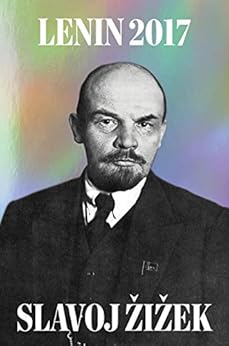
Gray is reviewing Zizek's First as Tragedy, Then as Farce,  but perhaps it's worth waiting a couple of weeks for the prolific Comrade Žižek's latest opus: Lenin 2017: Remembering, Repeating, and Working Through?

But perhaps it's time to lose patience with showmen who really haven't a clue as to what is to be done?

---

Next: What the Owl said to Lenin and Trotsky.

Tuesday, July 11, 2017

"Jeremy Corbyn and the bourgeois dream"


Bagehot in this week's Economist:
"One interpretation of Jeremy Corbyn’s rise, popular on the left, is that he is satisfying a pent-up desire for “real socialism”. But this ignores the fact that many people voted for the Islington MP despite his policies, not because of them.

Mr Corbyn is a long-standing critic of the European Union who did as much as he could to ensure that Remain would fail while pretending to support it. Another interpretation, popular on the right, is that his supporters are woolly minded virtue-signallers, determined to prove how compassionate they are while ignoring the fact that Corbyn-style policies have invariably led to disaster.

This ignores the fact that millennials have suffered more from the long stagnation that followed the financial crisis than any other generation. They have reason to be angry.

The most intelligent explanation has been provided by John Gray in the New Statesman. Mr Gray argues that Corbynism is “populism for the middle classes, serving the material and psychological needs of the relatively affluent and the well-heeled”. Far from being a repudiation of Tony Blair’s policies, Corbynism represents the completion of the takeover of Labour by middle-class people who put their own interests (such as free university education) above those of the working class.

But Mr Gray’s strictures miss an important point: most young Corbynistas are not so much settled members of the middle class as frustrated would-be members. Ben Judah, a millennial-generation journalist and author of “This is London”, points out that members of his generation are angry that they have done everything they were told, from studying hard at school to going to university to trying to get a respectable job, but are still holding on by their fingertips. ...

It is getting ever harder for young people to get a foot on the property ladder or find somewhere decent to rent. Thirty-year-old millennials are one-third less likely to own their own homes than baby boomers were at the same age, and spend £44,000 ($58,000) more on rent in their 20s than baby boomers did.

The problem then extends to the workplace. The young have been on the sharp end of two economic shocks: the 2008 crisis, which squeezed living standards, and a technological revolution, which is doing for middle-class jobs what mechanisation did for working-class ones.

Automation is hollowing out entry-level positions as companies use machines to do the routine tasks, such as searching through legal precedents or examining company accounts, that used to be done by junior employees. Companies of every type are cutting costs by ditching long-term perks such as defined-benefit pensions.

These problems reinforce each other. People who are subjected to flexible work contracts find it almost impossible to qualify for a mortgage. They are magnified by the London effect. Young people flock to the capital, where the best professional jobs are concentrated, but exorbitant property prices force them to migrate to the farthest corners of the city or to share with strangers. And they are curdled by generational antagonism.

The Resolution Foundation, a think-tank, calculates that people aged 65-74 hold more wealth than those under 45, a group that is almost twice the size. Browse the Facebook pages where young Corbynistas hang out and you do not find hymns of praise to the workers’ control of the means of production, but laments for the indignities of modern metropolitan life and jeremiads against baby boomers who grabbed all the cheap houses and got free university education into the bargain."
This seems quite consistent with Peter Turchin's "Secular Cycles" theory, where I commented:
"The main driver of the agrarian secular cycle is the Malthusian growth of population past the technological carrying capacity of the land. The gathering overpopulation initially facilitates an unsustainable growth in the numbers of militarily-capable elites while simultaneously undermining their finances.

The ensuing collapse is exacerbated by inter-elite warfare over the ever-shrinking spoils, and the final depression period cannot end until the elites themselves have been more than decimated and are thoroughly exhausted with war. Typical time frames are of the order of a century.

The post-agrarian capitalist world, as Turchin and others have frequently observed, exhibits similarities to the agrarian cycle. But differences are also plain, certainly in the advanced capitalist countries.

We have much more technology, we have many occupational niches for women and we have contraception. As a consequence the Malthusian overpopulation bomb doesn't detonate - more the contrary.

What we do have in plenty is elite overproduction (the new graduate 40%) which can never enter the real elite of the 1% bubble, where power and wealth is concentrated. This disaffected and mostly young middle class today inclines to leftism (Sanders, Corbyn and similar European-continental movements) or more generally the cultural marxism of the SJWs.

A traditional Marxist might say that the leftist 'movement' at present consists in taking bourgeois ideology in a rather literal way at its own face value, its self-valuation as inclusive, globalist, tolerant, equal and individualist. The bubble-elite is then denounced for not living up to its own stated values. Naturally, in its egalitarian utopia of the imagination, the status and influence of 'movement' supporters would be considerably more exalted.

Such an old-school Marxist would also characterise this social layer as petit-bourgeois, febrile and subject to abrupt changes in mood."
Since the mass of entitled young graduates are neither going away nor going up, they will continue to stew in resentment at their "betters", who seem to have effortlessly glided to elite positions through a combination of connections and nepotism.

Razib Khan writes ("Our Civilization’s Ottoman Years"):
"... subordinate peoples had their own hierarchies, and these hierarchies interacted with the Ottoman Sultan in an almost feudal fashion. Toleration for the folkways of these subordinate populations was a given, so long as they paid their tax and were sufficiently submissive. The leaders of the subordinate populations had their own power, albeit under the penumbra of the ruling class, which espoused the hegemonic ethos.

How does any of this apply to today? Perhaps this time it’s different, but it seems implausible to me that our multicultural future is going to involve equality between the different peoples. Rather, there will be accommodation and understandings. Much of the population will be subject to immiseration of subsistence but not flourishing. They may have some universal basic income, but they will be lack the dignity of work. Identity, religious and otherwise, will become necessary opiums of the people. The people will have their tribunes, who represent their interests, and give them the illusion or semi-reality of a modicum agency.

The tribunes, who will represent classical ethno-cultural blocs recognizable to us today, will deal with a supra-national global patriciate. Like the Ottoman elite it will not necessarily be ethnically homogeneous. There will be aspects of meritocracy to it, but it will be narrow, delimited, and see itself self-consciously above and beyond local identities and concerns. The patriciate itself may be divided. But their common dynamic will be that they will be supra-national, mobile, and economically liberated as opposed to dependent.

Of course democracy will continue. Augustus claimed he revived the Roman Republic. The tiny city-state of Constantinople in the 15th century claimed it was the Roman Empire. And so on. Outward forms and niceties may be maintained, but death of the nation-state at the hands of identity politics and late stage capitalism will usher in the era of oligarchic multinationalism.

I could be wrong. I hope I am."
A Marxist would say that what characterises the current 'conjuncture' is that the masses have recovered from the defeats of the 1980s and have a new-found confidence and bolshiness. They refused to be cowed by elites espousing policies they see as attacking their own best interests.

Their immediate political responses - what the elites call 'populism of the right and of the left'  (Trump & Sanders in the States; there are analogues in other countries) - in no way provide longer-term viable political-economic alternatives.

Since  postcapitalist socialism via revolution is ruled out (an ill-defined and unworkable target architecture), the period of instability will persist until Razib Khan's oligarchic multinational bourgeoisie restore order and, more importantly, a rate of profit which justifies renewed investment and therefore higher productivity.

The next decade is going to be extremely rough.

---

You might find "Economics of the populist backlash" by Dani Rodrik well worth reading (h/t Marginal Revolution). Professor Rodrik is an economist who distinguishes between models and reality: I'm currently checking out Kindle samples of his latest two books.

Tuesday, June 06, 2017

Voting Labour is not insane

Blogging will continue to be sparse over the next period.


Most people don't run the spreadsheet over party policies, preferring to rely upon gut feel and general impressions.

My personal impression of the Tories is summed up by Theresa May's unguarded remarks (to her neoliberal critics) that her 'Blue Labour' nationalist turn to the traditional (northern) working class was, in fact, the only way to save globalism. She has a point.

The Conservatives have run a cynical, patronising campaign. They initially thought Theresa May would appear impressive as a leader, but, as they say, 'she has been found out'.

In focus groups, when asked to compare political leaders to an animal, Corbyn is likened to 'a labrador'; May is described as 'a snake'.

In management terms I'd describe her as clearly stressed in the top job and showing little sign of growing into it. She lacks natural authority and vision. Most senior managers would not have assessed her as being ready for promotion - it was the referendum wot done it, removing the better-qualified 'remainer' candidates.

Turning to Labour, the powers-that-be have slung a lot of mud but little of it has stuck. This raises the question: what would a Corbyn administration look like?

Firstly off, it's plainly not going to abolish capitalism; it seems likely that it wouldn't even have the dogmatic idiocy to trash it à la Venezuela.

I suspect that once the dust had settled, the issue would be whether the new administration could find a different path for UK capitalism - and I think such an outline is faintly discernible.
1. The neoliberal global-interventionist thrust of UK policy since whenever might be further blunted. As it is, it's barely affordable. A foreign policy which is more Scandi might be the result (it could be termed 'minding your own business'). It's not clear the world would be a worse place as a result, to put it mildly.

2. Public services would be rebalanced: reorganised and somewhat-better funded. It is true that the economy has to grow - productivity has to grow - to afford ubiquitous public services. As immediate problems health and care for the elderly loom large; housing too.

But capitalists - especially globalised capitalists - are not much interested in those outcomes, their concern is rather valorising their rather large mountains of capital. The Tories are not trusted on mass-welfare issues - regardless of what they say - because people know instinctively that the rich really don't care, except defensively, to keep the masses from getting too excited.

I would like to think that the unfortunate statist DNA of a new Corbyn administration could be overcome. Wasn't it Lenin who identified the malign effects of monopolies as being one of the defining features of imperialism?

3. Taxation would be increased. The rich complain, but then they would .. after all, they are the ones who have the money. However, there is both a lot of ruin in a rich capitalist economy and far less elasticity of behaviour than is commonly argued by the rich and powerful, and their media mouthpieces.

It would do no harm to move some wealth from private hands to public services: it does not happen spontaneously or without some protests. The effects, if managed carefully, would not be dire.

I would also recommend that a Corbyn administration should encourage the development of the productive forces (a well-funded focus on R&D) - as Marx would have wanted.
So to summarise, I think an incoming Labour Government would effect a rebalancing and redirecting of UK capitalism; that Corbyn himself would be a Reaganesque figure, an affable front man; and that there would be significant visionary and operational talent behind him to execute the new course*.

A Theresa May government, by contrast, would flatter to deceive - mouthing the words while actually implementing under the hood a continuing neoliberal governance model in alliance with the US administration.

I believe Stephen Hawking agrees with me.

---

* People might say - evidence? - but power has a way of attracting talent, and nothing here violates core Labour norms and values.

---

Putting thought experiments to one side, is any of this going to happen in this election?

Not a chance.

Saturday, September 17, 2016

Why Jeremy will win


Watching Andrew Marr's insightful TV programme about recent political history in Scotland, I was struck by one of his observations: that the decline of Labour and the Trades Unions was a direct consequence of deindustrialisation. Scotland, he said, is now a post-industrial country with all the political and cultural diversity which comes with that.

Something else I read, relating to the evolution of the Labour Party (I have forgotten who wrote this): the Labour Party has walked away from its working class base and been colonised by its other historical support group, the urban leftist middle class.

OK, you knew that, but the real point was what came next: the middle class is largely unaffected by whichever party occupies government. Consequently, its political activism is fuelled not so much by righteous indignation on behalf of its own (mostly aspirational) problems, but by idealised, sacralised issues, often relating to other, less fortunate segments of society. [Example].

So do we think the future is more social, economic and political atomisation, more middle class overproduction and more cultural-tribal politics .. movement politics?

Or are we going to revert to the kind of proletarian solidarity formerly found in industries such as ship building and the mines?

To ask is to answer.

Forget those socialist-realist posters of cloth-capped workers united in storming the barricades. They are history.*

We have seen the future and it is Jeremy.

---

* Those posters have been history for a long time. This 'present conjuncture' so reminds me of the politics of the late sixties and early seventies, a time of protest, demonstrations and exciting left-wing politics.

The weasel Owen Smith's fundamental problem in this leadership election is that he thinks the 'Jeremy problem' is lack of competence in an electoral/parliamentary context.

Listen up, Owen! The new membership doesn't care about remote parliamentary antics - it's the movement, stupid!

Monday, August 22, 2016

Kamm, Corbyn and NATO


There's something about establishment vilification which makes a person reconsider old certainties. In today's Times, Oliver Kamm takes Jeremy Corbyn to task for his 'pacifism' (as usual with JC, nothing is really for sure).

According to Kamm, what did Jeremy say?
"... asked at a leadership hustings how he would respond if a Nato ally was invaded by Russia, Mr Corbyn replied: “I would want to avoid us getting involved militarily by building up the diplomatic relationships and also trying to not isolate any country in Europe . . .” He added: “I don’t wish to go to war. What I want to do is achieve a world where we don’t need to go to war, where there is no need for it.”
We wearily recall Trotsky: "You may not be interested in war, but war is interested in you."

Kamm continues:
"President Putin’s regime has already unilaterally altered the boundaries of Europe by force on preposterous pretexts. Mr Corbyn has in effect announced to this aggressive and expansionist power that if he is in charge there will be no costs and no resistance if Russia adopts the same methods against allies to which we are bound by treaty obligations.

"A few weeks ago, Nato announced plans to increase its strength in Poland and the Baltic states. Under a Corbyn government, those democratic allies won’t be able to rely on us."
One should generally listen to Oliver Kamm's very trenchant, neoliberal/neocon views and then adopt precisely the opposite.

Going to war with a serious opponent (Russia) is an existential business. This is not something any state does lightly. You may recall that America, our supposed great ally, took its time coming to our assistance in both the first and second world wars. Strangely, they took account of their own national interests.

The problem with NATO is that its mutual self-defence treaty locks in a supposed commonality of national interests which cannot in fact exist.

When NATO attacks some ultra-weak foe in a discretionary war, this is obscured - the war effort by some NATO members may be purely notional. This renders moot Oliver Kamm's point:
"Imagine that Mr Corbyn’s wish had been acted on. In 1998, the UN Security Council voted three times to identify the crisis in Kosovo as a threat to international peace and security and demand a response by the government of Slobodan Milosevic in Serbia. Milosevic’s forces intensified their persecution of Kosovan Albanians, driving hundreds of thousands from their homes.

"Belatedly, Nato launched a bombing campaign against Serbia in 1999. It thereby prevented a humanitarian catastrophe in Europe. Nato’s intervention rescued a threatened population and put Kosovo’s fate in the hands of a UN administration."
We say NATO, but in reality this was a coalition of the neocon-willing: no-one in the US or the UK feared retaliation from the Serbs. NATO was a convenient figleaf.

If Russia gets into a border war in Eastern Europe with a NATO member, does anyone really think NATO will automatically go to war on its behalf? General Sir Richard Shirreff pointed out in his recent book, "War with Russia", that for real wars NATO is an archaic, hollowed-out shell - an ineffectual paper tiger.

In truth we go to war when that's the only way to further advance our national interests. Treaties which would attempt to drag us into war against such interests are merely foolish pretences.

Would it really be such a catastrophe to let NATO go? Then we (and the rest of Europe) might get real about what we do, and do not, existentially care about.

Thursday, August 04, 2016

On the Corbyn New Left


Matt Bolton (PhD student) explains (July 14th 2016) that:
"... the mainstream ‘socialist’ or ‘green-liberal’ left who are the main constituency of Corbynism ... are much closer in form to moral or religious crusades, or perhaps a charity appeal, than marxism or anarcho-syndicalism. They are defined by a complete lack of strategic thinking, and are utterly devoid of cunning."
Bolton thinks that the 200,000 who have paid their £25 and joined/supported Labour as Corbyn supporters are very low-quality material to build the movement:
"My own CLP doubled its membership during Corbyn’s leadership campaign, with 300 people signing up. In the past year, I would generously estimate that perhaps 10 of those 300 has had any concrete involvement with the party (going to meetings, canvassing, delivering leaflets, taking up positions in the local party, running for council).

"The local Momentum group has had a little more success in turnout, though the majority of people attending were already involved in other campaigns, and the most that has been organised has been a few fundraising socials and the odd pro-Corbyn demo.

"This indicates that Momentum will be most effective in areas which already have a wide range of activist groups and networks (ie places with a high density of population due to a strong local economy) but far less so in places further away from the urban centres of capital accumulation, where existing political activism is thin on the ground, if not non-existent.

"The point here is not to bash people for lack of activity — there are all sorts of reasons why participation might be difficult, from lack of time to the labyrinthine structure of the party rulebook, to the deeply, deeply dull nature of most political work. It is merely to say that simply pointing to the numbers of new members says nothing about the existence or quality of a ‘social movement’.

"For the vast majority of ‘new members’, joining the party was not a promise of future activity, but a gesture of general support — perhaps similar to signing a Change.org petition — for whatever they thought Corbyn as Labour leader symbolised."
Such pessimism. And all Bolton can advocate is that the left should
"... campaign for Proportional Representation. It is only by getting rid of the farcical imbalance of FPTP that a Corbynist-style party has any chance of power (even if only as a minor partner in a coalition), and it would be far more effective in concrete terms than the membership reaching a million.

"Corbyn himself has had little to say about this issue, but McDonnell and Clive Lewis have intimated that a deal with the SNP, Greens, Lib Dems, Plaid Cymru — and perhaps even UKIP — could be a possibility."
Trotsky and Lenin are spinning in their graves.

---

Two days ago, Phil Burton-Cartledge took him to task for underestimating the potential dynamics of initially-naive popular movements.
"He argues that Corbynism is a simulacra of a social movement. It isn't a real one because the adherents Matt has encountered in his CLP and online do not match up to what activists in a proper movement looks like, such as the (relatively) politically sophisticated and hyper active supporters of Militant back in the day.

"In reality, how movements emerge are a process. Social movements are the purposeful, sustained mobilisation of large groups of people organising toward a series of political and/or social objectives. They never emerge fully formed and can in their early phases look like the remotest of primitive ancestors.

"Within days, St Petersburg peasants and workers went from clutching portraits of their beloved Tsar as they petitioned him to calling for his head as Russia almost tipped into revolution in 1905. The civil rights movement and its morphing into violent insurrection in parts of the northern US had its roots in the gospel, in pacifism, and a faith in American constitutionalism.

"How many activists have come into politics via beliefs in fairness, spirituality, conspiracy theory, and other ideas that at best partially reveal, and it worst obscure the realities of social life? The world over, millions have. And they always will.

"The movement of people coming into Labour are a work in progress, because we're all works in progress. The shouting on social media, the lack of sophistication with which some new comrades express themselves, the lapsing into semi-conspiratorial modes of thought, all are symptomatic of masses of new people getting drawn to politics.

"But among them there are future Labour ministers and perhaps even a Prime Minister who has got involved because of Jeremy Corbyn. "
Good Marxist points .. up to that last sentence. Lenin and Trotsky etc ...

---

And finally, why is Corbyn so very popular?

Yesterday, Helen Lewis at the New Statesman published this insightful essay, "Explaining the love for Jeremy Corbyn", expressed in 11 succinct bullet points.

My short summary: he's a blankish canvas on which the disaffected middle-class project their own sense of entitlement and self-worth - powered by their alienation from the power and influence wielded by remote denizens of the inner bubble, which they naturally resent.

Perhaps I'm a little too harsh on her theses.

---

There's a lot to like about the ethics, idealism and even the worldview of Marxism, as I tried to convey in my two previous posts:
  1. Revolution back on the agenda?
  2. Communism would be like - what?
Who wouldn't want to be a freedom fighter for the oppressed against distant and selfish elites who patronise from on high?

It's really unfortunate that the Marxist solution (the abolition of market mechanisms and total socialisation of politics and economics) flies in the face of real human nature, in all its evolved and genetically-endowed complexity.

The present generation of movement-activists may not be wholly aware that there was once a time when revolutionaries actually won, smashed the capitalist state and instituted the dictatorship of the proletariat. Putting in place a post-capitalist society was not easy (admittedly the communists at that time were faced with economic collapse and civil war).

Still, in 1922, five years after the proletarian revolution, the committed Bolshevik Leon Trotsky made this summing up to the Fourth World Congress of the Comintern, describing why 'War Communism' (extreme central planning) had to be replaced by the 'New Economic Policy', re-introducing market mechanisms.
"Failing a free market, the peasant would be unable to find his place in economic life, losing the incentive to improve and expand his crops. Only a mighty upsurge of state industry, enabling it to provide the peasant and agriculture with all its requirements, will prepare the soil for integrating the peasant into the general system of socialist economy.

"Technically this task will be solved with the aid of electrification, which will deal a mortal blow to the backwardness of rural life, the muzhik’s barbaric isolation, and the idiocy of village life. But the road to all this is through improving the economic life of our peasant-proprietor as he is today.

"The workers’ state can achieve this only through the market, which stimulates the personal and selfish interests of the petty proprietor. The initial gains are already at hand. This year the village will supply the workers’ state with more bread-grains as taxes in kind than were received by the state in the period of War Communism through confiscation of the grain surpluses.

"At the same time, agriculture is undoubtedly on its way up. The peasant is satisfied – and in the absence of normal relations between the proletariat and the peasantry, socialist development is impossible in our country."

The further history of the Soviet Union (and the other 'communist' states) confirmed that 'socialist man' was psychologically an impossibility both for peasants and, unfortunately, for workers, except in the heads of the most gullible and deluded Party cadres who were duly mocked by their contemporaries.*

---

* The Trotskyists think it was Stalinism which killed their leader and marginalised their movement. Proximately they are right, but ultimately it was human nature itself which fatally undermined the revolutionary Marxist movement.

Monday, December 14, 2015

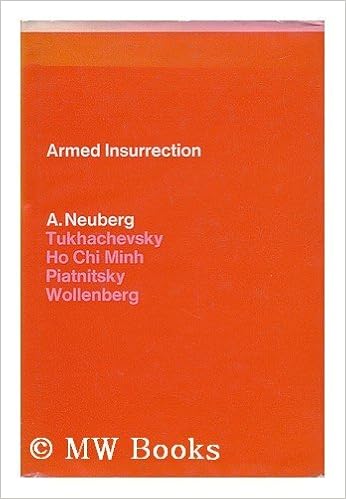
"Armed Insurrection"

People often complain that Marx, Engels and Lenin had little to say about Communism - what would this utopian society be like? As a revolutionary marxist in my early twenties, I was more interested in the practical business of the prior overthrow of capitalism.

I read about the great controversies in the Second International: those who argued for a peaceful road to socialism exploiting bourgeois democracy vs. those like Lenin who said that you might win the government but the state would fight back. Lenin proved his point in the October Revolution in Russia and later, to my excitement, I discovered that the Third International, the Comintern, had written this practical manual. See also this review.


Sadly, I could never afford it.

I was reminded of all this watching the main-stream media (MSM) reacting to Jeremy Corbyn and Marine Le Pen .. and to a lesser extent, Donald Trump ('Muslims') and Tyson Fury.

When faced with challenging opinions outside the liberal orthodoxy, my former trotskyist self would argue that the bourgeoisie goes through five stages:

  1. Ignore them*
  2. Attempt to ridicule them
  3. Threaten them with civil war
  4. Sabotage them
  5. Deploy the military in a coup.

We already saw an endless series of stupid gibes at Corbyn. Today it's the turn of Marine le Pen's Front national to be ridiculed for only getting 40% of the vote (more than UK election winners generally achieve) and losing in the face of a manoeuvre by the French establishment parties, the Socialists and Republicans.

It's telling that the intellectual case for bien-pensant capitalism is apparently so weak that the battle of ideas can't be won on a level playing field. That's what comes of denying reality I suppose - or maybe we should elect genetically-engineer a new people.

The Draka got there first, with Homo Servus. **

---

* See also 'Repressive Tolerance'.

** On this topic see Ken Macleod's good-to-middling novel 'Intrusion'.

Monday, September 21, 2015

Corbyn Watch

All those people crowing that Jeremy Corbyn has opportunistically changed his position on Trident, Europe, military interventionism, singing the National Anthem and so on know nothing about left-wing politics.

It's obvious that with the hostility of the PLP it would be insane tactics to insist on such things right now.

There's a party conference coming along, bound to be dominated by the activists and the unions. A little bit downstream we'll be watching the deselection of right wing and centrist MPs. Corbyn (and his more machine-oriented allies) will leverage the new activist base to transform the PLP: a project of at least a couple of years.

What's the rush? They've been waiting centuries.

---

S. M. Stirling's second Draka book, "Under the Yoke", has been giving me nightmares!

---

It turns out that men are more systematising than women while women are more empathising than men ... you won't be surprised to hear. Intriguingly, these two scales turn out to be almost orthogonal.

Additionally, both men and women studying hard science subjects are more systematising than those studying the humanities. Finally, those who score highly on the Autistic Spectrum Quotient scale (probably this means Asperger's Syndrome) are on the far end of the systematising distribution while also exhibiting deficits in empathising (empathising kind of equals agreeableness in the FFM).


All is explained in this interesting paper (PDF).

Monday, September 14, 2015

The Enforcer and the Thinker

Tom Watson and Jeremy Corbyn

I find myself guessing the personality types of the new Labour leadership. New leader Jeremy Corbyn is a classic INTP (which makes him similar to me). Profiles present him as rather solitary, not a team player, courteous to a fault, non-confrontational, not interested in the small stuff and infinitely stubborn over matters dear to his heart. Such people are rarely natural leaders.

His deputy, Tom Watson, seems to me an ESTJ (not sure how extravert). This is in line both with his reputation as a fixer/operator and with his claimed loyalty to the party. There are irresistible comparisons to the pairing of Blair (ENTP) and Prescott (ESTJ): the thinker and the enforcer.

The Machiavellian component (INTJ Peter Mandelson, anyone?) is surely provided by the third principal, the new shadow chancellor John McDonnell. Since I had never heard of him, for the moment the jury is out, though.

---

The unions will come to regret backing Corbyn; Andy Burnham would have been far more biddable.

Saturday, September 12, 2015

Mr Corbyn comes to town

The new leader of the Labour Party
In his acceptance speech at the Labour Party special conference today, Jeremy Corbyn laid out his Weltanschauung. British society, he suggested, comprises a constellation of the oppressed: those on welfare, the low-paid, trades-unionists (mostly public-sector), women, the homeless, and so on. This coalition of the dispossessed camps like a shanty town around the wealthy citadel of political-economic-military power politically identified with the Tories - a British version of Le Pouvoir: warmongering, selfish, contemptuous of the huddled masses and in essence morally evil. The job of the socialist left is to take them on, break their power and redistribute their resources.

I think that is a fair and non-biased summary of Jeremy's views. It is a slightly less nuanced version of a Manichean world view you can read any day of the week in The Guardian.

A Marxist analysis would go further and ask which social forces find such an ideology appealing. It's a good question and the answer suggests itself immediately:
  • public sector workers, 

  • activist intellectuals who feel excluded from the actual reins of power, 

  • liberal ('nice') individuals who are not in any immediate danger of deprivation themselves, but whose empathic faculties are fully engaged by those they take to be so much worse off than themselves. 

None of these groups have any problem with spending other people's money.

So now we come to the outer limits of Corbynism. Our Corbynistas make a fine and vehement moral case - there are always problems in the world which break your heart - but they mistakenly believe that they have a monopoly of such concerns. In the end it's economic and technological development which makes the money to pay for social progress. As this is of little interest to Jeremy and his fellow-thinkers, being strategically substituted by their confiscatory tendencies, it follows that those who invest, invent, develop, create value and pay taxes are always going to be somewhat less impressed with the new Labour leadership and its shining city upon a hill.

I wouldn't be at all surprised if Jeremy's honesty, forthrightness and rather strident moral fervour doesn't play rather well on TV and in Parliament. Ed Miliband, after all, frequently had the better of his opponents in verbal jousts though his economics was rubbish. We may as a consequence be in for a repeat of the late sixties when demonstrations, often violent, were common as the disenfranchised youth and unions of the period showed their alienation from majority society.

Tuesday, August 11, 2015

The poster boy of the left

Clare with her new poster - click on it to make large
Just back from the dentist where she suffered an injection & drilling en route to a new crown, Clare is cheered up by her new poster. Apparently I used to look like that guy with the red umbrella, back in my Jeremy Corbyn style salad days.