Showing posts with label Brexit. Show all posts

Friday, August 30, 2019

Nicos Poulantzas: Capitalism in the next decade

I wrote a series of generally admiring posts about the work of Nicos Poulantzas (here, in declining order of relevance).

I was reading this evening an outstanding recent summary of his work by David Sessions.

Nicos Poulantzas
Generally I'm a huge fan.

Poulantzas tried to break out of the simplistic stereotypes of both the Stalinists and the Trotskyists concerning the nature of the capitalist state and its role in mediating and enforcing capitalist class dynamics.

Poulantzas's great problem, the issue that destroyed his theoretical position, was that he wanted an accurate analysis of contemporary capitalism which also predicted transition to socialism (the supercession of capitalist relations of production) as a reachable goal.

All his analysis kept trying to tell him this wasn't on the cards. It simply wasn't possible.

What does the future hold if not a transition to socialism?

The central political problems 'we' face today: the breakdown of consensus politics, the rise of 'populism', leftist hysteria - these symptoms are all rooted in the obsolescence of the neoliberal phase of capitalism. Neoliberalism has created a gulf between the super-elite beneficiaries of a financialised, globalised capitalism and vast swathes of the proletariat and petit-bourgeoisie (old and new - Poulantzas emphasised the distinction) which has not shared in this largesse, which correctly feels abandoned, disrespected, atomised, alienated and futureless.

The problem has been accentuated by 'elite overproduction': the flow of c. 40% of the population through the universities, which has created a febrile petit-bourgeois mass which has internalised neoliberal ideologies and then naively tried to realise them in actuality.

This is the genesis of the SJW, equal-outcome, blank-slate-believing mass movements which self-define as 'left' but which are thoroughly bourgeois-liberal. They have captured the traditional labour parties of the left.

I expect a new capitalist synthesis to arise out of all this turmoil over the next decade. The shape is hard to discern but it will be whatever serves to restore class cohesion - that's the stability point.

Probably a little more socially conservative, a little more redistributive. Only time will tell. The process won't be pretty: I agree with Peter Turchin about that.

It's worth watching the project of Dominic Cummings and Boris Johnson in the new UK Government. That's exactly the project they're trying to define.

I expect the Brexit project now to go through, because there's a gathering consensus in the more strategic and hard-headed section of the British political elite that Britain's future is best assured by a strategic alliance with the US rather than being semi-locked-in to a disunited Europe, a power both politically and militarily weak.

In the past there has been the famous 'bridge' or 'straddling' policy, which saw the UK acting as a 'value-adding' middleman between the US and Europe. But in an increasingly multipolar political world resulting from the decay of the naive neoliberal globalisation project and catalysed by the rise of China and an incipent global recession, the UK finally, has to choose sides.

I think the Johnson government understands that, while the Remainers, locked into crumbling, sterile visions of the past, do not.

Such a shame that Nico Poulantzas is no longer with us. I wish I knew what he would have thought.

Wednesday, June 12, 2019

Forget Boris, it's Gove vs Hunt

Consider this scenario. Boris is one of the final two and wins the leadership election in the party-at-large on a policy of Brexit for sure (I think this means on WTO terms or something like it). Parliament doesn't agree and passes a no-confidence motion. There is an election.

A wavering-leave Tory Party is squeezed between the Brexit Party .. and the Labour and Liberal Parties, all of whom come out for Remain. They hoover up the votes of Conservative Remainers. Despite all of Boris's alleged rabble-rousing charms, the Tories are decimated: welcome to the new Lib-Lab-SNP government.

If Boris prevaricates in October, the Brexit Party continues to grow: a slow motion version of the above.

---

Boris is not the strategic thinker to get out of this hole. Logically therefore, he should not be one of the final two.

Hunt is surely the Remainers best bet. Smart, media-friendly, politically adroit.

He met with Trump - normally the mark of a supposed-winner.

Gove, once he gets past his immediate Class-A difficulties, is more Brexiteer-friendly, more ballot credible, a sop to the party-faithful. His problem is that he's too cerebral for these populist times. He doesn't look like a prime-minister: he's better cast as best-friend.

So logically, the process should return Gove-Hunt for the further party-ballot in the hope that either of them has the intellectual and political skills to navigate the very survival of the Tories where no solution currently presents itself.

Will Tory MPs see it that way, or will they panic and put Boris on the list - hope against hope that empty charisma will by some magic pull them through?

See the title of this post.

---

Note: this is an analysis of the best options for an intelligent Tory party interested in long-term survival. It does not represent my personal opinions as to who would be best PM.

None of the above would be a start.

Saturday, June 01, 2019

Range Anxiety

It's never a good idea to be anxious, is it?

There's clearly a problem, and the problem is with you.

---

Take a technology that has a low energy-density compared to its dominant competitor; which takes an order of magnitude longer to recharge than its dominant competitor; and which massively lacks charge points.

Who would rationally choose to trade down to something so inferior?

Range anxiety? 

Really?

---

It's a crude, moralistic trick to frame choices in a way that stigmatises the 'wrong choice' according to ideological criteria which masquerade as absolute.

---

Brexit: a conflict between those looking forwards and those (Leavers) who look backwards.

There's a neutral framing for you. Hard to win in that paradigm if you're not for 'Remain'.

How about?

Brexit: a conflict between elites grasping to a dying model of economic interests over everything including the destruction of communities and those seeking to create a more balanced, civilised and fair future for everyone.

Didn't hear that characterisation much.

Wednesday, April 03, 2019

Plumbers are a market failure

The shower is dripping again.

I phone our fifth plumber (all the rest have been struck off for incompetence or a refusal to attend - this one actually came the last time). He texts back airily, 'Busy right now, maybe three weeks time?'

I am wise to the language of plumbers. He means he has a lucrative long-term contract and cannot foresee a time when our little piece of work could make economic sense to him, or be scheduled.

Given the new houses being built in our neighbourhood, this makes complete sense.

---

I am dissatisfied with plumbing as a service, in a way I am not with retailing.  

Waitrose. Why can't plumbing be like Waitrose?

We tried a national organisation once. They advertised that they'd find a plumber for you. In so many hours, at such-and-such an inflated cost. I called them. Then I cancelled within the hour after reading - belatedly - their terrible reviews. They were cowboys and charlatans.

Most plumbers are small businesses. Family and friends. The job does not lend itself to economies of scale: each house and job is different, with little standardisation. This means that there is no value-adding role for a Waitrose-type organisation of plumbers.

The cowboy outfit I called was just an Internet middleman. But they sign up primarily incompetent plumbers because the margins their plumbers see are worse.

The supply of plumbers is inelastic.

The steady-state number of plumbers in an area is set by periods of weak demand, usually during a recession. When times are better, the good plumbers are always busy on the best contracts; the long-term ones sourced from house-builders.

The little family-house problem gets short shrift.

If supply of plumbing services is structurally inadequate, then what about demand? Deskilling the task would help: better quality piping and joints, designed for less, and easier, maintenance.

But housebuilders have no incentive. New-house plumbing works just fine for the first few years. The builders have been paid and are long-gone when the problems start.

With local supply restricted and local demand hard to decrease, the mismatch looks here to stay. Only labour mobility can solve this problem.

Market equilibrium demands we say yes to the Polish plumber!

---

This is not an argument against Brexit. It's an argument in favour of access to competent, skilled workers.

Saturday, March 30, 2019

Dominic Cumming's new political party?


Dominic Cummings

In his blog:  (my emphasis):
"Start rebuilding our network now. The crucial data to collect: name, email, postcode, mobile (full address if possible). If we need to set up a new entity — a campaign, a party — you will be able to plug this straight into new data infrastructure and we will try to grow super-fast. And it looks like we will need to…

Remember: we won last time even though the Establishment had every force with power and money on their side. They screwed it up because they do not have good models of effective action: they literally do not know what they are doing, as they have demonstrated to the world in the farcical negotiations. They are screwing up their attempt to cancel the referendum. Beating them again and by more will be easier than 2016.

Also, don’t worry about the so-called ‘permanent’ commitments this historically abysmal Cabinet are trying to make on our behalf. They are not ‘permanent’ and a serious government — one not cowed by officials and their bullshit ‘legal advice’ with which they have herded ministers like sheep — will dispense with these commitments and any domestic law enforcing them.

And next time we will not close down — we will try to ensure that votes are respected and the malign grip of the parties and civil service is broken, as Vote Leave said should happen in 2016.
I'm interested, Dominic, and not without some sympathy. But explain yourself clearly: what is your party going to be for?

Monday, January 28, 2019

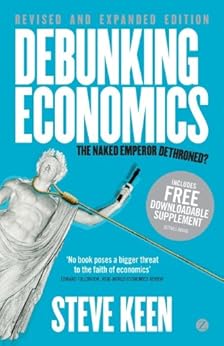
Phew, finally got through Steve Keen .. again!

Amazon link

Finally completed my second (and more successful) reading of Steve Keen's book. An impressive introduction to (and demolition of) neoclassical economics. A tale never told better.

Why isn't Keen a Marxist? He doesn't want to be drawn into a position where one is committed to overthrow capitalism rather than fix it, but also I think because his approach is very .. Australian. A kind of bluff, no-nonsense concrete directness which is a world away from Marx's sophistication of thought. However, you can be a Marxist and not believe capitalism is ripe for overthrow.

Keen's fairly grotesque mischaracterisation of Marxism is addressed by "Left Flank" (on the resources sidebar in the web version): "Steve Keen wrong about Marx".

---

I don't of course agree with International Socialism's Leninist aspirations but I thought Alex Callinicos's article, Brexit blues, was a pretty good outline of the dilemmas facing British capitalism.

The SWP was one of the few British left-wing organisations which did not succumb to the neoliberal ideological onslaught and capitulate to  'Remain'.

Sunday, January 13, 2019

A British Coup?


Over-the-top, copy-selling headline from The Sunday Times today.

It's always interesting watching the elite wrestling with the imperfect levers of governance to bring about the result they really want. The referendum result would have been reversed in a second if not for their inchoate, pervasive fear of the 52%.
Who are these people? We never meet them. No sign of them within the boundaries of the M25.
We know that the left petty-bourgeoisie, the metropolitan bubble-people, lined up for Remain. If the great reversal project progresses during the next weeks through a vote of confidence in May's government (to be lost) and then a general election, what will the Leave-voting working class do? No respectable party speaks to their concerns (Blue Labour, as championed by Rod Liddle, is dead in the water).

A general election with the Tory party in chaos and the Labour Party obfuscating and trying to change the subject - that would be a sight to behold. My tentative projection is that the Tory vote would collapse, the Labour vote would hold up and we would finally get to see what a Corbyn government would do.

No wonder they're cautious.

---

It's ironic really. The Theresa May strategy was always to retain the economic benefits of EU membership while continuing to maintain social cohesion by implementing the strict letter of Leave. It was always  'BREXIT in name only'.

The British elite, in its arrogance and short-term greed, has run roughshod over this mildly-intelligent plan. Do they really think a Corbyn government has their neoliberal interests at heart? That rather widespread popular expectations of a new socialist way forward will be so easy to endlessly subvert? They have learned nothing from M. Macron's experiences.

Such hubris: they can be very stupid at times.

Saturday, November 24, 2018

UDI from the proto-empire

Brexit: the fundamental issue is the UK vis-à-vis Germany

Brexit is not hard to understand.

1. The Germans are overt players again

Germany is waking from its decades of political hibernation. Its long atonement for the crimes of Nazism. The years in which it hid pursuit of its national interests behind the EU project, passive-aggressively ceding political leadership to France.

The new emerging Germany is finally ready and willing to be the European hegemon. Ask Greece.

2. The French know their place

The French elite, under Macron, has already capitulated, providing ideological cover to the German project with its narrative of transnationalism and 'ever closer union'. It's rather like the UK relationship with the US although the French have more influence over Germany.

La France profonde is increasingly restive.

3. The British: global financial reach + indifferent regional manufacturing

The UK elite, from its vantage point of a global financial nexus, knows it could never dominate Germany in Europe. But neither does it wish to be dominated. Its European strategy has always been transactional and divisive.

4. A political UDI suits both sides in the EU

A rising Germany is happy that the UK, a game-spoiling rival, is withdrawing from the ring. The French likewise.

The more globalised, financialised UK sees a least bad outcome in maintaining optimised economic access to the European market for goods and services. The British (English? .. London?) elite is therefore broadly happy with the May government's Brexit strategy and is content to spend the next plurality of years fine-tuning it.

Despite the aspirations of UK Remainers (fans of the Macron project), there has been no concerted pressure from the major EU powers (Germany, France) for a second referendum. The 'People's Vote’ has been theatre, reflecting a lack of purchase on the core of UK elite opinion.

5. Labour should tactically prop up the May government

If Labour were smart, they would abstain on the early December parliamentary vote on the May proposals.

This would avoid complicity in the risk of an uncontrolled hard Brexit (which would dismay their Momentum base and be strongly opposed by the UK elite) while exposing May's reliance on Labour to get her own policy through.

The three-way civil war inside the Conservative party would intensify and the Tories would look even less a viable government.

6. Plus ça change ... in the short run

As the UK transitions out of the EU in March 2019, all the cans will have been kicked down the road for another few years.

The May government may well stagger on to the next election (due 2022), spinning its administrative wheels with no consensual Tory vision or roadmap whatsoever - and with Labour salivating and preparing for government.

Tuesday, July 10, 2018

Variational Principles

Amazon link

Like Ted Chiang ('Arrival'/'Story of Your Life') I am a huge fan of variational principles. I was therefore pleased to discover Jennifer Coopersmith's well-regarded book (above). She has a good article about the connection between Newtonian Mechanics and the Principle of Least Action which I stumbled across when I was thinking about something quite different .. .

---

First Brexit. Beneath the daily froth of politics find the plate tectonics of political-economy. Political forms and institutions seek their stable equilibria, their maximal-entropy configuration. There's a variational principle here!

The UK is a small island abutting a Franco-German empire . The EU likes to drape itself in high-falutin' ideals but it's really about elite power and economic efficiency. Institutionally it's in crisis. Neoliberal stagnation and decay has frayed the bonds of social cohesion across the western world. Yet the economics of international supply chains, specialisation and scale permit no national regression. The consequent collapse-process is slow and uneven - and BRINO was perhaps always the fated outcome in this phase.

---

I was also thinking of my days as a BNR network planner in the 1990s, bringing modernity to the ex-socialist states of Eastern Europe. I was a frequent flyer, regularly presenting Nortel's model for modern network design to Polish, Hungarian and Romanian telecom planners.

We would take a country and look up the main town and cities in an atlas. We'd carefully measure the distance between every pair of towns to create a distance matrix. Then we'd check the populations figures: so many thousands of people per city, and apply a multiplier to work out the total traffic generated (erlangs in those days, now G/Tbps).

Next came the clever part. We used a gravity model on the inter-city distance matrix to work out how much traffic each link would have to carry. As I recall, we didn't use an inverse-square law: empirically that was too sharp a cut-off. A 1/distance rule worked better. So now we had a traffic matrix.

This was input into our network design tool, and out came design-graphics and equipment lists for access, aggregation and long distance core networks. Our audience, people who'd been using pencil and paper hitherto, were awestruck.

We made a lot of sales.

I mention this only because our solutions, too, seemed instances of a variational principle. The optimal cost-benefit solution for a network design, given the 'traffic potential field' defined by underlying populations and geographic-separation parameters.

---

Update: Gwern has researched all this to within one inch of its life.


Thursday, December 14, 2017

The United Socialist States of Europe


In the mid-1970s when I was trying to escape from teaching, I applied for an executive officer job with the Civil Service. I took the tests and attended an interview where I was asked, "What do you think about Britain being in the Common Market?".

I was conflicted: I was still a revolutionary socialist so I knew the party line was: 'No to the Europe of the capitalists, for a United Socialist States of Europe!'.

On the other hand, I was a disillusioned leftist and inclined to doubt that insurrection was likely to engulf Europe any time soon. In any case, I quite liked the idea of Europe: I'd had some great holidays there.

I responded without conviction that I thought the Common Market was not a good idea for Britain. No doubt that was why I didn't get the job .. (only kidding: there were a thousand reasons for the Civil Service not to employ me).

The left is now all at sea over Europe though; the pristine ideological purity of half a century ago has been shredded.

---

If the UK capitalist class was truly united in wishing to stay in the EU, that inconvenient referendum result would have been subverted or reversed well before now.

It's certainly true that almost all economists believe that being part of the customs union, with a say on policy, offers by far the best prospects for the UK economy. It goes with the flow of globalisation, increased market size, lowered transaction costs and just-in-time logistics.

But the UK bourgeoisie has never been quite so committed to that predominantly political project which the EU truly is. The path to ever greater convergence, towards that famed economic and political integration into a 'superstate', is in practice one of transition to a unified European polity under German dominance.

With its global interests - the tepid afterglow of Empire - the British establishment always wanted the economic benefits without the political subordination. That balancing act has become ever more difficult as Germany has become more assertive and other members states more reliant upon it, more subservient to its power one might say.

So apart from the most devoted servants of international finance capital in the City (the George Osborne wing of the Tory Party; the Blair wing of Labour) there is a kind of strategic paralysis gripping most other sectors of the capitalist class.

So-called soft-Brexit, which is essentially the status quo ante but with even less political influence in Europe (or, even more disengagement, to put the positive spin on it), is thus the favoured option.

Smaller, more national and regional businesses get little of benefit from the EU and lack lobbying power there. These are the stalwarts of the Tory Party in the country and the most enthusiastic Brexiteers.

Meanwhile everyone is now familiar with the plight of the traditional, relatively unskilled working class, marginalised by higher-skilled, younger and more energetic competition from Eastern Europe. As they have been pressed back into the reserve army of labour, their resentment has fuelled a visceral 'leave' sentiment: a problem for Labour and a tantalising opportunity for the Tories.

---

I don't have any views as to what the revolutionary left ought to be campaigning on here. The theory says that you should base your line on objective political analysis, not the vagaries of sentiment of your base-support. Since the EU is just as much a capitalist/globalisation project now as it was 45 years ago, the orthodox Leninist-Trotskyist position must be to oppose it.

But this implies that there's a viable strategy to supersede capitalism (a United Socialist States of Europe!) which can be meaningfully counterposed - and there is not.

The alternate argument, heard from those bright young revisionists in Labour's Momentum, is that socialism has to build on capitalism - it will be even more global and harmonised etc - so we obviously have to back all movement in that direction under capitalism. This reflects the naive idealism of their middle-class professional base which I myself exhibited (and suppressed) in my interview with the Civil Service.*

I'm not here to give advice to British capitalism on their optimal strategy: they don't need much assistance anyway to converge on 'soft-Brexit' as their preferred way forward.

But any institution which lionises George Osborne, Emmanuel Macron and Angela Merkel is going to find me heading rapidly towards the exit.

---

* What's wrong with that argument, I hear you say? Simply this: the purpose of capitalism is always and everywhere the valorisation (the self-expansion) of capital. This single-minded dynamic often cuts across broader human interests and values as you may have noticed.

We don't have to completely roll-over for every project of the haute-bourgeoisie to get the benefits of their development of the productive forces. There's a reason they're called 'the bubble'. With effort they can be constrained and diverted.

Thursday, May 25, 2017

Diary: Burnham-on-Sea

Temperatures hit 24 degrees again today. Time for a trip to the Somerset Riviera: Burnham-on-Sea.

If Weston-super-Mare (love the Latin!) just up the road has gentrified over the last twenty years, Burnham retains its authentic working-class culture: the mother chasing her recalcitrant toddler along the beach, shoulders reddening, crying "Jason, stop kicking over those sandcastles - they don't belong to you!"

I digress. Click on any of the images to make them larger.

Clare really enjoys the Somerset Riviera -
the beach is such an improvement over Nice

This in homage to Jonathan Meades - lover of concrete brutalism in all its forms

One of the sights from Burnham: the Hinkley Point reactors A and B.
I watched with fascinated interest for any intense flares of actinic blue light:
Burnham is downwind of the reactor.

The sandy beach will be packed this summer.

Never let it be said that we don't delight in our beach experience.
After our picnic, Clare read her John le Carré  in the bright sunshine;
I tried to read the screen of my Nexus 6.

You get a better class of beach graffiti at Burnham, perhaps inspired by Hinkley Point?

Your author on the promenade
---

If you'd like to check out the beach and sea-front at Burnham-on-Sea, here's a bonus video.


We'll certainly be back!

Thursday, April 27, 2017

Ode to Joy


There is a special character to Europhilia. The hushed, reverential tone of voice, those shining eyes. You see it with the apostles of Globalism: Tony Blair, Nick Clegg .. and Emmanuel Macron.

If only I had the literary technique to characterise such foolishness. I bow instead to the superior writing skills of  Phil Burton-Cartledge.
"The problem is for these folks, remainiacs if you will, the European Union is more than a trading bloc with an opaque bureaucracy. It's their Soviet Union, their City on the Hill, their Jerusalem.

"In their minds, the EU condenses Enlightenment values and liberal internationalism. It's an achievement standing above the nationalisms and tribalisms of old, that proves we can all get along on the basis of common humanity.

"And they have the nerve to look down their noses at Leave voters and call them deluded. It's stop-the-world-we-want-to-get-off, liberal-style. "
I rather wish I'd said that.

Monday, February 20, 2017

The deep state *is* the state

Much excitement in the States (but also in Brexit Britain) about elements of the state apparatus actively working to undermine the policies of an 'insurgent' government.

The governments in question are of the right, not the extreme left, but the founders of Marxism were clear that a truly revolutionary government cannot just take over the 'controls' of a 'neutral' state apparatus. They will be thwarted at every turn.

This is, of course, true of all bureaucracies. Successful 'turnaround' CEOs bring their own posse of senior managers - and waste no time clearing out the old regime. If they don't, their mission is toast. The political right, in order to to secure their victory, will have to purge the state of their enemies and repopulate it with supporters in their own ideological image.

Marxists, however, are seldom called out on what they think should replace the bourgeois state. Lenin and Trotsky, following the model of the Paris Commune, thought that the mobilised masses, organised in soviets (councils), would constitute a non-bureaucratic socialist state - a social formation not separate from broader society.

Marx himself never wrote much about it.

Yet the state is neither a contingent formation nor just 'bodies of armed men' safeguarding existing property relations. The state has an enormous, and under-analysed, role in social-coordination.

---

Turn now to the economy. All Marxists agree that their post-capitalist economic model will replace private decision-making about the allocation of resources with 'consciously democratic', centrally-planned directives.

Given the complex and highly-technical nature of policy-making and implementation, both as regards the state and the putative planned-economy, this is not going to something managed by the masses through their councils. Nor is it going to be that old favourite, the mere 'administration of things, not of people'.

The PDF version is here

It's hard to resist the conclusion that - until the AIs take over (and where does that leave us?) - the post-capitalist state will continue to be large, bureaucratic and unresponsive. Much like the bourgeois state.

History tends to support that view.

I would guess that Marxists would not agree, but for people proposing a radical makeover of society's fundamentals, they seem remarkably coy about their proposed replacement model.

Such studied casualness wouldn't work in engineering.

Why does the far left get a free pass on something of such fundamental importance?

Tuesday, January 17, 2017

The liberal colonisation of western elites: why?

The British Prime Minister, Theresa May, gave a defensive speech on Brexit today and was duly patronised on the talk shows by Remain liberals in their characteristic, languid upper-class drawl.

I wonder yet again why western capitalist elites seem dominated by liberals. The phenomenon is too widespread to be explained by purely national histories. From the Clintons to the Camerons to the Merkels the caste is pervasive.

I turn again to Jonathan Haidt and Moral Foundations Theory, quoting him from this previous post.
"Think of it like this: Evolution gave all human beings the same taste receptors — for sweet, sour, salt, bitter, and umami (or MSG) — but cultures then create unique cuisines, constrained by the fact that the cuisine must please those taste receptors. Moral foundations work much the same way. The six main moral taste receptors, according to MFT, are:

Care/harm: We feel compassion for those who are vulnerable or suffering.

Fairness/cheating: We constantly monitor whether people are getting what they deserve, whether things are balanced. We shun or punish cheaters.

Liberty/oppression: We resent restrictions on our choices and actions; we band together to resist bullies.

Loyalty/betrayal: We keep track of who is "us" and who is not; we enjoy tribal rituals, and we hate traitors.

Authority/subversion: We value order and hierarchy; we dislike those who undermine legitimate authority and sow chaos.

Sanctity/degradation: We have a sense that some things are elevated and pure and must be kept protected from the degradation and profanity of everyday life. (This foundation is best seen among religious conservatives, but you can find it on the left as well, particularly on issues related to environmentalism.)

"As with cuisines, societies vary a great deal in the moralities they construct out of these universal predispositions. Many traditional agricultural and herding societies rely heavily on the loyalty, authority, and sanctity  foundations to create rituals, myths, and religious institutions that bind groups together with a strong tribal consciousness.

"That can be highly effective for groups that are often attacked by neighboring rivals, but commercial societies (such as Amsterdam in the 17th century or New York City today) are far less in need of these foundations, and so make much less use of them.
Jonathan Haidt and his co-workers found that modern political tribes project differently onto these six dimensions.

Source: Wikipedia

Liberals are motivated almost entirely by the Caring dimension and Fairness, which they tend to interpret as equality of outcome. We might also observe that liberals tend to value self-control and eschew displays of physical aggression. Playing by the formal rules demands both.

Conservatives score less on Caring, stronger on Fairness which they tend to interpret as equality of opportunity, and are supportive of their own institutions via Groupishness.

Libertarians are like Mr Spock in Star Trek: cool and unemotional, detached and strongly autonomous as shown by their focus on Liberty - freedom from interference.

Modern capitalism in its full, globalist, multi-ethnic majesty is a kind of ecosystem-filter for these different moral types.

As I mentioned in the previous post about the current state of Russia, capitalism works best - as a network of anonymous economic relationships distributed over time and space - with a system of rules in place to enforce property rights and ensure transaction-integrity.

The point about rules is that they should be impersonal, not unduly biased by power and stable. In turn this requires an enforcing state which upholds associated values. These, however, can easily conflict with common psychological drives.

  • Universal abstract rights can undermine particularist family, kin and ethnic interests
  • Formal process requires the replacement of arbitrary force to resolve disputes
  • A safety net is needed to keep the masses from toppling the elites.

In MFT terms, this prioritises Fairness and Caring, and undermines the kinds of particularism expressed in the three Groupish dimensions. In theory Libertarian Freedom might suit an idealised capitalism but in reality its disengaged state-model is just ineffective and dangerously uncaring.

If these points carry a ring of truth then it's no surprise that liberals are so strongly selected for when populating elite positions, particularly within the state apparatus and organs of elite ideology like the media and social sciences.

When Groupish, 'populist' conservatives come to power, propelled by disgruntled in-groups, liberals react with fear and loathing seeing the threat to their carefully-crafted model of atomised society composed of formally-equal individuals.

They are right to do so: as discussed in the previous post, authoritarian leaders privilege their supporters while demonising others as out-groups. This can end in tears.

But .. the tenets of liberal ideology are so tendentious, so self-serving, and often so plainly delusional and damaging to the social fabric that sometimes, something just has to be done.

I think Theresa May clearly understands this, which makes her deference to the liberal establishment besieging her so depressing.

---

Is it possible to run a free, productive, dynamic, inclusive capitalist society without its natural ideology of social atomisation, blank-slate equality and hyper-individualism?

You might want to read this.

Wednesday, August 17, 2016

I'm with David

Daniel Finkelstein has this interesting comment piece in The Times today.
"When some years ago David Owen, one of the SDP’s founders, sent me an early draft of his memoirs, I understood for the first time that he had seen the SDP as essentially doomed — certainly in deep trouble — before I even joined it at the beginning of 1982. What had doomed it, in his view, was the decision to form a tight alliance with the Liberal Party.

"Owen’s conception of the SDP, which was formed in 1981, is that it would be a tough-minded, hawkish party of the left. It would appeal to an aspirational working class, particularly in the north, who had tired of bureaucratic socialism and saw the point of Margaret Thatcher, but were not Tories.

"When the future Labour foreign secretary was a student working on a building site he had been struck by the reaction of his fellow workers to the Suez crisis. It had been instinctively nationalist, uninterested in political protocol, and robust. It was these people he wanted the SDP to appeal to.

"Roy Jenkins, former Labour chancellor but also biographer of the Liberal prime minister HH Asquith, wanted a centre party that reflected his own liberal instinct. This would be a southern party of the middle class, disdainful of Thatcher, fastidious rather than bulldog-like on international issues, avowedly centrist.

"Everything about this Jenkins view — the electoral relationship with the Liberals in particular, but also the claret-drinking image — drove Owen crazy. But for all that he later did to shape the party, Owen was right that by 1982 Jenkins had won the battle. The SDP would be a liberal party. It lost almost all its northern and working-class seats, was not able to compete in the south because the Liberal Party took all the best constituencies, and ended up being swallowed up by its partner.

"Owen and Jenkins were rowing over whether liberalism and being a Labour moderate or even a centrist were the same thing. Jenkins felt that practically and philosophically they were. Owen felt that practically and philosophically they were not."
No-one in the current leadership cadre of the Labour Party, neither left, centrist or right, espouses David Owen's political views - with the possible exception of John Mann.

And so they will not reconnect with their millions-strong working class roots.

If Theresa May can find a way to overcome the respectable working class's tribal anti-Toryism, Labour are electoral toast till the end of time.

---

Blue Labour website and Wikipedia article.

Friday, July 29, 2016

The Collapse of Western Civilization (cont.)

The Economist proclaims today that it's no longer Left vs Right, but Open vs. Closed.


Political commentators embellish the idea of the insurgent masses rising against liberal elites across the globe. Hello Brexit, Ms Le Pen, Mr Trump, .. .

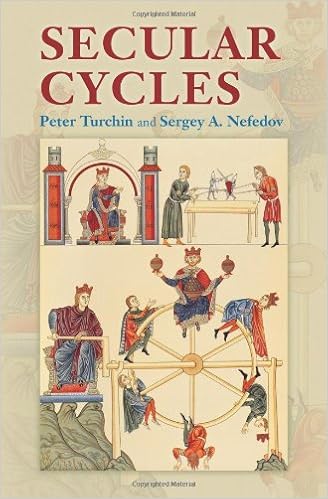
And Peter Turchin has a new book out soon: "Ages of Discord" (September 2016 and not yet on Amazon).
"By 2010 it became clear to me that the structural-demographic theory (SDT) generalizes very well. Essentially, it’s about complex large-scale societies that can be represented as a population - elitesstate system.

"Agrarian versus industrial distinction is important but doesn’t affect the basic logic of the model. In the United States we have common people, or the 99%, the elites (the 1%), and the state, just like in the Roman Empire. Yes, the Romans did not have smartphones, but the power relations in complex human societies are surprisingly durable.

"It also became clear that the answer to the question, “And where are we?” is: in the pre-crisis phase of the secular cycle. Thus, when in 2010 Nature asked me to comment on the coming decade, I wrote “Political instability may be a contributor in the coming decade.” Six years down the road, I am afraid to say, my gloomy forecast is developing right on schedule."
On the strength of this, I decided to read his earlier book (on the rise and fall of agrarian societies) and it arrived this morning.


Here is what Turchin says about his new book:
"Analysis of historical states shows that in complex, large-scale human societies long periods of relative equity, prosperity, and internal peace are succeeded by protracted periods of inequity, increasing misery, and political instability.

"These crisis periods—“Ages of Discord”—tend to share characteristic features, experienced by many societies in different historical eras. In fact, America today has much in common with the Antebellum America of the 1850s and with Ancien Régime France on the eve of the French Revolution, to give just two examples.

"Can it really be true that our time of troubles is not so new, and that it arises because of similar underlying reasons? Ages of Discord marshals a cohesive theory and detailed historical data to show that this is, indeed, the case.

"The book takes the reader on a roller-coaster journey through American history: from the Era of Good Feelings of the 1820s to our first Age of Discord, which culminated in the American Civil War, to the post-war prosperity and, finally, to our present, second Age of Discord."
Naturally, the book will end with good advice. Equally naturally, it will be ignored.

Sunday, July 24, 2016

Brexit and the English working class

Marginal Revolution links to John Lanchester's unfailingly-erudite essay on what Brexit tells us of the state of England.

Here is how it ends:
" An early sign of policy direction was George Osborne’s announcement that he wanted to cut corporation tax to 15 per cent to show that post-Brexit Britain is ‘open for business’. Osborne has gone; the policy probably hasn’t.

"The business press has been full of speculation that the government will backtrack on its plans to crack down on non-domiciled tax status for ultra-wealthy foreigners. The need for revenues makes it important not to drive non-doms out of the country, one City lawyer told the FT. ‘We need a friendly regime.’ There will be plenty more where that came from.

None of this is what working-class voters had in mind when they opted for Leave. If it’s combined with the policy every business interest in the UK wants – the Norwegian option, in which we contribute to the EU and accept free movement of labour, i.e. immigration, as part of the price – it will be a profound betrayal of much of the Leave vote.

"If we do anything else, we will be inflicting severe economic damage on ourselves, and following a policy which most of the electorate (48 per cent Remain, plus economically liberal Leavers) think is wrong. So the likeliest outcome, I’d have thought, is a betrayal of the white working class. They should be used to it by now."
While Lanchester's observations are spot on and his diagnosis has the ring of truth, his remedies are vitiated by familiar self-deceptions.

  • Lanchester's EU is the one conceived through the lens of its own liberal self-conception ('Europa!') rather than the brutal reality of an institutionally-flimsy carapace concealing a shaky set of strategic alliances between the major continental powers and their hangers-on;

  • Lanchester blindly accepts the comforting trope that all immigration is equal when rated for social capital. In truth, if you replace some millions of unborn northern Europeans by an equivalent number of middle-easterners, you do not get a revitalised northern European society; you get an internal middle-eastern colony.

The soon-to-be-betrayed working class had already figured this out, in their non-intellectualized observation of the world we live in, and voted accordingly.

Wednesday, July 06, 2016

Bubble-think and the ultraleft

Peter Turchin has a phrase, the 'overproduction of elites'.
"Elite overproduction generally leads to more intra-elite competition that gradually undermines the spirit of cooperation, which is followed by ideological polarization and fragmentation of the political class. This happens because the more contenders there are, the more of them end up on the losing side. A large class of disgruntled elite-wannabes, often well-educated and highly capable, has been denied access to elite positions."
He writes:
"The youth cohort in Europe, those in their 20s and 30s, are the highest educated in the history of humanity – and there are not enough jobs that would use their skills. History shows that the overproduction of youth with education credentials is a sure sign of political turbulence to come."
Ed West (The Spectator blogdescribes what these elites believe:
"More widely, in political discourse and culture, warm, fluffy notions about human nature are favoured over depressive realism. From a very young age children are read books and shown films that teach the message that we are all basically good and just like us, and then the more intelligent ones are sent off to universities where conservatism has been frozen out."
It is sometimes thought that the chic-radicalism of the bien-pensant is politically represented by the likes of Jeremy Corbyn and the hard left. But this isn't really true: the Marxist left privately characterises bubble-think as petit-bourgeois, a utopian worldview in which everyone is 'nice' and there are no more victims. Petit-bourgeois utopians aren't known for letting the class structure of society trouble their righteous little heads.

Whatever Corbyn may himself believe (who knows?) the hard left supporting him are in no doubt that the way forward is not to manage or prettify capitalism but to destroy it, replacing it with a 'democratic, centrally-planned economy under the control of workers' councils'.

The Marxist position on the EU of the Capitalists is Brexit; the EU is to be replaced by a post-capitalist socialist Europe.

The Bubble  is firmly Remain, as they identify with their pan-European elite tribe (as Ross Douthat observed).

The Marxist left is a highly-ideological minority which for tactical reasons hides its differences with bubble-leftism. This has been the strategy for decades: the expectation is that as the crisis of capitalism develops, the faux-leftists will become amenable to Marxist ideas, swelling the ranks of the Revolutionary Party.

It seemed to work for Lenin, back in 1917.

---

The non-Corbynistas in the PLP, what we used to call 'The Labour Party', are no less bubble-thinkers. The Tristram Hunts and Chuka Umunnas are not unfamiliar with Hampstead and Islington. It's just that they have a sense that managing a capitalist economy does impose some constraints over generalised niceness, equality of outcome and punching-up: decisions necessarily make enemies.

And what about the real proletarians, those millions of workers - mostly outside London - who really are working class and who recognise neither their identity nor their interests in Corbyn politics, or leftist or neo-Blairite bubble-think?

I suggest those Labour policy-makers not in thrall to bubble identity-politics might think a bit about a manifesto for them (here's an idea).

Tuesday, July 05, 2016

The Warrior, the Priest and the King

The roles required for effective governance: the warrior, the priest and the king.

  • The warrior is the enforcer, using charm, gifts and bludgeons to get stuff done
  • The priest is the strategist, directing the plays with divinely-inspired vision
  • The king exemplifies the unity and purpose of the community as a whole.

Many political failures result from getting these roles wrong; either by omitting one or more of them or misallocating power between them. Take Brexit (from an elite point of view):
David Cameron was the King, George Osborne was the Warrior (the Treasury frequently plays the role of enforcer) and people like Gove and Hilton were the Priests. But Osborne also played the strategist while Gove was used merely departmentally and Hilton bailed. The result was a fatal lack of coherent strategy and a sense of visionless coasting on the part of the Cameron administration.
Sometimes the Warrior is in the ascendant. When Margaret Thatcher came to power, the Establishment was beset by enemies: unruly trades unions, a rapacious EU bureaucracy, a stumbling economy. The Warrior demolished her opponents but couldn't progress to the role of King. Her endless search for further enemies brought about her downfall. Her successor, the emollient John Major, was a weak King.

You could tell a similar story about Winston Churchill.

In Myers-Briggs terms:

  • the King is a Guardian, most likely an ESTJ/ESFJ; 
  • the Warrior is often an Artisan ESTP .. or perhaps a righteous Idealist ENFJ; 
  • the priest is typically an intellectual Rational (NT).

The Labour Party

They have a diffident intellectual leader (Corbyn) failing to play the King; they have a far-left intellectual John McDonnell as Shadow Chancellor, failing as an effective Enforcer; and no Priest with a widely-supported political programme. In short: leaderless, ineffectual and all over the place; a party in civil war.

The Tories

Faced with novel challenges post-Brexit, they need powerful people in all three roles. Gove would be a good candidate as the Priest, although his political ineptness would have to be supervised; the Warrior role is up for grabs and not really visible in this leadership election, while Theresa May is a psychological match for the King role.

The question for Theresa May is whether she's up for the mission, or sees herself instead as a trojan horse for the dominant Establishment Remain faction. In the latter case, there will be tears before bedtime.

---

All of the above informs programme management as well. And business: COO, CMO, CEO.

Monday, July 04, 2016

Leave wins 421 seats across the UK, Remain just 229

A lot of chat, including here, about the prospects of weaselling out of the Brexit vote.

The referendum aggregated individual votes across the UK. But what if you group the votes by constituencies and see how each constituency would have voted?

BuzzFeedNews did it here (h/t: Marginal Revolution).
"To see how the country’s referendum vote could affect a general election, we’ve translated the referendum results (which in England, Scotland and Wales were counted by council area, not constituency) into results broken down by parliamentary seats.

"And when you do that, you get a radically different outcome. Instead of a close result, Leave win in a landslide.

"Although the referendum result was close nationally, Remain piled up many of its votes in a relatively small number of constituencies (London and Scotland being prime examples). As a result, the UK’s first-past-the-post electoral system would produce an extremely skewed result.

"In our projection, Leave would win 421 seats across the UK, while Remain would win just 229."


A solid sea of blue = Leave constituencies.

Yellow (Remain) indicates two things: the anti-English nationalist votes in Northern Ireland, Scotland and the northern part of Wales, plus the geography of the Elite Bubble in English/south Wales constituencies.

Most MPs won't be backing the coup, I suggest.

---

Peter Turchin (Cliodynamics) has an interesting piece: "Brexit as Destructive Creation".
"Now, in the aftermath of the referendum, the main question is, what’s next? In the following I propose some answers suggested by the new discipline of Cultural Evolution and my research on historical dynamics (Cliodynamics).

"My proposal is quite radical. Rather than trying to fight the disintegrative trend, we should allow it to run its course, destroying the EU as it is now. But we need a European Union. Thus, what I hope will happen is another integrative project within Europe, one that will learn from the mistakes of the last one.

"In other words, the EU is dead; long live a new and better EU."
Read the whole thing.