Showing posts with label Comintern. Show all posts

Tuesday, January 20, 2026

The Catholic Church and the Comintern


I began my adult life as an activist in the IMG, the British Section of the Fourth International and successor to the Comintern, immersed in the rituals of Marxist politics, endless meetings, and the promise of a transformed world. Decades later, I now find myself an activist in the Catholic Church (parish treasurer and project manager for our facilities) and I am struck by how familiar it all feels. These two great global organisations, one secular and revolutionary, the other religious and traditional, are oddly similar in their institutional life, with the activists still complaining about the passivity of most of the ordinary members...

Both claim to speak a universal truth. For the Comintern it was Marxism-Leninism, the scientific doctrine of history; for the Church it is the legacy of faith handed down from the Apostles. If you hold the key to human destiny, then errors and deviations should not be tolerated.

Hence orthodoxy, hence heresy, hence the long shadow of discipline.

For both rest on centralised authority. The Party had the Central and Political Committees - and the Control Commission; the Church has the Pope and the Magisterium. Democratic centralism vs. (in extremis) papal infallibility. Different idioms, same structural necessity: following discussion, unity is determined by a final arbiter.

Both manage conscience. In the Comintern, members were subjected to criticism and self-criticism (in the IMG not so much). In the Church, we have the confessional, the insistence on recognising fault and reaffirming commitment. In both settings, the ethos is interiorised, made personal (and thus more effective).

Both are missionary - universal in scope. The Comintern aspired to world revolution; the Church, to universal salvation. Both sprawl across cultures, nationalities, and centuries, and both face the constant problem of cohesion in the face of secular challenge.

Any institution that combines (1) a monopoly on truth, (2) a universal mission, and (3) a fragile global reach will converge on the same logic: central authority, discipline, self-examination, orthodoxy and exclusion. Whether the foundation is transcendental revelation or historical materialism, the organisational necessities are much the same.

Inside both, there is reward for those signed-up. In the Party it was the intoxicating sense of being active on the side of history. In the parish it is the palpable commitment of people who give their time, energy, and skill for something beyond themselves. Work can be mundane but has its life-affirming qualities. You are sustained by a sense of purpose and by the comradeship of those around you.

So from the Comintern to the Catholic Church, structures resemble while ideologies diverge. But in the lived experience of the activist core, the resemblance is remarkably similar, and the reward is the same: a life shaped by shared labour in service of a mission that transcends the individual.


Friday, April 27, 2018

Socialist Revolution in the 21st Century?

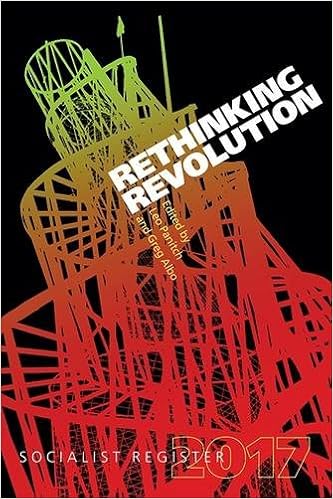
Amazon link .. and a review

"First published in 1928, this is the Comintern’s official manual for insurrection and it has a foreword by Erich Wollenberg giving details of its composite authorship. The introduction by Piatnitsky is generally sensible, which, since he quotes extensively from Lenin on the necessity of a very advanced stage of political decomposition of the capitalist state as a pre-condition for an uprising, is not surprising.

There then follow four case studies, in approved Staff College fashion, of Reval in 1924, Hamburg 1923, Canton 1927 and Shanghai in 1926-27. These are in effect object lessons in how not to do it and disobey practically every one of Lenin’s dictums. ..."              [from Ted Crawford's 1971 review].
---

Amazon link - and no reviews

From 2016/17. So relevant and timely that no-one in the UK or America reviewed it on Amazon ... .

---

In his latest blog post, Marxist economist Michael Roberts concludes:
"Surely, a left government must instead look to replace big capital with democratically-run state enterprises in the ‘commanding heights’ of an economy.  This would lay the proper foundation for innovation and enterprise and thus put use-value before value, price and profit."
Fine words, yet how are we to get there?

Back in the heady days of red-blooded Leninist party building (the 1970s) the revolutionary left was completely educated on what would happen if a left-wing government were to come into office and try to legislate capitalism away. We had seen what happened in Chile.

The media would put up a ferocious ideological onslaught, there would be a massive capital exodus leading to economic depression or collapse while the state apparatus would sabotage socialist initiatives. In extremis, other capitalist powers would restore 'order', perhaps through NATO.

We didn't forget that revolution is civil war. That in an existential clash of two sides, the side with the better programme, the stronger morale, the superior military forces and the more inspired leadership gets to win.

We didn't forget that for capitalists, the socialist revolution looks like the chavish masses violently stealing everything they have, possibly arresting or killing them and their families. No, they surely would not go quietly into that good night.

Of course, the working class today is totally unprepared for such a confrontation. Michael Roberts has argued in his book, Marx 200, that a revival of working class organisation and combativity will not be apparent for some years yet, not until a new capitalist upturn following the end of the current long depression.

And yet we have the prospects of a Corbyn-McDonnell government coming up shortly, which is going to do what exactly?

---

Perry Anderson wrote:
"Yet it is quite clear that without serious exploration and mapping of it [the nature of socialism], any political advance beyond a parliamentary capitalism will continue to be blocked. No working-class or popular bloc in a Western society will ever make a leap in the dark, at this point in history, let alone into the grey on grey of an Eastern society of the type that exists today. A socialism that remains incognito will never be embraced by it."
And this is the problem. With all its cyclical dysfunctions, the monstrously-complex capitalist economy in all its globally interconnected sophistication works. Its valorisation-brutality forces progressive advances where kinder, gentler and less-driven souls would acquiesce to the always-vociferous and inevitable victims .. and preside over stagnation.

It seems unlikely that the working class will take a leap into the 'socialist chaos' that all media commentators will accurately predict without a really compelling narrative.

---

My review and Amazon link


Having read János Kornai's blistering critique of the socialist system, I am deeply skeptical about any transition to socialism which promises a quasi-social-democratic state with mass nationalisation enriched by 'bottom-up democratic forms'. I think we all know that revolutionary fervour dims, the masses demobilise and the activists end up colonising the bureaucracies.

Amazon link

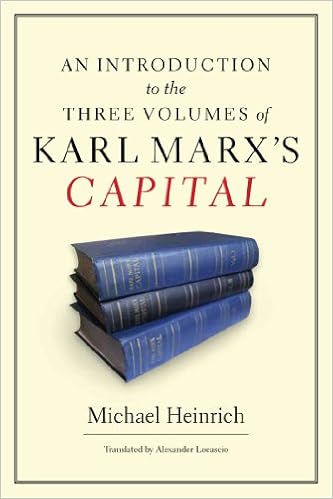
Capitalism, with its separation of politics and economics as so usefully described by Michael Heinrich (PDF link: see chapter 11 p. 203), looks a better guarantor of the development of the productive forces and of personal and political freedoms than any kind of model which Michael Roberts is implicitly proposing.

The best indication of the entirely ritualistic nature of incantations of 'the replacement of capitalism' by contemporary Marxist theoreticians is the complete absence of any discussion of the transition itself.

Speaking personally, I prefer a disappointed honesty to hypocrisy and (self-) deception with the potential to lead to catastrophe.

---

See also; "The Comintern guide to armed insurrection (1928)".

Sunday, October 22, 2017

What flag on your coffin?


At Princess Diana's funeral, her coffin was draped with the Royal Standard Flag.


Thus her life and memory were appropriated to the historical traditions of the British elite, their heartfelt commitment to ideological continuity from early feudalism to world-straddling empire.

Would Diana have identified with that manifest destiny?

I asked Clare what flag she would like her coffin bedecked by. She pooh-poohed the idea; she wants flowers - lots of them. And in a sense that's right, the coffin-flag has to express your final and most profound identity, the culture which in the end you claim. But I think Clare's sense of identity is, at its very foundation, cultural Catholicism.

Catholics don't have a flag as such, but the nearest is the flag of the Vatican City.


It's not nearly as aesthetic as one might like.

And me? I'm not tribal, I value my inner skepticism above all revealed wisdom. My flag should represent the epitome of scathing criticism concerning all deceptive agenda-ideologies.


Yes, I would like the flag of the Comintern draped across my coffin (or painted upon it). From those early days (1919-22) when all was youthful idealism, before the harsh realities of European defeat and 'primitive socialist accumulation' derailed the dream and brought forth the lies.

Monday, December 14, 2015

"Armed Insurrection"

People often complain that Marx, Engels and Lenin had little to say about Communism - what would this utopian society be like? As a revolutionary marxist in my early twenties, I was more interested in the practical business of the prior overthrow of capitalism.

I read about the great controversies in the Second International: those who argued for a peaceful road to socialism exploiting bourgeois democracy vs. those like Lenin who said that you might win the government but the state would fight back. Lenin proved his point in the October Revolution in Russia and later, to my excitement, I discovered that the Third International, the Comintern, had written this practical manual. See also this review.


Sadly, I could never afford it.

I was reminded of all this watching the main-stream media (MSM) reacting to Jeremy Corbyn and Marine Le Pen .. and to a lesser extent, Donald Trump ('Muslims') and Tyson Fury.

When faced with challenging opinions outside the liberal orthodoxy, my former trotskyist self would argue that the bourgeoisie goes through five stages:

  1. Ignore them*
  2. Attempt to ridicule them
  3. Threaten them with civil war
  4. Sabotage them
  5. Deploy the military in a coup.

We already saw an endless series of stupid gibes at Corbyn. Today it's the turn of Marine le Pen's Front national to be ridiculed for only getting 40% of the vote (more than UK election winners generally achieve) and losing in the face of a manoeuvre by the French establishment parties, the Socialists and Republicans.

It's telling that the intellectual case for bien-pensant capitalism is apparently so weak that the battle of ideas can't be won on a level playing field. That's what comes of denying reality I suppose - or maybe we should elect genetically-engineer a new people.

The Draka got there first, with Homo Servus. **

---

* See also 'Repressive Tolerance'.

** On this topic see Ken Macleod's good-to-middling novel 'Intrusion'.