Showing posts with label John McDonnell. Show all posts

Thursday, January 03, 2019

LQG, LSD* and depth psychology

Amazon link

I'm just about glad I read this but the experience was like munching slices of supermarket white bread. The story of Loop Quantum Gravity is told chronologically through the biographies of Lee Smolin and Carlo Rovelli. It's the journey of those who started with General Relativity and tried to quantise spacetime. The nodes and links of LQG are not spacetime quanta, they're precursor objects out of which spacetime, along with its metric field, should emerge in the low-energy limit.

This is the fabrication of reality at the Planck scale, way down from observational data. The models are not without interest (especially the cosmological models) and the approach seems to have its compelling moments .. but .. but .. all the nasty things said about the theological or purely mathematical nature of String Theory also apply here, do they not?

If you're short of cash you could skip the book and read the Wikipedia article, though you are unlikely to understand it without a total familiarity with GR and QFT (not me!). The author had somehow to handwave his way over this cathedral of densely-connected abstractions: the "Quantum Space" reading experience is consequently pretty anaemic.

I'm guessing that Baggott wrote this book because, with the continuing decline in the prospects for String Theory, he's become convinced that there's something to Loop Quantum Gravity and wants to raise its profile for a generation of new physicists wondering what on earth they should be devoting their lives to.

---
Amazon link

A few posts ago I said:
"I'm expecting this book to be a bunch of left-Keynesians arguing that an incoming Labour government should put more demand into the economy through deficit spending and increased transfer payments in order to stimulate investment and productivity."
I think I oversold it. This is a bunch of mediocre essays with no new ideas and many mistakes which reminded me of the kind of stuff sixth formers write. It insults the intelligence and bores the unfortunate reader. Give it a miss and read Steve Keen instead.

---
Amazon link

Adrian pushed his copy in front of me. As I worked my way through I grew more impressed. It's an easy, folksy read but far from superficial. It puzzled me for a while - how should we think about this book? - and in the end I place it mostly in the Jungian tradition of optimal personal development.

Peterson has read deeply across the disciplines and has melded evolutionary theory, neuroscience and depth psychology into something coherent and new. That is a real achievement.

His blind spot is sociology - he doesn't see how the SJW orthodoxy he confronts is in reality the ideology of the new petty bourgeoisie, conjured into being with the neoliberal transition of the 1970s. He should read Poulantzas.

Still, this omission does not invalidate anything he says since even being conscious of the social dynamics does not suggest any different conclusions.The problem is here regardless.

---

"Freud was a genius," Peterson remarks, “you can tell because people still hate him.”

---

* Left Social-Democracy.

Wednesday, December 12, 2018

Reading Poulantzas and McDonnell

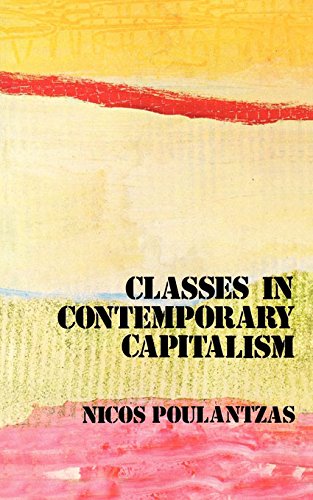
Classes in Contemporary Capitalism

Amazon link

From the preface:
"The book starts with a general theoretical essay that for the first time seriously explores the distinction between the “agents” and “positions” of capitalist relations of production, and seeks to avoid the typical errors of either functionalism or historicism. It also provides a polemical reconsideration of the problem of the “nation state” as a political unit today, and its relationship to the internationalization of capital.

Finally, and most originally, Poulantzas develops a long and powerful analysis of the much-abused concept of the “petty-bourgeoisie.” In this, he scrupulously distinguishes between the “traditional” categories of petty-bourgeoisie—shopkeepers, artisans, small peasants—and the “new” categories of clerical workers, supervisors, and salaried personnel in modern industry and commerce. At the same time he demonstrates the reasons why a unitary conceptualization of their class position is possible. The difficult question of the definition of “productive” and “unproductive” labor within Marx’s own account of the capitalist mode of production is subjected to a novel and radical reinterpretation. The political oscillations peculiar to each form of petty-bourgeoisie and especially their characteristic reactions to the industrial proletariat, are cogently assessed.

Poulantzas ends his work with a reminder that the actions and options of the petty-bourgeoisie are critical to any successful struggle by the working class, which must secure the alliance of important sections of the petty-bourgeoisie if the fateful experience of Chile is not to recur elsewhere tomorrow."
These are really critical issues when trying to understand the kind of class dynamics underlying the recent events in France, the left and right populist movements everywhere and specifically the SJW phenomenon. It's also relevant to any incoming Labour government here in the UK.

---

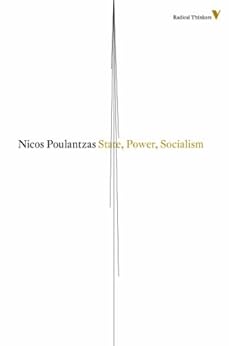
State, Power, Socialism


Amazon link

This is Poulantzas's great exposition of the anatomy and dynamics of the various forms of the capitalist state, and the implications for the transition to socialism. I already read "The State and the Transition to Socialism" (Chapter 14 "The Poulantzas Reader" - PDF) where Nicos Poulantzas debates with the (at that time) Trotskyist Henri Weber (of the LCR) as to whether the Leninist model of a proletarian revolution/state based on federated soviets is really viable in modern Western Europe.

Poulantzas further questions whether the power of the bourgeois state can really only be overthrown by dual-power soviet structures as in the Bolshevik revolution (that was Trotskyist orthodoxy at the time of the interview, 1977). A kind of head-on assault.

My sympathies align with Poulantzas here, insofar as he at least thought about the nature of the state unlike the FI which had not moved beyond "The State and Revolution".

Weber is right against Poulantzas that the state is too strong and - in extremis - too focused to be subverted/reused from within. But they are both wrong to think that modern capitalism is vulnerable to the revolutionary imposition of a post-capitalist mode of production led by the massed ranks of the industrial proletariat.

That isn't the failure mode.

Update 23rd February 2019:

I've just read Ellen Meiksins Wood's book, "The Retreat From Class", where she devotes a chapter to Poulantzas. She takes him to task for assigning white-collar workers to the 'new petty-bourgeoisie'  (rather than the working class) and also for assuming this category is equivalent to the Marxist (technical) distinction between productive and unproductive workers (productive of surplus value, that is).

Poulantzas was undoubtedly wrong about this, and Wood has him nailed.

---

Economics for the Many

Amazon link

I'm expecting this book to be a bunch of left-Keynesians arguing that an incoming Labour government should put more demand into the economy through deficit spending and increased transfer payments in order to stimulate investment and productivity.

I'm completely with Michael Roberts here: good luck with that.

Still, no sense in prejudging. Let's listen to what Mr McDonnell's favourite economists have to say.

Friday, April 27, 2018

Socialist Revolution in the 21st Century?

Amazon link .. and a review

"First published in 1928, this is the Comintern’s official manual for insurrection and it has a foreword by Erich Wollenberg giving details of its composite authorship. The introduction by Piatnitsky is generally sensible, which, since he quotes extensively from Lenin on the necessity of a very advanced stage of political decomposition of the capitalist state as a pre-condition for an uprising, is not surprising.

There then follow four case studies, in approved Staff College fashion, of Reval in 1924, Hamburg 1923, Canton 1927 and Shanghai in 1926-27. These are in effect object lessons in how not to do it and disobey practically every one of Lenin’s dictums. ..."              [from Ted Crawford's 1971 review].
---

Amazon link - and no reviews

From 2016/17. So relevant and timely that no-one in the UK or America reviewed it on Amazon ... .

---

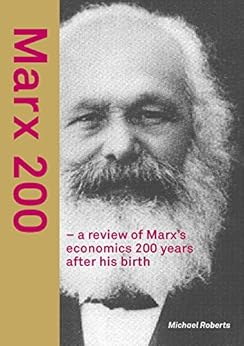
In his latest blog post, Marxist economist Michael Roberts concludes:
"Surely, a left government must instead look to replace big capital with democratically-run state enterprises in the ‘commanding heights’ of an economy.  This would lay the proper foundation for innovation and enterprise and thus put use-value before value, price and profit."
Fine words, yet how are we to get there?

Back in the heady days of red-blooded Leninist party building (the 1970s) the revolutionary left was completely educated on what would happen if a left-wing government were to come into office and try to legislate capitalism away. We had seen what happened in Chile.

The media would put up a ferocious ideological onslaught, there would be a massive capital exodus leading to economic depression or collapse while the state apparatus would sabotage socialist initiatives. In extremis, other capitalist powers would restore 'order', perhaps through NATO.

We didn't forget that revolution is civil war. That in an existential clash of two sides, the side with the better programme, the stronger morale, the superior military forces and the more inspired leadership gets to win.

We didn't forget that for capitalists, the socialist revolution looks like the chavish masses violently stealing everything they have, possibly arresting or killing them and their families. No, they surely would not go quietly into that good night.

Of course, the working class today is totally unprepared for such a confrontation. Michael Roberts has argued in his book, Marx 200, that a revival of working class organisation and combativity will not be apparent for some years yet, not until a new capitalist upturn following the end of the current long depression.

And yet we have the prospects of a Corbyn-McDonnell government coming up shortly, which is going to do what exactly?

---

Perry Anderson wrote:
"Yet it is quite clear that without serious exploration and mapping of it [the nature of socialism], any political advance beyond a parliamentary capitalism will continue to be blocked. No working-class or popular bloc in a Western society will ever make a leap in the dark, at this point in history, let alone into the grey on grey of an Eastern society of the type that exists today. A socialism that remains incognito will never be embraced by it."
And this is the problem. With all its cyclical dysfunctions, the monstrously-complex capitalist economy in all its globally interconnected sophistication works. Its valorisation-brutality forces progressive advances where kinder, gentler and less-driven souls would acquiesce to the always-vociferous and inevitable victims .. and preside over stagnation.

It seems unlikely that the working class will take a leap into the 'socialist chaos' that all media commentators will accurately predict without a really compelling narrative.

---

My review and Amazon link


Having read János Kornai's blistering critique of the socialist system, I am deeply skeptical about any transition to socialism which promises a quasi-social-democratic state with mass nationalisation enriched by 'bottom-up democratic forms'. I think we all know that revolutionary fervour dims, the masses demobilise and the activists end up colonising the bureaucracies.

Amazon link

Capitalism, with its separation of politics and economics as so usefully described by Michael Heinrich (PDF link: see chapter 11 p. 203), looks a better guarantor of the development of the productive forces and of personal and political freedoms than any kind of model which Michael Roberts is implicitly proposing.

The best indication of the entirely ritualistic nature of incantations of 'the replacement of capitalism' by contemporary Marxist theoreticians is the complete absence of any discussion of the transition itself.

Speaking personally, I prefer a disappointed honesty to hypocrisy and (self-) deception with the potential to lead to catastrophe.

---

See also; "The Comintern guide to armed insurrection (1928)".

Wednesday, April 25, 2018

Michael Roberts on Keynesianism & the modern left

Amazon link

I'm finding Michael Roberts's latest book a lot punchier than "The Long Depression". After a strong and penetratingly-clear review of Marx's 'three laws' (of value, of accumulation and of the tendency of the rate of profit to fall) he moves on to Marx's critics and has this interesting analysis of the continuing popularity of Keynesianism in the ranks of the modern socialist left.
"Marx, Keynes and the labour movement

Keynesian economics dominates on the left in the labour movement. Keynes is the economic hero of those wanting to change the world; to end poverty, inequality and continual losses of incomes and jobs in recurrent crises. In the US, the great gurus of opposition to the neoliberal theories of Chicago school of economics and the policies of Republican politicians are Keynesians.

In the UK, the leftish leaders of the Labour party around Jeremy Corbyn and John McDonnell, self-proclaimed socialists, look to Keynesian economists for their policy ideas and analysis. They bring them onto their advisory councils and seminars.

Those graduate students and lecturers involved in Rethinking Economics, an international attempt to change the teaching and ideas away from neoclassical theory, are led by Keynesian authors like James Kwak or post-Keynesians like Steve Keen, or Victoria Chick or Frances Coppola. Here the idea that inequality is the enemy, not capitalism as such, dominates the media and the labour movement. This is not to deny the ugly importance of rising inequality, but to show that a Marxist view on this does not circulate.

So why do Keynesian ideas continue to dominate? Geoff Mann provides us with an insightful explanation. In a new book, entitled In the Long Run We are all Dead, Mann reckons it is not that Keynesian economics is seen as correct. There have been "powerful Left critiques of Keynesian economics from which to draw; examples include the work of Paul Mattick, Geoff Pilling and Michael Roberts", but Keynesian ideas dominate the labour movement and among those opposed to what Mann calls 'liberal capitalism' for political reasons.

Keynes rules because he offers a third way between socialist revolution, and barbarism, i.e. the end of civilisation as we (actually the bourgeois like Keynes) know it. In the 1920s and 1930s, Keynes feared that the `civilised world' faced Marxist revolution or fascist dictatorship. But socialism as an alternative to the capitalism of the Great Depression could well bring down 'civilisation', delivering instead 'barbarism' - the end of a better world, the collapse of technology and the rule of law, more wars etc. So he aimed to offer the hope that, through some modest fixing of 'liberal capitalism', it would be possible to make capitalism work without the need for socialist revolution. There would be no need to go where the angels of 'civilisation' fear to tread. That was Keynes' narrative.

This appealed (and still appeals) to the leaders of the labour movement and 'liberals' wanting change. Revolution was too risky and we could all go down with it. Mann: "the Left wants democracy without populism, it wants transformational politics without the risks of transformation; wants revolution without revolutionaries". This fear of revolution, Mann reckons, was first exhibited after the French revolution. That great experiment in bourgeois democracy turned into Robespierre and the terror; democracy turned into dictatorship and barbarism — or so the bourgeois myth goes.

Keynesian economics offers a way out of the 1930s depression or the Long Depression now without socialism. It is the third way between the status quo of rapacious markets, austerity, inequality, poverty and crises and the alternative of social revolution that may lead to Stalin, Mao, Castro, Pol Pot and Kim Jong-Un.

It is such an attractive 'third way' that Mann professes that it even appeals to him as an alternative to the risk that revolution will go wrong (see his last chapter, where Marx is portrayed as the Dr Jekyll of Hope and Keynes as the Mr Hyde of Fear).

As Mann puts it, Keynes reckoned that, if civilised experts (like himself) dealt with the short-run problems of economic crisis and slump, then the long-run disaster of the loss of civilisation could be avoided. The famous quote that makes the title of Mann's book, that 'in the long run we are all dead, was about the need to act on the Great Depression with government intervention and not wait for the market to right itself over time, as the neoclassical (`classical' Keynes called it) economists and politicians thought.

For "this long run is a misleading guide to current affairs. In the long run we are all dead. Economists set themselves too easy, too useless a task if in tempestuous seasons they can only tell us that when the storm is long past, the ocean is flat again" (Keynes). You need to act on the short term problem or it will become a long-term disaster. This is the extra meaning of the long run quote: deal with depression and economic crises now or civilisation itself will come under threat from revolution in the long run.

[...]

Like all bourgeois intellectuals, Keynes was an idealist. He knew that ideas only took hold if they conformed to the wishes of the ruling elite. As he put it, "Individualism and laissez-faire could not, in spite of their deep roots in the political and moral philosophies of the late eighteenth and early nineteenth centuries, have secured their lasting hold over the conduct of public affairs, if it had not been for their conformity with the needs and wishes of the business world of the day...These many elements have contributed to the current intellectual bias, the mental make-up, the orthodoxy of the day.". Yet he still really believed that a clever man like him with forceful ideas could change society even it was against the interests of those who controlled it.

The wrongness of that idea was brought home to him in his attempts to get the Roosevelt administration to adopt his ideas on ending the Great Depression and for the political elite to implement his ideas for a new world order after the world war.

He wanted to set up 'civilised' institutions to ensure peace and prosperity globally through international management of economies, currencies and money. But these ideas of a world order to control the excesses of unbridled laissez-faire capitalism were turned into institutions like the IMF, World Bank and the UN Council, used to promote the policies of imperialism, led by America.

Instead of a world of 'civilised' leaders sorting out the problems of the world we got a terrible eagle astride the globe, imposing its will. Material interests decide policies, not clever economists. "
---

Michael Roberts has the strengths and weaknesses of an orthodox Marxist. I lay stress on the word orthodox here. He dismisses Keynes, along with the other critics he considers, because in no case do they propose socialist revolution to deal with the ills of capitalism (as he portrays them).

Roberts's critiques seem wholly compelling: the crises in capitalist reproduction are indeed crises of profitability (and not lack of effective demand, as Keynes claims), yet the brutal methods (devaluation of capital, lowering of wages) required to restore profitability within the framework of capitalism are not at all congenial to well-meaning economists or politicians seeking votes. Yet when executed by the impersonal forces of the crisis itself, they do work.

Roberts would prefer less callous, less cyclical pathways to growth. That's why he's a socialist. Yet he has no model for socialism, no hint as to how the overwhelming motivational and coordination issues of a global economy can be addressed in a manner superior to capitalism. There's just the blind faith that somehow the organised proletariat can do the job.

No political proposition with such a 'manifesto' has a prayer of being taken seriously and in his heart of hearts, Roberts knows it. Hence the ritualistic quality of his denunciations. Yet this selective myopia does neither him nor his book any favours.

And before uncritically lauding the (capitalist-driven) post-1980 successes of China and denouncing the (capitalism-blamed) stagnation of the third world he might try to emulate the bravery of bourgeois economist Garett Jones and absorb this.

But of course I have no serious expectations.

---

I recently wrote about Steve Keen and Corbyn. I plan to work my two posts so far about Marx 200 into an Amazon review over the next few days.

Monday, September 25, 2017

Preobrazhensky's lessons for Corbyn?*

PDF

With the Labour Party possibly, or even likely, to form the next UK administration, attention turns to how seriously to take their economic programme. I mentioned the Marxist economist, Michaels Roberts's views in my previous post. He reflects the Marxist orthodoxy: that attempts to implement socialist policies within the framework of a capitalist economy and state create a protracted economic and political crisis. Either the workers movement will transcend capitalist relations of production (OK, this is a euphemism for socialist revolution) .. or there will be a catastrophic defeat for the labour movement ushering in a period of reaction and a new rise in the capitalist economy.

I agree those are the alternatives and would expect the latter outcome with overwhelming probability.

It is, however, interesting to think about the nature of the economy after a successful socialist revolution. Unfortunately, the only example we have is the extremely atypical case (as regards 21st century advanced capitalism) of Soviet Russia in the 1920s.

Yevgeni Preobrazhensky was
"... a member of the governing Central Committee of the Bolshevik faction and, its successor, the All-Union Communist Party, Preobrazhensky is remembered as a leading voice for the rapid industrialisation of peasant Russia through a concentration on state-owned heavy industry.

"Closely associated with Leon Trotsky and the Left Opposition movement of the 1920s, Preobrazhensky fell afoul of the secret police during the decade of the 1930s, suffering expulsion from the Communist Party and internal exile in 1932 and a new arrest ending in execution in 1937 during the Great Purge. ...

"He argued in The New Economics that the USSR had to undertake the "primitive accumulation" that early capitalist societies had had to. That is, the peasants' agricultural surplus had to be appropriated to invest in industry. Thus the Soviet Union had to undertake by planning in "socialist primitive accumulation" what England had undergone by happenstance in the 17th century.

"This theory was criticized politically and associated with Trotsky and the Left Opposition, but it was arguably put into practice by Stalin in the 1930s, as when Joseph Stalin said in a speech that the Soviet Union had to accomplish in a decade what England had taken centuries to do in terms of economic development in order to be prepared for an invasion from the West. This argument is disputed by Trotskyists and Soviet historians."
I'm interested to understand his theoretical analysis of economics in a society no longer based on generalised commodity production so have added Preobrazhensky's book to my reading stack (already way too big). Given the current revival of interest in Marxism - as the ideological foundations of neoliberalism continue to fray - perhaps it's time to issue a new edition on Amazon and Kindle?

There are some hard-liners in the Corbyn leadership (McDonnell and Milne) but I suspect that in office they would behave more like a traditional European Socialist Party. But who knows?

---

* What are the lessons? I haven't read the book yet, but perhaps that he should refrain from at least the gratuitous killing of the kulaks?

Thursday, May 11, 2017

This ritualisation of Marxism is getting tiresome

Another day and the Labour leadership will be asked once again whether they "agree with Marx". They will reply - again! - that there is a lot to learn from Marx, but that he was wrong about some things.

And they will be right.

I have been reading: "Globalisation: A Systematic Marxian Account" by the excellent Tony Smith,

Amazon link

and I have read no other account of globalisation so sophisticated, profound or analytic (a detailed review here).

---

We all want some kind of roadmap, a clue as to where human civilisation is heading in the twenty first century. Smith reviews four contemporary theories:

  • Traditional social-democracy: capitalism plus a redistributive national state
  • Neoliberalism: emphasising the benign power of global markets
  • The "catalytic state": exemplified by the Chinese activist-state model
  • A putative 'democratic world-state' checking the power of global capital.


All these models assume global capitalism and seek to ameliorate its more perverse or dire effects, those currently creating the popular backlash against the dominant neoliberal ideology - so-called 'populism'.

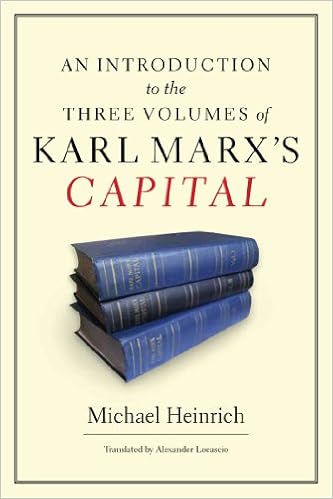
Smith then cruelly eviscerates each of these models, giving a master-class elaboration of the Marxist approach to economics. It might help to have read Michael Heinrich's "An Introduction to the Three Volumes of Karl Marx's Capital" first.

Amazon link


Such criticism is fine: indeed, a breath of fresh air. Where Marxism fails is not so much in the analysis - who could deny that the 'structures' of society are, in any deep analysis, highly-sophisticated protocols of systematised (but malleable) human behaviour? - but in the remedy.

Describing capitalism for what it is should be ethically-neutral .. in the tradition of scientific analysis.No Marxist analysis has, for example, demonstrated that capitalism would collapse through its own inner nature through some terminal crisis.

But Marxists then add something new and extraneous: an ethical criticism.

They claim that capitalism is inherently unfair, oppressive and - dare I say it? - evil. In opposition, a communitarian solution is proposed (although the Marxist tradition was - and is - understandably sketchy on the details).

The model of future-communism is seldom subject to the level of rigorous criticism correctly bestowed on capitalism, but if it was, it would be understood to be an impossibility. It presupposes a biological human nature which does not exist.

---

There have been precisely zero attempts to integrate Marxism with current understanding of human (evolutionary) psychology, genetics or genomics. Attempts to do so are disavowed as if some category error is being proposed. Marxist blank-slatism reacts with horror to the idea that there could even be such a thing as human nature, detachable from specific and historic relations of production and exchange.

Such a lack of seriousness: the sure hallmarks of an ideology to be taken on faith.

If we learned one thing from Marx, let alone from the Stalinist experience, it's that lack of development of the productive forces is the root of all evil. Conversely, as capitalism increases those forces seemingly without limit, who can predict - yes, who? - as to how future-humanity may be able to organise itself?

In the meantime, let's just crack on and increase those productive forces, while ameliorating the consequences of their current inadequacy.*

---

* Yep, a lot of people think that. And then the arguments start 😟 ..


Monday, September 14, 2015

The Enforcer and the Thinker

Tom Watson and Jeremy Corbyn

I find myself guessing the personality types of the new Labour leadership. New leader Jeremy Corbyn is a classic INTP (which makes him similar to me). Profiles present him as rather solitary, not a team player, courteous to a fault, non-confrontational, not interested in the small stuff and infinitely stubborn over matters dear to his heart. Such people are rarely natural leaders.

His deputy, Tom Watson, seems to me an ESTJ (not sure how extravert). This is in line both with his reputation as a fixer/operator and with his claimed loyalty to the party. There are irresistible comparisons to the pairing of Blair (ENTP) and Prescott (ESTJ): the thinker and the enforcer.

The Machiavellian component (INTJ Peter Mandelson, anyone?) is surely provided by the third principal, the new shadow chancellor John McDonnell. Since I had never heard of him, for the moment the jury is out, though.

---

The unions will come to regret backing Corbyn; Andy Burnham would have been far more biddable.