Showing posts with label HBD. Show all posts

Tuesday, August 14, 2018

The Virus of Marxism

A lot of people - ex-Marxists - talk about having caught 'the virus of Marxism' in their youth. They always seem less clear as to how they recovered from their complaint.

---

Marx thought that the selfishness and egotism so obvious in the people around him were the product of capitalist relations of production. Under communism selflessness would be the norm, the benevolence of a society of abundance.

This is an empirical claim, yet one which Marxists are strangely unwilling to explore. Everything we know about human beings suggests such a prospect is false. There are strata of society which are currently very well off. The pages of 'Hello' magazine suggest that saintliness does not come naturally. Why not? They're not all evil oppressors.

We know from biology that (for good genetic reasons) most animals are either in it for themselves or at most for their close kin. It's considered noteworthy that some evidence has been uncovered for reciprocal altruism in chimpanzees.

Humans exhibit adaptations for living in large groups*, and for symbol-mediated cooperation: loyalty to causes, countries and empires (provided such causes sufficiently align with personal self-interest of course). Despite much effort however, in-group/out-group tribalism has never been close to eradication. It's a bit airy-fairy to blame those famed (and reified) 'capitalist relations of production' for that historical universal.

Rich societies in a state of formal peace fragment into tribes which pick intense fights on secondary issues, spearheaded by young males. Who'd have thought it? (Apart from evolutionary psychologists).

---

Where does this leave the Marxist project? A clue can be found in the extreme unwillingness of Marxist theoreticians to engage with these issues. Their uneasiness is palpable: such research is neither acceptable nor refutable - a sheepish turning away of the head changes the subject.


Mediated of course by the social relations of production and exchange, it's new tech which opens the door to historical progress. The future presents as a branching tree: genomic experimentation in humans combined with social-agency in robots (cf replicants).

It's really hard to predict how things will turn out: there are many scenarios. Why suppose that Marx and Lenin tediously had the future nailed down more than a century ago?

The thing which scares Marxist intellectuals is that if humans can't make a collectivised society work - and they can't - then we seem to be stuck with capitalism indefinitely. That does seem a bit of a capitulation to bourgeois ideology. But private ownership of the means of production has a lot more flexibility than historical observers had imagined. Those dark satanic mills so graphically denounced in Capital Vol 1 have long since vanished in the west. Capitalism keeps getting richer (on trend) and more capable, with ever greater reserves. Its own dynamic will in the end utterly transform it .. I suspect.

Why is capitalism so bad, anyway?

We shouldn't ask the question this way. It's not the job of science to take sides on ethical questions. Marxists above all should not be appealing to platonic ethical absolutes. Yet they err in seeking ethical judgements about capitalism only in social relations.

If human beings didn't have a human, biological nature, if they didn't care whether they ate or starved, lived or died, then who could complain about social formations since the dawn of time where such 'bad' outcomes were the norm?

Of course, human beings very much subscribe (for obvious biological reasons) to something like Maslow's hierarchy of needs.

Maslow's hierarchy of needs

In Marx's day (and Lenin's too in Russia) capitalism was bootstrapping itself through primitive accumulation. It was a brutal time and every one of Maslow's levels was violated for the newly-emergent working class. The communists were vitriolic in their anger and hatred against capitalism - the new bourgeoisie were certainly not starving in their mansions.

But as Stalin showed in the 1930s, forced accumulation is inherently a brutal business.

A richer contemporary capitalism is less polar, more stratified. Large segments of the population - proletarian in that they own no means of production and need to sell their labour power to survive - find themselves not badly paid and doing socially-necessary work of deep intrinsic interest. They may well attain all of Maslow's levels in their occupations.

Marxists like to say that capitalism is irrational, not being centrally planned. This is a rather pejorative way of describing a decentralised economy composed of discrete, competing companies each trying to maximise its own profit. Companies may be legal persons, but in a dog-eat-dog capitalist economy their psychologies are psychopathic.

Still, self-centeredness is a common feature in natural ecosystems: we observed above that generalised altruism is rare to non-existent. Though corporates-gone-bad are a staple of dystopian fiction, in a healthy capitalist state there exist legal mechanisms to ensure rule-based behaviour, recognising that social-responsibility is not intrinsic to the capitalist firm.

Bad corporate behaviour is  often contested - see any newspaper.

The Marxist economist will then turn to crisis theory as evidence of capitalist inefficiency. The dynamics are not disputed (except by bourgeois equilibrium economists!) but given the inability to predict future demand, competitive overshoots will happen and in modern times the effects of downturns are somewhat mitigated.

It is claimed that capitalism has an inherent alienation, anomie caused by the fundamental deception of capitalism, that ordinary folks' efforts only serve to produce more profits for the bourgeoisie. We're all in it together, suckers! When things are going well, and capitalist corporations are achieving great outcomes (in construction, healthcare, new technologies) things don't seem that discordant. It's hard to identify "the Man" who sits in his top hat chortling at the efforts of his deceived minions.

Capitalism certainly has an ideology of 'atomism': the free individual contracting with an employer. But once in work, nothing much gets accomplished without the team .. and teamwork is pretty core to human nature. Outside of work there are associations in plenty for those who want them - even revolutionary communist parties.

We're down to the bottom line. In a class society, the rich and powerful tend to get their own way. What did you expect?

---

* Less aggression and more self-control, but varies with population group.

Getting capitalism to work successfully is the most difficult task humanity has ever set itself. Success correlates with national IQ, as Professor Garett Jones describes in his book "Hive Mind".

From "Hive Mind" by Garett Jones

Wednesday, August 23, 2017

A theorisation of Corbynism (Hardt and Negri)

An orthodox Marxist would be extremely interested in Momentum, the radicalisation of predominantly young, middle-class professional types organised around Jeremy Corbyn's Labour Party. It would seem highly reminiscent of the 'New Left' student movements of the sixties and seventies (full disclosure: I was there).

Said Marxist would, however, be far less impressed by the level of consciousness of the movement's thinking: its faddish diversities, its self-indulgent identity politics, its horizons delimited by left-wing social-democracy.

Traditionally we would call such proto-ideologies petit-bourgeois and see their proponents as candidates for a deeper education. But ancien-Marxism seems falsified by history - no lessons there to learn. The result - inevitably - is the theorisation of left-populism by itself as the new anti-capitalism.

Parenthetically, this rather ignores just how popular Corbynism and its American and Continental cousins are with the left bourgeoisie!

---

The poster-children for this way of thinking - after Paul Mason's efforts - are the theorists Michael Hardt and Antonio Negri, boosted by left-academics such as Phil Burton-Cartledge.

Phil has written a series of posts explaining the new ideas - I'll just quote a summary.
"What is clear for Hardt and Negri is the revolutionary party is out. As the properties of fixed capital are distributed among our growing legions of cognitive and socialised workers, the 'functions' of the revolutionary party are diffused among the politicising networks.

"Rather than the received conception of a vanguard of class conscious cadres providing leadership for the rest to follow, cadre building applies to the class as a whole. The power of the multitude lies in its being the living substance of the common, and increasingly their common lines of flight are putting them on a collision course with capital.

"Biopolitical production wrapped up in dense webs of communication brings people together, educates them, politicises them. For example, the incessant identity-related debates are no longer the concern of radical elites beavering away in academies but are now the property of millions of people, as the fall out from Charlottesville demonstrates.

"The aim then is to build up the capacity for self-organisation, forge new institutions that bring out the common interests of socialised workers without denying their difference. The image is of a self-activating, self-coordinating swarm that can simply overwhelm capital and the state in a process of creative destruction, of replacing one form of organising society with another."
None of this is well-defined. None of this has the ring of truth. Seems more like opportunistic pandering to a set of inchoate longings which have nothing to do with undermining capitalism and everything to do with its further development. Notice how the critiques of capitalism - how very bad it is - have a ritualistic and anaemic quality.

Those middle-to-upper-class Momentum supporters, those SJWs in the States, those French supporters of Jean-Luc Mélenchon in La France Insoumise, are having the time of their lives under capitalism.

---

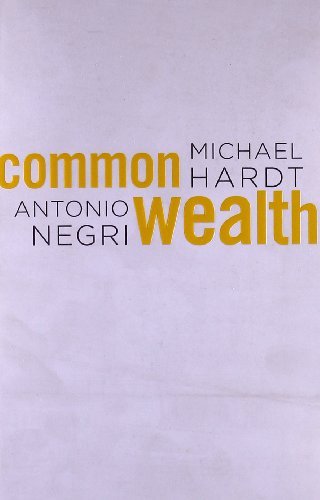
I feel, nonetheless, slightly motivated to read the final book of Hardt and Negri's trilogy, Commonwealth, if only to understand their thinking more fully.

I have to say though, that I do rather prefer my own vision as to the future destiny and supersession of capitalism - it's a lot more grounded in reality.

Amazon link

"Together Hardt and Negri's work is considered to be responsible for a resurgence of interest in non-orthodox Marxism and its political manifestations.

"Commonwealth is the final part of a trilogy that began with "Empire" in 2000, a book that was published during the emergence of the alter-globalization movement. "Multitude" followed in 2004, developing the ideas that had been introduced in "Empire," in particular the concept of the multitude as a new revolutionary subject. "Commonwealth" is a worthy addition to the trilogy, expanding and clarifying on the understandings in the previous books, but perhaps more significantly grounding their analysis within an extended discussion of "the common...".

"Commonwealth" is a book that challenges presuppositions about the utility of Marx, and introduces the possibility of combining his insights with the ideas of other significant authors such as Nietzsche, Foucault, Deleuze and Guattari, who are not traditionally associated with the radical communist project."
From the Amazon page.

---

Following on from John Gray's insightfully scathing review of Commonwealth, I should perhaps turn to Slavoj Žižek, a writer who prefers to épater les bourgeois rather than flatter them.

In Gray's words,
"A Slovenian philosopher, psychoanalytical theorist and film critic, Žižek has become a gadfly of the left establishment, a prolific provocateur whose principal aim seems to be to confound his tender-minded readers. His target throughout this book is not the right but the soft, democratic, meliorist left, which imagines that the egalitarian goals of communism can be realised by non-repressive, liberal means.

"Žižek is savagely scornful of this view, writing sharply that "One of the mantras of the postmodern left has been that we should finally leave behind the 'Jacobin-Leninist paradigm' of centralised dictatorial power. But perhaps the time has now come to turn this mantra around... Now, more than ever, one should insist on the 'eternal Idea of Communism' - strict egalitarian justice, disciplinary terror, political voluntarism, and trust in the people."

"In other words, dictatorship is indispensable to the communist project. Mass coercion and terror are not departures from a humane vision, brought about by tyrannical leaders acting in backward conditions. Lenin and Stalin were genuine masters of revolutionary strategy, who knew that without organised terror their goals would never be achieved."

Amazon link

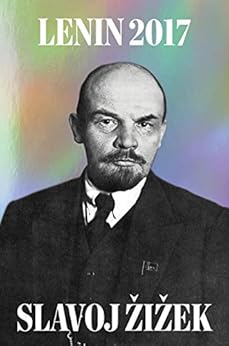
Gray is reviewing Zizek's First as Tragedy, Then as Farce,  but perhaps it's worth waiting a couple of weeks for the prolific Comrade Žižek's latest opus: Lenin 2017: Remembering, Repeating, and Working Through?

But perhaps it's time to lose patience with showmen who really haven't a clue as to what is to be done?

---

Next: What the Owl said to Lenin and Trotsky.

Saturday, September 12, 2015

The Economist: intelligent stupidity about migrants


The Economist says:
"Tens of thousands of asylum-seekers flowed towards Germany by rail, bus and on foot, chanting “Germany! Germany!”, to be welcomed by cheering crowds. Germany is showing that old Europe, too, can take in the tired, the poor and the huddled masses yearning to breathe free. It says it can absorb not thousands, but hundreds of thousands of refugees.

Such numbers will inevitably raise many worries: that cultures will be swamped by aliens, economies will be overburdened, social benefits will have to be curbed and even that terrorists will creep in. Anti-immigrant parties have been on the rise across Europe. In America, too, some politicians want to build walls to keep foreigners out.

Yet the impulse to see migrants as chiefly a burden is profoundly mistaken. The answer to these familiar fears is not to put up more barriers, but to manage the pressures and the risks to ensure that migration improves the lives of both immigrants and their hosts."
All of this would be very compelling if the social capital represented by the incomers was at the same level as or, better, superior to that of the present northern European incumbents. The Economist thinks (or pretends to think) this is a non-issue .. but unfortunately, it's not.

This is what the UCL guy who looked at the evidence had to say.