Showing posts with label Momentum. Show all posts

Monday, November 03, 2025

Where is the energy really? - ChatGPT


Summary

So this puzzled me a lot when I studied physics at secondary school. When you throw a ball, it seems obvious that its energy travels with it. The teacher talks about its kinetic energy and you do the calculations. But modern physics gives a different picture. Energy is not an intrinsic substance stored inside objects. Reality is altogether more weird.


The Energy Isn’t in the Ball

You see it soar through the air, a red-leathered projectile humming with menace. You raise your hands to catch it - thwack! - and for a moment the pain is tangible. So too, presumably, is the kinetic energy of the cricket ball. But where, precisely, was that energy located before it struck?

You might say, “It was in the ball, obviously.”

But was it?

In your frame - the one in which you were standing still and the ball was hurtling toward you - it certainly had kinetic energy, about half a joule for a fast delivery, enough to sting. Yet from the ball’s own point of view, it was sitting serenely at rest. It was your hands - indeed, the entire stadium and all the matter in the universe - that were flying toward it. In that frame, you had the energy.

Energy, as we shall see, is not a physical content carried by the ball but the value of the generator of time-translation symmetry in whatever frame we choose.

This is the first clue that something is amiss with our intuitive notion of “where” energy resides. In Newtonian mechanics we already learn that kinetic energy is frame-dependent. In special relativity, this becomes foundational: energy is just one component of the energy-momentum four-vector,

Pμ = (E/c, px, py, pz).

This four-vector isn’t “inside” any object in an absolute sense; its components depend on your choice of inertial frame. In the ball’s rest frame, it is you who carries the kinetic energy. What remains invariant across all frames is the Minkowski norm,

E2 − p2c2 = m2c4.

No matter who computes it, the ball or the catcher, this quantity remains the same. For an isolated object considering itself stationary so that p=0, the invariant gives the rest mass. In your frame, you measure the ball’s energy and momentum, plug them into this equation, and again recover its mass. In the ball’s frame, energy is just mc2 and momentum is zero—same result. The invariant has no spatial localisation; it is a scalar relation among dynamical quantities, not a distributable substance.

What slams into your hands is not a parcel of stored energy - it is a mismatch of frames, a disagreement about how to decompose four-vectors.

The cricket ball, calm in its own rest frame, surveys a universe of frenzied motion. You, by contrast, see the ball as the darting assassin. 

Yet both of you agree on the invariant: the square of the rest mass times c4. The physics holds; only the attributions vary. If you had been falling freely next to the ball, you’d have noticed no kinetic energy in it at all.

Energy and momentum are components of a single conserved object: the four-vector . This is constructed by integrating the stress-energy tensor Tμν over a spacelike hypersurface, your chosen slice of the universe at a constant time:

Pν = ∫Σ Tμνμ.

When you, the catcher, compute the ball’s energy and momentum, you integrate over the spatial hypersurface t = 0 in your own frame. On this slice, the ball is moving and carries momentum p and corresponding kinetic energy.

In the cricket ball’s frame, however, things are reversed: it is at rest, and you are in motion. The ball’s computation of the total four-momentum of the rest of the universe - including your incoming body - is performed on a different slice of spacetime, the surface t′ = 0 in its own frame.

These slices are not the same. They carve up reality in distinct ways, intersecting worldlines differently.

Yet in both frames the conservation law

μTμν = 0

ensures consistency. Energy and momentum are not substances floating inside objects but properties of how stress-energy is distributed across your chosen spacelike slice. Change the slice, and you change the bookkeeping, though the physical predictions remain identical.

The invariant mass of each object is preserved even as energy and momentum vary with frame.

Under Lorentz transformations, the energy and momentum components of mix, just as time and space do:

E′ = γ(E − v px),    p′x = γ(px − vE/c2).

A change of frame can convert what was previously momentum into energy and vice versa. The invariant norm remains constant, but its decomposition into energy and momentum depends on the observer. The total four-vector is conserved across all frames, yet the individual components - energy and momentum - are conserved only within a given inertial frame.

When you catch the ball, the energy it transfers to your hand is real enough, but it is not an absolute content bottled inside the leather. It is a frame-relative component of a conserved vector, evaluated on your slice of spacetime. From the ball’s perspective, you were the one carrying the energy.

So where does this four-vector itself come from? In field theory, it is an integral over a local density, the stress-energy tensor. The tensor Tμν represents the local density and flux of energy and momentum, derived from Noether’s theorem: invariance of the action under spacetime translations (xμ → xμ + aμ) yields this conserved current.

For a general field theory with Lagrangian density ℒ(ϕi, ∂μϕi),

Tμν = Σi (∂μϕi) ( ∂ℒ / ∂(∂νϕi) ) − ημνℒ.

For a simple scalar field ϕ with ℒ = (1/2) ∂μϕ ∂μϕ − V(ϕ), this reduces to:

Tμν = ∂μϕ ∂νϕ − ημν.

The tensor is thus built from the fields and their derivatives, and the energy-momentum four-vector is simply its global integral. Beneath the tensor lies the Lagrangian density ℒ, which encodes the dynamics of the fields. It is not an observable; it is a compact rulebook, a generative algorithm constrained by symmetry and experiment.

The fields themselves - ϕ(x), Aμ(x), ψ(x), and, in general relativity, the metric gμν(x) - appear to form the ontological ground of physics. Each of these fields assigns specific quantities to every point in spacetime:

  • a scalar field ϕ(x) such as the Higgs field gives a single value;
  • a vector field Aμ(x) describes directional quantities such as the electromagnetic potential;
  • a spinor field ψ(x) represents matter with half-integer spin—electrons, quarks, neutrinos;
  • the metric field gμν(x) defines spacetime’s own geometry, setting distances, durations, and curvature.

Together, their interactions encode all known physical phenomena. They assign dynamical degrees of freedom to spacetime points. All observables and conserved quantities are constructed from them.

Yet modern theoretical work increasingly suggests that these fields, and spacetime itself, may be emergent from a deeper quantum-informational substrate. In holographic and tensor-network models, geometry arises from patterns of entanglement in Hilbert space. In such approaches, “fields in spacetime” are effective, macroscopic approximations of relations among underlying quantum degrees of freedom.

If this is right, the ontological descent does not end with fields. Beneath them lies the abstract structure of the Hilbert space and its symmetries. Energy then becomes the expectation value of the operator that generates unitary time evolution: the same conceptual role it played classically, now expressed within quantum dynamics.

Whether the relevant “time” is a coordinate in spacetime or an emergent internal parameter, the pattern is identical: symmetry first, conservation second, energy last.

Energy is not a substance to be found in the ball, nor anywhere else. It is the conserved Noether charge associated with the invariance of the laws under temporal translation.

What you feel when the ball strikes your palms is the local expression of a geometric symmetry of the universe - a momentary reconciliation of two incompatible foliations of spacetime. The sting is real, but the energy was never in the ball.


This is a complex topic. You may want to ask ChatGPT some questions about the content: if so, click here and enter your thoughts.

Thursday, December 14, 2017

The United Socialist States of Europe


In the mid-1970s when I was trying to escape from teaching, I applied for an executive officer job with the Civil Service. I took the tests and attended an interview where I was asked, "What do you think about Britain being in the Common Market?".

I was conflicted: I was still a revolutionary socialist so I knew the party line was: 'No to the Europe of the capitalists, for a United Socialist States of Europe!'.

On the other hand, I was a disillusioned leftist and inclined to doubt that insurrection was likely to engulf Europe any time soon. In any case, I quite liked the idea of Europe: I'd had some great holidays there.

I responded without conviction that I thought the Common Market was not a good idea for Britain. No doubt that was why I didn't get the job .. (only kidding: there were a thousand reasons for the Civil Service not to employ me).

The left is now all at sea over Europe though; the pristine ideological purity of half a century ago has been shredded.

---

If the UK capitalist class was truly united in wishing to stay in the EU, that inconvenient referendum result would have been subverted or reversed well before now.

It's certainly true that almost all economists believe that being part of the customs union, with a say on policy, offers by far the best prospects for the UK economy. It goes with the flow of globalisation, increased market size, lowered transaction costs and just-in-time logistics.

But the UK bourgeoisie has never been quite so committed to that predominantly political project which the EU truly is. The path to ever greater convergence, towards that famed economic and political integration into a 'superstate', is in practice one of transition to a unified European polity under German dominance.

With its global interests - the tepid afterglow of Empire - the British establishment always wanted the economic benefits without the political subordination. That balancing act has become ever more difficult as Germany has become more assertive and other members states more reliant upon it, more subservient to its power one might say.

So apart from the most devoted servants of international finance capital in the City (the George Osborne wing of the Tory Party; the Blair wing of Labour) there is a kind of strategic paralysis gripping most other sectors of the capitalist class.

So-called soft-Brexit, which is essentially the status quo ante but with even less political influence in Europe (or, even more disengagement, to put the positive spin on it), is thus the favoured option.

Smaller, more national and regional businesses get little of benefit from the EU and lack lobbying power there. These are the stalwarts of the Tory Party in the country and the most enthusiastic Brexiteers.

Meanwhile everyone is now familiar with the plight of the traditional, relatively unskilled working class, marginalised by higher-skilled, younger and more energetic competition from Eastern Europe. As they have been pressed back into the reserve army of labour, their resentment has fuelled a visceral 'leave' sentiment: a problem for Labour and a tantalising opportunity for the Tories.

---

I don't have any views as to what the revolutionary left ought to be campaigning on here. The theory says that you should base your line on objective political analysis, not the vagaries of sentiment of your base-support. Since the EU is just as much a capitalist/globalisation project now as it was 45 years ago, the orthodox Leninist-Trotskyist position must be to oppose it.

But this implies that there's a viable strategy to supersede capitalism (a United Socialist States of Europe!) which can be meaningfully counterposed - and there is not.

The alternate argument, heard from those bright young revisionists in Labour's Momentum, is that socialism has to build on capitalism - it will be even more global and harmonised etc - so we obviously have to back all movement in that direction under capitalism. This reflects the naive idealism of their middle-class professional base which I myself exhibited (and suppressed) in my interview with the Civil Service.*

I'm not here to give advice to British capitalism on their optimal strategy: they don't need much assistance anyway to converge on 'soft-Brexit' as their preferred way forward.

But any institution which lionises George Osborne, Emmanuel Macron and Angela Merkel is going to find me heading rapidly towards the exit.

---

* What's wrong with that argument, I hear you say? Simply this: the purpose of capitalism is always and everywhere the valorisation (the self-expansion) of capital. This single-minded dynamic often cuts across broader human interests and values as you may have noticed.

We don't have to completely roll-over for every project of the haute-bourgeoisie to get the benefits of their development of the productive forces. There's a reason they're called 'the bubble'. With effort they can be constrained and diverted.

Wednesday, August 23, 2017

A theorisation of Corbynism (Hardt and Negri)

An orthodox Marxist would be extremely interested in Momentum, the radicalisation of predominantly young, middle-class professional types organised around Jeremy Corbyn's Labour Party. It would seem highly reminiscent of the 'New Left' student movements of the sixties and seventies (full disclosure: I was there).

Said Marxist would, however, be far less impressed by the level of consciousness of the movement's thinking: its faddish diversities, its self-indulgent identity politics, its horizons delimited by left-wing social-democracy.

Traditionally we would call such proto-ideologies petit-bourgeois and see their proponents as candidates for a deeper education. But ancien-Marxism seems falsified by history - no lessons there to learn. The result - inevitably - is the theorisation of left-populism by itself as the new anti-capitalism.

Parenthetically, this rather ignores just how popular Corbynism and its American and Continental cousins are with the left bourgeoisie!

---

The poster-children for this way of thinking - after Paul Mason's efforts - are the theorists Michael Hardt and Antonio Negri, boosted by left-academics such as Phil Burton-Cartledge.

Phil has written a series of posts explaining the new ideas - I'll just quote a summary.
"What is clear for Hardt and Negri is the revolutionary party is out. As the properties of fixed capital are distributed among our growing legions of cognitive and socialised workers, the 'functions' of the revolutionary party are diffused among the politicising networks.

"Rather than the received conception of a vanguard of class conscious cadres providing leadership for the rest to follow, cadre building applies to the class as a whole. The power of the multitude lies in its being the living substance of the common, and increasingly their common lines of flight are putting them on a collision course with capital.

"Biopolitical production wrapped up in dense webs of communication brings people together, educates them, politicises them. For example, the incessant identity-related debates are no longer the concern of radical elites beavering away in academies but are now the property of millions of people, as the fall out from Charlottesville demonstrates.

"The aim then is to build up the capacity for self-organisation, forge new institutions that bring out the common interests of socialised workers without denying their difference. The image is of a self-activating, self-coordinating swarm that can simply overwhelm capital and the state in a process of creative destruction, of replacing one form of organising society with another."
None of this is well-defined. None of this has the ring of truth. Seems more like opportunistic pandering to a set of inchoate longings which have nothing to do with undermining capitalism and everything to do with its further development. Notice how the critiques of capitalism - how very bad it is - have a ritualistic and anaemic quality.

Those middle-to-upper-class Momentum supporters, those SJWs in the States, those French supporters of Jean-Luc Mélenchon in La France Insoumise, are having the time of their lives under capitalism.

---

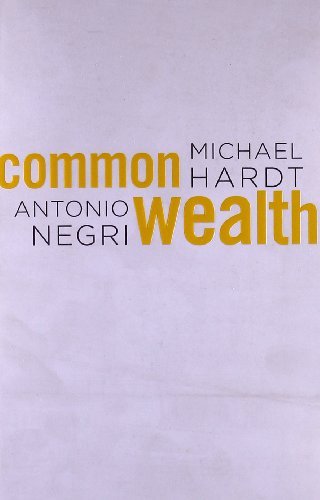
I feel, nonetheless, slightly motivated to read the final book of Hardt and Negri's trilogy, Commonwealth, if only to understand their thinking more fully.

I have to say though, that I do rather prefer my own vision as to the future destiny and supersession of capitalism - it's a lot more grounded in reality.

Amazon link

"Together Hardt and Negri's work is considered to be responsible for a resurgence of interest in non-orthodox Marxism and its political manifestations.

"Commonwealth is the final part of a trilogy that began with "Empire" in 2000, a book that was published during the emergence of the alter-globalization movement. "Multitude" followed in 2004, developing the ideas that had been introduced in "Empire," in particular the concept of the multitude as a new revolutionary subject. "Commonwealth" is a worthy addition to the trilogy, expanding and clarifying on the understandings in the previous books, but perhaps more significantly grounding their analysis within an extended discussion of "the common...".

"Commonwealth" is a book that challenges presuppositions about the utility of Marx, and introduces the possibility of combining his insights with the ideas of other significant authors such as Nietzsche, Foucault, Deleuze and Guattari, who are not traditionally associated with the radical communist project."
From the Amazon page.

---

Following on from John Gray's insightfully scathing review of Commonwealth, I should perhaps turn to Slavoj Žižek, a writer who prefers to épater les bourgeois rather than flatter them.

In Gray's words,
"A Slovenian philosopher, psychoanalytical theorist and film critic, Žižek has become a gadfly of the left establishment, a prolific provocateur whose principal aim seems to be to confound his tender-minded readers. His target throughout this book is not the right but the soft, democratic, meliorist left, which imagines that the egalitarian goals of communism can be realised by non-repressive, liberal means.

"Žižek is savagely scornful of this view, writing sharply that "One of the mantras of the postmodern left has been that we should finally leave behind the 'Jacobin-Leninist paradigm' of centralised dictatorial power. But perhaps the time has now come to turn this mantra around... Now, more than ever, one should insist on the 'eternal Idea of Communism' - strict egalitarian justice, disciplinary terror, political voluntarism, and trust in the people."

"In other words, dictatorship is indispensable to the communist project. Mass coercion and terror are not departures from a humane vision, brought about by tyrannical leaders acting in backward conditions. Lenin and Stalin were genuine masters of revolutionary strategy, who knew that without organised terror their goals would never be achieved."

Amazon link

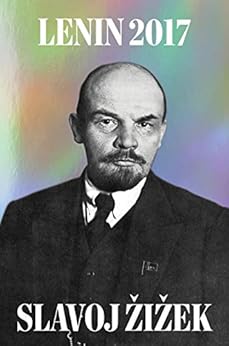
Gray is reviewing Zizek's First as Tragedy, Then as Farce,  but perhaps it's worth waiting a couple of weeks for the prolific Comrade Žižek's latest opus: Lenin 2017: Remembering, Repeating, and Working Through?

But perhaps it's time to lose patience with showmen who really haven't a clue as to what is to be done?

---

Next: What the Owl said to Lenin and Trotsky.

Wednesday, August 10, 2016

The SDP is not much of a model

I assume that nothing is now going to stop the Corbyn/Momentum group capturing the party machinery and reconstructing the PLP in its own image.

This may be the work of a year or two, but the issue which interests me is .. what then?

Specifically, how stable and durable is the movement which is currently funnelling hundreds of thousands of new members into the party?

My guess is not very. Momentum folk seem to be amateur, lifestyle activists - their involvement in politics faute de mieux. Something else will come along in due course.

I don't think the 'brand loyal' Labour voters, the 21% of the broader electorate, will necessarily stay on board during the forthcoming flight into terrain. Regular, non-PC working folk are being explicitly targeted by Theresa May's new model conservatives but that's a complex project for the Tories - it's eminently contestable.

Trouble is, there are no leading cadres in the Labour party who are even interested.

A clear political programme or manifesto would be a good start.