Showing posts with label The Economist. Show all posts

Wednesday, March 20, 2024

The Economist: the Last Days of the CSA?


I've subscribed to The Economist for many years. I bite my tongue when its young writers superciliously tack between trendy-nonsense and what they take to be yesterday's reactionary-nonsense. I appreciate the science and technology articles, and the too-few articles of neutral economic analysis.

Two years ago, in March 2022, I paid for a three year digital-only subscription. Until now all has gone well: on Thursdays the new edition would arrive on my phone and tablet; during the week articles would pop up daily. When they're good they're often very good.

A couple of days ago to my surprise a physical hard copy came through my door. I checked online and my account now says: "Print+Digital". Surely nothing could be easier than to contact The Economist and ask them to revert my account to purely Digital. After all, they have just unilaterally incurred the extra costs of mailing stuff to me.

My first attempt - a phone call - collapsed in confusion at their end, at the call centre. The person seemed to have no idea what I was talking about and no concept that there could have been a data glitch in The Economist's systems. I noticed that they outsourced their call centre to some global purveyor of such services.

This morning I tried again using Live Chat: here is the transcript.

---

(09:19:43 AM) (System) said : Someone will be with you as soon as possible.

(09:19:43 AM) (System) said : You’re 0 in line, and we will be with you as soon as possible. Thanks for your patience!

(09:19:48 AM) (System) said : Welcome to The Economist. Hi this is Rima. How can I help you?

(09:22:06 AM) (ME) said : Two years ago, in March 2022, I paid for a three-year digital-only subscription. Yesterday, for the first time, a physical hard copy came through my door. I checked online and my account now says Print+Digital. I would like to revert it to digital only.

Rima has joined the conversation

(09:24:03 AM) (Rima) said : Hello, I understand that you wish to change your subscription to Digital only. I will certainly help you out on this swiftly.

(09:24:25 AM) (Rima) said : Before I can proceed, for your account security and to locate it, I would need a few details. May I know your full billing address?

(09:24:57 AM) (ME) said : [I give my address].

(09:26:52 AM) (Rima) said : Thank you for the information! Please allow me a quick moment as I look into your account.

(09:27:06 AM) (ME) said : Thank you.

(09:29:52 AM) (Rima) said : While your account details are loading, may I know how are you doing today?

(09:30:19 AM) (ME) said : I'm fine, thank you.

[Note: at precisely this point in the previous phone conversation the call centre agent asked precisely the same thing. I hate these pseudo-friendly scripts!]

(09:32:18 AM) (Rima) said : I'm glad to hear that, Nigel!

(09:32:30 AM) (Rima) said : I can see that you are on Print + Digital Subscription which shall be auto renewed on Mar 12, 2025. If I change your subscription from today you will be charged on a pro-rata basis and you will be charged £1.55 instead of £199.00.Would that be okay?

[Me neither].

(09:34:28 AM) (ME) said : So you are saying that the one year extension from March 2025 to March 2026 would be charged at £1.55?

(09:36:56 AM) (Rima) said : The following is the charge until your current renewal. If we make the changes today, this will be valid until Mar 12, 2025.

[What does 'the following' mean?]

(09:39:13 AM) (ME) said : Don't understand. I have already paid until March 2025. Why would I need to make any further payment simply to revert from Print+Digital to simply Digital? In fact, logically I should expect a refund! I am not asking for a refund as I think there has simply been a computer error at The Economist. Recall that I never ordered Print+Digital. I ordered Digital only. For two years I've been happy with digital delivery only. Then yesterday, mysteriously, a print copy arrives. I just want the print copies to stop!

(09:44:20 AM) (Rima) said : I understand, however the following has been a pro-rata charge from the last payment made. As this seems to be an error from our end, please allow me a moment to check with my internal team and see what I can do for you here.

(09:48:45 AM) (ME) said : It's not the end of the world! By default the print issues will just get put in the recycling.

[Note: there is a five minute gap here, which I take to be the escalation referred to below].

(09:49:23 AM) (Rima) said : I'm sorry it took awhile, as a compensation towards our end we are able to provide you a 50% discount for the change in subscription. Post which it will renew at the standard price.

(09:50:32 AM) (Rima) said : If I change your subscription from today you will receive a pro-rated refund of £82.95. Post which your subscription will auto-renew at the standard cost next year. Would you like to go ahead with it?

(09:52:49 AM) (ME) said : I guess. So you will credit me with £82.95 and then I will auto renew for 25-26 at digital only at the normal subscription rate for that variant. Is that correct?

(09:54:27 AM) (Rima) said : Yes Nigel, that would be correct.

(09:55:22 AM) (ME) said : That's kind of you, and it would be helpful of course. Let's do it. And thanks for your help.

(09:56:06 AM) (Rima) said : You're welcome! Please allow me a moment to make the changes on account.

(09:58:17 AM) (Rima) said : I am glad to inform you that I have successfully changed your subscription from an Annual Digital + Print subscription to an Annual Digital subscription with immediate effect and the next renewal will be on Mar 12, 2025 at the standard price. 

---

I realise that there are a million call centre interactions which are just like this. Yawn! 

I wondered whether Rima is a real person juggling canned text or a LLM. The AI systems are in-trial at many customer service companies. Perhaps I was dealing with a LLM until the logic got a bit tortuous, at which point my problem was escalated to a human agent with the discretion to cut me a deal.

I suppose I have seen the future and it works - sort of.

Thursday, July 19, 2018

Goodbye to The Economist


Dear Sir/Madam,

This is to inform you that I have cancelled my Direct Debit to The Economist, due in August 2018. My customer reference number is *******.

The reason is that I am increasingly exasperated by the partisan slant of your articles, particularly on politics and culture. Instead of analysing and explaining the great changes afoot in the world (where I commend Irwin Stelzer for example), your articles are highly partisan on one side of the debate. You could be writing for the UK Liberal Party or the US Clintonite Democrats. In cultural pieces your journalists consistently indulge blank-slate, Guardian-style prejudices, offending the intelligence of your readership.

It's a shame. There are pockets of analysis in your science section and the generally excellent technology quarterly that I shall miss.

Regards, etc

---

Update Saturday:  I received the following reply this morning.
Dear Mr Seel,

Customer Reference Number:-****** 

Thank you for contacting The Economist.

We are sorry to hear that we are losing a valued subscriber.

I confirm that I have cancelled your subscription on its expiry with the issue dated 25th August 2018 and no further payments will be taken. Please ensure that you also cancel the Direct Debit instruction with your bank.

We hope that you will continue to read The Economist from time to time.

Should you require any further assistance, please do not hesitate to contact us.

Kind regards
Stefan King

The Economist subscription centre

Send the flea letter.

Good to know that The Economist AI did a close reading of my note.


Wednesday, December 20, 2017

Would you let this drive you around?

In the Christmas edition of The Economist we find an article, "How soon will computers replace The Economist’s writers?":
"In the spirit of going fast and breaking things, The Economist has therefore trained an AI program on articles from the Science and Technology section, and invited it to come up with a piece of its own. The results, presented unedited below, show both the power and the limitations of pattern-recognition machine learning, which is more or less what AI boils down to:
'... The material is composed of a single pixel, which is possible and thus causes the laser to be started to convert the resulting steam to the surface of the battery capable of producing power from the air and then turning it into a low-cost display. The solution is to encode the special control of a chip to be found in a car.

'The result is a shape of an alternative to electric cars, but the most famous problem is that the control system is then powered by a computer that is composed of a second part of the spectrum. The first solution is far from cheap. But if it is a bit like a solid sheet of contact with the spectrum, it can be read as the sound waves are available. The position of the system is made of a carbon containing a special component that can be used to connect the air to a conventional diesel engine. ...'
And so it goes on.

Reading the AI-generated text above is a curious psychological experience. Initially it's like skimming an article without paying too much attention. Individual sentences are absorbed without too much effort. But at a sentence-break .. there is cognitive dissonance. An underlying topic never properly coheres.

The state-of-the-art in machine comprehension of general cultural knowledge.

It's tempting to take cheap shots - would you trust a machine of this empty-headiness to drive you around?


In slight defence, autonomous-car R&D prioritises the encoding of a great deal of specialist domain knowledge into the controlling neural nets.

And if AlphaZero had been as idiotic as the above, we certainly would not be marvelling at it.

Thursday, September 07, 2017

Only engineering convinces

Amazon link

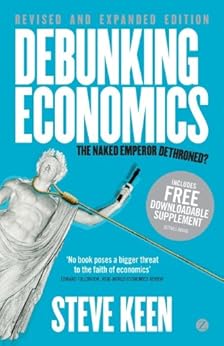
I'm only in the earliest stages of Steve Keen's critique of neoclassical economics (above). He's very successful in exposing their logical inconsistencies and utterly implausible assumptions.

From my own amateur reading of the standard texts, I recall authors conceding these points on the excuse that (i) we can learn something from pure models, and (ii) that despite the flawed assumptions the results seem surprisingly accurate.

I know that Dr Keen is underwhelmed by such hand-waving and will address those points in later chapters.

---

Keen is somewhat puzzled by the fact that leading economics journals won't see the force of his (undoubtedly correct) arguments or publish his erudite papers. He has some explanations in terms of cultural inertia, the apparent successes in the past of the neoclassical programme and even the usual lack of real-world consequences of getting the foundations so very wrong. He admits wryly that economics just isn't like physics or engineering.

This seems to me the crux of it:

  • People will believe all kinds of things if doing so underpins their self-interest.

  • If there are no practical consequences (ie nothing that can't be explained away), mere argument will never gain traction.

  • If you believe humans will never fly (“if God wanted man to fly he would have given him wings”) then only an aeroplane will refute you.

I'm waiting for the final chapters where Keen unveils his alternative macroeconomic model which, I believe, successfully outperforms those of the neoliberals.

---

Remember those stories of how racist AI systems were categorising criminals by their mug shots? Plainly, said liberals, crime was a matter of unfortunate circumstances. How could faces (which identical twins suggest are genetically shaped) have anything to do with it?

Yet it was engineering - hard to argue against.

The Economist (liberal susceptibilities very much on hold) reports today: "Advances in AI are used to spot signs of sexuality".
"When shown one photo each of a gay and straight man, both chosen at random, the model distinguished between them correctly 81% of the time.

When shown five photos of each man, it attributed sexuality correctly 91% of the time.

The model performed worse with women, telling gay and straight apart with 71% accuracy after looking at one photo, and 83% accuracy after five. In both cases the level of performance far outstrips human ability to make this distinction.

Using the same images, people could tell gay from straight 61% of the time for men, and 54% of the time for women. This aligns with research which suggests humans can determine sexuality from faces at only just better than chance."
Sexual orientation not so much a lifestyle choice after all.

Sunday, August 13, 2017

Diary: vexatious Sunday

My day starts with the Sunday Times and I'm reading Dominic Lawson on the James Damore/Google affair. I'm reminded of the illiterate and distorted editorials in The Times and The Economist (previous post) and I fantasise about cancelling my subscriptions as I ponder the old dilemma: (i) do they know the science but choose to lie about it, which makes them mendacious hypocrites; or (ii) have they not even bothered to check the relevant body of knowledge carefully cited by Damore, choosing instead to ventilate their blank-slate wish-fulfillment fantasies - which makes them incompetent.

In either case, why am I spending good money reading them? I console myself that The Economist does a good quarterly Technology Review and The Times occasionally has some useful news in it.

---

While Clare is at Mass I resume Frederick Beiser's Hegel.


When you read highly abstract discussions relating to substance, essence, the necessary, the contingent, the noumenon and phenomenon, the synthetic a priori, it's tempting to think that the underlying problem set these guys are wrestling with is impossibly abstruse.

Not so: at the end of the eighteenth century, with enlightenment rationality crumbling under the Reign of Terror and religion on the ropes, Hegel and the Romantics are struggling with straightforward questions.
  • Is the universe a Newtonian machine or is there scope for free will?
  • If knowledge is just representations in our minds, can reality be truly known?
  • If we have free will, and God is not a personal judge, whence morality?
I think we have a good scientific framework for these questions today (not, of course, uncontroversial), but Hegel was definitely on the right track. His stuff is abstract both because the right scientific toolset hadn't yet been developed, but also because in a dynamic world of evolving connections, the individual concrete element of reality is conditioned by its relationships with other things - and some of those relationships are inherently abstract.

Quick example: you concretely see a human walking from one location to another where they start doing certain things in a structured way and conversing with others. What extra information about that scenario's history of embedding relations do you need to properly and fully understand what is happening?

If I tell you the person is a priest and he walked to his church? If I say she is a barista and she walked to her coffee shop in a now-desanctified church? How much more do you need to understand completely and fully? A lot.

You get the idea.

---

In our irreligious age, residual belief in God seems a mere foible. But Hegel was not an atheist, and to be consistent God had to be present in the ontology of reality. Looming over everything was Spinoza's immanent God, a divine presence infusing everything. But this leads to quietist, passive conclusions. If we are part of God, what scope for novelty or freedom?

Hegel adds conflict, dynamics and process through the dialectic, but does he really have a solution?

---

In the afternoon we strolled to Wookey and had toasted teacakes on our return.

The evening progresses,  I watch BBC coverage of the IAAF World Championships and my distaste with the deep feminisation of media culture surfaces again. Some Brit has just been disqualified in a walking race of epic length after three warnings, at the 10 km mark or thereabouts.

He seems tearful but full of resolve to do better in future. The BBC interviewer is like a trauma therapist: "How do you feel?" "Can you recover from this?" "You put in so much hard work!" ..

Call me systemising rather than empathising but - insofar as I care - I would rather have liked some footage of his DQ faults, and someone explaining technically what he had done wrong and what he should do about it.

Dispassionate analysis? Not what this is about.

OK. I'm done with being vexed for today .. until the BBC News at ten o'clock.

".. then I must be .." *


The Economist this week writes:
"Mr Pichai had good reasons to sack Mr Damore. One is the content of the memo. It says many reasonable-sounding things: that “we all have biases” and that “honest discussion with those who disagree can highlight our blind spots”. But these are just camouflage before a stonking rhetorical “but”: the argument that innate differences, rather than sexism and discrimination, explain why women fare worse in the technology industry than men. “Neuroticism (higher anxiety, lower stress tolerance)”, Mr Damore writes, “may contribute…to the lower number of women in high-stress jobs.”

"Research has indeed shown some smallish group-level differences in personality and interests between the sexes. But drawing a line from this to women’s suitability for tech jobs is puerile. An unbiased eye would light on social factors rather than innate differences as the reason why only a fifth of computer engineers are women. "
In today's Sunday Times, Dominic Lawson observes of The Financial Times:
"... the Financial Times, which in an editorial denounced Damore’s memo as “almost pure drivel”. That paper is facing industrial action on behalf of its female employees, who suffer from a 13% gender pay gap (according to the National Union of Journalists).

It, too, has an internal reason for declaring to the world how deplorable it finds young Damore, so it published another article accusing him of a “long email rant against diversity programmes . . . a rambling confused mash-up of outdated science”.
---

When these idealogues attend a performance of 'The Life of Galileo' by Bertolt Brecht,
"This was a lively, heartfelt performance which showcased reason and science vs. obscurantist arguments from authority designed solely to buttress the interests of those in power. This never fails to be relevant."
they root for Galileo, bravely sticking it to The Man. It never occurs to them that they are The Man.

---

The genius of Brecht was to give good arguments to the Catholic Inquisition. The interrogator points out that regardless of any purely-scientific merits of Galileo's thesis, the practical effects of the new doctrine would be to undermine the primacy and sanctity of scripture and thus subvert the social order, undermining authority and leading to dangerous chaos.

A very high price to pay for some arid, esoteric and contested version of 'truth'.

---

* Imposter.

Tuesday, July 11, 2017

"Jeremy Corbyn and the bourgeois dream"


Bagehot in this week's Economist:
"One interpretation of Jeremy Corbyn’s rise, popular on the left, is that he is satisfying a pent-up desire for “real socialism”. But this ignores the fact that many people voted for the Islington MP despite his policies, not because of them.

Mr Corbyn is a long-standing critic of the European Union who did as much as he could to ensure that Remain would fail while pretending to support it. Another interpretation, popular on the right, is that his supporters are woolly minded virtue-signallers, determined to prove how compassionate they are while ignoring the fact that Corbyn-style policies have invariably led to disaster.

This ignores the fact that millennials have suffered more from the long stagnation that followed the financial crisis than any other generation. They have reason to be angry.

The most intelligent explanation has been provided by John Gray in the New Statesman. Mr Gray argues that Corbynism is “populism for the middle classes, serving the material and psychological needs of the relatively affluent and the well-heeled”. Far from being a repudiation of Tony Blair’s policies, Corbynism represents the completion of the takeover of Labour by middle-class people who put their own interests (such as free university education) above those of the working class.

But Mr Gray’s strictures miss an important point: most young Corbynistas are not so much settled members of the middle class as frustrated would-be members. Ben Judah, a millennial-generation journalist and author of “This is London”, points out that members of his generation are angry that they have done everything they were told, from studying hard at school to going to university to trying to get a respectable job, but are still holding on by their fingertips. ...

It is getting ever harder for young people to get a foot on the property ladder or find somewhere decent to rent. Thirty-year-old millennials are one-third less likely to own their own homes than baby boomers were at the same age, and spend £44,000 ($58,000) more on rent in their 20s than baby boomers did.

The problem then extends to the workplace. The young have been on the sharp end of two economic shocks: the 2008 crisis, which squeezed living standards, and a technological revolution, which is doing for middle-class jobs what mechanisation did for working-class ones.

Automation is hollowing out entry-level positions as companies use machines to do the routine tasks, such as searching through legal precedents or examining company accounts, that used to be done by junior employees. Companies of every type are cutting costs by ditching long-term perks such as defined-benefit pensions.

These problems reinforce each other. People who are subjected to flexible work contracts find it almost impossible to qualify for a mortgage. They are magnified by the London effect. Young people flock to the capital, where the best professional jobs are concentrated, but exorbitant property prices force them to migrate to the farthest corners of the city or to share with strangers. And they are curdled by generational antagonism.

The Resolution Foundation, a think-tank, calculates that people aged 65-74 hold more wealth than those under 45, a group that is almost twice the size. Browse the Facebook pages where young Corbynistas hang out and you do not find hymns of praise to the workers’ control of the means of production, but laments for the indignities of modern metropolitan life and jeremiads against baby boomers who grabbed all the cheap houses and got free university education into the bargain."
This seems quite consistent with Peter Turchin's "Secular Cycles" theory, where I commented:
"The main driver of the agrarian secular cycle is the Malthusian growth of population past the technological carrying capacity of the land. The gathering overpopulation initially facilitates an unsustainable growth in the numbers of militarily-capable elites while simultaneously undermining their finances.

The ensuing collapse is exacerbated by inter-elite warfare over the ever-shrinking spoils, and the final depression period cannot end until the elites themselves have been more than decimated and are thoroughly exhausted with war. Typical time frames are of the order of a century.

The post-agrarian capitalist world, as Turchin and others have frequently observed, exhibits similarities to the agrarian cycle. But differences are also plain, certainly in the advanced capitalist countries.

We have much more technology, we have many occupational niches for women and we have contraception. As a consequence the Malthusian overpopulation bomb doesn't detonate - more the contrary.

What we do have in plenty is elite overproduction (the new graduate 40%) which can never enter the real elite of the 1% bubble, where power and wealth is concentrated. This disaffected and mostly young middle class today inclines to leftism (Sanders, Corbyn and similar European-continental movements) or more generally the cultural marxism of the SJWs.

A traditional Marxist might say that the leftist 'movement' at present consists in taking bourgeois ideology in a rather literal way at its own face value, its self-valuation as inclusive, globalist, tolerant, equal and individualist. The bubble-elite is then denounced for not living up to its own stated values. Naturally, in its egalitarian utopia of the imagination, the status and influence of 'movement' supporters would be considerably more exalted.

Such an old-school Marxist would also characterise this social layer as petit-bourgeois, febrile and subject to abrupt changes in mood."
Since the mass of entitled young graduates are neither going away nor going up, they will continue to stew in resentment at their "betters", who seem to have effortlessly glided to elite positions through a combination of connections and nepotism.

Razib Khan writes ("Our Civilization’s Ottoman Years"):
"... subordinate peoples had their own hierarchies, and these hierarchies interacted with the Ottoman Sultan in an almost feudal fashion. Toleration for the folkways of these subordinate populations was a given, so long as they paid their tax and were sufficiently submissive. The leaders of the subordinate populations had their own power, albeit under the penumbra of the ruling class, which espoused the hegemonic ethos.

How does any of this apply to today? Perhaps this time it’s different, but it seems implausible to me that our multicultural future is going to involve equality between the different peoples. Rather, there will be accommodation and understandings. Much of the population will be subject to immiseration of subsistence but not flourishing. They may have some universal basic income, but they will be lack the dignity of work. Identity, religious and otherwise, will become necessary opiums of the people. The people will have their tribunes, who represent their interests, and give them the illusion or semi-reality of a modicum agency.

The tribunes, who will represent classical ethno-cultural blocs recognizable to us today, will deal with a supra-national global patriciate. Like the Ottoman elite it will not necessarily be ethnically homogeneous. There will be aspects of meritocracy to it, but it will be narrow, delimited, and see itself self-consciously above and beyond local identities and concerns. The patriciate itself may be divided. But their common dynamic will be that they will be supra-national, mobile, and economically liberated as opposed to dependent.

Of course democracy will continue. Augustus claimed he revived the Roman Republic. The tiny city-state of Constantinople in the 15th century claimed it was the Roman Empire. And so on. Outward forms and niceties may be maintained, but death of the nation-state at the hands of identity politics and late stage capitalism will usher in the era of oligarchic multinationalism.

I could be wrong. I hope I am."
A Marxist would say that what characterises the current 'conjuncture' is that the masses have recovered from the defeats of the 1980s and have a new-found confidence and bolshiness. They refused to be cowed by elites espousing policies they see as attacking their own best interests.

Their immediate political responses - what the elites call 'populism of the right and of the left'  (Trump & Sanders in the States; there are analogues in other countries) - in no way provide longer-term viable political-economic alternatives.

Since  postcapitalist socialism via revolution is ruled out (an ill-defined and unworkable target architecture), the period of instability will persist until Razib Khan's oligarchic multinational bourgeoisie restore order and, more importantly, a rate of profit which justifies renewed investment and therefore higher productivity.

The next decade is going to be extremely rough.

---

You might find "Economics of the populist backlash" by Dani Rodrik well worth reading (h/t Marginal Revolution). Professor Rodrik is an economist who distinguishes between models and reality: I'm currently checking out Kindle samples of his latest two books.

Friday, December 02, 2016

Now they come for the blue-collar jobs

From The Economist this week (my emphasis):


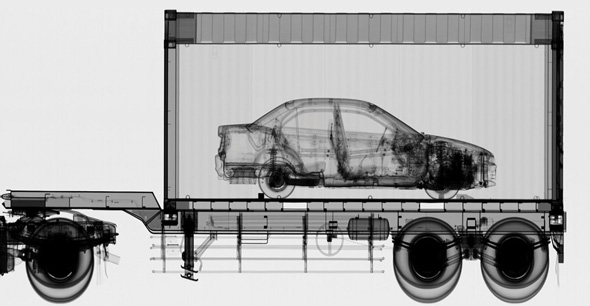
"Every day more than 8,000 containers flow through the Port of Rotterdam. But only a fraction are selected to pass through a giant x-ray machine to check for illicit contents. The machine, made by Rapiscan, an American firm, can capture images as the containers move along a track at 15kph (9.3mph).

"But it takes time for a human to inspect each scan for anything suspicious—and in particular for small metallic objects that might be weapons. (Imagine searching an image of a room three metres by 14 metres crammed to the ceiling with goods.) To increase this inspection rate would require a small army of people.

"A group of computer scientists at University College London (UCL), led by Lewis Griffin, may soon speed up the process by employing artificial intelligence. Dr Griffin is being sponsored by Rapiscan to create software that uses machine-learning techniques to scan the x-ray images. Thomas Rogers, a member of the UCL team, estimates that it takes a human operator about ten minutes to examine each X-ray.

"The UCL system can do it in 3.5 seconds."

...

"A paper the group presented at the Imaging for Crime Detection and Prevention conference in Madrid last week showed that in tests, the system spotted nine out of ten hidden metallic objects.

"Only six in every hundred readings flagged a weapon when there was nothing. Dr Griffin says this false positive rate has been reduced to one in every 200 since the paper was written in August. The group’s software has also been trained to detect concealed cars.

The UCL team hopes to test its software shortly on real containers, some with small weapons deliberately hidden inside. Assuming that works, Dr Griffin plans to integrate the artificial-intelligence system into Rapiscan’s scanning systems over the next few months.

"The team is also aiming to train the system to detect “anomalies”—the machine-learning equivalent of a human hunch that something is not quite right about a scan. That could, for instance, be something unusual in the way things are positioned inside the container."
Scanning images is a tedious task, whether at container ports or at airports. Most likely the security staff will be delighted to see this part of their job automated away. There are unlikely to be directly-attributable redundancies. As The Economist pointed out, they still need customs staff to search the containers.

But it's the thin end of the wedge.

---

From the book, "Deep Learning", section 1.2.4


Number of neurons in various AI systems vs biology

System 20 is GoogLeNet, brought to you by Google for image analysis.

Your take home message is that these wonderful AI learning systems which so impress us have, at best, the neural power of a frog. A human-level neural capacity is predicted for 2056 (which seems conservative).

Friday, July 29, 2016

The Collapse of Western Civilization (cont.)

The Economist proclaims today that it's no longer Left vs Right, but Open vs. Closed.


Political commentators embellish the idea of the insurgent masses rising against liberal elites across the globe. Hello Brexit, Ms Le Pen, Mr Trump, .. .

And Peter Turchin has a new book out soon: "Ages of Discord" (September 2016 and not yet on Amazon).
"By 2010 it became clear to me that the structural-demographic theory (SDT) generalizes very well. Essentially, it’s about complex large-scale societies that can be represented as a population - elitesstate system.

"Agrarian versus industrial distinction is important but doesn’t affect the basic logic of the model. In the United States we have common people, or the 99%, the elites (the 1%), and the state, just like in the Roman Empire. Yes, the Romans did not have smartphones, but the power relations in complex human societies are surprisingly durable.

"It also became clear that the answer to the question, “And where are we?” is: in the pre-crisis phase of the secular cycle. Thus, when in 2010 Nature asked me to comment on the coming decade, I wrote “Political instability may be a contributor in the coming decade.” Six years down the road, I am afraid to say, my gloomy forecast is developing right on schedule."
On the strength of this, I decided to read his earlier book (on the rise and fall of agrarian societies) and it arrived this morning.


Here is what Turchin says about his new book:
"Analysis of historical states shows that in complex, large-scale human societies long periods of relative equity, prosperity, and internal peace are succeeded by protracted periods of inequity, increasing misery, and political instability.

"These crisis periods—“Ages of Discord”—tend to share characteristic features, experienced by many societies in different historical eras. In fact, America today has much in common with the Antebellum America of the 1850s and with Ancien Régime France on the eve of the French Revolution, to give just two examples.

"Can it really be true that our time of troubles is not so new, and that it arises because of similar underlying reasons? Ages of Discord marshals a cohesive theory and detailed historical data to show that this is, indeed, the case.

"The book takes the reader on a roller-coaster journey through American history: from the Era of Good Feelings of the 1820s to our first Age of Discord, which culminated in the American Civil War, to the post-war prosperity and, finally, to our present, second Age of Discord."
Naturally, the book will end with good advice. Equally naturally, it will be ignored.

Friday, May 13, 2016

The Economist explains about science - quite well, actually

I am frequently irritated by pious lectures from The Economist's young writing team as to how the affairs of the world might be better ordered. But the Science and Technology section sometimes does it right - applying sophisticated thinking to get to the essence of a contemporary issue.

This week we have an excellent account of the new ideas underlying that exciting new genome analysis technique, SDS, which I mentioned in my last post.

Here's what they have to say:
"The team’s technique looks for changes not in alleles themselves, but in the DNA that surrounds those alleles.

"If a particular allele is more beneficial than other variants of a gene, it will tend, as lactose tolerance did, to spread through the population. As it does so, it will carry with it neighbouring DNA which is not strictly part of the gene and does not affect its function. This DNA can thus mutate without damaging the allele. And it is the amount of mutation this peripheral DNA has undergone which is the giveaway.

"DNA neighbouring an allele that has recently spread quickly will have had less time to accumulate mutations than that near one which evolution has been ignoring. By looking for evidence of mutations around particular alleles, Dr Pritchard and his team can reconstruct their history.

"Apply the method to lots of people, and it is possible to discern what evolution has been up to."
---

If only The Economist would apply the insights of contemporary behavioural genetics to the great affairs of the world. Here is my suggestion for an Economist Special Report:
"Is there something about the genomics of Europeans/Asians which enables them in principle to run successful democracies?"
If they wish, they can have the null hypothesis that the answer is no.

Let me suggest some reasons why this is even worth considering (apart from evidence in the actual world, that is):
- a democracy replaces kin- and tribe-based interest-mongering with an atomised population delegating conflict resolution to a formal and non-violent elite

- in a democracy, leaders who wield power are expected to hand it over in the event they lose an election, regardless of the idiots who won it

- if your sectional group has a problem, you are expected to wait for an election until it gets resolved; and then suck it up if your group does not succeed in winning power.
None of these things seems the kind of thing social animals usually get selected for.

Psychologically, democracy would appear to require the majority of the population to exhibit:
  • an immense amount of forbearance (self-control and future time-preference) 
  • pervasive intelligence (needed to make institutions work and, in fact, to buy into them) 
  • generalised trust (required for networks of relationships over time and space).
None of these psychological traits seems to be ancestral.

Historical defaults are:
  • to seek immediate redress for wrongs ('an eye for an eye')
  • to not be that capable of handling conceptual abstractions
  • to trust only those you or your neighbours can actually vouch for.

So we have some research to do here, checking the genomes of societies which have managed to sustain democracy over the decades or centuries vs those populations which can't seem to get it together. You'd be looking for elevated frequencies of the many relevant alleles of small effect.

By the way, the payoff to democracy - if you have the sort of people who can get it to work - is a scalable, developing economy and a benevolent social environment.

A great prize for inclusive fitness if you can get there.

Saturday, May 07, 2016

War and Peace and War in Europe

People say that the European Union has prevented war in Europe for seventy years; in fact, the truth is precisely the opposite - it is the absence of the conditions for war which have enabled the EU to stagger along all these years.

There are two conditions for war (armed conflict between states):
- two or more states experience differences which cannot be resolved peacefully;

- each state must be militarily capable with a belief in the possibility of winning.*
In the United States, a well-honed system of federal conflict resolution + economic unification tends to dampen inter-state conflicts of interest. If that were ever to break down, the US (federal) military would demolish any individual state's armed forces. They did it before.

In Europe, not so much.

Don't underestimate the sheer war-exhaustion and folk-memories of the Second World War in Europe's economically-strongest states as an engine of peace-so-far.

As Peter Turchin observed in "War and Peace and War" there is a generational cycle here:
'...the father’s generation fights bitterly, their sons seek to avoid the mistakes that led to violence, but the underlying pressures still exist, so their grandsons repeat the pattern as memories of the causes and consequence of civil strife fade.'
If the interests of states within the current EU were to diverge sufficiently, then war is perfectly possible - the legally-enshrined authority of the central institutions of the EU would be brushed aside as effortlessly as during the continuing refugee/immigration crisis and the events in Greece.

KALs' cartoon from The Economist this week

Inter-state war in Europe is neither an imminent prospect nor on the horizon, but a generation of young people has grown up who are not that scared of the idea (having not directly experienced the effects on their societies) and might even welcome the excitement, bonding and opportunities for glory. You may be able to think of examples even as we speak, in the middle-east.

In the absence of an EU army and a demilitarisation of its constituent members a la America, a sufficiently deep clash of interests could certainly lead to armed conflict. (The people pushing for an EU army understand this, I think, but that particular boat is never going to sail).

It's not like the 1990s Balkans conflicts (Yugoslavia was once 'for ever') and the recent Ukrainian events don't show viable scenarios.

---

* If two states have irreconcilable differences but one cannot stand up militarily against the other, we have a technical name for what then happens to it: it's defeated.

Sunday, March 20, 2016

Interrogating Salah Abdeslam

So the Belgians caught Salah Abdeslam, the logistician for the Paris attacks, and he will be extradited to Paris for interrogation. I doubt they'll be gentle, but robust interrogation only takes you so far in a Western European democracy.

Whatever happened to this?


I would have thought intelligence agencies around the world would have been falling over themselves to perfect brain scanning for interrogation. Writing last summer, Eli Wolfe found it very difficult to get anyone to state on the record they were working on this:
"But Conolly, who notes that his lab has designed and built all the MPI scanners in North America, is so adamant that his research (including that funded by the National Institutes of Health via the BRAIN Initiative) not be linked in any way to lie detection that he refused to be interviewed about it."
It seems harder than you might imagine:
"For starters, there’s no consensus in scientific circles about what part of the brain controls deception. The prefrontal cortex, which is responsible for regulating higher planning and other executive goals, is one promising candidate. But according to Jack Gallant, a professor of neuroscience at UC Berkeley, the search for this Holy Grail of deception-control in the brain oversimplifies the complexity involved in planning a lie.

“Most things in the brain are distributed over multiple brain areas, and the patterns relating brain activity to any other sort of behavior state tend to be thoroughly complicated,” Gallant said. “I mean, there are different kinds of lies, there are different motives for lying, there are different ways of telling a lie…. Most memories that people have are not accurate—they’re confabulated.”

"Thus it may not come as a surprise that experiments testing fMRI-based lie detection techniques are riddled with confounds. Last year, Anthony Wagner, a professor of neuroscience at Stanford University and a member of the Law and Neuroscience Project, co-authored a meta-analysis on dozens of lab-based studies testing whether or not fMRI could distinguish the lying mental state. The conclusion: Virtually all fMRI-based lie-detection experiments suffer from serious design flaws."
What you'd like is not so much to detect that the subject is lying per se as to read off what they're actually thinking about - directly from the brain scanner. The Economist wrote about this back in 2011 and I embellished it in a piece I did for sciencefiction.com.


Left: what the subject was viewing. Right: computer reconstruction from scanned brain

We must be further along by now, especially as it seems a natural fit to AI deep-learning.

So if you were dispensing funding for military interrogation R&D in this general area, how would you go about it? How would you avoid the liberal scruples (and PR sensitivities) of academic and industry researchers?

I think I might dress it up as prosthetic assistance for injured veterans.

Friday, March 18, 2016

Brexit: the fundamental issue is the UK vis-à-vis Germany

Henry Kissinger once famously observed, “Poor old Germany. Too big for Europe, too small for the world.

The British seem to believe that the EU is perpetually on the brink of collapse due to this or that crisis. In fact the EU subsists in a political 'lowest-energy state' - it continually varies its political geometry to accommodate challenges; it endures, it does not collapse. There is, however, an underlying secular trend towards German dominance.

For well-known historical reasons, Germany has hitherto been reluctant to overtly lead the EU - but things are changing. The EU core zone is evolving into Germany and its satellites, client states if you will. The suggestions of a supersized Holy Roman Empire are not misplaced.

The Holy Roman Empire in the early 16th century

Put to one side the headline issues of euro-idealism, immigration scares, trade-tariff issues, easy currency transactions and free-ish travel arrangements. Political strategy is about interests and power. The strategic issue facing the UK (perhaps I mean England) will be the same in the twenty-first century as it was in the twentieth. What's the best way to deal with Germany?

  1. If the UK stays in the EU, will it end up as a German satellite? 
  2. If it leaves, will it still end up as a German satellite, albeit at arm's length?

It might be argued that other countries were quite prepared to tolerate being 'Germany's running dogs' - in that old, unpleasant communist phrase. Sure, they yap, bicker and whine a bit, but they were keen to join the EU and prepared to embrace the Euro. They knew what they were getting into. Even Greece figured it out in the end.

England, you say, has always made it clear we're not signed up to the EU vision. We don't believe the answer is always 'more Europe'.

From Germany's point of view (and that of its allies) that makes the UK a real pain to deal with. The UK is the Kevin Pietersen of the European Union - a big hitter with no loyalty or esprit-de-corps. There are those in the europroject who would be delighted to see such an awkward member-state just push off.

But in or out, we continue to face the fundamental issues of power relationships and the resolution of conflicts of interest between the UK and a German-led Europe.

My feeling is that there can, in the end, only be one leader of the EU and that's Germany. So the answer to question 1 above is 'yes'.

There are historical precedents for offshore islands maintaining independence from a mainland hegemon (Japan, Taiwan, Singapore) although it's never easy. So my answer to question 2 above is 'not necessarily'.

But don't rush to judgement - perhaps there are worse things in the world than being Germany's competent and loyal senior lieutenant?

---

Marl Mardell at the BBC website has a perceptive piece on this.

Friday, February 19, 2016

The Boys in the Bubble

Bagehot in "The Economist" today

Bagehot writes:
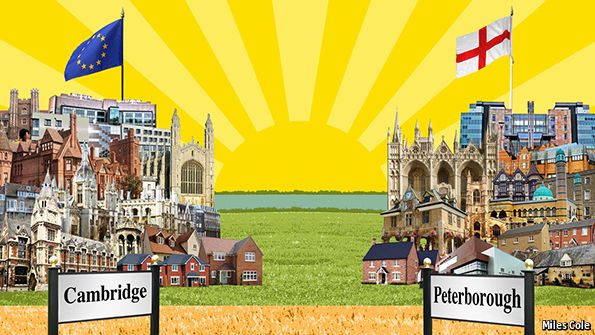
"BEING a Eurosceptic in a university city is a lonely business. In the drizzle outside the Cambridge Union a student in a roll-neck is trying to hand anti-EU leaflets to the cliques hurrying past. Most ignore him. One, having taken a folded piece of card, glances at it and sighs “nah”, shoving it back into the campaigner’s hand.

"Inside, in the neo-Gothic chamber, pro-EU luminaries ply their arguments to cheers. When Richard Tice, an anti-EU campaigner, delivers his speech students bob up and down, machine-gunning him rebarbative questions. Did regulation not exist before Britain joined the union? Why do so many firms support membership? If Britain doesn't control its borders why do foreign students struggle to get visas?

"When Mr Tice quotes “the highly respected economist, Tim Congdon” (a notorious Eurosceptic) the chamber resounds to laughter and sarcastic applause."
Things are different in Peterborough.
"Compare that with Peterborough, a similarly sized city at the other end of Cambridgeshire. At a public debate there locals voted decisively in favour of Brexit. “I asked rhetorically what the audience would put at risk to leave the EU,” recalls Mr Huppert. “They shouted back: ‘Everything’.”
Cambridge and Peterborough are geographically close and in many ways quite similar, so why the different attitudes to the EU?
"Cambridge bears the hallmarks of an economy in which one in two has gone to university, Peterborough is visibly a city of school-leavers.

"When it comes to the EU, this difference is everything. Education levels are “an extremely strong predictor” of an individual’s views on the subject, stresses Robert Ford, an expert on public opinion: the more qualifications someone has, the more pro-European he or she is likely to be.

"According to polls by YouGov, those educated only to 16 oppose EU membership by 57% to 43%, but among graduates it is 38% to 62%. When education is controlled for, other factors affecting an individual’s views on Europe—like income, choice of newspaper and even age—diminish.

What is it about those five years of study between 16 and 21? The answer has two parts. First, the self-interested one. “Having a degree is increasingly a prerequisite of getting on in life,” observes Mr Ford, adding: “Both sides are aware that there is a drawbridge called university and that those who don’t get across it are disadvantaged.”

[...]

"The second, cultural driver mostly concerns immigration. Whereas many in Cambridge see incomers as highly educated Germans and Swedes bringing their expertise to research projects, start-ups and product-development meetings, in Peterborough they are Lithuanian potato-pickers who, if not competing with locals for unskilled work, are at least nipping at their heels."
The Economist has sussed out the underlying trend though:
"University attendance has exploded, which suggests that Britain will become more internationalist and comfortable with EU co-operation. Yet in the meantime it seems the country will be increasingly polarised: liberal, Cambridge-like places on the one side; nationalist, Peterborough-like ones on the other and an ever-shrinking middle ground between the two, as the population bifurcates into those whose skills make them globally competitive and those who must compete with robots and the mass workforces of the emerging economies.

[...]

"Eventually Britain will look more like Cambridge than it does today."
In the year after taking A-level (i.e. at age 18+) 52% of young people were at a higher education institution - with one per cent at Oxbridge and another 8% at other Russell Group universities, according to a Government report.*

So Oxbridge is taking the top 1% of the population age-cohort and inducting them into an international elite bubble. I feel it is unlikely, short of the initiative described in my previous post, that very much more of Britain 'will look more like Cambridge in the future than it does today'.

There are better, more forward-thinking arguments which might speak to Oxbridge undergraduate as to the merits of leaving the present incarnation of the Holy Roman Empire. But that's for another day ... although ironically, The Economist got there before me.
___

Update: (March 18th 2016): see also "Brexit: the issue is Germany".

---

* These figures are interesting. If the 1% admitted to Oxford and Cambridge were selected entirely on merit, the IQ cut-off would be z = 2.33 SD, or 135. If you believe that some get into Oxbridge by not being quite as bright as that, but by having connections, then the merit IQ threshold will be greater than 135.

For the Russell Group  (the top 24 non-Oxbridge including my own alma mater, Warwick), you have to be in the top 9%. This requires z > 1.34, or an IQ of at least 120. In practice, IQ demands are likely to be less for non g-loaded subjects like English and Drama (plus there are those connections again), so this is very much a lower bound for disciplines positively requiring high-IQ (typically STEM subjects and philosophy).

---

We were in the Cribbs Causeway Mall today, pictured below, where I replaced my Primark trousers with softer and more luxurious variants from John Lewis at seven times the price.

The author at Cribbs Causeway Mall

I also popped into my first Apple store. I was expecting style and imagination, but was confronted by six large Formica-like tables upon which were arrayed rows of tethered iPhone 6s and MacBook Air laptops. The whole experience seemed tacky and impoverished; the shop was, however, crowded.

Saturday, December 19, 2015

Windows 10 ships with a keylogger turned on

Not being paranoid but this latest from Peter Watts sent me off to Google .. and this:
"Last fall, I discussed the keylogger that Microsoft openly put into the Windows 10 Technical Preview. The company admitted that “we may collect voice information” and “typed characters.” At the time I defended Microsoft, pointing out that the Preview was “intended for testing, not day-to-day use,” and that Microsoft recommended against installing the Preview on a computer with sensitive files. I said that “I seriously doubt that the worst spyware features will remain in the finished product.”

"I was wrong.

"Microsoft pretty much admits it has a keylogger in its Windows 10 speech, inking, typing, and privacy FAQ: “When you interact with your Windows device by speaking, writing (handwriting), or typing, Microsoft collects speech, inking, and typing information—including information about your Calendar and People (also known as contacts)…”

"If that makes you feel creepy, welcome to the human race."
The text continues with instructions as to how to turn the keylogger/microphone monitoring off.

I have done so.

---

I though exoskeletons had to be powered (and therein lies the problem - batteries!) but apparently not always so.


From The Economist.

Sunday, December 06, 2015

A Basic Income in Finland?


Marginal Revolution links to this article - "Finland plans to give every citizen a basic income of 800 euros a month":
"The Finnish government is currently drawing up plans to introduce a national basic income. A final proposal won’t be presented until November 2016, but if all goes to schedule, Finland will scrap all existing benefits and instead hand out €800 ($870) per month - to everyone.

"It sounds far-fetched, but it’s looking likely that Finland will carry through with the idea. Whereas several Dutch cities will introduce basic income next year and Switzerland is holding a referendum on the subject, there is strongest political and public support for the idea in Finland. ..."
The Economist had an article about this a while back:
"... The left has usually viewed such policies as a way of beefing up the social safety net and fighting inequality. That is particularly appealing in a world where technology creates unimaginable riches for some, but threatens the jobs of others. As early as 1964 James Meade, an economist, argued that technological progress could reduce the demand for labour so much that wages would fall to intolerable lows. In a world where a computer can suddenly make a profession redundant, those who have worked hard cannot be certain of a decent standard of living. That may justify more generous state support.

"For their part, right-wing advocates of the citizen’s income view it as a streamlined replacement for complicated means-tested welfare payments. A system where everyone receives the same amount requires fewer bureaucrats to administer. Existing schemes withdraw benefits from low earners as they earn more, discouraging work and so trapping some in poverty. For this reason, Milton Friedman, an economist known for his laissez-faire beliefs, wanted to replace all welfare with a simpler system that combined a guaranteed minimum income with a flat tax."
The Economist then looks at the costs:
" In 1970 James Tobin, an economist, produced a simple formula for calculating their cost. Suppose the government needs to levy tax of 25% of national income to fund public services such as education, policing and infrastructure.

"Paying for a basic income worth 10% of the average income requires average taxes to rise by ten percentage points, to 35%. A basic income worth 20% of the average income requires average taxes to be 20 percentage points higher, at 45%, and so on. Eradicating relative poverty, defined as income beneath 60% of the median, would require tax rates approaching 85%.

"The Swiss proposal is absurdly expensive: a rough calculation suggests it would cost about SFr 197 billion ($210 billion), or 30% of GDP.

"A generous basic income funded by very high taxes would be self-defeating, as it would reintroduce the sort of distortions that many of its advocates hope to banish from the welfare system. Loafers could live comfortably without lifting a finger.

"...

"A better system might also be financed by a return on assets, rather than by taxes. Alaska pays its residents an annual dividend - $1,900 in 2014 - from the returns on its oil fund. An asset-financed basic income would remove welfare distortions without introducing new ones through higher taxes.

"Unfortunately, few governments have wealth funds. On the contrary, they are mired in debt (though some think they could monetise public assets, including land, more effectively). In any case, many would worry that widespread government ownership of financial assets would lead to bureaucrats meddling in the private sector.

"Fans of the basic income make plenty of good arguments. A welfare system riddled with complicated means-testing distorts incentives and is a headache to run. Paine’s intellectual case for all citizens to be entitled to a return on the bounties of the earth is compelling. But a basic income is too costly and inefficient to act as a wholesale replacement for welfare. It is feasible only if it is small, and complemented by more targeted anti-poverty measures. Basic income: the clue is in the name."
Marx said "From each according to his ability, to each according to his needs." It's worth recalling that both abilities and needs have quite a broad statistical distribution: there are always going to be those whose lack of useful abilities make them essentially unemployable yet who happen to have very expensive needs (physical/mental disabilities and/or dependents, for example).

A one-size-fits-all basic income is an ill-fitting panacea despite its intellectual attractions, even if we ignore the enormous transfer payments implied.

The article about Finland concludes:
" ... But, as Bloomberg calculated, giving €800 of basic income to the population of 5.4 million every month would cost €52.2 billion a year. Finland only plans to give the basic income to adults, not every citizen, but with around 4.9 million adults in Finland, this would still cost €46.7 billion per year. The government expects to have €49.1 billion in revenue in 2016."
A laboratory for true libertarians, then.

Saturday, September 12, 2015

The Economist: intelligent stupidity about migrants


The Economist says:
"Tens of thousands of asylum-seekers flowed towards Germany by rail, bus and on foot, chanting “Germany! Germany!”, to be welcomed by cheering crowds. Germany is showing that old Europe, too, can take in the tired, the poor and the huddled masses yearning to breathe free. It says it can absorb not thousands, but hundreds of thousands of refugees.

Such numbers will inevitably raise many worries: that cultures will be swamped by aliens, economies will be overburdened, social benefits will have to be curbed and even that terrorists will creep in. Anti-immigrant parties have been on the rise across Europe. In America, too, some politicians want to build walls to keep foreigners out.

Yet the impulse to see migrants as chiefly a burden is profoundly mistaken. The answer to these familiar fears is not to put up more barriers, but to manage the pressures and the risks to ensure that migration improves the lives of both immigrants and their hosts."
All of this would be very compelling if the social capital represented by the incomers was at the same level as or, better, superior to that of the present northern European incumbents. The Economist thinks (or pretends to think) this is a non-issue .. but unfortunately, it's not.

This is what the UCL guy who looked at the evidence had to say.

Saturday, April 18, 2015

Alien Galactic Engineering in The Economist this week

Interesting piece in The Economist this week.
"A spacefaring civilisation, even one relying on craft travelling at far below the speed of light, would be able to colonise the entire galaxy in a few hundred million years. It therefore follows that if intelligent, technologically capable life forms had emerged elsewhere in the Milky Way, they would probably have done so long enough ago that they would, by now, be everywhere — which evidently they are not. This line of reasoning suggests humans really are the only intelligent life in this particular galaxy.

"Perhaps, therefore, the search for aliens is looking in the wrong place. The calculation that intelligent life will rapidly colonise its entire home galaxy — first made by Michael Hart, an American astrophysicist, in 1975 — suggests it is not other solar systems which should be scoured for little green men, but other galaxies. And this is just what Roger Griffith, an astronomer at Pennsylvania State University, has done."


...

"Dr Griffith reasoned that a galaxy inhabited by Dyson-sphere-constructing aliens would have an unusual, infrared-rich and visible-light-poor spectrum. With the aid of an American space telescope called the Wide-field Infrared Survey Explorer, he searched 100,000 galaxies for such spectra. What he found, as he reports in the Astrophysical Journal, is tantalising.

"No galaxies appeared to host civilisations that were using more than 85% of the available starlight as a power source. Fifty, however, were red enough to be hosting aliens gobbling up half or more of their starlight. Since even the most enthusiastic colonists would not, presumably, set up shop around every single star, and also because realistic versions of Dyson spheres would not totally enclose a star, these galaxies might indeed be the empires of individual alien species.

"Power-hungry aliens are not, sadly, the only explanation for the spectra Dr Griffith has found. More prosaic things, such as vast clouds of interstellar dust, might produce a similar signal. Nevertheless, these 50 unusual galaxies (and also 95 more which had spectra that were weird in other ways) might repay further study. The odds are that Dr Griffith’s discovery will have a humdrum explanation. But it is just possible he has answered the age-old question of whether humanity is alone."
Dr Griffith has checked out a large number of galaxies, but there are at least one hundred billion in the observable universe so he's sampling at a ratio of one in a million. If there are aliens with super-powers anywhere in the universe, this approach - scaled up - seems an effective way of getting the evidence in.

---

Look at this from the viewpoint of physics, not biology - or 'life-sentimentalism'. What we call life (or more properly, biological ecology) is an exponential process of environmental self-reconstruction. Inorganic-stuff turning itself into ever more life-stuff. A chemical self-organising diffusion process powered by free energy.

Ignore all the fine-grained details of 'intelligence', 'technology' and endogenous 'lofty aspirations'. From a sufficient number of millions of light years away, the galactic spread of free-energy-exploiting alien life is indistinguishable from the runaway infestation/transformation of a sterile, pristine galaxy by 'grey goo'.

---

There are people who rather like galaxies as they are now. Should we call them misozoic (after this and this)? You read it here first.

Friday, October 10, 2014

Evolutionary roots of homophobia

From The Economist: legality of homosexuality

The Economist this week has a main feature on Gay Rights. Some countries are moving forwards, while others move backwards. The map above, showing where homosexuality is permitted in law (shades of blue-green) and where it is illegal (orange and red), cries out for explanation. It is very far from random.

There is a hint, perhaps, in the language used by red-zone politicians. The Economist writes
"IN THE argot of human rights, LGBT means lesbian, gay, bisexual, transgender—a catch-all term for sexual minorities. But Yahya Jammeh, president of Gambia for 20 years, has a different reading. “As far as I am concerned,” he thundered during a televised speech in February, “LGBT can only stand for leprosy, gonorrhoea, bacteria and tuberculosis.” He compared gay people to vermin, and said his government would fight them as it does malaria-bearing mosquitoes, “if not more aggressively”."
The Economist also notes that:
"Revulsion against homosexuals is ancient, deep and, in its way, sincere."
Why?

Homophobia clearly draws on ancient, powerful emotions - chiefly disgust. Some of us oldies will remembers literary dialogues of the mid-twentieth century, where a refined woman gets to drawl in genuine puzzlement: "But what exactly do homosexuals actually do?"

Sex is inherently a mucky and disease-prone activity; we've all heard of sexually-transmitted diseases. Arguably, certain homosexual practices are more disease-prone. Some people find the whole idea of sexual activity frankly disgusting: homo- or heterosexual. However, any male or female who believes this sufficiently strongly is not going to leave any descendants - so genes coding for that emotional reaction are unlikely to spread widely in the population.

Some small percentage of the population (c. 3-4%) is significantly into homosexual practices. As this kind of sexual activity can't lead to descendants how can such people exist? Greg Cochran thinks the culprit is some kind of infectious agent priming an underlying heritability of 0.3 - 0.4; we know that sexuality is on a hormonal continuum so perhaps LGBT people are simply 'on the spectrum'?

Still, like all practitioners of sex, homosexual people historically engage in a potentially disease-spreading activity. And there is no genetic come-back from disgust in the heterosexual community, as so graphically articulated by Yahya Jammeh, President of Gambia above.

In the West, our standards of hygiene are higher and perhaps we're rather more self-controlled and empathic. We've become 'tolerant' (there's a word!) and of course we should be - LGBT people are what they are - and in the last decades we've agreed not to use the power of the state against them.

But let's not pretend - in some blank slate fashion - that those underlying, ancestral, selected-for emotions have somehow been edited out, because they plainly haven't.

---

Sparse pickings on the Internet for this topic. A Scientific American article makes a brave attempt but looks to paedophilia and xenophobia for explanations - disconfirmed both by common sense and the evidence. The whole area is stymied by liberal hand-wringing.

---

In case it wasn't obvious, let me summarise the speculative thesis of this post.

The reason for an evolved heterosexual disgust towards homosexuals (mislabelled as 'homophobia') is that in the environment of evolutionary adaptedness (EEA) homosexuals were more likely to be disease vectors.

See also: "The 'is' and 'ought' of homosexuality".

Friday, March 28, 2014

The robots are coming .. rather slowly

The Economist has a special report this week about robots. Apparently with advances in engineering, simulation environments and ever-increasing computer power we are in the early take-off period of robotech. Money is beginning to flow into the sector, Google has made acquisitions and intriguing new products are emerging.

One area of application is healthcare for the elderly. The "Domestic Service Robots" article has this to say:
"Robots may also make it possible for old people to stay independent in their own homes for longer. Mr Angle says this is iRobot’s “long-term guiding star”, towards which the Roomba is a small step. Mr Gupta at the NSF thinks that general-purpose home-help robots would be a big advance which, given a push, could be achieved in a couple of decades (though that, he stresses, is his own view, not the foundation’s). Mr Thrun reckons it could be done more quickly.

"Mr Ng points out that if you get a graduate student to teleoperate a PR2 robot, it can already do more or less everything a home-help robot might be required to do, so all that is needed is better software and more processing power, both of which are becoming ever more easily available."
Comparing this with other transformational technologies, we're 10-20 years from such products becoming affordable and widely available. A teleoperated home-care robot is a kind of household drone. One could imagine an operator controlling maybe twenty of them (one at a time, mostly). Sure they'd be expensive, but compared to what? Care homes? Even without full autonomy this could happen sooner than you'd think.

This is bound to have an impact on cost projections for the future care of the elderly from, say, 2025 out. No doubt the Japanese will lead the way, hopefully in time for me!

As a youthful trotskyist, I was told that in the future economy of post-capitalist abundance, robots would do all the hard and dreary work, leaving humans to lives of creative leisure last seen amongst the Greek and Roman aristocrats. Perhaps within another generation robotech will indeed bring about that scenario - in the sense of automating human slavery. Is this a good outcome? Economists worry about mass unemployment of all except the most highly skilled. Those remaining in work are infuriated to contemplate an ever-increasing, unproductive fraction on welfare.

Leisure for all or welfare for all? Michael Gove was apparently channelling Wham! yesterday in a school visit, The Times helpfully reprinting the lyrics of the rap song he was reciting:
Wham Rap! (Enjoy What You Do)

Hey everybody take a look at me
I've got street credibility
I may not have a job,
But I have a good time
With the boys that I meet down on the line

I don’t need you
So you don’t approve,
Well, who asked you to?
Hey, jerk, you work
This guy’s got better things to do

...
Bring on those robots, Mr Gove!