Showing posts with label Hive Mind. Show all posts

Wednesday, April 25, 2018

Michael Roberts on Keynesianism & the modern left

Amazon link

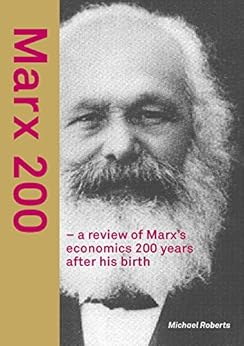
I'm finding Michael Roberts's latest book a lot punchier than "The Long Depression". After a strong and penetratingly-clear review of Marx's 'three laws' (of value, of accumulation and of the tendency of the rate of profit to fall) he moves on to Marx's critics and has this interesting analysis of the continuing popularity of Keynesianism in the ranks of the modern socialist left.
"Marx, Keynes and the labour movement

Keynesian economics dominates on the left in the labour movement. Keynes is the economic hero of those wanting to change the world; to end poverty, inequality and continual losses of incomes and jobs in recurrent crises. In the US, the great gurus of opposition to the neoliberal theories of Chicago school of economics and the policies of Republican politicians are Keynesians.

In the UK, the leftish leaders of the Labour party around Jeremy Corbyn and John McDonnell, self-proclaimed socialists, look to Keynesian economists for their policy ideas and analysis. They bring them onto their advisory councils and seminars.

Those graduate students and lecturers involved in Rethinking Economics, an international attempt to change the teaching and ideas away from neoclassical theory, are led by Keynesian authors like James Kwak or post-Keynesians like Steve Keen, or Victoria Chick or Frances Coppola. Here the idea that inequality is the enemy, not capitalism as such, dominates the media and the labour movement. This is not to deny the ugly importance of rising inequality, but to show that a Marxist view on this does not circulate.

So why do Keynesian ideas continue to dominate? Geoff Mann provides us with an insightful explanation. In a new book, entitled In the Long Run We are all Dead, Mann reckons it is not that Keynesian economics is seen as correct. There have been "powerful Left critiques of Keynesian economics from which to draw; examples include the work of Paul Mattick, Geoff Pilling and Michael Roberts", but Keynesian ideas dominate the labour movement and among those opposed to what Mann calls 'liberal capitalism' for political reasons.

Keynes rules because he offers a third way between socialist revolution, and barbarism, i.e. the end of civilisation as we (actually the bourgeois like Keynes) know it. In the 1920s and 1930s, Keynes feared that the `civilised world' faced Marxist revolution or fascist dictatorship. But socialism as an alternative to the capitalism of the Great Depression could well bring down 'civilisation', delivering instead 'barbarism' - the end of a better world, the collapse of technology and the rule of law, more wars etc. So he aimed to offer the hope that, through some modest fixing of 'liberal capitalism', it would be possible to make capitalism work without the need for socialist revolution. There would be no need to go where the angels of 'civilisation' fear to tread. That was Keynes' narrative.

This appealed (and still appeals) to the leaders of the labour movement and 'liberals' wanting change. Revolution was too risky and we could all go down with it. Mann: "the Left wants democracy without populism, it wants transformational politics without the risks of transformation; wants revolution without revolutionaries". This fear of revolution, Mann reckons, was first exhibited after the French revolution. That great experiment in bourgeois democracy turned into Robespierre and the terror; democracy turned into dictatorship and barbarism — or so the bourgeois myth goes.

Keynesian economics offers a way out of the 1930s depression or the Long Depression now without socialism. It is the third way between the status quo of rapacious markets, austerity, inequality, poverty and crises and the alternative of social revolution that may lead to Stalin, Mao, Castro, Pol Pot and Kim Jong-Un.

It is such an attractive 'third way' that Mann professes that it even appeals to him as an alternative to the risk that revolution will go wrong (see his last chapter, where Marx is portrayed as the Dr Jekyll of Hope and Keynes as the Mr Hyde of Fear).

As Mann puts it, Keynes reckoned that, if civilised experts (like himself) dealt with the short-run problems of economic crisis and slump, then the long-run disaster of the loss of civilisation could be avoided. The famous quote that makes the title of Mann's book, that 'in the long run we are all dead, was about the need to act on the Great Depression with government intervention and not wait for the market to right itself over time, as the neoclassical (`classical' Keynes called it) economists and politicians thought.

For "this long run is a misleading guide to current affairs. In the long run we are all dead. Economists set themselves too easy, too useless a task if in tempestuous seasons they can only tell us that when the storm is long past, the ocean is flat again" (Keynes). You need to act on the short term problem or it will become a long-term disaster. This is the extra meaning of the long run quote: deal with depression and economic crises now or civilisation itself will come under threat from revolution in the long run.

[...]

Like all bourgeois intellectuals, Keynes was an idealist. He knew that ideas only took hold if they conformed to the wishes of the ruling elite. As he put it, "Individualism and laissez-faire could not, in spite of their deep roots in the political and moral philosophies of the late eighteenth and early nineteenth centuries, have secured their lasting hold over the conduct of public affairs, if it had not been for their conformity with the needs and wishes of the business world of the day...These many elements have contributed to the current intellectual bias, the mental make-up, the orthodoxy of the day.". Yet he still really believed that a clever man like him with forceful ideas could change society even it was against the interests of those who controlled it.

The wrongness of that idea was brought home to him in his attempts to get the Roosevelt administration to adopt his ideas on ending the Great Depression and for the political elite to implement his ideas for a new world order after the world war.

He wanted to set up 'civilised' institutions to ensure peace and prosperity globally through international management of economies, currencies and money. But these ideas of a world order to control the excesses of unbridled laissez-faire capitalism were turned into institutions like the IMF, World Bank and the UN Council, used to promote the policies of imperialism, led by America.

Instead of a world of 'civilised' leaders sorting out the problems of the world we got a terrible eagle astride the globe, imposing its will. Material interests decide policies, not clever economists. "
---

Michael Roberts has the strengths and weaknesses of an orthodox Marxist. I lay stress on the word orthodox here. He dismisses Keynes, along with the other critics he considers, because in no case do they propose socialist revolution to deal with the ills of capitalism (as he portrays them).

Roberts's critiques seem wholly compelling: the crises in capitalist reproduction are indeed crises of profitability (and not lack of effective demand, as Keynes claims), yet the brutal methods (devaluation of capital, lowering of wages) required to restore profitability within the framework of capitalism are not at all congenial to well-meaning economists or politicians seeking votes. Yet when executed by the impersonal forces of the crisis itself, they do work.

Roberts would prefer less callous, less cyclical pathways to growth. That's why he's a socialist. Yet he has no model for socialism, no hint as to how the overwhelming motivational and coordination issues of a global economy can be addressed in a manner superior to capitalism. There's just the blind faith that somehow the organised proletariat can do the job.

No political proposition with such a 'manifesto' has a prayer of being taken seriously and in his heart of hearts, Roberts knows it. Hence the ritualistic quality of his denunciations. Yet this selective myopia does neither him nor his book any favours.

And before uncritically lauding the (capitalist-driven) post-1980 successes of China and denouncing the (capitalism-blamed) stagnation of the third world he might try to emulate the bravery of bourgeois economist Garett Jones and absorb this.

But of course I have no serious expectations.

---

I recently wrote about Steve Keen and Corbyn. I plan to work my two posts so far about Marx 200 into an Amazon review over the next few days.

Thursday, April 12, 2018

Life in a genetic meritocracy

Note: you may find the text below rather boring, but due to continuing migration and population movements on a global scale the situation described is becoming more prevalent, not less.

---

Expulsion of the Uganda Asians (Indians)

From the BBC (an interview with Toby Young).
"According to the political scientist Charles Murray, meritocracy inevitably leads to a genetically-based caste system. Why? Because the traits selected for by the meritocratic sorting principle are genetically-based and, as such, likely to be passed on from parents to their children.

Genetic variation means some highly able children will be born to people of average and below average intelligence, but the children of the meritocratic elite will, in aggregate, always have a competitive advantage and over several generations that leads to social ossification."
Capitalism, unlike previous more traditionalist modes of production, is strongly meritocratic. Those able to function at senior levels in industry, finance, the military, government and academia are inevitably highly educated and comfortable with abstractions. Charles Murray was worried about assortative mating amongst elites, which has been facilitated by the expansion in university places. But the situation, globally, is more complex than that.

---

Refer to Garett Jones's table of National IQs, mentioned in my previous post. Whether through colonialism, general population movements or targeted immigration, it's perfectly possible for people from a cognitively-advantaged country to find themselves a minority in a country where the majority fare markedly less well. Chinese minorities in Southeast Asia and the 'Ugandan Asians' (who were from India) are cases in point.

Such talented minorities, culturally distinct from the majority, tend meritocratically to rise.* While this does work its meritocratic magic when things are going well, it has downsides when the country runs into trouble, as economies invariably do.

---

How does it feel to be a member of a genetic elite? I can only imagine. There must be the sense of social solidarity with your cultural fellows, plus a vague sense of disquiet directed towards the non-elite majority. Some of that majority will be as accomplished as your group, but few. Most will be less able (although you will want to affirm their capabilities).

How does it feel to be a member of the somewhat-disadvantaged majority? Again, I can only speculate. Most of the time it won't be much on your mind. In any event, such reflections will not be a welcome feature of the zeitgeist.

Normally.

Now is a time when the interests of elites and the masses are perceived to be diverging across the world. It's when class conflict becomes enmeshed with ethnic identifications that we should start getting a little concerned. In Uganda things did not go well:
Before the expulsion, Asians owned many large businesses in Uganda but the purge of Asians from Uganda's economy was virtually total. In total, some 5,655 firms, ranches, farms, and agricultural estates were reallocated, along with cars, homes and other household goods.

For political reasons, most (5,443) were reallocated to individuals, with 176 going to government bodies, 33 being reallocated to semi-state organisations and 2 going to charities. Possibly the biggest winner was the state-owned Uganda Development Corporation, which gained control over some of the largest enterprises, though both the rapid nature of the growth and the sudden lack of experienced technicians and managers proved a challenge for the corporation, resulting in a restructuring in 1974-5.

"The Ugandan economy fell deep into a crisis under the strain of civil wars, the nationalization of certain industries and the expulsion of the Asians.. . By 1987, President Yoweri Museveni had inherited an economy that suffered the poorest growth rate in Africa."
Meritocracy normally works well, despite its critics. When times get hard, not so much.

---

* A worked example

From the standardised normal distribution, the percentage of a population more than 1 standard deviation above the mean is 16%, more than 2σ is 2.3% and more than 3σ is 0.13%.

Take a hypothetical population A with the European norm of 100 (standard deviation 15) and a distinct group B representing 0.5% of the population who have a mean IQ one standard deviation up, ie 115.

Assume that elite IQ is three standard deviations above majority-average: a member of the top elite will have an IQ in excess of 145. What is the expected ratio of people from A and B in the elite?

Suppose the population size of A is 20 million so that the population size of B is (at 0.5%) 100,000.

We know that 0.13% of population A (3σ) will make it into the elite (assuming pure meritocracy) contributing 26,000 people.

Population B will have 2.3% (2σ) of its members in the elite; this is 2,300 people.

So the elite ratio A:B is 11:1, a fair distance from the 200:1 overall population ratio.

Stratification will be more intense if population B clusters in certain sectors where they historically specialise, as the Ugandan Asians did in commerce.

---

Addendum

Consider four standard deviations above majority-average, an IQ of 160+.  The area under the normal curve above 4σ is 0.003%.

Population A contributes 600 people with this elevated score; population B provides 130 people. The A:B ratio is now around 5:1. Perhaps the really top elite does consist of under a thousand people in a medium-sized country, so the expected ratio is perhaps not too unrealistic.

National IQs - from "Hive Mind"

Amazon link

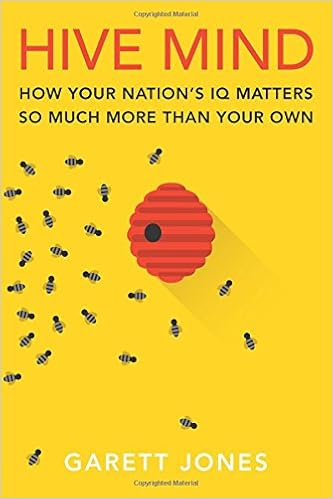
This is a reference post. The data below is taken from the "Data Appendix" in "Hive Mind" by Garett Jones, which I reviewed here. Click on the images below to make larger.


"Notes: The middle column reports the Rindermann, Sailer, Thompson cognitive ability (CA) scores estimated from the international tests the PISA, the TIMSS, and the PIRLS. The right-hand column reports national average IQ as estimated by Lynn and Meisenberg.

The table only reports data for countries where both estimates are available. Both estimates include data of varying quality; in particular, developing country estimates may be based on small samples or limited numbers of tests and should be treated with caution.

This is a problem that also arises when measuring GDP per person in developing countries, as Morten Jerven's book Poor Numbers documents. Sources: Rindermann, Sailer, and Thompson, "The Impact of Smart Fractions" and Lynn and Meisenberg, "National IQs Calculated." See also Jervens, Poor Numbers. "
The main take-home lesson is that countries differ quite markedly in their average IQ, pretty much as you would expect given their economic and political success or lack of it. Not forgetting that countries are people, not inert geography.

The scores are misleading for countries which are highly stratified ethnically such as Israel, many countries in Latin America and the USA (to some extent). India (not shown) with its castes and jatis is problematic - the concept of national IQ doesn't really apply there at all.

China's average national IQ is generally estimated to be 105, aligned with Taiwan and Japan above.

Tuesday, December 08, 2015

"Hive Mind" by Garett Jones: a review

Amazon link

The long, slow march of Darwinian Evolution applied to the human sciences continues. For more than a decade the work of Richard Lynn and Tatu Vanhanen on ‘IQ and the Wealth of Nations’ was ostracised and ignored; now, in Garett Jones’ new book, it is re-appraised and rehabilitated.

In 2007 James Watson was, well, ‘Watsoned’ for suggesting, "[I am] inherently gloomy about the prospect of Africa [because] all our social policies are based on the fact that their intelligence is the same as ours - whereas all the testing says not really." Since his views are validated in this book, I imagine his re-admission to public life cannot now be long delayed.

What else do we know? From genome studies and CSI police procedurals, we know that humanity exists in genetically-distinguishable ethnic groups, both within ancestral Africa and (via complex historical migrations) in the rest of the world. We know that intelligence as measured by IQ is strongly heritable (0.75). We know that the genetic component of intelligence is polygenic, and that the (thousands of) alleles positively associated with IQ are slowly being identified (the Beijing Genomics Institute is aiming to produce substantive results in the next few years).

And we expect, when we have this sequencing information, that different ethnic groups will exhibit different cognitive genotypes. It will then be clear that to elevate ethnic group (‘country’) intelligence up to (and perhaps beyond) the current East Asian level of IQ 105 is going to require DNA editing – there is a limit to how far good nutrition and iodine supplementation will take you.

Naturally Professor Jones knows all this - as does everyone else who takes the trouble to enquire. Unfortunately in the present state of public discourse, it cannot all be said without the Watsoning process re-engaging.  So in ‘Hive Mind’ Garett Jones had a tough task: to synthesise the current state-of-the-art through the lens of economics while not getting fired. The scientific constraint? Not to say or imply things which are actually untrue or gratuitously mislead in the process.

As many have observed, the book starts well. Rehabilitating the concept and utility of IQ is not new science, it’s a defence and popularisation of what every informed person already knows but of course, it’s necessary and done well. Similarly, the detailed re-examination of national/ethnic phenomenological IQ differences (mostly from Lynn and Vanhanen) is both clear and brave.

IQ is then linked with patience, propensity to collaborate and future-orientation, as Jones reviews research in psychology, political science and game theory. Applied to economics, he describes how, in complex technologies where mistakes can break the whole process (‘O-Ring technology’), there are surprising returns to pervasive intelligence. To put it crudely, high-IQ countries can do leading-edge high-tech, and low-IQ countries can’t (note that this is hardly a surprise when one observes the world).

So far so good, but now the wheels begin to come off a little. As if concerned by the consequences of his argument, Jones feels the need to signal his essential liberalism and humanity. There are long accounts of the Flynn effect to motivate speculation about increasing the IQ of poorer, more corrupt and disorganised nations (really ethnicities). Here he presents intelligence (as measured by IQ) as far more plastic and environmentally-malleable than it actually is.

Finally he plays with some oversimplified economic models to suggest that immigration from low-IQ countries is in the interests of the inhabitants of high-IQ countries (it’s plainly in their own interest - to a point). Naturally he equivocates (consequent damage to existing high-quality institutions). But he seems to ignore both the evidence from history and the increasingly-scary predictions of a hollowing-out of demand for low-and middle-skilled jobs. I’m sure he felt he had to write this but it breaks the rule: do not mislead the reader.

Perhaps in five years or ten years, it will be possible to write a well-balanced public-policy book starting from humanity as it actually is. In such a more enlightened time, a Garett Jones revision of this book would be well-worth reading.

---

Here is the list of national IQs from the book.

Greg Cochran's review - be sure to read the comments.

Slate Star Codex review - be sure to read the comments.

Wednesday, December 02, 2015

Hive Mind: to buy or not to buy?


I've mentioned this before. Here's an extract from the blurb at the book's Amazon page.
"... Over the last few decades, economists and psychologists have quietly documented the many ways in which a person's IQ matters. But, research suggests that a nation's IQ matters so much more.

"As Garett Jones argues in "Hive Mind," modest differences in national IQ can explain most cross-country inequalities. Whereas IQ scores do a moderately good job of predicting individual wages, information processing power, and brain size, a country's average score is a much stronger bellwether of its overall prosperity.

"... Jones argues that intelligence and cognitive skill are significantly more important on a national level than on an individual one because they have "positive spillovers." On average, people who do better on standardized tests are more patient, more cooperative, and have better memories. As a result, these qualities and others necessary to take on the complexity of a modern economy become more prevalent in a society as national test scores rise.

"What's more, when we are surrounded by slightly more patient, informed, and cooperative neighbors we take on these qualities a bit more ourselves. ... "
According to the Wikipedia article, the average IQ for sub-Saharan Africa is 82. For ethnic Europeans the average IQ is 100 and for East Asians (Chinese, Japanese, Koreans) the figure is 105. It's not hard to get significant correlations between such disparate national IQ figures and levels of economic development.

The validity of IQ as a predictor of achievement in very diverse milieux has been empirically verified time and time again so in a sense, what Hive Mind is talking about is hardly very new. This could be a reason not to buy it.

Greg Cochran reviewed it and said some nice things - quite rare from curmudgeon-central! Apparently Jones is quite a good writer too. So why not buy it?

The Hive Mind reviews on Amazon are quite amusing. Most of them are from Garett Jones's colleagues at GMU - as befits academics, they can't just summarise the book and say they like it, they have to write not-so-mini essays! Consider this review from colleague Timothy J. Groseclose, from which I quote this excerpt:
"Jones constructs an example, which I call “the parable of the vases.” In a moment I’ll explain the details of the example, but first let me briefly discuss its importance. The example has significantly affected my thinking, and it is one of the highlights of the book. I do not think it is an exaggeration to say that the parable ranks as one of the all-time great examples in economics. Although it is not quite as insightful and important as Ronald Coase’s crops-near-the-train-track example (which illustrates the efficiency of property rights), I believe it is approximately as insightful and important as: (i) Adam Smith’s pin-factory example (which illustrates the benefits of division of labor) and (ii) Friedrich Hayek’s example of an entrepreneur knowing about an unused ship (which illustrates the value of particular, versus general, knowledge).

"The parable begins with a simplifying assumption. This is that it takes exactly two workers to make a vase: one to blow it from molten glass and another to pack it for delivery. Now suppose that two workers, A1 and A2, are highly skilled - specifically no matter which task to which they are assigned they are guaranteed not to break the vase. Suppose two other workers, B1 and B2, are less skilled - specifically, for either task each has a 50% probability of breaking the vase.

"Now suppose you are worker A1. If you team up with A2, you produce a vase every attempt. However, if you team up with B1 or B2, then only 50% of your attempts will produce a vase. Thus, your productivity is higher when you team up with A2 than with one of the B workers. Something similar happens with the B workers. They are more productive when they are paired with an A worker than with a fellow B worker.

"So far, everything I’ve said is probably pretty intuitive. But here’s what’s not so intuitive. Suppose you’re the manager of the vase company and you want to produce as many vases as possible. Are you better off by (i) pairing A1 with A2 and B1 with B2, or (ii) pairing A1 with one of the B workers and A2 with the other B worker?

"If you do the math, it’s clear that the first strategy works best. Here, the team with two A workers produces a vase with 100% probability, and the team with the two B workers produces a vase with 25% probability. Thus, in expectation, the company produces 1.25 vases per time period. With the second strategy, both teams produce a vase with 50% probability. Thus, in expectation, the company produces only one vase per time period.

"The example illustrates how workers’ productivity is often interdependent—specifically, how your own productivity increases when your co-workers are skilled.

"The example generates an even more remarkable implication. It says that, if you are a manager of a company (or the central planner of an entire economy), then your optimal strategy is to clump your best workers together on the same project rather than spreading them out amongst your less-able workers.

"The parable has some interesting implications for immigration policy. Namely, it suggests that Ann Coulter and Donald Trump may be more correct than they realize. Coulter and Trump, when arguing for more restrictions on immigration, most often invoke political and cultural reasons - e.g. they note that more immigrants will cause crime to increase or cause the U.S. to adopt more left-wing policies. The parable of the vases, however, provides an economic reason: Specifically, when the U.S. allows more low-skilled immigrants into the country, it can lower the productivity of native workers.

"Perhaps more profound is the following implication. Immigration opponents usually make their argument from an own-country perspective. E.g. Trump and Coulter usually focus on the fact that a more open-borders policy hurts American natives. They rarely discuss the fact that such a policy helps potential immigrants. Related, they do not consider the net effect - that is, whether the costs to American natives are greater than the benefits to potential immigrants. The parable-of-the-vases example, however, takes a worldly perspective, not U.S.-centric perspective, and it suggests that the net benefits are negative.

"For example, it suggests the following: Suppose you were the secretary general of the U.N. - someone who is interested in the total economic output of the entire world, not just the output of the U.S. If so, then the parable-of-the-vases example implies that you would want the world’s smartest people to clump in only one or a few countries. You’d want the U.S. to restrict immigration from low-IQ countries because it increases the world’s economic output, not just the U.S.’s. As far as I’m aware, the people who favor more restrictive immigration policies - including Coulter and Trump - have never made this argument."
His rather gushing review is exactly how you write as an academic for whom the scales have just fallen from the eyes!

On balance, I think I ought to buy it, if only to provide a review not from George Mason University.

---

Update: here is my review.


Sunday, November 22, 2015

Castle Hill/Maesbury Castle on a cold Sunday afternoon

We first visited Maesbury Castle (Castle Hill) - just outside Wells on the Old Frome Road - in October, (I wrote about it here). On a cold, sunny Sunday afternoon Alex, Clare and myself visited again.

Clare and Alex on the Neolithic camp ramparts

The author in a chill wind

Glastonbury Tor in the far distance

Afterwards in the Crown, Wells market square

I was waiting for someone to review "Hive Mind" by Garett Jones, and finally Greg Cochran has done so here (comments are worth reading, too).


I don't think I will be buying it.