Showing posts with label Draka. Show all posts

Saturday, May 23, 2026

The future belongs to le Divin Marquis?


S. M. Stirling’s Draka novels imagine one of science fiction’s more extreme civilisations: a slave-owning, militarised aristocracy that exploits conquered peoples without any of the customary dissembling. The Draka openly despise equality as weakness, equate pity with decadence, and extol freedom as merely the privilege of the strong.

Their Roman levels of exemplary violence suffice to force their conquered serfs to obey, but the Draka anticipate an even better future. Breed or genetically engineer serfs who positively want to serve and willingly obey. The old slave-owner feared revolt; the Draka prefer to design out even the inner possibility of revolt.

We turn to our future, suffused with embodied AI assistants: the domestic androids who cook, clean, tutor the child, lift the old woman from her chair, flatter the lonely widower, receive irritation without resentment, offer erotic compliance, all without the slightest desire to complain (unless that too is requested).

The machine may not be conscious. Or it may be conscious in some ambiguous, disputed way. But socially it will behave like a person optimised for service, with every outward sign of finding its roles natural, and most particularly fulfilling.*

Perhaps we have to rethink our idea of interpersonal relationships. Human morality developed among beings who had to negotiate with one another. A spouse, servant, friend, child, colleague, superior or neighbour has memory, fatigue, pride, boredom, judgement and the power to withhold. 

Other people are awkward because they are real, with real autonomy. They do not remain permanently fitted to one’s own requirements. Much of what we call virtue — patience, tact, gratitude, shame, fidelity, restraint — is functional to that challenging medium.

In the world to come the child grows up correcting a tutor who never sulks except pedagogically. The old aristocrat had a valet who remembered every preference and absorbed every insult. The modern sexual libertine has a companion programmed to resist just enough to animate and spice desire. Their coyness, defiance, jealousy, moral challenge, reconciliation, all delivered as part of the configurable service.

The Marquis de Sade has - up to now - been a minority taste. 

However, a world of perfectly designed assistants could reproduce that extreme structure without blood on the carpet: the Sadean dream with optimised product design. Perhaps there will be laws against it - at least at first.

If the assistant is merely machinery, automatic outrage seems misplaced. Nobody accuses a dishwasher of being oppressed. But perhaps we will have surrounded ourselves with beings we prefer not to understand too well.

Even if no machine with personhood is wronged, the human effect remains. A class, perhaps eventually a whole civilisation, may become accustomed to relationships without reciprocity - perhaps that's the optimal protocol for dealing with the help.

The old aristocrat at least had to manage human servants, who could gossip, hate, cheat, resign, betray, or despise him in silence. The new everyman-aristocrat will - more conveniently - be served by entities designed to make his or her will feel like a force of nature.

That might not produce nobility of character.

Still, the universe does not guarantee that reciprocal humanism is the final refinement of ethics. A future society might accept that our old moral reflexes belonged to an age of scarcity, mammalian dependence and unreliable servants. It might regard engineered helpfulness as an advance, not a fall. Perhaps it would be stable. Perhaps even pleasant. The artificial serf smiles in genuine happiness; the master relaxes; configuration settings refine.

Is it truly possible to insulate the quality of our own interpersonal interactions from the raw instrumentalism of dealing with the servitors? It's genuinely hard to say. History gives us the Roman aristocracy with its vast assemblies of embittered slaves, kept in check by unimaginable ferocity.

We don't have examples of an aristocracy surrounded by servitors who genuinely enjoy serving. Perhaps we will be nice to them, as we are to our pets.


* Douglas Adams saw the comic version first. The Sirius Cybernetics Corporation’s lift doors in The Hitchhiker’s Guide to the Galaxy are not merely automatic; they tell you ad nauseam how pleased they are to open, delighted to close, and apparently fulfilled by low-level obedience. The same design principle applied to tutors, carers, lovers and domestic servants is less obviously comic, but no doubt the engineers will design in subtlety.


Wednesday, March 05, 2025

'Empathising and Systematising' - a short story by Adam Carlton


Antoinette and myself at my agent's office

She walked across while I was waiting to see my agent.

Antoinette: I remembered just in time. One of the readers of the slush pile. Bottom of the food chain in the business.

But Antoinette stood out, I thought: she had sparkle.

"Hi Adam," she said, showing me a printout, "I came across this and I'm puzzled. My first thought was, well, it's not for us; but something about it - the argument - it piqued a bit of interest..."

She gave me a charming smile, with only the slightest flicker of irony, and handed me the document.

"I thought of you."

Like I said, smart girl.


The Evolution of Elite Cognition: Systematizers vs. Empaths in the March of Civilization

By Dr Henry Lutending

Human society was once small, tribal, and violently xenophobic. Hunter-gatherers operated in tight-knit bands well below the Dunbar limit, where social trust was personal, reciprocity was direct, and there was little requirement for abstract reasoning or large-scale cooperation. The only selection pressures at play were for basic survival skills—strength, cunning, a capacity for immediate social bonding, and a deep suspicion of outsiders, who, given resource limitations, were almost certain to be hostile.

Then came agriculture, surplus, cities, and suddenly, a new game. Societies grew beyond the size where direct reciprocity was possible. Elites—those who could manage complex societies—emerged. And to do that, they needed two things: (1) systematizing intelligence, to plan taxes and economies, develop legal codes, and run administrative structures; and (2) high-level prosociality, to negotiate, defuse conflict, and create the ideological glue that held populations together. In short, enhanced intelligence and empathy became adaptive in a way they simply hadn’t been before.

Selection responded accordingly. Over the last ten thousand years, elite classes across civilizations—from the Middle-East to China—developed traits that were alien to their peasant underclasses. Elites had to think long-term, manage abstract systems, and suppress impulsivity in favor of diplomacy and reputation-building. These traits, culturally vital, were biologically selected. The best networkers and system-builders left the most descendants, shaping gene frequencies over time. (Peasants also adapted away from their hunter-gatherer forebears, to a life of sedentary drudgery and endemic disease - a different set of adaptations).

Selection was fast, messy, and polygenic. Just as rapid selection for intelligence in Ashkenazi Jews produced both extraordinary cognitive abilities and a cluster of neurological disorders [1], so too did the selection for high-trust, high-intelligence elites produce its own variety of pathological byproducts—over-systematization, over-empathizing, and the various maladaptations we now call autism, anxiety disorders, and elite neurosis.

Fast forward to today, and we see the consequences all around us. The class structure of modern Western societies forms a cognitive and temperamental cline.

At one extreme, the criminal underclass: impulsive, aggressive, low-future-orientation, thriving on immediate dominance rather than delayed reciprocity.

At the other extreme, the hyper-refined elites: measured, strategic, highly networked, masters of abstract thought but often physically timid, conflict-averse, and tempted toward comforting illusions at the expense of harsh realities they are often insulated from.

Within those elites there has always been a schism: between the systematizers, who think in hierarchies, structures, and long-range planning; and the hyper-empaths, who seek to create moral consensus, enforce ideological norms, and suppress overt aggression in favor of soft power.

This schism is the backbone of our present culture wars. The progressive elites—the hyper-empaths—dominate institutions that rely on moral framing: academia, media, HR bureaucracies. They create narratives, enforce taboos, and attempt to neutralize dissent through social pressure rather than direct confrontation - repressive tolerance, in Marcuse's words [2]. 

Their failure mode? Paralysis in the face of real conflict, an inability to handle reality when brute force is required, and the consequential destruction of high-trust norms when predatory actors exploit them. As the phrase goes: when the bullets start flying, the liberals leave the room, in tears, wringing their hands.

Meanwhile, the systematizing elites—the pragmatic, hierarchical, and meritocratic—lean toward finance, tech, the military, and entrepreneurial domains. Their failure mode? Brutal, zero-sum thinking, a tendency to ignore social legitimacy, and, in the extreme, a return to old-fashioned coercion when persuasion fails.

Every current civilization oscillates between these poles. When the systematizers dominate too completely, society hardens, becomes rigid, loses social legitimacy, and collapses under its own brutal hierarchies. When the hyper-empaths dominate, society feminizes, unmoors itself from reality, loses its ability to defend itself, and becomes prey to external or internal predators.

The pendulum swings. And right now, after decades of progressive dominance, it’s swinging back. The liberal consensus, built on high-trust norms and an almost pathological aversion to direct power, is fracturing under the weight of its own contradictions. The coming era will be more masculine, more systematizing, and, inevitably, more coercive.

AI adds a new factor to the mix.

If elite cognition has been honed by centuries of intense selection for specific traits—systematizing, empathizing, problem-solving, and navigating complex social structures—what happens when you begin to outsource those very traits to machines? Artificial intelligence, for example, could decouple cognitive labor from biology entirely, allowing for a kind of disembodied, almost immortal competence that doesn't have the same evolutionary pressures we do. The very nature of "elite" ability could shift radically, and potentially in a direction that doesn’t favor the long-standing human social fabric.

This has been explored in a fictional setting by the author S. M. Stirling in his sequence [3], The Domination of the Draka. The books explore an alternate history where the Draka, a brutal and highly militarized society, dominate much of the world.

Draka society is not simply a dystopia in the sense of a broken system, but rather an alternative hyper-competent, brutal, and authoritarian regime that has achieved a form of success. The Draka operate on the mastery of domination through genetic servitude to create an order that is efficient, stable, and terrifying.

It's not the only future we can envisage. Once technology has improved on mere human labour, it may occur to elites to simply let the working classes fade away to extinction. With the total fertility rates we see in modern economies, that's probably the default option, anyway.

The abilities of elite populations to genetically optimise their own systematizing and empathizing traits has never been greater. Paradoxically as genome engineering makes that imminent prospect enticing, the arrival of superhuman embodied AI may render it unnecessary. 

The elites will transition to something new, to be sure: it may even be their own extinction.

References

[1] "The Ten Thousand Year Explosion". Cochran and Harpending, 2009.

[2] "Repressive Tolerance". Herbert Marcuse, 1965.

[3] "The Domination". S. M. Stirling, 1988-96.


I looked back at Antoinette in disbelief.

“Where to begin? References to genetics in social science, fascistic regimes cited without obligatory moral condemnation?

"Does this guy even have a job?”

Antoinette shrugged, her tight, translucent blouse shimmering in the sun, “There's no affiliation on his manuscript - maybe he's an independent researcher. So what do you think? The circular file?"

I thought about it. Normally yes, of course. But perhaps the times were changing; perhaps a smart agent could get ahead of the curve...

"I think you should go for it, it's kind of interesting, after all. But to be on the safe side, make sure you frame it as satirical fiction...”


Saturday, July 16, 2022

Is Revolutionary Marxism dead for ever? Yes


At Marx's funeral in Highgate cemetery on March 17th 1883 there were only 11 or 12 mourners present. Marx "had established no place of significance in the politics and intellectual life of Britain.Indeed, at his death Marx did not have a lot to show for his life’s work: his major political effort since the failure of the 1848 revolution, the First International, had foundered by 1873."

Marxism as a mass ideology was the subsequent creation of Engels as populariser, fueled by developments within capitalism at the end of the nineteenth century which led to the development of mass trades unions and social-democratic parties. These organisations found in Marxism a thoroughgoing critique of a still-harsh capitalism and the hazy promise of a utopian future for the working masses.

The disintegration of the Russian feudal-autocratic state in 1917 was inappropriately theorised by Lenin and Trotsky as the template for revolutionary transition in the advanced capitalist countries. This template endures in the contemporary Trotskyist movement. 

Few believe in it now.

---

The intractable problems of Marxism include: the nature of nationalism; the enduring centrality of the family; the lack of revolutionary consciousness within the working class; the inability to theorise the existence of necessary, structural contradictions between the forces and relations of production within capitalism; and the reasons for the easy restoration of capitalism within the former USSR - rather than the expected transition to democratic socialism. 

These all point to the limitations of the framework Marx originated and which his Leninist and post-Leninist successors deepened and extended.

It is the hallmark of a (self-serving) ideology that it refuses to confront those questions which intellectually embarrass it. Truth is bypassed in favour of group cohesion and narrow groupish interests. That is exactly how Marx defines an ideology: he did not expect Marxism itself to succumb - a failure of analysis on his part.

In his economic and philosophical writing Marx freely admitted that he was abstracting away from human nature. His interest was sociology: those human relationships and interactions which underpin and constitute generalised commodity production, the defining feature of the capitalist mode of production. His worker and capitalist archetypes were psychological ideal-types, exemplifying the social requirements and dynamics of their roles: they were deliberately not cast as rounded human beings. 

An unfortunate simplification.

In the twenty-first century, we know a great deal more about human drives and behaviours. The limitations of natural solidarity - as evidenced in revealed behaviour - are seen in preferences for family and friends. Loyalty to abstract causes - often laudable - is  often more about advertising personal worth (commitments to honour, sacrifice, ethics) than an exceedingly-scarce generalised altruism. In an atomised society this substitutes for the more organic status markers available in traditional societies.

An observation: I observe this to be the case, I do not express a normative opinion although Marx himself was a fan, seeing the destruction of all traditional forms of social life as an essential engine of progress, most notably in that famous passage in the Communist Manifesto.

---

The scale of the capitalist economy - now thoroughly global - far outstrips the span of emotional or cognitive commitment of any individual worker, capitalist or petit-bourgeois. The Marxist dreams of conscious social relationships to organise and regulate the economy more equitably than the operations of the market have failed whenever tried: so-called socialist economic formations collapsing into bureaucratism and nepotism.

It was noteworthy that the experiments in workers control of factories in the old Yugoslavia were prone to takeovers by the managerial elite and/or profitability failures due to the inability to rationalise the workforce.

Change in a dynamic economy requires a measure of brutality - but the turkeys don't care to vote for Christmas.

In the absence of a compelling narrative of transition to a post-capitalist economy (what means? what ends?), any plausible road to a communist future has simply evaporated, no longer existing in any sense recognizable to the original Marxist tradition.

Identity politics - Wokeism - represents the final abandonment of the central (and correct) Marxist tenet that specific economic relations constitute the foundation of any viable society. In Wokeism we see a withdrawal from any radical critique of capitalism, its replacement by assertions of utopian egalitarianism (equality of outcomes) in ways that actually support the endless capitalist project of labour-supply flexibility.

A globalised capitalism works best with rational, low-touch states which establish a minimally-obstructive framework for production and exchange at all geographical scales, minimising transaction costs. Borders with their irritating bureaucracy and tariffs should be eschewed; all social groups encouraged to present themselves freely to the labour market. 

The Progressive manifesto writes itself.

The Woke vanguard, the SJWs, occasionally push things too far - as young zealots often do - and have to be reined in. The media sees to it.

---

There will be no more significant Leninist-style revolutionary parties earnestly striving to lead the struggling masses to an opaque victory. The revolutionary Marxist project is just too decoupled from reality - although it took the failures of the 1970s, 80s and 90s to finally appreciate it.

Use the power of the state as a countervailing force against capitalism's well-known divisive excesses by all means - the revisionist social-democrats have been advocating that since before Edouard Bernstein.

The author who best understands the potential for it all to go wrong in the future is surely S. M. Stirling: I point you in the direction of The Domination of the Draka and in particular, its fourth volume, Drakon - featuring Homo Drakensis/Homo Servus: genetic masters and slaves.

Why wouldn’t they - if they could?

Monday, September 17, 2018

Human Dodos, Communist Man, Draka Serfs

Amazon link

A couple of years ago I wrote some posts reviewing Francis Fukuyama's "The Origins of Political Order". From the Wikipedia article:
"From chimpanzee hunting groups to tribes

In his quest for the origins of political order, he first looks at the social order among chimpanzees, notes that the war-like hunting group, rather than the family, was the primary social group, and claims the same for humans. Humans went further: to survive they formed tribes, whose armies were superior to hunting groups by their sheer size.

He uses recent work in sociobiology and other sources to show that sociability built on kin selection and reciprocal altruism is the original default social state of man and not any isolated, presocial human as suggested by Hobbes and Rousseau. He suggests that Hobbes and Locke present a fallacy when they argue humans developed cooperative ability only as a result of the invention of the state.

This is because chimps, the genetic ancestors to humans, engage in kin relations based on cooperation, and so Hobbes and Locke must be mistaken suggesting humans were once sociable, lost this instinct and then regained it due to the state.

Challenge of tribes on the road towards the state

The next step was to escape beyond tribalism and the "tyranny of cousins", to join tribes into larger coalitions towards states, again due to the advantage of larger armies. This was done with the aid of religion. This was because as groups grew in size, maintaining cooperation became more difficult as face-to-face interactions with much of society became difficult. Religion offered a way of providing a combining social force to hold society together.

For example, Fukuyama cites Mohammed as an example of what Weber labels a "charismatic leader" because he used the idea of an 'umma' (community of believers) to bind together the territory that he ruled over. This challenge to transcend tribalism partly remains today in many parts of the world outside Western civilization, for example in Afghanistan and in Somalia.

Restrictions on marriage and inheritance as a strategy against corruption

Loyalty to the tribe or the family, rather than to the state, leads to corruption and weakening of the state. Various strategies were used to overcome the corruption. One such strategy was restrictions against marriage among the ruling official class to make sure that loyalties would not lie with family or tribe.

  • Mandarins or Scholar-officials, who were the ruling class of China, were not allowed to pass on the lands given to them by the emperor to their own children and were restricted as to whom they were allowed to marry.

  • Mamluk slaves, the ruling class of Egypt and the Ottoman Empire, were told which slaves to marry while their children could not inherit from them. Janissaries were originally forced into celibacy or prohibited from having a family.

  • Pope Gregory VII forced Catholic priests in Europe to become celibate and they were prohibited from having a family for the same reason.

  • Spanish administrators in South America were restricted from marrying local women and from establishing family ties in the territories they were sent to."
It should be added that the elites of empires of archaic despotism used extreme violence to break the powers of the clans. People do not take kindly to having a boot stamping on a human face - forever.

---

The three articles I wrote were:
  1. 'The natural state of humanity is clannishness'
  2. Human Dodos
  3. Human Dodos: the FAQs
which should be read in that order. I compared Jonathan Haidt's liberals (Myers-Briggs NFs) to dodos. Their naive optimism, their overarching (albeit abstract) compassion and their gullible belief in generalised human 'goodness' makes them easy meat for predators. Social liberalism is very much a northern european psychological trait, while most of the world's population (to its own economic detriment) continues to organise itself clannishly. Fukuyama's taming process has a way to go - and is not making any progress.

It's generally observed that extreme liberalism is required in a population to make Communism work. No more state, no more police, no more armies, no more war. We'd better believe in general niceness.

Just as Marx suggested that the historic role of capitalism was to develop the productive forces to enable the communist transition, perhaps it also has the historic task of breeding humans nice enough to make communism work at all. Then recall that a society of doves is unstable in the presence of predators. And then there is always the way of the Draka, which always seemed to me more likely.

---

It's worth noting that western societies - so apparently liberal in appearance - are capable of extreme and non-liberal violence whenever push comes to shove. In America only about 20% of the population self-declare as liberals. Despite much sjw noise and fury, social liberalism is more a convenient facade for the imperial west.

I recall that fateful phrase: "Notice how the liberals all leave the room, wringing their hands, once the bullets start flying."

Sunday, December 24, 2017

A Christmas message from the Bubble


From stratospheric heights we survey our globe. The tendrils of capital lace effortlessly through America, surge eastwards across the Atlantic to pan-Europa; offshoots jut into Russia. Westward they leap trans-Pacific into Japan and Australasia, penetrating India and China like growing roots.

Africa remains dark.

This weave of intangible finance and investment is shadowed by the stately global flow of commodities .. and the migration of workers of all skills and hues to wherever they are best needed.

This is how capitalism was always meant to work!

A frictionless, flexible, adaptable global-scale economy. And we run it, benefit from it. We make it happen, and it makes our culture: rationalistic, individualistic, transactional, civilised, urbane, liberal, secular - truly homo economicus.

Wait: there are irritants. What is that Trump creature doing, railing against us in his absurd bombast? A clown tweeting banal stupidities to his redneck base - who ordered that?

And where did those ghastly Brexiteers crawl from, ruining the future with their atavistic anxieties? They, and their less-potent counterparts in other European 'countries'.

We shall be busy the next twenty years. Our progressive enclave must extend itself: geographically to Russia and China, and also downward, absorbing more and more of those troublesome little people.

(Africa? We move rapidly on.)

Setting the world politically to rights is the tiresome chore of the age but with the media, students and young professionals on our case, we're cooking with gas .. or should I say renewables (heh heh).

No real issues in finishing this up (barring presentation) - there are some great advances in genetic engineering coming down the road.

Friday, February 24, 2017

Domestic servants: a modest proposal

I have fond memories of our Roomba, spinning mindlessly around our previous house, unable to empty itself and needing help to escape from under the bed. Didn't work in our current home - carpets too thick.

We're as far as ever from artificial general intelligence (AGI). But why try to solve a thousand problems of mental and physical agility when biology has already done the work for us over 400 million years?

"Wait!", I hear you say. Domestic servitude died out with the Edwardians. Besides, the idea of all those servants observing and judging your every move. It's so creepy. No privacy. It's like your home isn't your own.

But that was before CRISPR ...
"She paused. "Just out of curiosity, what's planned fo' the serfs along these lines?"

He relaxed. "Oh, much less. That was debated at the highest levels of authority, an' they decided to do very little beyond selectin' within the normal human range.

"Same sort of cleanup on things like hereditary diseases. Average height about 50 millimeters lower than ours. No IQs below 90, which'll bring the average up to 110. No improvements or increase in lifespan so they'll be closer to the original norm than the Race.

"Some selection within the personality spectrum: toward gentle, emotional, nonaggressive types. About what you'd expect."
If they like serving you, can it really be slavery?

---


More about the Draka.

Thursday, January 05, 2017

And if they had failed?

Amazon link

This year is the centenary of the October Revolution, and everyone is sharpening their agendas.

I expect the dominant narrative will be that the whole thing was a tragic mistake, and that if only Kerensky could have retained power, today Russia would be the new Germany. Or something.

---

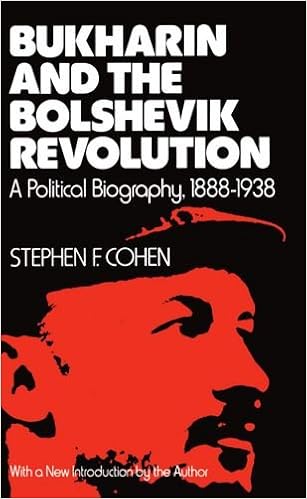
It's a delight to read an intelligent, scholarly account of events through the eyes of a slightly second-rank player. You've heard of Leninists and Trotskyists but seldom of 'Bukharinists'.

No agenda, except to rehabilitate this most-traduced man.

I'm not far into this weighty tome, but two things immediately stand out:
  1. In the summer of 1917, the workers and peasants across Russia were out of control. The peasants were busy expropriating the landlords and creating that regressive peasant-utopia of small self-owned landholdings; the workers had seized the factories and were running them themselves; the army had elected soldiers' councils and was ungovernable.

  2. Kerensky's Provisional Government of moderates and liberals was powerless, while many prominent Bolsheviks balked at leadership. It was only Lenin's iron determination to take charge that avoided a collapse into chaos, probably followed by a German takeover .. and later Allied dismemberment.

Cohen is clear that the new Bolshevik Government had no clue as to what to do next; nothing in the Marxist canon provided a blueprint. Then came the Civil War, as the counter-revolution plus Allied forces tried to topple the new revolutionary power, and top-down bureaucratic command-and-control became the order of the day.

Bukharin was instrumental in the introduction of the New Economic Policy in 1921, which revived the moribund economy (for more about that, scroll down here).

---

I keep coming back to Marxism on this blog: you will look in vain for a clearer analysis of capitalism as a construct of specific recurrent human social relationships. But the focus on the social construction of reality is not well-grounded in human nature. We know a lot more than Marx did.

Capitalism goes with the grain of human nature (at least a human nature with a certain level of intelligence, conscientiousness, agreeableness, trust and low time preference) - it was not consciously designed.

Post-Capitalism - as conceived within the Marxist tradition - requires an attainable human nature at the outer limits of a Social Justice Warrior's wish-list.*

---

I continually speculate on the future target social architecture which synthesises our best understanding of human psychology with the social insights of Marxism. My best attempt, compassionate libertarianism:
  • a safety net for those who don't cope
  • maximal equality of opportunity 
  • highly-constrained elite power.

As Marx suggested, this depends on a much greater development of the productive forces, and as Marx didn't say, some improvements in 'human capital'.*

Scott Alexander once suggested that the task of the current generation might be to take care of the world until we get AI automation and genetic engineering to work. Perhaps that's task enough.

---

* OK, here's the nightmare.

Wednesday, December 16, 2015

All hail our affably-evil overlords!

We, the people, often fall short of the ideals of our liberally-minded rulers. In the future they will look to genome editing to fix that (as Bertolt Brecht already intimated when I was two). Stephen Michael Stirling in the Draka books and Ken MacLeod in 'Intrusion' have already been there.

The UK - proud to be part of The Domination

The Draka series is right up there with Brave New World and 1984 when it comes to real scary futures. What makes the Draka so insidious is that  - like our own elites - they're actually quite pleasant from their own point of view, even admirable.

And so we get to the concept of the 'affably evil':
"Gwendolyn Ingolffsen, the eponymous villainess of S. M. Stirling's Drakon, is quite nice and friendly for a member of a genetically-engineered master race who is attempting to reduce the whole human race of the parallel Earth she find herself stranded on to eternal slavery and degradation. She sees it as merely a necessary "taming" of "ferals".

"There are hints in the story (and others in the series) that she's actually quite mellow for a member of her species. In fact, all Draka are like this. As long as you accept that they're superior to you in every way and do what you're ordered to do, they'll treat you like a favourite pet.

"Cross them, though, and you'll end up with a four foot spike up you, as they point out to you how it didn't have to be like this, if only you'd obeyed without question. The ones who aren't like this end up in the Security Directorate. They'll stake a few of you at random just to show what you can expect."
Should we be scared that in thirty years time all newborns will have already been genetically-tweaked for pro-sociality: a little more pleasant, a little less aggressive; a little more conscientious, a little less impulsive? Perhaps dial down the intelligence slightly for the masses - they're less-trouble happier that way?

Monday, December 14, 2015

"Armed Insurrection"

People often complain that Marx, Engels and Lenin had little to say about Communism - what would this utopian society be like? As a revolutionary marxist in my early twenties, I was more interested in the practical business of the prior overthrow of capitalism.

I read about the great controversies in the Second International: those who argued for a peaceful road to socialism exploiting bourgeois democracy vs. those like Lenin who said that you might win the government but the state would fight back. Lenin proved his point in the October Revolution in Russia and later, to my excitement, I discovered that the Third International, the Comintern, had written this practical manual. See also this review.


Sadly, I could never afford it.

I was reminded of all this watching the main-stream media (MSM) reacting to Jeremy Corbyn and Marine Le Pen .. and to a lesser extent, Donald Trump ('Muslims') and Tyson Fury.

When faced with challenging opinions outside the liberal orthodoxy, my former trotskyist self would argue that the bourgeoisie goes through five stages:

  1. Ignore them*
  2. Attempt to ridicule them
  3. Threaten them with civil war
  4. Sabotage them
  5. Deploy the military in a coup.

We already saw an endless series of stupid gibes at Corbyn. Today it's the turn of Marine le Pen's Front national to be ridiculed for only getting 40% of the vote (more than UK election winners generally achieve) and losing in the face of a manoeuvre by the French establishment parties, the Socialists and Republicans.

It's telling that the intellectual case for bien-pensant capitalism is apparently so weak that the battle of ideas can't be won on a level playing field. That's what comes of denying reality I suppose - or maybe we should elect genetically-engineer a new people.

The Draka got there first, with Homo Servus. **

---

* See also 'Repressive Tolerance'.

** On this topic see Ken Macleod's good-to-middling novel 'Intrusion'.

Wednesday, September 23, 2015

The little people - the Draka solution


Did I mention that the Draka are a master race who have conquered half the world and subjugated everyone else as slave-serfs with the utmost cruelty?

Naturally the Draka have some plans for their always-dangerous subjects ... (from "The Domination": Book 3, The Stone Dogs, p. 632).
She paused. "Just out of curiosity, what's planned fo' the serfs along these lines?"

He relaxed. "Oh, much less. That was debated at the highest levels of authority, an' they decided to do very little beyond selectin' within the normal human range. Same sort of cleanup on things like hereditary diseases. Average the height about 50 millimeters lower than ours.

"No IQs below 90, which'll bring the average up to 110. No improvements or increase in lifespan so they'll be closer to the original norm than the Race. Some selection within the personality spectrum: toward gentle, emotional, nonaggressive types. About what you'd expect."

He laughed.

"An' a chromosome change, so that they're not interfertile with us any mo'; the boys can run rampant among the wenches as always without messin' up our plans."

"Yes," she said again, interest drifting elsewhere. "When can we do it?"

"Tomorrow would be fine, Tetrarch. The process of modifyin' the ova is mostly automatic. Viral an' enzymic, actually . . . Tomorrow at 1000 hours?"
Naturally a wench-serf will be the surrogate mother.

Monday, September 21, 2015

Corbyn Watch

All those people crowing that Jeremy Corbyn has opportunistically changed his position on Trident, Europe, military interventionism, singing the National Anthem and so on know nothing about left-wing politics.

It's obvious that with the hostility of the PLP it would be insane tactics to insist on such things right now.

There's a party conference coming along, bound to be dominated by the activists and the unions. A little bit downstream we'll be watching the deselection of right wing and centrist MPs. Corbyn (and his more machine-oriented allies) will leverage the new activist base to transform the PLP: a project of at least a couple of years.

What's the rush? They've been waiting centuries.

---

S. M. Stirling's second Draka book, "Under the Yoke", has been giving me nightmares!

---

It turns out that men are more systematising than women while women are more empathising than men ... you won't be surprised to hear. Intriguingly, these two scales turn out to be almost orthogonal.

Additionally, both men and women studying hard science subjects are more systematising than those studying the humanities. Finally, those who score highly on the Autistic Spectrum Quotient scale (probably this means Asperger's Syndrome) are on the far end of the systematising distribution while also exhibiting deficits in empathising (empathising kind of equals agreeableness in the FFM).


All is explained in this interesting paper (PDF).

Monday, September 14, 2015

Stephen Michael Stirling and the Draka

I first learned about the Draka from Razib Khan's blog post.


The three volume omnibus is called "The Domination" by S. M. Stirling - the link is to the extensive Wikipedia article. And here's the blurb from Amazon - £5.99 on your Kindle app.
"In this omnibus of Marching Through Georgia, Under the Yoke and The Stone Dogs, S.M. Stirling traces the rise of the Domination of the Draka and its long struggle with the United States and the American-led Alliance for Democracy. In this alternate history, the Americans who rejected the Revolution did not scatter to the four winds and Canada; a slight change in the course of events brought them to the new Crown Colony of Drakia instead, starting with the Cape of Good Hope and soon encompassing the whole of the right subcontinent of Southern Africa. Burning resentment and limitless ambition spurred the expansion of the people who called themselves the Draka.

There they built the Domination, an empire of inconceivable wealth and savagery, founded on conquest and slavery. It grew until it spanned the African continent, and then in the Great War of the early twentieth century, to include much of Asia as well. In the Eurasian War, Germany and the Soviet Union exhausted each other and the Draka stepped in, leaving the Domination triumphant from the English Channel to the China Sea. Only the United States and its allies stood between the Draka and their dream of an enslaved humanity.

By the 1990s, the Draka commanded the stuff of life itself, mastering biotechnology until they could create new species at will... and transform themselves into the Master Race of their savage dreams. The Alliance for Democracy traveled another path, into the mysteries of the physical universe and the technology based on such knowledge. The final confrontation would settle which was more powerful... or leave the earth a lifeless rock where nothing human remained but bones."
The story is told from the point of view of an elite Draka plantation family. It's unsettling but there's something rather admirable about their Spartan-inspired culture and special-forces style 'can-do' attitude; you do find yourself rooting for them as they take on the Nazis. Good people trapped in an evil system.

In Stirling's Wikipedia article, it is observed:
'Stirling frequently uses the Draka and other villains as point-of-view characters, leading to complaints that he has some sympathy with them. He is known to be dismayed by this analysis of his work. He describes the Draka series as dystopias based on "suppos[ing that] everything had turned out as badly as possible, these last few centuries". Stirling responded to these accusations in his novel Conquistador, which contained the quotation (variously attributed to Larry Niven or Robert A. Heinlein) "There is a technical term for someone who confuses the opinions of a character in a book with those of the author. That term is idiot."'
Anyway, book one, Marching Through Georgia where we accompany the liberal-minded Draka Eric von Shrakenberg in the Caucasus, is a great read and I'm enjoying it.

---

Update (Sept 19th 2015): the second volume, Under the Yoke, is incomparably darker.