Showing posts with label Leon Trotsky. Show all posts

Saturday, January 25, 2025

Communism works given abundance? Or does it?

Amazon

Iain M. Banks with his ‘Culture’ novels has given us by far and away the best imagining of a future communist society, namely: The Culture

Typical is this, from Iain M. Banks' short story "The State of the Art" where the narrator reflects: "Money is a sign of poverty. This is an old Culture saying I remember every now and again..."

The Culture's post-scarcity society has transcended the need for money. From such a vantage point, the presence of money implies that resources are limited and need to be allocated, whereas in the Culture, advanced technology ensures abundance for all. 

Marx, himself, could not have put it better.

But Banks’s Culture had something else present day humanity does not: ubiquitous genomic engineering.


Luxury communism: a world where automation, artificial intelligence, and biotechnology have eradicated scarcity. The conventional (Marxist) vision is one of equality, abundance, and freedom from toil. It seems almost churlish to entertain deep skepticism regarding such a utopia.

The material logic of luxury communism is straightforward. Advances in technology make goods and services cheaper, energy cleaner, and human labour effectively unnecessary. Automation manufactures products with little to no human oversight; AI runs everything; biotech revolutionises agriculture and healthcare. A universal basic income (or free goods and services) ensures that everyone has access to life’s essentials and, soon after that, life’s luxuries.

Freed from the drudgery of work, they say, people could pursue creative, intellectual, or spiritual fulfillment (cf. the projected fantasies of those bourgeois intellectuals: Marx, Engels and Trotsky).

"From each according to his ability, to each according to his needs."

History tells us something else. When material concerns diminish, struggles for symbolic goods - status, power, recognition - intensify. Privileged elites in ancient Rome, medieval Europe and beyond often engaged in bitter rivalries not for survival but for prestige.

These conflicts were no less destructive than battles over land or wealth.

Think of the culture wars we see around us. Their ‘precariat’ foot-soldiers are not starving - although they plainly aspire to those enhanced material privileges to which they feel entitled - but their elite leadership is generally well-provisioned: it’s power, prestige and dominance which motivate them.

The sociologist Thorstein Veblen famously described the "conspicuous consumption" of elites, where the display of excess becomes a competitive weapon. Prestige, by its nature, is a scarce commodity. A luxury communist society, no matter how materially abundant, would still foster competition for symbolic dominance.

The result? Endless power struggles dressed in new clothing.

If only these patterns were merely ‘cultural’. But culture is the expression of biology. Humans evolved in environments where resources were limited, and high-position in dominance-hierarchies ensured survival. Traits like competitiveness, aggression, negotiation skills and status-seeking were selected over millennia. Those hierarchies don't look like going away.

Could we genetically-engineer our way out of this trap? We didn’t evolve for abundance, but given it, perhaps we could engineer the necessary adaptations? The resulting "dove society" might prioritise empathy, cooperation, and collective well-being over hierarchical and competitive drives.

Technically this could, of course, work. Genetic traits influencing aggression, impulsivity, or competitiveness will be understood and may be edited out. Likewise, empathy, patience, and long-term thinking could be genetically enhanced. The result? A society designed for harmony, not strife.

The evolutionary "hawk-dove" model now makes its voice heard. Hawks are aggressive, taking what they want by force; doves are cooperative, caving in to avoid conflict. Generally dove societies are unstable, their members replaced by hawks, although under some boundary conditions a 'mixed strategy' can be stable, though still one in which conflict is necessarily built in (those hawks!).

And perhaps a dove society is just too boring, too stationary and too stagnant. Doomed to extinction through tedium. 

Even Iain Banks preferred to write about Special Circumstances, the least ‘harmonious’ and ‘placid’ wing of the Culture, comprising those individuals ruthless and devious enough to deal with uncouth, vibrant and so very alive ‘barbarians’.

So perhaps the real problem with luxury communism is that it only works in a society of losers.

We’re never going to colonise the Galaxy that way, are we, Mr Elon Musk?


Wednesday, March 07, 2018

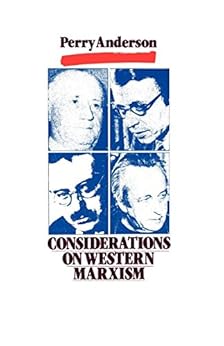
Perry Anderson on Western Marxism and Hegemony

Amazon link

"In The German Ideology, Marx wrote that the development of the forces of production is an absolutely necessary practical premise because without it scarcity is merely generalized (nur der Mangel verallgemeinert), and with destitution (Notdurft) the struggle for necessities would begin again and all the old filth would necessarily be reproduced'. See Werke, Vol. 3, pp. 34-5.

This passage was to be recalled by Trotsky in his analysis of the reasons for the rise of Stalinism in Russia, which made scarcity (nuzhda) a central category of its explanation: see The Revolution Betrayed, New York 1965,pp. 56-60."
This from the notes for Chapter 4 of "Considerations on Western Marxism" by Perry Anderson. It's a quote I've had in mind a long time, but was unable to track down. Very critical for the analysis of the failures of bureaucratic-socialism in the twentieth century, and perhaps in the twenty-first.

Anderson is a visionary, synthetic writer: (a bird or a seer in the classic distinction). His account of Western Marxism after the Russian revolution is crammed full of insights. Anderson reviews the works of Lukács, Korsch and Gramsci; Adorno, Marcuse and Benjamin; Sartre and Althusser; and Della Volpe and Colletti, together with other figures within Western Marxism from 1920 to 1975.

Here's a brief summary from a generally hostile review.
"Anderson argues that despite their diversity all these thinkers represent a common response to the failure of the Russian revolution to spread to the West after the First World War, and the consequent suffocation of Marxism by Stalinists, fascism, and social-democracy.

The ‘Western Marxists’ reacted by flying from active involvement in the class struggle to a preoccupation with philosophy, and indeed with idealist philosophy divorced from practice in a way that the classical Marxists, from Marx himself to Lenin, Luxemburg and Trotsky, would have violently rejected.

Only today, Anderson concludes, with the revival of workers’ struggles and of the revolutionary movement in the advanced capitalist countries, can Marxist theory be integrated into the class struggle again."
Anderson was writing in 1974, when the événements of May '68 in Paris were still fresh in mind and the Trotskyist movement had been revitalised (it was not to last). In his afterword written a decade later, Anderson was less starry-eyed and more conscious of the many gaps at the core of Marxist thinking: what would the socialist state look like, once we reject the naive vision of the permanently mobilised working class organised in councils? Where is the genesis of revolution to be found in a prosperous bourgeois democracy?

Our theoretical difficulties here relate to our very distance from the phenomenon in question: the practical transcendence of capitalism.

Anderson has come to see the concept of hegemony (as pioneered in the works of Gramsci) as a powerful and under-theorised foundation of capitalist stability: the privileging of consent over repression. His latest books ( The H-Word: The Peripeteia of Hegemony and the reissued The Antinomies of Antonio Gramsci: With a New Preface) are his attempt to address these issues.

---

Next: Perry Anderson's Marxism.

Monday, March 05, 2018

Leon Trotsky's vision of communism

Link to PDF

Trotsky wrote the series of articles published as "Literature and Revolution" in 1924, two years after the end of the ruinous civil war and during the earliest phase of the 'New Economic Policy'. At that time he still occupied the position of Commissar of War, the head of the Red Army.

Most of the early chapters are assessments of (often obscure) contemporary artists but towards the end Trotsky widens his scope and considers the nature of art in class societies and its future under socialism. Here is the final section from Chapter Eight, Revolutionary and Socialist Art.
"Having rationalized his economic system, that is, having saturated it with consciousness and planfulness, man will not leave a trace of the present stagnant and worm-eaten domestic life. The care for food and education, which lies like a millstone on the present-day family, will be removed, and will become the subject of social initiative and of an endless collective creativeness.

Woman will at last free herself from her semi-servile condition.

Side by side with technique, education, in the broad sense of the psychophysical molding of new generations, will take its place as the crown of social thinking. Powerful “parties” will form themselves around pedagogic systems. Experiments in social education and an emulation of different methods will take place to a degree which has not been dreamed of before. Communist life will not be formed blindly, like coral islands, but will be built consciously, will be tested by thought, will be directed and corrected.

Life will cease to be elemental and for this reason stagnant. Man, who will learn how to move rivers and mountains, how to build people's’ palaces on the peaks of Mont Blanc and at the bottom of the Atlantic, will not only be able to add to his own life richness, brilliancy, and intensity, but also a dynamic quality of the highest degree. The shell of life will hardly have time to form before it will burst open again under the pressure of new technical and cultural inventions and achievements.

Life in the future will not be monotonous.

More than that. Man at last will begin to harmonize himself in earnest. He will make it his business to achieve beauty by giving the movement of his own limbs the utmost precision, purposefulness, and economy in his work, his walk, and his play. He will try to master first the semiconscious and then the subconscious processes in his own organism, such as breathing, the circulation of the blood, digestion, reproduction, and, within necessary limits, he will try to subordinate them to the control of reason and will. Even purely physiologic life will become subject to collective experiments. The human species, the coagulated Homo sapiens, will once more enter into a state of radical transformation, and, in his own hands, will become an object of the most complicated methods of artificial selection and psychophysical training.

This is entirely in accord with evolution. Man first drove the dark elements out of industry and ideology, by displacing barbarian routine by scientific technique, and religion by science. Afterwards he drove the unconscious out of politics, by overthrowing monarchy and class with democracy and rationalist parliamentarianism and then with the clear and open Soviet dictatorship. [Recall that the 'Dictatorship of the Proletariat' in Marxist theory is the rule by the masses which secures the revolution against its class enemies. It does not mean Stalin!].

The blind elements have settled most heavily in economic relations, but man is driving them out from there also, by means of the Socialist organization of economic life. This makes it possible to reconstruct fundamentally the traditional family life. [Marx and Engels talked about the socialised, collectivised family (in The Communist Manifesto) - not one of their better ideas. Trotsky here seems more circumspect.]

Finally, the nature of man himself is hidden in the deepest and darkest corner of the unconscious, of the elemental, of the subsoil. Is it not self-evident that the greatest efforts of investigative thought and of creative initiative will be in that direction? [Trotsky was supportive of the work of Freud - p. 182].

The human race will not have ceased to crawl on all fours before God, kings, and capital, in order later to submit humbly before the dark laws of heredity and a blind sexual selection! Emancipated man will want to attain a greater equilibrium in the work of his organs and a more proportional developing and wearing out of his tissues, in order to reduce the fear of death to a rational reaction of the organism towards danger. There can be no doubt that man’s extreme anatomical and physiological disharmony, that is, the extreme disproportion in the growth and wearing out of organs and tissues, give the life instinct the form of a pinched, morbid, and hysterical fear of death, which darkens reason and which feeds the stupid and humiliating fantasies about life after death.

Man will make it his purpose to master his own feelings, to raise his instincts to the heights of consciousness, to make them transparent, to extend the wires of his will into hidden recesses, and thereby to raise himself to a new plane, to create a higher social biologic type, or, if you please, a superman.

It is difficult to predict the extent of self-government which the man of the future may reach or the heights to which he may carry his technique. Social construction and psychophysical self education will become two aspects of one and the same process. All the arts—literature, drama, painting, music, and architecture will lend this process beautiful form. More correctly, the shell in which the cultural construction and self-education of Communist man will be enclosed, will develop all the vital elements of contemporary art to the highest point.

Man will become immeasurably stronger, wiser, and subtler; his body will become more harmonized, his movements more rhythmic, his voice more musical. The forms of life will become dynamically dramatic. The average human type will rise to the heights of an Aristotle, a Goethe, or a Marx. And above this ridge new peaks will rise."

I think Trotsky is here making illustrative, but realistic projections of his futuristic views. Many of these ideas have also been addressed by science-fiction writers subsequently; Trotsky would have nodded appreciatively at current genomic research, I'm sure. Personally I'm a supporter of most of his vision.

One needs to remind oneself that Russia in 1924 was economically ruined. Trotsky, like the other Bolshevik leaders, was expecting revolution in Western Europe to save the infant soviet regime (undoubtedly very large and sustained transfer payments would have been needed - as was the case from West into East Germany after reunification).

Those revolutions never occurred, the soviet dream was lost. But the vision is worth pondering: how much of it is actually compatible with future developments within capitalism?

Thursday, August 04, 2016

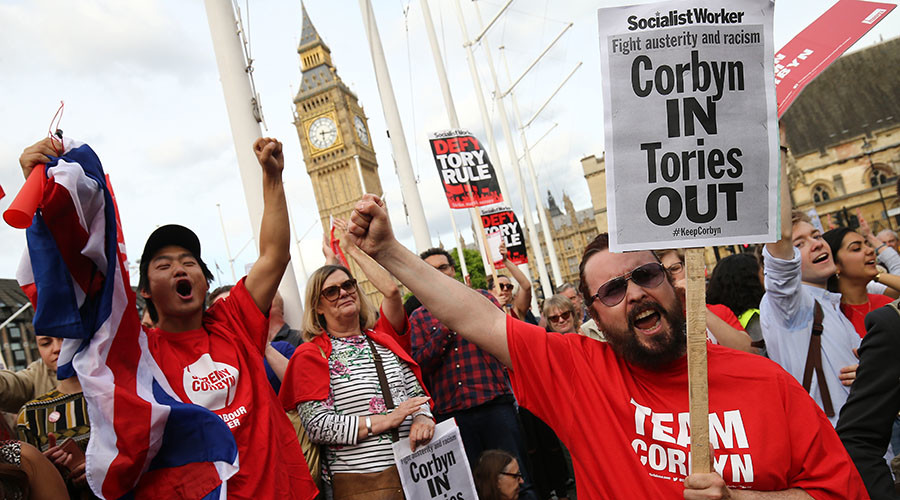
On the Corbyn New Left


Matt Bolton (PhD student) explains (July 14th 2016) that:
"... the mainstream ‘socialist’ or ‘green-liberal’ left who are the main constituency of Corbynism ... are much closer in form to moral or religious crusades, or perhaps a charity appeal, than marxism or anarcho-syndicalism. They are defined by a complete lack of strategic thinking, and are utterly devoid of cunning."
Bolton thinks that the 200,000 who have paid their £25 and joined/supported Labour as Corbyn supporters are very low-quality material to build the movement:
"My own CLP doubled its membership during Corbyn’s leadership campaign, with 300 people signing up. In the past year, I would generously estimate that perhaps 10 of those 300 has had any concrete involvement with the party (going to meetings, canvassing, delivering leaflets, taking up positions in the local party, running for council).

"The local Momentum group has had a little more success in turnout, though the majority of people attending were already involved in other campaigns, and the most that has been organised has been a few fundraising socials and the odd pro-Corbyn demo.

"This indicates that Momentum will be most effective in areas which already have a wide range of activist groups and networks (ie places with a high density of population due to a strong local economy) but far less so in places further away from the urban centres of capital accumulation, where existing political activism is thin on the ground, if not non-existent.

"The point here is not to bash people for lack of activity — there are all sorts of reasons why participation might be difficult, from lack of time to the labyrinthine structure of the party rulebook, to the deeply, deeply dull nature of most political work. It is merely to say that simply pointing to the numbers of new members says nothing about the existence or quality of a ‘social movement’.

"For the vast majority of ‘new members’, joining the party was not a promise of future activity, but a gesture of general support — perhaps similar to signing a Change.org petition — for whatever they thought Corbyn as Labour leader symbolised."
Such pessimism. And all Bolton can advocate is that the left should
"... campaign for Proportional Representation. It is only by getting rid of the farcical imbalance of FPTP that a Corbynist-style party has any chance of power (even if only as a minor partner in a coalition), and it would be far more effective in concrete terms than the membership reaching a million.

"Corbyn himself has had little to say about this issue, but McDonnell and Clive Lewis have intimated that a deal with the SNP, Greens, Lib Dems, Plaid Cymru — and perhaps even UKIP — could be a possibility."
Trotsky and Lenin are spinning in their graves.

---

Two days ago, Phil Burton-Cartledge took him to task for underestimating the potential dynamics of initially-naive popular movements.
"He argues that Corbynism is a simulacra of a social movement. It isn't a real one because the adherents Matt has encountered in his CLP and online do not match up to what activists in a proper movement looks like, such as the (relatively) politically sophisticated and hyper active supporters of Militant back in the day.

"In reality, how movements emerge are a process. Social movements are the purposeful, sustained mobilisation of large groups of people organising toward a series of political and/or social objectives. They never emerge fully formed and can in their early phases look like the remotest of primitive ancestors.

"Within days, St Petersburg peasants and workers went from clutching portraits of their beloved Tsar as they petitioned him to calling for his head as Russia almost tipped into revolution in 1905. The civil rights movement and its morphing into violent insurrection in parts of the northern US had its roots in the gospel, in pacifism, and a faith in American constitutionalism.

"How many activists have come into politics via beliefs in fairness, spirituality, conspiracy theory, and other ideas that at best partially reveal, and it worst obscure the realities of social life? The world over, millions have. And they always will.

"The movement of people coming into Labour are a work in progress, because we're all works in progress. The shouting on social media, the lack of sophistication with which some new comrades express themselves, the lapsing into semi-conspiratorial modes of thought, all are symptomatic of masses of new people getting drawn to politics.

"But among them there are future Labour ministers and perhaps even a Prime Minister who has got involved because of Jeremy Corbyn. "
Good Marxist points .. up to that last sentence. Lenin and Trotsky etc ...

---

And finally, why is Corbyn so very popular?

Yesterday, Helen Lewis at the New Statesman published this insightful essay, "Explaining the love for Jeremy Corbyn", expressed in 11 succinct bullet points.

My short summary: he's a blankish canvas on which the disaffected middle-class project their own sense of entitlement and self-worth - powered by their alienation from the power and influence wielded by remote denizens of the inner bubble, which they naturally resent.

Perhaps I'm a little too harsh on her theses.

---

There's a lot to like about the ethics, idealism and even the worldview of Marxism, as I tried to convey in my two previous posts:
  1. Revolution back on the agenda?
  2. Communism would be like - what?
Who wouldn't want to be a freedom fighter for the oppressed against distant and selfish elites who patronise from on high?

It's really unfortunate that the Marxist solution (the abolition of market mechanisms and total socialisation of politics and economics) flies in the face of real human nature, in all its evolved and genetically-endowed complexity.

The present generation of movement-activists may not be wholly aware that there was once a time when revolutionaries actually won, smashed the capitalist state and instituted the dictatorship of the proletariat. Putting in place a post-capitalist society was not easy (admittedly the communists at that time were faced with economic collapse and civil war).

Still, in 1922, five years after the proletarian revolution, the committed Bolshevik Leon Trotsky made this summing up to the Fourth World Congress of the Comintern, describing why 'War Communism' (extreme central planning) had to be replaced by the 'New Economic Policy', re-introducing market mechanisms.
"Failing a free market, the peasant would be unable to find his place in economic life, losing the incentive to improve and expand his crops. Only a mighty upsurge of state industry, enabling it to provide the peasant and agriculture with all its requirements, will prepare the soil for integrating the peasant into the general system of socialist economy.

"Technically this task will be solved with the aid of electrification, which will deal a mortal blow to the backwardness of rural life, the muzhik’s barbaric isolation, and the idiocy of village life. But the road to all this is through improving the economic life of our peasant-proprietor as he is today.

"The workers’ state can achieve this only through the market, which stimulates the personal and selfish interests of the petty proprietor. The initial gains are already at hand. This year the village will supply the workers’ state with more bread-grains as taxes in kind than were received by the state in the period of War Communism through confiscation of the grain surpluses.

"At the same time, agriculture is undoubtedly on its way up. The peasant is satisfied – and in the absence of normal relations between the proletariat and the peasantry, socialist development is impossible in our country."

The further history of the Soviet Union (and the other 'communist' states) confirmed that 'socialist man' was psychologically an impossibility both for peasants and, unfortunately, for workers, except in the heads of the most gullible and deluded Party cadres who were duly mocked by their contemporaries.*

---

* The Trotskyists think it was Stalinism which killed their leader and marginalised their movement. Proximately they are right, but ultimately it was human nature itself which fatally undermined the revolutionary Marxist movement.