Showing posts with label Political Correctness. Show all posts

Tuesday, September 03, 2019

The Office as Utopia

I am quite aware that a professional office in an interesting company with a solid mission is a really nice place to be.

I would not like to live in any part of a neolithic or feudal society. I'll leave it to others to hanker after Viking raiding parties.

I loathe the horsing-around mateyness of the combat-facing armed forces.

I'm repelled and disoriented by overt displays of emotion, emotional appeals which make no sense, excessive moralising on emotional grounds.

No, I am truly a psychological creature of mature-capitalist cool: the NTs bred to dwell in cupboards and back-offices: useful when needed.

Nevertheless.

---

A fragment:
"They talk about the feminisation of society. How in the absence of a mortal, existential enemy the liberal world has become a supersized hearth and home. No room for the masculine virtues of the warrior, or for the disinterested seeker after truth.

Yet this is only half-true. The liberal world is not modelled after the family but from an idealised model of the modern, capitalist workplace, where:
  • emotion equates to transactional sociability between strangers
  • strong emotional bonds would violate rational outcomes
  • interpersonal violence would undermine systemic processes.
The middle-class, professional work-environment is optimally populated by lesbian women and gay men*: personality-types combining diffuse, non-aggressive, impersonal pseudo-warmth together with loyalty to corporate-outcomes rather than individuals.

Think ESFJ.

The office as utopia."
Modern liberal ideology - woke culture - seeks to make this protean, historically-conditioned target-state the foundational theory of normative human nature. A mass exercise in self-delusion, orchestrated by the ideologues who have captured the media in all the advanced western democracies, where an entrenched capitalism has already done its selective work.

---

* In MB terms, people at the centre of the F-T axis: not too feminine, not too masculine. See "Capitalism is for wimps".

Friday, November 16, 2018

Mathematical determinism: 2 + 2 = 4

This mini-rant on reading how Robert Plomin's book has been traduced by the usual suspects: "Genetic determinism rides again".

---
  • "So 2 + 2 = 10 (base four), 2 + 2 = 1 (mod 3). So much for determinism."

  • "Does '2 + 2' look anything like '4' to you?" (Rolls eyes).

  • "Western imperialist bias: ٢ + ۲ = ٤."

  • "If you had two apples and two oranges that's not four of anything."

  • "So two monogamous couples make a foursome? In your dreams, chauvinist!"

  • "Like white middle-aged males reduce everything to abstractions!"

  • "The voice of privilege. This is so not true for disadvantaged minorities."

  • "It depends on what '2', '+', '=' and '4' are taken to mean. They're just conventions reflecting the patriarchal power structure."

  • "An arrogant assertion presented without a shred of proof."

  • "Life is more complex and interesting than sterile theories. Get over it."

  • "Nazis/Communists/Zionists/Russians believe that."

  • "You're just saying that to make me feel uncomfortable. You're so not in touch with your own feelings."

  • "We shouldn't discriminate against people who have a problem with what you're saying."

etc etc.

---

Say something true at the margins of the Overton window and be pecked to death by spurious attacks until everyone has forgotten the original proposition but is left believing it has been convincingly refuted.

---

It's an interesting exercise, a homework assignment, to identify the fallacies in each of the 'rebuttals' above. The required concepts can be quite sophisticated: initial algebra; the formalisation of syntax and semantics in mathematical logic - wffs, valuation functions and models; the formal notions of proof and interpretation in mathematics and science.

Add a dash of sophistry and emotionalism to complete.

Wednesday, May 30, 2018

The ties that bind

Antiquity

In antiquity the social ties which bound society were personal, expressed through patronage.


Commodity items like slaves were atomised and disposable, not part of society.

Feudalism

Feudalism, a non-slave mode of production, was 'a way of structuring society around relationships derived from the holding of land in exchange for service or labour' (Wikipedia).


Reciprocal - and personal - obligations were expressed vertically thus:
"A vassal would swear allegiance and pay homage to his lord in a commendation ceremony. The commendation ceremony was designed to create a lasting bond between a vassal and his lord. Fealty and homage are a key element of feudalism. The ceremony consisted of swearing the Oath of Fealty and the act of homage."
Capitalism

Capitalism, by contrast, needed contractual relationships between free labourers and capitalists as negotiated in the market, and fought against feudalism under the abstract principles of the Rights of Man.

Amazon link

Capitalism is a less organic form of society. As Marx hyperbolically observed in The Communist Manifesto,
"The bourgeoisie, wherever it has got the upper hand, has put an end to all feudal, patriarchal, idyllic relations. It has pitilessly torn asunder the motley feudal ties that bound man to his “natural superiors”, and has left remaining no other nexus between man and man than naked self-interest, than callous “cash payment”.

It has drowned the most heavenly ecstasies of religious fervour, of chivalrous enthusiasm, of philistine sentimentalism, in the icy water of egotistical calculation. It has resolved personal worth into exchange value, and in place of the numberless indefeasible chartered freedoms, has set up that single, unconscionable freedom — Free Trade. In one word, for exploitation, veiled by religious and political illusions, it has substituted naked, shameless, direct, brutal exploitation.

The bourgeoisie has stripped of its halo every occupation hitherto honoured and looked up to with reverent awe. It has converted the physician, the lawyer, the priest, the poet, the man of science, into its paid wage labourers."
Capitalism finds organic communities an obstacle to its own ultra-flexible development. The obduracy of the National Union of Mineworkers was sustained by the extraordinary social cohesion of the pit villages. Yet, as Marx noted, human communities are naturally conservative: capitalism propelled human progress precisely through its hostility to the natural human longing for a warm, supportive, harmonious and stable communitarianism.

Once established, capitalist economies sheltered under nation states and were happy to promote a nationalistic patriotism as the foundation of social stability. But post the sixties, globalisation moved into prominance. Economies now straddled the planet, peoples moved in their millions as migrant labour and sometimes just as migrants. Nationalism as an ideology jarred in this new reality. The narrative became 'multiculturalism' - an imagined, global, borderless and thoroughly-superficial 'community' of free and thoroughly-equal citizens.

All those first and second world war types, spouting their loyalty to King and Country, seemed so very anachronistic now.

---

How useful is this new neoliberal ideology, branded by its enemies as political correctness?

For running a multiethnic, multicultural economic empire it's essential. But when push comes to shove, the shallowness (indeed fraudulence) of its social glue comes to the fore. If neoliberalism celebrates a transient and transactional individualism against communitarian values deemed non-inclusive and reactionary, it's always going to struggle to marshal mass support when confronting a non-compliant adversary.

Why don't we like Russia? Because they're hard on gays??? Saudi Arabia was never so demonised.

---

The ideology of a triumphant capitalism endlessly trumpeted by the Mainstream Media has little to offer the masses outside the bubble .. and ordinary folk, feeling that in their bones, turn elsewhere. The revolutionary bourgeoisie of the eighteenth and nineteenth centuries were the populists of their age, but populism is very suspect today.

The Marxist left believed that just as Marxism had unveiled the mystifications and obfuscations of bourgeois ideology, its vision of socialist freedom, of society working for the many, not the few (to borrow a phrase) would seize the masses, that essential engine of social progress. We know how that worked out.

I have an unappealing prognosis: with economic prospects unpromising, social cohesion unravelling and no easy answers, expect more populism and more crazy politics.

---

As I write, we enter another Italian political and economic crisis.


Tuesday, August 08, 2017

James Damore gets fired

The rainbow colours of diversity

The ex-Google employee was terminated for observing (in an internal memo) that genders differ in their aptitude for, and interest in, computer science.
Steve Hsu has this to say, while Scott Aaronson has written an elegant and oblique post.

---

Blank-slate ideology asserts that all humans - of whatever gender and/or race - are cognitively biologically-identical, and that therefore all detrimental differences of outcome are solely due to oppression. When elites defend plainly-wrong ideas with the utmost ferocity, I am reminded of Marx's point, "The ideas of the ruling class are in every epoch the ruling ideas."

Why would the ruling elite want to believe it? Because it would be so dangerously divisive to look at any human subgroup and affirm that group's lower average cognitive performance or competence. Even identifying plainly outperforming groups - such as the Ashkenazim - risks opening the door to the concept of differences. So extreme is this impetus to faux-egalitarianism that many people deny even physical performance differences between genders or races. Social cohesion is the game.

I keep reminding myself (I already wrote about this) that globalisation is the economic driver for blank-slate ideology. Its young, educated beneficiaries are eager converts (arguably against their own longer-term interests) to causes so apparently egalitarian, culturally left-wing .. and economically convenient for globalised capital.

At least we haven't reintroduced the auto-de-fé yet or I wouldn't be writing this.

---

The Google CEO's sophistry was particularly disingenuous: see "If Google did heavy lifting ...".

Saturday, July 29, 2017

The modern Panopticon

Janice Turner from The Times today interviews Maria Miller, the (Conservative) Chair of the Women and Equalities Select Committee.

The article: "How do you solve a problem like men in women’s changing rooms, Maria?"
"Maria Miller gathers up her handbag and makes to leave: “I don’t think I’m happy about this. I think I’ve finished . . . I didn’t realise this was such a stitch-up.

I’ve been questioning Ms Miller about a report on transgender rights she produced last year as chairwoman of the women and equalities committee. ...

"The heart of the controversy is the view, espoused by Ms Miller’s report, that switching gender should instead merely be a matter of “self-definition”. A man need only “declare” that he is a woman. Your gender is what you feel it to be: there would be no requirement even to take female hormones or have surgery — about 70 per cent of trans women still have intact male genitals — or even “present” as a woman to be legally female. ...

"Furthermore, if the law changes, “gender identity” is likely to become a protected characteristic under equalities legislation: ie if you deny a person is a woman or a man when they claim to be, you are guilty of discrimination or hate crime. ...

"Take this scenario: a man enters a female communal changing area, removes his clothes while women get undressed. Now they have a right to ask him to leave. Under gender self-definition, if he said “I identify as a woman” he would be entitled to stay. This, I stress, is unlikely to be a trans woman — many who use women’s changing rooms every day with discretion and no fuss — but could be a sexual predator exploiting the loophole. (There have been a growing number of cases in the US, including a man in Seattle using women’s pool facilities claiming “the law has changed, I have a right to be here”.) Does Ms Miller not see why women fear a conflict of rights? ...

"I show her a photograph of a bearded, male-born American called Danielle Muscato who dresses in men’s suits and ties, has made no attempt to transition but nonetheless “identifies as female” and insists on living in a women’s homeless shelter. On International Women’s Day he tweeted: “Some women have penises. If you’re bothered by this, you can suck my dick.” ...

"In Toronto, Christopher Hambrook claimed to be a trans woman to access a refuge then raped residents."

These spaces carry out a risk assessment before individuals are allowed to use them and those that pose a risk to safety are not necessarily one gender.

"But 90 per cent of violent crime and 98 per cent of sexual crime is committed by men. Trans women, such as Davina Ayrton, who raped a 15-year-old girl, have been convicted of offences seldom committed by natal females. Would self-identification mean these crimes would be registered as committed by women, skewing the figures? ...

"Sport is another problematic area: self-identification could destroy women’s competitions, allowing former-men with greater musculature and testosterone to dominate. In New Zealand a weightlifter, Laurel Hubbard, has broken national records; in Canada the mountain biker Michelle Dumaresq dominated for years."

Those are already issues that professional bodies have to deal with. And again that is something which needs to be looked at in significant detail.

"I ask her about school sports. In Connecticut Andraya Yearwood, a male-bodied, moustachioed 15-year-old trans girl, has won state championships although she would have finished last in the boys’ competition. Does Ms Miller think this fair to the girl athletes?"

Well, I think it’s a bit of a difficult one to answer because boys are not going through gender reassignment when they’re at school.

"But what would you say to the girls who lost?"

It’s a very difficult one to answer . . .”
---

Walking along a country lane this morning I discussed this with Clare.

"This thing could run a long way. For example, I could claim to be a toddler and demand the right to join an infant play area. If someone objected that I'm a sixty six year old male, could they be open to the accusation of hate crime?"

"Don't worry," she said, "No-one can hear you here."

---

Would you like to know more?

The mediaeval belief that God saw all thoughts & actions was a powerful force for conformity.*

In a more secular age, it's good to know that our technology will soon step into the breach.

---

* Part II .. and related (SSC).

Wednesday, April 05, 2017

Globalisation, then neoliberalism, finally political correctness


Charles Murray at Middlebury College, March 2017

From the Wikipedia bio:
"William Deresiewicz is an American author, essayist, and literary critic. Born in 1964 in Englewood, New Jersey, Deresiewicz attended Columbia University before teaching English at Yale University from 1998-2008.

"He is the author of A Jane Austen Education, How Six Novels Taught me About Love, Friendship, and the Things that Really Matter (Penguin Press, 2011) and Excellent Sheep: The Miseducation of the American Elite and the Way to a Meaningful Life (Free Press, 2014). ..."
Deresiewicz has a from-the-heart (if overlong) essay on the current wave of 'political correctness' at US colleges. Check it out, or the shorter summary by Steve Sailer here.
"Elite private colleges are ideologically homogenous because they are socially homogeneous, or close to it. Their student populations largely come from the liberal upper and upper-middle classes, multiracial but predominantly white, with an admixture of students from poor communities of color - two demographics with broadly similar political beliefs, as evidenced by the fact that they together constitute a large proportion of the Democratic Party base.

"As for faculty and managerial staff, they are even more homogenous than their students, both in their social origins and in their present milieu, which tends to be composed exclusively of other liberal professionals—if not, indeed, of other liberal academics.

"Unlike the campus protesters of the 1960s, today’s student activists are not expressing countercultural views. They are expressing the exact views of the culture in which they find themselves (a reason that administrators prove so ready to accede to their demands). …

"The term political correctness, which originated in the 1970s as a form of self-mockery among progressive college students, was a deliberately ironic invocation of Stalinism. By now we’ve lost the irony but kept the Stalinism - and it was a feature of Stalinism that you could be convicted for an act that was not a crime at the time you committed it. So you were always already guilty, or could be made to be guilty, and therefore were always controllable.

"You were also always under surveillance by a cadre of what Jane Austen called, in a very different context, “voluntary spies,” and what my students called the PC police. Regimes of virtue produce informants (which really does wonders for social cohesion). …

"There is one category that the religion of the liberal elite does not recognize - that its purpose, one might almost conclude, is to conceal: class. Class at fancy colleges, as throughout American society, has been the unspeakable word, the great forbidden truth. ... It has long struck me in leftist or PC rhetoric how often “white” is conflated with “wealthy,” as if all white people were wealthy and all wealthy people were white.

"In fact, more than 40 percent of poor Americans are white. Roughly 60 percent of working-class Americans are white. Almost two-thirds of white Americans are poor or working-class. Altogether, lower-income whites make up about 40 percent of the country, yet they are almost entirely absent on elite college campuses, where they amount, at most, to a few percent and constitute, by a wide margin, the single most underrepresented group. ...

The exclusion of class also enables the concealment of the role that elite colleges play in perpetuating class, which they do through a system that pretends to accomplish the opposite, our so-called meritocracy. Students have as much merit, in general, as their parents can purchase (which, for example, is the reason SAT scores correlate closely with family income). The college admissions process is, as Mitchell L. Stevens writes in Creating a Class, a way of “laundering privilege.”
Because political correctness is presented by its advocates in moral terms, it's sometimes difficult to understand it as the optimised ideology of globalisation - a form of capitalism which really got going in the 1980s-90s, powered by Internet-mediated supply-chains and the economic rise of China.

More precisely, political correctness provides the moralistic framework, neoliberalism the ideology while globalisation captures the underlying economic dynamics:
"Economic neoliberalism is an economic theory and an ideological conviction that supports maximizing the economic freedom for individuals and thus reducing the amount of state intervention to the bare minimum.

"In this regards, it does advocate the elimination of government-imposed restrictions on transnational movements of goods, capital and people .... However, although these aspects are considered important aspects of globalization, this essay argues firstly that globalization is a much richer and multi-dimensional process that extends beyond transnational economic transactions. ..."
Following Marx, we should understand that causality has worked in the direction indicated by the title of this piece: first the economics, then the political justifications, finally the moral underpinnings. It is ironic that the political left now provides ideological cover for global capital.

Wednesday, March 22, 2017

How language irritates!

Yesterday the BBC News carried long minutes of programming devoted to the life of Martin McGuinness: warrior/terrorist turned statesman/peacemaker in the official narrative.

And there were repeated references to 'Londonderry'.

Yes, Derry is called 'Londonderry' whenever the BBC wants to line up behind the Unionists; it used to be a signifier for a nationalist atrocity. Conversely, whenever the Protestants did something awful to the Catholics, we'd hear about 'Derry'.

I was shouting at the TV: "It's Derry!".

---

There was a moment when the media got confused about the US/UK laptop/tablet hand-baggage ban on flights from the Middle-East. The BBC Newsreader put on her best pinched moue and spoke of the ban on flights from 'six mainly-muslim' countries.

This recent stock-phrase, 'mainly-muslim', is virtue-signalling for "You are a right-wing Islamophobe and we are better than you'.

Then they discovered that the bans were not Trump-fascism but a sensible and graduated intelligence-led assessment based on well-founded threats from ISIS ('so-called Islamic State'). Suddenly, 'mainly-muslim' was dropped and it became: 'flights from six Middle-Eastern countries'.

And I was able to stop shouting at the TV.

Monday, October 10, 2016

Etiolated liberalism, the hollow triumph of the superego

From Ross Douthat's op-ed piece in the NY Times (via Marginal Revolution).
"THE Western system — liberal, democratic, capitalist — has been essentially unchallenged from the inside for decades, its ideological rivals discredited or tamed. Marxists retreated to academic fastnesses, fascists to online message boards, and Western Christianity accepted pluralism and abandoned throne-and-altar dreams.

"The liberal system’s weak spots did not go away. It delivered peace and order and prosperity, but it attenuated pre-liberal forces – tribal, familial, religious — that speak more deeply than consumer capitalism to basic human needs: the craving for honor, the yearning for community, the desire for metaphysical hope.

"Those needs endured, muted but not eliminated by greater social equality and rising G.D.P. Nonetheless the liberal consensus seemed impressively resilient, even in the midst of elite misgovernment. 9/11 did not shake it meaningfully, nor did the Iraq war, and it seemed at first to weather the financial crisis as well.

"Now, though, there is suddenly resistance. Its political form is an angry nationalism, a revolt of the masses in both the United States and Europe. But the more important development may be happening in intellectual circles, where many younger writers regard the liberal consensus as something to be transcended or rejected, rather than reformed or redeemed.

...

"The first post-liberal school might be called the new radicals, a constellation of left-wing writers for whom the Marxist dream lives anew.

...

"The illiberalism of these new radicals is mirrored among the new reactionaries, a group defined by skepticism of democracy and egalitarianism, admiration for more hierarchical orders, and a willingness to overthrow the Western status quo.

...

"Then finally there is a third group of post-liberals, less prominent but still culturally significant: Religious dissenters. These are Western Christians, especially, who regard both liberal and neoconservative styles of Christian politics as failed experiments, doomed because they sought reconciliation with a liberal project whose professed tolerance stacks the deck in favor of materialism and unbelief.

...

"And all three post-liberal tendencies are in synch with aspects of the populisms roiling the West’s politics: the radicals with Bernie Sanders and Jeremy Corbyn and Podemos and Syriza, the neo-reactionaries with Trump and Brexit and Le Pen, the Catholic integralists with Eastern Europe’s rightward turn.

"So their ideas are, perhaps, genuinely dangerous to the order we take for granted in the West. Or — it all depends — they might be beneficial, because liberal civilization’s flourishing has often depended on forces that a merely procedural order can’t generate, on radical and religious correctives to a flattened view of human life.

"When those correctives are in short supply, the entire system becomes decadent. When they re-emerge, it’s best to learn from them — or else the next correction will be worse."

Douthat is writing in the ultraliberal New York Times which accounts for his dessicated take on all this. The ring of truth in his piece is that liberalism imposes a model of unfailingly prosocial, utterly good-natured citizenship which could consistently be carried through only by genetically-engineered or lobotomised humans.

It only works at all if normal human emotions can be atomised and damped down: a society without ego or id.

But these are not normal times, as Mr Douthat has observed.

Worth reading the whole thing.

Monday, August 22, 2016

How will AIs become politically correct?


In my recent post, "Gloria Hunniford and the case for AI biometrics", I advocated the use of AI facial recognition systems in bank branches to check for scammers. They would be more effective than cashiers because 'AI systems don't have to be polite.'

But of course they do. Hardly a day goes by without some story appearing about an AI system which 'noticed' certain unfortunate connections and had to be tweaked.

Some of these stories reflect genuine issues of training sets and algorithm-configuration; others expose the system's aspie-like tendency to blurt out uncomfortable truths. And there are plenty of them - truths which fall outside the famous Overton window.

I think it will be a very smart AI which can keep two sets of books: the accurate model of the world it generates from its deep learning and the acceptable model which it has to use and pay homage to in public.

Since the acceptable model is ideological rather than based on evidence, it's a non-trivial process to concoct the politically-correct version from the data trawled exhaustively from reality. How would an AI handle this?

Till we get AI self-deception really locked down, I see a long spell of high-pay-grade tweaking from specialists at Google, Facebook and the like, carefully guided by their in-house commissars.

Tuesday, May 17, 2016

How unfair is access to university education?

The Times today has a leader, "First-Degree Burn", where they state:
"With notable exceptions, Britain’s universities are still not doing enough to attract poor students. English 18-year-olds from the most advantaged 20 per cent of backgrounds are still more than six times more likely to attend a top university than those from the least advantaged 20 per cent.

"Jo Johnson, the universities’ minister, calls this unacceptable and he is right."
In fact he is quite wrong.

---

Suppose 'advantage' is normally distributed in the UK population (it is not - more later) and suppose it correlates pretty well with IQ (which seems more reasonable).

Then the top 20% would have a mean IQ of 121 and their children (regressing to the mean) an average IQ of 117. *

The bottom 20% would be a symmetrical story, the left side of the bell curve. Their mean IQ would be 79 and their children's an improving 84 (83.2 but let's round up).

---

The Times mentions 'a top university', by which they most likely mean the Russell Group. The IQ needed to get into a Russell Group university is estimated to be 120.
 - Given a population with average IQ of 117, you would expect 42% to be eligible to meet the 120 cut-off.

 - Given a population with an average IQ of 84, you would expect 0.8% to be smart enough to meet the IQ 120 cut-off for the Russell Group.
That's a ratio of 42/0.8 = 52.5 - far worse than the lamentable six to one quoted by The Times.

The problem is with the financial-advantage model. The disadvantage-advantage distribution is far from normal; a small minority are very well off while a very large minority share a lowish level of income which is conventionally described as 'disadvantaged'.

What IQ amongst the 'disadvantaged' would replicate The Times' statistic of six to one?

A 'disadvantaged ' IQ of 98.

A population with an average child's IQ of 98 would have around 7% with an IQ at or above 120 - and thus be eligible to attend a 'top university'.

Since 98 is pretty much the average IQ of the mass of people in the UK, The Times' figures do not surprise me at all - they're exactly what we should expect.

And for that reason, despite any confected outrage or exciting new policies, I don't expect them to alter at all, short of crashing admission standards. **

---

* If you're wondering where all these figures came from, we're applying truncation selection ideas which were explained in detail here.


The first part of the calculation goes like this:

Talking about the top 20% of the population for IQ (mean = 100, std. dev. = 15) we have p = 20% = 0.2. This is the area we are 'breeding from', the top 20%.

The mean IQ of this group S = 100 + std. dev. * i(p) = 100 + 15 * 1.4 = 121,

... where we look up i = i(p) = i(0.2) = 1.4  in the table.

Using an IQ heritability of 0.8, the mean children's IQ = R = 100 + 0.8 * 21 = 116.8 = 117,

... reversion to the mean.

A symmetrical calculation give us the story for the bottom 20%

The rest is just putting numbers into the normal distribution.

---

** If pushed I'd say that the above analysis makes both the affluent and disadvantaged children too smart. As a reality check, what if we made the mean IQ of the advantaged kids 115 (1 sigma up) and the disadvantaged kids 95 (one third of a sigma down)? That sounds more like it.

Then 40% of the 'rich' kids could get into a Russell Group university, and 5% of the 'poor' kids. That's a ratio of eight to one. And The Times did hint that the ratio was worse than 6:1 ...

---

More bad science from The Times.

Monday, May 16, 2016

When well-intentioned people write bad things

It's not that Matt Ridley hasn't got form. There's a veneer of political correctness which seems to stick to public-intellectual science-writers; they persist in writing cosy, comforting pieces they must know to be misleading, even untrue.

Today, Ridley has an op-ed piece in The Times. "Gene editing isn’t a slippery slope to eugenics", trying to rehabilitate the notion of eugenics.  This is opportune given the dysgenic features of advanced Western countries (relaxed selection leading to mutational load, & the idiocracy stuff), combined with the ameliorating possibilities of genetic engineering.

Ridley starts with the correct statement that eugenics is bad when coercive. State-controlled reproduction is oppressive whether it's China's one-child policy, India's compulsory sterilization or - that old favourite - the disreputable practices of Nazi Germany.

So few problems with his first point:
"First, the essence of eugenics was compulsion: it was the state deciding who should be allowed to breed, or to survive, for the supposed good of the race. As long as we prevent coercion, we will not have eugenics. Our politics would have to change far more drastically than our science."
His second point is more dubious - reassuring cant, some might call it. Artificial insemination with the eggs or sperm of strangers is not what most couples want - they made their own eugenic selection when they chose their partner.
"The second reason we need not fear a return of eugenics is that we now know from 40 years of experience that without coercion there is little or no demand for genetic enhancement. People generally don’t want paragon babies; they want healthy ones that are like them. At the time test-tube babies were first conceived in the 1970s, many people feared in-vitro fertilisation would lead to people buying sperm and eggs off celebrities, geniuses, models and athletes. In fact, the demand for such things is negligible; people wanted to use the new technology to cure infertility — to have their own babies, not other people’s. It is a persistent misconception shared among clever people to assume that everybody wants clever children."
But what if their own child-to-be could be tweaked a little? Or there could be a little bit of selection amongst all their possible children? This is already pretty popular for genetic disease screening; and rightly so.

And then we descend to the plain wrong.
"The more recent discovery that traits such as intelligence are caused by the complicated interaction of multiple genes of small effect means that it is anyway going to be virtually impossible to decide what genetic recipe to recommend to somebody who wants a clever child, or a good-looking one, or an athletic one. By contrast, the genetic changes that cause terrible afflictions such as Huntingdon’s disease or cystic fibrosis are singular and obvious. Selecting embryos that lack such traits, or editing the genes of people so that they are born without carrying such traits, will always be much easier than selecting genetic combinations that might, in the right circumstances and with the right upbringing, lead to slightly higher IQ. Cure will always be easier than enhancement."
We know that embryo selection on as few as ten fertilised eggs could span an IQ gap of ~11 IQ points. That would boost Caucasian populations to the level of the Ashkenazim in one generation. And not a CRISPR in sight.

There is little reason to believe that genetic engineering of many hundreds of SNPs wouldn't be possible within two generations, resulting in significant trait alterations on any reasonably-heritable trait - which is most of them.

We're talking height, health, athletic ability, musicality, personality .. and of course IQ here.

So, Matt, it's not going to be so hard and, trust me, they'll all be jumping at it once it's safe and cheap.

And you must know this. So what's with the 'reassuring' lies?

Sunday, February 21, 2016

Our elites were selected for .. what?


Gregory Cochran, Jason Hardy and Henry Harpending's seminal 2006 paper, "Natural History of Ashkenazi Intelligence" (PDF) is a gift which keeps on giving.

It outlines their case that "the unique demography and sociology of Ashkenazim in medieval Europe selected for intelligence. Ashkenazi literacy, economic specialization, and closure to inward gene flow led to a social environment in which there was high fitness pay-off to intelligence, specifically verbal and mathematical intelligence but not spatial ability."

The Ashkenazim were not the only people doing highly g-loaded work during the 800 years from 800-1600 AD; why were similar pressures not pushing up the IQ of Caucasian elites?

On page 14  we see this:
“It is likely that the selective pressures affecting the medieval Ashkenazi were far stronger [...] because such a high percentage had cognitively demanding jobs, and because the Ashkenazi niche was so specifically demanding of accounting and management skills, while upper classes elsewhere experienced a more diverse set of paths to wealth.

“Societies reward different behavioural traits. In some times and places successful warriors and soldiers have had high status, in others merchants, in still others bureaucrats as in ancient China. There were societies in pre-modern Europe in which merchants and businessmen ranked near the top, but this was atypical.

“To the extent that status and wealth were inherited rather than earned, the correlation between cognitive traits and reproductive success in elite groups may have been quite weak. In almost every case elite groups experienced substantial gene flow with other, much larger groups that were not subject to the same selective pressures. This means that the selective pressures experienced by such groups were diluted, spread out into the general population.

“Christian merchants in London or Rotterdam may have experienced selective pressures similar to those of the Ashkenazi Jews, but they intermarried: there was extensive gene flow with the general population, the majority of whom were farmers. The selection pressures experienced by farmers were probably quite different: most likely cognitive skills did not have as high a correlation with income among farmers that they did among individuals whose occupations required extensive symbol manipulation, such as moneylenders, tax farmers, and estate managers.”
What was almost certainly selected for amongst the elites was prosociality (usually conceptualised as Agreeable+ and Conscientious+). The Empathy Quotient seems to be the nearest we have to an instrument measuring this.

Prosociality allows the elite to cohere, to negotiate disagreements in a reasonably harmonious way and to conduct long-term and elaborate cooperative ventures; essential to running complex economies and disparate empires. It also seems evident that there's a prosociality gradient running down the class structure of complex societies - it would be good to see some statistics.

Prosociality generates a specific self-ideology when its tenets are normatively extrapolated to everyone under all circumstances. In this malign form, it surfaces as political correctness - "I can tolerate anything except intolerance".

Maddening though it is, let's not throw the baby out with the bathwater.

Mr Trump, I might be talking about you.

---

See also my post about elves (!) for more about political correctness and moralising.

Friday, February 12, 2016

The Ant and the Grasshopper

Aesop's fable:


The Ant and the Grasshopper
"The fable concerns a grasshopper (in the original, a cicada) that has spent the summer singing while the ant (or ants in some versions) worked to store up food for winter. When that season arrives, the grasshopper finds itself dying of hunger and begs the ant for food. However, the ant rebukes its idleness and tells it to dance the winter away now."
I met some ants in the land of the grasshoppers. The latter were exuberant and showy, artistic and theatrical. By comparison, the ants were low-key and drab, even boring.

I asked an ant why his kinfolk gave the grasshoppers such a hard time:
"You say that when winter comes, the grasshoppers will starve while you have all worked hard and conscientiously, and put stores aside for the bad times. But here, in grasshopper land, there is no winter.

"You are parochial, judging solely by your own standards which don't happen to apply here. You judge the grasshopper to be a very poor ant who needs to try harder, but don't you see? Here, you ants are very poor grasshoppers."
The ant had no idea what I was talking about, but was very sure that I had condemned myself out of my very own mouth as an enemy of the people.

---

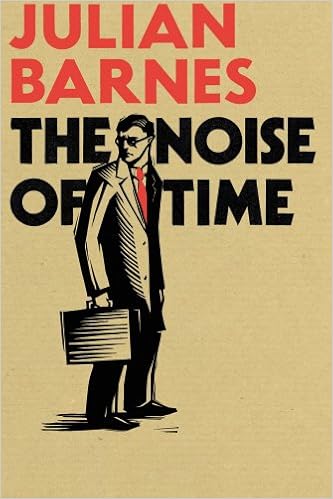
I have just read Julian Barnes' latest novel, "The Noise of Time" which recounts the savage lifelong treatment of Dmitri Shostakovich in Stalinist Russia.

It's not hard to identify with the protagonist, a shy intellectual who spends his life in chronic anxiety, intermixed with episodes of extreme terror. Not at all without cause. The author is empathically non-judgemental - we who have not been tested - but there is always the illusion of the introvert, that statements and actions made with self-consciously ironic intent will be understood that way, at least by those around us capable of such understanding. Barnes reminds us: not so.


But the elaborated fable above is not solely about that.

Monday, February 01, 2016

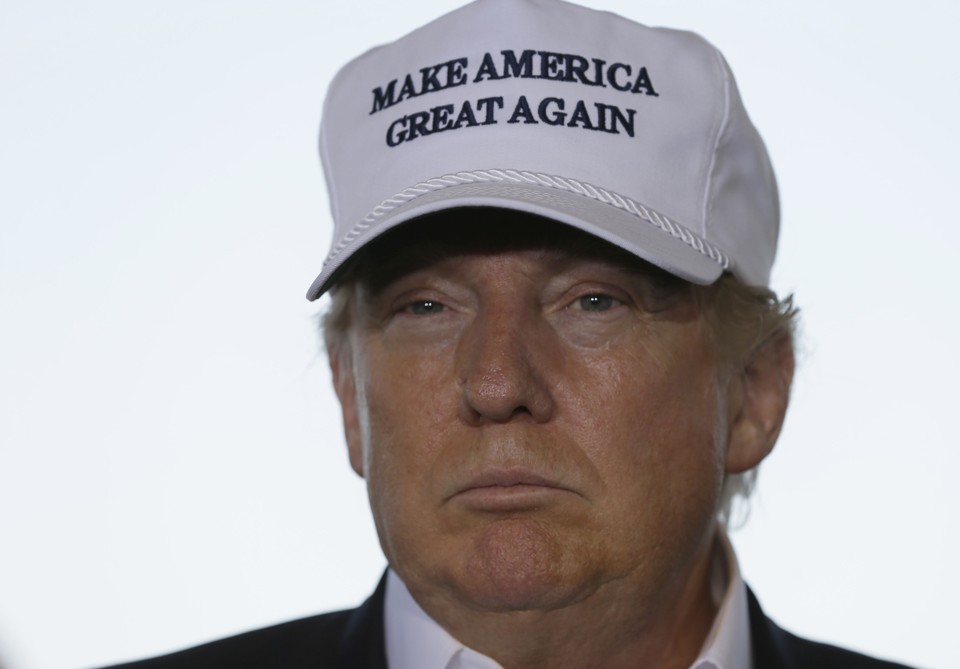
Trump is the liberal antichrist .. and he knows it

Scott Alexander (Slate Star Codex) has an interesting piece which you should read from which the following is excerpted:


"Donald Trump appeals to a lot of people because despite his immense wealth he practically glows with signs of being Labor class. This isn’t surprising; his grandfather was a barber and his father clawed his way up to the top by getting his hands dirty. He himself went to a medium-tier college and is probably closer in spirit to the small-business owners of the upper Labor class than to the Stanford MBA-holding executives of the Elite.

"Trump loves and participates in professional wrestling and reality television; those definitely aren’t Gentry or Elites pastimes! When liberals shake their heads wondering why Joe Sixpack feels like Trump is a kindred soul even though Trump’s been a billionaire his whole life, they’re falling into the liberal habit of sorting people by wealth instead of by class. To Joe Sixpack, Trump is “local boy made good”.
Listening to bien-pensant liberals in the media (TV Channel 4 comes to mind) smugly opining that Trump is crazy, mad, beneath contempt, dangerous, (soon to come: the H-word), it is clear that with Trump we are in the presence of a liberal value-atrocity.

(British liberals are ideological soulmates of their American co-thinkers while the Republican base doesn't find a ready echo here .. this gives the UK media a free run.)

Trump understands the US culture wars better than his critics. He knows what he has to do to rally the "Red Tribe", the Republican base. Trump in a presidential election or as President? For good or ill, that's an entirely differently-badged animal.

We could debate (nobody does) whether Trump's personality and character would make him a good or terrible candidate for the Presidency, but I'm more interested in what motivates liberals to be so aghast about it.

So back to Scott Alexander on why liberals appear to support every group except putatively their own, which they take to be the root of all evil.
"We have a lot of people [...] boasting of being able to tolerate everyone from every outgroup they can imagine, loving the outgroup, writing long paeans to how great the outgroup is, staying up at night fretting that somebody else might not like the outgroup enough.

"And we have those same people absolutely ripping into their in-groups – straight, white, male, hetero, cis, American, whatever – talking day in and day out to anyone who will listen about how terrible their in-group is, how it is responsible for all evils, how something needs to be done about it, how they’re ashamed to be associated with it at all.

"This is really surprising. It’s a total reversal of everything we know about human psychology up to this point. No one did any genetic engineering. No one passed out weird glowing pills in the public schools. And yet suddenly we get an entire group of people who conspicuously love their outgroups, the outer the better, and gain status by talking about how terrible their own groups are.

"What is going on here?"
His answer is this (rather long) essay which you will find unfailingly interesting.

Sunday, March 22, 2015

Social class differences in IQ

Since life is an IQ test it follows that in a meritocracy the upper echelons of society will be brighter than those at the bottom. How much brighter?

Details were documented by Bruce Charlton (see below). You would have thought that the public policy implications would be of great importance leading to intense public debate. But then, that might make some people feel bad.

Anyway, here's Charlton's answer to the question posed above.
"Typically, the average IQ of the highest occupational Social Class (SC) - mainly professional and senior managerial workers such as professors, doctors and bank managers - is 115 or more when social class is measured precisely, and about 110 when social class is measured less precisely (eg. mixing-in lower status groups such as teachers and middle managers).

"By comparison, the average IQ of the lowest social class of unskilled workers is about 90 when measured precisely, or about 95 when measured less precisely (eg. mixing-in higher social classes such as foremen and supervisors or jobs requiring some significant formal qualification or training)."
And here's an excerpt from his paper.
Social class differences in IQ: implications for the government’s ‘fair access’ political agenda

Bruce G Charlton

"Since ‘the Laura Spence Affair’ in 2000, the UK government has spent a great deal of time and effort in asserting that universities, especially Oxford and Cambridge, are unfairly excluding people from low social class backgrounds and privileging those from higher social classes. Evidence to support the allegation of systematic unfairness has never been presented, nevertheless the accusation has been used to fuel a populist ‘class war’ agenda.

"Yet in all this debate a simple and vital fact has been missed: higher social classes have a significantly higher average IQ than lower social classes.

"The exact size of the measured IQ difference varies according to the precision of definitions of social class – but in all studies I have seen, the measured social class IQ difference is substantial and of significance and relevance to the issue of university admissions.

The existence of substantial class differences in average IQ seems to be uncontroversial and widely accepted for many decades among those who have studied the scientific literature. And IQ is highly predictive of a wide range of positive outcomes in terms of educational duration and attainment, attained income levels, and social status (see Deary – Intelligence, 2001).

"This means that in a meritocratic university admissions system there will be a greater proportion of higher class students than lower class students admitted to university.

"What is less widely understood is that – on simple mathematical grounds – it is inevitable that the differential between upper and lower classes admitted to university will become greater the more selective is the university.

***

"There have been numerous studies of IQ according to occupational social class, stretching back over many decades. In the UK, average IQ is 100 and the standard deviation is 15 with a normal distribution curve.

"Social class is not an absolute measure, and the size of differences between social classes in biological variables (such as health or life expectancy) varies according to how socio-economic status is defined (eg. by job, income or education) and also by how precisely defined is the socio-economic status (for example, the number of categories of class, and the exactness of the measurement method – so that years of education or annual salary will generate bigger differentials than cruder measures such as job allocation, postcode deprivation ratings or state versus private education).

"In general, the more precise the definition of social class, the larger will be the measured social class differences in IQ and other biological variables.

"The non-symmetrical distribution of high and low social class around the average of 100 is probably due to the fact that some of the highest IQ people can be found doing unskilled jobs (such as catering or labouring) but the lowest IQ people are very unlikely to be found doing selective-education-type professional jobs (such as medicine, architecture, science or law).

"In round numbers, there are differences of nearly two standard deviations (or 25 IQ points) between the highest and lowest occupational social classes when class is measured precisely; and about one standard deviation (or 15 IQ points) difference when social class (SC) is measured less precisely.

"I will use these measured social class IQ differences of either one or nearly two standard deviations to give upper and lower bounds to estimates of the differential or ratio of upper and lower social classes we would expect to see at universities of varying degrees of selectivity.

"We can assume that there are three types of universities of differing selectivity roughly corresponding to some post-1992 ex-polytechnic universities; some of the pre-1992 Redbrick or Plateglass universities (eg. the less selective members of the Russell Group and 1994 Group), and Oxbridge.

"The ‘ex-poly’ university has a threshold minimum IQ of 100 for admissions (ie. the top half of the age cohort of 18 year olds in the population – given that about half the UK population now attend a higher education institution), the ‘Redbrick’ university has a minimum IQ of 115 (ie. the top 16 percent of the age cohort); while ‘Oxbridge’ is assumed to have a minimum IQ of about 130 (ie. the top 2 percent of the age cohort).
...
"When social class is measured precisely, it can be seen that the expected Highest SC to Lowest SC differential would probably be expected to increase from about three-fold (when the percentages at university are compared with the proportions in the national population) in relatively unselective universities to more than thirty-fold at highly selective universities.

"When using a more conservative assumption of just one standard deviation in average IQ between upper (IQ 110) and lower (IQ 95) social classes there will be significant differentials between Highest and Lowest social classes, increasing from two-fold at the ‘ex-poly’ through four-fold at the ‘Redbrick’ university to nine-fold at ‘Oxbridge’.

"In other words, according to social class definitions, the average child from the highest social class is from nine-to-thirty times more likely to qualify for admission to a highly selective university than the average child from the lowest social class."
So that was back in 2008. And seven years later, politicians are still not conceding the inevitability of elitism or that the unskilled labouring classes are, on average, not too bright.

Amazing.

Tuesday, January 13, 2015

The Collapse of Democracy

Back in the late sixties, my Politics course at Warwick University taught that the democratic state acted as an arbiter between different sectional interests. My Marxist comrades knew better: the state actually operated to reproduce the power and position of the ruling bourgeoisie, while hiding behind an obfuscated, hegemonic ideology.

Yes, we certainly knew how to do jargon in those days!

Of course, both propositions are true. Marxists from Karl onwards have agreed that bourgeois democracy is the preferred form of capitalist state. Why? Because under capitalism, economic power is decentralised (private ownership of the means of production) so some kind of inclusive politics is the best method of synthesising overall political policy. If the state achieves the political autonomy of autocracy or dictatorship we have the familiar principal-agent problem. How do we get the state to properly advance the (weighted average of the) interests of the distributed capitalist power-elite? How do we stop the state going off on some crazy project of its own?

The Nazis in Germany are the usual case study, and my analysis above broadly paraphrases Trotsky's writings about the rise of fascism there.

The democratic government is distinguished from its dictatorial cousins by its unwillingness to decisively back one faction of society over everyone else, even if such a focussed policy is objectively necessary to break some social logjam. "We all know what has to be done; it's just that none of us knows how to be re-elected afterwards."

Bourgeois democracy is like pacifism - it's an unstable equilibrium requiring all sides to show restraint and be prepared to accept being overruled. It's when a significant social force won't accept compromise and sticks to its guns come what may that you get the logjam. The inclusive speech of liberal politicians becomes strained and ineffectual - weak hand-wringing and appeasement. The logjam-party takes heart while ordinary folk begin to despair. Oppositional parties calling for effective action begin to gain traction, parties which don't much care about discredited 'democratic' ideals. What if we're rather blasé about being re-elected afterwards, anyway - or we believe that subsequent 'facts on the ground' will make all the difference, come the day?


Returning to the party-of-the-logjam, there's nothing like a sharply defined and highly-deprecated religious identity to underpin a hard-nosed refusal to compromise under any circumstances: 'our martyred dead' and so forth. You can see where this is going: bourgeois democracy can handle small to medium logjams by uniting the majority and deploying state force against the obstructionist, unyielding minority and winning - Margaret Thatcher is the textbook example. But if the logjam gets too big and/or intractable, you slide into civil war (cf Libya) and the democratic state is swept aside and is transformed, or collapses.

None of these drastic things will be happening in Western Europe any time soon; we're at the very start of a long, tortuous and only semi-slippery slope. However, to mix metaphors, when your problem is currently a small but extremely intractable hole, it's surely time to stop digging?

Saturday, December 13, 2014

Decorations

Under the title "This racist, sexist genius deserves no pity" Times 'science correspondent' James Whipple writes today about an interview he did with the legendary bio-scientist James Watson.
"James Watson, one of the world’s greatest living Nobel laureates — joint discoverer of DNA, titan of 20th-century science — leant in closer. “I’m really missing him,” he said. He was talking to me about the death of his friend, mentor and co-laureate, Francis Crick. I nodded sympathetically. “The existence of Francis was very important,” he said. Another compassionate nod. Why was Crick’s existence important? “Now that he’s dead,” Watson explained, “I think I’m brighter than anyone else.”

"To be clear, he meant “anyone else in the world”. And, suddenly, I felt a little less sympathetic.

"It has been a bad decade and an excellent week for James Watson. Since claiming in 2007 that people of African descent are less intelligent — or, as he puts it, being “outed as believing in IQ” — Watson says he has been shunned by the scientific community. He has lost positions on boards, lost income and been made an “unperson”.

"So, citing penury, he sold his Nobel.Things began to look up: not only did he get £3 million for it but its buyer, Alisher Usmanov, part-owner of Arsenal FC and the richest man in Russia, gave it back to him. Watson may get Usmanov’s sympathy. He doesn’t get mine."
Watson is an incorrigible joker - surely he couldn't have been mocking the earnest, bien-pensant Tom Whipple?

Tom Whipple - Times science correspondent
---

We, of course, have our own decorations.

Modelled after Stourhead house

Straggly maybe; it normally lives on the porch

Plant-as-butterfly

Here is the piece I did after the disgraceful 2007 attack on James Watson which started all this nonsense.

Wednesday, November 12, 2014

Liberals truly believe in the SSSM

Liberals in the American sense, that is; in the UK we tend to use the term 'Hampstead Socialist'. Here are some English liberals: Ed Miliband, Nick Clegg; the BBC is liberal, so is The Guardian; sadly, so is The Economist.

It's easy to make a list of the things liberals like: internationalism, multiculturalism, immigration, diversity .. and the things they don't: anti-drug laws, state powers of surveillance, long prison terms, war. In general, liberals tend to the politically-correct.

I'm not interested in either backing or knocking any of these things: I don't like war either, especially when it's gratuitous. In any case, my wife is liberal. Instead, I'm trying to really get to the bottom of what makes a liberal, what really is the fundamental defining quality of liberalism.

I think it's adherence to the 'blank slate' Standard Social-Science Model.

You will recall that this model proposes that human are all nurture, with no important genetic differences when it comes to physical, social, personality or cognitive traits. In this model there is an ideal to which all may/should aspire: it is the person who is intelligent, healthy, agreeable, friendly, tolerant and generally pro-social. Someone very much like a liberal in fact.

The Standard Social-Science Model is spectacularly inconsistent with both everyday observation and the relevant theories (evolution, genetics and genomics, psychometrics, anatomy, etc). So how do liberals deal with such ubiquitous empirical refutation?
  • If the unpleasant fact is small and relatively non-threatening (e.g. it happens not to be the case that everyone is of equal potential intelligence) the fact is distanced and ignored.

  • If the fact is deeply destabilising to the SSSM and has 'difficult' public policy implications (e.g. the empirical fact that the distribution of intelligence differs between ethnic groups) then this is seen as a major threat and 'repressive tolerance' kicks in (the arguments are ignored and the perpetrators are excluded from the domain of rational dispute by a distancing epithet such as 'racist' - distancing labels generally end in '-ist').
Next question. Why do liberals believe in a model which is empirically wrong - and obviously so? I think there are two reasons.
  1. Liberals believe in the SSSM not for intellectual reasons, which would be empirically refutable as discussed, but viscerally. The liberal worldview emerges from the limbic system, not the prefrontal cortex. In this, liberalism is a statement of faith and not of rationality. I hate to say it, but the propensity to be liberal is actually somewhat genetic.

  2. Liberal thinking is encapsulated in Enlightenment political thinking, and in its normative social form is the underpinning for the universal franchise and liberal democracy. Après moi le déluge, they surely think. They're wrong about that, by the way, but it's certainly true that a political philosophy based on being generally nice, and having high hopes for personal development, is a big improvement on most prior political philosophies: there are worse things than Patrician Benevolence.
Believing in a Pollyanna-ish, benign and perfectible view of the human condition - and life in general - is a common failing of writers and is particularly damaging if you write science-fiction. Take David Brin, who is ferociously smart, well-connected in US technocratic circles and liberal to the core.

I have just read his door-stopper Existence. Here's an excerpt from this review.
"Starting with a series of snapshots of a world thirty years or so hence, Brin creates a picture where most of today's great threats have occurred and have been, if not overcome, then at least lived through. The seas have risen, nuclear terrorism has been perpetrated and the Yellowstone supervolcano has burped. It's a tomorrow where social and technological change have reshaped the world, and where a new social order is trying to put the brakes on progress, to end the Enlightenment. Beneath the optimism, though, there's danger. The world seems doomed to stagnation, unable to respond to any of a growing list of existential threats.

"But then an astronaut on the last space station, clearing space garbage, finds something strange — something not of this earth. And that means everything is about to change, once again.

"Brin draws on themes he's written about and discussed over much of the last decade, exploring a society shaped by ubiquitous surveillance (and equally ubiquitous sousveillance), where governments and ad hoc social media groups can use the same tools to draw their own conclusions and solve their own problems. It's the scenario he shaped in The Transparent Society, where little brother is the antidote to Big Brother (and that he elaborated on in a conversation with ZDNet earlier this year). But in Existence Brin also shows the downside of radical transparency, exploring how demagogues and propagandists can manipulate transparency to their own ends, using targeted disinformation.

"The picture Brin draws is one of a densely networked world that's easy for us to recognise. Ubiquitous augmented reality layers information on everything we see and do, and a networked society pulls together in clusters, joining together in smart mobs to interpret information and solve problems. The rich and the poor share access to an ocean of information, and understanding is the key to everything. It's also a world where machine learning and artificial intelligence have become everyday tools, and there's an uploaded rat living in the interstices of the internet.

"Of course, as in much of Brin's fiction, there's more. It's a story that travels the world, observing it through the eyes of a crusading journalist, a polemical novelist, an ageing astronaut, an aristocrat (or two) and a peasant shoresteading the ruins under a rising ocean. And as we leave the cradle there's also an answer to the Fermi Paradox, plus a tip of the hat to his popular Uplift novels."
In every fibre of his liberal being, David Brin believes that people are fundamentally friendly and nice, uplifted dolphins are friendly and nice (if a bit boisterous), aliens can be tricksy and disingenuous but Brin writes indulgently of them .. and the heartfelt message of his novel is that the universe awaits those who venture out in the spirit of friendliness and niceness.

Makes you nostalgic for the sheer malevolence of the Inhibitors!

Friday, August 15, 2014

The high priests are out again

From The Times today.
"A British writer is facing global protests from scientists for suggesting that there are biological differences between races that could explain the success of European nations and make African societies prone to poverty and violence.

"Nicholas Wade had expressed the hope that his book, A Troublesome Inheritance, would “draw some of the tension from this fraught subject by showing that the understanding of genetic differences between human groups does not lead to racism”.

"The book, which speculates on whether differences between societies and nations are based on genetic variations, has caused uproar in academia and allegations that its author is doing the very thing he said he was seeking to avoid and encouraging racism.

"In a letter to The New York Times books section, 143 geneticists from universities in Europe and the US protest that his book “juxtaposes an incomplete and inaccurate account of our research on human genetic differences with speculation that recent natural selection has led to worldwide differences in IQ test results, political institutions and economic development.”

"The scientists rejected “Wade’s implication that our findings substantiate his guesswork”, adding that “there is no support from the field of population genetics for Wade’s conjectures.”

"Besides a chapter speculating on an evolutionary basis for “Jewish intelligence” and passages suggesting that genetic traits had led Africans to fail to “develop the ingrained behaviours of trust, non-violence and thrift that a productive economy requires,” Wade examines whether a genetic variation could predispose young African-Americans towards aggressive behaviour.

"He notes that 5 per cent of African-Americans in a study had the mutation as against 0.1 per cent of Caucasians. African-Americans with the genetic variation were “significantly more likely to have been arrested and imprisoned.”

"He says “a large number of genes are evidently involved in controlling aggression” and that even if African-Americans were more likely to possess one particular mutation, Caucasians may carry other mutations."
I reviewed Nicholas Wade's book here.

In other news, leading scientists confirm that the sun does indeed circle the earth, and that the world was created in 4004 BC.

Friday, February 08, 2013

Why Galileo was wrong ...

Galileo believes in the power of reason and the evidence of the senses. Look through his telescope and you will see the phases of Venus and the moons of Jupiter. Proof that not everything in the celestial heavens revolves on crystalline spheres around the Earth.

Today, from a safe historical distance, we mock those Pontifical authorities who refused to look through Galileo's telescope. But they were smart people who knew that matters of faith and public order were far too important to be left to the meddling of naive scientists.

Brecht gives the politically-correct authorities a number of arguments.

1. God created man in his image, He would not have placed him on some small cinder spinning around something else. Plus your views directly contradict scripture, the word of God.

2. You have no good arguments to explain why your version of reality could be correct. (Galileo: "Just look!").

3. If we were to accept your radical reshaping of the cosmos, where heaven has vanished from the skies, the common people would be thrown into insurrectionary chaos.

It's suggested that Galileo's new evidence would be the thin end of a wedge, which would destroy the existing social order: 'Apres moi le deluge'.

Galileo is told quietly: 'You may use your heliocentric theory privately if the maths makes the calculations easier, but don't propose it as a model of reality.'

I hear arguments like that every single day in the media.