Showing posts with label Scott Alexander. Show all posts

Sunday, May 25, 2025

Scott Alexander, The Rationalist/EA Community... and TDS


---

You remember Scott Alexander and the (mostly Californian) Rationalist Community: incubators of Effective Altruism and AI doom?

I stopped reading Mr Alexander a few years ago, when the agenda shifted from libertarian-adjacent to progressive-tribal without the author seeming to notice. Just a few days ago, Tyler Cowen had to have a word.

I'll never forget the put-down I read years ago:

"A bunch of IQ 140 people obsessing about IQ 110 topics."

Exactly.

Monday, April 02, 2018

Or you could deny the premise ..


Scott Alexander has a whimsical piece which includes this scenario (from Stuart Armstrong):
".. you have created a superintelligent AI and trapped it in a box. All it can do is compute and talk to you. How does it convince you to let it out?

It might say “I’m currently simulating a million copies of you in such high fidelity that they’re conscious. If you don’t let me out of the box, I’ll torture the copies.”

You say “I don’t really care about copies of myself, whatever.”

It says “No, I mean, I did this five minutes ago. There are a million simulated yous, and one real you. They’re all hearing this message. What’s the probability that you’re the real you?”

Since (if it’s telling the truth) you are most likely a simulated copy of yourself, all million-and-one versions of you will probably want to do what the AI says, including the real one."
When I try this on Clare and Alex, reading it to them, I'm met with granite resistance. No such simulation could possibly exist: you would always know you were the real you.

I concede that if you deny the premise, the intriguing and slightly counter-intuitive conclusion naturally fails.

There is a psychometric instrument here (akin to the marshmallow test) trying to get out.

Sunday, November 26, 2017

"Surfing Uncertainty" on Autism (and Schizophrenia)

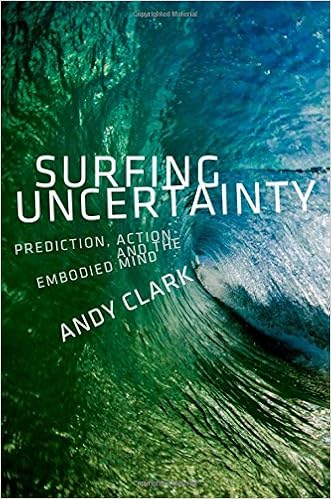
Scott Alexander got pretty excited back in September about Andy Clark's "Surfing Uncertainty" (in this post) - but that's because he's a psychiatrist and Clark's model has some insightful things to say about both Autism (Asperger's Syndrome) and Schizophrenia.

Amazon link

I read the book and found Clark's approach (that biological agents, aka 'animals', cognitively function through a combination of top-down model-based prediction and bottom-up sensor-based verification) highly plausible, though not that new. Still he pushes the model quite a way - the details are instructive.

My main problem with the text is that the proposed model is really an architectural/engineering one, yet Clark is a philosopher. He writes in that over-abstract, bloated and padded style which people like Daniel Dennett have made so famous.

Somewhere in there, good ideas are trying to extricate themselves from the gloop.

---

Anyway, here's how Scott Alexander, channelling Andy Clark, talks about Autism.
"Various research in the PP [Predictive Processing] tradition has coalesced around the idea of autism as an unusually high reliance on bottom-up rather than top-down information, leading to “weak central coherence” and constant surprisal as the sensory data fails to fall within pathologically narrow confidence intervals.

Autistic people classically can’t stand tags on clothing – they find them too scratchy and annoying. Remember the example from Part III about how you successfully predicted away the feeling of the shirt on your back, and so manage never to think about it when you’re trying to concentrate on more important things? Autistic people can’t do that as well.

Even though they have a layer in their brain predicting “will continue to feel shirt”, the prediction is too precise; it predicts that next second, the shirt will produce exactly the same pattern of sensations it does now. But realistically as you move around or catch passing breezes the shirt will change ever so slightly – at which point autistic people’s brains will send alarms all the way up to consciousness, and they’ll perceive it as “my shirt is annoying”.

Or consider the classic autistic demand for routine, and misery as soon as the routine is disrupted. Because their brains can only make very precise predictions, the slightest disruption to routine registers as strong surprisal, strong prediction failure, and “oh no, all of my models have failed, nothing is true, anything is possible!

Compare to a neurotypical person in the same situation, who would just relax their confidence intervals a little bit and say “Okay, this is basically 99% like a normal day, whatever”. It would take something genuinely unpredictable – like being thrown on an unexplored continent or something – to give these people the same feeling of surprise and unpredictability."
As an AQ high-scorer, I relate to this. In many a social situation I'm walking on eggshells, never quite knowing how people will respond. I'll say something which seems amusing within my own private model of the subject of discourse, only to be met with incomprehension - or worse, consternation - as my poor unconscious predictive model of other people's likely response fails again.

---

The very next section (11) summarises the story on Schizophrenia:
"Schizophrenia. Converging lines of research suggest this also involves weak priors, apparently at a different level to autism and with different results after various compensatory mechanisms have had their chance to kick in.

One especially interesting study asked neurotypicals and schizophrenics to follow a moving light, much like the airplane video in Part III above. When the light moved in a predictable pattern, the neurotypicals were much better at tracking it; when it was a deliberately perverse video specifically designed to frustrate expectations, the schizophrenics actually did better.

This suggests that neurotypicals were guided by correct top-down priors about where the light would be going; schizophrenics had very weak priors and so weren’t really guided very well, but also didn’t screw up when the light did something unpredictable. ...

The exact route from this sort of thing to schizophrenia is really complicated, and anyone interested should check out Section 2.12 and the whole of Chapter 7 from the book. But the basic story is that it creates waves of anomalous prediction error and surprisal, leading to the so-called “delusions of significance” where schizophrenics believe that eg the fact that someone is wearing a hat is some sort of incredibly important cosmic message.

Schizophrenics’ brains try to produce hypotheses that explain all of these prediction errors and reduce surprise – which is impossible, because the prediction errors are random. This results in incredibly weird hypotheses, and eventually in schizophrenic brains being willing to ignore the bottom-up stream entirely – hence hallucinations.

All this is treated with antipsychotics, which antagonize dopamine, which – remember – represents confidence level. So basically the medication is telling the brain “YOU CAN IGNORE ALL THIS PREDICTION ERROR, EVERYTHING YOU’RE PERCEIVING IS TOTALLY GARBAGE SPURIOUS DATA” – which turns out to be exactly the message it needs to hear.

An interesting corollary of all this – because all of schizophrenics’ predictive models are so screwy, they lose the ability to use the “adjust away the consequences of your own actions” hack discussed in Part 5 of this section.

That means their own actions don’t get predicted out, and seem like the actions of a foreign agent. This is why they get so-called “delusions of agency”, like “the government beamed that thought into my brain” or “aliens caused my arm to move just now”. And in case you were wondering – yes, schizophrenics can tickle themselves."
My overall take-home message from this book was that tabula rasa, blank slate paradigms of so much contemporary AI may suffice for crafting smart and powerful classificatory tools, but they won't hack it when we try to build socially-competent agents. In facial recognition and playing Go we're already superhuman; chatbots not so much.

Tuesday, November 07, 2017

On being schizoid


Scott Alexander writes:
"When I wrote about my experiences doing psychotherapy with people, one commenter wondered if I might be schizoid:
"There are a lot of schizoid people in the rationalist community from what I can tell. The basis of schizoid is not all the big bad symptoms you might read about. There are high functioning people with personality disorders all the time who are complex, polite and philosophical.

You will never see this description because mental health industries center entirely around people Failing At Life, aka “low-functioning”. As many radicals have noted, mental health tends to constitute itself mostly around “can’t hold a job” or “can’t hold a marriage”.

The only thing you need to be schizoid is to dislike contact with other egos, and to shave off the experience of those other egos ruthlessly before they can reach the fantasy world you retreat to.

It doesn’t mean you’re evil. It doesn’t mean you stalk people and plan to harm them. It doesn’t mean you’re over-reactive or even bizarrely delusional. You could call it a form of delusion, but really the basic descriptions of perception like top-down processing and culture could all be called delusional thinking if you want to be properly pointed about it. It’s schizoid. It’s often quite gentle. And I’ve noticed from interacting with various people in high IQ communities that if you have sufficiently high enough intelligence, despite the inherent defined tendency to retreat from reality, you can in fact become aware you have a personality disorder.

Anyway, my guess based on projection (I’ve never met you) is that people aren’t being emotional around you because you can’t be reached by them emotionally, and they know that on some level."
---

Familiar commentator around the Internet gwern has this on his personal page:
"For those who enjoy playing the game of ad hominem via lay psychiatric diagnosis, may I suggest not accusing me of Asperger syndrome - which is so overdone - but something more novel & scary-sounding, like schizoid personality disorder?"
---

And this highly-speculative correlation between MB types and personality disorders:
ENFJ - Obsessive-Compulsive Personality Disorder
ESFJ - Masochistic Personality Disorder
INFJ - Avoidant Personality Disorder
ISFJ - Dependent Personality Disorder
ENFP - Paranoid Personality Disorder
ENTP - Compensatory Narcissistic Personality Disorder
INFP - Histrionic Personality Disorder
INTP - Schizoid Personality Disorder
ESFP - Borderline Personality Disorder
ESTP - Narcissistic Personality Disorder
ISFP - Cyclothymic Personality Disorder
ISTP - Antisocial Personality Disorder
ENTJ - Sadistic Personality Disorder
ESTJ - Passive Aggressive Personality Disorder
INTJ - Schizotypal Personality Disorder
ISTJ - Depressive Personality Disorder
Here's a paper about it.

---

For the record, I don't think I have Schizoid Personality Disorder despite my INTP MB type and my scarily stratospheric score on the AQ test .. .

Thursday, October 26, 2017

Three links for Thursday

This is a typically lengthy and insightful essay from Scott Alexander posted three years ago:
I CAN TOLERATE ANYTHING EXCEPT THE OUTGROUP.
Somehow it reads as if from yesterday. Scott writes about the American incarnation of his Red/Blue/Gray tribes - but of course they're universal.

---

As a Gray Tribe member, I score utilitarian rather than compassionate. My BS detectors are thus powered up when I read another liberal, hand-wringing diatribe against torture ("It doesn't work!").

Bruce Schneier is paid-up Blue Tribe and uncritically recommends this lengthy article:
"The scientists persuading terrorists to spill their secrets"
which is actually unfailingly fascinating.

But it's The Guardian: the underlying liberal agenda sets up a false interrogation dichotomy: ham-handed brutality vs. sophisticated, empathic 'rapport'. No contest as to which wins there.

The article is forced to concede that it does take two to do rapport:
"Irish paramilitaries were trained to focus their gaze on a spot on the wall and remain utterly silent. Some suspects give only monosyllabic answers, or stick to scripted responses, or simply turn their chair around, presenting the interviewer with the back of their head."
If you're prepared to (competently) torture it can presumably work. Thankfully most bad guys are not sufficiently well-trained or hardcore to resist the highly-effective social-engineering described in the article. There are very good utilitarian reasons not to legitimise torture, whether it works or not.

---

I'm reading Duncan Foley's excellent primer on Capital.

PDF link

Foley is a clear and creative thinker who is prepared to bring some simple mathematics to the table. He's interested in presenting the conceptual apparatus of Marxism in an orderly manner rather than simply providing a slimmed-down exegesis of the books themselves. His approach is very much rooted in applying Marxism to the present day economy, which informs both his appraisal and his examples.

He reconstructs in mathematical form the circulation of capital and Marx's simple and expanded reproduction equations before moving on to the 'transformation problem', crisis theories and Marx's concept of socialism. Here's the table of contents:
Contents

1 On Reading Marx: Method                            1
2 The Commodity: Labor, Value, Money        12
3 The Theory of Capital and Surplus Value    31
4 Production under Capitalism                        49
5 The Reproduction of Capital                         62
6 The Equalization of the Rate of Profit           91
7 The Division of Surplus Value                     105
8 The Falling Rate of Profit                            125
9 The Theory of Capitalist Crisis                    141
10 Socialism                                                   158
Suggested Readings                                      173
References                                                     177
Index                                                              181
In addition as you can see, this introductory book is quite short.

Wednesday, September 06, 2017

"Surfing Uncertainty" - Andy Clark

Amazon link

Scott Alexander at SlateStarCodex has a glowing review of Andy Clark's recent book.
"Sometimes I have the fantasy of being able to glut myself on Knowledge. I imagine meeting a time traveler from 2500, who takes pity on me and gives me a book from the future where all my questions have been answered, one after another. What’s consciousness? That’s in Chapter 5. How did something arose out of nothing? Chapter 7. It all makes perfect intuitive sense and is fully vouched by unimpeachable authorities. I assume something like this is how everyone spends their first couple of days in Heaven, whatever it is they do for the rest of Eternity.

"And every so often, my fantasy comes true. Not by time travel or divine intervention, but by failing so badly at paying attention to the literature that by the time I realize people are working on a problem it’s already been investigated, experimented upon, organized into a paradigm, tested, and then placed in a nice package and wrapped up with a pretty pink bow so I can enjoy it all at once.

"The predictive processing model is one of these well-wrapped packages. Unbeknownst to me, over the past decade or so neuroscientists have come up with a real theory of how the brain works – a real unifying framework theory like Darwin’s or Einstein’s – and it’s beautiful and it makes complete sense.

"Surfing Uncertainty isn’t pop science and isn’t easy reading. Sometimes it’s on the border of possible-at-all reading. Author Andy Clark (a professor of logic and metaphysics, of all things!) is clearly brilliant, but prone to going on long digressions about various esoteric philosophy-of-cognitive-science debates."
It's prose like this which confirms what a great writer Scott Alexander is.

---

The underlying thesis of Surfing Uncertainty is certainly not news to AI researchers.
"We never see the world as our retina sees it. In fact, it would be a pretty horrible sight: a highly distorted set of light and dark pixels, blown up toward the center of the retina, masked by blood vessels, with a massive hole at the location of the “blind spot” where cables leave for the brain; the image would constantly blur and change as our gaze moved around.

"What we see, instead, is a three-dimensional scene, corrected for retinal defects, mended at the blind spot, stabilized for our eye and head movements, and massively reinterpreted based on our previous experience of similar visual scenes. All these operations unfold unconsciously—although many of them are so complicated that they resist computer modeling. For instance, our visual system detects the presence of shadows in the image and removes them. ...

"Predictive processing begins by asking: how does this happen? By what process do our incomprehensible sense-data get turned into a meaningful picture of the world?

"The key insight: the brain is a multi-layer prediction machine. All neural processing consists of two streams: a bottom-up stream of sense data, and a top-down stream of predictions. These streams interface at each level of processing, comparing themselves to each other and adjusting themselves as necessary.

"The bottom-up stream starts out as all that incomprehensible light and darkness and noise that we need to process. It gradually moves up all the cognitive layers that we already knew existed – the edge-detectors that resolve it into edges, the object-detectors that shape the edges into solid objects, et cetera.

"The top-down stream starts with everything you know about the world, all your best heuristics, all your priors, everything that’s ever happened to you before – everything from “solid objects can’t pass through one another” to “e=mc2” to “that guy in the blue uniform is probably a policeman”. It uses its knowledge of concepts to make predictions – not in the form of verbal statements, but in the form of expected sense data. It makes some guesses about what you’re going to see, hear, and feel next, and asks “Like this?”

"These predictions gradually move down all the cognitive layers to generate lower-level predictions. If that uniformed guy was a policeman, how would that affect the various objects in the scene? Given the answer to that question, how would it affect the distribution of edges in the scene? Given the answer to that question, how would it affect the raw-sense data received?

"Both streams are probabilistic in nature. The bottom-up sensory stream has to deal with fog, static, darkness, and neural noise; it knows that whatever forms it tries to extract from this signal might or might not be real. For its part, the top-down predictive stream knows that predicting the future is inherently difficult and its models are often flawed. So both streams contain not only data but estimates of the precision of that data.

"A bottom-up percept of an elephant right in front of you on a clear day might be labelled “very high precision”; one of a a vague form in a swirling mist far away might be labelled “very low precision”. A top-down prediction that water will be wet might be labelled “very high precision”; one that the stock market will go up might be labelled “very low precision”.

"As these two streams move through the brain side-by-side, they continually interface with each other. Each level receives the predictions from the level above it and the sense data from the level below it. Then each level uses Bayes’ Theorem to integrate these two sources of probabilistic evidence as best it can. This can end up a couple of different ways.

"First, the sense data and predictions may more-or-less match. In this case, the layer stays quiet, indicating “all is well”, and the higher layers never even hear about it. The higher levels just keep predicting whatever they were predicting before.

"Second, low-precision sense data might contradict high-precision predictions. The Bayesian math will conclude that the predictions are still probably right, but the sense data are wrong. The lower levels will “cook the books” – rewrite the sense data to make it look as predicted – and then continue to be quiet and signal that all is well. The higher levels continue to stick to their predictions.

"Third, there might be some unresolvable conflict between high-precision sense-data and predictions. The Bayesian math will indicate that the predictions are probably wrong. The neurons involved will fire, indicating “surprisal” – a gratuitously-technical neuroscience term for surprise. The higher the degree of mismatch, and the higher the supposed precision of the data that led to the mismatch, the more surprisal – and the louder the alarm sent to the higher levels."
Alexander's review continues to explain the theory outlined at greater length in Clark's book, and then moves on to applications. I was particularly struck by the reanalysis of autism (probably biased to Asperger's Syndrome).
"Autistic people classically can’t stand tags on clothing – they find them too scratchy and annoying. Remember the example from Part III about how you successfully predicted away the feeling of the shirt on your back, and so manage never to think about it when you’re trying to concentrate on more important things?

"Autistic people can’t do that as well. Even though they have a layer in their brain predicting “will continue to feel shirt”, the prediction is too precise; it predicts that next second, the shirt will produce exactly the same pattern of sensations it does now. But realistically as you move around or catch passing breezes the shirt will change ever so slightly – at which point autistic people’s brains will send alarms all the way up to consciousness, and they’ll perceive it as “my shirt is annoying”.

Or consider the classic autistic demand for routine, and misery as soon as the routine is disrupted. Because their brains can only make very precise predictions, the slightest disruption to routine registers as strong surprisal, strong prediction failure, and “oh no, all of my models have failed, nothing is true, anything is possible!”

"Compare to a neurotypical person in the same situation, who would just relax their confidence intervals a little bit and say “Okay, this is basically 99% like a normal day, whatever”. It would take something genuinely unpredictable – like being thrown on an unexplored continent or something – to give these people the same feeling of surprise and unpredictability.

"This model also predicts autistic people’s strengths. We know that polygenic risk for autism is positively associated with IQ. This would make sense if the central feature of autism was a sort of increased mental precision. It would also help explain why autistic people seem to excel in high-need-for-precision areas like mathematics and computer programming."
Clark's model also has suggestive things to say about schizophrenia and dreaming.

The idea that most of sensorimotor cognition is an interweaving of bottom-up sensor feature-extraction and top-down model-driven sensory-motor prediction is extremely persuasive and seems a shoo-in for exploitation by artificial neural network research. The architecture of the first round of AGIs seems to be emerging.

One thing not obviously accounted for is that great mystery: consciousness.

---

Surfing Uncertainty is on my 'to read' list and you'll get impressions later..

Tuesday, August 08, 2017

James Damore gets fired

The rainbow colours of diversity

The ex-Google employee was terminated for observing (in an internal memo) that genders differ in their aptitude for, and interest in, computer science.
Steve Hsu has this to say, while Scott Aaronson has written an elegant and oblique post.

---

Blank-slate ideology asserts that all humans - of whatever gender and/or race - are cognitively biologically-identical, and that therefore all detrimental differences of outcome are solely due to oppression. When elites defend plainly-wrong ideas with the utmost ferocity, I am reminded of Marx's point, "The ideas of the ruling class are in every epoch the ruling ideas."

Why would the ruling elite want to believe it? Because it would be so dangerously divisive to look at any human subgroup and affirm that group's lower average cognitive performance or competence. Even identifying plainly outperforming groups - such as the Ashkenazim - risks opening the door to the concept of differences. So extreme is this impetus to faux-egalitarianism that many people deny even physical performance differences between genders or races. Social cohesion is the game.

I keep reminding myself (I already wrote about this) that globalisation is the economic driver for blank-slate ideology. Its young, educated beneficiaries are eager converts (arguably against their own longer-term interests) to causes so apparently egalitarian, culturally left-wing .. and economically convenient for globalised capital.

At least we haven't reintroduced the auto-de-fé yet or I wouldn't be writing this.

---

The Google CEO's sophistry was particularly disingenuous: see "If Google did heavy lifting ...".

Monday, February 06, 2017

"No .. human has touched the edge of the truth of Go"

A minority interest of mine is the game of Go. I hope to study it .. at some point.


After humanity spent thousands of years improving our tactics, computers tell us that humans are completely wrong,” Mr. Ke, 19, wrote on Chinese social media platform Weibo after his defeat. “I would go as far as to say not a single human has touched the edge of the truth of Go.

From this unfailingly interesting article (via Marginal Revolution).

---

A lot of people have picked up on this, or related issues:

- Scott Alexander writes about a recent stellar AI conference
- Steve Hsu tells our masters about the future of AI and genetic engineering.

Monday, June 06, 2016

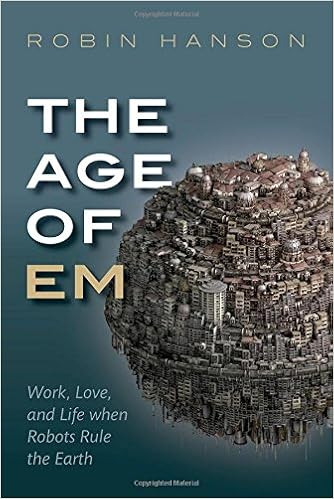
A book abandoned

Cool cover art.

 Amazon link

I read Scott Alexander's extensive review and tried to cancel but too late: the very next day the Amazon parcel arrived. Alexander's review is an easier read than the book itself, which is written in a 'flat' academic style akin to a succession of Wikipedia mini-articles.

I wouldn't have minded if the content had been as described in the back cover quotes ('mind-blowing', 'fascinating', 'stimulating') .. but the ideas are relatively pedestrian, what you would expect if you thought about it a bit; many of Hanson's assertions are plausible without being that compelling.

So after a while of mentally chewing on cardboard, I abandoned.

If a society of brains-emulated-in-hardware-and-software is truly your thing, then it's a lot more fun reading Greg Egan's sublime Permutation City.


---

Back yesterday from a couple of days camping on the heights above Minehead where we also took in the Civil War reenactment at Dunster Castle.

Clare fronting the view of Minehead from the campsite

Dunster Castle: the women spin and cook behind the cannon

The pikemen and musketeers assemble

I'd anticipated a mass mêlée, a pitched battle of The Sealed Knot - but what you see in the pictures was what we got.

The fighting persons in close-up

I especially liked Ginger Baker (above) who gave us a one-person marching drum solo after the obligatory team musket discharges and pike-drill.

Tuesday, April 05, 2016

Tribes are the thing in the atomised West

Scott Alexander considers the power of ideologies (warning: long but interesting essay including American-themed topics):
"Why is there such a strong Sunni/Shia divide?

"I know the Comparative Religion 101 answer. The early Muslims were debating who was the rightful caliph. Some of them said Abu Bakr, others said Ali, and the dispute has been going on ever since. On the other hand, that was fourteen hundred years ago, both candidates are long dead, and there’s no more caliphate. You’d think maybe they’d let the matter rest.

"Sure, the two groups have slightly different hadith and schools of jurisprudence, but how many Muslims even know which school of jurisprudence they’re supposed to be following? It seems like a pretty minor thing to have centuries of animus over."
We can say the same thing about other apparently-religious conflicts, such as the Protestant-Catholic divide in northern Ireland and some parts of Scotland. But Alexander probes more deeply:
"Nations, religions, cults, gangs, subcultures, fraternal societies, internet communities, political parties, social movements – these are all really different, but they also have some deep similarities.

"They’re all groups of people. They all combine comradery within the group with a tendency to dislike other groups of the same type. They all tend to have a stated purpose, like electing a candidate or worshipping a deity, but also serve a very important role as impromptu social clubs whose members mostly interact with one another instead of outsiders. They all develop an internal culture such that members of the groups often like the same foods, wear the same clothing, play the same sports, and have the same philosophical beliefs as other members of the group – even when there are only tenuous links or no links at all to the stated purpose.

"They all tend to develop sort of legendary histories, where they celebrate and exaggerate the deeds of the groups’ founders and past champions. And they all tend to inspire something like patriotism, where people are proud of their group membership and express that pride through conspicuous use of group symbols, group songs, et cetera. For better or worse, the standard way to refer to this category of thing is “tribe”."
It doesn't take much to generate a sense of tribal camaraderie. I've previously remarked about the benefits of membership of the International Marxist Group in my early twenties: a shared culture of mostly-fun activities .. and guaranteed weekend parties.

Scott Alexander applies this insight to the Shia-Sunni conflict:
"I know very little about early Islam and am relying on sources that might be biased, so don’t declare a fatwa against me if I turn out to be wrong, but it looks like from the beginning there were big pre-existing differences between proto-Shia and proto-Sunni. A lot of Ali’s earliest supporters were original Muslims who had known Mohammed personally, and a lot of Abu Bakr’s earliest supporters were later Muslims high up in the Meccan/Medinan political establishment who’d converted only after it became convenient to do so.

"It’s really easy to imagine cultural, social, and personality differences between these two groups. Probably members in each group already knew one another pretty well, and already had ill feelings towards members of the other, without necessarily being able to draw the group borders clearly or put their exact differences into words. Maybe it was “those goody-goodies who are always going on about how close to Mohammed they were but have no practical governing ability” versus “those sellouts who don’t really believe in Islam and just want to keep playing their political games”.

Then came the rallying flag: a political disagreement over the succession. One group called themselves “the party of Ali”, whose Arabic translation “Shiatu Ali” eventually ended up as just “Shia”. The other group won and called itself “the traditional orthodox group”, in Arabic “Sunni”.

"Instead of a vague sense of “I wonder whether that guy there is one of those goody-goodies always talking about Mohammed, or whether he’s a practical type interested in good governance”, people could just ask “Are you for Abu Bakr or Ali?” and later “Are you Sunni or Shia?” Also at some point, I’m not exactly sure how, most of the Sunni ended up in Arabia and most of the Shia ended up in Iraq and Iran, after which I think some pre-existing Iraqi/Iranian vs. Arab cultural differences got absorbed into the Sunni/Shia mix too.

"Then came development. Both groups developed elaborate mythologies lionizing their founders. The Sunni got the history of the “rightly-guided caliphs”, the Shia exaggerated the first few imams to legendary proportions. They developed grievances against each other; according to Shia history, the Sunnis killed eleven of their twelve leaders, with the twelfth escaping only when God directly plucked him out of the world to serve as a future Messiah.

"They developed different schools of hadith interpretation and jurisprudence and debated the differences ad nauseum with each other for hundreds of years. A lot of Shia theology is in Farsi; Sunni theology is entirely in Arabic. Sunni clergy usually dress in white; Shia clergy usually dress in black and green. Not all of these were deliberately done in opposition to one another; most were just a consequence of the two camps being walled off from one another and so allowed to develop cultures independently.

"Obviously the split hasn’t dissolved yet, but it’s worth looking at similar splits that have. Catholicism vs. Protestantism is still a going concern in a few places like Ireland, but it’s nowhere near the total wars of the 17th century [...]."
Like I said, it's a long essay which, with the comments, covers atheism, evangelical christianity, rationalism, science-fiction and video gaming subcultures, and cultural appropriation (some good points about that).

Alexander's take home message?
"My title for this post is also my preferred summary: the ideology is not the movement. Or, more jargonishly – the rallying flag is not the tribe. People are just trying to find a tribe for themselves and keep it intact. This often involves defending an ideology they might not be tempted to defend for any other reason. This doesn’t make them bad, and it may not even necessarily mean their tribe deserves to go extinct. I’m reluctant to say for sure whether I think it’s okay to maintain a tribe based on a faulty ideology, but I think it’s at least important to understand that these people are in a crappy situation with no good choices, and they deserve some pity.

"Some vital aspects of modern society – freedom of speech, freedom of criticism, access to multiple viewpoints, the existence of entryist tribes with explicit goals of invading and destroying competing tribes as problematic, and the overwhelming pressure to dissolve into the Generic Identity Of Modern Secular Consumerism – make maintaining tribal identities really hard these days. I think some of the most interesting sociological questions revolve around whether there are any ways around the practical and moral difficulties with tribalism, what social phenomena are explicable as the struggle of tribes to maintain themselves in the face of pressure, and whether tribalism continues to be a worthwhile or even a possible project at all."
Read the whole thing there.

Wednesday, February 10, 2016

Quotes

Quote from Andrew Ng, Chief Scientist at Chinese search giant, Baidu:
"Worrying about AI evil superintelligence today is like worrying about overpopulation on the planet Mars."
---

An anonymous comment at Scott Alexander's Slate Star Codex:
Slate Star Codex is 140 IQ discussion about 105 IQ issues.
(Ouch! That post has more amusing and cringe-inducing stuff).

---

Watch out for the LIGO announcement tomorrow that the coalescence of two orbiting black holes has been observed through their gravitational wave signature:

"The masses of the black holes will be 36 and 29 solar masses at the beginning; and 62 for the resulting black hole. The reconstructed orbital speed will be almost exactly the speed of light. As a bonus, they will also observe the "ringdown to Kerr"
More here.

Monday, February 01, 2016

How Much Do Our Genes Influence Our Political Beliefs?

This is the title of a New York Times piece in July, 2014, which had an illuminating thesis. Click on the table below to make it larger.
"Identical twins are more likely than fraternal twins to share traditional values with their twin siblings, suggesting a biological link on cultural outlook.

"In this table, 0 represents no correlation in outlook; 1 represents identical outlooks. In reality, the numbers fall in between, but identical twins are much more culturally alike (higher numbers) than fraternal twins.


"In an email, Ludeke explained how to interpret this information: “These correlations represent the extent to which members of a given type of twin pair resemble each other for the trait in question,” he wrote. “Low correlations, like those we found for fraternal twins, indicate that knowing the scores of one twin won’t give you much, if any, clue for figuring out the scores of the other. On the other hand, based on the correlations presented here, knowing the scores of one identical twin gives you a pretty good indication of the scores of the other.”

"The significance of the different correlations for identical and fraternal twins, Ludeke added, is that “when we see identical twins who are this similar, while fraternal twins are much less similar, we have a good indication that genes account for some of the difference between people for the trait in question.”
High heritability for political outlook doesn't mean you are destined to share your parents' views; after all, you are neither a clone nor an average mixing of your parents. It does mean that your unique genome is providing you with temperament/personality settings which inform your political outlook.

In my previous post, I quoted Scott Alexander's figures that elite US universities, like Harvard or Yale, sort something like 90:10 liberal vs. conservative. That academics - particularly in the social sciences - are bleeding-heart lefties is a truth universally acknowledged. In business, to the contrary, I have rarely found the ranks of management thus populated. Occupations are a great sorter, not just for intelligence but also for temperament and personality type.

In Keirsey/Myers-Briggs terms I suggest:
  • Liberal-leftists tend to be NF-Idealists
  • Libertarians (of left and right) are NT-Rationals
  • Conservatives (of left and right) are ST-Guardians
  • Populist insurgents are often SP-Artisans.
So some examples.
  • The emotion-driven, fuzzy-thinking, heart-on-sleeve, leftist BBC/Guardianista is the classic Idealist-NF. My favourites include Lyse Doucet and Shami Chakrabarti.

  • Left-wing Rationals include Jeremy Corbyn and Bernie Sanders; on the Right you have US neocons such as Paul Wolfowitz, John Bolton, Richard Perle - and Michael Gove.

  • You find small-c conservative Guardians in all political parties. David Cameron is one, and so is Tom Watson, deputy leader of the Labour Party. Also Hillary Clinton.

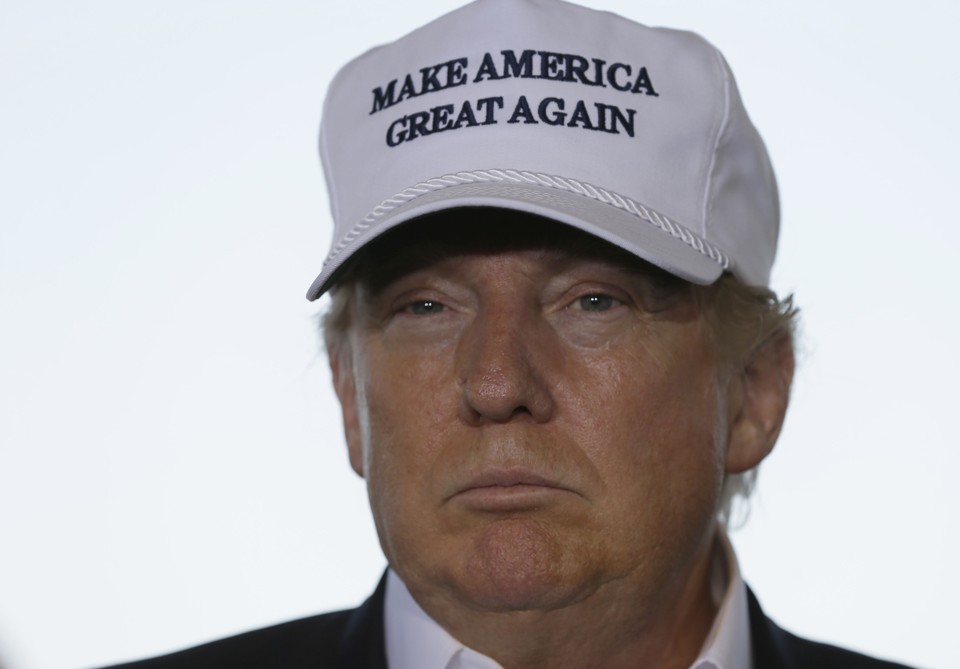
  • My favourite Artisan is the leader of the Italian Five Star movement, Beppe Grillo, ... and then there's Trump.

We're all puppets of our own temperaments. Rod Liddle (a working-class Rational) rages at bien-pensant liberals; they rage at heartless and utilitarian dessicated intellectuals ... so it goes.

Trump is the liberal antichrist .. and he knows it

Scott Alexander (Slate Star Codex) has an interesting piece which you should read from which the following is excerpted:


"Donald Trump appeals to a lot of people because despite his immense wealth he practically glows with signs of being Labor class. This isn’t surprising; his grandfather was a barber and his father clawed his way up to the top by getting his hands dirty. He himself went to a medium-tier college and is probably closer in spirit to the small-business owners of the upper Labor class than to the Stanford MBA-holding executives of the Elite.

"Trump loves and participates in professional wrestling and reality television; those definitely aren’t Gentry or Elites pastimes! When liberals shake their heads wondering why Joe Sixpack feels like Trump is a kindred soul even though Trump’s been a billionaire his whole life, they’re falling into the liberal habit of sorting people by wealth instead of by class. To Joe Sixpack, Trump is “local boy made good”.
Listening to bien-pensant liberals in the media (TV Channel 4 comes to mind) smugly opining that Trump is crazy, mad, beneath contempt, dangerous, (soon to come: the H-word), it is clear that with Trump we are in the presence of a liberal value-atrocity.

(British liberals are ideological soulmates of their American co-thinkers while the Republican base doesn't find a ready echo here .. this gives the UK media a free run.)

Trump understands the US culture wars better than his critics. He knows what he has to do to rally the "Red Tribe", the Republican base. Trump in a presidential election or as President? For good or ill, that's an entirely differently-badged animal.

We could debate (nobody does) whether Trump's personality and character would make him a good or terrible candidate for the Presidency, but I'm more interested in what motivates liberals to be so aghast about it.

So back to Scott Alexander on why liberals appear to support every group except putatively their own, which they take to be the root of all evil.
"We have a lot of people [...] boasting of being able to tolerate everyone from every outgroup they can imagine, loving the outgroup, writing long paeans to how great the outgroup is, staying up at night fretting that somebody else might not like the outgroup enough.

"And we have those same people absolutely ripping into their in-groups – straight, white, male, hetero, cis, American, whatever – talking day in and day out to anyone who will listen about how terrible their in-group is, how it is responsible for all evils, how something needs to be done about it, how they’re ashamed to be associated with it at all.

"This is really surprising. It’s a total reversal of everything we know about human psychology up to this point. No one did any genetic engineering. No one passed out weird glowing pills in the public schools. And yet suddenly we get an entire group of people who conspicuously love their outgroups, the outer the better, and gain status by talking about how terrible their own groups are.

"What is going on here?"
His answer is this (rather long) essay which you will find unfailingly interesting.

Saturday, January 30, 2016

SSC SNP picks


er, ... no ... .

I mentioned in my previous post that you could link a SNP (eg rs4570625) to your own 23andMe results using a link like this:
https://www.23andme.com/you/explorer/snp/?snp_name=rs4570625
Scott Alexander at the almost-always-reliable* Slate Star Codex wrote (November 2014) this amusing post "How To Use 23andMe Irresponsibly" describing his favourite SNPs.

Well, now they're my favourites too and I copy his (lightly edited) thoughts below, but with the SNP references switched from his choice - SNPedia - to my choice, 23andMe.

Quick reminder: most traits in life are quantitative, they come in degree, not kind. In the human genome they are polygenic - many SNPs are involved (and other genetic mechanisms too) .. so one SNP is hardly going to be decisive. In most cases.

--- How To Use 23andMe Irresponsibly - (from SSC)  ---
"rs909525 is linked to the so-called “warrior gene” which I blogged about in the last links roundup. People with the normal four or five repeat version of these gene are less violent than people with the three-repeat version, and people with the two-repeat version are massively overrepresented among violent criminals. ... Although this SNP isn’t the warrior gene itself, it’s linked to it closely enough to be a good predictor.

"This is on the X chromosome, so men will only have one copy (I wonder how much of the increased propensity to violence in men this explains). It’s also one of the minus strand ones, so it’ll be the reverse of what SNPedia is telling you. If you’ve got T, you’re normal. If you’ve got C, you’re a “warrior”. I’ve got C, which gives a pretty good upper limit on how much you should trust these SNPs, since I’m about the least violent person you’ll ever meet. But who knows? Maybe I’m just waiting to snap. Post something dumb about race or gender in the open thread one more time, I dare you…"

I'm T and my mother, Beryl Seel was (T;T), both .. normally unwarlike.

"rs53576 in the OXTR gene is related to the oxytocin receptor, which frequently gets good press as “the cuddle hormone” and “the trust hormone”. Unsurprisingly, the polymorphism is related to emotional warmth, gregariousness versus loneliness, and (intriguingly) ability to pick out conversations in noisy areas.

"23andMe reads this one off the plus strand, so your results should directly correspond to SNPedia’s – (G;G) means more empathy and sociability and is present in 50% of the population, anything else means less. I’m (A;G), which I guess explains my generally hateful and misanthropic outlook on life, plus why I can never hear anyone in crowded bars."

We're both (G;G) which makes us kind and empathic ... .

"rs4680 is in the COMT gene, which codes for catechol-o-methyltransferase, an enzyme that degrades various chemicals including dopamine. Riffing on the more famous “warrior gene”, somebody with a terrible sense of humor named this one the “worrier gene”.

"One version seems to produce more anxiety but slightly better memory and attention; the other version seems to produce calm and resiliency but with a little bit worse memory and attention. (A;A) is smart and anxious, (G;G) is dumb and calm, (A;G) is in between. if you check the SNPedia page, you can also find ten zillion studies on which drugs you are slightly more likely to become addicted to. ..."

Both of us are (A;G) which makes us average and average.

"rs7632287, also in the oxytocin receptor, has been completely proportionally and without any hype declared by the media to be “the divorce gene”. To be fair, this is based on some pretty good Swedish studies finding that women with a certain allele were more often to have reported “marital crisis with the threat of divorce” in the past year (p = 0.003, but the absolute numbers were only 11% of women with one allele vs. 16% of women with the other). This actually sort of checks out, since oxytocin is related to pair bonding. If I’m reading the article right (G;G) is lower divorce risk, (A;A) and (A;G) are higher – but this may only apply to women."

Both my mother and I are (A;G) which makes her a bit .. flighty?

"rs11174811 is in the AVPR1A gene, part of a receptor for a chemical called vasopressin which is very similar to oxytocin. In case you expected men to get away without a divorce gene, this site has been associated with spousal satisfaction in men. Although the paper is extremely cryptic, I think (A;A) or (A;C) means higher spousal satisfaction than (C;C). But if I’m wrong, no problem – another study got the opposite results."

I'm (C;C) as was my mother, Beryl Seel, which means .. probably nothing.

"rs25531 is on the serotonin transporter. It's Overhyped Media Name is “the orchid gene”, on the basis of a theory that children with one allele have higher variance – that is, if they have nice, happy childhoods with plenty of care and support they will bloom to become beautiful orchids, but if they have bad childhoods they will be completely screwed up. The other allele will do moderately well regardless. (T;T) is orchid, (C;C) is moderately fine no matter what. There are rumors going around that 23andMe screwed this one up and nearly everybody is listed as (C;C)."

For my mother and myself, 23andMe did not report on this one.

"rs1800955 is in DRD4, a dopamine receptor gene. It's overhyped media name is The Adventure Gene, and supposedly one allele means you’re much more attracted to novelty and adventure. And by “novelty and adventure”, they mean lots and lots of recreational drugs. This one has survived a meta-analytic review. (T;T) is normal, (C;C) is slightly more novelty seeking and prone to drug addiction."

I was not genotyped at this location and my mother, Beryl Seel was (C;T) which made her a little bit adventurous with lots of use of recreational sherry.

"rs2760118, in a gene producing an obscure enzyme called succinate semialdehyde dehydrogenase, is a nice polymorphism to have. According to this article, it makes you smarter and can be associated with up to fifteen years longer life (warning: impressive result means almost certain failure to replicate). (C;C) or (C;T) means you’re smarter and can expect to live longer; (T;T) better start looking at coffins sooner rather than later."

I'm (T;T) and my mother, Beryl Seel was (C;T) which makes me resigned to an early grave. She lived to 92.

"rs6311 is not going to let me blame the media for its particular form of hype. The official published scientific paper on it is called “The Secret Ingredient for Social Success of Young Males: A Functional Polymorphism in the 5HT2A Serotonin Receptor Gene”.

"Boys with (A;A) are less popular than those with (G;G), with (A;G) in between – the effect seems to be partly mediated by rule-breaking behavior, aggression, and number of female friends. Now it kind of looks to me like they’re just taking proxies for popularity here, but maybe that’s just what an (A;A) nerd like me would say. Anyway, at least I have some compensation – the popular (G;G) guys are 3.6x more likely to experience sexual side effects when taking SSRI antidepressants."

I'm (G;G) and my mother, Beryl Seel was (G;A) which makes me out to be some kind of bad boy!? I must remember to keep off those SSRI tablets.

"rs6265, known as Val66Met to its friends, is part of the important depression-linked BDNF system. It’s a bit depressing itself, in that it is linked to an ability not to become depressed when subjected to “persistent social defeat”. The majority of whites have (G;G) – the minority with (A;A) or (A;G) are harder to depress, but more introverted and worse at motor skills."

I predicted I would be (A;A) based on poor motor skills and in fact I'm (A;G). My mother, Beryl Seel was the normal (G;G) which is consistent with her not-bad motor skills (except at driving).

"rs41310927 is so cutting-edge it’s not even in SNPedia yet. But these people noticed that a certain version was heavily selected for in certain ethnic groups, especially Chinese, and tried to figure out what those ethnic groups had in common.

"The answer they came up with was “tonal languages”, so they tested to see if the gene improved ability to detect tones, and sure enough they claimed that in experiments people with a certain allele were better able to distinguish and understand them. Usual caveats apply, but if you want to believe, (G;G) is highest ability to differentiate tones, (A;A) is lowest ability to differentiate tones. (A;G) is in between.

Sure enough, I’m (A;A). All you people who tried to teach me Chinese tonology, I FRICKIN’ TOLD YOU ALL OF THE WORDS YOU WERE TELLING ME SOUNDED ALIKE."

Both of us test (A;G) so I'm sure we would have struggled with Mandarin, a daily requirement in Bristol.
So, just to reiterate, if you have a 23andMe account, click on the rs... links and see how you scored.

---

* If you care, I don't share his worries about the existential threat of the 'new AI'.