Showing posts with label BBC. Show all posts

Sunday, October 27, 2019

The Stupidity of Scientism


'Scientism' proposes the methods of the hard sciences - mathematical modelling - as the preferred, or sole approach to studying any topic, no matter how inappropriately (particularly social science).

In psychology this leads to operationalism, in economics to the neoclassical synthesis, in sociology to structuralist accounts of society.

The methodology is ubiquitous in contemporary thinking: listen to any 'expert' on the radio, TV or in the press.

Friedrich A. Hayek in "The Counter-Revolution of Science" characterised Scientism thus (my emphasis):
"The persistent effort of modern Science has been to get down to "objective facts," to cease studying what men thought about nature or regarding the given concepts as true images of the real world, and, above all, to discard all theories which pretended to explain phenomena by imputing to them a directing mind like our own. Instead, its main task became to revise and reconstruct the concepts formed from ordinary experience on the basis of a systematic testing of the phenomena, so as to be better able to recognize the particular as an instance of a general rule. ...

"The social sciences in the narrower sense, i.e., those which used to be described as the moral sciences, are concerned with man's conscious or reflected action, actions where a person can be said to choose between various courses open to him, and here the situation is essentially different. The external stimulus which may be said to cause or occasion such actions can of course also be defined in purely physical terms. But if we tried to do so for the purposes of explaining human action, we would confine ourselves to less than we know about the situation."
In summary, Scientism removes intentionality from the world. It theorises as if people were Newtonian billiard balls, as if populations were classical manifolds - described by (usually linear) differential equations.

It requires severe contortions of mind to wrench-away all the common-sense complexities of the real (agent-populated social) world and to rely exclusively upon some oversimplified, reified model which then predicts counter-intuitive (and false) results.

Truly one has to be extra-smart and very-well-educated to jump through these hoops for Newsnight and Radio 4! It helps to be confident, well-spoken and well-connected too, for some reason.

---

A cynic writes: "If the existing organisation of the world suits these people just fine, why not fix it for ever in some structural straitjacket from which it could never escape except by chaos?"

Monday, August 13, 2018

Rod Liddle on the BBC (The Spectator)

Yesterday I noted that "Those outside the bubble are ceaselessly lectured, indeed have no other language of norms and morality." At that time I hadn't read the piece below.

Must be the zeitgeist.


Rod Liddle

Rod Liddle (The Spectatorwrites:
"It is hard to keep up, isn’t it? The British Register of Victimhood lengthens almost daily, in defiance of science, common sense and reality. I think that the only way to avoid giving offence is for the BBC to lecture us on a daily basis about how we must see the world, according to its own implacable and berserk liberal agenda. Maybe a 15-minute slot after the early evening news, where Kirsty Wark or Huw Edwards could simply spell out to us where we’re going wrong and what we should do about it. That would be a genuine public service, no?

The corporation recently made a video aimed at GCSE students about multiculturalism — and it was, as you can imagine, a carefully balanced piece of work, giving equal weight to both sides of the story. ‘Multiculturalism is a powerful tool for survival and possibly the only way to survive, so let’s embrace it,’ the children were informed. Elsewhere a smug little Geordie narrator (the dialect of choice these days) said that Great Britain had ‘always’ been a nation of immigrants, there was no such thing as British people, and yet you could always hear malevolent idiots ‘banging on’ about the need to control immigration.

No mention was made of the overwhelming opposition to uncontrolled immigration, nor the weight of numbers that have arrived here recently, nor the relationship with crime figures. Still less the views of the majority of the population that immigration has actually not been a good thing, overall, for the country. In other words, they wish it hadn’t happened.

The film was eventually pulled by the BBC because, as viewers on YouTube pointed out, it was vacuous, tendentious, biased tripe. This must have come as a shock to the producers of the film, who will surely have believed that they were simply promulgating the usual BBC line on immigration — and that this isn’t remotely a case of bias but simply decency and civility, and that those who disagree are uneducated untermenschen who need to be taught a lesson or two, preferably by some Geordie halfwit so that it sounds authentic and not too metrocentric.

The problem is that this is indeed precisely the BBC’s view, without caveat: it is the mindset which informs every single report the BBC has ever done on the subject of immigration, be it on the news programmes or the dramas or even the bloody Food Programme. And as I say, they do not think that it is bias at all. It is simply right, and there’s an end to it. And if they pull this video, I assume they’ll be pulling Newsnight, The News at Ten, Today, World at One and every local news programme across the country."
The pervasiveness of bubble-think - and not just on immigration.

Sunday, January 07, 2018

The desert of diversity

Last night, ten thirty, and I was on the couch, flicking between BBC News and Sky News, and their respective reviews of the forthcoming Sunday papers.

Sky had a female and male journalist; the BBC two media women. They were all (including the hosts) fully paid-up liberals.


The main topic of the Sunday press was the continuing fallout from the Wolff book, "Fire and Fury", with Trump tweeting in rebuttal what a 'genius' he was.

The pundits were to-a-person in full triumphalist mode. Their eyes were gleaming: Wolff had sooo nailed the pig! They were outbidding each other in retelling juicy quotes from the newspaper excerpts. They were shocked, shocked!

I was going quietly crazy.

Wasn't it obvious that Wolff was not a disinterested analyst but a partisan liberal himself? Obviously he was going to use his weaselly-gained access to the White House to put the boot in.*

---

We're uniformly told that television is a warm, not cool medium. Translated, this means that feelgood emotionalism works well while objective analysis stresses and upsets the audience: they switch channel.

As a consequence, television has become (in Keirsey terms) an Idealist colony. More objective, dispassionate, and analytic personality types have been classified as outgroup .. and ejected. Toby Young is just the latest iconoclast to feel the antibodies clustering around him.

Truly they have made the media an ideological desert, and called it diversity.

I rejected throwing my shoe at the TV, and changed channel.

---

*  It is not that liberals/Idealists are stupid - far from it. It's that their intellectual powers are the servant of their primary emotional drives. Which are those of compassion and empathy towards imagined communities .. to the exclusion of most else. And vitriolic hostility to those who appear to question or violate those naïvely-inclusionary values.

Thursday, October 19, 2017

Chris Packham: coming out as an Aspie

Chris Packham

The BBC recently showed Chris Packham's hour-long documentary where he discusses his Asperger's syndrome (iPlayer till 27th October).

Strictly speaking you don't have Asperger's, you are Asperger's. This makes treatment problematic - are you signing up to erase, or profoundly modify, your personality?

Packham wasn't a fan, particularly as this seemed to be the dominant objective of the American 'therapies' he was taken to see.

His partner, Charlotte, who was on camera seemed to be a Myers-Briggs NT, maybe INTJ. She came across as cool, composed and eminently cerebral: a meeting of minds.

There's another kind of partner an 'Asperger's sufferer' can have: here's Paul Dirac's wife:
"Given his lack of interest in his fellow humans, most colleagues assumed Dirac was shut off sexually, or perhaps gay and repressed. So they got a bit of a shock when, in 1934, he met a chatty Hungarian divorcee called Manci Balazs and three years later married her.

Manci was his opposite: where Dirac hardly spoke, she never stopped; he found empathy difficult, she had friends coming out of her ears; he was very literal-minded, she was subjective and passionate.

Needless to say, it was she who was forced to woo him, but somehow it worked. As a friend once put it: 'He gave her status and she gave him a life.' They were married for 50 years and had two children.

A year after their marriage, he wrote Manci a lovely letter saying: 'You have made me human. I shall be able to live happily with you even if I have no more success in my work.'
---

I was surprised to hear Packham pronounce his condition 'Asperjers'; surely he, more than anyone, would know that Hans Asperger was Austrian, and as a consequence the 'g' is hard.

---

Asperger's (and Autism in general) is highly heritable, although Packham's documentary - more impressionistic and personal - made no mention of it. This means that most population variation along the autism spectrum, from normal (non-autistic) to extreme, is a consequence of individual genomic variation, rather than differential input from the environment.

So although your parents made you autistic, it was through their genes, not their parenting.

---

Autism and IQ

From Time:
"When Asperger’s was first described in 1944 by Austrian pediatrician Hans Asperger, he referred to children with the syndrome as “little professors” because of their prodigious vocabularies and precocious expertise, and because they tended to lecture others endlessly without being aware of their own tediousness. Poor social skills and obsessive interests characterize the condition.

Yet, despite the obvious similarities, very little research has been done on the connection between autism and extreme talent. One previous study, published in 2007, did find that close relatives of prodigies — like close relatives of people with autism — tended to score higher on autistic traits, particularly in problems with social skills, difficulty switching attention and intense attention to detail. Other than that, however, the issue hasn’t been studied systematically, beyond the observation that autism is often seen in savants, or people with exceptional abilities who have other simultaneous impairments. ..."

"... the intense world theory of autism, which posits how the disorder may arise. The theory holds that certain patterns of brain circuitry cause autistic symptoms, including excessive connectivity in local brain regions, which can heighten attention and perception, and diminished wiring between distant regions, which can lead to a sort of system overload. In both animal and human studies, this type of brain wiring has been associated with enhanced memory and also with amplified fear and sensory overstimulation. The former is usually a good thing; the latter may cause disability.

The intense world theory propounds that all autism carries the potential for exceptional talent and social deficits. The social problems, the theory suggests, may ensue from the autistic person’s dysfunctional attempts — social withdrawal and repetitive behaviors, for instance — to deal with his heightened senses and memory.

It’s possible, then, that the wiring in prodigies’ brains resembles that of an autistic person’s, with tight local connections, except without the reduction in long-distance links. Or, their brains may function just like those with autism, but their high intelligence allows them to develop socially acceptable ways of coping with the sensory overload."
I was struck by a TV programme some years ago about the Maths Olympiad. This is usually won by East Asians; Ashkenazim are also well-represented in winning teams. The British team was composed of pleasant, well-adjusted and extremely smart Ashkenazim .. and Anglo-Saxons who all seemed to be Aspies.

In the Gregory Cochran, Jason Hardy, and Henry Harpending paper it was suggested that the Ashkenazim had undergone extreme selection for high IQ over the last millennium due to the social niche of finance into which they were forced for so many centuries by the Christian proscription of usury. This, they argued, had also increased the frequency of specific mutations which increased brain efficiency at the cost of new debilitating genetic diseases (in the homozygous cases).

I suspect Asperger's may be somewhat similar, although with a more diffuse and sprawling etiology. As the causation is polygenic (+ CNV?) we are still some way from a definitive account.

Friday, August 04, 2017

Robo-Tyrion

I said to Clare, "Game of Thrones has got rather boring since they decimated all the extended families. When it was the Starks vs. the Lannisters, you could identify with all the intra- and inter-family personal dynamics."

But I was wrong, Series 7 is just as gripping as ever. Grown up Machiavellian realpolitik.

Apart from really sharp screen-writing, brilliant plotting, fantastic locations and the mega-budget to pay for it all, one secret of their success is the continuity of actors. How would you handle a situation where actors playing Cersei, Tyrion, Jon, Jaime or Sansa decided to skip the next series?

Peter Dinklage plays Tyrion Lannister

Must enormously increase their bargaining power. What joy for their agents.

---

The BBC is in trouble, not just for gender differences in pay but also for the sheer amount paid to their top staff. Radio presenter Chris Evans gets paid more than £2.2 million a year to present the breakfast show on Radio 2, which draws nine million listeners.

It's well-known in economics that the bulk of the economic value associated with a superstar ends up accruing to the talent themselves. Top footballers, rock stars and, yes, presenters get paid stupendous fees.

The reason is that they own a monopoly on their personal skills and typically engage in an auction process (via their agents) which allows them to identify and achieve their monopoly market value.

No competition, you see. But more on this in a moment.

With the BBC it's more complicated as they are a monopoly buyer (to a first approximation) in the UK entertainment market. If you want a truly mass audience, the BBC can potentially deliver it in a way that ITV, Channel 4 or Sky can't.

In theory, this should give the BBC monopsony power - lowering the price it has to pay for stars.

But in practice, the star will always win. The BBC cares most about the marginal, additional audience a top star can attract over the next best alternative. It's prepared to pay a hefty marginal price for that additional audience .. and since the absolute number of stars is not that large, the premium doesn't really register on its bloated budget.

Hence Chris Evans.

---

But technology has a way of undermining these simple truths. Game of Thrones is scripted and recorded. A lot already gets done in post-production. Soon it would not be hard to lose the estimable Peter Dinklage and hire a similarly sized actor. Use the latest AI to restore Mr Dinklage's face and voice and you've saved, no doubt, a shedload of money - and perhaps the series, if Mr D. was otherwise going to be a no-show.

I understand there's plenty of discussion around copyright for personal avatars and digital representations in Hollywood right now.

How is that going, I wonder?

Thursday, June 29, 2017

"Nemley Junior: chimp rescued from traffickers dies"

This moving story on BBC News last night.

Baby Nemley
"An orphaned baby chimpanzee whose plight moved people around the world has died.

"Nemley junior had been seized by poachers in West Africa and offered for sale but was then rescued following a BBC News investigation.

Despite dedicated care in the past few weeks, he succumbed to a series of illnesses including malaria.

A leading vet who helped care for him said that, without his mother, Nemley suffered from a "failure to thrive".

This was a sad story and the BBC invested significant resources to expose the traffickers and to rescue the chimp. Still, in the litany of horrors from sub-Saharan Africa, the tale of little Nemley must rank as the smallest footnote.

It's easy to curl the lip at the sentimentality behind this story. Plainly the chimp elicits all those baby-care reflexes in women; never mind that adult chimps are highly aggressive and quite intractable.

But any blokes reading this: think again. A woman who really empathises with little Nemley is plainly into kids. She may be your best hope of being an ancestor. It's time to virtue signal your excellent paternal attributes.

Show a little emotional solidarity and uncurl that lip!

Friday, May 05, 2017

Diary: flies + schizophrenia + fasting + reading

The fly menace: net curtains on the landing

A screen fronts the pantry

A dry, chilly, easterly wind gusts from the continent, so what do houseflies do? Seek nooks and crannies to avoid being dehydrated and swept away. Hence the plague of buzzing monstrosities in our bedrooms, bathrooms and kitchen.

New net curtains have gone up, the pantry screen was reattached: nothing seems to work. My latest belief is that they are crawling between the floors and emerging from small gaps around the pipework.

---

Perhaps I was over-influenced by the BBC Horizon documentary on Schizophrenia, "Why Did I Go Mad?".  The programme was interesting throughout: strong on phenomenology though weak/misleading on analysis.

The usual BBC inability to accept that genetics can underlie anything of importance.

In fact schizophrenia is 80% heritable, and triggered by a variety of stress factors.

I was most interested in the schizophrenic's objectification of 'sub-personalities': auditory hallucinations (voices) and visual illusions - often eerily-scary monsters. Somehow the brain's attribution of agency is being misapplied to internally-generated subconscious events.

They say psychosis is like being awake, but living in a dream.

---

Jenni Russell had an interesting piece in The Times yesterday, "It’s worth going hungry for a healthier life". She says,
"Fasting’s complex effects are still being explored but one of its most important mechanisms is that it pushes cells into repair mode, through a process called autophagy. After 12 hours or so of no food, a starving cell starts burning up diseased and damaged proteins, tumours and viruses, in a kind of spring-cleaning that only takes place when there are no alternative sources of energy.

"Autophagy has been known about for 50 years but not until recently has its essential function been widely understood. In past centuries, when food was relatively expensive and scarce, autophagy happened naturally in the long gap between supper and waking up. Now that food is so easily available many of us eat continuously, from breakfast until late-night snacks, meaning that autophagy cannot take place. That is disastrous for our physiology.

"Junk and rubbish build up in our cells and cannot be cleaned out. It is as if we are in a car driving continuously with the accelerator pedal down, never pausing to stop at a garage to have the engine parts, brakes, wheels or oil replaced. ...

"One of fasting’s most exciting consequences is its potential to regenerate the immune system. As I have mentioned on these pages before, I came across this particular research three years ago, just after it was published and just as my own treatment for a long-running auto-immune illness was about to be halted by the NHS because of its tremendous expense.

"Valter Longo, a leading anti-ageing specialist at the University of Southern California, had discovered that when mice fasted for three days at a time they generated new stem cells from their bone marrow. This was astounding. It meant that over six months of occasional fasts they replaced damaged immune cells with perfect ones. Potentially, this had huge implications for anyone with an auto-immune disorder and indeed everyone else, since a major cause of ill-health is the deterioration of our immune systems as we age.

"Dr Longo warned readers not to try this themselves but I couldn’t wait. With considerable scepticism — but more despair — I imitated the mice, started fasting on water-only for three days at a time, was cured within weeks and have never relapsed. It has made me a reluctant convert to fasting since a few days without food have proved more effective than 20 years of medical care by devoted doctors and £200,000-worth of drugs."
Assuming you don't find it paywalled, it's worth reading the whole article. In any event, we're into the recommended 36 hour fast even as I write this.

Here's Jenni Russell's previous (and very popular) article on her fasting.

---

After Charlie Fletcher's final Oversight book, "The Remnant", I started reading Greg Bear's "Quantico" to Clare last night. Alas, the qualities which reward silent reading to oneself do not transfer to reading Bear aloud. In recitation, Quantico is leaden, stilted and confusing. So it's abandoned.


Tonight I'll hope for better with Frederik Pohl's classic "Gateway". The link is Readings to Clare.

Wednesday, March 22, 2017

How language irritates!

Yesterday the BBC News carried long minutes of programming devoted to the life of Martin McGuinness: warrior/terrorist turned statesman/peacemaker in the official narrative.

And there were repeated references to 'Londonderry'.

Yes, Derry is called 'Londonderry' whenever the BBC wants to line up behind the Unionists; it used to be a signifier for a nationalist atrocity. Conversely, whenever the Protestants did something awful to the Catholics, we'd hear about 'Derry'.

I was shouting at the TV: "It's Derry!".

---

There was a moment when the media got confused about the US/UK laptop/tablet hand-baggage ban on flights from the Middle-East. The BBC Newsreader put on her best pinched moue and spoke of the ban on flights from 'six mainly-muslim' countries.

This recent stock-phrase, 'mainly-muslim', is virtue-signalling for "You are a right-wing Islamophobe and we are better than you'.

Then they discovered that the bans were not Trump-fascism but a sensible and graduated intelligence-led assessment based on well-founded threats from ISIS ('so-called Islamic State'). Suddenly, 'mainly-muslim' was dropped and it became: 'flights from six Middle-Eastern countries'.

And I was able to stop shouting at the TV.

Sunday, February 19, 2017

People are boring - so what chance chatbots?


The BBC's Dave Lee writes:
"It's been nearly a year since Microsoft's Satya Nadella proclaimed "bots are the new apps".

"Yet despite the promise of a revolution in how we interact with services and companies online, progress has been utterly miserable - the vast majority of chatbots are gimmicky, pointless or just flat out broken. ...

The CNN news chatbot, for example, is worse at giving you the news than any of CNN’s other products. ...

"Google's AI-powered messaging app Allo, since being launched to much fanfare last year, has failed to make even a minor dent in a messaging app market dominated by Whatsapp and Facebook Messenger.

"And that's because there's no compelling reason to bother with Allo. None of its features - like asking it for directions - provide enough of a benefit beyond what you'd get from just tapping in your request the "old fashioned" way. Users have an incredibly short fuse for chatbots not working exactly as we expect."
---

We have a special name for those few people who we (mostly) don't find boring.

Friends.

We don't much enjoy extended interactions with random folk. People who, nevertheless:
  • have been completely socialised into our culture for decades, 
  • come with detailed background knowledge of the world,
  • are endowed with common sense and full conversational abilities.
So why did the AI companies think we'd enjoy interacting with chatbots, which are cognitively impoverished in every conceivable way?

It's a good question and I'm not sure of the answer.
- Were they over-impressed by their mighty artificial neural nets? But they're only fantastic recognisers and classifiers, a far cry from artificial general intelligences (AGI).

- Did they think that we're all keen to have conversational, hands-free interaction with our pocket devices? In fact that's socially way too intrusive most of the time, plus we're talking to conversational muppets.

- Was there a belief that in some narrow, vertical and tightly-constrained domains there might be a niche for a conversational interface? There's almost certainly something to that - but we don't yet know what.
My own feeling is that the successful mass consumer chatbot can be nothing less than a truly effective virtual friend. To that end it will have to posses AGI and be malleable to your own personality and 'friend-preferences'.

We'll have starships before we have that; I haven't seen the first clue we're on that road.

---

All of the above presupposes peer-relationships, typically with kids or adults. Those conversations - most of the time! - exhibit an irreducible core of rational and relevant 'aboutness'.

So hard to replicate for an artefact.

But there are natural agents around without much cognitive competence: babies, small children and pets. The bond here is emotional .. and so is the interaction.

So if you're in the business of designing chatbots which could conceivably bond with your customers, you might want to take note .. .*

---

* In the old days, we called them 'dolls', and they came without batteries.

Thursday, February 09, 2017

Diary: weights + Lisp reader issues + trim & style

Consider a hulking biker, tattoos and leotard, bench-pressing some massive barbell.

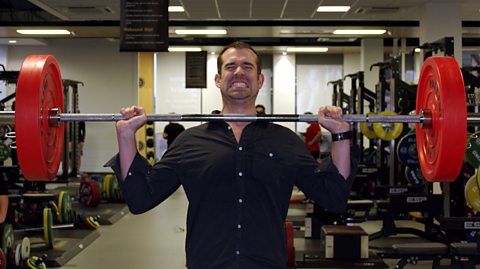
Alongside him, place that irritatingly-cheerful hunk Dr Chris van Tulleken, raising and lowering some wimpy baby dumbbells.

Pretending to be exhausted. Not this stagey picture below.


It was all in aid of this study (in the latest series of "Trust Me, I'm a Doctor").
"The study split 49 weight trainers into two groups and started them on a 12-week weight training programme. For each participant, they calculated their ‘one-repetition maximum’ or 1RM – that’s the heaviest weight they can lift.

"They then split the study into two groups, one group lifting 30-50% of their 1RM and the other group lifting 75-90%. The key thing was that each group lifted their weights to ‘volitional failure’ – in other words, they lifted until they couldn’t lift any more.

‘Failure’ will happen to anyone and everyone, however strong, if they do enough repetitions. So the group lifting the lighter weights did a larger number of reps (20-25) than the group lifting the heavier weight (8-12).

"The theory behind muscle failure is to do with ‘motor units.’ Motor units are bundles of muscle fibres controlled by a nerve. When you lift a weight, motor units will be required to contract the muscle. With each lift, some motor units will get fatigued, so additional motor units need to be used to do the next lift. Sooner or later you get to a point where all your available motor units have been exhausted – that’s what causes your muscles to fail.

"In the McMaster study, the results showed that despite lifting different weights, both groups showed the same increase in strength and muscle growth. In other words, doing heavy weights with fewer reps or lighter weights with more reps made no difference. These results agreed with earlier research conducted by the same group.

"So what does that mean for the rest of us? Well, it means that you can get results lifting heavy weights OR lighter weights, so long as you’re pushing your muscles to work harder than they normally do. You don’t always need to lift to failure to get results – but your muscles need to be ‘overloaded’ compared to your normal day to day life. Strength and conditioning coach Richard Blagrove from St. Mary’s University, Twickenham, suggests that on a scale of 1 to 10, where 10 is repetition failure, lifting to 7 or 8 is about right.

"If your muscles are feeling that overload once a week, your body will adapt and get stronger. If you want to continue to get stronger, you will need to constantly re-assess and progress your weight or rep level, to make sure you are always pushing your muscles beyond their comfort zone. If your weight training feels easy, it probably isn’t doing anything for you.

"You can get results using weights machines or free weights. Free weights also force you to use stabiliser muscles meaning you use more energy, and your joints move in their most natural way. But it’s important to lift correctly, so as soon as your “form” starts to go, you should probably stop. If you DO want to push yourself to failure, weight machines might be the safest place to do it. If you lift to failure with free-weights you need a partner who can relieve you of the weight when you can no longer lift it."
In a nutshell, don't go with "go heavy or go home!".

Do enough reps so that the last three are 'difficult'. Obviously you need enough weight so that you can get there within, say, 8-15 reps.

---

While I was watching our recording of "Trust Me, ..." my subconscious was whirring furiously. This afternoon I had painstakingly edited 43 rules for my Eliza program, which I'm reconstructing. The program works! But the rule set:
(defparameter +eliza-rules-extended+  '(.. stuff .. ))
refused to compile: weird and incomprehensible error messages complaining of 'invalid traits'. We're meant to be AI-advancing daily, but our development environments haven't the first clue.

My epiphany was that a rule which said something like:
(Why don't you like your mother?)
is going to hit a major problem with that quote character.

I rushed upstairs and deleted all the quotes from don't, doesn't, it's .. and everything loaded properly. Tomorrow I'll test it thoroughly and maybe post the code.

That should thrill you, dear reader.

---

As you know, my first target emulation is going to be the cat. Clare, who had to suffer through a tedious explanation of my afternoon difficulties, suggested that I should be designing a chatbot for the elderly. I'm to data-fill it with small talk about family, friends and neighbours (and pets?).

I suspect there's a market for that, and I'm not completely convinced that a state-of-the-art artificial neural net is required to implement it either.

But here to the contrary is Google's view:
"A simple strategy to build lightweight conversational models might be to create a small dictionary of common rules (input → reply mappings) on the device and use a naive look-up strategy at inference time.

This can work for simple prediction tasks involving a small set of classes using a handful of features (such as binary sentiment classification from text, e.g. “I love this movie” conveys a positive sentiment whereas the sentence “The acting was horrible” is negative).

But, it does not scale to complex natural language tasks involving rich vocabularies and the wide language variability observed in chat messages."
---

The diary would not be complete without observing that Clare had her hair done today.


I did notice.

Saturday, July 16, 2016

'Democracy' means we're always right


Late last night the BBC (and Fox News) predicted the success of the coup attempt in Turkey. They were rather happy about it, to be honest. The army was defending secularism against an increasingly authoritarian, Islamic-inclined President.

Yes, that would President Erdoğan. A leader elected largely by the pious, rural smallfolk. Thank God for the military, always ready to defend democracy against the small people.

We have been here more often than not. The anti-Islamic coup in Algeria in 1991 (that turned out well); the soviet tanks in Hungary (1956) and later in Czechoslovakia, in 1969.

Somehow, as Brecht observed, it's always elites defending 'democracy' against the masses.

This morning, the Turkish coup had failed. The people en masse seemed to be defending the famously illiberal and authoritarian government.

---

A note to plotters: a failed coup is one of the worst career moves you will ever make. Treason doth never prosper, etc. In subterranean cellars with thick walls, in Ankara and Istanbul, the pain machines will be running night and day.

---

I remember a TV programme a while back, simulating the UK cabinet committee directing affairs as the Russians invade the Baltic states. Hostilities ramp up while the few liberal politicians at the table wring their hands in gathering anguish as things get nasty. Finally, the lead liberal - asked to authorise a nuclear strike - walks out in tears.

Someone observes: the liberals always seem to leave the room once the bullets start flying.

---

It's rather shocking, but my first thought on the Nice tragedy (deluded idiot + lorry + crowds = carnage) was: 'This will strengthen Marine le Pen'.

People will be furious, and the pious abstractions they're getting from the French elite won't play well.

---

Long-buried tensions are emerging across the world from China/East Asia to the Middle-East through Europe and America. The new imbalances of power are testing liberal post-nationalist, dovish ideas to destruction. The feared 'new populism' is more accurately gauged as peoples perceiving where their common interests lie, in a world where diverse interests are increasingly antagonistically expressed.

President Trump is looking more likely, while the disintegration of the utopian EU-project just lurched a step nearer.

Monday, June 13, 2016

The FTO gene

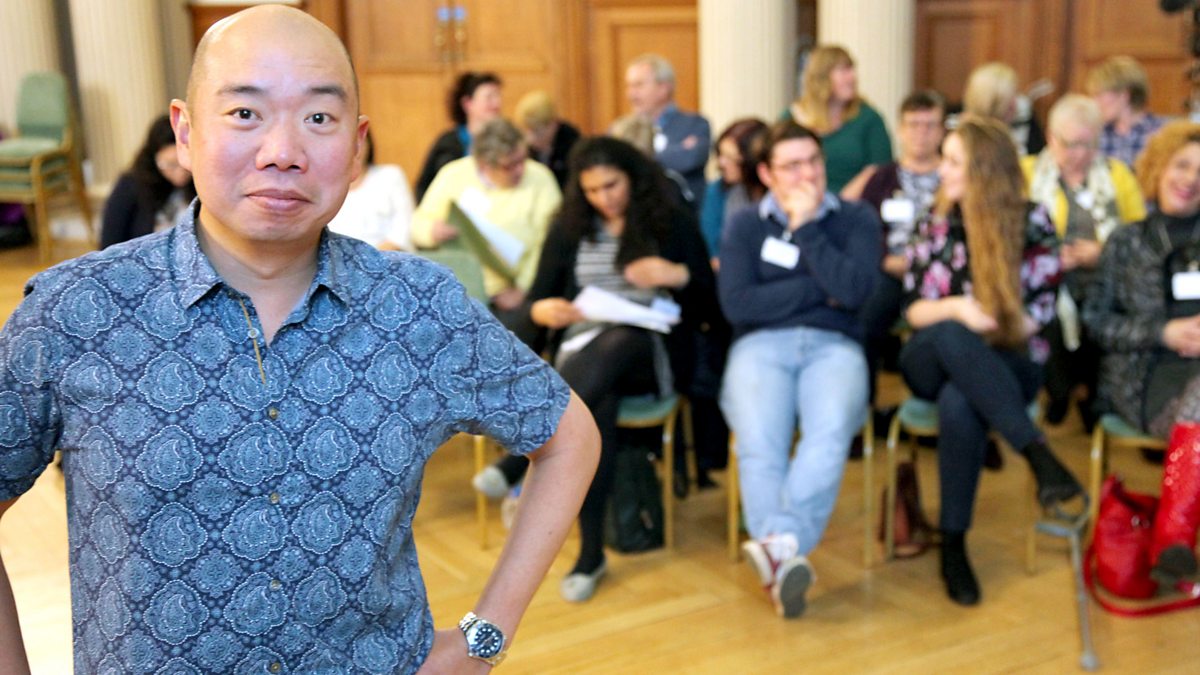
We watched the BBC Horizon programme on genetic causes of obesity, fronted by Dr Giles Yeo (good to see an ethnic East Asian presenter).

Dr Giles Yeo with some of the AA variant folk

There is a gene of quite large effect; here is what Wikipedia says:
"A study of 38,759 Europeans for variants of FTO identified an obesity risk allele. In particular, carriers of one copy of the allele weighed on average 1.2 kilograms (2.6 lb) more than people with no copies.

"Carriers of two copies (16% of the subjects) weighed 3 kilograms (6.6 lb) more and had a 1.67-fold higher rate of obesity than those with no copies.

"The association was observed in ages 7 and upwards. "

...

"In adult humans, it was shown that adults bearing the at risk AT and AA alleles at rs9939609 consumed between 500 and 1250 kJ more each day than those carrying the protective TT genotype (equivalent to between 125 and 280 kcal per day more intake).

"The same study showed that there was no impact of the polymorphism on energy expenditure. This finding of an effect of the rs9939609 polymorphism on food intake or satiety has been independently replicated in five subsequent studies (in order of publication)."
The protective allele is T while the risk allele is A at SNP site rs9939609.

---

Here is what 23andMe says about my late mother, Beryl Seel, and myself.


My mother had the protective genotype, TT, and was never overweight; I'm not so lucky (AT) and had to fight to get my weight down to its current 70-71 kilograms (from 86kg in mid-2012).

We can infer that my late father, who definitely had an expanded waistline, was AT or AA. Based on family history and if pressed, I would guess AT .. and that I got unlucky.

I wrote about this 18 months ago: another Horizon programme.

Thursday, February 11, 2016

Enduring Love


So our first argument this morning was about that BBC programme we watched last night, World War Three. The programme simulated a British 'War Room' dealing with a Ukraine-style Russian incursion into the Baltic States of Estonia and Latvia - which happen to be NATO members. It did not end well.

To crudely stereotype our positions, Clare was happy to surrender to the nuke-wielding Russians on the basis we couldn't win; I was all for going thermonuclear. "Men, you love war," was her pointed comment.

After I had cooled down a little we had our second argument. On Desert Island Discs, a BBC radio show, Bill Gates had this to say:
"My wife Melinda and I love Willie Nelson. So as a surprise gift for her, I had him show up the night before we got married. We were on a beach in Hawaii and he kind of walked down the beach with his guitar and I said, 'Well here he is, let's have this guy sing some songs for us.'"
I thought this was a window on Mr Gates' soul. It was incredibly patronising to the famous singer; Willie Nelson is not the hired help. Why couldn't Clare see that?

My inner aggression came to a boil at lunchtime when I was entering Passport details into a holiday company's website (we're off to Portugal in the summer). I pressed "continue" and a javascript box popped up saying "It is necessary to complete all the fields," without flagging any fields in error.  It also mentioned that the form had to be completed within 30 minutes or it would time-out and all the information entered (there was plenty) would be wiped.

For the life of me, I couldn't see any box I hadn't completed. I tried and tried and could not advance to the next screen - I was furious. (Clare finally found the one box I had missed - 'Where was the Passport issued?').

I changed and set off for the gym where my performance was the best for weeks. I really hit those machines! I returned a calmer person, ready for the LIGO press conference.

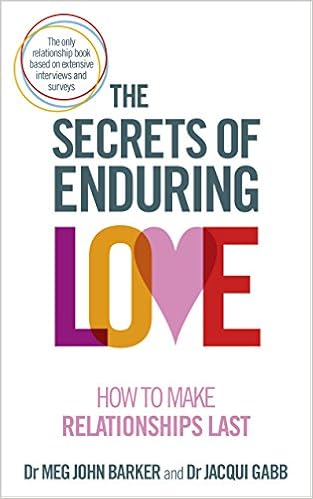
When I bought Enduring Love, Clare snorted about people who think the answer to everything is read the manual. In fact 'Enduring Love' is the name of an Open University research project enrolling 5,000 respondents. I was expecting data, statistical analysis, IQ and personality correlates and some well-founded conclusions.

I was so wrong. It's a soggy self-help book. The volunteers have been mined for case-history anecdotes. So if you want to know that it's better to keep the burned marmite toast for yourself, and serve the perfect one to your partner, (p. 29), I can't recommend this book highly enough.

Coming back to reality, I have found that a couple of good arguments and a recognition that your partner can sometimes solve a problem which has eluded you is often the recipe for kicking the can farther down the road, relationship-wise.

Call me romantic.

Thursday, November 19, 2015

Zena Skinner's Christmas Cake recipe

Zena Skinner is (apparently) a legendary TV cook from c. 40 years ago. Her rich and luscious Christmas Cake recipe was mentioned on BBC's Points West this evening - a few stalwart families have handed down the typewritten recipe over the years and still swear by it.


Zena's Christmas Cake comes in round and square versions of various sizes and is richer in fruit than customary today. Here is the link to her cookbook (PDF) - refer to pages numbered 60-64 (physical pages 62-66 if you want to print them) for the Christmas Cake recipe.

The cookbook is also (via resellers) available on Amazon.

The cake should have been made in October, to give it time to mature, so there's hardly any time to waste.

Clare is on the case - and here is her Zena Skinner Christmas cake straight out of the oven.

A Zena Skinner Christmas Cake

Sunday, May 31, 2015

The decline of fitness

Back to the gym this morning for the first time in twelve days. Weak as a kitten: my mother could have done better.

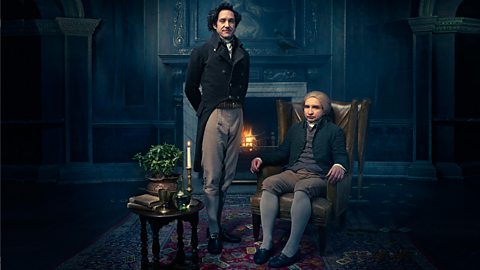
A television reviewer compared the current BBC production of Jonathan Strange & Mr Norrell unfavourably (nothing much happens) to the 'scintillating' novel by Susanna Clarke.


As someone who tried to read that lethargic, pedestrian work and died of boredom halfway through, I can confirm that the BBC have got this exactly right. (I am told it improves).

It's now been more than 18 hours and the recycled laptop upstairs is still downloading my entire DropBox dataset (54 GB) ... . At least Vista seems to have ceased its endless appetite for updates. Now if I could only get Chrome to install rather than hanging and dying ... .

Are you interested in the following thoughts?
"Reproduction has two parts, mating and parenting. This allocation is the stuff of life history theory. The allocation problem is complicated by the presence of two sexes that are designed differently. This is especially so in mammals: internal gestation, mammary glands, and prolonged immaturity indicate of the commitment of females to bear the brunt of reproductive effort. Fish, for example, are not engineered in this way. In fish species where males mouth brood, mama fish is free to shed some eggs and abandon dad and the kids to continue her partying unimpeded.

"Humans exhibit a diversity of strategy “choices” that are solutions to the allocation problem between mating and parenting. Males can devote most of their effort to mating effort, usually involving competition with other males. Male commitment to parenting effort is not common in mammals but there are familiar examples like beavers, coyotes, gibbons, and some humans. In the jargon the polar strategies of male mammals are called “cad” and “dad” strategies.

"Females have a more restricted set of strategy choices because of their engineered commitment to parenting. At one extreme a human female can seek a dadly male who provides resources like food and protection to their joint offspring. At the other extreme, a human female can pay little or no attention to her mate choice, instead letting the guys work things out. In the jargon these female alternatives are called “coy” and “fast”."
If so, you can read more here. West Hunter seems to be doing the heavy lifting for sociobiology these days.

Sunday, May 17, 2015

Fixing Labour

Mark Mardell wrote an intelligent piece on the BBC website, pointing out that the conventional wisdom as to why Labour lost the election has congealed out as follows:
"Step back from the angst of supporters, and it may not be that hard to see why Labour failed. An economic recovery, hailed by independent organisations as the result of government policy, undid a party that had loudly proclaimed for five years that the coalition's policies would lead to economic disaster. Combine that with an uncharismatic and uninspirational leader, then you might argue no further debate is necessary. Fat chance of that.

Defeat breeds resentment, and this one has opened up old divisions. A chorus of Blairites, led by the man himself, has declared that Ed's problem was ignoring those with aspiration and ambition, failing to appeal to those running business."
This is an incredibly superficial diagnosis, which fails to capture the diversity of trends which undercut Labour's simplistic message during the election. Mardell continues,
"The Scottish wipeout is Labour's biggest problem. Fail to solve it, and Labour can forget ever having a comfortable majority again. It is hard to argue Labour were wiped out in Scotland because the SNP outflanked them to the right with their appeal to the business community and the ambitious and aspirational. But it is true the SNP drew in to people from left, right and centre, just as the modernisers say Labour should. It was the politics of economic self-interest, but cast in a very different light. Tribally sneering at "the reactionary ideology of nationalism" as Mr Blair does, will not reach the central belt of Scotland, the middle ground of Midlothian."
Lenin and Trotsky were quite aware of the anti-imperialist power of nationalism, and certainly didn't reduce it to economic class interest. Nor, by the way, did they consider it reactionary. Below Marxism's radar lies the indisputable dynamic of ethnic social solidarity, perhaps the most powerful emotional motivator in the mass.

Then we come to the second, and quite different fissure - UKIP:
"The increase in votes for Nigel Farage's party wasn't translated into parliamentary seats, but, although it is early days in terms of research, it probably hurt Labour a lot. If we believe - and I do - Matthew Goodwin and Rob Ford, authors of Revolt on the Right, these voters are often former Labour supporters - older, less educated, those left behind on the tides of globalisation, stranded on the shores of post-industrialisation. They may have had too many disappointments to feel much ambition or aspiration. They are a challenge for Labour, and any new leader will spend a good deal of time thinking how to deal with the concerns of Europe and immigration.

Whether to share their fears, or confront them will be a big decision."
The third driver of Labour's defeat is paradoxically the very element which informs so much of Labour's own leadership, the trendy-leftism of petit-bourgeois radicalism and the aristo-liberal wing of the party:
"Those members who still proudly call themselves socialist. This is not about Old Labour - they are more likely to be baristas or barristers than boilermakers. It is easy as an outsider, as a journalist, to treat politics as an intellectual game about how best to win power - but many people, particularly the foot soldiers, particularly after the death of purely tribal loyalties, are in it because they passionately believe in winning power to do something specific. Many of them are suspicious of the later incarnations of New Labour, not because it reached an accommodation with wealth and business, but because it seemed to worship at the same altar, to regard the party's core beliefs in redistribution and equality as childish fantasies from a past age.

Perhaps to Mr Blair, they are the problem, people who may equate "ambition" with greed. They might point out that a man who claims to be worth "only" £20m may find it harder than most to squeeze through the eye of a needle to understand their point of view. Most successful Labour leaders will confront the left at some point, but the concerns of this group go to the existential question "What is the party for?"
Mark Mardell is as baffled as the rest of us as to the putative 'new direction for Labour'. I agree with his concluding thought, that these centrifugal dynamics are:
" a reflection on the complex conundrums that will face any new Labour leader, the tearing apart of the old alliance that made up a Labour majority, and so the political need to satisfy groups with very different, indeed, contradictory demands. But looking for a Social Democratic universal theory of everything may be missing the point. What the party desperately wants is a leader who can pull the disparate threads together and articulate them as common purpose.

Whether she or he exists is another matter."
Good luck with that then.

---
Update:
"Scottish Labour leader Jim Murphy is to resign next month, he has announced. It comes despite Mr Murphy narrowly surviving a vote of no confidence at a meeting of the party's national executive in Glasgow. Mr Murphy said he would tender his resignation alongside a plan to reform the party. He lost his seat in last week's general election as the SNP won 56 of the 59 Scottish seats, leaving Labour with a single MP in Scotland. Mr Murphy said he wanted to have a successor as leader in place by the summer, and confirmed he would not be standing for a seat at the Scottish Parliament in next year's election."
Apparently Jim Murphy was far and away the most competent senior leader in the Scottish Labour Party. His departure at the hands of the left further weakens the 'come back' strategy, not just in Scotland but in the whole of the UK.

Wednesday, November 12, 2014

Liberals truly believe in the SSSM

Liberals in the American sense, that is; in the UK we tend to use the term 'Hampstead Socialist'. Here are some English liberals: Ed Miliband, Nick Clegg; the BBC is liberal, so is The Guardian; sadly, so is The Economist.

It's easy to make a list of the things liberals like: internationalism, multiculturalism, immigration, diversity .. and the things they don't: anti-drug laws, state powers of surveillance, long prison terms, war. In general, liberals tend to the politically-correct.

I'm not interested in either backing or knocking any of these things: I don't like war either, especially when it's gratuitous. In any case, my wife is liberal. Instead, I'm trying to really get to the bottom of what makes a liberal, what really is the fundamental defining quality of liberalism.

I think it's adherence to the 'blank slate' Standard Social-Science Model.

You will recall that this model proposes that human are all nurture, with no important genetic differences when it comes to physical, social, personality or cognitive traits. In this model there is an ideal to which all may/should aspire: it is the person who is intelligent, healthy, agreeable, friendly, tolerant and generally pro-social. Someone very much like a liberal in fact.

The Standard Social-Science Model is spectacularly inconsistent with both everyday observation and the relevant theories (evolution, genetics and genomics, psychometrics, anatomy, etc). So how do liberals deal with such ubiquitous empirical refutation?
  • If the unpleasant fact is small and relatively non-threatening (e.g. it happens not to be the case that everyone is of equal potential intelligence) the fact is distanced and ignored.

  • If the fact is deeply destabilising to the SSSM and has 'difficult' public policy implications (e.g. the empirical fact that the distribution of intelligence differs between ethnic groups) then this is seen as a major threat and 'repressive tolerance' kicks in (the arguments are ignored and the perpetrators are excluded from the domain of rational dispute by a distancing epithet such as 'racist' - distancing labels generally end in '-ist').
Next question. Why do liberals believe in a model which is empirically wrong - and obviously so? I think there are two reasons.
  1. Liberals believe in the SSSM not for intellectual reasons, which would be empirically refutable as discussed, but viscerally. The liberal worldview emerges from the limbic system, not the prefrontal cortex. In this, liberalism is a statement of faith and not of rationality. I hate to say it, but the propensity to be liberal is actually somewhat genetic.

  2. Liberal thinking is encapsulated in Enlightenment political thinking, and in its normative social form is the underpinning for the universal franchise and liberal democracy. Après moi le déluge, they surely think. They're wrong about that, by the way, but it's certainly true that a political philosophy based on being generally nice, and having high hopes for personal development, is a big improvement on most prior political philosophies: there are worse things than Patrician Benevolence.
Believing in a Pollyanna-ish, benign and perfectible view of the human condition - and life in general - is a common failing of writers and is particularly damaging if you write science-fiction. Take David Brin, who is ferociously smart, well-connected in US technocratic circles and liberal to the core.

I have just read his door-stopper Existence. Here's an excerpt from this review.
"Starting with a series of snapshots of a world thirty years or so hence, Brin creates a picture where most of today's great threats have occurred and have been, if not overcome, then at least lived through. The seas have risen, nuclear terrorism has been perpetrated and the Yellowstone supervolcano has burped. It's a tomorrow where social and technological change have reshaped the world, and where a new social order is trying to put the brakes on progress, to end the Enlightenment. Beneath the optimism, though, there's danger. The world seems doomed to stagnation, unable to respond to any of a growing list of existential threats.

"But then an astronaut on the last space station, clearing space garbage, finds something strange — something not of this earth. And that means everything is about to change, once again.

"Brin draws on themes he's written about and discussed over much of the last decade, exploring a society shaped by ubiquitous surveillance (and equally ubiquitous sousveillance), where governments and ad hoc social media groups can use the same tools to draw their own conclusions and solve their own problems. It's the scenario he shaped in The Transparent Society, where little brother is the antidote to Big Brother (and that he elaborated on in a conversation with ZDNet earlier this year). But in Existence Brin also shows the downside of radical transparency, exploring how demagogues and propagandists can manipulate transparency to their own ends, using targeted disinformation.

"The picture Brin draws is one of a densely networked world that's easy for us to recognise. Ubiquitous augmented reality layers information on everything we see and do, and a networked society pulls together in clusters, joining together in smart mobs to interpret information and solve problems. The rich and the poor share access to an ocean of information, and understanding is the key to everything. It's also a world where machine learning and artificial intelligence have become everyday tools, and there's an uploaded rat living in the interstices of the internet.

"Of course, as in much of Brin's fiction, there's more. It's a story that travels the world, observing it through the eyes of a crusading journalist, a polemical novelist, an ageing astronaut, an aristocrat (or two) and a peasant shoresteading the ruins under a rising ocean. And as we leave the cradle there's also an answer to the Fermi Paradox, plus a tip of the hat to his popular Uplift novels."
In every fibre of his liberal being, David Brin believes that people are fundamentally friendly and nice, uplifted dolphins are friendly and nice (if a bit boisterous), aliens can be tricksy and disingenuous but Brin writes indulgently of them .. and the heartfelt message of his novel is that the universe awaits those who venture out in the spirit of friendliness and niceness.

Makes you nostalgic for the sheer malevolence of the Inhibitors!