Showing posts with label Feudalism. Show all posts

Sunday, June 03, 2018

Affiliating to your favoured mode of production

Me, driving along:

"Isn't it interesting. There are three modes of production - the slavery of antiquity, feudalism and bureaucratic socialism - all of which showed extreme stagnation in the development of their productive forces. Productivity stayed low and technological creativity was minimal. Only capitalism has been able to sustain technological progress."

Clare: "I thought you were a Marxist."

"I am."

"But you're just saying the capitalism is better than all the others."

"It is. I'm a Marxist because I think Marx's method is right. He's the only one who really understood how capitalism (and the other modes of production) really worked. It's his utopianism I have a problem with, his starry-eyed view of an entirely socially-determined human nature."

"You can't be a Marxist, not with all those conditions. You don't understand about labels. You're either a Marxist or you're not. You're not. No-one would understand you."

(A pause before I continue).

"I'm still thinking about some kind of token to show that I adhere to a higher ideal, that I'm self-disciplined and ethical. That's what a uniform buys you, or a religious badge showing you're a good Catholic."

"Your hair's short enough. Why don't you get some saffron robes. That would convince people."

"I'm not a Buddhist. I would sign up to philosophical Taoism, but would a Yin-Yang tattoo convince anyone .. wouldn't you just be self-labelling as new-age and flaky?


(I muse).

"I guess I could have a hammer and sickle tattoo, but who these days associates that with iron discipline and a higher morality? Most likely they'd think I was some kind of hipster who ran a microbrewery."

---

What I was really interested in was just why capitalism is such a growth machine, despite human nature's natural inclination to find a quiet rut and enjoy it - certainly not to over-exert oneself for some abstract 'higher common good'.

I know the answer: it's fear. The unique insight of Marx was that a capitalist who doesn't ruthlessly innovate will be outcompeted - and ruined - by their competitors. Without fear, without skin in the game - no progress.

But there's no virtue-advertising insignia which celebrates that insight.

Wednesday, May 30, 2018

The ties that bind

Antiquity

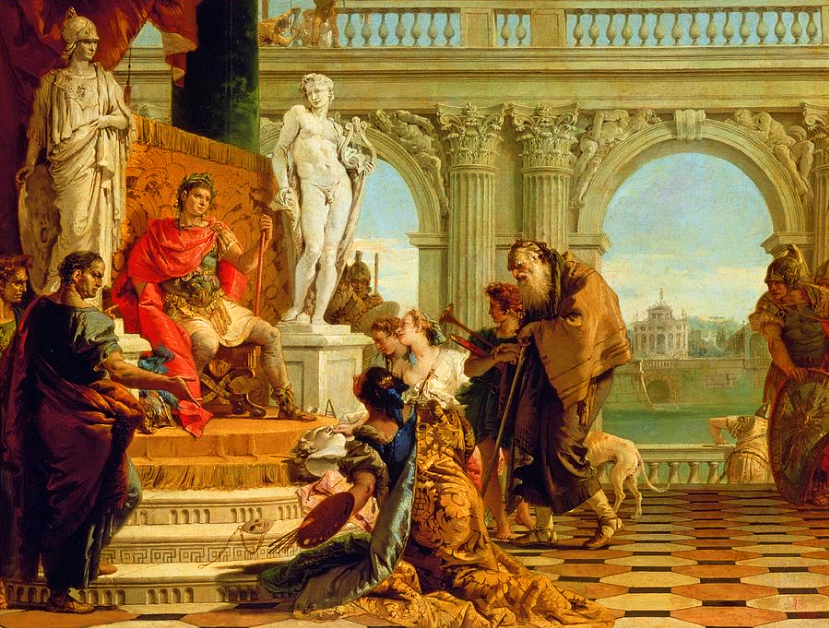
In antiquity the social ties which bound society were personal, expressed through patronage.


Commodity items like slaves were atomised and disposable, not part of society.

Feudalism

Feudalism, a non-slave mode of production, was 'a way of structuring society around relationships derived from the holding of land in exchange for service or labour' (Wikipedia).


Reciprocal - and personal - obligations were expressed vertically thus:
"A vassal would swear allegiance and pay homage to his lord in a commendation ceremony. The commendation ceremony was designed to create a lasting bond between a vassal and his lord. Fealty and homage are a key element of feudalism. The ceremony consisted of swearing the Oath of Fealty and the act of homage."
Capitalism

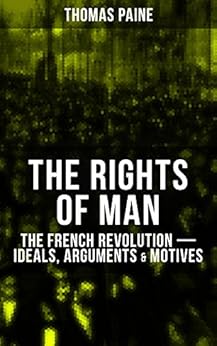
Capitalism, by contrast, needed contractual relationships between free labourers and capitalists as negotiated in the market, and fought against feudalism under the abstract principles of the Rights of Man.

Amazon link

Capitalism is a less organic form of society. As Marx hyperbolically observed in The Communist Manifesto,
"The bourgeoisie, wherever it has got the upper hand, has put an end to all feudal, patriarchal, idyllic relations. It has pitilessly torn asunder the motley feudal ties that bound man to his “natural superiors”, and has left remaining no other nexus between man and man than naked self-interest, than callous “cash payment”.

It has drowned the most heavenly ecstasies of religious fervour, of chivalrous enthusiasm, of philistine sentimentalism, in the icy water of egotistical calculation. It has resolved personal worth into exchange value, and in place of the numberless indefeasible chartered freedoms, has set up that single, unconscionable freedom — Free Trade. In one word, for exploitation, veiled by religious and political illusions, it has substituted naked, shameless, direct, brutal exploitation.

The bourgeoisie has stripped of its halo every occupation hitherto honoured and looked up to with reverent awe. It has converted the physician, the lawyer, the priest, the poet, the man of science, into its paid wage labourers."
Capitalism finds organic communities an obstacle to its own ultra-flexible development. The obduracy of the National Union of Mineworkers was sustained by the extraordinary social cohesion of the pit villages. Yet, as Marx noted, human communities are naturally conservative: capitalism propelled human progress precisely through its hostility to the natural human longing for a warm, supportive, harmonious and stable communitarianism.

Once established, capitalist economies sheltered under nation states and were happy to promote a nationalistic patriotism as the foundation of social stability. But post the sixties, globalisation moved into prominance. Economies now straddled the planet, peoples moved in their millions as migrant labour and sometimes just as migrants. Nationalism as an ideology jarred in this new reality. The narrative became 'multiculturalism' - an imagined, global, borderless and thoroughly-superficial 'community' of free and thoroughly-equal citizens.

All those first and second world war types, spouting their loyalty to King and Country, seemed so very anachronistic now.

---

How useful is this new neoliberal ideology, branded by its enemies as political correctness?

For running a multiethnic, multicultural economic empire it's essential. But when push comes to shove, the shallowness (indeed fraudulence) of its social glue comes to the fore. If neoliberalism celebrates a transient and transactional individualism against communitarian values deemed non-inclusive and reactionary, it's always going to struggle to marshal mass support when confronting a non-compliant adversary.

Why don't we like Russia? Because they're hard on gays??? Saudi Arabia was never so demonised.

---

The ideology of a triumphant capitalism endlessly trumpeted by the Mainstream Media has little to offer the masses outside the bubble .. and ordinary folk, feeling that in their bones, turn elsewhere. The revolutionary bourgeoisie of the eighteenth and nineteenth centuries were the populists of their age, but populism is very suspect today.

The Marxist left believed that just as Marxism had unveiled the mystifications and obfuscations of bourgeois ideology, its vision of socialist freedom, of society working for the many, not the few (to borrow a phrase) would seize the masses, that essential engine of social progress. We know how that worked out.

I have an unappealing prognosis: with economic prospects unpromising, social cohesion unravelling and no easy answers, expect more populism and more crazy politics.

---

As I write, we enter another Italian political and economic crisis.


Monday, September 12, 2016

Workers, slaves, androids - and agency

Einstein produced well-validated scientific theories combined with speculations which seem out of synch with current quantum orthodoxies, while politically he seemed to be socialist-pacifist.

Marx produced rigorous theories of class societies focusing on the capitalist mode of production (Capital etc), speculated about the future of capitalism (inaccurately), and politically seemed to be, well, a communist.

It pays to stay focused on the theories.

So ignore the politicking and moralising and focus on Marxism as a theoretical system; how exactly do workers as living, breathing persons figure in Marxist economic theory?

---

In the beginning was the 'primitive communism' of egalitarian hunter-gathers. Following the neolithic revolutions - agriculture and pastoralism - we entered the age of class societies. All class societies are unequal. At the bottom there are one or more classes which are the primary producers of the necessities of life.

Through the increased productivity of agriculture and pastoralism, the lower classes produced more than they needed to survive. The excess, the social surplus product, was appropriated by the rulers, also serving to fund the elements of the state - administration, warriors and of course, tax collectors.

There was always an accompanying ideology to explain why this little ditty:


was inapplicable, and in fact downright subversive.

Archaic empires had their God-Kings while Axial age empires harnessed more abstract Gods to the maintenance of social order.

In feudal times, there was "a set of reciprocal legal and military obligations revolving around the three key concepts of lords, vassals and fiefs. A lord was in broad terms a noble who held land, a vassal was a person who was granted possession of the land by the lord, and the land was known as a fief. In exchange for the use of the fief and the protection of the lord, the vassal would provide some sort of service to the lord."

As I mentioned already, for Marx the specific essence of capitalism was generalised commodity production and exchange.

The value at which a commodity is exchanged is captured by the formula c + v + s, where c is the value of machinery and raw materials, v the value of the worker's wage and s the additional value created by the activity of the worker in producing the final commodity.

The class nature of capitalism is exhibited in that the worker produces more value (v + s) than he or she receives in payment (v). It doesn't seem that way, as wages are superficially presented as payment for labour (ie the product of labour) rather than labour-power (the capacity to work - placed at the disposal of the capitalist).

Still, in formal terms the worker and the capitalist meet as equals in the market place; the worker sells his/her labour-power and receives a fair price for it. The workers don't have to sell their labour-power and the capitalist doesn't have to employ them. Proletarians have agency (although the concept is not theorised).

We have to add a few things to get closer to quotidien reality: asymmetries of power between workers and bosses; supply/demand & differing profitabilities creating price-variations around value, and so on. But the principle is as stated.

---

People sometimes talk about wage-slavery, working for the Man. Slavery exists under capitalism (the antebellum American South and Nazi Germany being high-profile examples) but in Marxist economics a slave isn't a proletarian; a slave is not a party to a market-transaction for labour-power: a slave is owned.

In this sense, a slave is in the same category as any other piece of equipment, classified as constant capital (c) in the equation. The slave is not paid wages but is merely provided with the same maintenance and raw materials (specifically shelter, food) as any other piece of smart automation. In particular, a slave does not produce surplus value (just surplus product). An economy comprised wholly of slaves, with no wage-labourers, is exactly equivalent to a totally-automated economy - it cannot operate as a capitalist economy as no surplus value is produced.

It's in this sense that slave economies such as the Roman Empire prefigure speculative-future total-automation economies. The Romans had a class of incredibly advanced, intelligent instrumenta vocalia ('talking tools') embedded within a general technological environment of staggering backwardness and low productivity.

The instrumentum vocale philosophy might be adopted for future AI systems, such as the androids featured in the recent TV programme 'Humans', but we run straight into the problem of agency.


"Humans" on Channel 4, showing the 'Synth' Anita

The moment we start treating advanced automation systems as persons, we cannot embed them into the economy as 'talking tools'. Considering them as free agents, we may feel obligated to offer them rights, including labour rights in waged employment. They then enter our existing capitalist society as 'new proletarians' .. and 'new capitalists'.


No doubt that will turn out well.

---

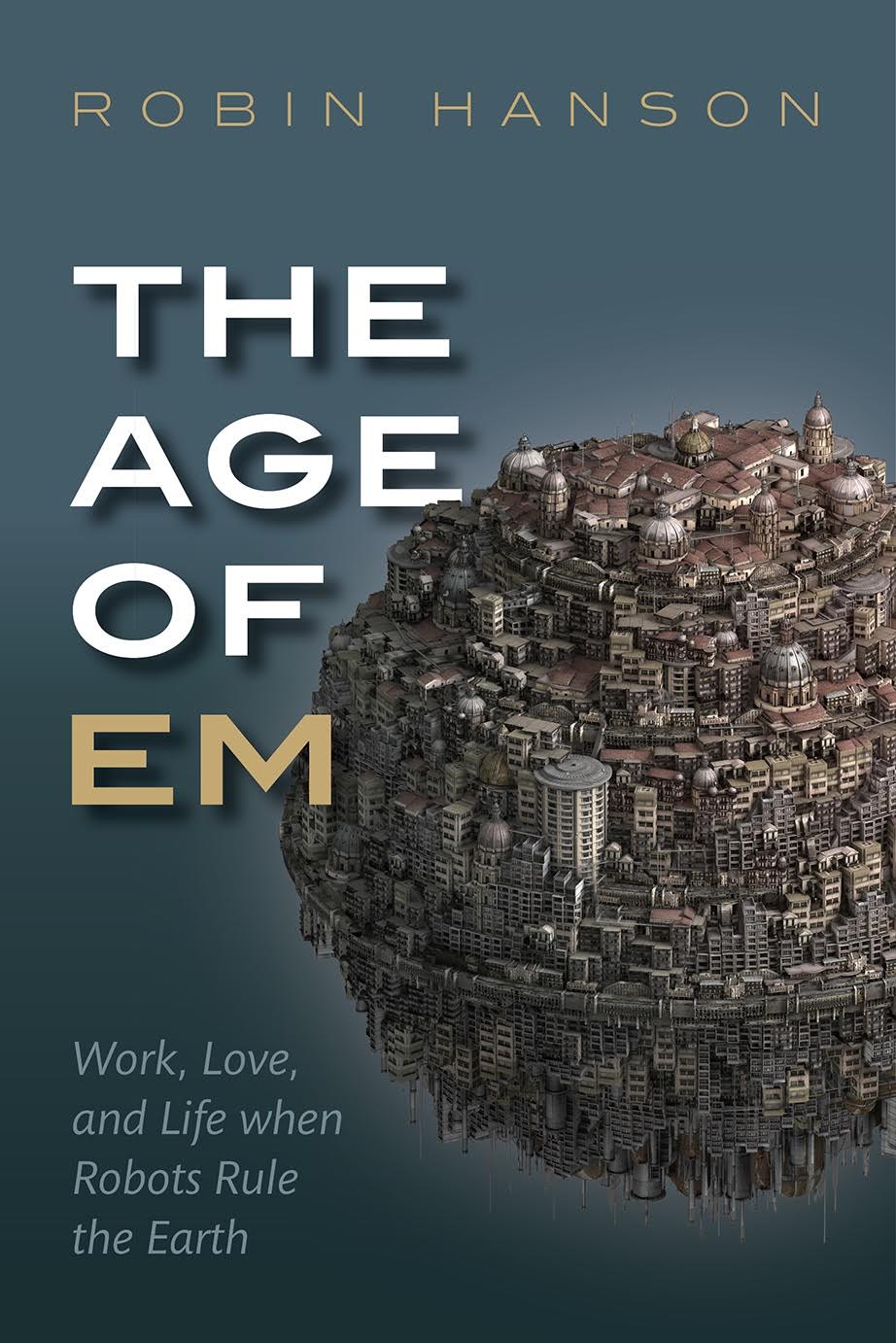
Let's be clear. There is nothing in Marx or reality which prevents a 'robot capitalism'. As long as worker-robots are paid wages which they use to buy their means of self-reproduction in the marketplace, and as long as robot-capitalists can use their robotic work force's labour-power to make profits, capitalist relations of production remain in place.

Protoplasm is not a requirement.

Whether these industrious, capable androids will feel comfortable being taxed to support the remaining, wholly parasitic, humans is an issue I leave to your imagination.

---

In the previous post on this topic, "Total automation under capitalism?", I considered communism brought about by non-sentient automation, giving as an example the 3D printer/fabricator.

In the scenario above, abundance is delivered through automation systems with agency: sentient AI systems - androids or robots - which most people would classify as persons.

It mirrors the distinction in AI research between systems which augment people (like Google today, satnavs or exoskeletons) and those which emulate/replace people, which cut people out of the loop. There are few examples of the latter at the moment - autonomous piloted vehicles perhaps being the most salient.

If we are to avoid the much-hyped technological singularity where in the worst case humans are rendered extinct by our creations, we should perhaps make sure that our automated infrastructure is of the non-sentient type while AI-based agents become our colleagues, companions and friends.

On a bad day, I wonder if this distinction can really hold, given the likely extreme complexity of a communist economy.