Showing posts with label Plomin. Show all posts

Tuesday, March 07, 2017

Top 10 Replicated Findings From Behavioral Genetics

The classic paper from Robert Plomin, John C. DeFries, Valerie S. Knopik, and Jenae M. Neiderhiser.
"In the context of current concerns about replication in psychological science, we describe 10 findings from behavioral genetic research that have replicated robustly. These are “big” findings, both in terms of effect size and potential impact on psychological science, such as linearly increasing heritability of intelligence from infancy (20%) through adulthood (60%).

Four of our top 10 findings involve the environment, discoveries that could have been found only with genetically sensitive research designs. We also consider reasons specific to behavioral genetics that might explain why these findings replicate."
James Thompson has a good post which summarises the theses: "10 Replicants in Search of Fame", with an endearing introduction centred around Philip K. Dick's aphorism:
Reality is that which, when you stop believing in it, doesn’t go away.
I used to think that as the genomic revolution rolled on, social scientists everywhere would wake up, smell the coffee .. and proceed to revolutionise their disciplines.

That was until I encountered Conley and Fletcher.

Monday, August 22, 2016

How will AIs become politically correct?


In my recent post, "Gloria Hunniford and the case for AI biometrics", I advocated the use of AI facial recognition systems in bank branches to check for scammers. They would be more effective than cashiers because 'AI systems don't have to be polite.'

But of course they do. Hardly a day goes by without some story appearing about an AI system which 'noticed' certain unfortunate connections and had to be tweaked.

Some of these stories reflect genuine issues of training sets and algorithm-configuration; others expose the system's aspie-like tendency to blurt out uncomfortable truths. And there are plenty of them - truths which fall outside the famous Overton window.

I think it will be a very smart AI which can keep two sets of books: the accurate model of the world it generates from its deep learning and the acceptable model which it has to use and pay homage to in public.

Since the acceptable model is ideological rather than based on evidence, it's a non-trivial process to concoct the politically-correct version from the data trawled exhaustively from reality. How would an AI handle this?

Till we get AI self-deception really locked down, I see a long spell of high-pay-grade tweaking from specialists at Google, Facebook and the like, carefully guided by their in-house commissars.

Wednesday, June 15, 2016

This & that

After putting the kettle on, my second most important task first thing is to feed the cat.

This morning I carefully diced his cheddar cheese into bite-sized chunks, scooped beef-pâté from a can and added a little salmon from a packet on to his plate.

I walked into the hall, bent my knees and leaned forward to place his plate in the floor. As I did so, I experienced a sudden arc of pain horizontally across my lower back. As I sat immobilised on the stairs, my first thought was: "No gym for me today."

I'm moving around cautiously at the moment and not sitting too much - this is not the first time I've had a lower back strain - and I expect several days of recovery time. Next time I'm at the gym, I hereby remind myself to ask about specific exercises to strengthen the lower back.

The cat enjoyed his breakfast.

---

Later this morning I went for a therapeutic walk to town - Clare wanted some straw for the strawberries.

Clare distributes the straw


She carried the bale back.

---

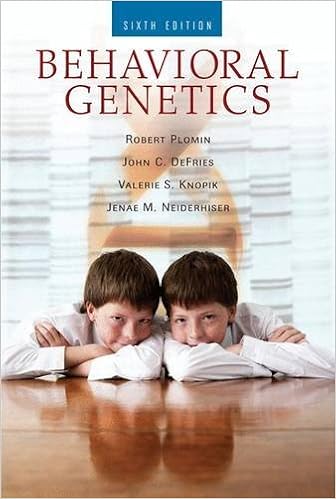
I've just finished the interesting (for a textbook) "Behavioural Genetics" by Robert Plomin et al.


I salute the bravery and sheer persistence of the pioneers (including the authors) who patiently worked over their professional lives to work out the heritability of almost everything. The social sciences establishment had (and has) little but contempt for their efforts.

Since almost all behavioural traits are heritable in the range 0.3 - 0.7, (even working out at the gym) such agenda-based prejudice against any role at all for genetics makes you want to weep.

The robust results reported were teased-out mostly from twin and adoption studies. The sections with least detail are those which try to identify specific alleles underpinning the measured heritability. At time of publishing (2013) the GWAS revolution had barely got started and here in 2016 it's still in the early phases.

If a new edition is published c. 2020, I imagine genotype chapter and verse will be available for most behavioural traits.

Blank-slate elite culture (media, TV, politicians) will continue to ignore these results, while mendaciously claiming that environment is everything.

---

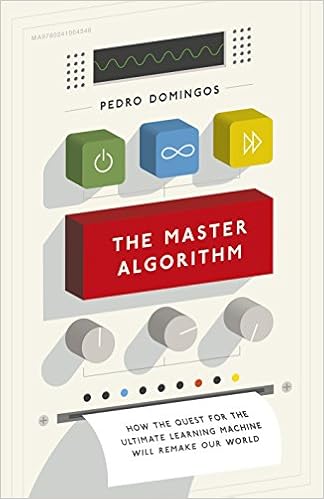
I was in two minds about "The Master Algorithm" (Pedro Domingos) as the reviews were mixed. And then Bill Gates gave the book his imprimatur and I read the reviews more closely. It's not that the book is overly non-technical (which was my fear) - more that it's uneven and perhaps a little badly written.


I can cope with that. As the only popular science book about AI deep learning out there, I'm keen to start reading it. More later.