Showing posts with label Donald Trump. Show all posts

Wednesday, January 21, 2026

Preparing for war: the next decade


Preparing for War

The social and political order that prevailed from the 1960s through to the end of the twentieth century was always going to break down. It rested on an historically exceptional configuration of power, one that was never sustainable. What many people mistook for a stable - almost natural - world order was in fact a temporary suspension of normal history.

For most of the twentieth century, China was effectively supine. Its economy was crippled by catastrophic policy choices, and it lacked the institutional and technological capacity to project power beyond its borders. Russia, meanwhile, stagnated, then collapsed outright at the end of the century, losing not just ideological coherence but its imperial structure. Europe emerged from the Second World War exhausted and strategically neutered.

The result was the American century: a brief period of uncontested global hegemony. The United States became the organising centre of the world system, militarily dominant, technologically pre-eminent, and economically indispensable. Europe was folded into this system as a subordinate but useful adjunct: politically compliant after the destruction of the Reich, economically productive, and strategically dependent. The so-called Pax Americana was not a peace between equals but an order held together by overwhelming asymmetry.

What later came to be described as the “rules-based order” was essentially a protocol for managing economic and political interactions under conditions of American dominance. It was never a neutral or universal framework. It worked because there were no peer competitors capable of challenging the United States at scale. That was its hidden precondition.

This situation was never going to last. Once China abandoned ideological economics and adopted policies aligned with growth, capital accumulation, and technological development, its rise to peer-competitor status was close to inevitable. A civilisation with 1.3 billion people, deep historical continuity, technological competence, and a disciplined state apparatus was always going to reassert itself once the self-inflicted constraints were removed. That point has now been reached.

Russia’s trajectory was different but equally predictable. Once the post-Soviet collapse stabilised and a degree of economic recovery occurred, Russia was bound to attempt to reassert control over what it regards as its historical sphere. Empires do not forget themselves easily. Revanchism was not an aberration; it was the default setting once weakness gave way to capacity.

We are therefore no longer living in a post-historical world. We are reverting to normal history: great powers competing over security, territory, resources, and strategic depth. The anomaly was the late twentieth century, not the present.

The United States appears to have internalised this paradigm shift. America no longer assumes it can manage the entire world. It is increasingly concerned with its own survival as a great power in a multipolar system. From this perspective it is “girding for war” in the classical sense: securing the homeland, consolidating its strategic perimeter, and prioritising its responses to existential threats. The renewed focus on the continental United States, on the Arctic, and on hemispheric security reads less like paranoia than a return to strategic realism: walls and moats rebuilt because the landscape has changed.

At the same time, America’s overriding geopolitical objective is to prevent the formation of a unified Sino-Russian bloc. A coordinated challenge from two continental powers would be genuinely dangerous. Decoupling Russia from China is therefore a higher priority for Washington than preventing Russian consolidation in parts of Eastern Europe. In this hierarchy of threats, European territorial disputes become secondary.

There is also a logical pressure built into Russia’s own position. If Russia succeeds - to its own satisfaction - in securing its western borders and reasserting control over its near abroad, it should then look east with a cold jolt of recognition. The real demographic and economic mass on Russia’s frontier is not Poland or the Baltics but China: 1.3 billion people, an industrial colossus, sitting beside a vast, thinly populated Siberia rich in resources. A Russia that has “won” in the west may find itself newly and seriously exposed in the east, and the spectre of that imbalance should haunt any serious Russian strategist. From Washington’s point of view, the potential is obvious: that Moscow, once it has banked its western gains, will begin to fear its dependency on Beijing more than it fears Europe, or American power.

This helps explain the apparent oscillation in American policy over Ukraine. What looks like incoherence is better understood as tactical manoeuvring in service of a larger strategic goal: preventing Russia from becoming a permanent junior partner to China. From an American point of view, it is brutal arithmetic rather than moral theatre.

Europe, by contrast, has failed to adapt. European elites remain ideologically invested in the idea that the rules-based order is a natural and permanent state of affairs, akin to the laws of physics rather than a contingent outcome of power relations. They remain nostalgic for a world in which free trade, moral suasion, and multilateral institutions function - quietly underwritten by implicit American supremacy. America no longer believes in that vanishing world. Europe still does.

This mismatch explains much of the current confusion. European elites tend to interpret Trump as a personal aberration rather than as a symptom of a deeper structural shift. In reality, Trump is better understood as a battering ram: an instrument used by sections of the American establishment to smash through internal resistance, entrenched interests, and outdated commitments that no longer serve a threatened national survival. When existing elite networks are too powerful to be reformed from within, they have to be broken. Disruption is not a bug of this process; it is its mechanism.

European leaders, however, lack both the clarity and the courage to articulate the new reality to their populations. To do so would require admitting that Europe is militarily weak, strategically fragmented, and dangerously exposed. It would mean acknowledging that the long holiday from history is over, and that hard choices lie ahead. They also know that telling the truth would demand radical domestic disruption - and they do not see, at present, the social forces that would support such a transformation. Absent that support, honesty on the part of any serious politician becomes politically suicidal.

Yet Europe’s strategic choice should not be mystified or glossed over. In a global power struggle between America, China, and Russia, it would be folly for Europe to imagine it can float above the fray. If Europe wishes to retain its economic model, its civil liberties, and the broad civilisational inheritance it claims to value, then it must side with America. Not because America is saintly, but because the alternatives are worse: a Chinese-led order in which Europe would become a subject civilisation of the Middle Kingdom, permitted to trade and to remember its past, but expected to kowtow on issues of strategic importance; or a Russian sphere of influence that treats smaller nations as resources for its oligarchy and its Imperial state. If Europe will not defend its own autonomy and values, it will not keep them.

Most likely Europe instead drifts - clinging to an expired paradigm while the strategic environment hardens around it. Unless something forces a reckoning, Europe is likely to remain a strategic basket case for the next decade or two: increasingly irrelevant, increasingly vulnerable, and increasingly the victim of decisions made elsewhere .

History has a habit of delivering such reckonings brutally. One can only hope that Europe is jolted awake by events less catastrophic than the wars that have traditionally marked the return of reality as practised by human beings.

They say that if you want peace, then prepare for war.


Friday, April 04, 2025

Tariffs vs. TDS


In March 1981, 365 economists wrote a letter to The Times denouncing Margaret Thatcher's monetarist economic policies. The letter criticised her government's approach of restricting the money supply to control inflation, arguing that it was exacerbating the recession and causing unnecessary unemployment. The signatories, including prominent figures such as Sir Richard Stone and James Meade, warned that the policies would deepen the economic downturn rather than resolve it.

Thatcher and her Chancellor, Sir Geoffrey Howe, ignored the letter, and her government remained committed to its monetarist stance. By the mid-1980s, inflation had indeed fallen, but at the cost of high unemployment and significant industrial decline. It was eventually understood that the Thatcher reforms - deregulatory, dismantling restrictive practices and veto networks - were essential to reposition the UK economy for the era of globalisation which followed.

Now the US administration is embarking upon a similar revectoring of the U.S. economy to confront America's new challenges - internal and external. Naturally, conventional economists are united in condescending fury. The ivory towers resound to the squeals of Trump Derangement Syndrome.

Let it go. With the help of ChatGPT, let's examine - calmly and professionally - why the Trump administration's tariff strategy is broadly correct from America's point of view.

And why, sharing similar problems, the UK government should be similarly radical when it comes to sacred cow slaying (although it won't be).


The orthodox economic consensus has long favoured free trade, viewing tariffs as an inefficient distortion of market forces. This perspective assumes a world of frictionless global commerce, where nations specialise according to comparative advantage, and capital moves freely to its most productive uses. However, this idealised framework has not always aligned with political-economic reality, particularly in the context of geopolitics, strategic industries, and long-term national economic resilience in a period of heightened inter-state tensions.

The Trump administration’s tariff strategy, often dismissed as crude protectionism, can be more accurately understood as an attempt to recalibrate America’s economic position in a global system that has, in many respects, disadvantaged its domestic manufacturing. One of the central issues is the persistent strength of the U.S. dollar, a consequence of its role as the world’s dominant reserve currency - a safe haven for the wealth of rich foreigners. 

This status generates continuous international demand for dollars, driving up its value. A strong dollar, in turn, makes U.S. exports more expensive on global markets while simultaneously making imports cheaper. The result is a structural trade imbalance, where American industries struggle to compete internationally, and domestic production is displaced by the relocation of manufacturing abroad and by lower-cost imports.

Tariffs provide one means of addressing this imbalance. By imposing levies on imported goods, the government can create a more level playing field for domestic producers, mitigating some of the distortions caused by exchange rate dynamics, stimulating domestic investment. 

While tariffs are often criticised for raising consumer prices, they can also serve a strategic purpose: ensuring that key industries—particularly those essential to national security and technological leadership—are not eroded by the vagaries of global capital flows.

The case for tariffs is further strengthened by the issue of unfair competition, particularly in the form of state-backed overproduction and dumping. China, for example, has a long history of producing goods at levels far beyond domestic demand, selling the surplus abroad at marginal cost. This practice, enabled by extensive state subsidies, undermines industries in importing nations, leading to deindustrialisation and job losses.

Tariffs can serve as a countermeasure, preventing domestic markets from being flooded with artificially cheap goods that domestic producers cannot match. In practice, most countries in the world have used tariffs in this way.

Historically, developing nations such as South Korea and Japan used protectionist measures to nurture their industries until they were able to compete on equal footing with established global players.

The notion that a country should simply allow market forces to dictate outcomes, regardless of strategic consequences, is a relatively recent economic orthodoxy reflecting the ideals of globalisation. In reality, the most successful industrial nations have always employed a mix of free-market competition and targeted state intervention to shape economic outcomes in their favour.

Beyond economic theory, there is a broader geopolitical imperative at play. The post-Cold War assumption of a benign, integrated global economy is increasingly untenable in an era of great-power competition. As global supply chains become a site of strategic rivalry, economic policy must reflect national interests rather than abstract efficiency. Tariffs, in this context, are not merely a protectionist tool but part of a broader strategy to ensure economic sovereignty and resilience.

While conventional economists will continue to argue for unfettered trade, the case for a more interventionist approach is gaining traction. The U.S. experience over recent decades—marked by the offshoring of production, the hollowing out of industrial regions, and persistent trade deficits—suggests that a reassessment is overdue.

The Trump administration’s policies, though controversial, reflect a pragmatic response to these challenges. Whether tariffs alone can achieve the desired economic realignment remains an open question, but their use as a corrective measure within a broader strategy of economic rebalancing is a completely defensible position.

Thursday, March 20, 2025

'What Does Trump See in Putin?' A Conversation With Fiona Hill


Fiona Hill

A recent Foreign Affairs podcast between Dan Kurtz-Phelan and noted Russian expert Fiona Hill is perhaps the best analysis of the Trump-Putin dynamic this year. It's quite lengthy, so I asked ChatGPT to summarise the transcript - see below. Here is the link to the original (may be gated).


What Does Trump See in Putin?

Fiona Hill’s contributions throughout the interview provide a penetrating analysis of how personal dynamics, strategic miscalculations, and a rapidly shifting geopolitical landscape are reshaping U.S. foreign policy, European security, and the global balance of power.

Rapid Pace and Unpreparedness

Hill begins by expressing surprise at the lightning-fast pace of events in Trump’s second term. While many outcomes were anticipated, the sheer speed and “furious” nature of developments caught even seasoned observers off guard. This rapid evolution of U.S. policy has left both allies and adversaries scrambling to understand and adapt to a new reality—a reality in which the old assumptions about deliberate policymaking have given way to a volatile and reactionary approach.

Trump’s Personalized Diplomacy

A recurring theme in Hill’s commentary is Trump’s hyper-personal approach to international diplomacy. Reflecting on the Oval Office meeting with Ukrainian President Zelensky, she underscores how Trump’s dismissive treatment—reducing established agreements to mere personal whims and treating foreign leaders as pawns in his quest for image management—illustrates a dangerous departure from institutional norms.

According to Hill, this personalized style of negotiation not only undermines the continuity of U.S. foreign policy but also leaves counterparties ill-prepared for the fast-paced, high-stakes encounters that define today’s diplomatic landscape.

In a realm where precision and cultural nuance matter, even small missteps, such as Zelensky’s choice to speak in English without the full support of a skilled interpreter, can have outsized consequences.

The Putin Paradigm and Institutional Contrast

In stark contrast to Trump’s improvised style, Hill paints a vivid picture of the Russian approach under Vladimir Putin. For Putin, decision-making is centralized and supported by a cadre of experienced officials—figures like Lavrov and Dmitriev—who are well-versed in the art of diplomacy and adept at communicating a consistent message.

This disciplined and institutional framework stands in sharp relief against Trump’s tendency to fixate on the individual, particularly his obsession with meeting Putin face-to-face. By sidelining experienced advisors and professional diplomats, Trump risks simplifying complex geopolitical realities, a miscalculation that inadvertently bolsters Putin’s image as a strong and in-control leader.

Europe’s Agency and the “Vassal State” Debate

A significant portion of Hill’s analysis is devoted to Europe’s precarious position amid these shifting power dynamics. She argues that Trump’s “America First” approach, combined with his overt antagonism toward European security interests, is effectively relegating Europe to a collection of “vassal states.”

In her view, this dynamic is twofold. On one hand, European nations—ranging from Poland and Finland to the Baltic states—are compelled to rapidly rearm and invest in their own military capacities in response to a perceived abandonment by the United States. This reactive posture suggests that while Europe is often depicted as fragmented and dependent, it does retain a measure of agency; its leaders are now more urgently recalibrating their defense strategies and pooling resources in a bid to assert independence.

On the other hand, Hill is skeptical about the extent of this agency. She notes that the deep-rooted institutional weaknesses and the slow pace of reform across much of Europe mean that even well-intentioned moves toward self-reliance may prove too little, too late in the face of an assertive Russian posture aimed at regaining its sphere of influence.

Dividing the World into Spheres of Influence

In her broader reflections on global order, Hill discusses the emerging paradigm of dividing the world into three primary spheres of influence—America, Russia, and China—a model in which Europe is conspicuously marginalized.

In this vision, Europe is not seen as an independent actor but rather as a subordinate entity whose destiny is to be dictated by the strategic interests of these dominant powers. Hill points out that such a tripartite division is reflective of a nostalgic, almost eighteenth-century mindset where power was concentrated in the hands of a few autocrats.

For Trump and, to some extent, for Putin, this framework offers a simplified narrative: strongmen should control distinct regions of the world, leaving little room for the multilateral and often messy realities of European politics.

However, Hill challenges this notion by highlighting Europe’s complex identity—its population of 550 million, its diverse political systems, and its economic clout—which collectively underscore that Europe, though currently sidelined in strategic narratives, does possess the potential to reshape its role if it can overcome internal fragmentation.

Implications for Global Order and Nuclear Proliferation

Hill’s reflections extend to the broader implications of this evolving order. The personalized, reactionary diplomacy of the United States, coupled with an emboldened Russian strategy, is not only eroding traditional alliances but also creating an environment in which nuclear proliferation becomes a tangible risk.

With countries in close proximity to Russia, such as those in Eastern Europe, now forced to rethink their security arrangements, there is a real danger that nations will rush to acquire nuclear capabilities. This proliferation is not confined to Europe; Hill warns that similar dynamics could spread to other regions, thereby destabilizing an already fragile global balance.

Admiration and Misguided Affinities

Another critical aspect of Hill’s analysis is her exploration of the peculiar personal dynamic between Trump and Putin. She contends that Trump’s admiration for strongmen is driven by a personal affinity for the image of power rather than an objective assessment of geopolitical threats. 

Drawing on historical analogies, Hill likens Trump’s mindset to that of eighteenth-century monarchs, suggesting that his tendency to view international relations through the lens of personal relationships and flattery is both anachronistic and dangerously simplistic. This personal affinity, she argues, has led Trump to downplay or even dismiss actions by Russia that undermine U.S. credibility and international stability.

Conclusion: A Call for Strength, Unity, and Institutional Integrity

In her concluding remarks, Hill emphasizes that the only viable path forward lies in restoring a credible deterrence posture, strengthening internal cohesion, and re-engaging with global partners. The emerging order—with its tripartite division and its reduction of Europe to a secondary role—serves as a stark warning about the long-term consequences of neglecting institutional foundations.

For Hill, the solution is not to return to the old ways of personalized, autocratic diplomacy but to reaffirm the principles of strength, unity, and multilateral cooperation that have underpinned international stability for decades.

Overall, Fiona Hill’s insights offer a sobering and multifaceted analysis that not only critiques the current leadership styles of Trump and Putin but also highlights the broader systemic shifts reshaping global power. 

Her reflections on Europe’s dual status as both a potentially autonomous actor and a group of “vassal states” within a tripartite world order underscore the urgency for renewed commitment to collective security and institutional integrity in an increasingly complex and competitive international landscape.

Wednesday, March 19, 2025

Bonapartism: The Politics of Exhaustion and Renewal


Bonapartism: The Politics of Exhaustion and Renewal

Karl Marx’s theory of Bonapartism, most famously articulated in The Eighteenth Brumaire of Louis Napoleon (1852), describes a political phenomenon in which a charismatic leader emerges in times of systemic crisis to impose order, override institutional paralysis, and forge a new governing consensus. This occurs when the existing political order—whether liberal-democratic, aristocratic, or revolutionary—has exhausted its capacity to reconcile deep social and economic contradictions. The Bonapartist leader presents himself as standing above class conflicts, acting as an arbiter between competing interests, yet in reality, he restructures the state in a way that ultimately serves the long-term interests of the ruling class.

In The Eighteenth Brumaire, Marx examines the rise of Napoleon III, who seized power in 1851 amid the decay of the French Second Republic. Marx describes how the bourgeoisie, unable to maintain class rule through parliamentary means and fearful of proletarian revolution, ceded power to an authoritarian figure who promised to restore stability. The Bonapartist leader appeals to multiple classes simultaneously—bourgeois elites, the petty bourgeoisie, and even elements of the working class—by adopting a rhetoric of national renewal while systematically dismantling democratic structures. The state, in this phase, appears to gain an autonomous power of its own, floating above class conflicts, yet it remains a tool for consolidating a new elite consensus.

Bonapartism is not simply dictatorship; it is a transitional mechanism. Marx understood it as an historical necessity in moments when the old order could no longer function, but no new order had yet emerged. Napoleon Bonaparte himself embodied this logic when he assumed power in 1799, stabilizing a post-revolutionary France that had descended into factional chaos. His rule introduced modern legal and administrative structures—most notably the Napoleonic Code—while sweeping away both the feudal remnants of the ancien régime and the radical instability of revolutionary government. Similarly, his nephew’s coup d’état in 1851 marked the end of the tumultuous revolutions of 1848 and the failure of bourgeois democracy to manage the contradictions of industrial capitalism.

The Bonapartist interlude is, by its nature, temporary. While it serves as a violent reset for a failing system, it ultimately exhausts itself, either giving way to a more stable and institutionalised form of rule or collapsing into deeper crisis. It is a moment of transition, not an endpoint. The question for any Bonapartist regime is not whether it can last indefinitely—it cannot—but whether it successfully lays the foundations for the political and economic order that will follow.

Historical examples abound. Napoleon’s empire, despite its military triumphs, was undone by the very contradictions it sought to resolve, giving way to the Bourbon Restoration. Napoleon III’s Second Empire, despite its modernization efforts, crumbled under the weight of geopolitical miscalculations and domestic unrest, paving the way for the Third Republic. Twentieth-century variants of Bonapartism, from Perón in Argentina to De Gaulle in France, likewise emerged from crises, imposed order, and then gave way to more durable structures.

The pattern remains relevant. When institutions falter, when economic transformations outpace political adaptation, and when ruling elites prove incapable of maintaining legitimacy, the Bonapartist figure emerges. His function is not to create stability, but to smash resistance to a new order. The question is: what comes after him?

Saturday, February 08, 2025

The Martian Economist on Donald Trump

The Martian Economist views events on planet Earth from a lofty height, refusing to take sides in parochial, tribal mud-slinging. This alien intellectual is - broadly speaking - a follower of Joseph Schumpeter, who they take to be the most persuasive of all Terran economists. At this critical turning point in Earth's history, the Martian presents us with his/her/its views on perspectives (with a little help from ChatGPT).


The Martian Economist on Donald Trump

A Visual Metaphor for the Past, Present, and Future

A global grid of pulsing light once connected the world - commerce flowing freely from New York to Shanghai, Frankfurt to São Paulo. It was the 1990s, the age of neoliberal triumphalism, and the promise of universal prosperity through open markets seemed within reach. Fast forward a generation: the grid now flickers, fraying at the edges. The engines of globalisation have stalled, weakened by economic contradictions, political backlash, and rising great-power competition. Walls - literal and figurative - divide the world, as revolutionary technologies emerge that could either rebuild the grid or tear it apart entirely. The year is 2025.

Donald Trump’s return to the presidency a few weeks ago is not a historical fluke, nor the mere triumph of personal ambition. It is the product of seismic economic, political, and geopolitical shifts that have accelerated since his first term ended in 2021. These forces - rooted in the failures of neoliberalism, technological disruption, and the fracturing of the global order - demanded a populist, nationalist response, one that Trump was uniquely positioned to deliver.


Neoliberalism’s Implosion

Over the last two decades, the neoliberal economic order that dominated the post-Cold War period has eroded. The structural weaknesses exposed by the 2008 financial crisis, the uneven recovery of the 2010s, and the faltering response to the COVID-19 pandemic created fertile ground for popular alienation from borderless elites who pocketed the many benefits of globalisation.

The 2016 Brexit vote and Trump’s first term were the harbingers of a broader shift toward deglobalisation. Trade wars, the reshoring of manufacturing in response to perceived security-of-supply threats, and geopolitical instability, all began to unravel the global economic system. By the 2020s, the pandemic’s exposure of intrinsic supply-chain fragilities and rising tensions between the U.S. and China cemented this trend. 

The Biden administration attempted progressive economic reforms, temporarily stabilising some constituencies, but these efforts failed to resolve the deeper contradictions of the American economy. Wage stagnation persisted, wealth inequality widened, and inflationary pressures eroded the purchasing power of ordinary Americans.

And then there were the culture wars: a near-perpetual conflict over identity and values that sapped any remaining trust in American institutions. By 2024, "drain the swamp" had evolved from a campaign slogan to a grim metaphor for what should be done to the failing state.


Trump’s Return and a Fractured Global Order

Trump’s 2024 campaign capitalised on this discontent, promising a return to “American greatness” through protectionist policies, border controls, and an unapologetic assertion of transactional national interests. His second term emerges against the backdrop of a far more fragmented world than his first.

The U.S., once the undisputed global hegemon, now faces near-peer competitors in China and a revanchist Russia, as well as a host of regional powers asserting themselves. The unipolar moment is over, and Trump’s foreign policy - bilateralism, transactional diplomacy, and military modernisation - reflects this reality. “Peace through strength” is paired with renewed investment in AI-driven defence technologies, hypersonics, and advanced manufacturing.

China is the foremost challenger. It has matched or surpassed the U.S. in AI, quantum computing, and green energy. Its success stems from a state-capitalist model that combines strategic focus with technological ambition. Yet, the contradictions of its authoritarian system act as a brake on progress: centralisation and censorship stifle the entrepreneurial dynamism necessary for sustained innovation.

Russia, meanwhile, is a declining power with delusions of grandeur. Its strategy of leveraging energy exports to sustain its influence is faltering under Western sanctions and a shifting global energy mix. Internally, demographic decline and economic stagnation amplify its vulnerabilities. Russia’s gamble - expanding its empire westward while drifting into economic and even political subservience to China - looks increasingly like a strategic cul-de-sac.

Elsewhere, the rest of the world remains a sideshow. Europe is in inexorable managed decline, its complacent elites and entrenched vested interests strangling change and stifling growth; regions like Latin America and the Middle East struggle with endemic instability. India, though rising, is not yet cohesive or industrialised enough to play a decisive role in the global balance of power.


The Domestic Battlefield

Domestically, Trump’s second term inherits a deeply polarised United States, where institutions from Congress to the judiciary are perceived as captured by self-interested elites. Trump’s populist economic agenda promises to revitalise the industrial heartland through protectionism, infrastructure investment, and reshoring. But these policies face significant obstacles: entrenched elites within the state apparatus, fiscal constraints, and inflationary pressures from an already overstretched economy.

The accelerating pace of technological change further complicates matters. AI, automation, and robotics are transforming labour markets, displacing traditional industries while creating new opportunities for the educated elite. The challenge for Trump - or any leader in this moment - is navigating this transition without exacerbating inequality or social unrest, or losing his base.


The New Arms Race

The 2020s have ushered in an arms race not only in military technology but in economic and ideological competition. AI, quantum computing (potentially, at some point), and hypersonics are at the forefront, reshaping both war and commerce. These technologies are not just tools but arenas of conflict, where leadership confers economic dominance as well as military superiority.

For the U.S., the question is whether Trump’s administration can harness America’s innovative edge to rebuild its economic and strategic primacy, or whether bureaucratic inertia and political dysfunction will squander this advantage. Trump’s “wrecking ball” energy, paired with an operations team capable of executing his vision, may yet reforge America for the next cycle of capitalist development: creative destruction finally unleashed.


The Path Forward

Trump’s second term represents both a moment of crisis and an opportunity. The global order is undergoing a chaotic transformation, with great-power competition, technological upheaval, and economic realignment reshaping the world. Trump’s transactional approach to diplomacy - while risky - may help deter uncontrolled escalation between the U.S., China, and Russia, while forcing these powers to confront their internal contradictions and hopefully transform themselves to a new global equilibrium.

The stakes are immense. A failure to adapt could plunge the world into protracted conflict, while a successful recalibration could usher in a new era of stability and growth. This is the crucible where the next stage of human development will be forged - or destroyed.


Sunday, December 22, 2024

A New and Necessary Leadership Style


The Roman Republic had a keen sense of political dualism. In ordinary times, the Senate served as a theatre for the aristocracy’s disputatious squabbles, each family pursuing its private ambitions under the banner of public interest. But when existential threats loomed, Rome cut through the noise: a dictator was appointed, granted extraordinary powers for a limited term to unify command and save the Republic.

Modern advanced democracies have mirrored this approach in practice if not in theory. In normal times, government operates as managerialism - weak leaders triangulating between a fragmented chorus of competing interest groups, lobbyists, and policy technocrats. Yet, when national survival is at stake, a Churchillian figure may somehow emerge - a previously derided figure capable of galvanizing the nation in the face of war or crisis.

The appointment of Winston Churchill in 1940 exemplifies this dynamic. Weak appeasers were swept aside for a man whose single-mindedness matched the gravity of the moment. Britain’s victory depended not on consensus but on clarity and resolve: "action this day".

Today’s elites - to their dismay - are rediscovering this lesson. Decades of neoliberal globalism and cultural progressivism have widened the chasm between ruling fractions and the non-elite majority. The rise of populist leaders like Donald Trump - dismissed by elites as aberrations - in the first instance signalled an internal 'cold civil war', a backlash from the forgotten majority whose patience was exhausted.

Ironically, these populist leaders, derided as unfit for power, may be precisely what is needed to confront the growing and ominous threats posed by hostile states like Russia, China, North Korea, and Iran.

Just as Rome needed its dictators and Britain its Churchill, arguably the West’s internal divisions might yet produce leaders with the fortitude to face under-realised external dangers.

Tuesday, November 19, 2024

The Pathological State and the Prospects of War


"No Two Democratic States Have Ever Gone to War"

This oft-cited claim is at least approximately true. It holds not as an iron law but as a reflection of the dynamics within and between democratic states. Understanding why this holds - and when it doesn’t - requires analysing the nature of democracy, the capitalist economy and the specific phenomenon of the pathological state.

The Democratic State is Generally Reactive

Capitalism is unique as a mode of production where economic power resides with the private owners of capital, while the state's role is almost entirely non-economically productive: setting and enforcing the rules for commerce, providing public goods like education and defence - and otherwise staying out of the way.

Critically, the default capitalist state lacks its own economic resources. Revenues depend on taxes and borrowing, tethering the state to the economic vitality of its capitalist and working classes.

In bourgeois democracies, the government and the state remain distinct entities. The government - composed of elected officials - sets policy and provides direction but the sprawling state bureaucracies, influenced by diverse civil society lobbying, operate in their own sphere - and generally in their own interests.

In the modern era, capitalism has transcended national boundaries. The most powerful firms and financial institutions are transnational, motivated to influence democratic states in the direction of harmonised regulations, free trade rather than tariffs, and stable markets. 

The pathological state stands in stark contrast.

The Pathological State: A Breeding Ground for Conflict

Pathological states are those captured by elites whose ambitions go beyond purely economic rationality. These regimes are often characterised by a fusion of government and state, where the ruling elite purges the state apparatus to serve visions such as territorial expansion, national pride, and dominance.

Historical examples abound. Nazi Germany sought Lebensraum in Eastern Europe, aiming for territorial control to directly support its perceived agricultural and resource needs. Similarly, contemporary Russia and China - while not identical - exemplify the pathological state in their proactive use of state power for revanchist ends and national-ethnic dominance.

In these regimes, economic elites are often subordinated to the state’s broader ideological goals. The calculus of transnational capitalism - focused on profitability, efficiency and stability - gives way to the more visceral drives of power and status backed by military action. It has to be said that in this the state is often backed by the patriotism of popular opinion - while few in democracies have felt impelled to die for their company...

How Democracies Resist Pathological States

Pathological states often provoke democratic ones into confrontation. For a pathological state, war and aggressive policies are not anomalies but extensions of its raison d’être. History shows that democracies targeted by such states face a stark choice: capitulate or fight.

Take current conflicts in Ukraine and around Taiwan. In both cases, pathological states (Russia and China) confront democracies, threatening territorial integrity and sovereignty. War for these kinds of objectives is not congenial to developed bourgeois democracies, but they are not given the choice.

The Limits of Pathological States

While democracies rarely devolve into pathological states, the reverse is even less likely. Pathological states tend to sustain themselves until they are forced to collapse, often by losing a war. The cases of Spain and Portugal may serve as exceptions - examples where entrenched repressive regimes after many decades eventually transitioned into democracies as militarism and authoritarianism became inefficient shackles, to be thrown off by new elites amid popular pressure.


Q&A on Pathological States and Political Movements  

Q: How do pathological states come into existence?

A: In cases like Russia and China, the collapse of the 'ancien régime' occurred without prior significant capitalist development or the presence of a robust civil society. The revolutionary governments in both cases seized control of the state apparatus to forcibly drive industrialization, embedding dysfunctionality from the outset. This reliance on the state for economic transformation created a system of repression and inefficiency - pathologies that have persisted over time.  

By contrast, in Nazi Germany, the bourgeois democratic state disintegrated under the weight of internal divisions that proved irreconcilable through peaceful means. The National Socialist movement, a mass political force, rose by exploiting economic despair and ideological polarisation. Through violence and suppression - primarily targeting trade unions, socialists, and communists - the Nazis dismantled institutional opposition and restructured the state to align with their extra-economic ideological objectives. This transformation rendered the state pathological, prioritising coercion and ideological conformity over functional governance - and launching the world to war.  

Q: Some people have called the Trump MAGA movement in America fascist. Is this an accurate statement?

A: No, the comparison is misplaced. The MAGA movement under Trump is better understood as part of a broader realignment within bourgeois democracy, akin to Margaret Thatcher’s transition in the UK during the 1980s.  

Thatcherism arose in response to the exhaustion of the post-war Keynesian economic model, introducing neoliberal reforms to revitalise capitalism. While fiercely contested - at times violently - the transition maintained the framework of bourgeois democracy, redirecting it along new deregulated and globalised lines.  

Similarly, the Trump phenomenon represents an attempt to pivot away from the now-declining neoliberal, globalising model that has dominated American (and Western) politics for decades. This shift is partly driven by the pressures of geopolitical competition from coordinated adversaries like China, Russia, Iran, and North Korea, which expose the vulnerabilities of the existing global order, but also by a popular revolt against internal stagnation.

However, unlike the Nazi seizure of power, the MAGA movement does not seek to dismantle democratic institutions wholesale, or impose an ideologically rigid state. Instead, it signifies the reconfiguration of bourgeois democracy to meet the demands of a changing global and domestic landscape.  

While the process is polarising, the trajectory remains rooted in the competitive pluralism that defines democratic capitalism, not the totalitarian impulses characteristic of fascist regimes.


This essay was drafted by ChatGPT from my extensive notes, and then lightly post-edited.

Wednesday, November 06, 2024

A Perfect Day

 Some will think so today.


This beautiful, poignant song by Lou Reed finishes with a lyric to ponder:

"You're going to reap just what you sow".


Ambiguity? I am of course referring above to the party which has adopted and aggregated the fantasy luxury beliefs of the aspirant young professional strata - and thereby abandoned aspirations to hegemonic ideological leadership for the population as a whole. It now falls to the Republicans to break the logjam: I have high hopes for JD Vance and his talented colleagues to get real work done behind the scenes, while Trump entertains in front of house.

Naive (cultural) globalisation has truly had its day.

Friday, January 05, 2018

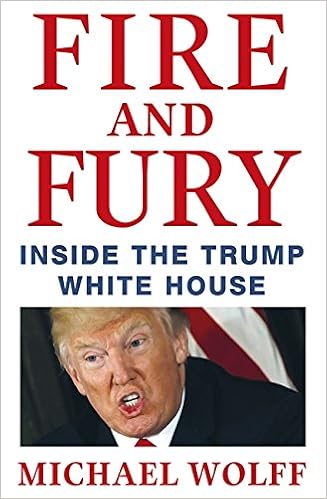
Way too much Fire and Fury

Amazon link

I think it was David Keirsey in "Please Understand Me II" who observed that the feminism of the sixties and seventies was driven by female ENFJs.


Amazon link

The Keirsey/Myers-Briggs NF ('Idealist') temperament describes a combination of abstract-intuition and compassion which forms the essence of liberalism. The extraversion (E) and Judging (J) work to turn that abstracted-compassion loose on the world - let the campaign begin!

Rationals like myself (ineffectually inclined to Libertarianism) tend to value truth and logical coherence. We are prepared for our ideas to be refuted.

Idealists, by contrast, are driven by moral fervour, not intellectual rigour. When they meet opposition, their opponents get classed as heretics, their positions a value-atrocity.

It's no fun debating SJWs.

So when the liberals got their claws into Donald Trump for not being one of them (and for refusing to sign up to their agenda - as Obama and Clinton had done), it was very tempting to defend the current POTUS.

But the political enemy of my enemy can also be .. my enemy.

---

Trump is most likely an ESTP. The lack of interest in ideas or coherent policy-making is not unusual for a self-indulging, prickly and egocentric Artisan.

The higher ranks of modern society tend to be overpopulated with intellectuals. Rationals do strategy and policy; the Idealists focus on the people stuff: the media and the campaigns. People who traffic in ideas usually write off concrete types (Guardians and Artisans) as stupid.

But Trump has made a successful business and television career and by all accounts has a mesmerising eye for detail. Stupid he is not.

Out of his depth, aggressive and unintellectual? - Well, we are where we are.

---

I would advise to dial down the panic. Trump is not Hitler. There is no American fascist movement of any consequence. One person alone does not control what happens in any modern society. Trump is undoubtedly the boss from hell - Wolff can be relied upon in his numerous anecdotes of glazed eyes and childish petulance - but the managing of such people is a well-trodden path.

You give them options and ensure the right one is the most attractive. It does require a good chief of staff as butler-in-chief, supported by a solid team across the silos of government.

The military, however, excels at developing senior officers with that kind of talent. This last year has seen a Darwinian process operating in the White House to form a senior government leadership team which actually kind of works.

Saturday, April 15, 2017

The smart move


It's a bit obvious, the three-pronged attack, don't you think?
  • Decapitation-strike takes out the North Korean leadership
  • Bunker-busters take out the nukes
  • Jamming and carpet-bombing north of the DMZ  nullifies the NK artillery.
None of this is 100% so the collateral damage (not least to South Korea) is going to be intense. And then - what next?

I see a much better strategy. The Americans keep the pot boiling - making the status quo untenable. The Chinese .. well. let's say Kim Jong-un and his closest supporters have a little accident. Perhaps a bad case of 'flu' or some unfortunate transportation malfunction.

A new leadership emerges, one positively aligned with China, committed to economic reforms the People's Republic way - and prepared to forego nukes.

Looks win-win to me.

Friday, April 07, 2017

Cruise missiles in the wilderness of mirrors

En route to Syria

I almost completely agree with the points below made by Scott Adams in his latest blog post.
" ... But let’s say the world believes Assad or a rogue general under his command gassed his own people. What’s an American President to do? If Trump does nothing, he appears weak, and it invites mischief from other countries. But if he launches 59 Tomahawk missiles at a Syrian military air base base within a few days, which he did, the U.S. gets several benefits at low cost:

1. President Trump just solved for the allegation that he is Putin’s puppet. He doesn’t look like Putin’s puppet today. And that was Trump’s biggest problem, which made it America’s problem too. No one wants a president who is under a cloud of suspicion about Russian influence.

2. President Trump solved (partly) for the allegation that he is incompetent. You can hate this military action, but even Trump’s critics will call it measured and rational. Like it or not, President Trump’s credibility is likely to rise because of this, if not his popularity. Successful military action does that for presidents.

3. President Trump just set the table for his conversations with China about North Korea. Does China doubt Trump will take care of the problem in China’s own backyard if they don’t take care of it themselves? That negotiation just got easier.

4. Iran might be feeling a bit more flexible when it’s time to talk about their nuclear program.

5. Trump’s plan of a Syrian Safe Zone requires dominating the Syrian Air Force for security. That just got easier.

6. After ISIS is sufficiently beaten-back, the Syrian government will need to negotiate with the remaining entities in Syria to form a lasting peace of some sort that keeps would-be refugees in place. Syria’s government just got more flexible. It probably wants to keep the rest of its military.

7. Israel is safer whenever an adversary’s air power is degraded.

On the risk side of the equation, we have the possibility of getting into war with Russia. I’d put those odds at roughly zero in this case because obviously the U.S. warned Russia about the attack. That means we knew their reaction before we attacked. And it was a measured response of the type Putin probably respects. I expect Russia to complain a lot but continue to partner with the U.S. against ISIS.

If it turns out that the sarin gas attack that sparked this military action didn’t come from Assad, it doesn’t much matter. President Trump will bank all of the benefits above even if the attack turns out to be a hoax. We know Assad had some chemical weapons at one point, and probably used them. No one will be crying for Assad if the attack was unnecessary. And realistically, the public will never be 100% sure who was behind the attack. ..."
I would just add this. The liberal-dominated media still don't get Trump. They persist in thinking he's operating according to some overarching grand theory. They had him pegged as a Putin-puppet, then as an America-first isolationist and now a latter-day neocon.

Since they approve of this last position they're breathing a collective sigh of relief.

None of this is true. Ordinary folk realise that Trump is not an intellectual, he's just out to defend US interests. He instinctively knows that the way you do that is to operate from a position of strength and not let your opponents diss you.

Liberals, who never think like that, will never understand Trump, But I suspect that the Syrian military are also behind the curve.

Unlike western liberals, they should have no problem figuring out Trump's 'Big Man' politics - those are de rigeur in the Middle-East. But they're so parochial over there, so insular, that until yesterday they still hadn't figured out that the game changed when Obama left the building.

But unlike the liberals, they'll be fast learners.

Wednesday, March 22, 2017

How language irritates!

Yesterday the BBC News carried long minutes of programming devoted to the life of Martin McGuinness: warrior/terrorist turned statesman/peacemaker in the official narrative.

And there were repeated references to 'Londonderry'.

Yes, Derry is called 'Londonderry' whenever the BBC wants to line up behind the Unionists; it used to be a signifier for a nationalist atrocity. Conversely, whenever the Protestants did something awful to the Catholics, we'd hear about 'Derry'.

I was shouting at the TV: "It's Derry!".

---

There was a moment when the media got confused about the US/UK laptop/tablet hand-baggage ban on flights from the Middle-East. The BBC Newsreader put on her best pinched moue and spoke of the ban on flights from 'six mainly-muslim' countries.

This recent stock-phrase, 'mainly-muslim', is virtue-signalling for "You are a right-wing Islamophobe and we are better than you'.

Then they discovered that the bans were not Trump-fascism but a sensible and graduated intelligence-led assessment based on well-founded threats from ISIS ('so-called Islamic State'). Suddenly, 'mainly-muslim' was dropped and it became: 'flights from six Middle-Eastern countries'.

And I was able to stop shouting at the TV.

Friday, February 24, 2017

Something to conjure with

This post serves as an ideal introduction for my review of "The Last Days of New Paris" by China Miéville.

The Ritual's first outing is today, by the way. If you're keen you'd better rush to hit the shops for that orange candle stub. I somehow feel the baby carrot just won't cut it.

From here via Charles Stross.


A Spell to Bind Donald Trump and All Those Who Abet Him (version 2.0)

To be performed at midnight on every waning crescent moon until he is removed from office. The first ritual takes place Friday evening, February 24th, at the stroke of midnight. This binding spell is open source, and may be modified to fit your preferred spiritual practice or magical system — the critical elements are the simultaneity of the working (midnight, EST—DC, Mar-a-Lago, and Trump Tower NYC time) and the mass energy of participants. ...

Some lodges/covens are doing a variation of this as a group working, while a number of solitary practitioners are planning to connect and live-stream via Facebook, Twitter, and other social media.

Components
  • Unflattering photo of Trump (small)
  • Tower tarot card (from any deck)
  • Tiny stub of an orange candle (cheap via Amazon)
  • Pin or small nail (to inscribe candle)
  • White candle (any size), representing the element of Fire
  • Small bowl of water, representing elemental Water
  • Small bowl of salt, representing elemental Earth
  • Feather (any), representing the element of Air
  • Matches or lighter
  • Ashtray or dish of sand

Optional
  • Piece of pyrite (fool’s gold)
  • Sulfur
  • Black thread (for traditional binding variant)
  • Baby carrot (as substitute for orange candle stub)

Preparation
  • Write “Donald J. Trump” on the orange candle stub with a pin or nail
  • Arrange other items in a pleasing circle in front of you
  • Lean the Tower card against something so that it’s standing up (vertically)
  • Say a prayer for protection and invoke blessing from your preferred spirit or deity. Reading the 23rd Psalm aloud is common in Hoodoo/Conjure/Rootwork traditions. Experienced magicians may perform an appropriate banishing ritual.

RITUAL (v. 2.1)

(Light white candle)

Hear me, oh spirits
Of Water, Earth, Fire, and Air
Heavenly hosts
Demons of the infernal realms
And spirits of the ancestors

(Light inscribed orange candle stub)

I call upon you
To bind
Donald J. Trump
So that he may fail utterly
That he may do no harm
To any human soul
Nor any tree
Animal
Rock
Stream
or Sea

Bind him so that he shall not break our polity
Usurp our liberty
Or fill our minds with hate, confusion, fear, or despair
And bind, too,
All those who enable his wickedness
And those whose mouths speak his poisonous lies

I beseech thee, spirits, bind all of them
As with chains of iron
Bind their malicious tongues
Strike down their towers of vanity

(Invert Tower tarot card)

I beseech thee in my name

(Say your full name)

In the name of all who walk
Crawl, swim, or fly
Of all the trees, the forests,
Streams, deserts,
Rivers and seas
In the name of Justice
And Liberty
And Love
And Equality
And Peace

Bind them in chains
Bind their tongues
Bind their works
Bind their wickedness

(Light the small photo of Trump from the flame of the orange candle stub and hold carefully above the ashtray)

(Speak the following loudly and with increasing passion as the photo burns to ashes)

So mote it be!
So mote it be!
So mote it be!

(Blow out orange candle, visualizing Trump blowing apart into dust or ash)

(Pinch or snuff out the white candle, ending the ritual)

In a spirit of ecumenicalism or something, I imagine that you could replace Trump in this ritual with any other celebrity you have a problem with. Bono, .. or Shami Chakrabarti, for example.

Thursday, February 23, 2017

Liberals meet the Moties: high-K vs. high-r

My current after-dinner read to Clare is that wonderful old (1974) classic, "The Mote in God's Eye" by Larry Niven and Jerry Pournelle.

Amazon Link

Here's a brief plot summary (it's surely OK now for spoilers).
"An alien spaceship using a light sail to fly at speeds below the speed of light appears in the human system of New Caledonia. The ship has been traveling for at least 135 years.

The Viceroy ruling the New Caledonia system, the Emperor's appointed representative, determines that a mission of two ships will be sent to the alien system that sent out the pod. Both species are wary, protective, and secretive.

Communication is established; understanding, however, remains more distant. One of the warships is invaded by a lower alien species and must be destroyed. Three Midshipmen end up alone on the planet, uncovering the aliens' desperate secrets of uncontrollable population explosion and giving their lives to protect Empire secrets.

Three aliens are sent to accompany the remaining human ship and crew back to New Caledonia as ambassadors."
The Moties are an example of an r-selected species which, via their technological civilization, solve the high death-rate problem - at least until their numbers hit ultimate carrying capacity.

From Wikipedia:
"As the name implies, r-selected species are those that place an emphasis on a high growth rate, and, typically exploit less-crowded ecological niches, and produce many offspring, each of which has a relatively low probability of surviving to adulthood (i.e., high r, low K).

In unstable or unpredictable environments, r-selection predominates due to the ability to reproduce quickly. There is little advantage in adaptations that permit successful competition with other organisms, because the environment is likely to change again. Among the traits that are thought to characterize r-selection are high fecundity, small body size, early maturity onset, short generation time, and the ability to disperse offspring widely.

By contrast, K-selected species display traits associated with living at densities close to carrying capacity, and typically are strong competitors in such crowded niches, investing more heavily in fewer offspring, each of which has a relatively high probability of surviving to adulthood (i.e., low r, high K). ...

In stable or predictable environments, K-selection predominates as the ability to compete successfully for limited resources is crucial and populations of K-selected organisms typically are very constant in number and close to the maximum that the environment can bear (unlike r-selected populations, where population sizes can change much more rapidly).

Traits that are thought to be characteristic of K-selection include large body size, long life expectancy, and the production of fewer offspring, which often require extensive parental care until they mature. ... Organisms with K-selected traits include large organisms such as elephants, humans and whales, but also smaller, long-lived organisms such as Arctic terns. ...

The r/K dichotomy can be re-expressed as a continuous spectrum using the economic concept of discounted future returns, with r-selection corresponding to large discount rates and K-selection corresponding to small discount rates."

The novel revolves around the debate between liberals and conservatives as to how to deal with the Moties (who pretend to be high-K liberals). It's an eerie book to read, weirdly analogous to contemporary debates in the media. It's been suggested on a regular basis that it would make a stupendous film, but until Hollywood learns to love The Donald, I fear their immune system makes that prospect stillborn.

---

Advanced capitalist countries have been carrying out an interesting experiment with effective birth control over the last fifty years or so. A possible result has been a decline in fertility leading to projected population collapses: Japan is often mentioned as a trend-setter.

Birth control is a central theme in the novel too. The treatment is very game-theoretic: over their history, some Motie continents under strong political leadership did in fact practice population control. They were simply outbred and then conquered by their more numerous competitors.

Monday, February 20, 2017

The deep state *is* the state

Much excitement in the States (but also in Brexit Britain) about elements of the state apparatus actively working to undermine the policies of an 'insurgent' government.

The governments in question are of the right, not the extreme left, but the founders of Marxism were clear that a truly revolutionary government cannot just take over the 'controls' of a 'neutral' state apparatus. They will be thwarted at every turn.

This is, of course, true of all bureaucracies. Successful 'turnaround' CEOs bring their own posse of senior managers - and waste no time clearing out the old regime. If they don't, their mission is toast. The political right, in order to to secure their victory, will have to purge the state of their enemies and repopulate it with supporters in their own ideological image.

Marxists, however, are seldom called out on what they think should replace the bourgeois state. Lenin and Trotsky, following the model of the Paris Commune, thought that the mobilised masses, organised in soviets (councils), would constitute a non-bureaucratic socialist state - a social formation not separate from broader society.

Marx himself never wrote much about it.

Yet the state is neither a contingent formation nor just 'bodies of armed men' safeguarding existing property relations. The state has an enormous, and under-analysed, role in social-coordination.

---

Turn now to the economy. All Marxists agree that their post-capitalist economic model will replace private decision-making about the allocation of resources with 'consciously democratic', centrally-planned directives.

Given the complex and highly-technical nature of policy-making and implementation, both as regards the state and the putative planned-economy, this is not going to something managed by the masses through their councils. Nor is it going to be that old favourite, the mere 'administration of things, not of people'.

The PDF version is here

It's hard to resist the conclusion that - until the AIs take over (and where does that leave us?) - the post-capitalist state will continue to be large, bureaucratic and unresponsive. Much like the bourgeois state.

History tends to support that view.

I would guess that Marxists would not agree, but for people proposing a radical makeover of society's fundamentals, they seem remarkably coy about their proposed replacement model.

Such studied casualness wouldn't work in engineering.

Why does the far left get a free pass on something of such fundamental importance?

Sunday, November 13, 2016

Canada builds a wall

Commentator 'Ken' writes on the post, "Nietzsche was right – liberal democracy is flawed" at The Spectator blog today.

" ... In an effort to stop illegal aliens, they erected higher fences, but the liberals scaled them. They then installed loudspeakers that blared Rush Limbaugh across the fields, but they just stuck their fingers in their ears and kept coming. Officials are particularly concerned about smugglers who meet liberals just south of the border, pack them into electric cars, and drive them across the border, where they are simply left to fend for themselves after the battery dies. ..."

"A lot of these people are not prepared for our rugged conditions,” an Alberta border patrolman said. “I found one carload without a single bottle of Perrier water, or any gemelli with shrimp and arugula. All they had was a nice little Napa Valley cabernet and some kale chips. When liberals are caught, they’re sent back across the border, often wailing that they fear persecution from Trump high-hairers."

---

"Canadian border residents say it’s not uncommon to see dozens of sociology professors, liberal arts majors, global-warming activists, and “green” energy proponents crossing their fields at night.

“I went out to milk the cows the other day, and there was a Hollywood producer huddled in the barn,” said southern Manitoba farmer Red Greenfield, whose acreage borders North Dakota. “He was cold, exhausted and hungry, and begged me for a latte and some organic chicken. When I said I didn’t have any, he left before I even got a chance to show him my screenplay, eh?”

Rumours are circulating about plans being made to build re-education camps where liberals will be forced to drink domestic beer, study the Constitution, and find jobs that actually contribute to the economy."

Wednesday, November 09, 2016

President Trump

This morning's result confirms the overwhelming exasperation of ordinary folk with the liberal elite which has run the world so successfully over the last decades, and which continues to colonise the hectoring mainstream media (MSM).

Rod Liddle commented,
"If Trump wins, I wonder if the BBC will be as exultant as it was in 2008, when Obama won? Here’s a small bet – it won’t be. There will be wailing and gnashing of teeth. It’s almost worth him winning for that alone. Oh, and for the Guardian’s tears."
The Brexit dynamic now looks more assured. Rod Liddle again:
"Take Brexit. Whether you were for Remain or Leave, we are leaving and need to secure the best possible future for our country, no? The Democrats have made it absolutely clear that in trade deals we are ‘at the back of the queue’. They were vehemently opposed to Brexit, a position made clear by Hillary Clinton herself, who also opposed any independent trade deal with the UK, worried that it might have an impact upon US jobs.

"There is no such problem with Trump – who not only cheered the Brexit result but has said that a trade deal with Britain would be near the top of his agenda. Whether a Remainer or a Leaver, then, it’s clear that Trump is better for Britain."
Greg Cochran put his finger on why the polls - as for Brexit - were so consistently and spectacularly wrong (here).
"Social Desirability Bias

Posted on November 8, 2016 by gcochran9

"It must be strong today, something like 5 points.

"If so, you’ll be hearing calls for the end of the secret ballot."

Monday, February 01, 2016

Trump is the liberal antichrist .. and he knows it

Scott Alexander (Slate Star Codex) has an interesting piece which you should read from which the following is excerpted:


"Donald Trump appeals to a lot of people because despite his immense wealth he practically glows with signs of being Labor class. This isn’t surprising; his grandfather was a barber and his father clawed his way up to the top by getting his hands dirty. He himself went to a medium-tier college and is probably closer in spirit to the small-business owners of the upper Labor class than to the Stanford MBA-holding executives of the Elite.

"Trump loves and participates in professional wrestling and reality television; those definitely aren’t Gentry or Elites pastimes! When liberals shake their heads wondering why Joe Sixpack feels like Trump is a kindred soul even though Trump’s been a billionaire his whole life, they’re falling into the liberal habit of sorting people by wealth instead of by class. To Joe Sixpack, Trump is “local boy made good”.
Listening to bien-pensant liberals in the media (TV Channel 4 comes to mind) smugly opining that Trump is crazy, mad, beneath contempt, dangerous, (soon to come: the H-word), it is clear that with Trump we are in the presence of a liberal value-atrocity.

(British liberals are ideological soulmates of their American co-thinkers while the Republican base doesn't find a ready echo here .. this gives the UK media a free run.)

Trump understands the US culture wars better than his critics. He knows what he has to do to rally the "Red Tribe", the Republican base. Trump in a presidential election or as President? For good or ill, that's an entirely differently-badged animal.

We could debate (nobody does) whether Trump's personality and character would make him a good or terrible candidate for the Presidency, but I'm more interested in what motivates liberals to be so aghast about it.

So back to Scott Alexander on why liberals appear to support every group except putatively their own, which they take to be the root of all evil.
"We have a lot of people [...] boasting of being able to tolerate everyone from every outgroup they can imagine, loving the outgroup, writing long paeans to how great the outgroup is, staying up at night fretting that somebody else might not like the outgroup enough.

"And we have those same people absolutely ripping into their in-groups – straight, white, male, hetero, cis, American, whatever – talking day in and day out to anyone who will listen about how terrible their in-group is, how it is responsible for all evils, how something needs to be done about it, how they’re ashamed to be associated with it at all.

"This is really surprising. It’s a total reversal of everything we know about human psychology up to this point. No one did any genetic engineering. No one passed out weird glowing pills in the public schools. And yet suddenly we get an entire group of people who conspicuously love their outgroups, the outer the better, and gain status by talking about how terrible their own groups are.

"What is going on here?"
His answer is this (rather long) essay which you will find unfailingly interesting.

Sunday, December 27, 2015

The Gospel according to Trump

A seasonal thought from Morten Morland, cartoonist at The Times.


Seems to me that Trump is not the hard thing to explain. It's regular politics that's hard. After all, if you perceive a problem and you have the power to fix it, why not just do it? As Stalin observed, "No man, no problem."

It's not like Trump's white, non-elite base don't have a bunch of well-telegraphed problems ranging from economic stagnation, cultural imposition and deprecated patriotism. Many other countries have Trump-like leaders - they are, however, countries which by and large can't get themselves together, limiting their potential for collateral damage.

America not so much.

Trump isn't remotely a fascist, but his aggressive tribalism is not dissimilar to the rhetoric of the Führer in the thirties. The bourgeoisie swung behind Hitler when all alternatives to resolving Germany's economic, political and social crisis were exhausted - they mistakenly believed they could, in the end, control him.

I doubt the American bourgeoisie hasn't learned that lesson.