Showing posts with label Democracy. Show all posts

Sunday, May 04, 2025

Prospects for Capitalist Democracy in the US and China (2025+)


Under capitalism, 'bourgeois democracy' represents a unique historical governance model. Unlike preceding social formations, where autocratic rule prevailed for the majority even if ruling elites practiced forms of internal democracy, capitalism fundamentally separates the primary locus of economic wealth generation (the capitalist class) from direct, day-to-day control of the state apparatus.

Why is this distinction crucial?

Capitalist societies, under stable conditions, tend to reproduce themselves through economic mechanisms rather than constant, overt state coercion. Individuals generally participate in the labour market due to economic necessity and the prospect of wages, not under the direct threat of state violence, which was implicitly (and sometimes literally) the case for slaves or feudal peasants.

In periods of expansion, the inherent competitive drive of capitalism ("invest or die") fuels economic growth. When this "rising tide" genuinely lifts living standards across various classes, it fosters social stability and consent.

A democratic framework in theory allows for debate and negotiation over the optimal policies to manage the complex economic and political system. It permits the appearance of 'government by consent' and provides transparent feedback  to the governing elite. The lack of requirement for heavy coercion removes the atmosphere of pervasive fear which blights the lives of everyone under explicitly authoritarian modes of governance.

The dynamics shift dramatically when capitalist economies face serious challenges, such as prolonged stagnation, severe recession, or deep-seated inequality – conditions acutely relevant to the current situation in the United States.

While headline figures might fluctuate, significant portions of the American working and middle classes have experienced decades of wage stagnation relative to productivity gains, increased job precarity, and anxieties fueled by inflation and the rising cost of living. The promise of a consistently rising tide has faltered for many.

This economic malaise is intertwined with profound political polarisation and social friction. We see widespread "confusion and obdurate resistance" manifesting as deep distrust in institutions, political deadlock hindering effective governance, and the rise of populist movements on both the left and right. 

These movements often obstruct policy measures, whether aimed at restoring traditional capitalist profitability (which might involve austerity unpopular with the left) or addressing social inequalities (which often face resistance from the right). The strain on the US democratic system is palpable, marked by intense debates over electoral legitimacy, the functioning of democratic institutions, and increased social division.

While not yet necessitating overt authoritarian rule in the mold of historical fascism, these conditions of political deadlock create fertile ground for erosion of traditional democratic norms and heightened state responses to unrest.

Historically, severe crises have generally prompted shifts towards authoritarianism to enforce unpopular economic adjustments – mass unemployment, wage cuts, restructuring – deemed necessary by capital and the state to restore growth conditions. The examples of Franco's Spain or Salazar's Portugal serve as reminders that while bourgeois democracy might be the systemic "attractor" in 'normal' times, repressive regimes installed during crises can subsequently endure for generations.

The current pressures within the US highlight the fragility of democratic consent when the underlying economic bargain frays.

Systems attempting direct bureaucratic control over production through central planning have historically required significant repression. The interests of a planning bureaucracy rarely align organically with the diverse needs and desires of the broader population. Maintaining control necessitates suppressing dissent and enforcing compliance through administrative and often coercive means.

While China today isn't a purely centrally planned economy, its hybrid model, combining significant market elements with dominant strong-state direction and extensive political repression, illustrates this inherent tension. The state's pervasive control apparatus is a response to perceived weaknesses or insecurities rather than as it appears - a display of strength.

While China embraced market mechanisms extensively in recent decades leading to dramatic economic growth and the rise of a large middle class, recent years have witnessed a marked reassertion of Communist Party control over the economy and society, driven by state-elite fears of a weakening of national cohesion and vision.

The state has consequently cracked down on private sector power (particularly in tech), emphasized "common prosperity" (partly as a means to manage inequality and reassert Party legitimacy), and maintained significant influence through state-owned enterprises. The economy faces headwinds, including demographic challenges, a property sector crisis, and high youth unemployment, potentially alienating middle-class aspirations and demands.

Given China's historical anxieties about national unity and fragmentation, the leadership leverages these fears to justify intense central control. Any imagined transition towards a system resembling France or Russia seems less likely now than a continuation and hardening of the current sophisticated, tech-enabled authoritarian model under entrenched CCP rule.

While economic discontent exists, the Party's grip, combined with nationalist appeals and the lack of organized opposition, makes a fundamental political shift appear distant. The CCP is adapting its methods of managing capitalism and controlling dissent, rather than yielding to pressures for liberal democracy. Of course, there is an economic downside to such suppression of individual initiative.

The United States currently exemplifies a mature capitalist democracy under significant strain, where economic anxieties fuel political polarization and challenge institutional stability.

China, conversely, showcases a potent, adaptive authoritarian state managing a vast, partially marketised economy through sophisticated control and repression, defying earlier expectations of inevitable political liberalization driven by economic development.

The forces driving political and institutional transformation in the US and China are markedly dissimilar. However, the stresses of their rivalry accentuate the drive towards strong states, and diminish the space for the traditional weak, laissez-faire, managerial style of liberal bourgeois democracy.

Interesting times.

Saturday, November 16, 2024

'Schumpeter' on Robotics and the Labour Theory of Value

From Amazon

I spent a significant number of years contemplating Marx's version of the Labour Theory of Value, recognising its attraction as the source of what we're able to bring to market (subject to rents of course, such as found things).

And yet: Marx himself indicates that value is not a property of a commodity but an abstract social relationship, established under highly idealised circumstances, in general market transactions. In practice value is not observable, so how can it be causal?

I discovered Joseph Schumpeter's masterly explication and critique of Marx's economic and sociological ideas very late. But that's better than never; with ChatGPT I can actually chat with the master economist himself. Note that our lives did not overlap.


Exploring Marx and Value Theory: A Conversation with Joseph Schumpeter (ChatGPT)

This is a reconstructed dialogue between myself and the economist "Joseph Schumpeter" (1883–1950), inspired by his seminal work Capitalism, Socialism, and Democracy. In this hypothetical exchange, we use Schumpeter's perspective to explore complex topics such as Marx's labour theory of value and the notion of "social surplus product" within capitalist systems. The aim is to shed light on the unique ways that Marx and Schumpeter approached questions of value and economic growth—and to consider how these ideas might apply to a world of increasing automation.


Me: So, Joe, I know you’re not fully on board with Marx’s labour theory of value. But how do you feel about the broader idea of the social surplus product?


Schumpeter: Ah, an excellent question! While I certainly take issue with Marx’s labour theory of value as a strict framework, I’m more receptive to the concept of a social surplus product. Marx rightly recognized that societies generate a surplus beyond basic subsistence needs, and this surplus becomes the fuel for investment, growth, and—crucially—innovation.


But here’s where I differ. Marx viewed this surplus as a tool of exploitation, a force driving capitalism toward collapse and class conflict. I, on the other hand, see it as the engine of capitalism’s unique adaptability. In capitalism, this surplus isn’t just appropriated by the capitalist class but reinvested, spurring cycles of what I call “creative destruction.” Capitalism, through this cycle, continually evolves, creating new industries and wealth.


So yes, I find the social surplus concept useful, but I see it as a catalyst for capitalism’s evolution, not its inevitable downfall.


Me: To be fair, you have yourself acknowledged that Marx also emphasised that capitalists are driven to reinvest their appropriated wealth. But on another topic, do you think, then, that Marx was guilty of what we might call “vitalism”? I mean, what would happen to his model if we replaced human workers with equally capable robots who perform all productive labour and maintain themselves? If these robots earned a “wage” to cover their self-maintenance costs, then like any other form of constant capital wouldn’t Marx’s framework imply that no new value could ever be created, even though production continues in all other respects unchanged?


Schumpeter: Ah, yes, this is an insightful question! In a sense, Marx’s model does seem bound to something resembling vitalism. By his account, only human labour can create new value because, for him, human labour uniquely adds surplus value in production. If we replaced workers with robots, who would merely be another form of "constant capital", his model would suggest that no value is generated—only transferred.


This creates a dilemma. The productive process, as you note, remains the same; the output is identical, and profit still exists. So, has anything truly changed?


I would argue that this scenario points to a limitation in Marx’s framework. He insists on tying value creation exclusively to human labour, almost as if labour contained an "animating spirit." It’s as though Marx was implicitly holding onto a vitalistic view of labour, which limits the applicability of his theory in an age where machines increasingly perform complex labour.


Me: So, from your perspective, value creation doesn’t require a human “animating spirit.”


Schumpeter: Precisely. From my perspective, value creation lies in the productive function rather than in human effort alone. Imagine a fully automated system, where robots both maintain themselves and perform all productive tasks. Such a system could indeed generate value—not because of some mysterious property of human labour, but due to its efficient organisation and minimal input costs.


This interpretation sees value not as a product of human labour alone but as an outcome of productive efficiency and innovation. Marx’s model is restricted by this vitalistic assumption, limiting its usefulness in a world that increasingly relies on automation and artificial intelligence.


Me: I read your book, "Capitalism, Socialism and Democracy" with great interest. It's a true tour-de-force: visionary, objective, not at all tribal and steeped in your vast expertise in history, economics and politics. Eighty two years later, I am most struck by your pessimism about capitalism's lack of enduring vitality, and by your misplaced faith in the power of so-called 'rational bureaucracy' to get things done. The collapse of the Soviet model and much else shows how effectively bureaucracy without competition kills progress and allows institutions to be captured by their own elites - to the detriment of wider societal interests. So how would you reappraise the prospects of the future of capitalism if you were writing today?

Schumpeter: When I wrote my book, my central argument was that capitalism’s greatest strength—its capacity for creative destruction—would also sow the seeds of its eventual decline. By relentlessly revolutionizing the means of production, capitalism disrupts not only markets but also the cultural and social fabric that supports its institutions. Over time, I predicted, capitalism would erode the entrepreneurial spirit that made it dynamic, replacing it with a class of managers and bureaucrats who, while efficient, lack the visionary energy to sustain perpetual innovation.

Now, in hindsight, I see that I underestimated the resilience of entrepreneurial capitalism, particularly when tied to democratic institutions and bolstered by global competition. The collapse of the Soviet Union and the stagnation of centralized economies underscore how essential competition and private incentives are to innovation. Bureaucracy alone, far from being a neutral executor of rational plans, often succumbs to sclerosis, inefficiency, and elite capture. The lessons of Kornai’s 'The Socialist System'—a work I would eagerly reference today—make clear how central planning inherently breeds shortages, inefficiency, and corruption due to its structural inability to adapt to complex, dynamic markets.

You are correct that I overestimated the efficacy of rational bureaucracy. My optimism was rooted in the idea that a bureaucratic structure could, at its best, implement policies consistently and rationally. However, what I underestimated—what history has since made painfully clear—is that without the competitive pressures of the market, bureaucracies lack both the incentive and the feedback mechanisms necessary to innovate and respond effectively to change. Instead, they protect their own existence and entrench their elites. This tendency is not limited to socialist states; even in capitalist democracies, public institutions often suffer from a similar ossification, as seen in the inefficiencies of large welfare states and regulatory bodies.

Finally, a word on capitalism’s potential future adversary. If socialism as envisioned by Marx and Lenin is now discredited, a new form of bureaucratic corporatism or "managerialism" may well take its place. The threat to capitalism today lies not in revolutionary upheaval but in the creeping expansion of non-competitive structures—be they state bureaucracies or monopolistic corporations—that stifle innovation and dynamism. The battle for the future, then, is not between capitalism and socialism but between innovation and stagnation, competition and rent-seeking.

Tuesday, June 07, 2016

Robert Heinlein on Democracy

Robert Heinlein from "The Notebooks of Lazarus Long, Time Enough for Love".
"Democracy is based on the assumption that a million men are wiser than one man. How's that again? I missed something. Autocracy is based on the assumption that one man is wiser than a million men. Let's play that over again too. Who decides?"
In Robert Harris's novel "Archangel", I recall a scene after the death of Stalin where the secret police chief, Beria, tries to manipulate his colleagues to ensure his own succession. He has a cunning plan but it does not end well.

A politburo colleague observes that Beria, like many very smart people, assumes that more average people will never figure out what he's up to. But that's to mistake the nature of average folk: it's not that they can't get there - they can; it just takes them a little longer.

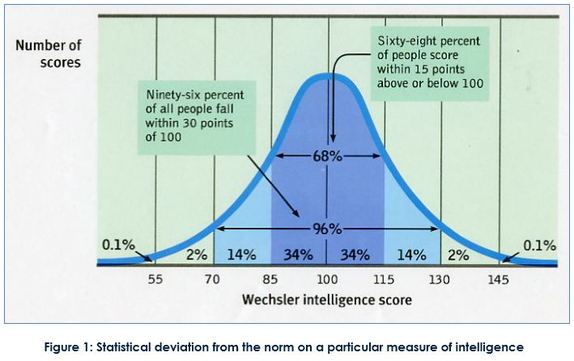
That's why I'm not that worried by the left-hand side of the bell-curve getting the vote.


The not-so-super-smart are usually not au fait with the niceties of public policy options, but they tend to be pretty expert on whether things are working out well for themselves. And in the end, that's a recipe for a stable and productive society: keep the punters reasonably content.

If you disenfranchise swathes of the population, you reserve political power to the vested interests of those who retain the vote. Naturally public policy will be captured (in the economics sense of regulatory capture) by such vested interests.

In the long run, this is seldom a good thing.

Sentimental, moralistic platitudes about the 'ethical superiority of democracy' don't do it for me.

No, I'm strictly functionalist. Democracy should be supported because it's the only system which provides a regular and universal protocol to "kick the bastards out".

---

Note: if you want Robert Heinlein's considered view as to how to make democracy work, you should read "Starship Troopers".


Tl; dr - voting should be restricted to those prepared to defend society, so no votes for parasites. Basically you do your military service, indicate your willingness to put your life on the line for your country .. and then you get to vote.

Friday, May 13, 2016

The Economist explains about science - quite well, actually

I am frequently irritated by pious lectures from The Economist's young writing team as to how the affairs of the world might be better ordered. But the Science and Technology section sometimes does it right - applying sophisticated thinking to get to the essence of a contemporary issue.

This week we have an excellent account of the new ideas underlying that exciting new genome analysis technique, SDS, which I mentioned in my last post.

Here's what they have to say:
"The team’s technique looks for changes not in alleles themselves, but in the DNA that surrounds those alleles.

"If a particular allele is more beneficial than other variants of a gene, it will tend, as lactose tolerance did, to spread through the population. As it does so, it will carry with it neighbouring DNA which is not strictly part of the gene and does not affect its function. This DNA can thus mutate without damaging the allele. And it is the amount of mutation this peripheral DNA has undergone which is the giveaway.

"DNA neighbouring an allele that has recently spread quickly will have had less time to accumulate mutations than that near one which evolution has been ignoring. By looking for evidence of mutations around particular alleles, Dr Pritchard and his team can reconstruct their history.

"Apply the method to lots of people, and it is possible to discern what evolution has been up to."
---

If only The Economist would apply the insights of contemporary behavioural genetics to the great affairs of the world. Here is my suggestion for an Economist Special Report:
"Is there something about the genomics of Europeans/Asians which enables them in principle to run successful democracies?"
If they wish, they can have the null hypothesis that the answer is no.

Let me suggest some reasons why this is even worth considering (apart from evidence in the actual world, that is):
- a democracy replaces kin- and tribe-based interest-mongering with an atomised population delegating conflict resolution to a formal and non-violent elite

- in a democracy, leaders who wield power are expected to hand it over in the event they lose an election, regardless of the idiots who won it

- if your sectional group has a problem, you are expected to wait for an election until it gets resolved; and then suck it up if your group does not succeed in winning power.
None of these things seems the kind of thing social animals usually get selected for.

Psychologically, democracy would appear to require the majority of the population to exhibit:
  • an immense amount of forbearance (self-control and future time-preference) 
  • pervasive intelligence (needed to make institutions work and, in fact, to buy into them) 
  • generalised trust (required for networks of relationships over time and space).
None of these psychological traits seems to be ancestral.

Historical defaults are:
  • to seek immediate redress for wrongs ('an eye for an eye')
  • to not be that capable of handling conceptual abstractions
  • to trust only those you or your neighbours can actually vouch for.

So we have some research to do here, checking the genomes of societies which have managed to sustain democracy over the decades or centuries vs those populations which can't seem to get it together. You'd be looking for elevated frequencies of the many relevant alleles of small effect.

By the way, the payoff to democracy - if you have the sort of people who can get it to work - is a scalable, developing economy and a benevolent social environment.

A great prize for inclusive fitness if you can get there.

Tuesday, January 13, 2015

The Collapse of Democracy

Back in the late sixties, my Politics course at Warwick University taught that the democratic state acted as an arbiter between different sectional interests. My Marxist comrades knew better: the state actually operated to reproduce the power and position of the ruling bourgeoisie, while hiding behind an obfuscated, hegemonic ideology.

Yes, we certainly knew how to do jargon in those days!

Of course, both propositions are true. Marxists from Karl onwards have agreed that bourgeois democracy is the preferred form of capitalist state. Why? Because under capitalism, economic power is decentralised (private ownership of the means of production) so some kind of inclusive politics is the best method of synthesising overall political policy. If the state achieves the political autonomy of autocracy or dictatorship we have the familiar principal-agent problem. How do we get the state to properly advance the (weighted average of the) interests of the distributed capitalist power-elite? How do we stop the state going off on some crazy project of its own?

The Nazis in Germany are the usual case study, and my analysis above broadly paraphrases Trotsky's writings about the rise of fascism there.

The democratic government is distinguished from its dictatorial cousins by its unwillingness to decisively back one faction of society over everyone else, even if such a focussed policy is objectively necessary to break some social logjam. "We all know what has to be done; it's just that none of us knows how to be re-elected afterwards."

Bourgeois democracy is like pacifism - it's an unstable equilibrium requiring all sides to show restraint and be prepared to accept being overruled. It's when a significant social force won't accept compromise and sticks to its guns come what may that you get the logjam. The inclusive speech of liberal politicians becomes strained and ineffectual - weak hand-wringing and appeasement. The logjam-party takes heart while ordinary folk begin to despair. Oppositional parties calling for effective action begin to gain traction, parties which don't much care about discredited 'democratic' ideals. What if we're rather blasé about being re-elected afterwards, anyway - or we believe that subsequent 'facts on the ground' will make all the difference, come the day?


Returning to the party-of-the-logjam, there's nothing like a sharply defined and highly-deprecated religious identity to underpin a hard-nosed refusal to compromise under any circumstances: 'our martyred dead' and so forth. You can see where this is going: bourgeois democracy can handle small to medium logjams by uniting the majority and deploying state force against the obstructionist, unyielding minority and winning - Margaret Thatcher is the textbook example. But if the logjam gets too big and/or intractable, you slide into civil war (cf Libya) and the democratic state is swept aside and is transformed, or collapses.

None of these drastic things will be happening in Western Europe any time soon; we're at the very start of a long, tortuous and only semi-slippery slope. However, to mix metaphors, when your problem is currently a small but extremely intractable hole, it's surely time to stop digging?

Thursday, February 20, 2014

Telling it like it is

From The Economist Blog today (Democracy in America):
"Viktor Yanukovich is a democratically elected president who has used his powers to eliminate liberal-rights safeguards and jail political opponents on dubious charges. He has reinforced his political position by building cronyistic relationships with powerful business figures. In this system the state creates economic rents and awards them to favoured business interests, who in turn buttress the state's political power, all while maintaining the trappings of democracy.

"In other words, Ukraine looks a lot like Russia or Egypt; more significantly, it looks like other states that are in the early stages of similar threats to liberal democracy, such as Turkey and Hungary. The enemy of liberal democracy today is more often kleptocracy, or "illiberal democracy" (as tiger-mom Amy Chua put it in her book "World on Fire"), than ideological totalitarianism.

"The threat is less obvious than in the days of single-party states and military dictators. But it ends up in the same place: economic stagnation, a corrupt elite of businessmen and politicians, censored media, and riot police shooting demonstrators."
We need to spend a little more time understanding the socio-economic preconditions for a liberal, non-corrupt parliamentary democracy and a little less time (you know who you are!) in smug posturing and denouncing people on vacuous moral grounds for doing things which are sadly but obviously in their best and vital interests.

As the post elsewhere notes:
"But no matter how widespread the fighting becomes, the only country that could conceivably intervene militarily is Russia. (Mr Putin's top Ukraine adviser, Sergei Glazyev, has openly hinted Russia may do so.) That leaves America and the EU with one option: economic sanctions. But economic sanctions will never deter a regime from killing protesters when it correctly understands that it is fighting for its life."
Even a cursory look at the social dynamics in the Ukraine, let alone its geopolitical position, suggests that the chances of a western-oriented liberal-democratic movement taking power and remodelling that country are on a par with similar chances in Syria.

Replace al-Qaeda militias with tooled-up far-right soccer hooligans for a somewhat-better fit.

Wednesday, February 13, 2013

"The Architecture of Democracy"

This is the title of a book I would like to read (not the American book of this name which already exists and appears to believe the eventual worldwide triumph of 'democracy' is assured).

The book I want to buy and read will be written in the paradigm of sociobiology. It will identify the chief reasons why small-scale and relatively informal governance models which work for tribes or kin-groups, c. 100 strong, don't scale.

Apart from the obvious requirements for hierarchy as the size of a community gets into the tens or hundreds of millions, I would expect a careful treatment of corruption, nepotism and bureaucratisation; the power of vested interests to capture parts of the state and government, the success of populist governments implementing policies which bring a state to ruin, and the abrogation of civilized norms when dealing with out-groups.

Democracy addresses these issues by a careful assignment of limited, but real, power to leadership teams which can be thrown out (almost always against their wills!) by the mass of citizens in a controlled and non-violent process.

Does it work? Not always: it didn't in Chile under Allende, when the policies adopted seemed to be wrecking the economy.

Lenin outlined the soviet model (soviets are elected councils), which on paper creates a form of state which is an organic expression of the self-activity of the masses. What could be more democratic, defined as a state-architecture which genuinely represents the barely-mediated interests of all?

In practice it didn't model the operational arm of Government, the bureaucracy, which in best public choice theory mode promptly took over and transformed the soviets into empty shells. I believe Lenin's architecture here was fundamentally flawed and the outcome inevitable. (Trotskyists disagree .. but comrades, it has actually never worked anywhere, has it?).

Democracy has many bugs but is it really the least bad of all possible architectures? I'm not convinced - we surely have the right conceptual tools now to design credible alternatives - but I still can't seem to find that book on Amazon ...

(Perhaps China will eventually get round to inventing it  *wry smile*).