Showing posts with label asabiyya. Show all posts

Wednesday, May 30, 2018

The ties that bind

Antiquity

In antiquity the social ties which bound society were personal, expressed through patronage.
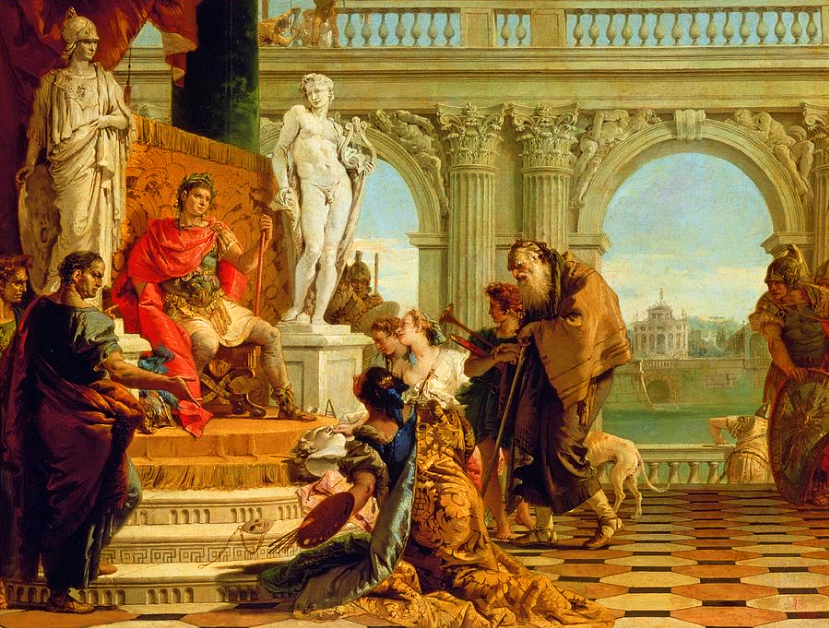

Commodity items like slaves were atomised and disposable, not part of society.

Feudalism

Feudalism, a non-slave mode of production, was 'a way of structuring society around relationships derived from the holding of land in exchange for service or labour' (Wikipedia).


Reciprocal - and personal - obligations were expressed vertically thus:
"A vassal would swear allegiance and pay homage to his lord in a commendation ceremony. The commendation ceremony was designed to create a lasting bond between a vassal and his lord. Fealty and homage are a key element of feudalism. The ceremony consisted of swearing the Oath of Fealty and the act of homage."
Capitalism

Capitalism, by contrast, needed contractual relationships between free labourers and capitalists as negotiated in the market, and fought against feudalism under the abstract principles of the Rights of Man.

Amazon link

Capitalism is a less organic form of society. As Marx hyperbolically observed in The Communist Manifesto,
"The bourgeoisie, wherever it has got the upper hand, has put an end to all feudal, patriarchal, idyllic relations. It has pitilessly torn asunder the motley feudal ties that bound man to his “natural superiors”, and has left remaining no other nexus between man and man than naked self-interest, than callous “cash payment”.

It has drowned the most heavenly ecstasies of religious fervour, of chivalrous enthusiasm, of philistine sentimentalism, in the icy water of egotistical calculation. It has resolved personal worth into exchange value, and in place of the numberless indefeasible chartered freedoms, has set up that single, unconscionable freedom — Free Trade. In one word, for exploitation, veiled by religious and political illusions, it has substituted naked, shameless, direct, brutal exploitation.

The bourgeoisie has stripped of its halo every occupation hitherto honoured and looked up to with reverent awe. It has converted the physician, the lawyer, the priest, the poet, the man of science, into its paid wage labourers."
Capitalism finds organic communities an obstacle to its own ultra-flexible development. The obduracy of the National Union of Mineworkers was sustained by the extraordinary social cohesion of the pit villages. Yet, as Marx noted, human communities are naturally conservative: capitalism propelled human progress precisely through its hostility to the natural human longing for a warm, supportive, harmonious and stable communitarianism.

Once established, capitalist economies sheltered under nation states and were happy to promote a nationalistic patriotism as the foundation of social stability. But post the sixties, globalisation moved into prominance. Economies now straddled the planet, peoples moved in their millions as migrant labour and sometimes just as migrants. Nationalism as an ideology jarred in this new reality. The narrative became 'multiculturalism' - an imagined, global, borderless and thoroughly-superficial 'community' of free and thoroughly-equal citizens.

All those first and second world war types, spouting their loyalty to King and Country, seemed so very anachronistic now.

---

How useful is this new neoliberal ideology, branded by its enemies as political correctness?

For running a multiethnic, multicultural economic empire it's essential. But when push comes to shove, the shallowness (indeed fraudulence) of its social glue comes to the fore. If neoliberalism celebrates a transient and transactional individualism against communitarian values deemed non-inclusive and reactionary, it's always going to struggle to marshal mass support when confronting a non-compliant adversary.

Why don't we like Russia? Because they're hard on gays??? Saudi Arabia was never so demonised.

---

The ideology of a triumphant capitalism endlessly trumpeted by the Mainstream Media has little to offer the masses outside the bubble .. and ordinary folk, feeling that in their bones, turn elsewhere. The revolutionary bourgeoisie of the eighteenth and nineteenth centuries were the populists of their age, but populism is very suspect today.

The Marxist left believed that just as Marxism had unveiled the mystifications and obfuscations of bourgeois ideology, its vision of socialist freedom, of society working for the many, not the few (to borrow a phrase) would seize the masses, that essential engine of social progress. We know how that worked out.

I have an unappealing prognosis: with economic prospects unpromising, social cohesion unravelling and no easy answers, expect more populism and more crazy politics.

---

As I write, we enter another Italian political and economic crisis.


Thursday, April 12, 2018

Life in a genetic meritocracy

Note: you may find the text below rather boring, but due to continuing migration and population movements on a global scale the situation described is becoming more prevalent, not less.

---

Expulsion of the Uganda Asians (Indians)

From the BBC (an interview with Toby Young).
"According to the political scientist Charles Murray, meritocracy inevitably leads to a genetically-based caste system. Why? Because the traits selected for by the meritocratic sorting principle are genetically-based and, as such, likely to be passed on from parents to their children.

Genetic variation means some highly able children will be born to people of average and below average intelligence, but the children of the meritocratic elite will, in aggregate, always have a competitive advantage and over several generations that leads to social ossification."
Capitalism, unlike previous more traditionalist modes of production, is strongly meritocratic. Those able to function at senior levels in industry, finance, the military, government and academia are inevitably highly educated and comfortable with abstractions. Charles Murray was worried about assortative mating amongst elites, which has been facilitated by the expansion in university places. But the situation, globally, is more complex than that.

---

Refer to Garett Jones's table of National IQs, mentioned in my previous post. Whether through colonialism, general population movements or targeted immigration, it's perfectly possible for people from a cognitively-advantaged country to find themselves a minority in a country where the majority fare markedly less well. Chinese minorities in Southeast Asia and the 'Ugandan Asians' (who were from India) are cases in point.

Such talented minorities, culturally distinct from the majority, tend meritocratically to rise.* While this does work its meritocratic magic when things are going well, it has downsides when the country runs into trouble, as economies invariably do.

---

How does it feel to be a member of a genetic elite? I can only imagine. There must be the sense of social solidarity with your cultural fellows, plus a vague sense of disquiet directed towards the non-elite majority. Some of that majority will be as accomplished as your group, but few. Most will be less able (although you will want to affirm their capabilities).

How does it feel to be a member of the somewhat-disadvantaged majority? Again, I can only speculate. Most of the time it won't be much on your mind. In any event, such reflections will not be a welcome feature of the zeitgeist.

Normally.

Now is a time when the interests of elites and the masses are perceived to be diverging across the world. It's when class conflict becomes enmeshed with ethnic identifications that we should start getting a little concerned. In Uganda things did not go well:
Before the expulsion, Asians owned many large businesses in Uganda but the purge of Asians from Uganda's economy was virtually total. In total, some 5,655 firms, ranches, farms, and agricultural estates were reallocated, along with cars, homes and other household goods.

For political reasons, most (5,443) were reallocated to individuals, with 176 going to government bodies, 33 being reallocated to semi-state organisations and 2 going to charities. Possibly the biggest winner was the state-owned Uganda Development Corporation, which gained control over some of the largest enterprises, though both the rapid nature of the growth and the sudden lack of experienced technicians and managers proved a challenge for the corporation, resulting in a restructuring in 1974-5.

"The Ugandan economy fell deep into a crisis under the strain of civil wars, the nationalization of certain industries and the expulsion of the Asians.. . By 1987, President Yoweri Museveni had inherited an economy that suffered the poorest growth rate in Africa."
Meritocracy normally works well, despite its critics. When times get hard, not so much.

---

* A worked example

From the standardised normal distribution, the percentage of a population more than 1 standard deviation above the mean is 16%, more than 2σ is 2.3% and more than 3σ is 0.13%.

Take a hypothetical population A with the European norm of 100 (standard deviation 15) and a distinct group B representing 0.5% of the population who have a mean IQ one standard deviation up, ie 115.

Assume that elite IQ is three standard deviations above majority-average: a member of the top elite will have an IQ in excess of 145. What is the expected ratio of people from A and B in the elite?

Suppose the population size of A is 20 million so that the population size of B is (at 0.5%) 100,000.

We know that 0.13% of population A (3σ) will make it into the elite (assuming pure meritocracy) contributing 26,000 people.

Population B will have 2.3% (2σ) of its members in the elite; this is 2,300 people.

So the elite ratio A:B is 11:1, a fair distance from the 200:1 overall population ratio.

Stratification will be more intense if population B clusters in certain sectors where they historically specialise, as the Ugandan Asians did in commerce.

---

Addendum

Consider four standard deviations above majority-average, an IQ of 160+.  The area under the normal curve above 4σ is 0.003%.

Population A contributes 600 people with this elevated score; population B provides 130 people. The A:B ratio is now around 5:1. Perhaps the really top elite does consist of under a thousand people in a medium-sized country, so the expected ratio is perhaps not too unrealistic.