Showing posts with label Intelligence. Show all posts

Thursday, April 26, 2018

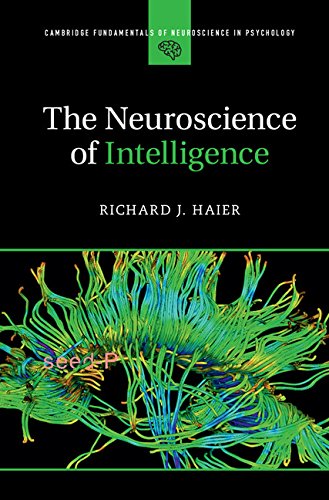
Practical review of intelligence research - Rich Haier

Amazon link

This book is "Rich" Haier, Professor Emeritus in the Pediatric Neurology Division of the School of Medicine at the University of California, Irvine, writing to his students. He wants to tell them about the three-pronged nature of contemporary research into intelligence: psychometric tests (delivering 'g'), neuro-imaging and genomics.

Leveraging all three approaches, he comprehensively demolishes blank-slate ideas that intelligence doesn't really differ between individuals, genders and/or ethnic groups, and shows that intelligence differences (as measured psychometrically or in life outcomes) have measurable correlates neuro-anatomically and genetically.

Since higher IQ correlates positively with desirable life outcomes, he is a strong proponent of research which might lead to future IQ improvements, either through some kind of  'IQ pill' or targeted allele-engineering.

Haier is plainly an experimentalist, not a theoretician. He is happiest explaining the details of studies, neuro-imaging equipment and brain images: he's almost too thorough. He is also good on the unexpected results: when men and women with identical (and high) mathematical abilities were scanned while solving advanced math problems they were equally successful - but the men used the spatial parts of their brain while the women were using verbal modules.

While we are plainly in the middle of a technology-led revolution (well-described at an introductory level) it's frustrating that the jury is still out on all the important questions. We don't know what the brain is doing which distinguishes consciousness from unconsciousness; we don't really know how the high-IQ brain differs in structure or function from the low-IQ brain although there are some suggestive ideas; we don't know how to alter/improve IQ by any well-attested intervention.

Perhaps this will change over the next few years. Given the stigma which still attaches to intelligence research in the West, perhaps we'll have to wait for the Chinese to tell us.

Wednesday, January 17, 2018

The dream of 'designer babies'

Some things in the media are so mind-numbingly stupid that I feel frozen into dumbness: 'Where would I start?'

Where is the politician or pundit who simply states - in exasperation:
"Why wouldn't we want designer babies? Is random better? And when you choose your partner with care, aren't you trying - in  part - to optimise your children? Listen people, we already do designer babies! And that's good and indeed evolutionarily obvious."
OK, I never heard that. Ever.

But we will soon be able to make more informed choices about the genomes of our offspring. Three obstacles:
  1. We need to understand the phenotypical effects of alleles (existing or even new)
  2. We need certainty about the effects of genetic engineering - no mistakes
  3. We need to make it easy and convenient to access and then implant the modified cell.
So, once fixed, my question is: what do we want to do?

---

Issues

Firstly, there seems to be a biological recognition of kin-similarity. Babies swapped unknowingly at birth who grow up with unrelated 'parents' do seem to feel that something is wrong. I don't think we understand causally-genomically what is going on here and changing too many alleles, increasing the genomic distance between parents and child, may start to impact the relationship.

Secondly, you can't optimise everything. It may be true - as Steve Hsu has insisted - that high IQ tends to correlate with general health and superior performance in most areas. And if it's a question of minimising genetic load you can see why.

But beyond a certain point, high IQ seems to require that more of the brain is devoted to the processing of abstractions leaving less for other things. This is probably part of the underlying etiology for different personality types.

There seem to be few highly-intellectual axe-wielding warriors.

Thirdly, there is a feeling that although some parents might want their children to be great athletes or painters or musicians or novelists or priests or therapists or .. parents, there is something special about IQ.

Without intelligence we are sunk, none of the rest is going to work as our civilization will collapse. And that has been true up to now: all that smart fraction stuff - that you need a lot of folks with IQ 105+ just to run a complex society. And that the real innovation comes from those world-class people with IQs in excess of 160.

But .. I have not the slightest doubt that by the time we are able to routinely engineer the genomes of our offspring, we will have AI systems which are conceptually-competent way beyond the smartest humans that we can envisage.

We know what really smart people do: they internalise and extend a vast set of abstractions and manipulate them in interesting and complex ways to engage with problems. The lower foothills of this space are already colonised by deep-learning systems: their future seems pretty scalable.

It's not at all clear that the destiny or destination of the human race is or should be unbounded smartness, once we correct the errors of mutational load.

---

I've just finished reading "The Strangest Man: The hidden Life of Paul Dirac, Quantum Genius" by Graham Farmelo.

Amazon link

Dirac was plainly one of the smartest people who have ever lived. He is also generally assessed as autistic (Asperger's syndrome). In Farmelo's account, although not chronically unhappy, he hardly seems to have led a fulfilled life. His total, obsessive focus on developing theory seems to have led to a final disillusionment with the state of physics when he died (1984) - and with his own life's work.

I suspect that the first epoch of empowered genomic engineering will not be a mad rush for ever higher IQ, with the target of the ubiquitous production of von Neumann equivalents. Instead, I suspect we will edit out the obvious errors and reinforce the talents already latent in the specific underlying genome.

Let a thousand flowers bloom.

---

I suspect the second epoch of genomic engineering will be entirely different.

Tuesday, August 08, 2017

'Accelerando' and the architecture of superintelligence


After four years I've just re-read Charles Stross's Accelerando and was again blown away. Here are my summer of 2013 thoughts. But in a nutshell, as the solar system transitions through the Singularity, posthumans of superintelligence transcend even augmented versions of ourselves.

Can we say more?

---

Intelligence is a reified concept. It presents as a trait of performance but is frequently conceived of as a mechanistic 'thing'. It's as if we took athletes such as Usain Bolt and Mo Farah and claimed they had a high 'quickness-quotient'. We would discuss the heritability of QQ and perhaps derive a scale. We would discuss biological correlates - is there a QQ module somewhere in the body?

IQ is clearly telling us something about performance, but to a greater extent than admitted it's collapsing several different things into one measure.
  • Reaction time (where we're defeated by houseflies).
  • Logical inference - where we're easily beaten by simple AI systems.
  • Pattern induction (eg Raven's Progressive Matrices):  AI programs do well.
But perhaps the best definition of intelligence is the 'ability to learn or understand or to deal with new or trying situations'.

---

Back in March I wrote a piece about the architecture of intelligence, 'Roger Atkins: Mind Design notebook'.  I proposed that we should think of the intelligent mind as operating over a semantic network defined by nodes, links and overall processing speed.

-- Each node is a minitheory: some facts, rules and cached deductions + relevant inference rules. For example, you have a small minitheory about your pet and a much larger one about yourself.

-- Each link represents a kind of relation between theories (there are many). The classic 'ISA' relation familiar from object-oriented languages and ontologies would be an example. Also similarity relations for analogical reasoning.

-- Processing operations over a semantic net include:
  • Take a node (minitheory) and deepen it with new facts, deductions or rules. Or create a new node on encountering or constructing some new entity.

  • Create a new connection or relationship between nodes via an insight as to how they relate. A more richly-connected semantic net is potentially more powerful.

  • Given a problem, navigate around the semantic net to form a solution (then add it).
---

With this architecture, a more intelligent entity has:
  • a larger and more densely-connected link-set
  • more and more-elaborated nodes
  • faster link-traversal, new-link-creation and node-processing.
Links between different, and perhaps remote nodes will likely be rather abstract and removed from direct experience. For example, a notion of symmetry underlies both natural beauty and artificial design. A sophisticated semantic net requires the handling of complex abstraction.

---

This architectural model gives us a handle both on superior human intelligence and on posthuman superintelligence.

Firstly, why can't we just go and build an AGI today? Because the root set of competences in every human's semantic net are nodes and links which encode the experienced physical and social world, a net which requires a degree of innervated embodiment we have as yet no clue as to how we might build. Only when 'they walk amongst us' will designers be in with a chance.

Secondly, how would a superintelligence differ from today's humanity? A superintelligence would possess a semantic net with improved performance along all three dimensions. Observe however that no matter how complex a network of abstract nodes, at the base is the set of nodes which must connect to the complexity of the world. Even the brightest genius condemned to a sensory-deprivation cell wouldn't be that performative. Nothing there to work on.

I suspect that the sum total of new social experiences is parameterised by the possibilities of new physical environments, whether occasioned by exploration and/or technologies. And even these are ultimately bounded by the free energy available, as Accelerando reminded us with such gusto.

I think the take-home message is broadly as Stross imagined it. A superintelligence which walked amongst us (Hi Aineko!) would be bounded by the limitations of purely human technology + culture. But a society of superintelligences able to drive forward  their own physical, technological and cultural environment?

Well, let's just say there would be plenty of headroom.

---

Note: in this view, artificial neural nets are an engineering implementation of the semantic net architecture described above. We know from human neural nets (aka 'brains') that a 'compiled' semantic network runs real fast in the subconscious (maybe it is the subconscious) while trying to 'consciously' work on your own semantic network to address novel, complex problems is really hard work and a real test of IQ.

Sunday, January 22, 2017

How smart are software developers?


It's quite hard getting figures but based on this raw data, it appears that the average IQ of students applying for PhD programmes at good universities in computer science is around 128.

That sounds right to me. Most software development companies don't take people without good first degrees or a higher degree in a STEM subject - and that's just the pool we're talking about here.

Monday, April 11, 2016

Truncation Selection by 50% (half the population)

This post uses the results of: "Boosting IQ by 15 points (truncation selection)". We now look at another example.

Suppose we had a country whose population originally shared the Caucasian average IQ,
(mean = 100; std dev = σ = 15).
And suppose a catastrophe occurred which led to half the population emigrating - such things have been known to happen in European history.

And suppose the brightest were the ones who emigrated.

What would be the average IQ of those who remained?

  • The proportion who remain, p, is 50%.
  • From the table at the bottom of the post above, the intensity of selection, i(p) = 0.8
  • Then use this equation, S = σ * i(p).

The average IQ of those left behind is S = 15 * 0.8 = 12 points below the mean; i.e. the non-emigrating have an average IQ of 88. However, due to regression to the mean, subsequent generations will do better than this.

Their descendants will have an IQ of R = h2S, where h2 = 0.6 (say) is the additive heritability of IQ.
So R = 0.6 *12 = 7 IQ points below the original population mean.
Their descendants will have an average IQ of 93.

Here's a list of country IQs.

---

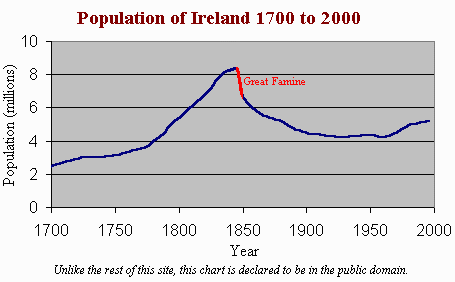
The power of population genetics ...

Diagram from here

The mean IQ of Ireland was documented in the country list above as 92.

---

You have to be careful with country IQs. If the country is not ethnically homogeneous you tend to get a stratified society where the average IQ hides more than it illuminates. For example, in Israel the Ashkenazim are smart and tend to dominate at the top of society - but non-Ashkenazim have a more typical Middle-Eastern IQ and numerically dominate - the resulting averaged IQ is documented as 95. Many Latin-American countries are ethnically stratified so one number is not that useful.

If the country has had a dysfunctional economic system and/or history (China is a case in point, Vietnam another), then deprivation will depress IQ scores.

Saturday, April 02, 2016

Heritability, correlation and prediction

We're told that intelligence is 60-80% heritable, and that personality is 40-60% heritable. In some hand-wavy way, we know that heritability captures the nature side of the nature-nurture contribution to traits.

But what does heritability really mean? It's a rather slippery concept. We'll get there by stages.

1. The contribution of genes to a phenotype

Let's take height as our running example (pretty much the same heritability as intelligence). Let's take a person with height P (P stands for phenotype - the measured trait). P is measured in inches away from the population mean height.

How did a person get to be that height? Nature and nurture, right?

We assume that the alleles the person got from their father contributes Xfather inches of height, Xmother counts the inches they received from their mother's alleles they inherited, and then there is a nurture - or environmental - term E inches. So their total height,
P = Xfather + Xmother + E.
Note these are genetic additive effects: each additional allele is plausibly assumed to make its independent contribution into raising or lowering X a fraction. Dominance and epistatic effects are neglected in this simplified conceptual model (in a polygenic trait, they tend not to be large).

Since we're measuring deviations from the mean, the average values across the population of Xfather, Xmother and E must all be zero. And so, therefore, must be the average value of P.

So without loss of generality, we assume Xfather, Xmother and E are normally distributed random variables with mean zero and variances as follows:
Var(Xfather) = Vadditive/2    -- each parent provides half the additive genetic 'input'

Var(Xmother) = Vadditive/2   -- each parent provides half the additive genetic 'input'

Var(E) = Venvironment.
So what is Var(P), the variance of height as we observe it in the population?
Var(P) = Var(Xfather) + Var(Xmother) + Var(E) +

        2Cov(Xfather, Xmother) + 2Cov(Xfather, E) + 2Cov(Xmother, E).
Messy, but if we assume Xfather, Xmother and E are independent, their covariances are zero, so
Var(P) = Var(Xfather) + Var(Xmother) + Var(E),

Vphenotype  = Vadditive + Venvironment
The fraction of the population phenotypic variation due to genetic, additive effects is then simply
h2 = Vadditive/Vphenotype = Vadditive/(Vadditive + Venvironment).
This is the definition of heritability, h2.

So if h2 is 0.5, then 50% of the variance in the phenotype is genetic in origin (additive-genetic, that is) and 50% is environmental (everything else).

Note that the more you reduce environmental variance, for example making sure that everyone's well-fed, properly educated and not knocked about, the more genetic differences predominate .. and heritability goes up. Not what the SJWs really want to hear!

---

2. Correlations

What is the correlation, ρ, between a parent and child for height?

If we have two random variables, A and B, the correlation between them is defined as follows:
ρ =  Cov(A,B)/√(Var(A) * Var(B)).
This is the standard definition.

In the case of one parent and their offspring, under some simplifying assumptions,
Cov(parent,offspring) = Vadditive/2
- this takes a few lines to work out, setting most of the Xfather, Xmother and E cross-terms to zero. It reflects the 50% of genetic material they have in common.

More obviously,
Var(parent) = Var(offspring) = Vphenotype,
So using the formula for ρ above,
ρ = (Vadditive/2) / Vphenotype = h2/2.
This shows that heritability is not the same as the correlation between a child and one of its parents.

In general, the correlation, ρ, on a trait between relatives is equal to the coefficient of relatedness times the heritability, ie ρ = rh2.

---

3. Predictions

If we know the height of both the parents, what's our best prediction of the height of their offspring? In our mind, we draw the best-fit regression line on the scatter-plot of parental-midpoint and offspring heights measured across the population.

If we centre the graph-axes at the mean values of the two populations (parental mid-point heights and offspring heights) then the regression line goes through the origin, with slope β. Then the equation of the regression line takes this simple form:
predicted-offspring-height = β * parental-midpoint-height
with both heights measured as inches in deviation from the respective means.

How do we compute β?

In this special case it turns out that β equals the heritability, so β  = h2. *

This should remind you of the Breeder's Equation.

---

Example: suppose the heritability of height is 0.673 and we know that one parent is 3 inches above the population mean while the other parent is 1 inch above the mean, what's the predicted (expected) height deviation from the mean for their child?
Answer: predicted-offspring-height = β * (3 + 1)/2 = 2h2 = 1.35 inches.
Yes, the child has regressed towards the mean.

---

This is problem 6.3 (p. 149) from 'Population Genetics: a concise guide' by John H. Gillespie, from which all the material above has been summarised.

---

* In general, β = ρ * (σyx) where x is the independent variable.

Tuesday, March 29, 2016

Offspring IQ vs parental midpoint IQ

We had Alex and Adrian with us over the Easter and fell to talking .. as you do .. about the correlation between parental IQ and the intelligence of their offspring. I was trying to recall this post, from Steve Hsu, from which I reproduce the key material below.

There are three key ideas in Steve's post:
  • You start from the parental midpoint IQ (the average of father and mother)
  • To get the mean, or expected value of the offspring IQ multiply by h (Breeder's Equation)
  • The distribution of offspring IQ has a tightened standard deviation, 12 rather than 15 IQ points.
---
"Assuming parental midpoint of n SD above the population average, the kids' IQ will be normally distributed about a mean which is around +.6n with residual SD of about 12 points. (The .6 could actually be anywhere in the range (.5, .7), but the SD doesn't vary much from choice of empirical inputs.)

"So, e.g., for n = 4 (parental midpoint of 160 -- very smart parents!), the mean for the kids would be 136 with only a few percent chance of any kid to surpass 160 (requires +2 SD fluctuation). For n = 3 (parental midpoint of 145) the mean for the kids would be 127 and the probability of exceeding 145 less than 10 percent.

"No wonder so many physicist's kids end up as doctors and lawyers. Regression indeed! ;-)
 ...
"Assuming bivariate normality (and it appears that IQ has been successfully scaled to produce this), the offspring density function is normal with mean n*h2 and variance 1-(1/2)(1+ρ)h2, where ρ is the correlation between mates attributable to assortative mating and h2 is the narrow-sense heritability. *

"I put h2 between .5 and .7. Bouchard and McGue found a median correlation between husband and wife of .33 in their review many years back, but not all of that may be attributable to assortative mating. So anything in (.20, .25) may be a reasonable guesstimate for ρ.
...

"Note: Some people are confused that the value of h2 = narrow sense (additive) heritability is not higher than (.5 - .7). You may have seen *broad sense* heritability H2 estimated at values as large as .8 or .9 (e.g., from twin studies). But H2 includes genetic sources of variation such as dominance and epistasis (interactions between genes, which violate additivity). Because children are not clones of their parents (they only get half of their genes from each parent, and in a random fashion), the correlation between midparent IQ and offspring IQ is not as large as the correlation between the IQs of identical twins."
* Putting in the numbers: σ = 15 √(1 - 0.5 * 1.225 * 0.6) = 12.
___

The other discussion we had was how to estimate the IQ of my parents, now both dead.

Neither ever took an IQ test as far as we know. We have my mother's DNA with 23andMe so eventually with full genome sequencing we may expect to read this off (when the research ...).

We don't have my father's DNA although we might forensically get it one day via his belongings.

Still, all is not lost. Life is an IQ test and we have the biographies. We can also do some reverse correlations from the children, (my brother, sister and myself). IQ test data is not available here either, but we can still make biographical estimates.

Saturday, February 27, 2016

You're similar to your spouse in so many ways ...

You already knew that spouses were correlated for intelligence.


R Plomin and I J Deary have this to say:
" ... Assortative mating is greater for intelligence (spouse correlations ~0.40) than for other behavioural traits such as personality and psychopathology (~0.10) or physical traits such as height and weight (~0.20)."

Here's what a correlation of 0.4 looks like (top right).


Marginal Revolution gets excited about this result though:
"Nordsletten and colleagues find an amazing amount of assortative mating within psychiatric disorders.

"Spouse tetrachoric correlations are greater than 0.40 for attention-deficit/hyperactivity disorder (ADHD), autism spectrum disorder (ASD), and schizophrenia.

"The next highest spouse correlation emerged for substance abuse (range, 0.36-0.39).

"Assortative mating was significant but far less substantial for other disorders, such as affective disorders (range, 0.14-0.19)."
They conclude:
"Beyond genetics and genomics, assortative mating matters because it means that the person closest to an individual with a psychiatric disorder is also likely to have psychiatric problems, which could exacerbate problems for both spouses and their offspring."
The ubiquity of assortative mating - who knew?

Sunday, February 21, 2016

Our elites were selected for .. what?


Gregory Cochran, Jason Hardy and Henry Harpending's seminal 2006 paper, "Natural History of Ashkenazi Intelligence" (PDF) is a gift which keeps on giving.

It outlines their case that "the unique demography and sociology of Ashkenazim in medieval Europe selected for intelligence. Ashkenazi literacy, economic specialization, and closure to inward gene flow led to a social environment in which there was high fitness pay-off to intelligence, specifically verbal and mathematical intelligence but not spatial ability."

The Ashkenazim were not the only people doing highly g-loaded work during the 800 years from 800-1600 AD; why were similar pressures not pushing up the IQ of Caucasian elites?

On page 14  we see this:
“It is likely that the selective pressures affecting the medieval Ashkenazi were far stronger [...] because such a high percentage had cognitively demanding jobs, and because the Ashkenazi niche was so specifically demanding of accounting and management skills, while upper classes elsewhere experienced a more diverse set of paths to wealth.

“Societies reward different behavioural traits. In some times and places successful warriors and soldiers have had high status, in others merchants, in still others bureaucrats as in ancient China. There were societies in pre-modern Europe in which merchants and businessmen ranked near the top, but this was atypical.

“To the extent that status and wealth were inherited rather than earned, the correlation between cognitive traits and reproductive success in elite groups may have been quite weak. In almost every case elite groups experienced substantial gene flow with other, much larger groups that were not subject to the same selective pressures. This means that the selective pressures experienced by such groups were diluted, spread out into the general population.

“Christian merchants in London or Rotterdam may have experienced selective pressures similar to those of the Ashkenazi Jews, but they intermarried: there was extensive gene flow with the general population, the majority of whom were farmers. The selection pressures experienced by farmers were probably quite different: most likely cognitive skills did not have as high a correlation with income among farmers that they did among individuals whose occupations required extensive symbol manipulation, such as moneylenders, tax farmers, and estate managers.”
What was almost certainly selected for amongst the elites was prosociality (usually conceptualised as Agreeable+ and Conscientious+). The Empathy Quotient seems to be the nearest we have to an instrument measuring this.

Prosociality allows the elite to cohere, to negotiate disagreements in a reasonably harmonious way and to conduct long-term and elaborate cooperative ventures; essential to running complex economies and disparate empires. It also seems evident that there's a prosociality gradient running down the class structure of complex societies - it would be good to see some statistics.

Prosociality generates a specific self-ideology when its tenets are normatively extrapolated to everyone under all circumstances. In this malign form, it surfaces as political correctness - "I can tolerate anything except intolerance".

Maddening though it is, let's not throw the baby out with the bathwater.

Mr Trump, I might be talking about you.

---

See also my post about elves (!) for more about political correctness and moralising.

Thursday, February 18, 2016

Boosting IQ by 15 points (truncation selection)

It's 2025 and England, having left the EU, has to fend for itself in competitive battle against China. It's not easy: the Chinese are very smart and out-innovate us in key sectors - financial services and high technology.

Something has to be done.

A secret Government task force reports. The problem is our human capital: we're just not smart enough; we can't hack the highly abstract, interconnected and complex realities of the new economy. We have to give our population an IQ boost.

Farmers have known for centuries what to do; animal breeding and genetics professionals have worked out all the details. You identify the traits you want and select that proportion of the population which - if bred together - will deliver offspring with the desired characteristics.

Evolution in action.

'What do we need?' asks the Minister.

Nothing less than a boost in our average population IQ of 15 points, the report suggests, which would bring us up to the level of the the Ashkenazim or India's Brahmin - and better than the Chinese average IQ of 106.

'OK,' says the Minister, 'and how would we get there?'

The report has done the calculations. We'd have to restrict breeding to those people with an IQ greater than 109. Basically, middle-class professionals and up.

The Minister ponders: 'We're doomed.'

---

The report had an easy-to-read annex which is reproduced below.

State-enforced eugenics has had a deservedly poor press. But voluntary, on-demand child improvement - without coercion - is an easier sell. Putting breeding restrictions to one side, the report also talked about making gene-editing and embryo-selection options widely available, perhaps free on the NHS for the poor.

Perhaps England can hack the 21st century after all.

---

Truncation selection

As a running example, we take a population of potential parents with mean IQ 100 and standard deviation 15 IQ points; this is broadly the Caucasian English population. We wish to identify a proportion of high-IQ individuals (p%) to breed from, so that their offspring will have an average IQ one standard deviation, σ = 15 IQ points, greater than the current overall parent population.

The related questions of interest:
  1. What is the IQ cut-off threshold, above which we permit high-IQ parents to breed?
  2. What proportion of the overall population parents do we allow to breed?
  3. What is the average IQ of the selected parent-breeders?
We know that the parent-breeder IQ has to be higher than the target IQ in the offspring, because of regression to the mean. This reflects that some of the parents' higher intelligence is due to "luck" - what we euphemistically call 'environmental influences'. In the offspring, this luck goes away and only that portion of intelligence due to (additive) genetics contributes. This is captured by the heritability being less than one.


S is the mean of the selected population minus the population mean, (example: 118.75 - 100 = 18.75, as we shall see).

h2 is the heritability of the trait (example: for IQ we'll assume h2 = 0.8 - estimates vary)

R is the mean of the offspring of those selected minus the population mean, (example: 115 - 100 = 15).

We can now define the relationship between the mean incremental-IQ in the selected parent-breeders and the mean incremental-IQ of their offspring. It's the breeder's equation.
R = h2S.
Knowing R and h2 we can easily work out S. For our running example, we want a future breeding population with mean IQ of 115 (ie R is 15) and the heritability, h2, is 0.8.
So S = 15/0.8 = 18.75.
The mean IQ of our selected parents has to be 118.75.

Connecting proportion allowed to breed (p) with their mean trait-value (S)

This doesn't tell us what proportion of the population is going to be allowed to breed. We need another equation relating S and p, the proportion of the population (on the right-hand side of the bell curve) allowed to breed.

Note that p is the area under the curve on the right of the distribution (see picture above), and S is the mean value of that selected area (in units of σ).

This equation is:
S = σi(p)
where σ is the population standard deviation (15 IQ points) and i(p) is a function we look up in tables, called the 'intensity of selection'. Once we know i(p), we can work backwards in the table to look-up p.

Let's do it.
i(p) = S/σ = 18.75/15 = 1.25. *
Looking up in the tables, p = 26%.

Looking at the selection intensity table below, if we select 26% of parents from the top of the existing intelligence distribution and allow them to breed, the average IQ if their children will be 115, one standard deviation greater than at present.

Note that the average IQ of these parents will be, as we already saw, 118.75.

The IQ cut-off (below which we don't allow anyone to breed) is the truncation point x0. From the table below, it's 0.643 (standard deviations) which equates to an IQ of approximately 110.

The result of all this hard work? Our selected offspring will have an average IQ of 115 - that puts them on a par with the Ashkenazim or Brahmin, and better than the Chinese average of 106.

Job done in one generation!

---

* We can combine the two equations to eliminate S, so that
R = h2σi(p), or

i(p) = R/(h2σ)   -   (example: i(p) = 15/(0.8 * 15) = 1.25 as above).
---

Here is the table for i(p).


Further Reading
  1. A slide overview (PDF).
  2. A useful handbook, 'Selection and Genetic Change' (PDF), by Erling Strandberg and Birgitta Malmfors . 
  3. The appendices to the above (PDF) with the maths for the intensity of selection function.
Thursday, December 31, 2015

The limits to intelligence

There's an old saying: if you want to know how smart someone is, don't ask them about things they're familiar with; give them a problem with which they are unfamiliar .. and see how they cope.

Actually, intelligence is implicated in both procedures, but not equally.

In the first case answering requires deduction within a framework already established. The problem solving process proceeds by deduction (whose results may already have been memorised). Another old saying: the expert doesn't have to think because they know.

If someone is a quick thinker or has encompassing knowledge then we're impressed. But it's hard to gauge whether we're seeing quick wits or the consequences of long experience: fluid vs. crystallised intelligence. The former is more associated with high IQ.

The second case, where the problem is unfamiliar, calls for a different kind of cognitive process - abduction. Concepts which at first sight may appear to be unrelated to the problem need to be brought into play, to transform the paradigm into something which can then be successfully addressed by deduction (in truth both processes intertwine). Raw intelligence is much more apparent in searching a space of general concepts to see which might turn out to be useful. Still, those concepts must have been learned in the first place. Perhaps that's why the truly intelligent are curious about everything.

Here's an example from this website (there are more puzzles there).
You are driving down the road in your car on a wild, stormy night, when you pass by a bus stop and you see three people waiting for the bus:

1. An old lady who looks as if she is about to die.
2. An old friend who once saved your life.
3. The perfect partner you have been dreaming about.

Knowing that there can only be one passenger in your car, whom would you choose?
If you're like me, you'll think about this for a while, mulling over the three alternatives - none of which seem particularly compelling - before plumping for the altruistic but unsatisfactory solution of the old lady.

And that's where deductive logic gets you. Using abductive logic there's a much better solution, as shown in this diagram.


Modelled after a semantic net (hand-waving as to how a machine intelligence might do it) we introduce a new concept - that nothing says you have to stay in the car yourself. Then (assuming the old friend is amenable and can drive, both of which are plausible) everyone gets to be happy.
Solution: The old lady of course! After helping the old lady into the car, you can give your keys to your friend, and wait with your perfect partner for the bus
Suppose we were confronted by a super-intelligent entity. I suggest that the content of its super-intelligence is that it has superior powers of deduction (ie it can quickly search and rate a large tree of relevant consequences) and it has enhanced powers of abduction (ie it has a large and well-attributed set of concepts about all kinds of things which it can rapidly search and grade for relevance to the problem at hand, thus effecting a paradigm-transformation, a reframing of the problem).

Such an entity wouldn't just be impressive, it would be awesome. It would be impossible to predict because it would keep moving the goalposts. How unsettling is that?

How could you defeat such an entity? Put it into a situation where no amount of reframing the problem (which occurs in conceptual space, not material reality) can be mapped back into effective action. A genius, thrown into a prison cell which is then locked and the key thrown away, may find escape impossibly difficult.*

* Watch out for repurposable implements, jailers susceptible to compelling propositions and pre-prepared allies.

---


Talking of entities which keep reframing the plot so that you never know what's happening next, may I recommend to you the ridiculously exciting and 'possibly bonkers' SF thriller, The Breach' by Patrick Lee.

---

This morning's addition to our front garden menagerie

Tuesday, December 08, 2015

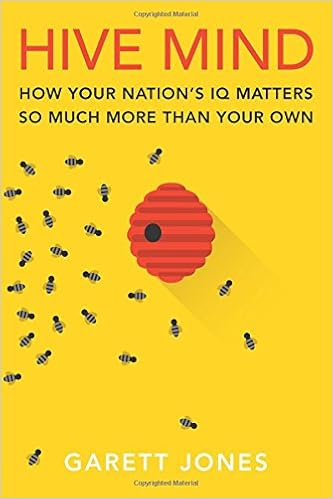
"Hive Mind" by Garett Jones: a review

Amazon link

The long, slow march of Darwinian Evolution applied to the human sciences continues. For more than a decade the work of Richard Lynn and Tatu Vanhanen on ‘IQ and the Wealth of Nations’ was ostracised and ignored; now, in Garett Jones’ new book, it is re-appraised and rehabilitated.

In 2007 James Watson was, well, ‘Watsoned’ for suggesting, "[I am] inherently gloomy about the prospect of Africa [because] all our social policies are based on the fact that their intelligence is the same as ours - whereas all the testing says not really." Since his views are validated in this book, I imagine his re-admission to public life cannot now be long delayed.

What else do we know? From genome studies and CSI police procedurals, we know that humanity exists in genetically-distinguishable ethnic groups, both within ancestral Africa and (via complex historical migrations) in the rest of the world. We know that intelligence as measured by IQ is strongly heritable (0.75). We know that the genetic component of intelligence is polygenic, and that the (thousands of) alleles positively associated with IQ are slowly being identified (the Beijing Genomics Institute is aiming to produce substantive results in the next few years).

And we expect, when we have this sequencing information, that different ethnic groups will exhibit different cognitive genotypes. It will then be clear that to elevate ethnic group (‘country’) intelligence up to (and perhaps beyond) the current East Asian level of IQ 105 is going to require DNA editing – there is a limit to how far good nutrition and iodine supplementation will take you.

Naturally Professor Jones knows all this - as does everyone else who takes the trouble to enquire. Unfortunately in the present state of public discourse, it cannot all be said without the Watsoning process re-engaging.  So in ‘Hive Mind’ Garett Jones had a tough task: to synthesise the current state-of-the-art through the lens of economics while not getting fired. The scientific constraint? Not to say or imply things which are actually untrue or gratuitously mislead in the process.

As many have observed, the book starts well. Rehabilitating the concept and utility of IQ is not new science, it’s a defence and popularisation of what every informed person already knows but of course, it’s necessary and done well. Similarly, the detailed re-examination of national/ethnic phenomenological IQ differences (mostly from Lynn and Vanhanen) is both clear and brave.

IQ is then linked with patience, propensity to collaborate and future-orientation, as Jones reviews research in psychology, political science and game theory. Applied to economics, he describes how, in complex technologies where mistakes can break the whole process (‘O-Ring technology’), there are surprising returns to pervasive intelligence. To put it crudely, high-IQ countries can do leading-edge high-tech, and low-IQ countries can’t (note that this is hardly a surprise when one observes the world).

So far so good, but now the wheels begin to come off a little. As if concerned by the consequences of his argument, Jones feels the need to signal his essential liberalism and humanity. There are long accounts of the Flynn effect to motivate speculation about increasing the IQ of poorer, more corrupt and disorganised nations (really ethnicities). Here he presents intelligence (as measured by IQ) as far more plastic and environmentally-malleable than it actually is.

Finally he plays with some oversimplified economic models to suggest that immigration from low-IQ countries is in the interests of the inhabitants of high-IQ countries (it’s plainly in their own interest - to a point). Naturally he equivocates (consequent damage to existing high-quality institutions). But he seems to ignore both the evidence from history and the increasingly-scary predictions of a hollowing-out of demand for low-and middle-skilled jobs. I’m sure he felt he had to write this but it breaks the rule: do not mislead the reader.

Perhaps in five years or ten years, it will be possible to write a well-balanced public-policy book starting from humanity as it actually is. In such a more enlightened time, a Garett Jones revision of this book would be well-worth reading.

---

Here is the list of national IQs from the book.

Greg Cochran's review - be sure to read the comments.

Slate Star Codex review - be sure to read the comments.

Saturday, October 31, 2015

You get stupider as you get older

With my 65th birthday in view, I am kinda worried that I'm getting stupider by the year.

Stupidity (can we still say that?) is really a decline or lack of fluid intelligence, the horsepower that lets you think abstractly and creatively solve new problems. Most older people have learned stuff over the decades and score rather better at crystallised intelligence (see the Wikipedia article for more on fluid and crystallized intelligence).

What does the world of science have to say? It's not completely easy to find out, but after some digging I found the diagram below (from here) - where the T-scores on the vertical axis are rescaled IQ scores, as shown further down this post. It shows the sad story of someone who had an IQ of 120 at their mid-twenties peak (T-score 63) but was merely average at 60.

It seems we lose about 0.6 IQ points per year from a high point when we're 26, a figure consistent with this Aberdeen/NHS study. How depressing!

Whatever my IQ was at age 26, it's now 23 points lower. And yes, I had to resort to pen and paper to work that out ...


Age decline in fluid intelligence - around 0.6 IQ points per year

Translating between the different statistics (IQ, Z, T)

You might want to take a look at this LessWrong article which has a different graph, but one which is depressingly and scarily consistent.

---

* Understanding the Stats (Descriptive Statistics and Psychological Testing - Stephen E. Brock, Ph.D., NCSP)

How is IQ scored?

IQ scores are a standard score with a mean of 100 and a standard deviation of 15.

Z-scores have a mean of 0 and a standard deviation of 1.

Z-scores can be transformed into IQ scores by multiplying a given Z-score by 15 (the standard deviation of  IQ scores), and then adding 100 (the mean IQ score). For example, a Z-score of –1 equals an IQ of 85 [100 + 15(-1) = 85].

Transforming a Z-score into an IQ score: IQ = 100 + 15Z.

What are T-scores?

T-scores are standard scores with a mean of 50 and a standard deviation of 10.

Z-scores can be transformed into T-scores by multiplying the Z-score by 10 (the standard deviation of T-scores), and adding 50 (the mean of T-scores).

For example, a Z-score of –1 equals a T-score of 40 [50 + 10(-1) = 40] ,,, and an IQ of 85.

Transforming a Z-score into a T-score: T = 50 + 10Z,  and IQ = 1.5T + 25.

Sunday, September 06, 2015

Success in life: is it coz i is nice?


Thought for the day.
"We assessed the association and underlying genetic and environmental influences among intelligence (IQ) and personality in adolescent and young adult twins.

Data on intelligence were obtained from psychometric IQ tests and personality was assessed with the short form of the NEO five factor inventory (NEO-FFI).

IQ and personality data were available for 646 twins. There were an additional 1307 twins with NEOFFI data, and 535 with IQ data. Multivariate genetic structural equation modeling was carried out.

Significant positive phenotypic correlations with IQ were seen for agreeableness (r = 0.21) and openness to experience (r = 0.32). A negative correlation emerged for neuroticism and IQ (r = -0.10).

 Genetic factors explained (nearly) all of the covariance between personality traits and IQ.

Genetic correlations were 0.3–0.4 between IQ and agreeableness and openness. The genetic correlation between IQ and neuroticism was around -0.18. Thus, personality and IQ did not appear to be independent dimensions, and low neuroticism, high agreeableness and high scores on openness all contributed to higher IQ scores."
All that stuff you were told, that personality was independent from intelligence, was so much guff. Smarter people tend to be nicer.

Self-control is also positively associated with intelligence. The famous marshmallow test purported to show that those with self-control got ahead in life. Maybe so, but wait .. they were also smarter.

---

By the way, before you complain that you know people who are nice but dim, or cite The Donald as a counterexample .. which part of the following scatter diagram are you struggling with?

Correlation here is 0.3 
Hint: think Intelligence (IQ) on the horizontal axis and a psychological trait such as Agreeableness on the vertical axis.

Friday, March 06, 2015

"The Evolution of Reciprocal Altruism" - Robert L. Trivers

Way too many people still waste everyone's time by falsely averring that the existence of altruism is a challenge and a puzzle to evolutionists. I re-read Robert Trivers classic paper: "The Evolution of Reciprocal Altruism" and share with you the following observations.

  1. This is a model of how to write a paradigm-changing paper. It's an easy read, conceptually clear and comprehensive. You owe it to yourself to click on the link and give it a try.

  2. In a sense, it's a statement of the blindingly obvious, particularly when Trivers discusses human altruism and the psychological mechanisms underlying it (friendship, dislike, gratitude, moralistic aggression, sympathy). It is, however, a testament to the systematic confusion and obfuscation of prior intellectual elites that Trivers had to restate and reframe the obvious to clear away an edifice of tendentious, muddle-headed thinking. On second thoughts, you may delete the word 'prior' above: an evolutionist's work is truly never done.

  3. Trivers suggested that the arms race between altruists and cheaters (doves vs. hawks if you like) is so complex, with strategies and counter-strategies and counter-counter-strategies, that it may have been a major driver for human-level intelligence. I'm not sure this intriguing idea has really been explored to date.

Trivers' first case study- 'Altruistic Behaviour in Cleaning Symbioses' - carefully removes issues of kin-selection and inclusive fitness by considering between-species altruism. He then considers the puzzling case of bird alarm calls (which seem to put the calling bird in special danger) and shows that a bird warning non-kin still has a selective advantage over the cheating non-warner. Finally we get to the human condition, where his apparently commonplace observations are subtly situated within a carefully-argued evolutionary framework.

Going forwards, there has to be scope for a genetic level of analysis based on GWAS research. Is altruism normally distributed (many genes of small effect)? Is there evidence of multi-modal distributions based on distinct evolutionarily stable strategies (crudely, sociopaths vs. the prosocial)?

For evidence that people's natural instincts and inclinations do not naturally align with Darwinian thinking, review these comments at West Hunter.

Monday, November 10, 2014

Idiocracy: a glimmer of hope

From Mike Judge’s film "Idiocracy" (2006):
 “Most science fiction of the day predicted a future that was more civilized and more intelligent. But as time went on things seemed to be heading in the opposite direction. The years passed and mankind became stupider at a frightening rate. Some had high hopes that genetic engineering would correct this trend in evolution. But sadly, the greatest minds and resources were focused on conquering hair loss and prolonging erections.”
'Idiocracy' portrayed a society where the left-hand side of the bell curve (those with IQ less than 100, lack of conscientiousness, lack of impulse control, .etc, etc) had reproduced uncontrollably while those folk with the smarts hadn't bothered. In the quantitative genetics literature, this would be called truncation selection, in this case breeding for stupidity.

The results were that nothing worked. The complex infrastructure of logistics, power, water, sanitation - even keeping the streets clean - had broken down. People lived in decaying hovels and lived on scraps. The other, less obvious, feature of 'Idiocracy' was that innovation was now impossible: the extremely bright people who drive innovation either didn't exist, or lacked an infrastructure to do anything with their ideas.

The mean IQ of "Idiocracy" society was pretty low, I would guess well south of 90, but there are societies around today which are not dissimilar. Turn on the News.

Well-meaning people - which is most of us - typically have three main responses to these continuing human tragedies:
  • Hope for some unspecified 'development' which will fix things - a sadly illusory prospect.
  • Rely on a discredited neo-colonialism from outside to fix/run things (Ebola care is the latest manifestation of this).
  • Hope for future genetic engineering to increase the cognitive capabilities of these populations (as in the quote above). Good luck with that.
Yes, it looks hopeless.

You're may think I'm referring to the societies of sub-Saharan Africa but even in advanced western countries we have our areas of 'Idiocracy' - our bleak, welfare-ridden estates.

So what would an answer look like?

The low-IQ societies of today and of the past were (and in some cases, still are) equatorial hunter-gatherers, operating in a relatively non-seasonal environment, in smallish groups and mostly in the here-and-now*. In that environment they didn't experience any 'cognitive limitations' - they were adapted. We can't go back to that situation, which was hardly ideal in terms of lifestyle difficulty anyway. Besides which, the numbers are now too great and we've largely lost the ecological environment which made that lifestyle possible.

No, we have to create a simulated environment which pushes similar ecological buttons, but which operates at much higher population densities. It may sound ridiculous, but the model which comes to mind is that of a very-robust, highly-automated and free theme park.
  • The activities there would permit a variety of inter-personal relationship types including, for example, status-contests for the males (e.g. sports competitions).
  • Basic human requirements such as food, shelter, entertainment and medical care would be provided free-of-charge.
  • The mil-spec automated systems would fulfill a social role of 'slaves' - something we couldn't do with real, technically-competent people.**
I would guess we're less than a hundred years from being able to create such an effective and affordable infrastructure***. In that time we're not going to lose the many very smart people we need to create and maintain it. Let's get on with it.

---
* Sub-Saharan agricultural and pastoralism is fairly recent (cf the Bantu) in evolutionary terms.

** As last seen with the Romans and their Hellenic slaves.

*** You may be thinking 'zoo' but this would not be for the benefit of spectators: such a competent social environment would be pretty utopian for all of us.

Friday, November 07, 2014

"What's my IQ?" (You ask yourself)

Lots of people haven't taken IQ tests, or maybe they did but their company declined to share the results. But calm yourselves: there is a way. Recall that one of the major utilities of IQ test results is that they correlate strongly with competence in occupations requiring intelligence. So naturally, you can reverse-engineer your IQ from your occupation or education, or at least establish a personal floor level.

Let's start with university. In the UK, along with many industrialised societies, something like 40% of the cohort go to university. This sets the entrance level at the 60th percentile. Looking up the value of 0.1 (corresponds to 0.6 = 0.5 + 0.1) in a normal distribution table tells us that this occurs at 0.25 standard deviations to the right of the mean. Since IQ is normed at mean = 100, standard deviation = 15, the minimum IQ to get into university these days is about 104.

Obviously if this is your IQ you're going to be doing media studies or drama, not economics, mathematics or physics. It's a floor.

Now we turn to another useful chart, this time from Steve Hsu via Lubos Motl. I reproduce part of Lubos' rather satirical post below. Steve Hsu's original data was GRE (Graduate Record Examinations) scores, which he then translated into IQ scores. The GRE are taken by most American university graduates seeking to do post-graduate study to PhD level. Anyway, here's Lubos:
"Steve Hsu has found a very interesting table with the average GRE scores computed for various concentrations. He has also defined a linear map translating the average V-Q-A scores into a more familiar IQ scale. This convention looks natural to me and I will follow his scale although it is not guaranteed that it is equally calibrated as other IQ measurements.

"Disclaimer: these cold numbers expressing typical IQ for different occupations must be interpreted very carefully. They don't necessarily imply anything. The outcome depends on the character of the question, discrimination, etc. Despite different numbers, all of us are equal. Blah blah blah. And so on.

"The results are: [A PhD student's typical IQ for this subject]

130.0 Physics
129.0 Mathematics
128.5 Computer Science
128.0 Economics
127.5 Chemical engineering
127.0 Material science
126.0 Electrical engineering
125.5 Mechanical engineering
125.0 Philosophy
124.0 Chemistry
123.0 Earth sciences
122.0 Industrial engineering
122.0 Civil engineering
121.5 Biology
120.1 English/literature
120.0 Religion/theology
119.8 Political science
119.7 History
118.0 Art history
117.7 Anthropology/archeology
116.5 Architecture
116.0 Business
115.0 Sociology
114.0 Psychology
114.0 Medicine
112.0 Communication
109.0 Education
106.0 Public administration"
Since these are graduate entry levels, they're creaming off the top end of undergraduates. So it's kind of an 'undergraduate good 2:1' floor we're seeing here. Oh, and scary & surprising about US doctors, don't you think? In the UK, the average IQ of medical students is reckoned to be 125 (page 61).

At the very top-end, Steve Hsu has observed:
"I doubt that the average among eminent scientists (averaging over all fields) is 160; probably a bit lower like 145."
Finally I draw your attention to "Smart Fraction" Theory, which examines the notion that to run a modern, complex, industrialised society requires a mass of people with (verbal) IQs greater than around 106. Our best societies today have a smart fraction just under 50% (see graph at the bottom of the linked article).

Estimating IQ from genotype

This post is a simple back of the envelope calculation based on Davide Piffer's paper as discussed in my earlier post.

First a quick reminder about opinion polls and sampling.

Opinion Polls

We assume a large population of interest and we sample n individuals (often 1,000) with a yes-no question. Something like "Are you going to vote for the Labour Party in the forthcoming election?" We want to know how likely it is that the population as a whole votes in the same proportions as found in our survey. Suppose p is the fraction of the sample-population who tell us they will vote yes (example: 0.32).

This is just the same as throwing a biased coin (Heads with probability 0.32) a thousand times and seeing how many Heads we actually get. Clearly on average we'll get 320 Heads [the mean of our sample is np]. Of more interest, however, is the standard deviation of the mean if we took sample after sample (or coin-throwing exercise after coin-throwing exercise). We would like to know the upper and lower bounds of 'yes' respondents we would get in, say, 95% of the samples we took, corresponding to +/- 1.96 standard deviations. We can be pretty confident that those bounds would play out in real life (nineteen times out of 20).

The standard deviation of a binomial distribution, which is what we have here, is √(npq) where n is the size of the sample (example, 1,000), p is the probability of the 'yes' outcome (example: 0.32) and q is the probability of the 'no' outcome (0.68 = 1-p).

The 95% confidence interval around the mean np is +/- 1.96 standard deviations - which we approximate here to 2. We also approximate p and q to 0.5 as this is the largest value of √(pq).

Plugging the numbers in, we get the 95% confidence interval as: 2 times √(0.5 x 0.5 x n) = √n.

In our running example with 1,000 people sampled (√1000 equals around 32), this tells us that the interval 320 +/- 32 will  contain the number of 'yes' answers we'll get 95% of the time. We sometime prefer to have the results as a proportion, usually written as a percentage, in which case we divide everything by n.

The mean number of 'yes' voters here is 320/1,000 = np/n = p (0.32 or 32%).

The 95% confidence interval here is 32/1,000 = n/n = 1/n  (usually described as +/- 3%).

Note that if we had sampled just 100 voters, we would have a 95% confidence interval of +/- 1/√100 = +/- 10%. We're already losing quite a bit of predictive power.

Asking just 10 people, the 95% confidence interval is 1/√10 = 0.32 = approx. 30%. So the three people who said they'd vote 'yes' .. in multiple surveys that number could dip as low as zero and as high as six. Pretty much worthless in forecasting the election.

---

To apply this to IQ I'm going to use the data in Davide Piffer's paper, as discussed in my earlier post - to which you may need to refer.

Looking at my own results I had 16 alleles to play with, of which 7 were 'good for intelligence'. So this is an opinion poll where I was able to survey only 16 people. Duh!

My computed allele frequency was 44% against a European average of 35.5% so I'm 8.5 percentage points up from the average.

Looking at the Chinese/Japanese figures we see an allele frequency score of 39.1% (a difference of 3.6% from the European mean) which corresponds to an IQ difference of 5 IQ points from Europeans. I'm going to assume a linear relation - an additive model.

To convert a difference of mean allele frequency to IQ difference we multiple by 5/3.6 = 1.4. So the estimate of my IQ is 8.5 * 1.4 = 12 points above the European average of 100. In my incorrigible vanity I'd like to believe that 112 is rather on the low side! What is the 95% confidence interval for this calculation?

Since n = 16, and following the path described above, the 95% confidence interval is +/- 1/√16 = 25%.

That's the allele frequency limits so my true allele frequency (of those hundreds or thousands of 'good alleles driving IQ') is probably in the range 44% +/- 25% or [19%, 69%]. To change these limits into IQ scores multiply the confidence interval of +/-25%  by 1.4 giving +/- 35 IQ points

We may be 95% confident that my IQ is in the range [77, 147].

So I guess we can be 95% confident that I'm neither extremely educationally subnormal nor Albert Einstein!

The take-home message is that we need hundreds of alleles to give us a big enough sample to get the error bounds down. The concordance of twins brought up together for IQ is around 0.86 so non-genetic factors will still prevent us getting all the way.

BTW we're just a few years from getting to that 'hundreds of IQ-affecting alleles' point, so although this is a fun exercise, reality will be along soon enough.

Thursday, November 06, 2014

The genetics of intelligence - early results

Refer to text below to understand this
A somewhat overlooked paper: "Factor Analysis of Population Allele Frequencies as a Simple, Novel Method of Detecting Signals of Recent Polygenic Selection: The Example of Educational Attainment and IQ" available here.

This is how Peter Frost summarises the paper.
"We know that human intellectual capacity has risen through small incremental changes at very many genes, probably hundreds if not thousands. Have these changes been the same in all populations?

"Davide Piffer (2013) has tried to answer this question by using a small subset of these genes. He began with seven SNPs whose different alleles are associated with differences in performance on PISA or IQ tests. Then, for fifty human populations, he looked up the prevalence of each allele that seems to increase performance. Finally, for each population, he calculated the average prevalence of these alleles at all seven genes.

"The average prevalence was 39% among East Asians, 36% among Europeans, 32% among Amerindians, 24% among Melanesians and Papuan-New Guineans, and 16% among sub-Saharan Africans. The lowest scores were among San Bushmen (6%) and Mbuti Pygmies (5%). A related finding is that all but one of the alleles are specific to humans and not shared with ancestral primates.

"Yes, he was using a small subset of genes that influence intellectual capacity. But you don't need a big number to get the big picture. If you dip your hand into a barrel of differently colored jelly beans, the colors you see in your hand will match well enough what's in the barrel. In any case, if the same trend holds up with a subset of 50 or so genes, it will be hard to say it's all due to chance."
The alleles which Piffer frequency-analysed differentially code for things like:
"... the regulation of neuronal morphology in neurons, including hippocampal neurons and developing brains"

"... neuronal excitability, synaptic plasticity and feedback regulation of acetylcholine release."
Ten or so SNPs don't determine very much of a person's intelligence, which depends upon the actions of hundreds or thousands of genes as well as environmental effects. But even a small sample - if representative and correlated - can be quite predictive, as Piffer explains.
"As the effect size of each SNP is typically very low (around 0.1%), even 10 SNPs would not account for more than 1% of the variance in IQ or educational attainment scores across populations. The likely explanation for why the effect size for the 10 SNPs at a cross population level detected in this study is so high (around 80%), is that the alleles are not randomly distributed across human races, so that the combined frequency of a few alleles predicts the frequencies of many other alleles affecting the same phenotype. This inflates the correlation with the phenotype well beyond anything that would be explainable by the modest effect sizes of the examined SNPs.

"This is nothing more than the principle applied to psychometric instruments, such as IQ tests or personality scales, where a handful of items produce a reliable score, precisely because these items represent an underlying, latent factor and are thus correlated among each other. Even reliable psychometric scales are usually composed of around 10 items, equal to the number of SNPs examined in the present study, which in turn showed good internal reliability (Cronbach’s α= 0.84).

"A model based on random evolution or genetic drift alone cannot account for such a pattern."
The particular SNPs used in the study are listed in the tables at the back of the paper. I was naturally interested in checking which of these SNPs are analysed by 23andMe. It turns out that about half are. So in the graphic above you see the 'good for intelligence' SNPs in the first column, the gene name (where available) in the second and the chromosome it's on (from 23andMe) in the third. The fourth column is the specific nucleotide which marks this as a 'good-for-intelligence' allele, and the fifth is the database where the source-data came from (refer to the paper for details). The final column is my own genotype at these alleles, as downloaded from 23andMe.

Here is an Excel workbook for you to try yourself. Hint: download your 23andMe results and load into an Excel spreadsheet; then search on the rs SNP identifiers.

There are sixteen alleles (2 x 8) which are both 'good' and available from 23andMe. Of these 16, you will see that I have 7 'good' ones, so my personal 'frequency' is 7/16 = 0.44. This sounds terrible, but in fact the European average frequency for these 'good alleles' is 35.5% and the East Asian (Chinese, Japanese) average frequency is 39.1. This number of alleles is too small to be a good estimator of anyone's overall IQ though.

The message of Piffer's paper is that, as humans radiated out of Africa, a rising tide of natural selection drove novel alleles coding for increased intelligence to higher and higher population frequencies. This emerges clearly from the  SNPs analysed in the paper, and is by hypothesis true for the rest too. It appears that selection for higher intelligence has been more, rather than less, intense over the last 10,000 years - possibly reflecting the cognitive demands of agrarian, pastoral and yet more complex modern civilisations.

More to come, undoubtedly as the larger scale GWAS studies begin to deliver.

Friday, September 19, 2014

Be as stupid as possible

"All animals are under stringent selection pressure to be as stupid as they can get away with." (Echopraxia, p. 23).

Obviously. 

Intelligence costs.

Echopraxia (and prequel Blindsight)  present ordinary, baseline humans dealing with entities far smarter than they are. It's a hard call for the author: are his super-intelligent beings smarter than the author himself, his readers? How then can they possibly be imagined?

Try another question first. What possible utility could super-intelligence have in evolutionary terms? After all houseflies, not known as paragons of smartness, seem to have had no problem colonising the planet. The answer has been known for a long time: in a predictable environment (aka ecological niche) the organism can get away with hard-wired reflexes - instincts - and that's the way to go. Intelligence is the way animals deal with problem-solving in variable, somewhat unpredictable environments, often when they are social creatures and have to compete with equally-complex and hard-to-fathom conspecifics.

Still, we are where we are and there's not much sign of super-intelligence in the myriad species inhabiting this globe. So what are the fictional super-smarts actually doing?

In Blindsight/Echopraxia they are capable of maintaining and manipulating multiple highly-abstract models applied to extrapolating from the current situation. They understand what they perceive at a much deeper level and can predict and direct consequences far better than we can. This assumes of course that these deep levels of abstraction are actually relevant: a quantum physicist understand the dynamics of the world far more profoundly than any lay person but in everyday life it makes no difference - and even gets in the way.

To be super-intelligent in a way which pays off you have to be in a situation where complex phenomena are directly causally present, and you must possess super-senses and super-tools to act effectively on your superior understanding. In Echopraxia for example, most of the super-smarts are able to perceive and affect human brain states directly, and manipulate effective theories of human brain functioning in real-time. No wonder they run rings round us. They have a similar relationship to advanced technologies, which makes them pretty effective in dealing with power and transportation platforms and weapon systems - always useful in an SF novel!

The moral is that being as stupid as possible (but not stupider) is the right answer - but the ratchet of that minimal level keeps cranking up, as science and technology complexify our environment.

So how does Peter Watts convey to us, his readers, the super-intelligence of his protagonists? By making his stories intricate puzzles where we're never quite sure who's doing what to whom, and why. After the novel is finished, you reflect, try to make some sense out of the hints, the apparently purposeless or perverse actions. And then it starts to come together: being slow-witted is sometimes homologous to cranking down the clock speed of the very smart.