Showing posts with label Genetics. Show all posts

Wednesday, January 14, 2026

Heritability vs. Penetrance - a ChatGPT tutorial

---

Heritability, Penetrance, and Genetic Control

When you first encounter the term heritability in genetics, it is natural to assume it means “how genetic” a trait is. But that is not quite right. Heritability has a very specific technical meaning: it is the proportion of the variation in a trait, within a population, that can be attributed to genetic differences between individuals (genetically-induced variance over total variance).

(See the definition of heritability at the end of this post, below).

Notice the emphasis: heritability is about trait variation in a group, not about whether a trait is caused by genes in the first place.

Take the example of having two eyes. The development of two eyes is tightly controlled by genes. The biological mechanism is overwhelmingly genetic. But in most human populations there is no meaningful variation here: virtually everyone has two eyes and any variation is likely to be environmentally-induced. Since heritability measures genetic contribution to observed variation, the heritability of “having two eyes” is close to zero. Yet no one would doubt that the trait itself is genetically determined.

Now compare this with height. In a given population, some of the variation in height is due to genetics, and some is due to environment (nutrition, illness, socioeconomic status). If careful statistical studies show that 80% of the variation in height is explained by genetic differences, then we say the heritability of height is 0.8 in that population at that time.

But change the environment (for example, move the same genotypes to a famine-stricken region), and the heritability estimate will sharply drop, because environmental variation now explains so much more of the differences.


More Direct Measures of Genetic Influence

Heritability does not tell us how a trait is controlled at the level of the individual or the mechanism. For that, biologists use different concepts:

  • Penetrance: For a specific genotype, what is the probability that the phenotype will appear? For example, a BRCA1 mutation carries high but not complete penetrance for breast cancer. This is a direct, causal measure at the level of an individual genotype.
  • Expressivity: Given that a trait is present, how strongly or in what form is it expressed? Cystic fibrosis mutations can vary in severity, even within the same family. Expressivity captures this.
  • Functional impact of alleles: Molecular biology can measure how a specific mutation changes protein function or disrupts a developmental pathway. This connects genotype to mechanism. For example, the sickle cell mutation changes a single amino acid in hemoglobin, altering how red blood cells form under low oxygen.
  • Variance explained by identified loci: Genome-wide association studies (GWAS) can estimate how much of the variance in a trait is accounted for by the set of variants we have actually identified so far. This is still a population-level measure but closer to causal genetics than broad heritability.

Contexts of Use

Heritability is most useful in population genetics, plant and animal breeding, and public health studies. It tells us how much of the observed variation we can expect to respond to selection - given current conditions. But it should never be taken as a timeless or universal measure of “genetic determination”.

Penetrance, expressivity, and functional impact are more useful in medical genetics and molecular biology. They help clinicians predict risk for individual patients, and they help researchers understand mechanisms.

In short: heritability is a statistical lens on variation within a group. Penetrance and related concepts are causal lenses on individuals and mechanisms. Both are valuable, but they answer different questions.


Key Takeaway

Always ask: are we talking about variation in a population (heritability), or are we talking about causal pathways in an individual (penetrance, expressivity, functional effect)? Mixing them up is a common beginner’s mistake. Once you see the distinction, the field of genetics becomes far less confusing.


Mathematical definition of heritability

Broad-sense heritability is the fraction of phenotypic variance in a population attributable to all genetic sources (G - total-genetic; P - population):

H2 = VG / VP

Narrow-sense heritability is the fraction of phenotypic variance attributable to additive genetic effects only:

h2 = VA / VP

Variance decomposition (standard model)

VP = VG + VE + 2COV(G,E) + VGE

and

VG = VA + VD + VI

Variables

  • VP: phenotypic variance of the trait in the specified population and environment.
  • VG: total genetic variance (all genetic contributions combined).
  • VA: additive genetic variance (sum of average effects of alleles; component that responds predictably to selection).
  • VD: dominance variance (interactions between alleles at the same locus).
  • VI: epistatic variance (interactions among loci).
  • VE: environmental variance (all non-genetic sources of variation).
  • COV(G,E): covariance between genotype and environment (nonzero when genotypes systematically experience different environments).
  • VGE: genotype-by-environment interaction variance (genetic effects that change with environment).

Notes

  • H2 and h2 are properties of a particular population in a particular environment; they are not trait constants.
  • When COV(G,E) and VGE are negligible, many texts simplify to VP = VG + VE.

Optional estimator (selection response)

Under the breeder’s equation, an empirical estimate of narrow-sense heritability is:

h2 ≈ R / S

  • R: response to selection (mean of offspring minus mean of base population).
  • S: selection differential (mean of selected parents minus mean of base population).

Sunday, October 20, 2019

Neanderthal dilemmas

Cro-Magnons - early humans - entered Europe from the Middle East around 38,000 years ago. Their path took them through the Zagros mountains (Iran, East Turkey). Climate change had led to a greening of the desert and thereby permitted northbound migration.

They were entering a Eurasian continent already populated by Neanderthals.

Cro-Magnon penetration at 37,500 years before present (here)
Suppose that there had been exactly one decisive pass through the mountains, and suppose this pass was occupied by a band of Neanderthals who could in principle have engaged and repulsed the incoming Cro-Magnon tribe.

Should they have held the pass, or just dispersed and avoided conflict?

It's a thought experiment.

Let us give these tooled-up Neanderthals the future knowledge of one branch of their decision tree.

If they stand aside and let the newcomers in, then over the next 10,000 years the Neanderthals will be displaced from their range and driven to extinction. The newcomers will proceed to build a mighty civilisation which will span the Earth .. and even beyond.

On the other hand ...

---

The argument

1. The Neanderthals are inherently limited: they should make way for an improved species

There is no evidence that the Neanderthals were capable - in terms of their genetic endowment - in creating an advanced civilisation. They were just too well-adapted to their ecological niche to need the expansion of cognitive competences which compensated for Cro-Magnon physical inadequacy.

However, in biological terms, what's progress? The Neanderthals went extinct. Their genes only survive today as fragmented admixtures in the successor population. The subsequent massive population expansion (8 billion humans in the world today) of another species was not to their advantage at all. So why make way?

2. We should be in favour of life as a whole rather than any one species

Sure, some people believe this. But no species which practically implemented this belief could survive. It's the ultimate prey strategy in a Darwinian world of predators. You're toast in the paws of species which do care about their own survival.

3. The Neanderthals should have fought - it was in their own genetic interest

This is superficially appealing but it misunderstands the dynamic of evolution. No single organism operates in the interests of its 'species' - which in any case is a theoretical construct, a genotype-set boundary with rather arbitrary borders.

A creature fights for the survival of those creatures which best guarantee the further propagation of its own alleles. Itself. Usually its offspring. In more caring/social species the mates, extended kin group and perhaps allies ('friends' in a relationship of reciprocal, transactional altruism).

We could talk about imagined communities but let's discuss patriotism and nationalism another time.

So in a real scenario, the local Neanderthals should have fought if it was in their immediate, localised and situated interests. No doubt their innate emotions would have backed that up: some combination of aggression and fear balancing out.

However, if they had (counter-factually) known their future prospects over the next 10,000 years or so, they should have fought. Extinction is not consistent with any kind of fitness.

But you can't know.

---

Supplementary question

If we designed a more competent social creature than current humanity - some self-sustaining artificial intelligence perhaps, or some genetically enhanced human subspecies - in any event some new creature which would out-compete us, should we proceed to implement the design?

Knowing we would lose the subsequent contest? But knowing that our designed-successors would inherit the stars (or something similarly grandiose) while rendering us extinct.

This would be completely against our genetic interests as individuals. But such a glittering future is surely something to be prized. Why should we care about the underlying dynamics of DNA replication and natural selection anyway? It's just mindless applied chemistry.

But why should we care about the glittering interstellar high-civilisation either? It's still all just navel-gazing atoms.

We care only because it's a human emotion - that's all 'caring' is. And human emotions simply encode the cognitive strategies which make us a (so-far) successful social species.

You don't find universal values in physics or biology.

There are only species-specific values. And the ones we cherish so much are specifically the values of a species ecologically-genomically structured like us. They motivate us to want to bring about situations which worked for us survivors up to now.

Monday, June 17, 2019

Capitalism is for wimps

File under speculative.

In the days before capitalism (feudalism etc), productivity was static, the Malthusian trap operated and the economy was zero-sum. Basically if you could grab it, or could network well so that you and your mates (normally male kin) could grab it, you were ahead.

This placed a selective premium on males with superior aggression and leadership/followership qualities (such as loyalty) - and females who thought that men with such attributes were good prospects.

There were always wimps of course. Alleles which determine personality, body morphology and aggression are scattered across the autosomes (the 22 pairs of chromosomes which are not X or Y, sex-determining). Many men will have had more feminine bodies and less aggressive demeanour.

Undoubtedly there was also a measure of balancing selection. Wimp niches.

Nevertheless, on aggregate, these were very masculine-feminine gendered societies. Shakespeare's plays give us a clue. How uncomfortable they feel these days!

Don't get me started on the Bible.

Capitalism, dominant over the last centuries, lives in a world of contracts across time and space. Individual capitalists are quite weak: they can't force their customers to buy from them, they can't eliminate the competition by force. (That doesn't stop them trying sometimes, but the system depends upon the majority not succeeding and not even trying: three cheers for effective competition).

What does capitalism select for?
  • Intelligence - the ability to conceptualise abstractions
  • Affability - getting along with strangers
  • Lack of physical aggression - can't do business with guys who beat you up.
Here is the real story of the so-called 'feminisation of society' which has been blamed on the women's movement and feminism. Capitalism's very requirement for feminine psychological attributes has called forth feminism to articulate the roles which women can - and are encouraged to - fill.

Gay men also find many niches, particularly in the media and in areas of high social-interaction.

As manual, blue-collar  work recedes to zero this trend will surely continue. I was looking at the candidates for the next Tory leader and prime minister: Jeremy Hunt, Michael Gove, Rory Stewart.

They'd all be classified historically as wimps.

Has there been time for capitalism to have significantly changed allele frequencies (wimpier men, more assertive women) to optimise psychological fit to its functioning?

Hell, yes!

We're talking about the bubble here, the ruling elite. Not the whole of society. Offspring diffuse in or out.

Outside the bubble, the masses sometimes look like a different species.

---

I'm using the term 'masses' here as a synonym for those people not part of the 'smart fraction' (qv). IQs less than 105, say, .. and not so prosocial. It's no accident that politicians such as Trump, Farage and Boris Johnson, who have some rapport with the masses, are never plausibly characterised as wimps.

Wimp-language, aka bubble-speak, characterises them as populists, monsters, unstable, anti-intellectual, uncontrolled.

Sadly, the masses don't seem that impressed by the blueblood wimps.

Will this toxically-masculine breed of populist politicians find a new incarnation of capitalism which can bind the Caliban-Morlock masses back into the fraying project? A new and more successful Blue Labour? Or a socially-conservative one-nationism?

It should be an interesting few years.

---

Further reading: "The Office as Utopia".


Wednesday, November 14, 2018

"Blueprint: How DNA Makes Us Who We Are" - Robert Plomin

Amazon link

Robert Plomin is one of the good guys, and this book is apparently a summing up, for a general audience, of his life work. It has just arrived and is on the stack.

Meanwhile Dr James Thompson of UCL has an excellent and detailed chapter-by-chapter review, from which this short excerpt.
"Chapter 11 is about the development of genome-wide association studies. Chapter 12 is a very substantial one about genetic prediction. Chapter 12 is Plomin’s real coming out: he reveals his polygenic scores for all to see. Naturally, this is a teaching opportunity, explaining the insights and the limitations of such measures. Figs 6 and 7 are worth showing again and again, if only to explain polygenic scores and their overlaps, and the fact that they provide probabilistic estimates, not certainties."
Greg Cochran has written a review at Quillette, "Forget Nature Versus Nurture. Nature Has Won".

And Toby Young, also at Quillette: "Is Sociogenomics Racist?".  No, he argues.

I'm looking forward to reading and learning. Update: here's my review.

Tuesday, August 14, 2018

The Virus of Marxism

A lot of people - ex-Marxists - talk about having caught 'the virus of Marxism' in their youth. They always seem less clear as to how they recovered from their complaint.

---

Marx thought that the selfishness and egotism so obvious in the people around him were the product of capitalist relations of production. Under communism selflessness would be the norm, the benevolence of a society of abundance.

This is an empirical claim, yet one which Marxists are strangely unwilling to explore. Everything we know about human beings suggests such a prospect is false. There are strata of society which are currently very well off. The pages of 'Hello' magazine suggest that saintliness does not come naturally. Why not? They're not all evil oppressors.

We know from biology that (for good genetic reasons) most animals are either in it for themselves or at most for their close kin. It's considered noteworthy that some evidence has been uncovered for reciprocal altruism in chimpanzees.

Humans exhibit adaptations for living in large groups*, and for symbol-mediated cooperation: loyalty to causes, countries and empires (provided such causes sufficiently align with personal self-interest of course). Despite much effort however, in-group/out-group tribalism has never been close to eradication. It's a bit airy-fairy to blame those famed (and reified) 'capitalist relations of production' for that historical universal.

Rich societies in a state of formal peace fragment into tribes which pick intense fights on secondary issues, spearheaded by young males. Who'd have thought it? (Apart from evolutionary psychologists).

---

Where does this leave the Marxist project? A clue can be found in the extreme unwillingness of Marxist theoreticians to engage with these issues. Their uneasiness is palpable: such research is neither acceptable nor refutable - a sheepish turning away of the head changes the subject.


Mediated of course by the social relations of production and exchange, it's new tech which opens the door to historical progress. The future presents as a branching tree: genomic experimentation in humans combined with social-agency in robots (cf replicants).

It's really hard to predict how things will turn out: there are many scenarios. Why suppose that Marx and Lenin tediously had the future nailed down more than a century ago?

The thing which scares Marxist intellectuals is that if humans can't make a collectivised society work - and they can't - then we seem to be stuck with capitalism indefinitely. That does seem a bit of a capitulation to bourgeois ideology. But private ownership of the means of production has a lot more flexibility than historical observers had imagined. Those dark satanic mills so graphically denounced in Capital Vol 1 have long since vanished in the west. Capitalism keeps getting richer (on trend) and more capable, with ever greater reserves. Its own dynamic will in the end utterly transform it .. I suspect.

Why is capitalism so bad, anyway?

We shouldn't ask the question this way. It's not the job of science to take sides on ethical questions. Marxists above all should not be appealing to platonic ethical absolutes. Yet they err in seeking ethical judgements about capitalism only in social relations.

If human beings didn't have a human, biological nature, if they didn't care whether they ate or starved, lived or died, then who could complain about social formations since the dawn of time where such 'bad' outcomes were the norm?

Of course, human beings very much subscribe (for obvious biological reasons) to something like Maslow's hierarchy of needs.

Maslow's hierarchy of needs

In Marx's day (and Lenin's too in Russia) capitalism was bootstrapping itself through primitive accumulation. It was a brutal time and every one of Maslow's levels was violated for the newly-emergent working class. The communists were vitriolic in their anger and hatred against capitalism - the new bourgeoisie were certainly not starving in their mansions.

But as Stalin showed in the 1930s, forced accumulation is inherently a brutal business.

A richer contemporary capitalism is less polar, more stratified. Large segments of the population - proletarian in that they own no means of production and need to sell their labour power to survive - find themselves not badly paid and doing socially-necessary work of deep intrinsic interest. They may well attain all of Maslow's levels in their occupations.

Marxists like to say that capitalism is irrational, not being centrally planned. This is a rather pejorative way of describing a decentralised economy composed of discrete, competing companies each trying to maximise its own profit. Companies may be legal persons, but in a dog-eat-dog capitalist economy their psychologies are psychopathic.

Still, self-centeredness is a common feature in natural ecosystems: we observed above that generalised altruism is rare to non-existent. Though corporates-gone-bad are a staple of dystopian fiction, in a healthy capitalist state there exist legal mechanisms to ensure rule-based behaviour, recognising that social-responsibility is not intrinsic to the capitalist firm.

Bad corporate behaviour is  often contested - see any newspaper.

The Marxist economist will then turn to crisis theory as evidence of capitalist inefficiency. The dynamics are not disputed (except by bourgeois equilibrium economists!) but given the inability to predict future demand, competitive overshoots will happen and in modern times the effects of downturns are somewhat mitigated.

It is claimed that capitalism has an inherent alienation, anomie caused by the fundamental deception of capitalism, that ordinary folks' efforts only serve to produce more profits for the bourgeoisie. We're all in it together, suckers! When things are going well, and capitalist corporations are achieving great outcomes (in construction, healthcare, new technologies) things don't seem that discordant. It's hard to identify "the Man" who sits in his top hat chortling at the efforts of his deceived minions.

Capitalism certainly has an ideology of 'atomism': the free individual contracting with an employer. But once in work, nothing much gets accomplished without the team .. and teamwork is pretty core to human nature. Outside of work there are associations in plenty for those who want them - even revolutionary communist parties.

We're down to the bottom line. In a class society, the rich and powerful tend to get their own way. What did you expect?

---

* Less aggression and more self-control, but varies with population group.

Getting capitalism to work successfully is the most difficult task humanity has ever set itself. Success correlates with national IQ, as Professor Garett Jones describes in his book "Hive Mind".

From "Hive Mind" by Garett Jones

Sunday, July 29, 2018

Climate collapse and pandemics: the fall of Rome

Amazon link

From the Princeton University Press description:
"Interweaving a grand historical narrative with cutting-edge climate science and genetic discoveries, Kyle Harper traces how the fate of Rome was decided not just by emperors, soldiers, and barbarians but also by volcanic eruptions, solar cycles, climate instability, and devastating viruses and bacteria.

He takes readers from Rome’s pinnacle in the second century, when the empire seemed an invincible superpower, to its unraveling by the seventh century, when Rome was politically fragmented and materially depleted.

Harper describes how the Romans were resilient in the face of enormous environmental stress, until the besieged empire could no longer withstand the combined challenges of a “little ice age” and recurrent outbreaks of bubonic plague."

This is a highly readable, even exciting narrative which situates the Roman Empire within the climate cycle of the:
  • Roman Climate Optimum (200 BC - 150 AD)
  • Late Roman Transitional Period (150 - 450)
  • Late Antique Little Ice Age (450 - 700).
Agrarian societies are highly susceptible to climate deterioration and its attendant woes of famine, plague and attack from similarly-stressed 'barbarians'. Consequent depopulation subverts both the economy and the military. The later Empire was, as Harper demonstrates, constituted as a sequence of structural-political responses to increasingly debilitating challenges. In the end it was all too much.

This is by far the best, and most compelling account I have read of the dynamics underlying the fall of the Roman Empire (and also the rise of Islam, which brought the final coup de grace). Another case where climate science and paleogenetics are revolutionising history and archaeology.

One small criticism: Harper uses anachronistically the categories of capital and wage labour. But Rome was not capitalist, it was mercantilist, dominated by a mode of production based on ubiquitous slavery as Harper explains in great detail.

Thursday, April 26, 2018

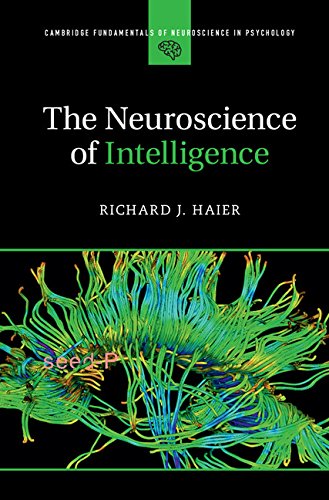
Practical review of intelligence research - Rich Haier

Amazon link

This book is "Rich" Haier, Professor Emeritus in the Pediatric Neurology Division of the School of Medicine at the University of California, Irvine, writing to his students. He wants to tell them about the three-pronged nature of contemporary research into intelligence: psychometric tests (delivering 'g'), neuro-imaging and genomics.

Leveraging all three approaches, he comprehensively demolishes blank-slate ideas that intelligence doesn't really differ between individuals, genders and/or ethnic groups, and shows that intelligence differences (as measured psychometrically or in life outcomes) have measurable correlates neuro-anatomically and genetically.

Since higher IQ correlates positively with desirable life outcomes, he is a strong proponent of research which might lead to future IQ improvements, either through some kind of  'IQ pill' or targeted allele-engineering.

Haier is plainly an experimentalist, not a theoretician. He is happiest explaining the details of studies, neuro-imaging equipment and brain images: he's almost too thorough. He is also good on the unexpected results: when men and women with identical (and high) mathematical abilities were scanned while solving advanced math problems they were equally successful - but the men used the spatial parts of their brain while the women were using verbal modules.

While we are plainly in the middle of a technology-led revolution (well-described at an introductory level) it's frustrating that the jury is still out on all the important questions. We don't know what the brain is doing which distinguishes consciousness from unconsciousness; we don't really know how the high-IQ brain differs in structure or function from the low-IQ brain although there are some suggestive ideas; we don't know how to alter/improve IQ by any well-attested intervention.

Perhaps this will change over the next few years. Given the stigma which still attaches to intelligence research in the West, perhaps we'll have to wait for the Chinese to tell us.

Monday, April 02, 2018

"Who We Are and How We Got Here" - David Reich

Amazon link

For millennia astronomy (~ astrology) was a naked eye science. That was sufficient to chart the phenomena: the wanderers, the cloudy blobs, the falling stars. It fostered theories - the crystal spheres. There was an origins story: creation then stasis under the guiding hands of angels.

Telescopes, emission spectra and doppler shifts changed all that. The naked-eye astronomers with their theocratic agendas hated the new instruments and balked at the maths.

You have to pity the archaeologists and anthropologists: they really don't like Reich's book.

---

Reviews

Perhaps more from me later: it's interesting and full of unexpected insights but despite the studied lack of jargon, it does make conceptual demands. It's not an effortless page-turner.

---

Update: Saturday April 7th 2018

I've now finished Reich's book, having read with trepidation those parts where he criticises Nicholas Wade, Henry Harpending and Greg Cochran, and James Watson by name, not shrinking from use of the r-word. His criticisms are curiously uncompelling, though veiled by intemperate language and tendentious argumentation.

As he himself observes, the message of his book is profoundly unsettling to the current liberal orthodoxy. He himself deals with the resulting cognitive dissonance by compartmentalisation .. exhibiting psychic stress when dealing with people who are less inhibited.

None of this really takes anything away from what is a fine piece of science-writing at a high conceptual level, which if taken on board revolutionises our ideas of human history.

And the work is just beginning!

Saturday, December 02, 2017

Homosexuality as a side-effect of civilization

Discordant twins

We seem to be closing in on the underlying etiology of homsexuality (excerpt below via Marginal Revolution) as a consequence of polygenic kin-selection.
"Why are there homosexuals? According to Darwinian thinking, a genetic trait that reduces the reproductive success cannot endure in the long run.

"The answer sounds crazy: blood relatives of gays and lesbians have more offspring. ...

"That homosexuality has a genetic basis is evidenced by comparative studies. A study by US-researchers J. Michael Bailey and Richard Pillard reached a clear conclusion: With identical twin brothers of homosexuals, the probability that they are gay too amounts to 52 percent, with fraternal twins it is 22, with adopted siblings 11 percent.

"So can we estimate the proportion of genetic influence on homosexuality? Only to a degree. The estimates range from 31-74 percent heritability in men and 27-76 percent heritability in women. The interpretation of these statistics is made difficult by the fact that no precise figures on the incidence of homosexuality exist, because it is difficult to define who actually is homosexual.  ...

"Miller has proposed an alternative explanation quite a few years ago. Genes always exists as doubles on chromosomes, in the form of two alleles. Genetic factors that promote homosexuality can survive in the gene pool if they mostly occur in a heterozygous (coupled with other alleles) form and increase the reproductive success of their carriers in this combination. Only in the rare cases where the inheritance is  homozygous –  both alleles are identical - homosexuality emerges and reduces fitness.

"A man who carries a small dose of gay genes in his genome would, according to the theory, improve his success  in the heterosexual mating game. That “certain something” that heightens sex appeal probably consist exactly of those essentials which make homosexuals different from heterosexuals in the first place.

"According to his theory, the alleged "gay genes" equip men who carry  the heterozygous disposition with an above-average degree of feminine traits such as sensitivity, gentleness and friendliness. Gay genes therefore form a natural antidote against "hypermasculine" genes that turn men into rough machos. They would promote properties that appeal to women and indicate a good suitability as a father and significant other.

"A lesbian disposition lends women reversed traits that helps their reproductive success. Surveys have already shown that psychologically "masculine" women have more sex contacts.

"Imagine, for example, there were five genes, each of which occurs in duplicate and increases the probability of homosexuality, Miller speculates. Only if a man had all five alleles in duplicate, he would be gay. "That would be an event that occurs with a probability of 1 to 32, meaning in 3 percent of all men." Such a system would already be evolutionary stable if a hint of homosexual disposition would increase the genetic fitness of heterosexuals by only 2 percent.

"What hitherto was pure academic speculation, a team led by epidemiologists Brendan Zietsch from Brisbane in Australia has empirically underpinned with a study of 5000 twin siblings. Metrosexuals,  who in their appearance and lifestyle mix male and female characteristics, are the genetic proxies of homosexuals.

"The male and female subjects provided information about their personality traits, their sexual orientation and their total number of sexual partners. 2.2 percent of men and 0.6 percent of women admitted to having a purely gay or lesbian gender identity. There were also 13 percent male and 11 percent female "nonheterosexuals” who reported dating with both sexes.

"Crucial point: Both the siblings of homosexuals and those of nonheterosexuals possessed remarkably many personality traits of the opposite sex. And they also had a greater number of sexual partners than the siblings of heterosexuals. In the evolutionary past, before the invention of the pill and family planning, they should have had a particularly big reproductive success.

"The androgynous personality traits and above-average rates of sexual contacts which characterized these men and women were, according to the researchers' calculations, primarily due to genetic factors and not to environmental influences.

"The genetic vacancy which is caused by the reduced reproductive success of homosexuals is probably offset by the increased rate of reproduction achieved by their blood relatives. This, incidentally, also explains a puzzling fact which scientists previously could not figure out: Homosexuals have a larger than average number of relatives. This was first demonstrated for the maternal side, but is also true, according to the latest data, for the paternal side, perhaps even stronger.

"According to the results of psychologist Andrea Camperio Ciani from the University of Padua, not only the siblings, but also the mothers and aunts of homosexuals are offsetting their "reproductive shortcomings". They not only had a larger than average number of births, but had also been affected particularly rarely by miscarriages and infections. Maybe they are blessed with genes that produce a particularly strong "love of men".

"This would be conducive to their genetic fitness, as it would encourage them to have more children. With their sons, this aptitude could trigger an outright homosexual orientation. But even if those were to become reproductive “underachievers”, that could still be evolutionarily adaptive for mothers: If the same genes would procure them - and their daughters - a larger swarm of children.

"The fact that there are gene variants that provide a fitness benefit if they are "heterozygous" and therefore occur only in one edition of the genetic double set has long since been known in biology. Homozygous carriers on the other hand, who inherit the gene from both parents, are exposed to the fitness reducing effect of this dual system. The best-known example of the so-called heterozygous advantage is the gene for sickle cell anemia. ... "
Interesting that the phenotype of an individual with a reasonable smattering of 'gay genes' seems a lot more prosocial than the highly hetero/macho type. Perhaps the process of 'self-domestication' hypothesised to have coevolved - ie to have been selected for - during the rise of civilization has inadvertently promoted homosexuality as a side-effect?

Greg Cochran has noted (in the context of his rival 'gay germ hypothesis') that "It doesn’t exist in most hunter-gatherers: you have to explain what it is you’re even talking about when you ask them."

---

The 52% concordance on homosexuality for identical twins (rather than c. 100%) indicates that some kind of environmental effect is also present. A study reported in The Times today suggests this might be due to variant hormonal influences within the womb.
"It seemed like the sexuality differences were asserting themselves long before puberty. Dr Rieger said that this gave useful information about the development of sexual identity.

“What we can do is rule out a few things now. A lot of people jump to the conclusion it must be genetics.” Past research has indeed shown there is a genetic component to sexuality but also that that is not the whole story. Given these twins shared the same genetics, it can’t be that in this case. “This shows there is something early on, in the early environment, that has nothing to do with genes but can still have a tremendous effect on sexual orientation.”

Insofar as it is possible to rule out parenting, this research did so — all the twins shared the same home. Dr Rieger thinks the most likely explanation then is something happening before birth.

“Prenatal hormones are the number one candidate,” he said. “Our theory is that even though twins are identical, what happens in the womb can be quite different. They can have different nutrition, different levels of hormones.”
The study, Gender Nonconformity of Identical Twins With Discordant Sexual Orientations: Evidence From Childhood Photographs, is unfortunately gated. There's a summary (Daily Mail) here.

Monday, August 21, 2017

Exercise fetishism, genetic confounds


I observed a few days ago that, at age 66, my physical capabilities were in visible decline.
"Let it be noted that in my mid sixty-sixth year I finally realised that my body was not immortal and that age would wreak its toll on both competences and recovery time.

"I observed recently that due to over-enthusiastic lifting, I was now experiencing chronic elbow joint and tendon twinges which have not yet recovered. As a consequence I have to rethink this whole weight-lifting thing.

"I suspect I will be doing more running and cardio work going forwards, with strength stuff more focussed on the core and upper back, where I have historically had muscle issues. Biceps and triceps can maybe go hang!"
So at some point I'll be packing away those weights, and going for a brisk walk rather than a run.

But will it make any difference?

---

We're led to believe that vigorous exercise is the only way to stave off the myriad complaints of old age: heart disease, cancer, dementia .. .  But such exciting and well-publicised studies are correlative and seldom investigate genetic confounds. The only way to be sure is to conduct twin studies.

And so I was led to this news item: "Exercise Differences Do Not Produce Longevity Differences in Identical Twins". You should read it, but I will just quote the bottom line.
"High physical activity level was associated with longer lifespan when looking at non-identical twins that differ for their genetic background.

"However, in identical twins, that share the same genetic background, in pairwise analyses comparing physically active members of a twin pair with their inactive co-twin, there was no difference in lifespan.

"Our results are consistent with previous findings, that animals that have high aerobic capacity are physically more active compared to animals with low aerobic capacity. The findings in human twins were in agreement with this: discordance in physical activity level was clearly more common among non-identical twins than in identical twins showing an effect of genetic background on physical activity level.

"Vigorous physical activity in adulthood did not increase lifespan in human twins, even though physical activity is well-known to have various positive effects on health, physical fitness, and physical function.

"Based on our findings, we propose that genetic factors might partly explain the frequently observed associations between high physical activity level and later reduced mortality in humans. "
I therefore conclude that backing off from intensive physical exercise is unlikely to have much impact on either my general state of health or my longevity, assuming I avoid perverse outcomes such as complete indolence or gross obesity.

We sometimes counterpose exercise to everything else we do, as if our bodies would turn into jellyfish if we failed to lift those weights, or run those miles.

But formal exercise simply adds the icing on the cake to any reasonably active lifestyle.

It's not as if the opposite to vigorous exercise is going to be chronic bed rest.

Wednesday, August 02, 2017

My Personal Genome Project report has now arrived

Personal Genome Project Logo

I discovered the Personal Genome Project in September 2014 and immediately tried to sign up. They weren't taking new volunteers.

In December 2015 (15 months later) I finally did succeed in registering, but no-one was very interested in taking a spit-sample.

In May 2016, my sample collection kit arrived and I duly spat for science. I returned my sample for sequencing, at which point they stored it .. and nothing whatsoever happened.

It is now August 2017. Fifteen further months have passed and this morning I received an email from the PGP. I have been sequenced!

---

My genome will now be released for research. Was there anything interesting in the report? No. Was it different in any important respect than that which I already received from 23andMe? No.

As usual, the report is mostly centred around SNPs. Unfortunately most interesting phenotypic traits are polygenic, the full connections with genomic variation yet to be unravelled. The SNPs - taken individually - simply adjust your odds ratio up or down for various conditions. Example: some of my SNPs elevate my odds for baldness; others lower it.

Insofar as the science centres around connecting my personal genome with my own phenotype characteristics, research should now focus on the latter.

I look forward to the first request for the promised punch biopsy.

Monday, February 13, 2017

"The Genome Factor" - Conley and Fletcher

Amazon link

For decades the Standard Social Science Model has dominated academic social science and mainstream elite thinking. Broadly speaking, the model states: (i) there are no innate precursors for cognitive traits such as personality, intelligence, character and interests - everything is environmental; and (ii) consequentially, there are no innate psychological differences between women and men - or between blacks, whites, east asians or the Ashkenazim.

Since everything is environmental (the 'blank slate' hypothesis) then any observed differences must be due to selective discrimination which can therefore be addressed by public policy. The consequence is a litany of discriminations with which we are all familiar: sexism, racism and various phobias.

Plainly there are differences in the physical realm. Some sports are gender-segregated, for example. But even acknowledging that makes people nervous. Physical differences are played down as inconsequential.

Less well-educated folk know that the blank-slate hypothesis is rubbish. A little experience of families, a little observation both of everyday life and of the world at large will convince most people that it is more likely that the moon truly is made of green cheese.

So what explains the astonishing durability of the SSSM?

Plainly it speaks to that powerful liberal sense of compassion and fairness highlighted in Jonathan Haidt's Moral Foundations Theory.  Most western democracies are multiracial, patchwork 'internal-empires' - the legacy of centuries of immigration and in some cases slavery. Race- and gender-blind application of legislation and social norms is considerably enhanced by taking the view that formal social and legal equality is also biological equality. Once the argument for population-genetic differences is admissible, it seems to liberals that the floodgates of discrimination would be opened once again.

The ideology of the SSSM also makes it easy to justify generic immigration: high, low and zero-skilled ('everyone is the same'). This can be very convenient for company executives who suffer few of the frequently-negative social consequences of the latter.

Recent advances in genetic sequencing over very large populations pose a grave threat to the convenient untruths of the SSSM. It is already known that almost all psychological and behavioural traits of interest to social scientists are heritable at c. 50-60%. This means that about half the trait-variation in the population is attributable to genetic differences, the rest being due to differences in contemporary shared and personal environments.

Apart from hands-on confirmation of these heritability results, genomics also adds personalisation. Once we understand how to map a person's genome to such phenotypic attributes as IQ, personality, character and a myriad of narrower traits (such as political orientation) with high precision - and correlational accuracies of 0.7-0.9 seem potentially in reach - then it seems that genome truly is life-destiny. And most likely this is the case. The life-history similarities of twins, even when raised apart, tends to show the way.

Social scientists mostly ignore the incoming tsunami of new research. But the genomic telescope has been invented, it's not going to go away. A more sophisticated strategy is deployed in "The Genome Factor" by Conley and Fletcher. The authors are sociologists by profession but research the social science implications of genomic surveys. They had a choice - to go with the trend of such research to transcend the SSSM - or to find ever more intricate arguments to preserve it.

In choosing the latter approach, their strategy is to freely accept the theoretical results of population genetics and the empirical data of GWAS (genome-wide association studies) where this does not threaten blank-slatism. They then labour to find fault in every study which might cast it into doubt while feeding plenty of slack to the many purported environment-only explanations of race and gender differences. You will see plenty of uncritical space given to: continuing discrimination and poor institutions (pp. 107 ff.); subconscious bias, priming and stereotype threat (appendix 5).

In chapter 4, the authors address the claims of Herrnstein and Murray's seminal 1994 book, The Bell Curve. The three theses they wish to 'take seriously' are (to summarise): (i) increasing genetic stratification due to cognitive meritocracy; (ii) increasing assortative mating for intelligence; (iii) cognitive dysgenics via reduced fertility in the cognitive elite.

They announce, to their evident satisfaction, that none of these theses is born out by the evidence. But how convinced should we be by their arguments? The answer is, not very. There are many confounding variables - particular the massive changes in education and employment practices over the decades relevant to analysis - as Conley and Fletcher themselves spell out. In some cases the phenotypic attributes measured do, in fact, accord with Herrnstein and Murray's theses but the authors rapidly draw our attention to their underlying genetic correlates, as derived from GWAS.

Here they find no such trends. But unfortunately, we do not yet know the genetic markers for the relevant cognitive traits. Instead, the genomic indicator the authors use is the incredibly noisy 'polygenic score' (PGS). All we can really conclude is that the effects are small, and that as far as Herrnstein and Murray's proposed theses are concerned, it's too early to be sure.

Chapter 6, 'The Wealth of Nations', engages with Ashraf and Galor's 'Goldilocks' hypothesis of correlations between degrees of genetic diversity (too much in Africa?) and higher income and growth. Yet the correlations are poor (p. 124).  I wish they had engaged with work such as Garett Jones' 'Hive Mind', which focuses on ideas that country differences in IQ and size of the 'smart fraction' have something to do with it. Jones finds remarkably high correlations. But you can see the dangers.

So this is a book with an agenda although I think it's subconscious bias. The authors take too much pleasure in 'refuting' challenges to the core doctrines of the SSSM to make me think they're just doing so to protect their positions.

There are things to learn from this book. As critics they look for every conceivable flaw in twin and GWAS studies - this is socially useful. They also explain various techniques such as GWAS well, although the book is too technical and too dry for both the general public and mainstream social science academics.

In all, I regard this book as a missed opportunity.

Thursday, November 24, 2016

The square root of Andy Pandy


You might argue that Andy Pandy isn't the kind of thing which could have a square root. You're clearly the kind of person who strongly believes in typed programming languages. I'm the last person to deny the utility of polymorphic typing - caught so many errors that way - but you'll never wean me from my love of Lisp: (sqrt 'AndyPandy).

Even so, trying to find an x such that x2 = Andy Pandy is a stretch. We plainly need to identify an operation 'multiply' over a set which includes Andy Pandy, who is not often known as a number.

In modern mathematics we define operations like 'plus' and 'times' axiomatically. In some sense both these operations are the same: group operations over different sets (integers; non-zero rationals being one pair of examples).

Can we instantiate the group axioms over a set involving Andy Pandy?

The operator 'marries and produces one child ' which we'll call * might do it.
Mother * Father = Child.
This is a very modern relationship permitting terms like:
  • Mother * Mother
  • Father * Father
  • Mother * Child
  • ...
combining both Greek myth and modern genetic engineering.

The identity e produces clones (e is a kind of null-person):
Mother * e = Mother.
Each individual has a unique inverse, for example,
Mother * Mother-1 = e
which implies everyone has one entity with whom they are infertile.

With this representation of the group axioms, we seek an X such that
X * X = Andy Pandy.
Here's the group table, the cyclic group of order three, with Mother as generator.


So there you have it. The square root of Andy Pandy is her parthenogenetic mother. 

Who knew?*

---

* "... that Andy Pandy was transgender .."

 ---

† Andy Pandy's own procreative propensities? Let's not go there, children!

Tuesday, August 02, 2016

Revolution back on the agenda?

Amazon Link

Marxist theory has a 'non-constructive' kind of proof that the capitalist mode of production is not the final form of society. This is simply the fact that capitalism is a class society: private ownership of the means of production (factories, machines, land, raw materials, etc) ensures that the production process replicates a class of capital-owners on the one hand, engaged in commodity production for exchange in the market, and a class of workers on the other, who own only their ability to productively labour and can do so only through employment by capitalists.

Surely this asymmetry in social role between bourgeoisie and proletariat will not echo down the centuries for ever?

So far, so arid. But Marxism also has a seemingly-ethical dimension. It is claimed that capitalism cannot develop the productive forces of society without ongoing oppression of the mass of the people. So it's not only rather inelegant as a social-structuring mechanism, it's also inefficient and bad.

You won't get a good answer from Marxists as to whether capitalism has a built-in failure mode. Some have thought that it will collapse through its own contradictions (Marx's theory of the declining rate of profit is often fingered as the proximate mechanism) but as V. I. Lenin observed,
"... there is no such thing as an absolutely hopeless situation, since the bourgeoisie can – in principle – always find a way out."
No one disagrees however that capitalism is subject to regular cycles of boom-and-bust. In the 'bust' phases the elites are always just fine; it's the masses which end up unemployed and desperate. (I remind you about Peter Turchin's forthcoming book, "Ages of Discord", although I believe Charles Murray's "Coming Apart" would tide you over until September).

Marxist theory suggests that the working class can take advantage of an acute crisis to transcend capitalist relations of production, (this would be the violent revolution, led by a revolutionary communist party), and bring about a post-capitalist society in transition to communism.

With 168 years of research since the publication of the Communist Manifesto (1848) what can we say about the viability of such a post-capitalist society?

Marx very wisely declined to speculate - there simply wasn't the data. This meant of course that his discussion of the target society was very abstract - and in some cases plain weird (Chapter 2):
"... nothing is more ridiculous than the virtuous indignation of our bourgeois at the community of women which, they pretend, is to be openly and officially established by the Communists. The Communists have no need to introduce community of women; it has existed almost from time immemorial.

"Our bourgeois, not content with having wives and daughters of their proletarians at their disposal, not to speak of common prostitutes, take the greatest pleasure in seducing each other’s wives.

"Bourgeois marriage is, in reality, a system of wives in common and thus, at the most, what the Communists might possibly be reproached with is that they desire to introduce, in substitution for a hypocritically concealed, an openly legalised community of women.

"For the rest, it is self-evident that the abolition of the present system of production must bring with it the abolition of the community of women springing from that system, i.e., of prostitution both public and private."
Lenin, having observed workers and peasants councils (soviets) in the Paris Commune and the 1905 revolution in Russia proposed that the politics and economics of the post-capitalist society would indeed be organised by a hierarchy of soviets (local, regional, national, by industry and so forth).

How would this work in detail? I recall Ernest Mandel suggesting that opinion polls might do the work of capitalist speculative investment in new product introduction, although I'm not sure that Apple would ever have happened if it had required a senior soviet to vote the financial resources. The socialist Steve Jobs would have had plenty of oversight in his work, and would not have been permitted remuneration beyond that of any 'skilled worker'.

So here is the heart of the problem. Marxists have supposed that absent capitalist reification - the opacity of social relationships leading to atomisation of society - humanity's inherent social solidarity would emerge and we would all work cooperatively together to eliminate oppression and develop society's productive forces in harmony together indefinitely.

This was the root of E. O. Wilson's famous critique of Marxism, "Wonderful theory, wrong species."

Human nature makes us rather clannish and nepotistic, with sharp clines of empathy. Given that we are not all clones of each other, this makes rational evolutionary sense so will not go away.

What would actually happen in the post-revolutionary state? We know what Oscar Wilde thought about socialism, 'too many meetings', and we know what happened to the post-revolutionary states in Russia, Eastern Europe and China - bureaucratisation and stagnation.

Stalinism was explained away as 'inadequate development of the productive forces' but Marxist blank-slatism is the real villain here. In the end, the people who control resources at the centre of society will make decisions based on their own interests and all the 'delegated powers' and 'rights of recall' will count for nothing, as the mass of society gives up on 'all those endless meetings' and demobilises.

When it comes down to it, we just don't care that much about non family-and-friends.

Is there a form of society which is post-capitalist, freer and more potentially successful? I have no idea, but the Marxist model in its current human-nature-naive form isn't it.

Perhaps a combination of super-automation and widely-spread social ownership of the robots will propel every last one of us, proletarian or bourgeois, to the status of ancient Greek aristocrats with a lifetime of luxury to look forward to.

Sounds as likely as anything else I've heard about the future.

---

This is not as bizarre or speculative as you might think.

Improving AI-driven automation will increase overall productivity and decrease costs for things like robotic personal assistants (just beyond the state of the art right now).

This could eventually fund a 'basic income' which, with a mature virtual reality infrastructure, could keep the left-hand side of the bell curve quiescent for ever. They might even tell you they were already in paradise - before returning to 'Call of Duty VR'. No doubt there will be more highbrow versions extending - how far, I wonder? - up the right-hand side.

In such a process of runaway automation, note that the former working class has in fact been expelled from the process of production. Literally, they are no longer proletarian, but a group wholly parasitic upon the automated economy.

An analogy would be to imagine a people who inhabited such a benevolent natural environment that all their needs from the most basic (food, shelter) to the most refined were instantly and effortlessly available to hand.

If such an AI-automation economy is the means by which 'communism' (full abundance) is to be achieved, we should be careful what we wish for.

As well as the dysgenic dangers of relaxed selection (which we already experience in the West), I suspect that without any meaningful challenges, the population would rapidly disintegrate into chaos, anomie and violence .. unless this utopia provides for omnipresent VR capable of realising any fantasy-endeavour whatsoever.

And it was for this that the great wheel of human history turned?

---

The second part of this article: "Communism would be like - what?".

Click on the link to read it.

Friday, July 22, 2016

Our ancestors were not like us


At some level this is obvious; we're so much more squeamish. No more public executions, mass-spectacle bear-baiting or routine Game of Thrones-style interpersonal violence.

At least not in the enlightened west.

Greg Clark's "Genetically Capitalist?", which I cited in passing in an earlier post, has something to say about all this:

---
"In the Malthusian era on average every woman could have only two surviving offspring. But these two had to be selected by some mechanism from the average of 5 children each woman had in the pre-industrial era.

"And as long as mothers and fathers varied in their characteristics this survival process favored some types of individuals over others. The Darwinian struggle that has shaped human nature did not end with the Neolithic Revolution, but continued indeed right up to 1800. " (p. 16).
---
" Genetically modern English males are 50-100% Anglo-Saxon, despite the fact that Anglo-Saxon migrants to England in the fifth century AD are now believed to have constituted no more than 0.5% to 10% of the population.

"Thus economic orientation had a dynamic of its own in the static Malthusian economy. Middle class values, and economic orientation, were most likely being spread through reproductive advantage across all sections of stable agrarian societies. " (p. 35).
---
"What were societies like at the dawn of the settled agrarian era with the Neolithic Revolution of c. 8,000 BC?

"Based on observation of modern forager and shifting cultivation societies we expect that the early agriculturalists were impulsive, violent, innumerate, illiterate, and lazy. Ethnographies of such groups emphasize high rates of time preference, high levels of interpersonal violence, and low work inputs.

"Abstract reasoning abilities were limited. " (p. 53).
---

Before agriculture and pastoralism, all of hunter-gatherer humanity was like this; it was civilisation that made us genetically-modern (see, for example, the last paragraph here).

The late Henry Harpending summarised and extended Clark's ideas in this instructive post which extended the analysis to the collapse of the Roman Empire and some contemporary events.

---

It's an interesting idea of Peter Frost's (the Roman Empire link above) that by the fifth century the Pax Romana had altered the genetic distribution of its citizens making them over-welcoming to the Barbarians, militarily incompetent, and .. Christian.

The paper doesn't do the selection-rate maths. It's interesting to consider whether we can get enough data - I have in mind an exercise something like the (in)famous 'Amish Quotient'.

What we really need is whole-genome sequencing of representative samples of Roman Citizens and contemporary Barbarians.

That, plus a decoding map identifying those prosocial alleles underpinning 'human domestication'.

It will come.

Monday, June 13, 2016

The FTO gene

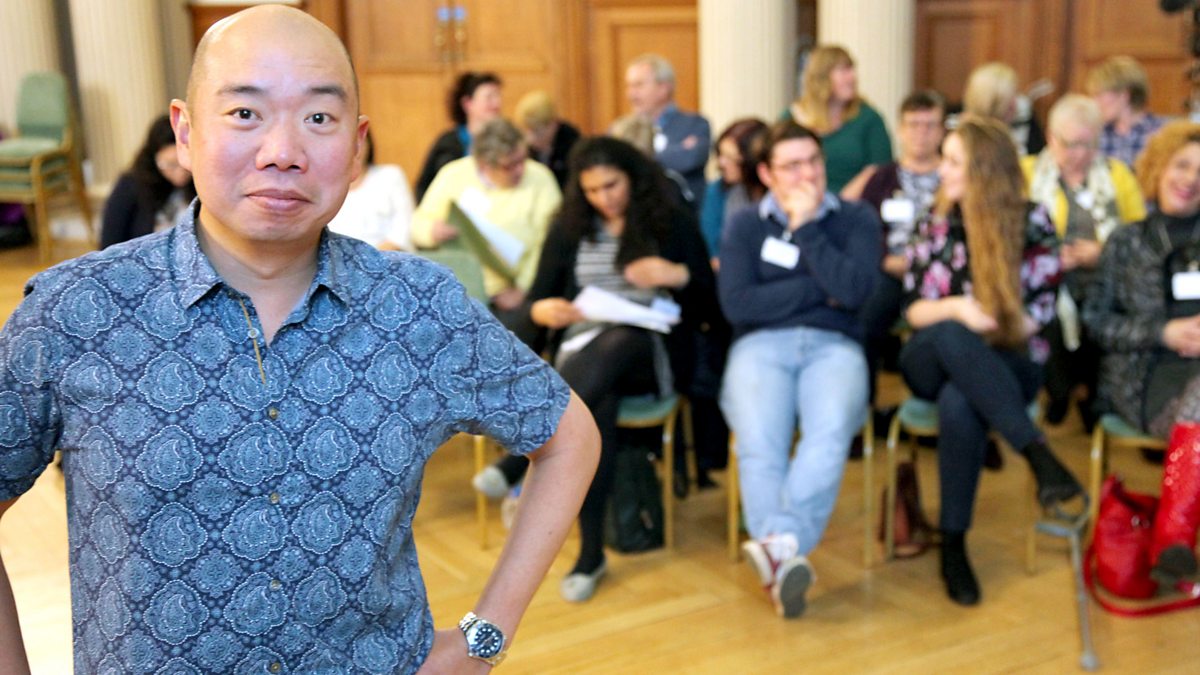
We watched the BBC Horizon programme on genetic causes of obesity, fronted by Dr Giles Yeo (good to see an ethnic East Asian presenter).

Dr Giles Yeo with some of the AA variant folk

There is a gene of quite large effect; here is what Wikipedia says:
"A study of 38,759 Europeans for variants of FTO identified an obesity risk allele. In particular, carriers of one copy of the allele weighed on average 1.2 kilograms (2.6 lb) more than people with no copies.

"Carriers of two copies (16% of the subjects) weighed 3 kilograms (6.6 lb) more and had a 1.67-fold higher rate of obesity than those with no copies.

"The association was observed in ages 7 and upwards. "

...

"In adult humans, it was shown that adults bearing the at risk AT and AA alleles at rs9939609 consumed between 500 and 1250 kJ more each day than those carrying the protective TT genotype (equivalent to between 125 and 280 kcal per day more intake).

"The same study showed that there was no impact of the polymorphism on energy expenditure. This finding of an effect of the rs9939609 polymorphism on food intake or satiety has been independently replicated in five subsequent studies (in order of publication)."
The protective allele is T while the risk allele is A at SNP site rs9939609.

---

Here is what 23andMe says about my late mother, Beryl Seel, and myself.


My mother had the protective genotype, TT, and was never overweight; I'm not so lucky (AT) and had to fight to get my weight down to its current 70-71 kilograms (from 86kg in mid-2012).

We can infer that my late father, who definitely had an expanded waistline, was AT or AA. Based on family history and if pressed, I would guess AT .. and that I got unlucky.

I wrote about this 18 months ago: another Horizon programme.

Friday, May 13, 2016

The Economist explains about science - quite well, actually

I am frequently irritated by pious lectures from The Economist's young writing team as to how the affairs of the world might be better ordered. But the Science and Technology section sometimes does it right - applying sophisticated thinking to get to the essence of a contemporary issue.

This week we have an excellent account of the new ideas underlying that exciting new genome analysis technique, SDS, which I mentioned in my last post.

Here's what they have to say:
"The team’s technique looks for changes not in alleles themselves, but in the DNA that surrounds those alleles.

"If a particular allele is more beneficial than other variants of a gene, it will tend, as lactose tolerance did, to spread through the population. As it does so, it will carry with it neighbouring DNA which is not strictly part of the gene and does not affect its function. This DNA can thus mutate without damaging the allele. And it is the amount of mutation this peripheral DNA has undergone which is the giveaway.

"DNA neighbouring an allele that has recently spread quickly will have had less time to accumulate mutations than that near one which evolution has been ignoring. By looking for evidence of mutations around particular alleles, Dr Pritchard and his team can reconstruct their history.

"Apply the method to lots of people, and it is possible to discern what evolution has been up to."
---

If only The Economist would apply the insights of contemporary behavioural genetics to the great affairs of the world. Here is my suggestion for an Economist Special Report:
"Is there something about the genomics of Europeans/Asians which enables them in principle to run successful democracies?"
If they wish, they can have the null hypothesis that the answer is no.

Let me suggest some reasons why this is even worth considering (apart from evidence in the actual world, that is):
- a democracy replaces kin- and tribe-based interest-mongering with an atomised population delegating conflict resolution to a formal and non-violent elite

- in a democracy, leaders who wield power are expected to hand it over in the event they lose an election, regardless of the idiots who won it

- if your sectional group has a problem, you are expected to wait for an election until it gets resolved; and then suck it up if your group does not succeed in winning power.
None of these things seems the kind of thing social animals usually get selected for.

Psychologically, democracy would appear to require the majority of the population to exhibit:
  • an immense amount of forbearance (self-control and future time-preference) 
  • pervasive intelligence (needed to make institutions work and, in fact, to buy into them) 
  • generalised trust (required for networks of relationships over time and space).
None of these psychological traits seems to be ancestral.

Historical defaults are:
  • to seek immediate redress for wrongs ('an eye for an eye')
  • to not be that capable of handling conceptual abstractions
  • to trust only those you or your neighbours can actually vouch for.

So we have some research to do here, checking the genomes of societies which have managed to sustain democracy over the decades or centuries vs those populations which can't seem to get it together. You'd be looking for elevated frequencies of the many relevant alleles of small effect.

By the way, the payoff to democracy - if you have the sort of people who can get it to work - is a scalable, developing economy and a benevolent social environment.

A great prize for inclusive fitness if you can get there.

Wednesday, May 04, 2016

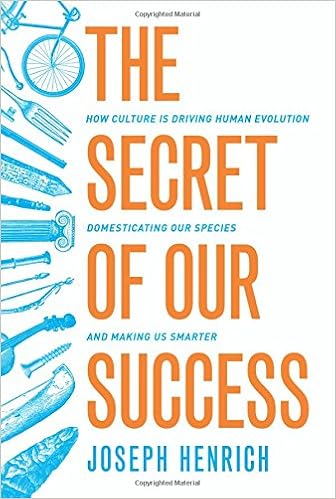
"The Secret of our Success" - Joseph Henrich

Luke tells us that "there is rejoicing in the presence of the angels of God over one repentant sinner."

There is similar rejoicing in heaven over anthropologists who embrace gene-culture coevolution. The late Henry Harpending was the paradigmatic example while Joseph Henrich, by contrast, has only made it part of the way.


That being said, the stellar reviews of "The Secret of our Success" correctly identify the good parts of Henrich's new book. We are cultural beings to the core and without the wisdom of our societies our big brains and high IQs are as nothing. Henrich's paradigmatic example is well described in this review from Joe Brewer:
"HMS Erebus and HMS Terror .. left port in June 1845 from the British Isles under the command of Sir John Franklin in search of a Northwest Passage that could energize trade by connecting western Europe to East Asia. They were outfitted with two field tested ice-breaker vessels equipped with state-of-the-art steam engines, retractable screw propellers, and detachable rudders. They also had five years of provisions and were prepared to deal with the harsh winter in the Arctic Ocean. And yet, even with all of these things going for them, the crew was forced to abandon ship in their second year and move onto King Williams Island—where they became fragmented into small groups and forced to the point of cannibalism before all dying eventually.

"The crew was in an area where Inuits had lived for thousands of years, some of whom came into contact with the shipwrecked crew during the time they were stranded there. It was a harsh environment where the locals had amassed a repertoire of knowledge about how to build kayaks and igloos, hunt sea animals for food, and scavenge for plants during the brief warm spells of summer. Unfortunately for the British explorers, this body of cultural knowledge was not available to them and they suffered the consequences."
Henrich has many similar anecdotes about the adaptations which enabled humans - uniquely amongst primates - to develop, share and propagate a collective culture, something we understand in business when we say that 'good processes get excellent performance from average people'.

Still, there are things not to like. The book is too long: after a promising start it becomes a long-winded sprawl, obscuring the big picture.

Henrich has not internalised modern thinking in genetics, particularly population genetics; his underlying mental framework is still at heart blank-slatism. He doesn't understand the genetics of racial differentiation (cf Greg Cochran's post "Such a thing"); he thinks humankind is still evolving into more effective cultural animals (where's the evidence for selection for that?); and many of his assertions - the reasons for the menopause, for example - are far less settled than he suggests.

The book, despite its flaws, is well worth reading as an antidote to Dawkins-style evolutionary individualism. Ironically it's by far the best account of what a theory of memes would actually look like. But its approach to genetics makes one wince.