Showing posts with label Ideology. Show all posts

Friday, April 05, 2024

A Modern Take on Catholicism


From OpenArt

So this is an argument I hear sometimes. You may find it as thought-provoking as I do.


”Perhaps you have heard of John Dominic Crossan? He is a bit of a hero of mine. He used to be a monk and a Catholic priest. He fell out with the hierarchy, left the priesthood, got married. He’s a leading researcher in the Historic Jesus programme.

"His position is not mine. He wants to revert to the teaching of the historical Jesus as best we can determine it. But Jesus preached his apocalyptic thesis of the very imminent arrival of the Kingdom of God in very precise historical circumstances: those of a febrile, pre-revolutionary Jewish agrarian society disintegrating under the Roman yoke [see note at end]. His personal, authentic teachings are less directly applicable - in their difficult entirety - for the ongoing civilisations of subsequent eras. I doubt Dr Crossan has a workable programme.

"From one angle I could appear a mere cultural catholic but that is not the case. I'm not invested in ‘theology-as-factual’ at all, of course: no-one of any sophistication could be a Biblical literalist. I have, in fact several takes on Catholicism. 

"Firstly, the existence of the church itself, a significant social force for 2,000 years. Institutionally the church fosters certain ethical stances which, taken in the round, are prosocial (not the reactionary stuff, for sure, which comes from substituting institutional doctrine for the founder’s original message). We'd miss it, or something like it, if it wasn't there - in its vast inertia it is a bulwark against far more profoundly stupid and/or dangerous ideologies.

"Secondly, I would argue that in the purely secular domain the big issues: life, death and points in between, are not addressed well. A culture founded upon individualism has consequences: there are no emotionally-compelling commemorative processes or rites of passage which come close to those offered by the Church.

"Thirdly, the real message of Catholicism is emotional, not rational. The religious experience is at heart an emotional one: God - the concept of God - is mysterious and will not be limited and bracketed by human theorisation. John Henry Newman said, "It is not by logic we believe, but by a multitude of separate converging reasons, by testimony, by habit, by disposition, by growing experience...".

"In our present dominant ideology of secular rationalism (of a very shallow, bounded, biased kind, one should add) the deprecation of collective emotional experience is a felt lack for many people, including myself.

"You will argue that despite all that, the elephant in the room is that the Catholic paradigm is bogus and illusory; I respond thus: it is in the nature of the cultural artefacts humankind has come up with to justify and make sense of existence that they should be equally without a truly compelling foundation. It suffices that they do the job of socialising our young people well and codifying our best ethical morality: Catholicism does a fair job in this.

"In truth Nihilism is the only well-founded philosophy: we're all just atoms and the void; everything is pointless. Period. And in that philosophy the first part is true and the second part is not: as a framework for living it is useless.”


Note

"The historical Jesus can be retrieved only within the context of first-century Galilean Judaism. The Gospel image must therefore be inserted into the historical canvas of Palestine in the first century CE, with the help of the works of Flavius Josephus, the Dead Sea Scrolls and early rabbinic literature. 

"Against this background, what kind of picture of Jesus emerges from the Gospels? That of a rural holy man, initially a follower of the movement of repentance launched by another holy man, John the Baptist. 

"In the hamlets and villages of Lower Galilee and the lakeside, Jesus set out to preach the coming of the Kingdom of God within the lifetime of his generation and outlined the religious duties his simple listeners were to perform to prepare themselves for the great event."

[From: Vermes, Geza (2010). The Real Jesus: Then and Now. pp. 54–55].

Tuesday, September 03, 2019

The Office as Utopia

I am quite aware that a professional office in an interesting company with a solid mission is a really nice place to be.

I would not like to live in any part of a neolithic or feudal society. I'll leave it to others to hanker after Viking raiding parties.

I loathe the horsing-around mateyness of the combat-facing armed forces.

I'm repelled and disoriented by overt displays of emotion, emotional appeals which make no sense, excessive moralising on emotional grounds.

No, I am truly a psychological creature of mature-capitalist cool: the NTs bred to dwell in cupboards and back-offices: useful when needed.

Nevertheless.

---

A fragment:
"They talk about the feminisation of society. How in the absence of a mortal, existential enemy the liberal world has become a supersized hearth and home. No room for the masculine virtues of the warrior, or for the disinterested seeker after truth.

Yet this is only half-true. The liberal world is not modelled after the family but from an idealised model of the modern, capitalist workplace, where:
  • emotion equates to transactional sociability between strangers
  • strong emotional bonds would violate rational outcomes
  • interpersonal violence would undermine systemic processes.
The middle-class, professional work-environment is optimally populated by lesbian women and gay men*: personality-types combining diffuse, non-aggressive, impersonal pseudo-warmth together with loyalty to corporate-outcomes rather than individuals.

Think ESFJ.

The office as utopia."
Modern liberal ideology - woke culture - seeks to make this protean, historically-conditioned target-state the foundational theory of normative human nature. A mass exercise in self-delusion, orchestrated by the ideologues who have captured the media in all the advanced western democracies, where an entrenched capitalism has already done its selective work.

---

* In MB terms, people at the centre of the F-T axis: not too feminine, not too masculine. See "Capitalism is for wimps".

Saturday, June 01, 2019

Range Anxiety

It's never a good idea to be anxious, is it?

There's clearly a problem, and the problem is with you.

---

Take a technology that has a low energy-density compared to its dominant competitor; which takes an order of magnitude longer to recharge than its dominant competitor; and which massively lacks charge points.

Who would rationally choose to trade down to something so inferior?

Range anxiety? 

Really?

---

It's a crude, moralistic trick to frame choices in a way that stigmatises the 'wrong choice' according to ideological criteria which masquerade as absolute.

---

Brexit: a conflict between those looking forwards and those (Leavers) who look backwards.

There's a neutral framing for you. Hard to win in that paradigm if you're not for 'Remain'.

How about?

Brexit: a conflict between elites grasping to a dying model of economic interests over everything including the destruction of communities and those seeking to create a more balanced, civilised and fair future for everyone.

Didn't hear that characterisation much.

Monday, April 22, 2019

Who is 'us'?

This post is meant to be faintly sardonic and humorous, indicating the many and varied implicit answers to the question exhibited through revealed choices across the social spectrum worldwide.

Personally I'm most inclined to option 10. But I don't want to fall into complete relativism. I won't convince anyone in this post but I do have a methodological view, which is always to start on these questions from sociobiology.

For almost all species, the answer to the question "who is us?" is "kin".

In a species which practises reciprocal altruism, the answer is "family and friends".

In that uniquely ultra-social species which is humanity, the answer is: the toleration of unrelated individuals who:
(i) don't threaten the essential interests of family and friends (item 10);

(ii) contribute through their structured and disciplined activities to a level of civilisation (= an enhanced environment) which enhances the survival and flourishing of your family and friends (item 9).
Most of the other items either reflect survival strategies in situations of social instability (5-8) or are parochial and egregious generalisations based upon ideological/material drivers which represent the interests of privileged social groups (1-4).

If I had one wish, it would be for a non-ideological sociology based, as E. O. Wilson wished, on sociobiology.

---

Question 1: who is 'us'
  1. Those who are prosocial, compassionate and tolerant
  2. Those who are the oppressed of the world
  3. All life in the universe/galaxy/solar system/planet Earth
  4. All of humanity across the world
  5. Those in my religious community
  6. Those who share my ethnicity
  7. My fellow members of the rich and powerful elite
  8. Those who live in my country
  9. Those who are civilized and productive
  10. People who will leave me alone.
One option only to be chosen.

---

Question 2

Match answers to Question 1 with the following tribes and class-fractions.
  1. Liberals
  2. Social-Justice Warriors
  3. Buddhists/Jains
  4. Communists/Socialists/Humanists
  5. People of the Book
  6. X-Power advocates for values of X
  7. Rich and powerful elites
  8. Nationalists
  9. Conservatives
  10. Libertarians.
---

Monday, November 12, 2018

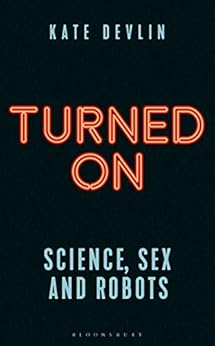
A feminist on sex machines: Kate Devlin

Amazon link

Dr Kate Devlin's Wikipedia entry.

---

The concept of a 'machine for sex’ is a wondrous, powerful one. As the author notes, its arc aligns with all of human history. Devlin describes ‘sex toys’ from prehistory and antiquity right through to the present day.

The term ‘sex robot’ itself is rather reified. Better is the idea of an artefact with which humans may engage sexually. Such an artefact might be genetically engineered, machine fabricated or some hybrid in between. Sex devices interestingly inhabit the intersection of science and technology, genetics and evolutionary biology, and the myriad social sciences.

If a sex robot is defined as a thing, as human property, then they existed once, currently don't really exist and may exist again in the middling future. In antiquity slaves were property and presumed to have no agency. It was routine and uncontroversial for elite slave-owning males to buy and use nubile male and female slaves for sex. As Kyle Harper recounts in his “Slavery in the Late Roman World, AD 275–425”, consequences included masters becoming (stupidly) besotted with their slave sex-objects, wifely jealousy .. and unintended offspring who would join the next generation of slaves.

Antique ‘sex robots’ were, from a functional point of view, poorly implemented. Their inner drives and motivations were not aligned with their 'function’ which made ownership fraught and only manageable through sustained terror.

Devlin’s first degree was in archaeology so she will know all this. It would have been good to read about the social, ethical and even practical implications of the widespread availability of high-functioning ‘sex robots’ in antiquity. Devlin's discussion is however (pp.116-117) superficial, flagging only the usual oppressively gendered roles found in all premodern societies stabilised by male violence. She also notes a pre-Christian sexual disinhibition of which she approves.

“Turned On” is not a book of science with some feminist advocacy. It is instead a feminist tract anchored around the topic of sex-with-artefacts (p.213). What’s this for example - a mocking rebuke to the transgression of equal outcomes?
“Why do we experience things? How do the mechanisms of our bodies and brains give rise to conscious sensations? Where does that consciousness come from? You don’t have to have an answer in the Great Zombie Debate. The philosophers can’t agree on it either, Which is why you have a bunch of very clever middle-aged white men amusingly inventing words like‘ ‘zoombie’ and ‘zimboe’ to put forward their own variations on the theory. “ (p. 102)
My emphasis. It's certainly of the moment, but it jars.

Devlin tells us she is a feminist, an ideology developed to further the interests of liberal professional women like Dr Devlin. Like all ideologies, it’s protean and eclectic, cherry picking arguments which support the cause. A characteristic of ideologies is that they narrate a world their proponents wish they were in but which rarely coincides with actuality or realistic possible outcomes.

Consider objectification, something she takes strong issue with. The discussion is phenomenological: an example might be a builder wolf-whistling an attractive woman in the street; or a bunch of women hooting and laughing at a male stripper at a ‘hen party’.

In the broad-brush triune brain model, primary drives such as lust are associated with the (animalistic) brainstem formation; emotional attachment with the mammalian limbic system; and rational interaction with hominid cortical systems. It’s not much of a surprise that humans can exhibit sexual behaviour dominated by any of these loci.

Objectification (the mode of lust-dominance) would then be a brain-stem determined form of behaviour. In more refined circles we expect cortical inhibition/mediation of primary drives to deliver more measured, prosocial behaviour factoring in social context. Our biology is complicated in social settings.

There isn’t any such framing in Devlin's book. Just normative presumption that objectification is out there (for some reason), that’s it’s wrong and that current sex doll designs play up to it. This is to sell the reader short, replacing analysis with moralising.

Naturally we don't wish to succumb to the naturalistic fallacy; humans with their small group evolutionary history are imperfectly adapted to large scale societies. There are plenty of natural urges we need to regulate and indeed legislate against. There are few easy answers here as Devlin would be the first to argue, in contexts such as the legality and ethics of child sex dolls.

Devlin adopts the fashionable feminist view that phenomenal gender differences are purely social constructs. This despite the enormous weight of hard evidence (evolutionary, neuroanatomic, genomic, physical, psychometric) for well-defined and reproducible biological differences between the sexes. Differences which are hardly obscure, but recognition of which might undermine the claims of her interest group. Public choice theory assumes its usual relevance here.

Devlin interviews the CEO of RealDoll, Matt McMullen, and gives him a hard time about the overwhelming preponderance of hyper-sexualised female dolls and robots. 'Where are the less-sexualised dolls, the male dolls?' she wants to know. Actually this is a point she takes up with all the doll manufacturers she meets. The replies she gets are defensive, framed in terms of male-female differences in sexuality leading to skews in demand. Devlin is having none of it, blaming biased marketing and uncritical social conditioning (pp. 153-154). Time for a quick review of microeconomics (supply-demand equilibria?) then as I reflect on the democracy of markets in probing the world as it actually is.

Then we read this in a meandering discussion of rape fantasies and the claimed lack of any genetic influence:
“If anything, rape would theoretically reduce the reproductive success of our ancestors as it takes away selective genetic choice. “ (p. 233).
Reality is more nuanced. Rape is historically (and currently) commonplace in intergroup conflicts. It's plainly adaptive for males in the absence of draconian ingroup penalties. I suggest a quick read of Dawkins' "The Selfish Gene".

Gendered social roles have historically been oppressive to women. There are biological reasons (eg male physical strength, aggression and paternity-uncertainty) which interlink with social reasons (eg within-family inheritance) which are specific to different kinds of society and which need to be explicitly teased out. If capitalism appears to be intrinsically gender-blind in its desire to free everyone up to maximally work, then the deleterious effects on human self-reproduction also need some analysis.

A perennial science-fictional trope referenced by Tom Whipple, The Times science editor in his review, is that of the perfected sex robot as a kind of sterile mosquito (which has already resulted in some local extinctions of this malaria disease vector).

This is not a problem we'll face anytime soon but is there something to it? Devlin is unworried while Whipple remains concerned. Plainly it’s hard to assess an unknown artefact but with universal and easy access to contraception in the west, perhaps we already have a natural experiment. Check those Total Fertility Ratios.

We are already selecting for women who positively want children (rather than just sex); ubiquitous effective and sterile sex robots would select for men with a similar drive. Let's hope there's that much variability in the gene pool.

In summary Devlin's book is an easy and amusing read: somewhat superficial; an interesting tour of the sex doll/sex toy landscape which will be unfamiliar to many readers; intriguing confessional snippets from the author's private life.

The book is not particularly scandalous or salacious, it's not very conceptual or analytic and its opinions are conventional liberal left. Put aside a slightly sprawling and uneven structure and it reads like an extended New Scientist article.

Incidentally, if Dr Devlin or her co-workers were ever to read this review, they would not be won over. It is in the nature of ideologies to be believed by their adherents and they provide powerful mechanisms of contextualisation and framing to theorise their opponents. This review would be framed as a defence of the patriarchal power structure: discredited gender essentialism.

We are truly the victims of our own axioms.

---

Further reading: "So Beautiful".

Monday, August 13, 2018

Rod Liddle on the BBC (The Spectator)

Yesterday I noted that "Those outside the bubble are ceaselessly lectured, indeed have no other language of norms and morality." At that time I hadn't read the piece below.

Must be the zeitgeist.


Rod Liddle

Rod Liddle (The Spectatorwrites:
"It is hard to keep up, isn’t it? The British Register of Victimhood lengthens almost daily, in defiance of science, common sense and reality. I think that the only way to avoid giving offence is for the BBC to lecture us on a daily basis about how we must see the world, according to its own implacable and berserk liberal agenda. Maybe a 15-minute slot after the early evening news, where Kirsty Wark or Huw Edwards could simply spell out to us where we’re going wrong and what we should do about it. That would be a genuine public service, no?

The corporation recently made a video aimed at GCSE students about multiculturalism — and it was, as you can imagine, a carefully balanced piece of work, giving equal weight to both sides of the story. ‘Multiculturalism is a powerful tool for survival and possibly the only way to survive, so let’s embrace it,’ the children were informed. Elsewhere a smug little Geordie narrator (the dialect of choice these days) said that Great Britain had ‘always’ been a nation of immigrants, there was no such thing as British people, and yet you could always hear malevolent idiots ‘banging on’ about the need to control immigration.

No mention was made of the overwhelming opposition to uncontrolled immigration, nor the weight of numbers that have arrived here recently, nor the relationship with crime figures. Still less the views of the majority of the population that immigration has actually not been a good thing, overall, for the country. In other words, they wish it hadn’t happened.

The film was eventually pulled by the BBC because, as viewers on YouTube pointed out, it was vacuous, tendentious, biased tripe. This must have come as a shock to the producers of the film, who will surely have believed that they were simply promulgating the usual BBC line on immigration — and that this isn’t remotely a case of bias but simply decency and civility, and that those who disagree are uneducated untermenschen who need to be taught a lesson or two, preferably by some Geordie halfwit so that it sounds authentic and not too metrocentric.

The problem is that this is indeed precisely the BBC’s view, without caveat: it is the mindset which informs every single report the BBC has ever done on the subject of immigration, be it on the news programmes or the dramas or even the bloody Food Programme. And as I say, they do not think that it is bias at all. It is simply right, and there’s an end to it. And if they pull this video, I assume they’ll be pulling Newsnight, The News at Ten, Today, World at One and every local news programme across the country."
The pervasiveness of bubble-think - and not just on immigration.

Wednesday, May 03, 2017

The disintegration of neoliberalism

When I was in my early teens, I'd listen to Labour and Tory politicians at the General Election and be baffled. Both sides had good arguments - how was one to decide?

My adolescent confusion was far from unique. It took a few more years to figure out that politics was not maths or physics; there was no one right answer. In the Marxist jargon, political parties represent different class interests (or perhaps divergent fractions within a class) and the point was to decide where you stood.

This didn't make the exercise completely arbitrary. Perhaps one party was - in the grand scheme of things - better for everybody. Perhaps one party would be better at not crashing the economy, closing down freedoms or crushing innovation.

---

Marx explained that in every age, the ruling ideology was the ideology of the ruling class. This was not a crass point. Whether it's the Roman Empire, feudalism or capitalism, the theorisation of the status quo naturally aligns with the practices, values and intentions of the elite who happen to be running things.

Western liberalism, so amplified during the last two decades of Globalisation, is fraying at the edges. Way too many people don't believe that current neoliberal elites speak for them. Real interests are diverging.

So when I hear yet another world leader castigated for liberal value atrocities, I try not to join in the ritual abuse but to figure out instead whether - in the great scheme of things - the said leader is actually trying to do good for the constituency they represent .. and whether, on balance, that would be a good thing for humanity as a whole.

I don't subcontract that analysis to the BBC, The Guardian or the rest of the liberal media.

---

Neoliberal sweetness and light takes you only so far. When, for example, Allende was trashing the economy in Chile in 1973, the Americans (Nixon and Kissinger) had no hesitation in supporting the Pinochet coup which brought the Chicago Boys into economic power.

Pinochet meets Kissinger

The Chilean economy was fixed pretty fast; the parallel and one-sided civil war was vile and atrocity-ridden.

More recently, those nice Eurocrats gave Greece's Alexis Tsipras a pretty hard time.

---

Erdogan seems pretty popular amongst his supporters as he rolls back the Gülenists and secularists who, with implicit approval from western elites, tried to overthrow his government in a coup last July.

From the Wikipedia article:
"The 2016–17 Turkish purges are an ongoing series of purges by the government of Turkey enabled by a state of emergency in reaction to the 15 July failed coup d'état. After the immediate arrest of military personnel accused of making the coup attempt, arrests were expanded to include further elements of the Turkish military service, as well as various civil servants and private businesses.

These later actions, reflecting a power struggle between secularist and Islamist political elites in Turkey, which began to be known as a purge, affected people who were not active in nor aware of the coup as it happened, but who were alleged to be connected with the Gülen movement, a group which the government blames for the coup."
I don't know whether the Erdogan faction is a positive factor in world history or a regressive one. Perhaps we'll just have to wait and see. But his violations of liberal check-boxes are just par for the course when you're in a civil war.

---

Neoliberal ideology at its heart has a helium model of humanity: for all practical purposes people are autonomous hyper-individualistic clones, as is assumed in economics.

Thus unrestricted immigration is an unvarnished public good, dispossessed workers are arbitrarily retrainable and that there are no personal, gender or ethnic differences beyond the most trivial and inconsequential.

Yes, there are people - actors, politicians and journalists - who truly believe this.

Incidentally, Marxism also cleaves to the 'human clone' model but unlike the 'transactional-individual' model of neoliberalism, it prefers the maximally-collective 'ant-nest' model - at all scales up to the planetary soviet.

Neither ideology is consistent with evolutionary theory, psychometrics or genomics (not to mention commonplace observation).

Tuesday, April 05, 2016

Tribes are the thing in the atomised West

Scott Alexander considers the power of ideologies (warning: long but interesting essay including American-themed topics):
"Why is there such a strong Sunni/Shia divide?

"I know the Comparative Religion 101 answer. The early Muslims were debating who was the rightful caliph. Some of them said Abu Bakr, others said Ali, and the dispute has been going on ever since. On the other hand, that was fourteen hundred years ago, both candidates are long dead, and there’s no more caliphate. You’d think maybe they’d let the matter rest.

"Sure, the two groups have slightly different hadith and schools of jurisprudence, but how many Muslims even know which school of jurisprudence they’re supposed to be following? It seems like a pretty minor thing to have centuries of animus over."
We can say the same thing about other apparently-religious conflicts, such as the Protestant-Catholic divide in northern Ireland and some parts of Scotland. But Alexander probes more deeply:
"Nations, religions, cults, gangs, subcultures, fraternal societies, internet communities, political parties, social movements – these are all really different, but they also have some deep similarities.

"They’re all groups of people. They all combine comradery within the group with a tendency to dislike other groups of the same type. They all tend to have a stated purpose, like electing a candidate or worshipping a deity, but also serve a very important role as impromptu social clubs whose members mostly interact with one another instead of outsiders. They all develop an internal culture such that members of the groups often like the same foods, wear the same clothing, play the same sports, and have the same philosophical beliefs as other members of the group – even when there are only tenuous links or no links at all to the stated purpose.

"They all tend to develop sort of legendary histories, where they celebrate and exaggerate the deeds of the groups’ founders and past champions. And they all tend to inspire something like patriotism, where people are proud of their group membership and express that pride through conspicuous use of group symbols, group songs, et cetera. For better or worse, the standard way to refer to this category of thing is “tribe”."
It doesn't take much to generate a sense of tribal camaraderie. I've previously remarked about the benefits of membership of the International Marxist Group in my early twenties: a shared culture of mostly-fun activities .. and guaranteed weekend parties.

Scott Alexander applies this insight to the Shia-Sunni conflict:
"I know very little about early Islam and am relying on sources that might be biased, so don’t declare a fatwa against me if I turn out to be wrong, but it looks like from the beginning there were big pre-existing differences between proto-Shia and proto-Sunni. A lot of Ali’s earliest supporters were original Muslims who had known Mohammed personally, and a lot of Abu Bakr’s earliest supporters were later Muslims high up in the Meccan/Medinan political establishment who’d converted only after it became convenient to do so.

"It’s really easy to imagine cultural, social, and personality differences between these two groups. Probably members in each group already knew one another pretty well, and already had ill feelings towards members of the other, without necessarily being able to draw the group borders clearly or put their exact differences into words. Maybe it was “those goody-goodies who are always going on about how close to Mohammed they were but have no practical governing ability” versus “those sellouts who don’t really believe in Islam and just want to keep playing their political games”.

Then came the rallying flag: a political disagreement over the succession. One group called themselves “the party of Ali”, whose Arabic translation “Shiatu Ali” eventually ended up as just “Shia”. The other group won and called itself “the traditional orthodox group”, in Arabic “Sunni”.

"Instead of a vague sense of “I wonder whether that guy there is one of those goody-goodies always talking about Mohammed, or whether he’s a practical type interested in good governance”, people could just ask “Are you for Abu Bakr or Ali?” and later “Are you Sunni or Shia?” Also at some point, I’m not exactly sure how, most of the Sunni ended up in Arabia and most of the Shia ended up in Iraq and Iran, after which I think some pre-existing Iraqi/Iranian vs. Arab cultural differences got absorbed into the Sunni/Shia mix too.

"Then came development. Both groups developed elaborate mythologies lionizing their founders. The Sunni got the history of the “rightly-guided caliphs”, the Shia exaggerated the first few imams to legendary proportions. They developed grievances against each other; according to Shia history, the Sunnis killed eleven of their twelve leaders, with the twelfth escaping only when God directly plucked him out of the world to serve as a future Messiah.

"They developed different schools of hadith interpretation and jurisprudence and debated the differences ad nauseum with each other for hundreds of years. A lot of Shia theology is in Farsi; Sunni theology is entirely in Arabic. Sunni clergy usually dress in white; Shia clergy usually dress in black and green. Not all of these were deliberately done in opposition to one another; most were just a consequence of the two camps being walled off from one another and so allowed to develop cultures independently.

"Obviously the split hasn’t dissolved yet, but it’s worth looking at similar splits that have. Catholicism vs. Protestantism is still a going concern in a few places like Ireland, but it’s nowhere near the total wars of the 17th century [...]."
Like I said, it's a long essay which, with the comments, covers atheism, evangelical christianity, rationalism, science-fiction and video gaming subcultures, and cultural appropriation (some good points about that).

Alexander's take home message?
"My title for this post is also my preferred summary: the ideology is not the movement. Or, more jargonishly – the rallying flag is not the tribe. People are just trying to find a tribe for themselves and keep it intact. This often involves defending an ideology they might not be tempted to defend for any other reason. This doesn’t make them bad, and it may not even necessarily mean their tribe deserves to go extinct. I’m reluctant to say for sure whether I think it’s okay to maintain a tribe based on a faulty ideology, but I think it’s at least important to understand that these people are in a crappy situation with no good choices, and they deserve some pity.

"Some vital aspects of modern society – freedom of speech, freedom of criticism, access to multiple viewpoints, the existence of entryist tribes with explicit goals of invading and destroying competing tribes as problematic, and the overwhelming pressure to dissolve into the Generic Identity Of Modern Secular Consumerism – make maintaining tribal identities really hard these days. I think some of the most interesting sociological questions revolve around whether there are any ways around the practical and moral difficulties with tribalism, what social phenomena are explicable as the struggle of tribes to maintain themselves in the face of pressure, and whether tribalism continues to be a worthwhile or even a possible project at all."
Read the whole thing there.