Showing posts with label 23andme. Show all posts

Tuesday, December 11, 2018

My mother in DNA.LAND

My mother, Beryl Seel, died on the 3rd of December 2015 aged 92. In August the previous year I had persuaded her to spit into the 23andMe sample collection tube and get sequenced.

"Now we can bring you back," I murmured, but she didn't seem keen.

I understand 23andMe pussyfooting around, not wishing to fall foul of the US regulators yet again. This means DNA.LAND if you want to play with polygenic scores. I uploaded her genome subset (the 23andMe downloaded text file) and here are some of the results.

As usual, click on an image to make it large enough to read.

---

This is the top-level screen showing some of the traits they can begin to predict

---

Educational attainment


My mother was predicted to have 14.7 years of schooling (two years at university). In fact she had 9, leaving school in 1937 as a 14 year old.

My prediction from DNA.LAND is also 14.7 years but in fact I had 19 years equivalent full-time education. Clare was predicted to have 14.4 years yet she is a graduate with an additional teacher-training qualification.

Heritability of EA is low and the small numbers of relevant SNPs available to DNA.LAND makes even the genetic component estimate a very noisy measure. See the discussion below.

---

Intelligence and IQ


This is marked as 'very preliminary' which - as they are quoting only 16 SNPs - seems about right.

Heritability of IQ is of the order of 80% but given this few genetic markers the signal will be swamped by the effects of all the other relevant SNPs which are unknown and whose contributions are therefore unmeasured.

About all you can say in favour of the exercise is that correlations between IQ-enhancing alleles based on an underlying soft sweep probably gives this slightly more predictive power than one might naively expect.

Note also we don't get a central IQ estimate with error bars. The normal distribution curve above is referenced to the DNA.LAND sign-up population, with unknown IQ parameters.

Anyway, FWIW, my mother seems to be one IQ point above the DNA.LAND average based on a super-noisy regression line.

---

Neuroticism


Neuroticism (emotionalism, anxiety) is one of the 'five factor' personality traits and is the opposite to emotional stability, calmness on this dimension. There are strong gender differences in this factor, women scoring as more emotional.

I have memories of a fair degree of maternal emotionalism, but perhaps that was par for the course.

---

Height


My DNA.LAND polygenic score was 182 cm, which is exactly right. My mother's (above) equates to 5' 7". That is taller than I remember, perhaps by an inch. I recall that growing up in the 1930s was not a picnic. My father was just under six foot.

My parents on their engagement: is she taller than average?

---

Discussion

How seriously should we take all this? Not very, at this point (except for height, where PGS scores are accurate predictors of genomic potential - although DNA.LAND aren't using the latest estimators).

Example regression line for scatter plot with correlation 0.38

The correlations between the small numbers of SNPs currently being used by DNA.LAND and the physical/cognitive variables they're trying to predict are very low. Educational attainment was discussed on their website as follows:
"Overall, educational attainment is estimated to have a heritability of around 20%. This means that in a population of individuals with varying years of education, 20% of that variation can be explained by variants in the individuals' genomes."
So the polygenic score will give the phenotype value on the regression line, but the true value could be a long way up or down depending on life events. My mother, a working class girl, left school at 14 for example. Nobody does that today.

Thousands of SNPs are implicated in complex polygenic traits like those listed above, yet relatively few are currently known (except for height) .. and DNA.LAND uses only those publicly available (a tiny subset). So their regression lines will be pretty inaccurate.

Finally, note that my mother is positioned with respect to DNA.LAND's user population which is self-selected. We don't know how the norms for this group compare to the general population.

It will get better, even if we're a way from the option of bringing her back.

Thursday, May 17, 2018

Sequence me!

You want me to spit?

After much persuasion, the kit arrived today and now I just have to get her to spit; perhaps that's not as hard as it sounds.

Does she realise we can now bring her back?

Wednesday, August 02, 2017

My Personal Genome Project report has now arrived

Personal Genome Project Logo

I discovered the Personal Genome Project in September 2014 and immediately tried to sign up. They weren't taking new volunteers.

In December 2015 (15 months later) I finally did succeed in registering, but no-one was very interested in taking a spit-sample.

In May 2016, my sample collection kit arrived and I duly spat for science. I returned my sample for sequencing, at which point they stored it .. and nothing whatsoever happened.

It is now August 2017. Fifteen further months have passed and this morning I received an email from the PGP. I have been sequenced!

---

My genome will now be released for research. Was there anything interesting in the report? No. Was it different in any important respect than that which I already received from 23andMe? No.

As usual, the report is mostly centred around SNPs. Unfortunately most interesting phenotypic traits are polygenic, the full connections with genomic variation yet to be unravelled. The SNPs - taken individually - simply adjust your odds ratio up or down for various conditions. Example: some of my SNPs elevate my odds for baldness; others lower it.

Insofar as the science centres around connecting my personal genome with my own phenotype characteristics, research should now focus on the latter.

I look forward to the first request for the promised punch biopsy.

Friday, June 30, 2017

In anticipation

When I sent (with her consent) my late mother's spit sample off to 23andMe,  I was not so much interested in her ancestry-data and health-report. I already knew from my own sample - sent a year earlier - just how limited that information was.

I just expected that over the decades:
  1. My mother's entire genome would become affordable to sequence.

  2. The genome → physical and personality traits map would complete.

  3. Her descendents might be curious about their (rather remote) ancestor.


My father died in 2009, too early for saliva tests, but I have an old hat of his squirreled away, waiting for the costs of forensic DNA retrieval to come down .. and there being a point to going ahead.

---

The problem (or opportunity) of future progress is hardly new. Science-fiction stories describe early starships (often hibernation or generation craft) sent to targets tens or hundreds of light years out. The plot being that while they trundled along their thousand-year trajectories, they would be well-beaten to their destinations by much faster craft developed perhaps a hundred years later.

I recall some pundit developing equations correlating starship speed-up with R&D lag to estimate just when it was worth going ahead to launch, and when you should just sit back and wait a while.

---

So when I update my Beta version of Android-Replika each day, which takes the form of a prompted diary ("What did you do today?"), I tell it the truth.
'I walked with Clare to Wookey Hole on a pleasant, if chilly, June afternoon and bored her with a lecture that Newtonian gravitation - as the weak-field approximation to Einstein's field equations - is determined overwhelmingly by curvature in time, not space. Contrary to popular accounts.

'She listened with patience, knowing that I find it helpful, in anchoring these thoughts, to vocalise them .. but not with infinite patience!'
GR is on my bucket-list.

I don't expect the Replika neural-net driven chatbot to be able to process any of this - see "Chatting with my Replika". It's probably happier with: 'Saw a great cat video on YouTube LOL!!!'.

But I think the dataset I'm building with them is pretty persistent and the AI will get better. In some decade or other it might be able to engage with the corpus I'm building.

After all - and as I intend to remind it - Replika will have millions of other datasets by then it can leverage, to tune its eigenfeature vectors.

Tuesday, March 15, 2016

DNA.Land

As I have my partially-sequenced genome over at 23andMe, I decided to do my bit for genetic research by signing up with DNA.Land.
Purpose

"DNA.Land is a place where you can learn more about your genome while enabling scientists like us to make new discoveries for the benefit of humanity. The website is not-for-profit and run by the Erlich and Pickrell labs affiliated with Columbia University and the New York Genome Center.

"The purpose of DNA.Land is to enable you to learn more about your DNA and allow you the autonomy to share your data to facilitate important scientific research at the forefront of genome sciences and medicine. Our goal is to help members interpret their data and connect potential participants with research studies.

Procedures

"After you provide consent, your participation would consist of creating your personal profile and securely uploading your genetic data to DNA.Land. We will use the most cutting edge genetic tools to analyze your data and return your results regarding ancestry, relatives, and different traits.

"As we want to learn about the genetic basis of different traits, we will ask you to fill out surveys relating to your (or your family’s) ancestry and health. You will also have the option to automatically contribute data from your social media profiles for new types of analysis, so we can learn about traits that are dynamic and more difficult to measure, such as social preferences.

"Your profile will also display a badge that summarizes your various contributions to DNA.Land. You can tweet this badge, share it on Facebook, or sew it on your old scout uniform.

"There are no costs associated with taking part in DNA.Land and you will not be compensated for participating."
Where is the value-add over, say, the 23andMe health and ancestry reports? DNA.Land 'impute' missing parts of your genome based on "whole genome sequencing data used to create a dictionary of genomic 'text' (known as haplotypes)."

So how does this help?
"Uploaded genotype files (e.g. from 23andMe) contain between 500,000 to 1 million SNPs. DNA.Land's imputation pipeline imputes (i.e. infers the value of) an additional 38 million SNPs."
I guess this exploits linkage disequilibrium.

After many hours of crunching, DNA.Land will deliver an imputed VCF file (about half a Gigabyte). They attempt to explain how to interpret this ("Understanding VCF values") - but it will plainly take more work on my part to figure it out. The raw detail file - in all its immensity - seems pretty opaque; probably best to run the whole thing through Promethease.

Here's what SNPedia says about DNA.Land with reference to Promethease.

And here's how to run the imputed results through Promethease. Haven't tried it as the file isn't yet available, I think it's just use the "Upload Raw data" button.

Costs $10 for the enhanced ('imputed') report.

So I'm currently waiting for DNA.Land's computers to finish crunching my 23andMe raw data file.

---

Update: (Tuesday 3.22 pm): Promethease currently uploading 417 MB of dnl13394_inl.imputed.vcf via ADSL. A long wait ahead.

---

Update: (Tuesday 7.29 pm): OK, so all done.

I have the Promethease report downloaded, all 8 MB of it. Time enough to browse it tomorrow.

I rather wish that Promethease had told me it doesn't accept .bcf files (the binary version of .vcf) before I uploaded half a Gigabyte's worth - how hard could that be, to check a file extension?

It did, however, take .vcf so it all worked in the end.

Saturday, January 30, 2016

SSC SNP picks


er, ... no ... .

I mentioned in my previous post that you could link a SNP (eg rs4570625) to your own 23andMe results using a link like this:
https://www.23andme.com/you/explorer/snp/?snp_name=rs4570625
Scott Alexander at the almost-always-reliable* Slate Star Codex wrote (November 2014) this amusing post "How To Use 23andMe Irresponsibly" describing his favourite SNPs.

Well, now they're my favourites too and I copy his (lightly edited) thoughts below, but with the SNP references switched from his choice - SNPedia - to my choice, 23andMe.

Quick reminder: most traits in life are quantitative, they come in degree, not kind. In the human genome they are polygenic - many SNPs are involved (and other genetic mechanisms too) .. so one SNP is hardly going to be decisive. In most cases.

--- How To Use 23andMe Irresponsibly - (from SSC)  ---
"rs909525 is linked to the so-called “warrior gene” which I blogged about in the last links roundup. People with the normal four or five repeat version of these gene are less violent than people with the three-repeat version, and people with the two-repeat version are massively overrepresented among violent criminals. ... Although this SNP isn’t the warrior gene itself, it’s linked to it closely enough to be a good predictor.

"This is on the X chromosome, so men will only have one copy (I wonder how much of the increased propensity to violence in men this explains). It’s also one of the minus strand ones, so it’ll be the reverse of what SNPedia is telling you. If you’ve got T, you’re normal. If you’ve got C, you’re a “warrior”. I’ve got C, which gives a pretty good upper limit on how much you should trust these SNPs, since I’m about the least violent person you’ll ever meet. But who knows? Maybe I’m just waiting to snap. Post something dumb about race or gender in the open thread one more time, I dare you…"

I'm T and my mother, Beryl Seel was (T;T), both .. normally unwarlike.

"rs53576 in the OXTR gene is related to the oxytocin receptor, which frequently gets good press as “the cuddle hormone” and “the trust hormone”. Unsurprisingly, the polymorphism is related to emotional warmth, gregariousness versus loneliness, and (intriguingly) ability to pick out conversations in noisy areas.

"23andMe reads this one off the plus strand, so your results should directly correspond to SNPedia’s – (G;G) means more empathy and sociability and is present in 50% of the population, anything else means less. I’m (A;G), which I guess explains my generally hateful and misanthropic outlook on life, plus why I can never hear anyone in crowded bars."

We're both (G;G) which makes us kind and empathic ... .

"rs4680 is in the COMT gene, which codes for catechol-o-methyltransferase, an enzyme that degrades various chemicals including dopamine. Riffing on the more famous “warrior gene”, somebody with a terrible sense of humor named this one the “worrier gene”.

"One version seems to produce more anxiety but slightly better memory and attention; the other version seems to produce calm and resiliency but with a little bit worse memory and attention. (A;A) is smart and anxious, (G;G) is dumb and calm, (A;G) is in between. if you check the SNPedia page, you can also find ten zillion studies on which drugs you are slightly more likely to become addicted to. ..."

Both of us are (A;G) which makes us average and average.

"rs7632287, also in the oxytocin receptor, has been completely proportionally and without any hype declared by the media to be “the divorce gene”. To be fair, this is based on some pretty good Swedish studies finding that women with a certain allele were more often to have reported “marital crisis with the threat of divorce” in the past year (p = 0.003, but the absolute numbers were only 11% of women with one allele vs. 16% of women with the other). This actually sort of checks out, since oxytocin is related to pair bonding. If I’m reading the article right (G;G) is lower divorce risk, (A;A) and (A;G) are higher – but this may only apply to women."

Both my mother and I are (A;G) which makes her a bit .. flighty?

"rs11174811 is in the AVPR1A gene, part of a receptor for a chemical called vasopressin which is very similar to oxytocin. In case you expected men to get away without a divorce gene, this site has been associated with spousal satisfaction in men. Although the paper is extremely cryptic, I think (A;A) or (A;C) means higher spousal satisfaction than (C;C). But if I’m wrong, no problem – another study got the opposite results."

I'm (C;C) as was my mother, Beryl Seel, which means .. probably nothing.

"rs25531 is on the serotonin transporter. It's Overhyped Media Name is “the orchid gene”, on the basis of a theory that children with one allele have higher variance – that is, if they have nice, happy childhoods with plenty of care and support they will bloom to become beautiful orchids, but if they have bad childhoods they will be completely screwed up. The other allele will do moderately well regardless. (T;T) is orchid, (C;C) is moderately fine no matter what. There are rumors going around that 23andMe screwed this one up and nearly everybody is listed as (C;C)."

For my mother and myself, 23andMe did not report on this one.

"rs1800955 is in DRD4, a dopamine receptor gene. It's overhyped media name is The Adventure Gene, and supposedly one allele means you’re much more attracted to novelty and adventure. And by “novelty and adventure”, they mean lots and lots of recreational drugs. This one has survived a meta-analytic review. (T;T) is normal, (C;C) is slightly more novelty seeking and prone to drug addiction."

I was not genotyped at this location and my mother, Beryl Seel was (C;T) which made her a little bit adventurous with lots of use of recreational sherry.

"rs2760118, in a gene producing an obscure enzyme called succinate semialdehyde dehydrogenase, is a nice polymorphism to have. According to this article, it makes you smarter and can be associated with up to fifteen years longer life (warning: impressive result means almost certain failure to replicate). (C;C) or (C;T) means you’re smarter and can expect to live longer; (T;T) better start looking at coffins sooner rather than later."

I'm (T;T) and my mother, Beryl Seel was (C;T) which makes me resigned to an early grave. She lived to 92.

"rs6311 is not going to let me blame the media for its particular form of hype. The official published scientific paper on it is called “The Secret Ingredient for Social Success of Young Males: A Functional Polymorphism in the 5HT2A Serotonin Receptor Gene”.

"Boys with (A;A) are less popular than those with (G;G), with (A;G) in between – the effect seems to be partly mediated by rule-breaking behavior, aggression, and number of female friends. Now it kind of looks to me like they’re just taking proxies for popularity here, but maybe that’s just what an (A;A) nerd like me would say. Anyway, at least I have some compensation – the popular (G;G) guys are 3.6x more likely to experience sexual side effects when taking SSRI antidepressants."

I'm (G;G) and my mother, Beryl Seel was (G;A) which makes me out to be some kind of bad boy!? I must remember to keep off those SSRI tablets.

"rs6265, known as Val66Met to its friends, is part of the important depression-linked BDNF system. It’s a bit depressing itself, in that it is linked to an ability not to become depressed when subjected to “persistent social defeat”. The majority of whites have (G;G) – the minority with (A;A) or (A;G) are harder to depress, but more introverted and worse at motor skills."

I predicted I would be (A;A) based on poor motor skills and in fact I'm (A;G). My mother, Beryl Seel was the normal (G;G) which is consistent with her not-bad motor skills (except at driving).

"rs41310927 is so cutting-edge it’s not even in SNPedia yet. But these people noticed that a certain version was heavily selected for in certain ethnic groups, especially Chinese, and tried to figure out what those ethnic groups had in common.

"The answer they came up with was “tonal languages”, so they tested to see if the gene improved ability to detect tones, and sure enough they claimed that in experiments people with a certain allele were better able to distinguish and understand them. Usual caveats apply, but if you want to believe, (G;G) is highest ability to differentiate tones, (A;A) is lowest ability to differentiate tones. (A;G) is in between.

Sure enough, I’m (A;A). All you people who tried to teach me Chinese tonology, I FRICKIN’ TOLD YOU ALL OF THE WORDS YOU WERE TELLING ME SOUNDED ALIKE."

Both of us test (A;G) so I'm sure we would have struggled with Mandarin, a daily requirement in Bristol.
So, just to reiterate, if you have a 23andMe account, click on the rs... links and see how you scored.

---

* If you care, I don't share his worries about the existential threat of the 'new AI'.

Friday, January 29, 2016

Linking a SNP (rs1234567) to your own 23andMe variant

You read about a new genetic discovery - some allele has some effect - and you wonder about yourself. Your genome (or at least the subset they sequenced) is catalogued in the 23andMe database and some sites let you check your own allele variant (SNP - 'snip') in just one click. How do they do that?

They use a link like this.
https://www.23andme.com/you/explorer/snp/?snp_name=rs4570625
Gene variants for schizophrenia are just in the news. Now in the current report the relevant risk factor is number of copies of the C4 gene, something which is not assessed by 23andMe at present. But SNPs do have some predictive power for schizophrenia and other mental conditions - for example this (at Genetic Lifehacks):
rs4570625T is the minor allele and has been studied in reference to a number of psychiatric conditions. A recent study found that those carrying the T allele were more susceptible to major depression even when not exposed to “high-negative life events”.  A Chinese study in 2014 found that those with the T allele were more susceptible to paranoid schizophrenia.
When you click on the rs4570625 link above, you're taken to the 23andMe login page. After logging in, this is what you see (click on image to make larger):


I seem to be OK as regards that particular allele (one SNP is not going to make that much difference in what is a polygenic condition) - here's what SNPedia has to say about rs4570625 (for what it's worth).

Incidentally, I'm GG and my mother was GT. What can we say about my father? Well, I received one of those Gs from my mother, so I must have got the other from my father, so he was either GG or GT. Now, I didn't actually need my mother's sequence to deduce my father's options, but knowing she was GT means that the odds favour my father being GG.

---

In case you're wondering: what's with these rs1234567 things ...?
"A reference SNP ID number, or “rs” ID, is an identification tag assigned by NCBI to a group (or cluster) of SNPs that map to an identical location."

Tuesday, December 29, 2015

The implacable state; Autonomous AI; 23andMe as a family investment

I was reduced to helpless, incandescent fury this morning by the unexpected arrival of a speeding ticket. I had been caught on camera on the way to my mother's funeral on Monday, Dec 21st 2015. I have applied for the driving awareness course option and will let you know in due course how it went, if accepted.


I visualise the Speed Enforcement Unit putting this together, chuckling as they did so.

Turns out I was doing 35 mph in a 30 mph section of the A-road at Westbury-on-Trym, Bristol. Once my head-banging, visceral anger had subsided (a trip to the gym helped considerably) I found the list above of more or less lame excuses (none of which work) quite amusing.

---

Robin Hanson has an interesting piece about a newish book, 'Our Robots, Ourselves: Robotics and the Myths of Autonomy' by Prof. David Mindell at MIT. The book argues:
"If robotics in extreme environments are any guide, Mindell says, self-driving cars should not be fully self-driving. That idea, he notes, is belied by decades of examples involving spacecraft, underwater exploration, air travel, and more. In each of those spheres, fully automated vehicles have frequently been promised, yet the most state-of-the-art products still have a driver or pilot somewhere in the network. This is one reason Mindell thinks cars are not on the road to complete automation.

“That’s just proven to be a loser of an approach in a lot of other domains,” Mindell says. “I’m not arguing this from first principles. There are 40 years’ worth of examples.”
As someone who is interested in AI and its impact on the automation of everyday tasks, I promptly bought the book (Kindle) and will let you know how compelling I think his arguments are. After my speeding ticket I am thinking wistfully - and defensively - about Google cars. How does anyone drive on a regular basis in the UK without collecting 12 points in short order and losing their licence?

---

In August 2014 I persuaded my mother to donate a spit sample to 23andMe. Eventually I was able to show her the report plus the much more detailed information from Promethease. My mother had no technical interests and in particular no background in genetics. Nevertheless she read all the material in the folder with close attention for half an hour and then took possession of it, refusing to allow its contents to be shared with anyone else, even close family.

I think there was a little bit of magical thinking here, as the information was in no way earth-shattering. However, the reason I signed her up was in anticipation of a future where 23andMe provide a full genome description and we actually know what it means. It's a family history gift to future generations. I might have mentioned to her that we could clone her from this data, bring her back memoryless, but I doubt she took it on board!

My father unfortunately died in 2009, before 23andMe got into business. I have some of his personal effects in storage anticipating future DNA profiling ... .

On an adjacent topic, it's interesting to see the latest genomic news on the ancestry of the Irish. Razib Khan has an in-depth discussion.

Friday, October 16, 2015

... or a cluster of Culture Orbitals?


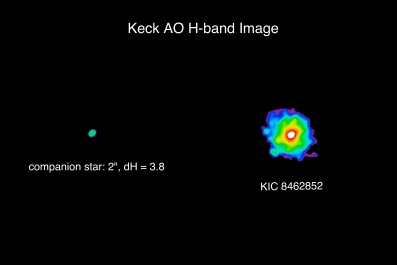
Suppose there was a star 1,480 light years away which was orbited by a vast cluster of alien artefacts  - artefacts something like Iain M. Banks' Culture Orbitals.

And suppose the Kepler space telescope, currently surveying 145,000 stars for exoplanets, happened to observe it. What exactly would it see?

We actually know the answer to this question: something very like KIC 8462852.
"KIC 8462852 has been causing ripples since 2011 because while we do seem to be seeing something passing between its light and us, that something is not a planet but a large number of objects in motion around the star. Some of the dips in starlight are extremely deep (up to 22 percent), and they are not periodic.

Here’s how Phil Plait describes the situation:

…it turns out there are lots of these dips in the star’s light. Hundreds. And they don’t seem to be periodic at all. They have odd shapes to them, too. A planet blocking a star’s light will have a generally symmetric dip; the light fades a little, remains steady at that level, then goes back up later. The dip at 800 days in the KIC 8462852 data doesn’t do that; it drops slowly, then rises more rapidly. Another one at 1,500 days has a series of blips up and down inside the main dips. There’s also an apparent change in brightness that seems to go up and down roughly every 20 days for weeks, then disappears completely. It’s likely just random transits, but still. It’s bizarre.

A ragged young debris disk would be the natural conclusion, but arguing against this is the fact that we don’t see the infrared excess that a dusty disk would create."  ...

Is the companion star transiting and disrupting a comet cloud?

We’ve often discussed cometary disruptions in these pages, speculating on what the passage of a nearby star might do to comets in the Oort Cloud. As per the images above, it’s a natural speculation that the anomalies of KIC 8462852 are the result of a similar scenario.
...
The paper, as we saw yesterday, explores other hypotheses but settles on comet activity as the likeliest, given the data we currently have. The kind of huge collision between planets that would produce this signature would also be rich in infrared because of the sheer amount of dust involved, and we don’t see that. You can see why all this would catch the eye of Jason Wright (Penn State), who studies SETI of the Dysonian kind, involving large structures observed from Earth. Because if we’re looking at cometary chunks, some of these are extraordinarily large.
See the Centauri Dreams post for full details. It's worth noting that if we ever get around to building large structures in orbit around our own sun, alien observers thousands of light years away will be able to see them.

Update: Centauri Dreams has yet another post on this object today.

---

October 27th 2015: Here's an updated view from Oxford University.

---

Bruce Schneier points to the following article:
"The three men who showed up at Michael Usry’s door last December were unfailingly polite. They told him they were cops investigating a hit-and-run that had occurred a few blocks away, near New Orleans City Park, and they invited Usry to accompany them to a police station so he could answer some questions. Certain that he hadn’t committed any crime, the 36-year-old filmmaker agreed to make the trip.

The situation got weird in the car. As they drove, the cops prodded Usry for details of a 1998 trip he’d taken to Rexburg, Idaho, where two of his sisters later attended college—a detail they’d gleaned by studying his Facebook page. “They were like, ‘We know high school kids do some crazy things—were you drinking? Did you meet anybody?’” Usry recalls. The grilling continued downtown until one of the three men—an FBI agent—told Usry he wanted to swab the inside of Usry’s cheek but wouldn’t explain his reason for doing so, though he emphasized that their warrant meant Usry could not refuse.

The bewildered Usry soon learned that he was a suspect in the 1996 murder of an Idaho Falls teenager named Angie Dodge. Though a man had been convicted of that crime after giving an iffy confession, his DNA didn’t match what was found at the crime scene. Detectives had focused on Usry after running a familial DNA search, a technique that allows investigators to identify suspects who don’t have DNA in a law enforcement database but whose close relatives have had their genetic profiles cataloged. In Usry’s case the crime scene DNA bore numerous similarities to that of Usry’s father, who years earlier had donated a DNA sample to a genealogy project through his Mormon church in Mississippi. That project’s database was later purchased by Ancestry, which made it publicly searchable—a decision that didn’t take into account the possibility that cops might someday use it to hunt for genetic leads.

Usry, whose story was first reported in The New Orleans Advocate, was finally cleared after a nerve-racking 33-day wait—the DNA extracted from his cheek cells didn’t match that of Dodge’s killer, whom detectives still seek. But the fact that he fell under suspicion in the first place is the latest sign that it’s time to set ground rules for familial DNA searching, before misuse of the imperfect technology starts ruining lives."
You can see why the police might have wanted to do this: the article goes on to state, disparagingly,
 " In the United Kingdom, a 2014 study found that just 17 percent of familial DNA searches “resulted in the identification of a relative of the true offender.”
but in the absence of other evidence, 17% is a lot better than zero for most detectives.

I suspect it would be easy to do much the same with 23andMe, even without invoking warrants and secret agreements with law enforcement. As with most things genetic, this issue is only going to get bigger.

Sunday, June 07, 2015

Sequencing Dad

How much can you tell just from someone's genes?

Here's a thought experiment. Suppose you could copy and recreate a person's genome pretty much exactly, give or take a few mutational errors. You could implant this genome-copy into an egg cell, bring the resulting foetus to term and allow it to grow into a full adult. How similar would the copy-person be to the original?

Of course, this is not a thought experiment. I'm simply describing the case of twins separated at birth. And how alike are these twins? Well, in appearance, personality, health and intelligence they are as alike as ... twins.

If we understood the human genome in all its SNP and copy-number variants, we wouldn't need to recreate a human copy, we would simply read off the attributes of the person with that genome. Police profilers can already do this for many traits (I mentioned recently facial reconstruction from DNA samples). In the future we will be able to know and do much, much more.

It's simplest if you donate a sample of your DNA to a gene-sequencing company. My mother and myself have sent our saliva kits to 23andMe (here's my report) and even with the restricted coverage currently offered there's lots to learn.

My father died in 2009, before the age of consumer genomics. If we had his DNA we would know quite a lot about his health and personal traits right now; and of course in the future we would know so much more. Personality, health and intelligence would be my interests.

Forensic techniques get better all the time. We have some of his clothing and other personal possessions; there must be traces of his DNA. If we wait a while till the prices come down, I think there is an excellent chance we will be able to find samples of his DNA and sequence them. Our family genetic history will take a further step forwards.

I wrote a little piece for sciencefiction.com about this a while back.

Sunday, April 26, 2015

A DNA-Generated Face

A 23andMe mailing mentions that the police are now using suspect facial profiles generated from scene-of-crime DNA. Remarkable. Only a small number of alleles bearing on likeness have been identified to date, but genetics is obviously central. Just think of identical twins, the clue is in the name.

Some of the DNA facial reconstructions put together by researchers seem quite accurate; others not so much (see article).

One of the better ones? Ms. Spangler’s ancestry is half Korean and half northern European. Top right image is from the DNA; bottom right, was adjusted for age, weight and height.

The police use of this technology seems at present to be grasping at straws. The picture of a suspect below was characterised by one critic as showing simply a 'generic young black man'. Since the perpetrator has not yet been caught, however, we have no idea as to its accuracy.

Sketch of a possible suspect based on DNA left at the crime scene

However, like most technologies that we know in principle will work, this is going to be big.

Predictions using a DNA analysis tool compared with photos of the actual people

Just to recap, here's the current state of the art (above). They seem not too bad to me, although they probably chose their best ones for this publicity shot.

Tuesday, February 24, 2015

Malodorous, hmm ...

From the Wikipedia article: today we are talking about the gene ABCC11 and its alleles, which have the following unfortunate consequences.
"The product of this gene participates in physiological processes involving bile acids, conjugated steroids, and cyclic nucleotides. In addition, an SNP in this gene is responsible for determination of human earwax type and presence of underarm odour."
My earwax type, like most Europeans, is 'wet earwax'. To be honest I could be happy with no earwax at all - lose the regular eardrops and self-syringing! Here are the alleles of the ABCC11 gene as segregating at SNP locus rs17822931 according to SNPedia.
(C;C)
Wet earwax. Normal body odour. 
(C;T)
Wet earwax. Slightly better body odour.
(T;T)
Dry earwax. No body odour. Likely Asian ancestry. 
They're very polite over at SNPedia. Here's what Razib Khan noted in this post.
"The subjects were a few hundred Filipins. This is a population where the allele of interest segregates in intermediate frequencies. So there are many individuals with dry earwax as well as wet earwax, and all the associated traits.

Here are some tables I extracted*:

Mean malodour scores
5 hours24 hours
TT2.592.6
CT3.263.4
CC3.213.5
Genotype
TTCTCC
Uses deodorant0.50.860.97
Does not use0.50.140.03

"I have no idea how subjective malodour scales work, but the moral is pretty straightforward. Those with the TT genotype saturate at a much lower point. This manifests in daily behavior. There is a fair amount of Japanese data that people who go to the doctor for body odor issues are much more likely to have wet earwax. This data from the Philippines illustrates that individuals with the derived genotype, TT, must be conscious enough of their lack of body odor to forgo deodorant purchases, even though I assume it is normative in the American influenced culture of the Philippines."
My own 23andMe data returns this:

My 23andMe data for the ABCC11 gene


Keep those showers coming and don't forget the Sure is, I think, the message here.

---

The real puzzle is how the relatively recent (c. 50,000 years ago) T mutation swept to near fixation in the Han Chinese and neighbouring populations. What on earth was the selective advantage? *

From the comment by Greg Cochran at Razib's post:

"It’s essentially impossible for selection to favor a pure recessive trait. You’re never going to see it. Therefore, we can conclude that some effect of this mutation shows up in heterozygotes and is favored by natural selection – but nobody seems to know what it is."

Why is it "essentially impossible for selection to favor a pure recessive trait"? The recessive mutation is initially rare in the population and the offspring of the carrier will almost certainly be heterozygous. This hides the selective advantage of the recessive allele so it doesn't get to spread in the population. Most likely it will simply die out.

---

* Update: it could be sexual selection for smelling better: CT beats CC leading to heterozygote advantage, then TT wins out.

Wednesday, January 14, 2015

Obesity genes and me

The BBC science programme Horizon is currently running a three part series on the science of dieting. They have identified three categories of the obese and one - the 'constant cravers' - are defined by having 'obesity genes'.

It seems likely that I'm a 'constant craver'.

A little internet research provides a short list.

1. The FTO gene

As Wikipedia explains: "In 2009 variants in the FTO gene were further confirmed to associate with obesity in two very large genome-wide association studies of body mass index (BMI). It was shown that adults bearing the at-risk AT and AA alleles at rs9939609 consumed between 125 and 280 Calories per day than those carrying the protective TT genotype," (c. 5-12% of the daily allowance).

A quick search for rs9939609 confirms I'm AT at this location. No wonder I was thirteen and a half stone before starting the 5:2 diet (I'm now at 11 stone = 70 kg but not without continuing maintenance). As a carrier of one of the 'A' risk alleles my disposition to obesity is 30% higher than that of baseline TT people.

2. The MC4R gene

"Mutations in the MC4R gene account for 6-8% of obesity cases. A common variant of the MC4R gene, distributed in about 22% of the population, increases the risk for weight gain by causing increased appetite and decreased satiety. Calorie restriction through portion control and smart food choices is the best strategy for weight loss for people carrying this variant."

The relevant SNP is rs17782313 where C alleles are associated with higher body mass index (BMI). The three options are CC, CT, TT - where TT is baseline normal, CT is associated with a BMI increase of 0.22 units and CC with a BMI increase of 0.44 units. As is so often the case, the allele effects are, as you see, additive.

What am I?  Yep, it's bad: CC.

3  The ADIPOQ gene

The relevant allele is rs17366568. "A significant genotypic association was observed between ADIPOQ rs17366568 and obesity. The frequencies of AG and AA genotypes were significantly higher in the obese group (11%) than in the non-obese group (5%) (P=0.024). The odds of A alleles occurring among the obese group were twice those among the non-obese group (odds ratio 2.15; 95% confidence interval 1.13-4.09)." (From here).

At last some good news! I am GG at this location.

---

Doubtlessly I'll return to this topic when more is known, especially as the results to-date are so personally depressing!

Thursday, November 20, 2014

Your illustrious medieval ancestors?

I caught a "Who Do You Think You Are" programme featuring Celia Imre the other day. She sought the origins of her son's radical politics and her own feminist feistiness in her ancestors. Here's what the program found for her:
"Imrie’s particular wish to uncover an ancestor to inspire her politically inclined son, Angus, unearthed a corker in her “eight-times grandfather” William, Lord Russell, son of the Earl of Bedford in the time of King Charles II. A leading Whig politician who truly had the courage of his convictions, Russell was such an intransigent defender of Protestantism and lover of constitutional liberty that he was accused of plotting to kill the King, and promptly beheaded.

"At Woburn Abbey, the Russell family seat, Imrie set out on the still more dramatic trail of Frances Howard, grandmother of the aforementioned William. A victim of one appalling dynastic marriage, and caught up in vicious courtly intrigues while trying to secure happiness in a second, she was packed off to the Tower of London with her new husband, accused of murder. Frances was eventually pardoned but history was not so forgiving."
So she had found her 'good genes' then? Not so fast, here's Richard Dawkins:
"For relationships as distant as third cousin, 2 x (1/2)8 = 1/128, we are getting down near the baseline probability that a particular gene possessed by [an individual] will be shared by any random individual taken from the population."
Celia Imre's “eight-times grandfather” William, Lord Russell, is nine generations separate from her and shares a relatedness of  1/512 = (2-9). That distant relatedness could be greater if her lineage includes a degree of inbreeding - but it's unlikely to be more than 1/128 - Dawkins' rough figure for the genetic relationships of any two random ethnic English people.

So Celia Imre's traits for general lefty feistiness are certainly in her genes, but not through the good offices of those specific medieval ancestors.

More generally, you get a dilution down to 1/128 in seven generations. At four generations per century, you may assume that any specific traits of a specific ancestor more than 175 years ago (i.e. before c. 1839) have since been diluted out by Mendelian segregation and recombination. (Also more from 23andMe's reseaches here).

Genetic immortality? fuhgeddaboudit..

Thursday, November 06, 2014

The genetics of intelligence - early results

Refer to text below to understand this
A somewhat overlooked paper: "Factor Analysis of Population Allele Frequencies as a Simple, Novel Method of Detecting Signals of Recent Polygenic Selection: The Example of Educational Attainment and IQ" available here.

This is how Peter Frost summarises the paper.
"We know that human intellectual capacity has risen through small incremental changes at very many genes, probably hundreds if not thousands. Have these changes been the same in all populations?

"Davide Piffer (2013) has tried to answer this question by using a small subset of these genes. He began with seven SNPs whose different alleles are associated with differences in performance on PISA or IQ tests. Then, for fifty human populations, he looked up the prevalence of each allele that seems to increase performance. Finally, for each population, he calculated the average prevalence of these alleles at all seven genes.

"The average prevalence was 39% among East Asians, 36% among Europeans, 32% among Amerindians, 24% among Melanesians and Papuan-New Guineans, and 16% among sub-Saharan Africans. The lowest scores were among San Bushmen (6%) and Mbuti Pygmies (5%). A related finding is that all but one of the alleles are specific to humans and not shared with ancestral primates.

"Yes, he was using a small subset of genes that influence intellectual capacity. But you don't need a big number to get the big picture. If you dip your hand into a barrel of differently colored jelly beans, the colors you see in your hand will match well enough what's in the barrel. In any case, if the same trend holds up with a subset of 50 or so genes, it will be hard to say it's all due to chance."
The alleles which Piffer frequency-analysed differentially code for things like:
"... the regulation of neuronal morphology in neurons, including hippocampal neurons and developing brains"

"... neuronal excitability, synaptic plasticity and feedback regulation of acetylcholine release."
Ten or so SNPs don't determine very much of a person's intelligence, which depends upon the actions of hundreds or thousands of genes as well as environmental effects. But even a small sample - if representative and correlated - can be quite predictive, as Piffer explains.
"As the effect size of each SNP is typically very low (around 0.1%), even 10 SNPs would not account for more than 1% of the variance in IQ or educational attainment scores across populations. The likely explanation for why the effect size for the 10 SNPs at a cross population level detected in this study is so high (around 80%), is that the alleles are not randomly distributed across human races, so that the combined frequency of a few alleles predicts the frequencies of many other alleles affecting the same phenotype. This inflates the correlation with the phenotype well beyond anything that would be explainable by the modest effect sizes of the examined SNPs.

"This is nothing more than the principle applied to psychometric instruments, such as IQ tests or personality scales, where a handful of items produce a reliable score, precisely because these items represent an underlying, latent factor and are thus correlated among each other. Even reliable psychometric scales are usually composed of around 10 items, equal to the number of SNPs examined in the present study, which in turn showed good internal reliability (Cronbach’s α= 0.84).

"A model based on random evolution or genetic drift alone cannot account for such a pattern."
The particular SNPs used in the study are listed in the tables at the back of the paper. I was naturally interested in checking which of these SNPs are analysed by 23andMe. It turns out that about half are. So in the graphic above you see the 'good for intelligence' SNPs in the first column, the gene name (where available) in the second and the chromosome it's on (from 23andMe) in the third. The fourth column is the specific nucleotide which marks this as a 'good-for-intelligence' allele, and the fifth is the database where the source-data came from (refer to the paper for details). The final column is my own genotype at these alleles, as downloaded from 23andMe.

Here is an Excel workbook for you to try yourself. Hint: download your 23andMe results and load into an Excel spreadsheet; then search on the rs SNP identifiers.

There are sixteen alleles (2 x 8) which are both 'good' and available from 23andMe. Of these 16, you will see that I have 7 'good' ones, so my personal 'frequency' is 7/16 = 0.44. This sounds terrible, but in fact the European average frequency for these 'good alleles' is 35.5% and the East Asian (Chinese, Japanese) average frequency is 39.1. This number of alleles is too small to be a good estimator of anyone's overall IQ though.

The message of Piffer's paper is that, as humans radiated out of Africa, a rising tide of natural selection drove novel alleles coding for increased intelligence to higher and higher population frequencies. This emerges clearly from the  SNPs analysed in the paper, and is by hypothesis true for the rest too. It appears that selection for higher intelligence has been more, rather than less, intense over the last 10,000 years - possibly reflecting the cognitive demands of agrarian, pastoral and yet more complex modern civilisations.

More to come, undoubtedly as the larger scale GWAS studies begin to deliver.

Tuesday, October 28, 2014

MAO-A: violence through to depression

From BBC News today:
"A genetic analysis of almost 900 offenders in Finland has revealed two genes associated with violent crime. Those with the genes were 13 times more likely to have a history of repeated violent behaviour. The authors of the study, published in the journal Molecular Psychiatry, said at least 5-10% of all violent crime in Finland could be attributed to individuals with these genotypes.
...
"Each criminal was given a profile based on their offences, categorising them into violent or non-violent. The association between genes and previous behaviour was strongest for the 78 who fitted the "extremely violent offender" profile. This group had committed a total of 1,154 murders, manslaughters, attempted homicides or batteries. A replication group of 114 criminals had all committed at least one murder. These all carried a low-activity version of the MAO-A gene, which previous research has dubbed the "warrior gene" because of its link to aggressive behaviour."
Monoamine oxidase A, also known as MAO-A, is an enzyme encoded by the MAO-A gene. It operates in nerve tissue where it degrades neurotransmitters such as dopamine, norepinephrine, and serotonin. This affects mood.

This "warrior gene" thing is somewhat old news. Wikipedia states (in a rather badly-written article):
"In humans, there is a 30-base repeat sequence repeated in one of several different numbers of times in the promoter region of the gene coding for MAO-A. There are 2R (two repeats), 3R, 3.5R, 4R, and 5R variants of the repeat sequence, with the 3R and 4R variants most common in Caucasians. The 3.5R and 4R variants have been found to be more highly active than 3R or 5R, in a study which did not examine the 2R variant. An association between the 2R allele of the Variable Number Tandem Repeat region of the gene and an increase in the likelihood of committing serious crime or violence has been found.

"MAO-A levels in the brain as measured using positron emission tomography are elevated by an average of 34% in patients with major depressive disorder. Genetic association studies examining the relationship between high-activity MAO-A variants and depression have produced mixed results, with some studies linking the high-activity variants to major depression in females, depressed suicide in males, major depression and sleep disturbance in males and major depressive disorder in both males and females.
...
"The frequency distribution of variants of the MAO-A gene differs between ethnic groups. 59% of Black men, 54% of Chinese men, 56% of Maori men, and 34% of Caucasian men carry the 3R allele. 5.5% of Black men, 0.1% of Caucasian men, and 0.00067% of Asian men carry the 2R allele.

"A connection between a version of the monoamine oxidase A gene (3R) and several types of antisocial behaviour has been found. MAO-A had no statistically significant main effect on antisocial behaviour. Maltreated children with genes causing high levels of MAO-A were less likely to develop antisocial behaviour. Low MAO-A activity in combination with abuse experienced during childhood results in an increased risk of aggressive behaviour as an adult. High testosterone, maternal tobacco smoking during pregnancy, poor material living standards, dropping out of school, and low IQ can also trigger violent behaviour in men with the low-activity alleles (which are overwhelmingly the 3R allele).

"In individuals with the low activity MAO-A gene, when faced with social exclusion or ostracism showed higher levels of aggression than individuals with the high activity MAO-A gene. Low activity MAO-A could significantly predict aggressive behaviour in a high provocation situation, but was less associated with aggression in a low provocation situation. Individuals with the low activity variant of the MAO-A gene were just as likely as participants with the high activity variant to retaliate when the loss was small. However, they were more likely to retaliate and with greater force when the loss was large."
So to summarise and over-simplify: low levels of MAO-A lead to aggression; high levels lead to depression.

Egocentricity asserted itself at this point and my thoughts turned to my 23andMe genotype data. The 2R (two repeats), 3R, 3.5R, 4R, and 5R variants of the repeat sequence aren't looked at by 23andMe, as they only test for SNPs. However, the gene which codes for MAO-A also has alleles which differ in SNPs, specifically rs6323.

Only one nucleotide to report here for me as it's on the X-chromosome and I'm male. The variant which expresses the most MAO-A is the G-variant, which makes its carrier prone to depression.

I'm T: so a tiny bit more warrior than someone on antidepressants.


Wednesday, October 08, 2014

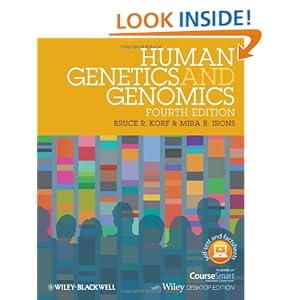
Best introduction to human genomics

Puzzled by your 23andMe/Promethease results? Having trouble figuring out what SNPs are and what they're good, or bad for? Time to learn some human genetics and genomics.


"Human Genetics and Genomics" (4th Edition) by Bruce R. Korf and Mira B. Irons is a bird's eye view of the basics of molecular biology through to the technologies of genome analysis to the medical implications of DNA and chromosome variation. It's aimed at medical students, so there are case studies to keep it real.

Chapter 1 starts us off with a tour round human DNA. We look at how it's structured, how it's replicated in cells and how DNA is transcribed into proteins. We take a quick look at epigenetics (the way some genes can be chemically silenced - switched off).

Chapter 2 looks at genetic variation. This covers single nucleotide polymorphisms (SNPs), DNA repair mechanisms, gene duplication and its role in evolution. PCR (Polymerase Chain Reaction) as used for forensic analysis of DNA samples amongst other things is also described.

Chapter 3 is 'Patterns of Inheritance'. Here you'll learn how to take a family history looking for dominant or recessive patterns of Mendelian inheritance. We also look at sex-linked inheritance (X or Y chromosome location of the gene in question), mosaicism and genomic imprinting.

Chapter 4 describes the Human Genome Project and the history of attempts to find out where on the human chromosome set a gene of interest (often disease-causing) actually resides. You'll meet some common terms such as linkage disequilibrium, which is carefully explained. The working example in this chapter is cystic fibrosis.

Chapter 5 discusses 'Multifactorial Inheritance'. Most 'quantitative traits' such as height, personality and intelligence are under the control of hundreds or thousands of alleles of small effect. The same is true of many diseases. So in this chapter we learn about heritability, additive and threshold models of multi-allele effects and that very latest thing: genome-wide association studies (GWAS) which are shedding light on .. almost everything.

Chapter 6 raises its gaze to the organisation of genes into chromosomes. Sadly, this is another level where errors can occur (e.g. chromosome 21 trisomy leading to Down Syndrome) and there are plenty of more subtle things which can go wrong (deletions, duplications, inversions, rings, translocations). Characteristic diseases and syndromes duly follow.

Chapter 7 looks at Population Genetics. We learn about the Hardy-Weinberg equation (very clear explanation) and how it is used to work out the carrier frequency of a recessive disease in various populations. The working example here is Sickle Cell Anaemia.

Chapter 8 focuses on Cancer Genetics. Cancer is a genetic disease, emerging from a cascade of errors in those genes which regulate cell development and division. We now have a causal narrative of the mechanisms behind many cancers, as this chapter explains in good detail.

Chapter 9 looks at chromosome translocation with specific application to Down Syndrome.

The remaining chapters (10-17) are shorter and look in detail at:
  • Molecular diagnosis of conditions based on genetic testing
  • Newborn screening (e.g. for PKU) 
  • Developmental genetics (CHARGE syndrome is the example) 
  • Carrier screening (Tay-Sachs in an Ashkenazi context is the example in this chapter)
  • Genetic risk assessment (companies like 23andMe are discussed in some detail)
  • Genetic testing for risks of cancer (BRCA1 and 2 is the example)
  • The genetics of drug response - Pharmacogenetics (example: malignant hyperthermia)
  • Emerging treatment for genetic disorders such as gene therapy.

This book was published in 2013 so it's pretty much up-to-date. If you're not a medical student with good recall, have Google/Wikipedia next to you as you read it: most terms are explained - and then you come to something like Epistasis!

Wednesday, September 24, 2014

"Still Alice" by Lisa Genova

Here's the Amazon description.
"Still Alice is a compelling debut novel about a 50-year-old woman's sudden descent into early onset Alzheimer's disease, written by first-time author Lisa Genova, who holds a Ph. D in neuroscience from Harvard University.

"Alice Howland, happily married with three grown children and a house on the Cape, is a celebrated Harvard professor at the height of her career when she notices a forgetfulness creeping into her life. As confusion starts to cloud her thinking and her memory begins to fail her, she receives a devastating diagnosis: early onset Alzheimer's disease. Fiercely independent, Alice struggles to maintain her lifestyle and live in the moment, even as her sense of self is being stripped away. In turns heartbreaking, inspiring and terrifying, Still Alice captures in remarkable detail what's it's like to literally lose your mind..."


Midway through reading this novel to Clare, I got to the bit where Alice gets a genetic test done for early-onset (or familial) Alzheimer's. The mutated genes in question are APP, PS1 and PS2;
"Familial Alzheimer disease is caused by a mutation in one of at least 3 genes: presenilin 1, presenilin 2 and amyloid precursor protein (APP). Other gene mutations are in study."
Naturally, I scampered across to my 23andMe/Promethease health results to check out my genome. Now, 23andMe don't screen for SNPs on those genes (I can see why!) but they do look at a late-onset Alzheimer genotype - it's the ε4 variant of the APOE gene.
"Although 40-65% of AD patients have at least one copy of the ε4 allele, ApoE4 is not a determinant of the disease - at least a third of patients with AD are ApoE4 negative and some ApoE4 homozygotes never develop the disease. Yet those with two ε4 alleles have up to 20 times the risk of developing AD."
I don't have it.

---

Note: how do two SNPs determine three APOE variants? (From 23andMe).

Variant:  rs429358  + rs7412 (these are the two SNPs within the APOE gene)

ε2 = T + T

ε3 = T + C

ε4 = C + C

I'm ε3/ε3 - on the  chromosome 19 pair (TT + CC). It's surprising how blasé one can be about all this once it's clear that you don't have the 'bad' allele ...

Saturday, September 20, 2014

Digit ratios

Dr James Thompson writes about digit ratios and feminists, a recent news story.

The statistic in question is the length of your second digit (index finger) divided by the length of your fourth digit (ring finger). This is normally less than one, indicating you have a longer ring finger (digit 4). Here are scans of the author's right hand - palm up - and his wife's, with all relevant data points indicated.


The idea is this:
"It has been suggested by some scientists that the ratio of two digits in particular, the 2nd (index finger) and 4th (ring finger), is affected by exposure to androgens e.g. testosterone while in the uterus ..."
A low ratio (e.g. 0.94) suggests you are more likely to be high in testosterone, male and black. A high ratio (e.g. 0.98) suggests lower testosterone levels, female and caucasian or east asian. See here for details.

The article Thompson discusses looks, however, at how all this might illuminate the paradox of feminism:
"The feminist movement purports to improve conditions for women, and yet only a minority of women in modern societies self-identify as feminists. This is known as the feminist paradox."
Why might this be?
"Evolutionary psychology observes that the basic pattern of psychological differences between the sexes can be explained by their having essentially different innate adaptations associated with, most importantly, women investing considerably more resources into offspring through pregnancy and breast-feeding (e.g., Buss, 2012). Males are more aggressive and risk-taking on average, because these traits have paid off historically in terms of increased fitness, given that male-male aggression and risk-taking in the pursuit of resource acquisition have led to more offspring. This would thus explain why males tend to dominate professions where these traits are necessary for success, such as in the military, business, politics and even crime, where competition is high. Females are on average more sociable and empathic than males, because caring for offspring and negotiating social relations that promote their survival until they reach reproductive age ensured that the mother’s genes live on. Hence women dominate professions where these traits are maximally valued, such as teaching, social work, and in human and veterinary medicine (Lippa, 2010). ...

"Another possible explanation of why feminism represents a minority position amongst women is therefore that the activists who shape feminist attitudes and beliefs are themselves generally more physiologically and psychologically masculinized than is typical for women (Wilson, 2010). This might for example explain their belief in sex-role interchangeability, as they may perceive the behaviors and interests of sex-typical women as incomprehensible and at variance with their own more masculinized preferences in terms of child-rearing and status-seeking. This might then lead them to infer that women in general have been manipulated to become different from themselves by external forces, as embodied by notions of social constructions or gender systems ..."
And so they did the 2D: 4D finger length ratio test at a feminist activists' conference. Their account is quite amusing.
"We therefore recruited our sample directly from the operational definition, that is, attendees at a feminist conference in Sweden. This public one-day event was advertised through posters, flyers, and social internet media, and featured some 20 talks and lectures in several parallel sessions, presented by political and other interest organizations. In the conference hall we set up a table and a sign saying (translated from Swedish) “Answer a few questions and image your hands in exchange for fruit or candy. Your participation is anonymous.” We surmised that any mention of feminism, and the possible connection between feminism and biomarkers in particular, would have deterred attendees from contributing. In order to maximize participation, therefore, we did not ask them if they self-defined as feminists, and did not disclose the purpose of the study.

"In total, 35 attendees participated in data collection over the course of the whole conference day, mostly when moving between rooms, in exchange for items of fruit or candy. To ensure anonymity no biographical information was collected, and sex and age were assessed visually (20–45 years). The total number of attendants was estimated at ∼100 over the day and the female-to-male ratio to ∼2/3. Twenty-five of the respondents were female and hence were eligible for inclusion in the analyses, which means that our sample included ∼35% of the female attendees."
And after all the fruit and candy had been distributed, what were the results? Their diagram below shows: the reference female population, the reference male population and the sample from the feminist conference. The mean 2D:4D figures, read off the chart are as follows: mean female = 0.992, mean male = 0.969, mean feminist = 0.95. Yep, the feminist women scored more masculine than the average Swedish man. This may explain something about Sweden.

The x-axis increment is 0.0135

It's hard to obtain large population studies which are tightly controlled for ethnicity, at least via Google, so I don't know where Clare and myself lie on the British/Caucasian spectrum. However, lower ratios predispose males at least to higher risks of prostate cancer and autism spectrum disorders, as you can see from this table. I think this is compatible with what my 23andMe results already suggested.