Showing posts with label David Reich. Show all posts

Saturday, April 07, 2018

David Reich on Wade, Harpending and Watson

Amazon link

I've now finished Reich's book, having read with trepidation those parts where he criticises Nicholas Wade, Henry Harpending and Greg Cochran, and James Watson by name, not shrinking from use of the r-word. His criticisms are curiously uncompelling, though veiled by intemperate language and tendentious argumentation.

Reich observes that the message of his book is profoundly unsettling to the current liberal orthodoxy. He himself deals with the resulting cognitive dissonance by compartmentalisation .. exhibiting psychic stress when dealing with people who are less inhibited.

None of this really takes anything away from what is a fine piece of science-writing at a high conceptual level, which if taken on board revolutionises our ideas of human history.

And the work is just beginning!

---

Here's Greg Cochran's considerably more acerbic take.

"Marx: A Very Short Introduction" - Peter Singer

I was impressed by the readability and erudition of Peter Singer's VSI to Hegel, so decided to read his take on Marx.

Amazon link

I was disappointed. Singer is affectionately amusing on Marx's life and I agree with him that Marx retained a (materialist-reframed) Hegelian perspective throughout his life's work. But Singer struggles with Marx's notoriously tricky concept of value (abstract human labour), buying the argument that machines can create surplus-value. In Marxist thinking, only human labour can do that, reflecting the distinction between labour and labour-power.

Once you don't 'get' Marx's theory of value, then the theory of capitalist dynamics tends to go too, and you're left with a static evaluation of Marx's specific predictions, most of which did not track capitalism's evolution throughout the twentieth century.

Singer thereby concludes by seeing Marx more as an ethical philosopher than anything else, but that's a retreat too far. I would, however, be even harder than Singer on Marx's lamentably blank-slate view of human nature, which fatally undermines any naive presentation of Communism.

---

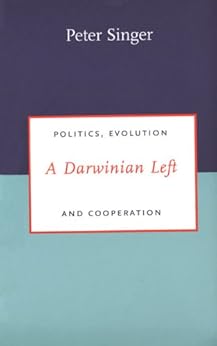
Singer also wrote this book, which is on my list:

Amazon link

I had thought I might be the only person in the world who cared about the synthesis between Marxism and evolutionary theory, specifically human sociobiology. But I guess that along with Peter Singer I should now add David Reich to my list of good guys too, although he's a liberal-leftist, not a Marxist.

Monday, April 02, 2018

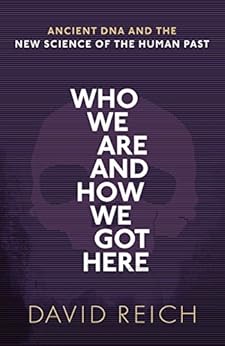
"Who We Are and How We Got Here" - David Reich

Amazon link

For millennia astronomy (~ astrology) was a naked eye science. That was sufficient to chart the phenomena: the wanderers, the cloudy blobs, the falling stars. It fostered theories - the crystal spheres. There was an origins story: creation then stasis under the guiding hands of angels.

Telescopes, emission spectra and doppler shifts changed all that. The naked-eye astronomers with their theocratic agendas hated the new instruments and balked at the maths.

You have to pity the archaeologists and anthropologists: they really don't like Reich's book.

---

Reviews

Perhaps more from me later: it's interesting and full of unexpected insights but despite the studied lack of jargon, it does make conceptual demands. It's not an effortless page-turner.

---

Update: Saturday April 7th 2018

I've now finished Reich's book, having read with trepidation those parts where he criticises Nicholas Wade, Henry Harpending and Greg Cochran, and James Watson by name, not shrinking from use of the r-word. His criticisms are curiously uncompelling, though veiled by intemperate language and tendentious argumentation.

As he himself observes, the message of his book is profoundly unsettling to the current liberal orthodoxy. He himself deals with the resulting cognitive dissonance by compartmentalisation .. exhibiting psychic stress when dealing with people who are less inhibited.

None of this really takes anything away from what is a fine piece of science-writing at a high conceptual level, which if taken on board revolutionises our ideas of human history.

And the work is just beginning!