Showing posts with label DNA. Show all posts

Wednesday, November 14, 2018

"Blueprint: How DNA Makes Us Who We Are" - Robert Plomin

Amazon link

Robert Plomin is one of the good guys, and this book is apparently a summing up, for a general audience, of his life work. It has just arrived and is on the stack.

Meanwhile Dr James Thompson of UCL has an excellent and detailed chapter-by-chapter review, from which this short excerpt.
"Chapter 11 is about the development of genome-wide association studies. Chapter 12 is a very substantial one about genetic prediction. Chapter 12 is Plomin’s real coming out: he reveals his polygenic scores for all to see. Naturally, this is a teaching opportunity, explaining the insights and the limitations of such measures. Figs 6 and 7 are worth showing again and again, if only to explain polygenic scores and their overlaps, and the fact that they provide probabilistic estimates, not certainties."
Greg Cochran has written a review at Quillette, "Forget Nature Versus Nurture. Nature Has Won".

And Toby Young, also at Quillette: "Is Sociogenomics Racist?".  No, he argues.

I'm looking forward to reading and learning. Update: here's my review.

Tuesday, May 03, 2016

In which I spit for science

"Dear PGP-UK Participant

Following your completion of the PGP-UK geographic survey, we would like to invite you to participate in PGP-UK.

As outlined previously this involves the collection of a saliva sample from you, from which DNA will be extracted and whole-genome sequenced at the Wellcome Trust Sanger Institute."
I have this morning spent ten minutes spitting into a test tube and the sample has been posted off to the  Wellcome Trust Sanger Institute to be sequenced: whole genome sequencing. Scary thought: I can now be cloned.


I was selected (as one of a number of participants) as my four grandparents all lived in or around Bristol, in support of this study.
"Fine-scale genetic variation between human populations is interesting as a signature of historical demographic events and because of its potential for confounding disease studies. We use haplotype-based statistical methods to analyse genome-wide single nucleotide polymorphism (SNP) data from a carefully chosen geographically diverse sample of 2,039 individuals from the United Kingdom.

"This reveals a rich and detailed pattern of genetic differentiation with remarkable concordance between genetic clusters and geography. The regional genetic differentiation and differing patterns of shared ancestry with 6,209 individuals from across Europe carry clear signals of historical demographic events.

"We estimate the genetic contribution to southeastern England from Anglo-Saxon migrations to be under half, and identify the regions not carrying genetic material from these migrations. We suggest significant pre-Roman but post-Mesolithic movement into southeastern England from continental Europe, and show that in non-Saxon parts of the United Kingdom, there exist genetically differentiated subgroups rather than a general ‘Celtic’ population."
More later.

Thursday, December 17, 2015

In which I sign up with the PGP


Back in September 2014, I tried to sign up with the Personal Genome Project, based at UCL in its UK incarnation (Harvard Medical School in the States). Sadly, this proved so popular that admissions had closed by the time I tried. But now they're open again and I've signed up!

It's a process which selects for both intelligence and perseverance. An online exam has to be passed testing your understanding of their ethics policy, the risks and dangers as well as your basic understanding of genetics. The whole thing took me an hour and a half.

They try to scare you off:
"Unanticipated uses of your data and cell lines

"The list of potential uses of your data and cell lines by other individuals is diverse and sometimes worrisome. The benefit of these things is that other researchers will use them in their own work, greatly facilitating the process of scientific research. Other researchers might also create their own interpretations of your genetic data -- and these could make incorrect claims regarding your predisposition to traits and diseases that we cannot control.

"Someone might match your public data against other genetic databases to find matches for yourself or relatives - this includes criminal and forensic DNA fingerprinting databases as well as other genetic research studies.

"More nefarious uses are also possible, if unlikely. DNA is commonly used to identify individuals in criminal investigations. Someone could plant samples of DNA, created from genome data or cell lines, to falsely implicate you in a crime.

"It’s currently science fiction -- but it’s possible that someone could use your DNA or cells for in vitro fertilization to create children without your knowledge or permission, or to create human clones."
Anyway, I'm good with all that.

Hopefully the UCL process will now run and at some point I will be asked to provide a DNA sample.
"You may be invited to provide additional tissues or other specimens as approved by the study and the UCL REC ...

"Description of certain specimen sample collection procedures:

"(i) A skin punch biopsy (about 3–4 mm in diameter) is collected from the underside of the upper arm or hip and requires local anaesthesia. Anaesthetic cream is applied and covered with a bandage for 45–60 minutes then wiped off and swabbed with alcohol to sterilise the area. Then a 3‒4 mm skin biopsy is obtained. A bandage and antibiotic ointment is applied.
...
"The ... skin biopsy may involve pain, bleeding and/or fainting, and may also cause temporary bruising and/or infection at the site of puncture. Some degree of permanent scarring can be expected from the skin biopsy procedure."
Under 'Benefits' the documentation states:
"ARTICLE VII: Benefits

"7.1 No benefits to you

"You are not likely to benefit in any way as a result of your participation in the PGP-UK."
So cool.

Tuesday, November 03, 2015

Who died on Law Hill?

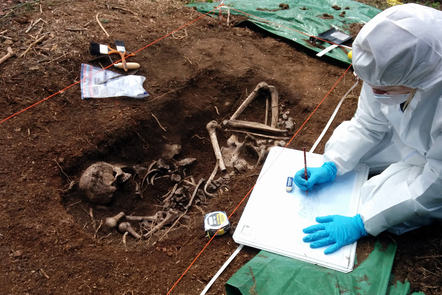
Dundee University, in collaboration with the OU, is launching a free online course (6 weeks; 4 hours per week) on 'forensic anthropology': Identifying the Dead.


"In the shadow of Dundee’s Law Hill, a grim discovery demands the attention of forensic experts. Unidentified human remains have been found and the police need to identify the victim to move forward with their investigation.
  • After a meticulous recovery of the remains, it will be your job to:
  • document and attempt to explain any evidence of trauma;
  • identify the victim through biological profiling;
  • and undertake a facial reconstruction.
"Experts from the University of Dundee’s award-winning Centre for Anatomy and Human Identification (CAHId) will guide you through the process of human identification. They will introduce you to the fields of human identification; forensic anthropology and archaeology; craniofacial identification; and the study of the human body.

"Week-by-week, the case will unfold, providing you with more information about the victim. You will be presented with theoretical material and hands-on learning opportunities, to evaluate the case information and use what you have learned, to piece together clues to the victim’s identity."
Clare and myself have signed up. The start date hasn't been announced yet but there will be more here later.

---

Identifying the Dead is just one course from FutureLearn. There are so many! I was naturally interested as to how they make their money, what's the business model?

The CEO, Simon Nelson, suggests it's through charging for certificates and exams .. but it seems early days yet.

Friday, October 16, 2015

... or a cluster of Culture Orbitals?


Suppose there was a star 1,480 light years away which was orbited by a vast cluster of alien artefacts  - artefacts something like Iain M. Banks' Culture Orbitals.

And suppose the Kepler space telescope, currently surveying 145,000 stars for exoplanets, happened to observe it. What exactly would it see?

We actually know the answer to this question: something very like KIC 8462852.
"KIC 8462852 has been causing ripples since 2011 because while we do seem to be seeing something passing between its light and us, that something is not a planet but a large number of objects in motion around the star. Some of the dips in starlight are extremely deep (up to 22 percent), and they are not periodic.

Here’s how Phil Plait describes the situation:

…it turns out there are lots of these dips in the star’s light. Hundreds. And they don’t seem to be periodic at all. They have odd shapes to them, too. A planet blocking a star’s light will have a generally symmetric dip; the light fades a little, remains steady at that level, then goes back up later. The dip at 800 days in the KIC 8462852 data doesn’t do that; it drops slowly, then rises more rapidly. Another one at 1,500 days has a series of blips up and down inside the main dips. There’s also an apparent change in brightness that seems to go up and down roughly every 20 days for weeks, then disappears completely. It’s likely just random transits, but still. It’s bizarre.

A ragged young debris disk would be the natural conclusion, but arguing against this is the fact that we don’t see the infrared excess that a dusty disk would create."  ...

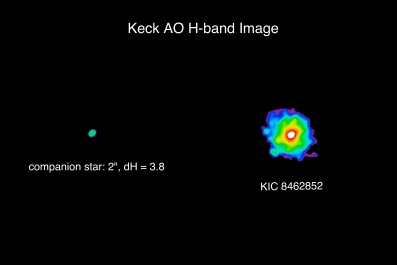
Is the companion star transiting and disrupting a comet cloud?

We’ve often discussed cometary disruptions in these pages, speculating on what the passage of a nearby star might do to comets in the Oort Cloud. As per the images above, it’s a natural speculation that the anomalies of KIC 8462852 are the result of a similar scenario.
...
The paper, as we saw yesterday, explores other hypotheses but settles on comet activity as the likeliest, given the data we currently have. The kind of huge collision between planets that would produce this signature would also be rich in infrared because of the sheer amount of dust involved, and we don’t see that. You can see why all this would catch the eye of Jason Wright (Penn State), who studies SETI of the Dysonian kind, involving large structures observed from Earth. Because if we’re looking at cometary chunks, some of these are extraordinarily large.
See the Centauri Dreams post for full details. It's worth noting that if we ever get around to building large structures in orbit around our own sun, alien observers thousands of light years away will be able to see them.

Update: Centauri Dreams has yet another post on this object today.

---

October 27th 2015: Here's an updated view from Oxford University.

---

Bruce Schneier points to the following article:
"The three men who showed up at Michael Usry’s door last December were unfailingly polite. They told him they were cops investigating a hit-and-run that had occurred a few blocks away, near New Orleans City Park, and they invited Usry to accompany them to a police station so he could answer some questions. Certain that he hadn’t committed any crime, the 36-year-old filmmaker agreed to make the trip.

The situation got weird in the car. As they drove, the cops prodded Usry for details of a 1998 trip he’d taken to Rexburg, Idaho, where two of his sisters later attended college—a detail they’d gleaned by studying his Facebook page. “They were like, ‘We know high school kids do some crazy things—were you drinking? Did you meet anybody?’” Usry recalls. The grilling continued downtown until one of the three men—an FBI agent—told Usry he wanted to swab the inside of Usry’s cheek but wouldn’t explain his reason for doing so, though he emphasized that their warrant meant Usry could not refuse.

The bewildered Usry soon learned that he was a suspect in the 1996 murder of an Idaho Falls teenager named Angie Dodge. Though a man had been convicted of that crime after giving an iffy confession, his DNA didn’t match what was found at the crime scene. Detectives had focused on Usry after running a familial DNA search, a technique that allows investigators to identify suspects who don’t have DNA in a law enforcement database but whose close relatives have had their genetic profiles cataloged. In Usry’s case the crime scene DNA bore numerous similarities to that of Usry’s father, who years earlier had donated a DNA sample to a genealogy project through his Mormon church in Mississippi. That project’s database was later purchased by Ancestry, which made it publicly searchable—a decision that didn’t take into account the possibility that cops might someday use it to hunt for genetic leads.

Usry, whose story was first reported in The New Orleans Advocate, was finally cleared after a nerve-racking 33-day wait—the DNA extracted from his cheek cells didn’t match that of Dodge’s killer, whom detectives still seek. But the fact that he fell under suspicion in the first place is the latest sign that it’s time to set ground rules for familial DNA searching, before misuse of the imperfect technology starts ruining lives."
You can see why the police might have wanted to do this: the article goes on to state, disparagingly,
 " In the United Kingdom, a 2014 study found that just 17 percent of familial DNA searches “resulted in the identification of a relative of the true offender.”
but in the absence of other evidence, 17% is a lot better than zero for most detectives.

I suspect it would be easy to do much the same with 23andMe, even without invoking warrants and secret agreements with law enforcement. As with most things genetic, this issue is only going to get bigger.

Sunday, April 26, 2015

A DNA-Generated Face

A 23andMe mailing mentions that the police are now using suspect facial profiles generated from scene-of-crime DNA. Remarkable. Only a small number of alleles bearing on likeness have been identified to date, but genetics is obviously central. Just think of identical twins, the clue is in the name.

Some of the DNA facial reconstructions put together by researchers seem quite accurate; others not so much (see article).

One of the better ones? Ms. Spangler’s ancestry is half Korean and half northern European. Top right image is from the DNA; bottom right, was adjusted for age, weight and height.

The police use of this technology seems at present to be grasping at straws. The picture of a suspect below was characterised by one critic as showing simply a 'generic young black man'. Since the perpetrator has not yet been caught, however, we have no idea as to its accuracy.

Sketch of a possible suspect based on DNA left at the crime scene

However, like most technologies that we know in principle will work, this is going to be big.

Predictions using a DNA analysis tool compared with photos of the actual people

Just to recap, here's the current state of the art (above). They seem not too bad to me, although they probably chose their best ones for this publicity shot.

Friday, August 22, 2014

The story on DNA sequencing

One company has transformed the economics of gene-sequencing. Here's the story of Illumina and a taste of where things go next. (h/t Razib Khan's site).

How important is this? Here's a clip from the article.
"... But then Follweiler, a retired financial services professional, found she had another tumor in her bowel. Her doctors opened her up, found it was too big to remove and sent her home. “I was basically throwing in the towel,” she said.

"But one of her physicians sent a tumor sample to Foundation Medicine, a startup backed by Bill Gates and Google Ventures that used Illumina’s sequencers to locate mutations in 236 genes that could help direct drug treatment. As a result of the test she was given Pfizer’s Xalkori, which has made the bowel tumor undetectable and has kept it that way for more than a year. “I feel no different than I felt two and a half years ago,” she says."
23andMe use the Illumina chip; my mother's saliva sample should be arriving at its North Carolina offices later this afternoon.

Friday, August 15, 2014

Why bother with 23andMe?

The genetics company 23andMe is no longer permitted (under a current US FDA ruling) to provide you with health advice based on sequencing your own DNA sample. In practice this is not an issue since you simply go to Promethease and import to them your raw data from 23andMe (as described here). For some reason this is not forbidden.

How useful are these reports? To be honest, I believe they're of bounded interest, and here's why.
"A number of commercial firms offer targeted or extensive genotyping to anyone who wants to submit a saliva specimen and pay a fee. Some of the reasons suggested for doing this include identification of ancestral background, relationship certification and most commonly, detection of genetic susceptibilities to disease.

"The latter are almost entirely based on GWAS that have associated specific single nucleotide polymorphisms (SNP) with an increased (or decreased) likelihood of developing a particular common disease. In almost all such GWAS-based analyses, the association with disease is highly statistically significant but of remarkably little predictive value. In other words, the relative risks of developing a disease based on having one of these markers is typically in the range of 1.1–1.4.

"Moreover, virtually no research has been done to examine the clinical utility of being identified as having one of these risk markers. For example, is someone with the 9p21-linked SNP that has no known biologic function but is associated with a slightly greater risk of developing an atherosclerosis-related condition more likely to alter their lifestyle, change their diet, or stop smoking? "
In addition, there are many other sources of error in the genetic code which can have profound medical implications - but are not SNPs - such as (from the same report):
"Translocation results from an exchange of parts of two chromosomes.

"Deletion is loss of chromosomal material.

"Duplication is the presence of two or more copies of the same region of a given chromosome. The redundancy may occur in the same chromosome or in a nonhomologous chromosome. In the latter case, a translocation will also have occurred."
So most health reports tell you that you have some SNPs which increase, or decrease your susceptibility to this or that condition, but in the current state of the research it's not known how many other SNPs or distinct genetic modifications could also affect the likelihood of acquiring it. Early days indeed!

One of the things 23andMe ask you is whether you permit them to keep your sample for ten years (I guess in liquid nitrogen or something). I imagine that in a decade the cost of a complete genome sequencing will have come down to something affordable and 23andMe will then be able to offer a much more sophisticated analysis/diagnostic service based on your complete genome (FDA willing!).

Assuming we will also by then understand a lot more about how the genome ties in to phenotypic traits such as health, intelligence, personality, appearance, sports potential and so on, the report in 2024 might be quite informative, and the one in 2034 even more so.

One generation down-track from now, everyone will have their genome transcribed for health reasons, and moreover we'll understand it. One of our remote descendants may well be interested in their ancestors, bewailing the fact that they never got genotyped.

But wait!

---

Steve Hsu has more to say here:
"... given sufficient phenotype|genotype data, genomic prediction of traits such as cognitive ability will be possible. If, for example, 0.6 or 0.7 of total population variance is captured by the predictor, the accuracy will be roughly plus or minus half a standard deviation (e.g., a few cm of height, or 8 IQ points). The required sample size to extract a model of this accuracy is probably on the order of a million individuals. As genotyping costs continue to decline, it seems likely that we will reach this threshold within five years for easily acquired phenotypes like height (self-reported height is reasonably accurate), and perhaps within the next decade for more difficult phenotypes such as cognitive ability. At the time of this writing SNP genotyping costs are below $50 USD per individual, meaning that a single super-wealthy benefactor could independently fund a crash program for less than $100 million.

"Once predictive models are available, they can be used in reproductive applications, ranging from embryo selection (choosing which IVF zygote to implant) to active genetic editing (e.g., using powerful new CRISPR techniques). In the former case, parents choosing between 10 or so zygotes could improve their expected phenotype value by a population standard deviation. For typical parents, choosing the best out of 10 might mean the difference between a child who struggles in school, versus one who is able to complete a good college degree. Zygote genotyping from single cell extraction is already technically well developed, so the last remaining capability required for embryo selection is complex phenotype prediction. The cost of these procedures would be less than tuition at many private kindergartens, and of course the consequences will extend over a lifetime and beyond.

"The corresponding ethical issues are complex and deserve serious attention in what may be a relatively short interval before these capabilities become a reality. Each society will decide for itself where to draw the line on human genetic engineering, but we can expect a diversity of perspectives. Almost certainly, some countries will allow genetic engineering, thereby opening the door for global elites who can afford to travel for access to reproductive technology. As with most technologies, the rich and powerful will be the first beneficiaries. Eventually, though, I believe many countries will not only legalize human genetic engineering, but even make it a (voluntary) part of their national healthcare systems. The alternative would be inequality of a kind never before experienced in human history."