Showing posts with label Stalinism. Show all posts

Tuesday, March 25, 2025

Russian History after a Bolshevik Defeat


Trotsky's theory of Permanent Revolution argued that in economically backward countries like early 20th-century Russia, the bourgeoisie was too weak and reactionary to carry out a full capitalist transformation, including land reform and democratic rights. Instead, he believed that only the working class, leading the peasantry, could overthrow the old order and usher in profound change.

In so doing, it could not simply hand over affairs to the politically-impotent bourgeoisie; instead the workers’ movement would have to forge on, working to establish a socialist state. Thus the communist revolution would be ‘permanent’, i.e. completed once and for all.

Trotsky never anticipated that the revolution would not expand beyond Russia itself. Russia was so backward economically, its productivity so low, that a society of equality based on abundance was unthinkable. It would have to be helped by workers’ states in prosperous western europe. 

Trotsky’s model, however, was fatally flawed; tragically simplistic: centrally planned economies controlled by workers’ councils simply do not work in practice. And so Russia proceeded to Stalinism, heckled by Trotsky from increasing distances, until the exiled dissident was eventually assassinated.

Perhaps, contrary to Trotsky's vehemently-expressed views, there really was no ‘Trotskyist’ alternative to Stalinism after the revolution succeeded in 1917. But what would have happened if Lenin’s Bolsheviks had failed in their putsch against the collapsing Kerensky government? Despite the disintegration of the army, enough units of the Russian military were, after all, standing by, as the Bolsheviks discovered in the long civil war which followed.

Had the Bolsheviks failed in 1917, Russia would certainly have fallen under a military dictatorship, facing the same challenge Stalin later confronted: dragging a feudal, agrarian society towards a modern industrial economy and state. The military dictatorship would have been forced to depopulate the countryside, dismantling peasant agriculture to create a mass urban workforce. This brutal transition - akin to enclosures in Europe but imposed at breakneck speed - would have been necessary to fuel rapid industrialisation, driven by the imperatives of security and military rivalry, particularly with Germany.

Schumpeter’s insight applies: authoritarian command economies, whether Stalinist or capitalist, can be equally effective at economic take-off. The regime would have pursued state-directed capitalism, using repression to discipline labor, expand heavy industry, and consolidate large-scale capitalist farming. Political rhetoric would frame these measures as national survival, not class struggle, but the human toll - displacement, famine, and political terror - would mirror Stalin’s forced modernisation.

Yet, no dictatorship lasts forever. Spain, Portugal, and Greece transitioned from authoritarianism to democracy as modernisation weakened their regimes. A Russian junta, once its industrial goals were met, might have faced internal power struggles, economic stagnation, or public unrest in the second half of the twentieth century. However, Russia’s deep imperial and autocratic traditions could have prolonged authoritarian rule, replacing one strongman with another rather than fostering genuine democracy.

In the end, a post-1917 military dictatorship would have shaped Russia much as Stalinism did - through coercion, industrial might, and state-driven modernisation. Whether it collapsed into reform or prolonged despotism would depend less on economic success than on Russia’s historical inertia: a state that has long thrived on repression is rarely eager to let go.

But a capitalist Russia emerging from dictatorship would have had a working civil society, an economic power-base separate from the state apparatus. Consequently, the chances of a democratic transition would have been far greater than with the Russia we currently have, where civil society (weak to begin with) has been thoroughly crushed for a century by the power of an overweening state.

Without Stalinism to discredit it, it’s possible that the revolutionary left in a Bolshevik-defeat world would be more vigorous than in our actual world; but overall, if the Bolsheviks had been defeated, that world today would most likely be a better and more peaceful place than our own, too.

Monday, March 19, 2018

No communism without abundance

PDF link

This is the exact quote I was looking for (page 11 of the text above).
"this development of productive forces ... is an absolutely necessary practical premise because without it want is merely made general, and with destitution the struggle for necessities and all the old filthy business would necessarily be reproduced"
Marx, The German Ideology, Part I, Feuerbach, Opposition of the Materialist and Idealist Outlook.

This remark seems commonplace, but its cold-eyed assessment of human nature contradicts the voluntarism which underlay Stalinism - and other over-enthusiastic projects to build the socialist utopia based on good intentions.

Wednesday, January 31, 2018

"Life and Fate" - Vasily Grossman

Amazon link

'Life and Fate' is one of the greatest Russian novels of the twentieth century, a semi-autobiographical account by Vasily Grossman of life under the twin horrors of Stalinism and Nazism. Grossman, a Russian Jew, was a war reporter and his book (banned in Russia under Khrushchev) focuses on an extended family scattered across the siege at Stalingrad, a Jewish ghetto and Nazi death camp, and a Stalinist concentration camp, mostly in the period 1941-43.

Robert Chandler, its translator, has written an impressive introduction to the book.

Grossman rejected all total ideologies, as Chandler observes:
"The tribute that a Grossman character pays to Chekhov is a statement of Grossman’s own hopes and beliefs: “Chekhov brought Russia into our consciousness in all its vastness… He said, let’s put God - and all these grand progressive ideas - to one side. Let’s begin with man; let’s be kind and attentive to the individual man - whether he’s a bishop, a peasant, an industrial magnate, a convict in the Sakhalin islands or a waiter in a restaurant. Let’s begin with respect, compassion and love for the individual - or we’ll get nowhere.”
Large Russian novels, books compared to Tolstoy's 'War and Peace' and acclaimed as classics, can appear intimidating. In fact 'Life and Fate' is beautifully written (and I should also add, translated) and many of the chapters are quite short, little more than a page.

In the Kindle version, it's quite easy to do a book search to refresh one's memories of the large cast of characters.

---

Those of us who have led sheltered lives shudder at the thought of what the Grossman generation had to endure. Yet his conclusion seems too austere: history is driven forwards by social movements, and those necessarily clothe themselves in banners and ideals. Few great social upheavals have been unmarked by sustained, collective violence against those invested in the status quo.

The atrocious luck of Grossman (and millions of others) was that the twin forces of Stalinism and Fascism, which pressed so lethally upon them, were going nowhere in history.

Tuesday, May 16, 2017

And this is the best you could do?

Over the last thirty to forty years, capitalism leveraged the developing Internet and a rapidly-industrialising Far-East to reorganise itself on a thoroughly global basis. It's just a fading memory now, the latter part of the twentieth century with its industrially-based national capitalisms, first-world manufacturing and millions of production-workers in secure, well-paid and unionised jobs with prospects.

The advent of globalisation coincided with massive overproduction in manufacturing (cf the car industry, steel)  so that the smart money moved into finance. Bailed out in the aftermath of 2008, and with a dearth of profitable investment opportunities, the global elite continue to enjoy their luxuries while the masses stagnate .. and wonder where their lives are going.

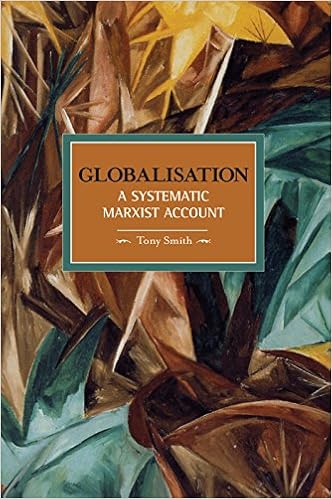
We all know something about globalisation and many of us want our politicians to fix it. Part one of Tony Smith's book reviews the leading proposals for reform.


Amazon link

---

As I mentioned in a previous post, I learned a lot from Tony Smith. Here is how he begins: the quotes below are taken from his chapter 8, "A Marxian Model of Socialist Globalisation".
"The various models of globalisation examined in part one are designed to ... provide a spur to reform existing institutions and practices.

  1. Proponents of the social state call for a renewed state commitment to social welfare and full employment. 

  2. Neoliberals advocate increased free trade and capital liberalisation, along with the dismantling of 'crony capitalism'. 

  3. Defenders of the catalytic state insist that public authorities must aggressively and comprehensively provide the necessary preconditions for a region's successful participation in the global economy. 

  4. Democratic-cosmopolitan theorists propose a global social charter guaranteeing the material preconditions for autonomy and substantive equality of opportunity."

Smith has little difficulty in establishing that all four schools of thought (since they accept the continuing existence of capitalism) fail to propose realistic measures which put a 'democratic' control of economic activity ahead of relentless global profit maximisation.

---

There is, of course, no end to the list of critics of capitalism. But the socialist alternatives are completely tarnished, are they not? By the disastrous experience of 'soviet communism'?

Smith tackles this issue with commendable rigour and honesty:
"A wide variety of objections have been proposed against Soviet-style bureaucratic central planning, widely taken to be either the only form of socialism or the form to which all others degenerate. I shall first list what I take to be the eight most significant criticisms of this framework. ..."
Smith's case against state bureaucratic-socialism is familiar:
"(i) Ownership of the means of production lies in the same hands as control of the coercive state apparatus. While this arrangement may not make the worst forms of totalitarianism inevitable, no one familiar with the historical record could deny its close association with authoritarian regimes.

(ii) Ownership by everyone in general is equivalent to a lack of ownership by anyone in particular. When private property rights to capital goods are not defined, no one has an incentive to use them efficiently.

(iii) Product quality tends to be poor. It is far easier for planners to formulate, implement, and monitor plans in quantitative than qualitative terms. The lack of an effective feedback mechanism connecting producers and users/consumers also leads to a neglect of product quality.

(iv) The informational burdens placed on bureaucratic central planning are now almost universally acknowledged to result in economic inefficiency. Central planners cannot appropriate adequate information regarding all potential inputs, all potential outputs, and all potential social wants and needs, when possible inputs, outputs, and wants and needs are all changing over time.

(v) If we take planners as 'principals' and managers of enterprises as their 'agents', centralised bureaucratic planning necessarily tends to generate severe principal/agent problems. Collective ownership leads managers to distort the information they pass on to central planners, underestimating the output their enterprises are capable of producing while overestimating the inputs required to produce any given level of output.

(vi) Authoritarian central planning is not able to develop successfully in areas where personal initiative and creative responses to unforeseen problems are important. Ordinary workers feel dehumanised and cynical, with pernicious economic effects.

(vii) State ownership of the means of production and centralised planning by a bureaucratic caste cannot match the technological dynamism of capitalism. In certain circumstances, bureaucratic central planning is able to attain considerable extensive growth, that is, growth resulting from the mobilisation of greater and greater inputs. And, in certain sectors where mass resources could be devoted and where success or failure was relatively easily measured (for example, space, military, heavy industry), significant accomplishments were in fact attained in the Soviet Union and elsewhere.

But this sort of social order is unable to generate intensive growth based on the more efficient use of inputs. The lack of incentives for managers to engage in risky activities like innovative behaviour is surely a significant factor. Managers appropriate few of the fruits of such activities when they are successful, and may suffer significant penalties when they are not.

(viii) A lack of hard budget constraints allows inefficient firms to continue in production and even expand over time.

Taking all of these factors into account, most observers conclude, it should have come as no surprise that bureaucratic central planning with state ownership of the means of production eventually generated vast material and spiritual stagnation."
It's surprising how many nostalgic communists and left social-democrats have still not taken these forceful (and thoroughly correct and legitimate) points on board.
"These considerations appear to justify the conclusion that there is simply no feasible alternative to capitalist markets with private ownership of the means of production. Market competition appears to provide private owners with incentives to ensure a level of efficiency and dynamism unattainable in either bureaucratic socialism or market socialism.

"One can accept this conclusion without having to deny that capitalism brings with it profound social costs. Financial crises, environmental crises, extreme levels of economic and political inequalities, and so on, are not likely to ever be entirely eliminated. But the harms they inflict can be lessened over time.

"If there is no feasible and normatively attractive alternative to a capitalist framework, lessening these harms must be our goal, and the failed project of collective ownership of the means of production must be unequivocally abandoned.

"In the present historical context, the burden of proof lies entirely with those who continue to call for the socialisation of the means of production [my emphasis]. Meeting this burden requires developing an alternative model of socialism capable of avoiding the fundamental structural flaws listed above."
---

You can imagine at this point how excited I was that such an incisive and profound thinker was about to unveil a model of post-capitalist economics and politics which might actually work!
"I shall adopt the model of economic democracy developed by David Schweickart, adding three modifications to make it a more adequate alternative form of globalisation."
David Schweickart's book is called "After Capitalism" (2002) by the way: I haven't read it.
"The model Schweickart defends has the following essential elements:

(i) Production and distribution are primarily undertaken within worker collectives. Workers are not hired as wage-labourers by capital; they instead join worker collectives as fellow members. There is a basic right to employment, with state enterprises providing jobs for those unable to find positions in collectives."
Hiring is the easy bit. Smith does a fair amount of hand-wringing later in the chapter when he considers how you might have to get around to actually firing workers.
"(ii) Managers of worker collectives are democratically accountable to those over whom they exercise authority, either through direct elections or through appointment by a workers' council that is itself directly elected. These enterprises are required to have representatives from a range of social movements (environmental groups, consumer groups, feminist groups, and so on) on their boards of directors, accountable to those movements."
Given the intellectual coherence and balanced judgement observed in radical social movements in the real world, I think you can guarantee that they would wreck any otherwise-viable economic enterprise. I might also mention the ample opportunities for rent-seeking and intimidation.
"(iii) Worker collectives produce public goods, inputs into the production process, or final consumption goods. Funds for the first are directly allocated to collectives by the relevant planning agencies (see below). The latter two categories of products are offered for sale in producer and consumer markets.

"In Schweickart's view, attempts to centrally plan all inputs and outputs in a top-down fashion are simply not feasible, at least not in a complex and dynamic economy. But it does not follow that capitalist market societies are the only acceptable forms of economic organisation.

It is possible to imagine a feasible and normatively attractive society combining markets with the socialisation of the means of production, that is, a society making use of producer and consumer markets after abolishing both capital markets and labour markets."
This doesn't pass the innovation test. Would Steve Jobs have got the funds he needed from the relevant 'planning agency'?
"(iv) Workers in enterprises are granted use rights to facilities and other means of production. But ultimate ownership rights remain with the local community. Workers cannot use their enterprise as a cash cow and then walk away; they have a legal duty to maintain the value of the community's investments. If sufficient depreciation funds cannot be appropriated from revenues to maintain the value of these investments, it is the responsibility of community banks to shut down an enterprise."
Shutting down a community enterprise? Yes, that's going to happen. To be fair, Smith himself worries about that but his Pollyanna assumptions that everyone would 'do the best thing' are unfortunately just so much pie-in-the-sky.
"Once depreciated funds have been deducted, the remainder of the revenues from public allocations or sales in consumer/producer markets (apart from the taxes to be considered below) are then distributed among the members of the collective according to formulae set by the democratically accountable management."
Incidentally, this focus on local communities is endearingly Victorian but hopelessly anachronistic. Modern globalised industry (which Smith agrees is a productivity advance that post-capitalism needs to build upon, not roll-back) increasingly organises both production and employee-allocation globally. Localised, and presumably small-scale communities are simply not the scale at which state-of-the-art enterprises operate at.
"(v) The origin of funds for new investment and public goods is a flat tax on the non-labour assets of all enterprises. In Schweickart's proposal, the rate of this tax is initially set by a democratically elected legislature, operating on the national level. This legislature also decides on the appropriate division of revenues between funding for national public goods and funds that are allocated to democratically elected regional and local legislative bodies.

"Each of these assemblies, in turn, must also decide upon the level of funding for public goods to be supplied in the relevant geographical area vis-à-vis the level of funds set aside for distribution to the level below it. These legislative bodies can also set aside a percentage of funds for investment in areas of pressing social needs."
It's touching that Smith thinks that allocations of resources in the billions of dollars are going to be somehow resistant to powerful lobbying, rent-seeking and every form of power-play. Plainly the human nature that Smith sees is not the same as most of us observe.
"(vi) After all decisions have been made regarding the general level of new investment and the order of social priorities, and after funds required for public goods on the national, regional, and local levels have been allocated, the remaining revenues are distributed to local communities on a per capita basis (at least this should be the presumption in the absence of compelling reasons to do otherwise, such as the need to temporarily favour historically disadvantaged regions).

"Community banks would then undertake the actual allocation of new investment funds to worker collectives. The boards of directors of these banks would include representatives of a broad range of social groups affected by the banks' decisions. New enterprises would be formed, and existing ones expanded, through allocations by community banks rather than private capital markets."
Still this idea that 'local communities' are the essential unit of future social organisation. Leading edge corporations today operate globally and have to raise resources on global financial markets. Any socialist alternative is going to have to recognise that global is not simply the additive sum of hundreds or thousands of local community banks.
"(vii) When allocating investment funds for new worker collectives and the expansion of existing ones, community banks must take three main questions into account. Is there likely to be sufficient demand for the output of the given enterprise for it to maintain the value of the community's investment and provide adequate income for its members? Will the investment provide stable employment? And is the investment consistent with the set of social priorities democratically affirmed on the national, regional and local levels?

"Extensive external financial and social audits can be regularly imposed on all enterprises and community banks to assess their performances in terms of these criteria. These independent social audits are a crucial component of the socialist version of the principle of transparency, institutionalising a level of accountability and transparency far beyond the limited neoliberal version of the principle.

"Community banks can then be ranked on the basis of the results of these audits. The level of income of the staff of a particular bank, and the amount of funds allocated to this bank for distribution in the future, are determined by the bank's place in this ranking."
I think we're looking at an impenetrable veto-network here. How many crucial innovations were funded by capitalists taking a punt? There will be precious few punts in the above arrangements.
"(viii) In Schweickart's model, there are no markets for capital assets, and so there will be no capital flight in the form of cross-border investments in capital assets. There will also be little foreign direct investment, since worker collectives are unlikely to outsource their own jobs, and community banks are assessed according to the extent they create employment in their own communities. But there will still be trade across borders.

"For a period of time, this may include trade with regions that have not institutionalised a version of economic democracy. In such circumstances, regions committed to socialist globalisation should follow the principle of fair trade rather than 'free' trade. To ensure that this occurs, Schweickart calls for a 'social tariff'." If oppressive labour practices hold down wage levels in a given region, the prices of imports from that region will be raised to what they would have been had worker income been comparable to the level prevailing in the importing country.

"A social tariff will also be imposed to compensate for a lack of adequate spending on the environment, worker health and safety, or social welfare in the exporting nation. The revenues collected by this tariff will then be distributed to the groups in the exporting country with the best record of effectively implementing anti-poverty programmes, whether or not they are agencies of the government."
A touching faith in (chronically ineffectual) do-gooding organisations and a complete lack of insight into the intractable developmental issues in the third world, particularly sub-Saharan Africa.
"I believe that three additions to this framework should be made:

"(ix) Schweickart does not investigate the monetary dimension of international trade in his model. I believe that the proposals made by Paul Davidson discussed in the last chapter are incompatible with capitalist social relations, but quite feasible if socialist production relations are established. In the latter set of circumstances, it would be possible to have something like Davidson's International Monetary Clearing Units serve as the sole form of world money. It would also be feasible to establish a set of rules that ensure that excessive trade imbalances do not persist, and that the burdens of adjusting to the imbalances that do arise are not disproportionately imposed on the most vulnerable regions of the global economy.

"(x) David Held's proposals for democratic-cosmopolitan law are also incompatible with capitalist social relations, as Chapter 4 established. But they, too, would be feasible if socialist production relations were in place. More specifically, a level of global governance above the state should be established. This would include a representative assembly selected more democratically than the United Nations, a global social charter, an international court of justice, and so on."
Ah yes, world government through a beefed-up UN. presumably with a world army to enforce its decisions. That will go down well. If only we could all get along, like a vast ant colony of genetically-related and sterile individuals.
"(xi) Schweickart holds that local communities within a nation ought to receive new investment funds on a per capita basis. In this manner, the material preconditions for both individual autonomy and flourishing communities are furthered. The force of this argument extends to the global level. There should be a democratically accountable socialist international planning agency to ensure the provision of global public goods. It must also guarantee that regions across the planet have access to new investment funds in direct proportion to their population in the absence of special considerations (such as the need to temporarily favour previously disadvantaged regions of the global economy).

"This is an extension of Held's proposal for global social investment funds, but with these funds now replacing, rather than merely 'complementing', global capital markets. In this manner, the systematic tendency to uneven development that afflicts all possible forms of capitalism could be abolished."
We know how popular transfer payments are.
"This model of economic democracy undoubtedly needs to be greatly supplemented and modified, and compared and contrasted with other approaches with which it shares 'family resemblances'. Once again, however, the goal here is not to provide a fully fleshed-out blueprint of the single best form of socialism. If the model is developed enough to show that a feasible and normatively attractive socialist alternative is possible in principle, that is sufficient."
So you can see how unimpressed I was by Tony Smith's model of post-capitalism. A fantasy of infeasible cooperation and general niceness. To be fair, Smith recognises that not everyone will be thinking altruistically of the greater good of all humanity all of the time, but his architecture kinda presupposes that.

It's what happens when you ignore biology and your model assumes a human nature which would indeed work if almost everyone was a sterile clone.

Still, even if the solution is utterly unconvincing, the analysis isn't bad. I listened to Professor Smith lecturing for an hour last night - to a rather sparsely-attended class at Iowa State - and I was impressed by what he had to say about current global economic difficulties.


He comes across as a slightly manic Bernie Sanders.

---

I am still waiting for the Martian Marxist, the social scientist who simple analyses without confected, activist rage.

I am also of the opinion that a post-capitalist future will emerge from a capitalism which has automated away almost all routine jobs. Call me a fan of AI and robotics.

What happens when the few remaining jobs are at a level of skill and intelligence denied to, say, 95% of the workforce? Those 95% will insist on a radical reordering of things, one which is probably incompatible with the reproduction of capitalist relations of production.

But it will be better.

Sunday, March 12, 2017

Humanism and terror

From "Darkness at Noon".

No. 1 is Stalin; Rubashov is a combination of Bukharin, Trotsky and Radek.
Extract from the diary of N. S. Rubashov, on the fifth day of imprisonment

"... The ultimate truth is penultimately always a falsehood. He who will be proved right in the end appears to be wrong and harmful before it. But who will be proved right? It will only be known later. Meanwhile he is bound to act on credit and to sell his soul to the devil, in the hope of history's absolution.

"It is said that No. 1 has Machiavelli's Prince lying permanently by his bedside. So he should: since then, nothing really important has been said about the rules of political ethics. We were the first to replace the nineteenth century's liberal ethics of ‘fair play' by the revolutionary ethics of the twentieth century. In that also we were right: a revolution conducted according to the rules of cricket is an absurdity.

"Politics can be relatively fair in the breathing spaces of history, but at its critical turning points there is no other rule possible than the old one, that the end justifies the means. We introduced neo-Machiavellism into this country, the others, the counter-revolutionary dictatorships, have clumsily imitated it. We were neo-Machiavellians in the name of universal reason - that was our greatness, the others in the name of a national romanticism, that is their anachronism. That is why we will in the end be absolved by history, but not they.

"Yet for the moment we are thinking and acting on credit. As we have thrown overboard all conventions and rules of cricket-morality, our sole guiding principle is that of consequent logic. We are under the terrible compulsion to follow our thought down to its final consequence and to act in accordance to it. We are sailing without ballast, therefore each touch on the helm is a matter of life or death.

"A short time ago, our leading agriculturist, B., was shot with thirty of his collaborators because he maintained the opinion that nitrate artificial manure was superior to potash. No. 1 is all for potash; therefore B. and the thirty had to be liquidated as saboteurs.

"In a nationally centralized agriculture, the alternative of nitrate or potash is of enormous importance: it can decide the issue of the next war. If No. 1 was in the right, history will absolve him, and the execution of the thirty-one men will be a mere bagatelle. If he was wrong ...

"It is that alone that matters: who is objectively in the right.

"The cricket-moralists are agitated by quite another problem: whether B. was subjectively in good faith when he recommended nitrogen. If he was not, according to their ethics he should be shot, even if it should subsequently be shown that nitrogen would have been better after all. If he was in good faith, then he should be acquitted and allowed to continue making propaganda for nitrate, even if the country should be ruined by it.

"That is, of course, complete nonsense. For us the question of subjective good faith is of no interest. He who is in the wrong must pay; he who is in the right will be absolved. That is the law of historical credit; it was our law. History has taught us that often lies serve her better than the truth, for man is sluggish and has to be led through the desert for forty years before each step In his development. And he has to be driven through the desert with threats and promises, by imaginary terrors and imaginary consolations, so that he should not sit down prematurely to rest and divert himself by worshipping golden calves. "

"We have learnt history more thoroughly than the others. We differ from all others in our logical consistency. We know that virtue does not matter to history, and that crimes remain unpunished; but that every error had its consequences and revenges itself unto the seventh generation. Therefore we concentrated all our efforts on preventing error and destroying the very seeds of it.

"Never in history has so much power over the future of humanity been concentrated in so few hands as in our case. Each wrong idea we follow is a crime committed against future generations. Therefore we have to punish wrong ideas as others punish crimes: with death.

"We were held for madmen because we followed every thought down to its final consequence and acted accordingly. We were compared to the inquisition because, like them, we constantly felt in ourselves the whole weight of responsibility for the super-individual life to come. We resembled the great Inquisitors in that we persecuted the seeds of evil not only in men's deeds, but in their thoughts. We admitted no private sphere, not even inside a man's skull.

"We lived under the compulsion of working things out to their final conclusions. Our minds were so tensely charged that the slightest collision caused a mortal short-circuit. Thus we were fated to mutual destruction.

"I was one of those. I have thought and acted as I had to; I destroyed people whom I was fond of, and gave power to others I did not like. History put me where I stood; I have exhausted the credit which she accorded me; if I was right I have nothing to repent of; if wrong, I will pay.

"But how can the present decide what will be judged truth in the future? We are doing the work of prophets without their gift. We replaced vision by logical deduction; but although we all started from the same point of departure, we came to divergent results. Proof disproved proof, and finally we had to recur to faith - to axiomatic faith in the rightness of one's own reasoning. That is the crucial point.

"We have thrown all ballast overboard; only one anchor holds us: faith in one's self. Geometry is the purest realization of human reason; but Euclid's axioms cannot be proved. He who does not believe in them sees the whole building crash.

"No. 1 has faith in himself, tough, slow, sullen and unshakable. He has the most solid anchor-chain of all. Mine has worn thin in the last few years. ... "The fact is: I no longer believe in my infallibility. That is why I am lost."
This argument is not fiction. It was exactly the worldview of the Communist Party leadership. Gramsci, channelling Machiavelli, argued that the Party was the Modern Prince.

---

Why this argument? Why now?

1. Ideological Stalinism has made an unlamented departure, but as long as there are losers in society there will be ideological leftists with a vision, a strategy and a lack of scruples.

2. Rubashov describes ideologically-driven revolutionary change in general, not limited to Stalinism: "We introduced neo-Machiavellism into this country, the others, the counter-revolutionary dictatorships, have clumsily imitated it."

Radical Islam was not on the radar in 1940 but fits all the technical criteria of totalitarianism.

3. And finally, as a matter of practicality, how could you bring about decisive transformational change without a philosophy like this?

Tuesday, August 02, 2016

Revolution back on the agenda?

Amazon Link

Marxist theory has a 'non-constructive' kind of proof that the capitalist mode of production is not the final form of society. This is simply the fact that capitalism is a class society: private ownership of the means of production (factories, machines, land, raw materials, etc) ensures that the production process replicates a class of capital-owners on the one hand, engaged in commodity production for exchange in the market, and a class of workers on the other, who own only their ability to productively labour and can do so only through employment by capitalists.

Surely this asymmetry in social role between bourgeoisie and proletariat will not echo down the centuries for ever?

So far, so arid. But Marxism also has a seemingly-ethical dimension. It is claimed that capitalism cannot develop the productive forces of society without ongoing oppression of the mass of the people. So it's not only rather inelegant as a social-structuring mechanism, it's also inefficient and bad.

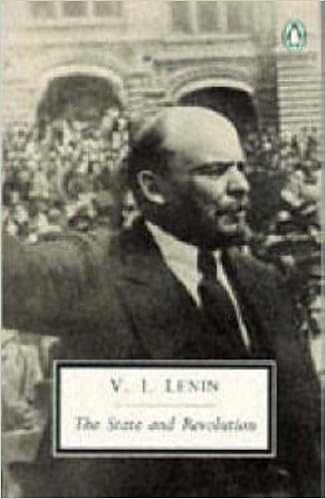
You won't get a good answer from Marxists as to whether capitalism has a built-in failure mode. Some have thought that it will collapse through its own contradictions (Marx's theory of the declining rate of profit is often fingered as the proximate mechanism) but as V. I. Lenin observed,
"... there is no such thing as an absolutely hopeless situation, since the bourgeoisie can – in principle – always find a way out."
No one disagrees however that capitalism is subject to regular cycles of boom-and-bust. In the 'bust' phases the elites are always just fine; it's the masses which end up unemployed and desperate. (I remind you about Peter Turchin's forthcoming book, "Ages of Discord", although I believe Charles Murray's "Coming Apart" would tide you over until September).

Marxist theory suggests that the working class can take advantage of an acute crisis to transcend capitalist relations of production, (this would be the violent revolution, led by a revolutionary communist party), and bring about a post-capitalist society in transition to communism.

With 168 years of research since the publication of the Communist Manifesto (1848) what can we say about the viability of such a post-capitalist society?

Marx very wisely declined to speculate - there simply wasn't the data. This meant of course that his discussion of the target society was very abstract - and in some cases plain weird (Chapter 2):
"... nothing is more ridiculous than the virtuous indignation of our bourgeois at the community of women which, they pretend, is to be openly and officially established by the Communists. The Communists have no need to introduce community of women; it has existed almost from time immemorial.

"Our bourgeois, not content with having wives and daughters of their proletarians at their disposal, not to speak of common prostitutes, take the greatest pleasure in seducing each other’s wives.

"Bourgeois marriage is, in reality, a system of wives in common and thus, at the most, what the Communists might possibly be reproached with is that they desire to introduce, in substitution for a hypocritically concealed, an openly legalised community of women.

"For the rest, it is self-evident that the abolition of the present system of production must bring with it the abolition of the community of women springing from that system, i.e., of prostitution both public and private."
Lenin, having observed workers and peasants councils (soviets) in the Paris Commune and the 1905 revolution in Russia proposed that the politics and economics of the post-capitalist society would indeed be organised by a hierarchy of soviets (local, regional, national, by industry and so forth).

How would this work in detail? I recall Ernest Mandel suggesting that opinion polls might do the work of capitalist speculative investment in new product introduction, although I'm not sure that Apple would ever have happened if it had required a senior soviet to vote the financial resources. The socialist Steve Jobs would have had plenty of oversight in his work, and would not have been permitted remuneration beyond that of any 'skilled worker'.

So here is the heart of the problem. Marxists have supposed that absent capitalist reification - the opacity of social relationships leading to atomisation of society - humanity's inherent social solidarity would emerge and we would all work cooperatively together to eliminate oppression and develop society's productive forces in harmony together indefinitely.

This was the root of E. O. Wilson's famous critique of Marxism, "Wonderful theory, wrong species."

Human nature makes us rather clannish and nepotistic, with sharp clines of empathy. Given that we are not all clones of each other, this makes rational evolutionary sense so will not go away.

What would actually happen in the post-revolutionary state? We know what Oscar Wilde thought about socialism, 'too many meetings', and we know what happened to the post-revolutionary states in Russia, Eastern Europe and China - bureaucratisation and stagnation.

Stalinism was explained away as 'inadequate development of the productive forces' but Marxist blank-slatism is the real villain here. In the end, the people who control resources at the centre of society will make decisions based on their own interests and all the 'delegated powers' and 'rights of recall' will count for nothing, as the mass of society gives up on 'all those endless meetings' and demobilises.

When it comes down to it, we just don't care that much about non family-and-friends.

Is there a form of society which is post-capitalist, freer and more potentially successful? I have no idea, but the Marxist model in its current human-nature-naive form isn't it.

Perhaps a combination of super-automation and widely-spread social ownership of the robots will propel every last one of us, proletarian or bourgeois, to the status of ancient Greek aristocrats with a lifetime of luxury to look forward to.

Sounds as likely as anything else I've heard about the future.

---

This is not as bizarre or speculative as you might think.

Improving AI-driven automation will increase overall productivity and decrease costs for things like robotic personal assistants (just beyond the state of the art right now).

This could eventually fund a 'basic income' which, with a mature virtual reality infrastructure, could keep the left-hand side of the bell curve quiescent for ever. They might even tell you they were already in paradise - before returning to 'Call of Duty VR'. No doubt there will be more highbrow versions extending - how far, I wonder? - up the right-hand side.

In such a process of runaway automation, note that the former working class has in fact been expelled from the process of production. Literally, they are no longer proletarian, but a group wholly parasitic upon the automated economy.

An analogy would be to imagine a people who inhabited such a benevolent natural environment that all their needs from the most basic (food, shelter) to the most refined were instantly and effortlessly available to hand.

If such an AI-automation economy is the means by which 'communism' (full abundance) is to be achieved, we should be careful what we wish for.

As well as the dysgenic dangers of relaxed selection (which we already experience in the West), I suspect that without any meaningful challenges, the population would rapidly disintegrate into chaos, anomie and violence .. unless this utopia provides for omnipresent VR capable of realising any fantasy-endeavour whatsoever.

And it was for this that the great wheel of human history turned?

---

The second part of this article: "Communism would be like - what?".

Click on the link to read it.