Showing posts with label Genomics. Show all posts

Wednesday, January 17, 2018

The dream of 'designer babies'

Some things in the media are so mind-numbingly stupid that I feel frozen into dumbness: 'Where would I start?'

Where is the politician or pundit who simply states - in exasperation:
"Why wouldn't we want designer babies? Is random better? And when you choose your partner with care, aren't you trying - in  part - to optimise your children? Listen people, we already do designer babies! And that's good and indeed evolutionarily obvious."
OK, I never heard that. Ever.

But we will soon be able to make more informed choices about the genomes of our offspring. Three obstacles:
  1. We need to understand the phenotypical effects of alleles (existing or even new)
  2. We need certainty about the effects of genetic engineering - no mistakes
  3. We need to make it easy and convenient to access and then implant the modified cell.
So, once fixed, my question is: what do we want to do?

---

Issues

Firstly, there seems to be a biological recognition of kin-similarity. Babies swapped unknowingly at birth who grow up with unrelated 'parents' do seem to feel that something is wrong. I don't think we understand causally-genomically what is going on here and changing too many alleles, increasing the genomic distance between parents and child, may start to impact the relationship.

Secondly, you can't optimise everything. It may be true - as Steve Hsu has insisted - that high IQ tends to correlate with general health and superior performance in most areas. And if it's a question of minimising genetic load you can see why.

But beyond a certain point, high IQ seems to require that more of the brain is devoted to the processing of abstractions leaving less for other things. This is probably part of the underlying etiology for different personality types.

There seem to be few highly-intellectual axe-wielding warriors.

Thirdly, there is a feeling that although some parents might want their children to be great athletes or painters or musicians or novelists or priests or therapists or .. parents, there is something special about IQ.

Without intelligence we are sunk, none of the rest is going to work as our civilization will collapse. And that has been true up to now: all that smart fraction stuff - that you need a lot of folks with IQ 105+ just to run a complex society. And that the real innovation comes from those world-class people with IQs in excess of 160.

But .. I have not the slightest doubt that by the time we are able to routinely engineer the genomes of our offspring, we will have AI systems which are conceptually-competent way beyond the smartest humans that we can envisage.

We know what really smart people do: they internalise and extend a vast set of abstractions and manipulate them in interesting and complex ways to engage with problems. The lower foothills of this space are already colonised by deep-learning systems: their future seems pretty scalable.

It's not at all clear that the destiny or destination of the human race is or should be unbounded smartness, once we correct the errors of mutational load.

---

I've just finished reading "The Strangest Man: The hidden Life of Paul Dirac, Quantum Genius" by Graham Farmelo.

Amazon link

Dirac was plainly one of the smartest people who have ever lived. He is also generally assessed as autistic (Asperger's syndrome). In Farmelo's account, although not chronically unhappy, he hardly seems to have led a fulfilled life. His total, obsessive focus on developing theory seems to have led to a final disillusionment with the state of physics when he died (1984) - and with his own life's work.

I suspect that the first epoch of empowered genomic engineering will not be a mad rush for ever higher IQ, with the target of the ubiquitous production of von Neumann equivalents. Instead, I suspect we will edit out the obvious errors and reinforce the talents already latent in the specific underlying genome.

Let a thousand flowers bloom.

---

I suspect the second epoch of genomic engineering will be entirely different.

Thursday, September 07, 2017

Only engineering convinces

Amazon link

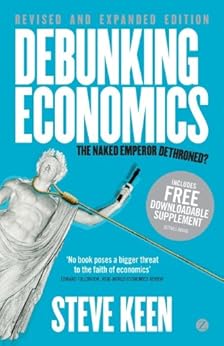
I'm only in the earliest stages of Steve Keen's critique of neoclassical economics (above). He's very successful in exposing their logical inconsistencies and utterly implausible assumptions.

From my own amateur reading of the standard texts, I recall authors conceding these points on the excuse that (i) we can learn something from pure models, and (ii) that despite the flawed assumptions the results seem surprisingly accurate.

I know that Dr Keen is underwhelmed by such hand-waving and will address those points in later chapters.

---

Keen is somewhat puzzled by the fact that leading economics journals won't see the force of his (undoubtedly correct) arguments or publish his erudite papers. He has some explanations in terms of cultural inertia, the apparent successes in the past of the neoclassical programme and even the usual lack of real-world consequences of getting the foundations so very wrong. He admits wryly that economics just isn't like physics or engineering.

This seems to me the crux of it:

  • People will believe all kinds of things if doing so underpins their self-interest.

  • If there are no practical consequences (ie nothing that can't be explained away), mere argument will never gain traction.

  • If you believe humans will never fly (“if God wanted man to fly he would have given him wings”) then only an aeroplane will refute you.

I'm waiting for the final chapters where Keen unveils his alternative macroeconomic model which, I believe, successfully outperforms those of the neoliberals.

---

Remember those stories of how racist AI systems were categorising criminals by their mug shots? Plainly, said liberals, crime was a matter of unfortunate circumstances. How could faces (which identical twins suggest are genetically shaped) have anything to do with it?

Yet it was engineering - hard to argue against.

The Economist (liberal susceptibilities very much on hold) reports today: "Advances in AI are used to spot signs of sexuality".
"When shown one photo each of a gay and straight man, both chosen at random, the model distinguished between them correctly 81% of the time.

When shown five photos of each man, it attributed sexuality correctly 91% of the time.

The model performed worse with women, telling gay and straight apart with 71% accuracy after looking at one photo, and 83% accuracy after five. In both cases the level of performance far outstrips human ability to make this distinction.

Using the same images, people could tell gay from straight 61% of the time for men, and 54% of the time for women. This aligns with research which suggests humans can determine sexuality from faces at only just better than chance."
Sexual orientation not so much a lifestyle choice after all.

Wednesday, August 02, 2017

My Personal Genome Project report has now arrived

Personal Genome Project Logo

I discovered the Personal Genome Project in September 2014 and immediately tried to sign up. They weren't taking new volunteers.

In December 2015 (15 months later) I finally did succeed in registering, but no-one was very interested in taking a spit-sample.

In May 2016, my sample collection kit arrived and I duly spat for science. I returned my sample for sequencing, at which point they stored it .. and nothing whatsoever happened.

It is now August 2017. Fifteen further months have passed and this morning I received an email from the PGP. I have been sequenced!

---

My genome will now be released for research. Was there anything interesting in the report? No. Was it different in any important respect than that which I already received from 23andMe? No.

As usual, the report is mostly centred around SNPs. Unfortunately most interesting phenotypic traits are polygenic, the full connections with genomic variation yet to be unravelled. The SNPs - taken individually - simply adjust your odds ratio up or down for various conditions. Example: some of my SNPs elevate my odds for baldness; others lower it.

Insofar as the science centres around connecting my personal genome with my own phenotype characteristics, research should now focus on the latter.

I look forward to the first request for the promised punch biopsy.

Friday, July 28, 2017

Smart pets? An *obvious* spinoff ...

From Steve Hsu today at Information Processing:
"Work on cognitive enhancement will probably be done first in monkeys, proving Planet of the Apes prophetic within the next decade or so :-)"
Many (most?) of the alleles implicated in superior cognitive functioning will doubtless have other physiological effects. This 'multiple and diverse impact' of genes is called Pleiotropy.

For this reason - when we have a list of the relevant IQ alleles - we would be ill-advised to shift into genome-editing mode and just flip all those genes to their 'enhancement' variants.

Naturally, there'll be loads of research first on mice, monkeys (expensive) and .. cats.


Link

Contra Wittgenstein, I may yet share my life with a truly biologica Aineko before I die.

---

(Nothing worse than being incessantly nagged by an entitled creature which believes itself master or mistress of the universe and which additionally possesses claws).

Monday, February 13, 2017

"The Genome Factor" - Conley and Fletcher

Amazon link

For decades the Standard Social Science Model has dominated academic social science and mainstream elite thinking. Broadly speaking, the model states: (i) there are no innate precursors for cognitive traits such as personality, intelligence, character and interests - everything is environmental; and (ii) consequentially, there are no innate psychological differences between women and men - or between blacks, whites, east asians or the Ashkenazim.

Since everything is environmental (the 'blank slate' hypothesis) then any observed differences must be due to selective discrimination which can therefore be addressed by public policy. The consequence is a litany of discriminations with which we are all familiar: sexism, racism and various phobias.

Plainly there are differences in the physical realm. Some sports are gender-segregated, for example. But even acknowledging that makes people nervous. Physical differences are played down as inconsequential.

Less well-educated folk know that the blank-slate hypothesis is rubbish. A little experience of families, a little observation both of everyday life and of the world at large will convince most people that it is more likely that the moon truly is made of green cheese.

So what explains the astonishing durability of the SSSM?

Plainly it speaks to that powerful liberal sense of compassion and fairness highlighted in Jonathan Haidt's Moral Foundations Theory.  Most western democracies are multiracial, patchwork 'internal-empires' - the legacy of centuries of immigration and in some cases slavery. Race- and gender-blind application of legislation and social norms is considerably enhanced by taking the view that formal social and legal equality is also biological equality. Once the argument for population-genetic differences is admissible, it seems to liberals that the floodgates of discrimination would be opened once again.

The ideology of the SSSM also makes it easy to justify generic immigration: high, low and zero-skilled ('everyone is the same'). This can be very convenient for company executives who suffer few of the frequently-negative social consequences of the latter.

Recent advances in genetic sequencing over very large populations pose a grave threat to the convenient untruths of the SSSM. It is already known that almost all psychological and behavioural traits of interest to social scientists are heritable at c. 50-60%. This means that about half the trait-variation in the population is attributable to genetic differences, the rest being due to differences in contemporary shared and personal environments.

Apart from hands-on confirmation of these heritability results, genomics also adds personalisation. Once we understand how to map a person's genome to such phenotypic attributes as IQ, personality, character and a myriad of narrower traits (such as political orientation) with high precision - and correlational accuracies of 0.7-0.9 seem potentially in reach - then it seems that genome truly is life-destiny. And most likely this is the case. The life-history similarities of twins, even when raised apart, tends to show the way.

Social scientists mostly ignore the incoming tsunami of new research. But the genomic telescope has been invented, it's not going to go away. A more sophisticated strategy is deployed in "The Genome Factor" by Conley and Fletcher. The authors are sociologists by profession but research the social science implications of genomic surveys. They had a choice - to go with the trend of such research to transcend the SSSM - or to find ever more intricate arguments to preserve it.

In choosing the latter approach, their strategy is to freely accept the theoretical results of population genetics and the empirical data of GWAS (genome-wide association studies) where this does not threaten blank-slatism. They then labour to find fault in every study which might cast it into doubt while feeding plenty of slack to the many purported environment-only explanations of race and gender differences. You will see plenty of uncritical space given to: continuing discrimination and poor institutions (pp. 107 ff.); subconscious bias, priming and stereotype threat (appendix 5).

In chapter 4, the authors address the claims of Herrnstein and Murray's seminal 1994 book, The Bell Curve. The three theses they wish to 'take seriously' are (to summarise): (i) increasing genetic stratification due to cognitive meritocracy; (ii) increasing assortative mating for intelligence; (iii) cognitive dysgenics via reduced fertility in the cognitive elite.

They announce, to their evident satisfaction, that none of these theses is born out by the evidence. But how convinced should we be by their arguments? The answer is, not very. There are many confounding variables - particular the massive changes in education and employment practices over the decades relevant to analysis - as Conley and Fletcher themselves spell out. In some cases the phenotypic attributes measured do, in fact, accord with Herrnstein and Murray's theses but the authors rapidly draw our attention to their underlying genetic correlates, as derived from GWAS.

Here they find no such trends. But unfortunately, we do not yet know the genetic markers for the relevant cognitive traits. Instead, the genomic indicator the authors use is the incredibly noisy 'polygenic score' (PGS). All we can really conclude is that the effects are small, and that as far as Herrnstein and Murray's proposed theses are concerned, it's too early to be sure.

Chapter 6, 'The Wealth of Nations', engages with Ashraf and Galor's 'Goldilocks' hypothesis of correlations between degrees of genetic diversity (too much in Africa?) and higher income and growth. Yet the correlations are poor (p. 124).  I wish they had engaged with work such as Garett Jones' 'Hive Mind', which focuses on ideas that country differences in IQ and size of the 'smart fraction' have something to do with it. Jones finds remarkably high correlations. But you can see the dangers.

So this is a book with an agenda although I think it's subconscious bias. The authors take too much pleasure in 'refuting' challenges to the core doctrines of the SSSM to make me think they're just doing so to protect their positions.

There are things to learn from this book. As critics they look for every conceivable flaw in twin and GWAS studies - this is socially useful. They also explain various techniques such as GWAS well, although the book is too technical and too dry for both the general public and mainstream social science academics.

In all, I regard this book as a missed opportunity.

Saturday, September 03, 2016

The Experience Room

Look at pictures of your parent's house as compared to yours. It's a bit cluttered but in essence not a lot different, is it?

Not as many electrical points.

It's tempting to assume that, like the bicycle, we've got there. We know how to make the ideal person-cave.

Not at all. We're in the interregnum while they figure out programmable matter: self-reconfiguring smart dust, computronium.

You know, like how the Terminator gets smashed up, then flows like a black fluid back into .. the Terminator.


The house of the future. It's made of smart matter - tiny programmable components which attach to each other to form chairs, tables, rugs, pictures and screens. We sometimes call computers a case-study of 'deferred design'; the future dwelling is deferred décor.

Your apartment will simulate any reality by creating smart-dust avatars (telepario) with the floor, walls and ceiling showing synthesised scenes. VR without the helmets.

You might still run into the walls, though. Much better to directly stimulate the brain. Emulate all sensory inputs and interpret all effector outputs in a totally simulated environment.

How many SF stories have we read with that theme? The slippery slope to the prospect of the brain in a vat, so unsettling at the end of Dan Simmons's spooky 'Flashback'.

We're living the transitional decades, waiting for AI, nanotech, genomics, neuroscience and materials-tech to catch up. The world will then lurch to a very different place.

Friday, August 05, 2016

Economics and Human Nature


I was reading the Wikipedia article, "Marx's Theory of Human Nature".

Educated people in the mid-nineteenth century, mostly middle-aged white males like Karl Marx, were aware that:

  • People differ in intelligence and temperament
  • Such differences run in families
  • Poor upbringing, such as mistreatment or malnutrition, can stunt development.

What they didn't have were appropriate psychometric instruments, and tools (twin studies, GWAS) which allow estimation of the relative contribution of genetic vs environmental differences.

As Marx was full of righteous anger against the capitalists, championing the downtrodden workers (who at the time were extremely oppressed, malnourished and ill-educated) he had ample grounds for believing that in a benign social environment people would be a whole lot smarter and nicer.

Still, 'From each according to his ability, to each according to his needs," does not suggest a complete belief in necessary equality of outcomes.

I'm interested in the concept of the re-invention of Marxism for the 21st century, factoring in all we've learned about human nature - especially in the last few genomics-rich years.

But that's for another time.

You would think that bourgeois economists might have been tracking the latest theories of the raw material of their discipline, namely people, but a cursory reading of any elite periodical (The Economist will do) confirms their dedication in looking the other way.

Greg Cochran had an amusing piece on this a few months back which I really liked: "Economists and biology". It starts like this:
"Naturally, economists know a lot about human biology and evolution, just as civil engineers have to know about the properties of timber, concrete and steel. They have a good grounding in psychometrics, behavioral genetics, and quantitative genetics – how else could they do their job?

"Populations vary in traits that play key roles in economic activity and growth – in intelligence, asabiya, savings propensity, etc – you have to be aware of that variation, else whole continents would be economic mysteries. In the same way they know that those observed differences are a product of selection – which means economic historians think seriously about psychometric changes over time and their consequences, such as the Industrial Revolution. That kind of analysis helps predict where modern economic institutions can be successfully introduced, and where they cannot.

"Yet even Jove nods. Sometimes even tenured professors make serious errors on fairly elementary topics. Like anyone else who has made a mental typo, they welcome polite correction."

... more.
Yep. Sure they do.

Friday, May 13, 2016

The Economist explains about science - quite well, actually

I am frequently irritated by pious lectures from The Economist's young writing team as to how the affairs of the world might be better ordered. But the Science and Technology section sometimes does it right - applying sophisticated thinking to get to the essence of a contemporary issue.

This week we have an excellent account of the new ideas underlying that exciting new genome analysis technique, SDS, which I mentioned in my last post.

Here's what they have to say:
"The team’s technique looks for changes not in alleles themselves, but in the DNA that surrounds those alleles.

"If a particular allele is more beneficial than other variants of a gene, it will tend, as lactose tolerance did, to spread through the population. As it does so, it will carry with it neighbouring DNA which is not strictly part of the gene and does not affect its function. This DNA can thus mutate without damaging the allele. And it is the amount of mutation this peripheral DNA has undergone which is the giveaway.

"DNA neighbouring an allele that has recently spread quickly will have had less time to accumulate mutations than that near one which evolution has been ignoring. By looking for evidence of mutations around particular alleles, Dr Pritchard and his team can reconstruct their history.

"Apply the method to lots of people, and it is possible to discern what evolution has been up to."
---

If only The Economist would apply the insights of contemporary behavioural genetics to the great affairs of the world. Here is my suggestion for an Economist Special Report:
"Is there something about the genomics of Europeans/Asians which enables them in principle to run successful democracies?"
If they wish, they can have the null hypothesis that the answer is no.

Let me suggest some reasons why this is even worth considering (apart from evidence in the actual world, that is):
- a democracy replaces kin- and tribe-based interest-mongering with an atomised population delegating conflict resolution to a formal and non-violent elite

- in a democracy, leaders who wield power are expected to hand it over in the event they lose an election, regardless of the idiots who won it

- if your sectional group has a problem, you are expected to wait for an election until it gets resolved; and then suck it up if your group does not succeed in winning power.
None of these things seems the kind of thing social animals usually get selected for.

Psychologically, democracy would appear to require the majority of the population to exhibit:
  • an immense amount of forbearance (self-control and future time-preference) 
  • pervasive intelligence (needed to make institutions work and, in fact, to buy into them) 
  • generalised trust (required for networks of relationships over time and space).
None of these psychological traits seems to be ancestral.

Historical defaults are:
  • to seek immediate redress for wrongs ('an eye for an eye')
  • to not be that capable of handling conceptual abstractions
  • to trust only those you or your neighbours can actually vouch for.

So we have some research to do here, checking the genomes of societies which have managed to sustain democracy over the decades or centuries vs those populations which can't seem to get it together. You'd be looking for elevated frequencies of the many relevant alleles of small effect.

By the way, the payoff to democracy - if you have the sort of people who can get it to work - is a scalable, developing economy and a benevolent social environment.

A great prize for inclusive fitness if you can get there.

Thursday, December 17, 2015

In which I sign up with the PGP


Back in September 2014, I tried to sign up with the Personal Genome Project, based at UCL in its UK incarnation (Harvard Medical School in the States). Sadly, this proved so popular that admissions had closed by the time I tried. But now they're open again and I've signed up!

It's a process which selects for both intelligence and perseverance. An online exam has to be passed testing your understanding of their ethics policy, the risks and dangers as well as your basic understanding of genetics. The whole thing took me an hour and a half.

They try to scare you off:
"Unanticipated uses of your data and cell lines

"The list of potential uses of your data and cell lines by other individuals is diverse and sometimes worrisome. The benefit of these things is that other researchers will use them in their own work, greatly facilitating the process of scientific research. Other researchers might also create their own interpretations of your genetic data -- and these could make incorrect claims regarding your predisposition to traits and diseases that we cannot control.

"Someone might match your public data against other genetic databases to find matches for yourself or relatives - this includes criminal and forensic DNA fingerprinting databases as well as other genetic research studies.

"More nefarious uses are also possible, if unlikely. DNA is commonly used to identify individuals in criminal investigations. Someone could plant samples of DNA, created from genome data or cell lines, to falsely implicate you in a crime.

"It’s currently science fiction -- but it’s possible that someone could use your DNA or cells for in vitro fertilization to create children without your knowledge or permission, or to create human clones."
Anyway, I'm good with all that.

Hopefully the UCL process will now run and at some point I will be asked to provide a DNA sample.
"You may be invited to provide additional tissues or other specimens as approved by the study and the UCL REC ...

"Description of certain specimen sample collection procedures:

"(i) A skin punch biopsy (about 3–4 mm in diameter) is collected from the underside of the upper arm or hip and requires local anaesthesia. Anaesthetic cream is applied and covered with a bandage for 45–60 minutes then wiped off and swabbed with alcohol to sterilise the area. Then a 3‒4 mm skin biopsy is obtained. A bandage and antibiotic ointment is applied.
...
"The ... skin biopsy may involve pain, bleeding and/or fainting, and may also cause temporary bruising and/or infection at the site of puncture. Some degree of permanent scarring can be expected from the skin biopsy procedure."
Under 'Benefits' the documentation states:
"ARTICLE VII: Benefits

"7.1 No benefits to you

"You are not likely to benefit in any way as a result of your participation in the PGP-UK."
So cool.

Sunday, June 07, 2015

Sequencing Dad

How much can you tell just from someone's genes?

Here's a thought experiment. Suppose you could copy and recreate a person's genome pretty much exactly, give or take a few mutational errors. You could implant this genome-copy into an egg cell, bring the resulting foetus to term and allow it to grow into a full adult. How similar would the copy-person be to the original?

Of course, this is not a thought experiment. I'm simply describing the case of twins separated at birth. And how alike are these twins? Well, in appearance, personality, health and intelligence they are as alike as ... twins.

If we understood the human genome in all its SNP and copy-number variants, we wouldn't need to recreate a human copy, we would simply read off the attributes of the person with that genome. Police profilers can already do this for many traits (I mentioned recently facial reconstruction from DNA samples). In the future we will be able to know and do much, much more.

It's simplest if you donate a sample of your DNA to a gene-sequencing company. My mother and myself have sent our saliva kits to 23andMe (here's my report) and even with the restricted coverage currently offered there's lots to learn.

My father died in 2009, before the age of consumer genomics. If we had his DNA we would know quite a lot about his health and personal traits right now; and of course in the future we would know so much more. Personality, health and intelligence would be my interests.

Forensic techniques get better all the time. We have some of his clothing and other personal possessions; there must be traces of his DNA. If we wait a while till the prices come down, I think there is an excellent chance we will be able to find samples of his DNA and sequence them. Our family genetic history will take a further step forwards.

I wrote a little piece for sciencefiction.com about this a while back.

Thursday, January 15, 2015

Predicting IQ across the world from genotypes

Early days for this - I wrote about it last November, where I tried to 'predict' my own IQ. Now a much better article has appeared, written by Anatoly Karlin. Interesting stuff, highlighting the ground-breaking research of Davide Piffer.

Wednesday, October 08, 2014

Best introduction to human genomics

Puzzled by your 23andMe/Promethease results? Having trouble figuring out what SNPs are and what they're good, or bad for? Time to learn some human genetics and genomics.


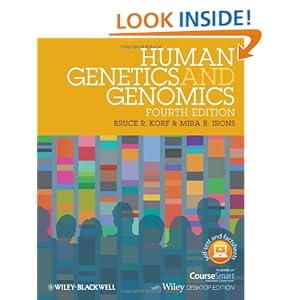
"Human Genetics and Genomics" (4th Edition) by Bruce R. Korf and Mira B. Irons is a bird's eye view of the basics of molecular biology through to the technologies of genome analysis to the medical implications of DNA and chromosome variation. It's aimed at medical students, so there are case studies to keep it real.

Chapter 1 starts us off with a tour round human DNA. We look at how it's structured, how it's replicated in cells and how DNA is transcribed into proteins. We take a quick look at epigenetics (the way some genes can be chemically silenced - switched off).

Chapter 2 looks at genetic variation. This covers single nucleotide polymorphisms (SNPs), DNA repair mechanisms, gene duplication and its role in evolution. PCR (Polymerase Chain Reaction) as used for forensic analysis of DNA samples amongst other things is also described.

Chapter 3 is 'Patterns of Inheritance'. Here you'll learn how to take a family history looking for dominant or recessive patterns of Mendelian inheritance. We also look at sex-linked inheritance (X or Y chromosome location of the gene in question), mosaicism and genomic imprinting.

Chapter 4 describes the Human Genome Project and the history of attempts to find out where on the human chromosome set a gene of interest (often disease-causing) actually resides. You'll meet some common terms such as linkage disequilibrium, which is carefully explained. The working example in this chapter is cystic fibrosis.

Chapter 5 discusses 'Multifactorial Inheritance'. Most 'quantitative traits' such as height, personality and intelligence are under the control of hundreds or thousands of alleles of small effect. The same is true of many diseases. So in this chapter we learn about heritability, additive and threshold models of multi-allele effects and that very latest thing: genome-wide association studies (GWAS) which are shedding light on .. almost everything.

Chapter 6 raises its gaze to the organisation of genes into chromosomes. Sadly, this is another level where errors can occur (e.g. chromosome 21 trisomy leading to Down Syndrome) and there are plenty of more subtle things which can go wrong (deletions, duplications, inversions, rings, translocations). Characteristic diseases and syndromes duly follow.

Chapter 7 looks at Population Genetics. We learn about the Hardy-Weinberg equation (very clear explanation) and how it is used to work out the carrier frequency of a recessive disease in various populations. The working example here is Sickle Cell Anaemia.

Chapter 8 focuses on Cancer Genetics. Cancer is a genetic disease, emerging from a cascade of errors in those genes which regulate cell development and division. We now have a causal narrative of the mechanisms behind many cancers, as this chapter explains in good detail.

Chapter 9 looks at chromosome translocation with specific application to Down Syndrome.

The remaining chapters (10-17) are shorter and look in detail at:
  • Molecular diagnosis of conditions based on genetic testing
  • Newborn screening (e.g. for PKU) 
  • Developmental genetics (CHARGE syndrome is the example) 
  • Carrier screening (Tay-Sachs in an Ashkenazi context is the example in this chapter)
  • Genetic risk assessment (companies like 23andMe are discussed in some detail)
  • Genetic testing for risks of cancer (BRCA1 and 2 is the example)
  • The genetics of drug response - Pharmacogenetics (example: malignant hyperthermia)
  • Emerging treatment for genetic disorders such as gene therapy.

This book was published in 2013 so it's pretty much up-to-date. If you're not a medical student with good recall, have Google/Wikipedia next to you as you read it: most terms are explained - and then you come to something like Epistasis!