Showing posts with label weight training. Show all posts

Tuesday, November 14, 2017

Things they don't tell you about exercise

From Dr Mark Porter today in The Times (emphasis added):
"The real risk [of cardiac arrest] occurs when you push yourself, as can happen in a competitive setting (the squash court) or, as I discovered at the weekend, when hiking up and down the Jurassic Coast with two physically fit daughters.

Older people with “hardened”, furred-up arteries are likely to develop chest pain (angina) if they over-exert, giving them a warning sign that they need to slow down. In advanced cases this can occur on the flat after walking a couple of hundred yards, but with minor narrowings the pain may be evident only 10 to 15 minutes into a cycle ride. If you try to push through the pain, the starved heart muscle beyond the narrowing can trigger a cardiac arrest. Sensible people stop.

More of a concern are silent “soft plaques” that coat the lining of the coronary arteries of otherwise outwardly healthy middle-aged and elderly people. These are like poached eggs covered in a thin crust, and the shearing action caused by the twisting motion the heart adopts when it is beating at very high rates can cause them to rupture, with catastrophic consequences.

The fatty pool (the yolk of the egg) is released into the narrow coronary artery, triggering a clotting reaction that can block blood flow, causing chest pain and starving the muscular heart wall (a heart attack or myocardial infarction). And if you are my age it is often not a matter of if you have some of these plaques, but how many.

This is the rationale behind wearing a pulse-rate monitor and capping your heart rate during exercise as you get older (see the formula below). This is one reason why I am sceptical of the trend for high-intensity workouts that require you to max out on a bike or treadmill in short blasts rather than go for a steady ride or jog for 20 minutes. In my opinion this type of interval training is highly effective but, for the over-50s, best limited to lifelong athletes."
Peta Bee continues:
"while couch potatoes face impending doom in the form of a raised risk of heart disease and diabetes, the aspirationally athletic are encountering their own set of health issues — injuries that threaten to cause long-term harm if left untreated.

Hardcore workouts and high-intensity interval training sessions have contributed to a shift in our perception of what is required to get fit. A survey of more than 4,000 people from across the UK, commissioned by Bupa health clinics, reveals that more than a quarter of gym-goers assume that they have had a good session only if they feel pain during or after it.

Pushing through the pain barrier is taking its toll, with 4.5 million or 43 per cent of people in training for a fitness challenge getting injured in the process; 60 per cent of those who encountered a strain or pulled a muscle or worse never sought treatment and 22 per cent carried on regardless.

...

Lifting weights

Common problem: Haemorrhoids

Prevention

A trend for lifting heavy weights has resulted in an unexpected rise in haemorrhoids, or piles, among gym users. “Weight training is a common cause as people often hold their breath while lifting weights, which forces the air in your lungs downward, putting pressure on your internal organs and the veins in your rectum,” says Dr Amyn Haji, a consultant colorectal surgeon at the Whiteley Clinic in London. “As a result, the veins near your anus become swollen and are forced outside the body, which can cause uncomfortable and sometimes painful haemorrhoids.”

Treatment

In some cases haemorrhoids disappear within a few days. “However, I’d recommend seeing a qualified personal trainer to help you perfect your breathing technique while weight training,” Haji says. “To prevent it from worsening, avoid weight lifting if you have already developed the condition, drink plenty of fluids and buy some over-the-counter medicines — there’s a variety of creams, lotions and gels available to treat the problem.”
I had to stop weight training at the beginning of August as I was experiencing pain in my elbow joints (both arms) and in my forearm tendons. You know it's bad when you have problems lifting a mug of coffee, or using the loppers in the garden (yesterday).

Happier days. I started home weight-training in September 2016 - (link)

It's now November 2017, and the last three months have resulted in essentially no improvement, despite my having ceased lifting. I self-diagnosed as RSI and expect a long period of slow recovery. I was lifting at ridiculous levels for someone with no real history: squats at 28 kg, biceps curls at 23 kg. Idiotic at age 66.

Monday, August 21, 2017

Exercise fetishism, genetic confounds


I observed a few days ago that, at age 66, my physical capabilities were in visible decline.
"Let it be noted that in my mid sixty-sixth year I finally realised that my body was not immortal and that age would wreak its toll on both competences and recovery time.

"I observed recently that due to over-enthusiastic lifting, I was now experiencing chronic elbow joint and tendon twinges which have not yet recovered. As a consequence I have to rethink this whole weight-lifting thing.

"I suspect I will be doing more running and cardio work going forwards, with strength stuff more focussed on the core and upper back, where I have historically had muscle issues. Biceps and triceps can maybe go hang!"
So at some point I'll be packing away those weights, and going for a brisk walk rather than a run.

But will it make any difference?

---

We're led to believe that vigorous exercise is the only way to stave off the myriad complaints of old age: heart disease, cancer, dementia .. .  But such exciting and well-publicised studies are correlative and seldom investigate genetic confounds. The only way to be sure is to conduct twin studies.

And so I was led to this news item: "Exercise Differences Do Not Produce Longevity Differences in Identical Twins". You should read it, but I will just quote the bottom line.
"High physical activity level was associated with longer lifespan when looking at non-identical twins that differ for their genetic background.

"However, in identical twins, that share the same genetic background, in pairwise analyses comparing physically active members of a twin pair with their inactive co-twin, there was no difference in lifespan.

"Our results are consistent with previous findings, that animals that have high aerobic capacity are physically more active compared to animals with low aerobic capacity. The findings in human twins were in agreement with this: discordance in physical activity level was clearly more common among non-identical twins than in identical twins showing an effect of genetic background on physical activity level.

"Vigorous physical activity in adulthood did not increase lifespan in human twins, even though physical activity is well-known to have various positive effects on health, physical fitness, and physical function.

"Based on our findings, we propose that genetic factors might partly explain the frequently observed associations between high physical activity level and later reduced mortality in humans. "
I therefore conclude that backing off from intensive physical exercise is unlikely to have much impact on either my general state of health or my longevity, assuming I avoid perverse outcomes such as complete indolence or gross obesity.

We sometimes counterpose exercise to everything else we do, as if our bodies would turn into jellyfish if we failed to lift those weights, or run those miles.

But formal exercise simply adds the icing on the cake to any reasonably active lifestyle.

It's not as if the opposite to vigorous exercise is going to be chronic bed rest.

Monday, August 14, 2017

Diary: Blacktop + anomic aphasia

Today has been a physical day. First the hoovering - no joke with thick pile carpets and an exceedingly heavy vacuum cleaner - which I slovenly accomplish once per fortnight. Then, brimming with energy, I did the two mile run into the Mendips in a new best time, just under 18 minutes.

One is pleased with oneself.

---

I guess it must have been oil on the drive asphalt


This asphalt damage on the driveway is, I think due to an oil spill. It's made the surface spongy and crumbly. After much searching, both in local hardware shops and on the web I ordered this: Dap Blacktop Asphalt Filler & Sealant 27065.

Amazon link


This afternoon, time to put it all together. The Blacktop is squeezed out using the gun thing you see in the picture below. It's brown and thick and poisonous and carcinogenic. Clare got to use her compétences de cuisine to smooth it off.

Clare using her compétences de cuisine

It now has to sit, protected from the rain, for a further 72 hours. They claim it dries to black: God, let's hope so!

---

Let it be noted that in my mid sixty-sixth year I finally realised that my body was not immortal, that age would wreak its toll on both competences and recovery time. I observed recently that due to over-enthusiastic lifting, I was now experiencing chronic elbow joint and tendon twinges which have not yet recovered. As a consequence I have to rethink this whole weight-lifting thing.

I suspect I will be doing more running and cardio work going forwards, with strength stuff more focussed on the core and upper back, where I have historically had muscle issues. Biceps and triceps can maybe go hang!

At least the brain still mostly works .. oh wait .. yesterday I completely forgot the word 'autistic' for three and a half minutes. I had started with neurotypical and then navigated to Asperger's and then altruism (!) - at which point my left parietal lobe entered an indefinite wait state.

I said to Clare, "Given the amount of hard physical labour, let alone intelligence this house requires to keep it functional, I despair of what will happen when we get old."

She observed that we bought the house from a couple of 90+ year olds, and that it was indeed in a terrible state of disrepair.

We agreed not to get old.

Tuesday, August 08, 2017

Diary: exercise from an advanced standpoint

... advanced in age, that is!


I am incredibly irritated by my 66 year old body. Fairly basic stuff like a two mile run and a weights session inflict unacceptable damage to my joints. Twinges in my knees and soreness in my elbows and tendons.

The only benign exercise is cycling, but I'm not a fan of road cycling - too many cars for my poor bike-handling skills, especially on steep uphill sections. Conversely, lengthy exercise-bike sessions are just too boring.

I am mostly at a loss. I will ration road runs to once a week and use lighter weights with more reps.

Monday, March 27, 2017

Diary: garden maintenance

I noticed over the last week that I was completely out of energy for weight training.

I'd spin the bike for eight minutes throwing in some twenty-second high-intensity surges, do a few press-ups, stare at the dumbbells .. then go off and get showered: no energy.

Clare finally figured it out: no carbs. And I used to know this!

---

In the past I was very aware that if I'd had a carb-rich meal the previous evening I was good at the gym next day. But recently, experimenting with a protein and fat-centric diet, I've been avoiding cereals and carbs except for fruit (which is just water, right?).

Saturday evening I relaxed the regime; Sunday morning I did a half hour of solid iron-lifting, book-ended with bike HIT. And today I reaped the benefits.

Invited to take the saw to the dense tree at the bottom of the garden, I was all over it.

Sadly, a major trip to the municipal dump will now have to be scheduled.


While I'm writing this, Clare is out there with the loppers, stripping branches and getting the debris in shape for the car ... .


Thursday, February 09, 2017

Diary: weights + Lisp reader issues + trim & style

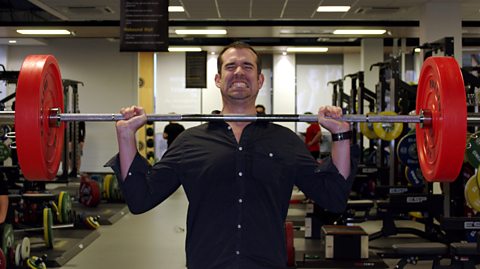
Consider a hulking biker, tattoos and leotard, bench-pressing some massive barbell.

Alongside him, place that irritatingly-cheerful hunk Dr Chris van Tulleken, raising and lowering some wimpy baby dumbbells.

Pretending to be exhausted. Not this stagey picture below.


It was all in aid of this study (in the latest series of "Trust Me, I'm a Doctor").
"The study split 49 weight trainers into two groups and started them on a 12-week weight training programme. For each participant, they calculated their ‘one-repetition maximum’ or 1RM – that’s the heaviest weight they can lift.

"They then split the study into two groups, one group lifting 30-50% of their 1RM and the other group lifting 75-90%. The key thing was that each group lifted their weights to ‘volitional failure’ – in other words, they lifted until they couldn’t lift any more.

‘Failure’ will happen to anyone and everyone, however strong, if they do enough repetitions. So the group lifting the lighter weights did a larger number of reps (20-25) than the group lifting the heavier weight (8-12).

"The theory behind muscle failure is to do with ‘motor units.’ Motor units are bundles of muscle fibres controlled by a nerve. When you lift a weight, motor units will be required to contract the muscle. With each lift, some motor units will get fatigued, so additional motor units need to be used to do the next lift. Sooner or later you get to a point where all your available motor units have been exhausted – that’s what causes your muscles to fail.

"In the McMaster study, the results showed that despite lifting different weights, both groups showed the same increase in strength and muscle growth. In other words, doing heavy weights with fewer reps or lighter weights with more reps made no difference. These results agreed with earlier research conducted by the same group.

"So what does that mean for the rest of us? Well, it means that you can get results lifting heavy weights OR lighter weights, so long as you’re pushing your muscles to work harder than they normally do. You don’t always need to lift to failure to get results – but your muscles need to be ‘overloaded’ compared to your normal day to day life. Strength and conditioning coach Richard Blagrove from St. Mary’s University, Twickenham, suggests that on a scale of 1 to 10, where 10 is repetition failure, lifting to 7 or 8 is about right.

"If your muscles are feeling that overload once a week, your body will adapt and get stronger. If you want to continue to get stronger, you will need to constantly re-assess and progress your weight or rep level, to make sure you are always pushing your muscles beyond their comfort zone. If your weight training feels easy, it probably isn’t doing anything for you.

"You can get results using weights machines or free weights. Free weights also force you to use stabiliser muscles meaning you use more energy, and your joints move in their most natural way. But it’s important to lift correctly, so as soon as your “form” starts to go, you should probably stop. If you DO want to push yourself to failure, weight machines might be the safest place to do it. If you lift to failure with free-weights you need a partner who can relieve you of the weight when you can no longer lift it."
In a nutshell, don't go with "go heavy or go home!".

Do enough reps so that the last three are 'difficult'. Obviously you need enough weight so that you can get there within, say, 8-15 reps.

---

While I was watching our recording of "Trust Me, ..." my subconscious was whirring furiously. This afternoon I had painstakingly edited 43 rules for my Eliza program, which I'm reconstructing. The program works! But the rule set:
(defparameter +eliza-rules-extended+  '(.. stuff .. ))
refused to compile: weird and incomprehensible error messages complaining of 'invalid traits'. We're meant to be AI-advancing daily, but our development environments haven't the first clue.

My epiphany was that a rule which said something like:
(Why don't you like your mother?)
is going to hit a major problem with that quote character.

I rushed upstairs and deleted all the quotes from don't, doesn't, it's .. and everything loaded properly. Tomorrow I'll test it thoroughly and maybe post the code.

That should thrill you, dear reader.

---

As you know, my first target emulation is going to be the cat. Clare, who had to suffer through a tedious explanation of my afternoon difficulties, suggested that I should be designing a chatbot for the elderly. I'm to data-fill it with small talk about family, friends and neighbours (and pets?).

I suspect there's a market for that, and I'm not completely convinced that a state-of-the-art artificial neural net is required to implement it either.

But here to the contrary is Google's view:
"A simple strategy to build lightweight conversational models might be to create a small dictionary of common rules (input → reply mappings) on the device and use a naive look-up strategy at inference time.

This can work for simple prediction tasks involving a small set of classes using a handful of features (such as binary sentiment classification from text, e.g. “I love this movie” conveys a positive sentiment whereas the sentence “The acting was horrible” is negative).

But, it does not scale to complex natural language tasks involving rich vocabularies and the wide language variability observed in chat messages."
---

The diary would not be complete without observing that Clare had her hair done today.


I did notice.

Friday, January 13, 2017

My weight training programme (video)

Here's an 8 minute video where I describe my weight training routine, which starts with an exercise bike HIT warm-up followed by floor exercises and free weights (dumbbells).

As of Saturday morning, 23 people have viewed this post .. and 3 people watched the video. What were the other 20 doing?


Some mistakes in my commentary:
  • the heaviest dumbbells are 14 kg each, not 14.5 kg 
  • the first weight routine is the 'bent over row' (not 'back over row') 
  • it's the 'bicep curl', not 'bicep crunch'.
The order I do exercises varies, there's no rule which says 'heaviest weights first' - in fact that's rather deprecated. Sometimes I start with arm flaps (not the technical term).

---

Credits to Clare for the camera work.

Monday, December 26, 2016

The "No Presents" Christmas: year 2

Another year, another Christmas with the "no presents" policy.

As usual, Clare had been insistent. In reality, the presents just got bought somewhat earlier. We all saved on deferred gratification.

One such gift has had us settling down each evening as a nuclear family to watch the box set of "Game of Thrones" - starting at season one, episode one.

Tonight was episode two: the one where Sansa cries while Arya murderously adds Joffrey to her kill list (she will soon have better reasons).

---

So was our Christmas day merely a joyless, barren wasteland of time lost?

You decide.


---

This rather balanced article caught my eye.
"Gym Showdown: Free Weights Vs. Machines

"If you want to get stronger, some kind of resistance training is the way to go. So when you walk into the gym, should you start loading plates onto a barbell or should you just walk up to the first easy-to-use machine you spot? Let's compare both approaches.

Continues .."
A triad of Christmas Cake, Mince Pies and Berry Gateau has me persuaded: weights tomorrow.

Friday, December 02, 2016

The Tao of Weights: function follows form


Dear A. J,

I have been reflecting on your recent performance on my weight training programme. You warmed-up on the bike and then did the sixteen exercises. In every case you were dismissive, repeatedly advocating "More resistance!", "Heavier weights!".

I observed, though, that you focused solely on hitting your performance target, usually 15 repetitions, despite in many cases only achieving this through the most intricate contortions in which you threw every part of your body at the exercise to achieve 'success'.

This relentless goal-centric performance is even stranger as I know you have studied martial arts, where the philosophy - the Tao if you will - is Wu Wei:
"Wu Wei (chinese, literally “non-doing”) is an important concept of Taoism and means natural action, or in other words, action that does not involve struggle or excessive effort. Wu wei is the cultivation of a mental state in which our actions are quite effortlessly in alignment with the flow of life."
The point of 'pushing iron', as with all other exercises, is to develop specific muscles, tendons and joints. The form is all-important. Without it, random muscles and parts of the body engage in an unbalanced and uncontrolled manner. The body does not develop harmoniously and there is a risk of injury.

Let me say it again. In the first instance, neither the weights you are lifting nor the number of reps you achieve is the goal. The goal is to perfect the form. With dumbbells, where many muscle groups coordinate to achieve the exercise form, this takes a while. Use manageably small weights until the form is good, then slowly increase weights and reps.

In general you should do reps only until you lose the form, not up to the point where you cannot continue despite arbitrary contortions.

My final point. It's a mistake to approach an exercise session with external achievement goals in mind. Your objective is to do each exercise in a calm and measured way, taking care to observe the form, and focussing on your body's feeling to fine-tune technique.

Concentrate on your proprioceptive sense and you will discover whether the exercise is working the right muscles.

Next time, I urge you to be calm and unhurried - emphasise optimal process - and desired outcomes will follow.

Best regards,

Nigel.

---

PS. Bruce Lee quotes to ponder 😔.

Tuesday, October 25, 2016

"Start lifting weights to fight onset of dementia"

From The Times today:
"People with mild memory loss should start lifting weights to help stave off dementia, a study suggests.

"Researchers have found that building up muscle strength helps to improve brain function in adults over the age of 55 with mild cognitive impairment (MCI).

"People with MCI have a slight but noticeable decline in memory, reasoning and thinking skills and are more likely to develop Alzheimer’s and others forms of dementia.

"Between 5 and 10 per cent of over-65s in Britain are thought to have the condition and up to 15 per cent of these will develop dementia."
I thought at first this might be a typical confounding of correlation with causation - that in reality, people who go to all the effort of weight training are simply a little smarter and more conscientious than their more demented brethren. But no:
"The study published in the Journal of American Geriatrics measured the effect of different exercise programmes on the brain of 100 people aged 55 to 86 with MCI. It found that those who took part in twice-weekly weight-training sessions for six months, in which they were made to work to at least 80 per cent of their peak strength, had significantly improved brain function."
OK, so they measured it.
"Yorgi Mavros, a research associate at the University of Sydney in Australia, and lead author of the study, said: “What we found is that the improvement in cognition function was related to their muscle strength gains. The stronger people became, the greater the benefit for their brain.

“The more we can get people doing resistance training like weightlifting, the more likely we are to have a healthier ageing population. The key, however, is to make sure you are doing it frequently, at least twice a week, and at a high intensity so that you are maximising your strength gains. This will give the maximum benefit for your brain.”

The findings reinforce research from a trial this year in which MRI scans showed an increase in the size of areas of the brain among those who took part in a weight-training programme. The brain changes were linked to the cognitive improvements after weight lifting.

Maria Fiatarone Singh, a geriatrician at the University of Sydney and the co-author of the study, said: “The next step now is to determine if the increases in muscle strength are also related to increases in brain size that we saw."

Clare has taken it all on board with her new 1kg "beauty bells".


So far, it all seems to be working, as far as I can tell.

Thursday, September 22, 2016

Weight Training Programme

Here, for my records and a bored posterity is my current weight training schedule: 16 exercises and the weights assigned to each. Click on images to make larger.


I have two dumbbell-pairs: one set to the full 10kg each; the other pair set to 7.5kg each which can then be reduced (via one pair of locking collars removal) down to 6.5kg.

The remaining weights, not affixed to the bar, (1.25 + 0.5 =1.75kg and not 5kg, as the spreadsheet mistakenly calculates) can be used for the final three exercises (dumbbell sets pictured below).*


Here are the exercises (most of them) - I tend to work through each, in the order above, starting with the heaviest weights and mixing the muscle groups.


Takes about forty minutes. Some cardio to start and end; stretching exercises at the end. Before I hit the weights I do some non-apparatus exercises such as press-ups, ab crunches, locust and plank, boat and leg stretch.

The weights shown are pretty feeble! I'm an ectomorph and very far from the stereotypical lifter. Also not trying for massive muscle gain - it's more about avoiding muscle-mass loss and general task competence.

---

* The dumbbell weights are: 2.5kg, 1.25kg and 0.5kg. Each dumbbell bar weighs 1.5kg empty.

So a full configuration is: 1.5 + (2*2.5) + (2*1.25) + (2*0.5) = 1.5 + 5 + 2.5 + 1 = 10kg.

Friday, September 09, 2016

Gym: Dec 2012 - November 2016

In December 2012 I wrote about my gym induction. The Wells Blue Sports Centre is just seven minutes walk from home and I had signed up.

The proximate cause was Dr Michael Mosley. In August 2012, after his TV programme introducing the 5:2 diet, I decided to give it a go. By December the fat had rolled off - I lost more than two stone. But healthy thinking is contagious: fed up with being a couch potato, I had decided to join the local gym.

So here we are, four years of gym-bunnying later. Recently it penetrated my consciousness that I'm not getting a whole lot stronger. Blaming my poor use of the resistance machines, I took the weight room induction.

There are big advantages to free weight training. But it's complicated learning the exercises and assessing the right weights, much harder than the choreographed resistance machines. Serious home study was required, so I bought the York Dumbbell set and started working through their recommended suite of routines.


Bench-pressing 20kg: things can only get better!

It's good, and this morning I additionally jogged almost two kilometres up the Mendips and back, so that's seen to my warm-up and cardio needs.

Why do I need the gym?

So there you have it. I walked across to the gym an hour ago and cancelled my direct debit. From the beginning of November, if Clare or myself want to use it, we pay-as-you-go.

Monday, August 15, 2016

Free Weights vs Resistance Machines

So this is the question I have recently been asking myself: for four years I have done the circuit of aerobic and resistance machines at the gym .. and resolutely walked past the weight room.

Am I missing something important?

'Dr. Mercola' writes,
"The primary difference between free weights and machines, however, is the fact that when using free weights, you can move in three dimensions: forward, backward, horizontally, and vertically. This is important, because this is how your body normally moves in daily life.

"When you use free weights, you therefore end up engaging more muscles, as you have to work to stabilize the weight while lifting it. The drawback is that you’re at an increased risk of injury unless you maintain proper form.

"Machines, on the other hand, are fixed to an axis that will only allow you to move in one or two planes. If used exclusively, this could lead to a lack of functional fitness, which can translate into injuries outside the gym.

"Simply stepping off the sidewalk could result in a knee or ankle injury if stabilizing muscles have been ignored in favor of only working your larger muscle groups. On the upside, a machine will allow you to lift heavier weights, and allow you to target specific muscle groups."
Other commentators noted that resistance machines tend to under-develop the 'core', which includes the abdominal and back muscles. Since I have had the odd twinge (some might call it a weakness) in my back, I am seriously thinking about doing some free weight training.

But it's so complicated! I don't know anything about weights, apparatuses or forms. Still, when in doubt, buy the book.


Obviously free weights can be done at the gym, but another thought occurred to me. As we walked back from our Bishop's Palace picnic today, I subtly murmured to Clare,
"If you like, you can use my weights, when they arrive."
(I have not in fact ordered any weights; the ground must first be prepared).

This is what I heard: the house is not to be made into a gym; the last thing needed is a testosterone-heavy male around (I thought there already was one); and some remark about sweat I didn't quite catch.

No real problems then. I emphasised that weight training is mostly kind and gentle, like yoga.

---

Michael O'Neal eat your heart out; I will pump iron!!