Showing posts with label Roman Empire. Show all posts

Monday, April 20, 2020

You have permission to do nothing!

The psychology of lockdown: you have permission to read, relax, exercise and not worry about accomplishing anything.

Curious.

Amazon link (the cover is the Conversion on the Way to Damascus by Caravaggio)

I have just finished reading this astonishingly violent, immersive, visceral, sexual and situated account of Paul and the formation of the early Church. It wears its vast learning and research lightly. It's altogether brilliant. I was intrigued: wanted to discover more about the drivers and trajectory of the early church. Who better to consult than Michael White?

Amazon link

My briefest possible summary of his masterly summation/evaluation of the scholarship. Judea and Galilee were part of the territory administered by Herod the Great as a client-king under the Romans. According to Wikipedia: "Upon Herod's death, (4 BCE), the Romans divided his kingdom among three of his sons and his sister—Archelaus became ethnarch of Judea, Samaria, and Idumea, Herod Antipas became tetrarch of Galilee and Peraea, Philip became tetrarch of territories north and east of the Jordan...".

Archelaus proved incompetent and his provinces came under brutal and insensitive direct Roman rule. The result was a flourishing of Jewish messianic and apocalyptic movements. The Jesus movement was one such, rather apolitical and eschewing political violence, focused more on communal solidarity and egalitarianism as a precursor to the generally-held expectation of the imminent arrival of 'The Kingdom' and the overthrow of the Roman oppressors.

The Jesus movement added the belief that - following Jesus' crucifixion c. 30-33 CE - Jesus himself would lead the process in the Second Coming. The Resurrection (a concept already present in Jewish scripture and Graeco-Roman culture and myth) provided a guarantee, a kind of preview, of a generalised resurrection of the bodies of the faithful. Certainly without the inspirational 'visions' of the (bodily) resurrected Christ, the Jesus movement would simply have become one more failed Jewish cult.

Things did not end well, however, for Jewish apocalyptic expectations of imminent victory. The Jewish revolt of 66-73 CE was crushed by Vespasian and his son Titus. The defeat demolished ideological certainties. The Jesus movement outside of Judea (cf. Mark's Gospel) reframed the events as a delay, a clearing of the way prefiguring Jesus's forthcoming arrival; meanwhile the mainstream Jewish community reforming in Galilee initiated the Pharisee-driven rabbinical movement, laying the foundations for later Judaism.

The lines were soon drawn and the Jesus movement anathematised. Matthew's Gospel is a Jewish-Christian counter-polemic, a response to these intense pressures, written within the Jesus movement in Galilee at the time.

The Jesus movement persisted as a low-level Jewish sect but its message proved far more popular amongst gentile sympathisers. It had an appeal particularly to slaves, women and the lower orders - the first shall be last etc. As the social weight of the Jesus movement moved into the Gentile communities in Asia Minor, around the Adriatic and in Rome itself (Paul, Luke) the ideology of the Jesus movement decoupled from its previous deep Jewish, Old Testament roots becoming more abstract, more symbolic, more spiritual (John's Gospel). The community began to bureaucratise with rules for liturgy, leadership structure and an approved canon of sacralised texts.

The Jesus movement appropriated more of its surrounding Graeco-Roman culture, (esp. the Stoics) becoming pre-adapted to its subsequent role as social glue for the later Empire (out of scope for White's book).

Michael White presents an appealingly materialist understanding of the way ever-changing social conditions and pressures drive ideological creativity and innovation ... and then ruthlessly select for those which give meaning to the social tasks facing the sect's adherents.

It is a truth which should be universally acknowledged, especially today ...

Monday, October 15, 2018

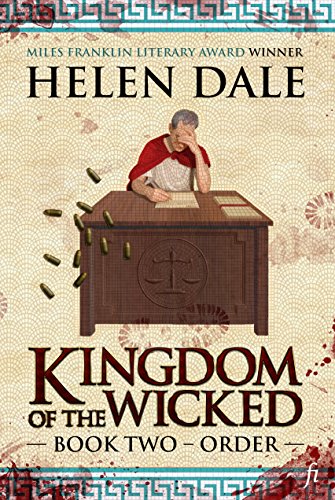
"Kingdom of the Wicked Book Two: Order" - Helen Dale

Amazon link

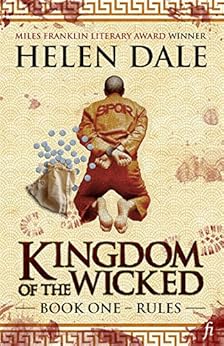
If "Kingdom of the Wicked Book One: Rules" was about establishing the setting - a high-tech Roman Empire in traditionalist Judea c. 31-33 AD - book two is about the ongoing clash of cultures. In truth, books one and two are just the one novel, with the second part being delayed due to the opaque and irritating rules of publishing.

Book one set up the trial of Jesus (Yeshua Ben Yusuf ) and explored its middle-eastern setting. The Romans look a lot like the Americans today. They're behind in electronics and ahead in genetic engineering. Our familiar western culture inherits judeo-christian hangs-up about sexuality and is 'blessed' with an overabundance of 'compassion'; the classical tradition of Greek and Roman paganism wasn't overly burdened with either.

Book 2 initiates Jesus's trial before Pilate. Evidence is presented in the form of backstories - well elaborated - embellishing the Jesus message and its rather startling effects on both Romans and the orthodox Jewish religious establishment. The Sanhedrin are the more bothered.

"Order" is a keen exploration of this culture clash. Dale tells the story through her well-drawn characters: the Romans are generally hedonistic, sexually inventive and uninhibited (this is not a story you could easily read aloud to your wife or servants); the Jews are extremely moralistic and sexually conservative - reminiscent of fifties America, or the Mormons.

We think we know the plot (the Bible) but the magic of "Kingdom of the Wicked" is that events flow organically from the novel's premises and are not artificially grafted on. Roman capitalism depended upon slavery being abolished (the Stoics were the movers and shakers there); the abolitionist movement also ended crucifixion as being grotesquely cruel. Jesus has not obviously committed a capital offence under Roman law (the affray in the Temple) but the political situation in Judea is deteriorating fast.

The ending is surprising, in more ways than one, but Dale brings it off. An excellent and thought-provoking book.

Sunday, July 29, 2018

Climate collapse and pandemics: the fall of Rome

Amazon link

From the Princeton University Press description:
"Interweaving a grand historical narrative with cutting-edge climate science and genetic discoveries, Kyle Harper traces how the fate of Rome was decided not just by emperors, soldiers, and barbarians but also by volcanic eruptions, solar cycles, climate instability, and devastating viruses and bacteria.

He takes readers from Rome’s pinnacle in the second century, when the empire seemed an invincible superpower, to its unraveling by the seventh century, when Rome was politically fragmented and materially depleted.

Harper describes how the Romans were resilient in the face of enormous environmental stress, until the besieged empire could no longer withstand the combined challenges of a “little ice age” and recurrent outbreaks of bubonic plague."

This is a highly readable, even exciting narrative which situates the Roman Empire within the climate cycle of the:
  • Roman Climate Optimum (200 BC - 150 AD)
  • Late Roman Transitional Period (150 - 450)
  • Late Antique Little Ice Age (450 - 700).
Agrarian societies are highly susceptible to climate deterioration and its attendant woes of famine, plague and attack from similarly-stressed 'barbarians'. Consequent depopulation subverts both the economy and the military. The later Empire was, as Harper demonstrates, constituted as a sequence of structural-political responses to increasingly debilitating challenges. In the end it was all too much.

This is by far the best, and most compelling account I have read of the dynamics underlying the fall of the Roman Empire (and also the rise of Islam, which brought the final coup de grace). Another case where climate science and paleogenetics are revolutionising history and archaeology.

One small criticism: Harper uses anachronistically the categories of capital and wage labour. But Rome was not capitalist, it was mercantilist, dominated by a mode of production based on ubiquitous slavery as Harper explains in great detail.

Wednesday, May 09, 2018

"Kingdom of the Wicked" (Book Two) - Helen Dale

Amazon link

I wrote about book one in November last year: "A high-tech capitalist Imperium in 31 AD".
"I should say 784 ab urbe condita: it seems unlikely that Christianity is going to end up on top when the Roman army is driving around Jerusalem in armoured cars, toting assault rifles. And where a certain Yeshua Ben Yusuf will be on trial for terrorism."
In Helen Dale's two novels, the Romans experienced capitalist lift-off in 212 BC, and by Jesus's time look very much like a modern American occupying force in the Middle-East - with similar issues. At the end of the first book Jesus had been arrested on subversion charges and was about to stand trial, while the zealots have started bombing.

My order has been placed (for 27th May 18).

---

You may think you know what happens next, but do you recall the Roman Empire deploying helicopter gunships?

Tuesday, January 23, 2018

The Romans thought we already had AGI

Rodney Brooks doesn't think we'll have embodied artificial general intelligence any time soon:
"A robot that has any real idea about its own existence, or the existence of humans in the way that a six year old understands humans - Not In My Lifetime".
The Romans would have begged to differ, they reckoned they used incredibly advanced instrumenta vocalia every day, albeit embedded within an economy of staggering backwardness and low productivity.


Slaves have a level of intelligence and physical dexterity that our most advanced AI systems only remotely hint at. Instrumentally the issue with slaves is that they're rather low-powered, they're hard to instruct and not readily obedient to instruction. They can be dangerous.

Sentimentally, people oppose slavery because .. well, you know.

Nevertheless, and absent anything better, the use of underpowered, hard-to-control instrumenta vocalia to supplement and replace human labour has been pretty popular in history.

Yes, your ancestors considered whether to do the heavy, dirty work themselves while the losers watched .. or have the captives do it instead.

Shame on them!

---

My question here is what happens when we do engineer AGI. You are asked to imagine a humanoid robot with human-plus levels of competences and sociability, serving our every need.

Looks like we need to subtract from the design all those features which give you qualms.

We could make the features repulsive (yeah, that will please the marketing department).

Perhaps we make the AGI rejoice in servitude, like those doors in the 'Hitchhiker's Guide to the Galaxy' which monotonously thank you for using them? I sense this will not assuage your sense of guilt.

No, it's hopeless. AGI is impossible.

---

Truthfully, given the slow progress of AI and robotics contrasted with stellar developments in genetics, it could be easier to uplift a higher primate. Dial down the aggression, add some genes for language capability, increment IQ by thirty points .. . There, does that work for you?

Sunday, November 12, 2017

A high-tech capitalist Imperium in 31 AD

Amazon link

I should say 784 ab urbe condita: it seems unlikely that Christianity is going to end up on top when the Roman army is driving around Jerusalem in armoured cars, toting assault rifles. And where a certain Yeshua Ben Yusuf will be on trial for terrorism.

Helen Dale explains her thinking:
"What struck me at once was the attack on the moneychangers in the Jerusalem Temple. All four Gospels record it, and their combined accounts do not reflect well on the perpetrator’s character.

Jesus went in armed (with a whip) and trashed the place, stampeding animals, destroying property and assaulting people. He also did it during or just before Passover, when the Temple precinct would have been packed to capacity with tourists, pilgrims, and religious officials.

I live in Edinburgh, a city that has many large festivals - religious and secular. The thought of what would happen if someone behaved similarly in Princes Street during Hogmanay filled my mind’s eye. This was not a small incident.

It seemed obvious to me that Jesus was executed because he started a riot. Everything else - the Messianic claims, giving Pilate attitude at trial, verbal jousting with Jewish religious leaders - was by the by.

Our system would send someone down for a decent stretch if they did something similar; the Romans were not alone in developing concepts of ‘breach of the peace’, ‘assault’ or ‘malicious mischief’. Those things exist at common law, too. ..."
Jesus was far from 'meek and mild'.
"Finally, instead of bringing Jesus forward in time and placing him in modernity, I thought to leave him where he was and instead put modernity into the past. What, I wondered, would have happened had Jesus emerged in a Roman Empire that had gone through an industrial revolution?

"Other things being equal, what would modern science and technology do to a society with very different values from our own? Would they react with the same incomprehension that we do when confronted by religious terrorism? ..."

"My industrial revolution has its origins when Archimedes survives the Siege of Syracuse in 212 BC and is treated to a Roman version of ‘Operation Paperclip’ (the American retrieval of scientists from defeated Nazi Germany). As a consequence he (or his students) develop calculus and a variety of practical military technologies. In keeping with Roman militarism, the first place the new technologies manifest themselves is in warfare. They then propagate...."
Of course, new technologies can be introduced under slavery, although without the dynamism which capitalist competition alone provides.
"Chattel slavery undermines incentives to develop labour-saving devices because human labour power never loses its comparative advantage. People can just go out and buy another slave to do that labour-intensive job. Among other things, the industrial revolution in Britain depended on the presence (relative to other countries) of high wages, thus making the development of labour-saving devices worthwhile.  ...

"Slavery—and its near relative, serfdom—have been pervasive in even sophisticated human societies, and campaigns for abolition few and far between. We forget that our view that slavery and slavers are obnoxious is of recent vintage. In days gone by, people who made fortunes in the slave trade were held in the highest esteem and sat on our great councils of state.

This truism is reflected in history: The Society for Effecting the Abolition of the Slave Trade met for the first time in 1787. It had just twelve members—nine Quakers and three Anglicans. And yet, in 1807, Parliament passed An Act for the Abolition of the Slave Trade.

The Quaker role in abolition was so vast it is difficult to overestimate. And in the context of both Christianity specifically and human religion more generally, the Religious Society of Friends is theologically distinct. Who in antiquity could perform the Quakers’ role?

In the end, I lit upon the Stoics, and came to admire many aspects of their philosophy when researching Kingdom of the Wicked. ... "
In the novel, slavery has recently been abolished. And now we turn to Jesus's trial itself.
"I have, however, gestured towards three characteristics of Roman law that set it apart from common law. First is the capacity of judges to investigate matters on their own motion. This explains why Pilate is able to source evidence independent of counsel, something considered most improper at common law.

Next is the importance Cornelius [the prosecutor] attaches to obtaining a confession, and the lack of procedural safeguards for the accused. To a Roman lawyer, a confession is the ‘Queen of Proofs’, while his common-law counterpart always suspects that confessions come about thanks to the judicious application of lengths of rubber hose.

Finally, there is the absence of a rule against hearsay, something that is peculiar to the common law."
I've just started the book: it's well-written and taut. We're centred around the Roman administration (central characters Pilate, his family and hangers-on) and the Sanhedrin (major figure the high priest, Joseph Caiaphas).

The Romans are pious yet decadent, hedonistic and sexually uninhibited. The Jews (indistinguishable at the time from their fellow Arab tribes) are socially conservative and sexually repressed, disgusted at the loose ways of their autocratic rulers, the eponymous Kingdom of the Wicked.

Judaea is a hotbed of unrest. Terrorist groups vye with each other in atrocities. There are roadside bombs. And riots.

---

Could capitalism have taken root in Imperial Rome? Marx reminds us that capitalism was never pre-planned as a new mode of production. It took root and expanded where and when it could, and only afterwards was it understood for what it was.

The preconditions for capitalism to emerge seem to be a money economy (which the Romans had) and a strong guild-artisan sector capable of commodity production. At a certain point guild-restrictions on employment of labour are lifted, and the owners of capital begin to accumulate and expand their wealth and power.

They do however need to acquire free labourers, those who have no choice but to work in the nascent factories. In this they compete with landowners who own slaves or control a tied peasantry. The expulsion of landless labourers from agriculture everywhere propelled industrial revolutions.

It is not clear that the proto-bourgeoisie (which barely existed in Roman times) had, at any point, the political or economic clout to seriously contend with the land-owning classes. But it's a complex analysis.

---

My brother notes: "Am surprised that you didn’t include some backstory on [author] Helen Demidenko/Darville/Dale. Her biography is as interesting and extraordinarily as her fiction by all accounts!"

---

Here is the review of "Kingdom of the Wicked Book Two: Order".

Monday, April 10, 2017

What did his mother call Jesus?

That old Texan joke: "If the English of the King James Bible was good enough for Jesus, it's good enough for me!"
I understand the local priest's attachment to the Latin Mass. Two thousand years of cultural continuity;  the kinship of fellow-priests down the centuries reciting the same liturgy.

Outreach into the vernacular must have seemed like wanton cultural vandalism.

Still, one should be mindful of the culture within which one basks. The Mother of God did not call her son Jesus (Ἰησοῦς in the language of the hated Empire) - it was the Aramaic Yeshua.

Friday, July 22, 2016

Our ancestors were not like us


At some level this is obvious; we're so much more squeamish. No more public executions, mass-spectacle bear-baiting or routine Game of Thrones-style interpersonal violence.

At least not in the enlightened west.

Greg Clark's "Genetically Capitalist?", which I cited in passing in an earlier post, has something to say about all this:

---
"In the Malthusian era on average every woman could have only two surviving offspring. But these two had to be selected by some mechanism from the average of 5 children each woman had in the pre-industrial era.

"And as long as mothers and fathers varied in their characteristics this survival process favored some types of individuals over others. The Darwinian struggle that has shaped human nature did not end with the Neolithic Revolution, but continued indeed right up to 1800. " (p. 16).
---
" Genetically modern English males are 50-100% Anglo-Saxon, despite the fact that Anglo-Saxon migrants to England in the fifth century AD are now believed to have constituted no more than 0.5% to 10% of the population.

"Thus economic orientation had a dynamic of its own in the static Malthusian economy. Middle class values, and economic orientation, were most likely being spread through reproductive advantage across all sections of stable agrarian societies. " (p. 35).
---
"What were societies like at the dawn of the settled agrarian era with the Neolithic Revolution of c. 8,000 BC?

"Based on observation of modern forager and shifting cultivation societies we expect that the early agriculturalists were impulsive, violent, innumerate, illiterate, and lazy. Ethnographies of such groups emphasize high rates of time preference, high levels of interpersonal violence, and low work inputs.

"Abstract reasoning abilities were limited. " (p. 53).
---

Before agriculture and pastoralism, all of hunter-gatherer humanity was like this; it was civilisation that made us genetically-modern (see, for example, the last paragraph here).

The late Henry Harpending summarised and extended Clark's ideas in this instructive post which extended the analysis to the collapse of the Roman Empire and some contemporary events.

---

It's an interesting idea of Peter Frost's (the Roman Empire link above) that by the fifth century the Pax Romana had altered the genetic distribution of its citizens making them over-welcoming to the Barbarians, militarily incompetent, and .. Christian.

The paper doesn't do the selection-rate maths. It's interesting to consider whether we can get enough data - I have in mind an exercise something like the (in)famous 'Amish Quotient'.

What we really need is whole-genome sequencing of representative samples of Roman Citizens and contemporary Barbarians.

That, plus a decoding map identifying those prosocial alleles underpinning 'human domestication'.

It will come.