Showing posts with label Jerry Pournelle. Show all posts

Wednesday, November 08, 2017

Three books

Amazon link

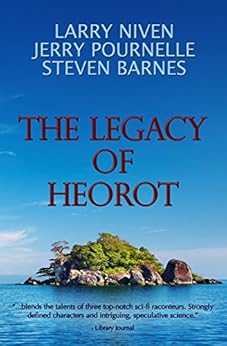
I have abandoned reading "The Legacy of Heorot" (Niven, Pournelle, Barnes) to Clare after three or so nights. The build-up is way too slow, the characters uninteresting and the writing too clunky.

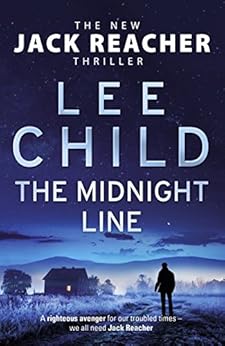
I've taken the easy option and resorted to Lee Child's latest:

Amazon link

---

I thought "The Buried Giant" by Kazuo Ishiguro was good, despite Abigail Nussbaum's emotional review.

Amazon link

If I may be permitted spoilers, the novel is about the aftermath of a Dark Ages genocide in an imagined post-Arthurian, Briton-Saxon co-mingled England. Peace between the races has been artificially maintained by an ageing dragon, whose misty breath fills the land, inducing forgetfulness.

Axl and Beatrice, an old Briton couple, leave their hobbit-like village residence to visit their dimly remembered son. Through various adventures the amnesiac-fog is finally lifted and memories begin to return. Can the peace survive the recall of earlier wrongs? Can Axl's and Beatrice's relationship survive the recall of ancient infidelity and revenge?

Ishiguro is pessimistic.

I felt the book - highly stylized in manner and dialogue - was well-done. As to whether, Guardian-style, it was really telling us anything we didn't already know: well, not so much.

Monday, September 11, 2017

Jerry Pournelle RIP

Very sorry to hear that Jerry Pournelle has just died (of pneumonia after a long spell of ill-health).


I read his classic to Clare. Steve Sailer wrote a memoir here,

Thursday, February 23, 2017

Liberals meet the Moties: high-K vs. high-r

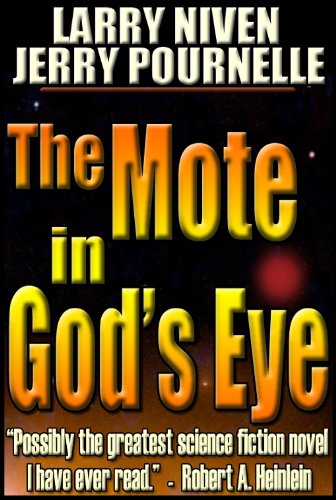
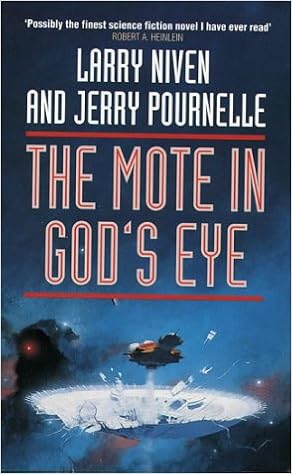
My current after-dinner read to Clare is that wonderful old (1974) classic, "The Mote in God's Eye" by Larry Niven and Jerry Pournelle.

Amazon Link

Here's a brief plot summary (it's surely OK now for spoilers).
"An alien spaceship using a light sail to fly at speeds below the speed of light appears in the human system of New Caledonia. The ship has been traveling for at least 135 years.

The Viceroy ruling the New Caledonia system, the Emperor's appointed representative, determines that a mission of two ships will be sent to the alien system that sent out the pod. Both species are wary, protective, and secretive.

Communication is established; understanding, however, remains more distant. One of the warships is invaded by a lower alien species and must be destroyed. Three Midshipmen end up alone on the planet, uncovering the aliens' desperate secrets of uncontrollable population explosion and giving their lives to protect Empire secrets.

Three aliens are sent to accompany the remaining human ship and crew back to New Caledonia as ambassadors."
The Moties are an example of an r-selected species which, via their technological civilization, solve the high death-rate problem - at least until their numbers hit ultimate carrying capacity.

From Wikipedia:
"As the name implies, r-selected species are those that place an emphasis on a high growth rate, and, typically exploit less-crowded ecological niches, and produce many offspring, each of which has a relatively low probability of surviving to adulthood (i.e., high r, low K).

In unstable or unpredictable environments, r-selection predominates due to the ability to reproduce quickly. There is little advantage in adaptations that permit successful competition with other organisms, because the environment is likely to change again. Among the traits that are thought to characterize r-selection are high fecundity, small body size, early maturity onset, short generation time, and the ability to disperse offspring widely.

By contrast, K-selected species display traits associated with living at densities close to carrying capacity, and typically are strong competitors in such crowded niches, investing more heavily in fewer offspring, each of which has a relatively high probability of surviving to adulthood (i.e., low r, high K). ...

In stable or predictable environments, K-selection predominates as the ability to compete successfully for limited resources is crucial and populations of K-selected organisms typically are very constant in number and close to the maximum that the environment can bear (unlike r-selected populations, where population sizes can change much more rapidly).

Traits that are thought to be characteristic of K-selection include large body size, long life expectancy, and the production of fewer offspring, which often require extensive parental care until they mature. ... Organisms with K-selected traits include large organisms such as elephants, humans and whales, but also smaller, long-lived organisms such as Arctic terns. ...

The r/K dichotomy can be re-expressed as a continuous spectrum using the economic concept of discounted future returns, with r-selection corresponding to large discount rates and K-selection corresponding to small discount rates."

The novel revolves around the debate between liberals and conservatives as to how to deal with the Moties (who pretend to be high-K liberals). It's an eerie book to read, weirdly analogous to contemporary debates in the media. It's been suggested on a regular basis that it would make a stupendous film, but until Hollywood learns to love The Donald, I fear their immune system makes that prospect stillborn.

---

Advanced capitalist countries have been carrying out an interesting experiment with effective birth control over the last fifty years or so. A possible result has been a decline in fertility leading to projected population collapses: Japan is often mentioned as a trend-setter.

Birth control is a central theme in the novel too. The treatment is very game-theoretic: over their history, some Motie continents under strong political leadership did in fact practice population control. They were simply outbred and then conquered by their more numerous competitors.
Thursday, January 26, 2017

Diary: books + Clare's health

Not many posts for the next few days as we have a visitor: my 'study' reverts to its ur-status as bedroom.

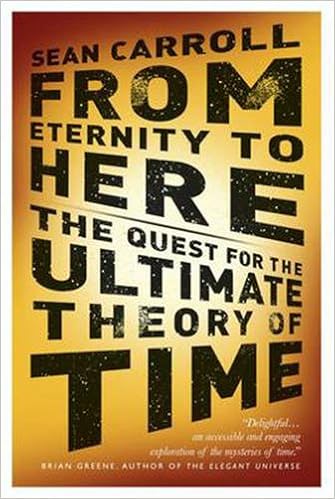
I ordered Sean Carroll's book (which should be arriving tomorrow or Saturday) ..


.. on account that one reviewer (3 stars) complained it was 'too hard'. I'll try to let you know.

---

Strange how hard it is to predict another's taste in books. I really appreciated Scott Bakker's "The Disciple of the Dog" but all that inline philosophy slowed it down way too much for Clare.

It's been replaced - amazingly - by the famous "The Mote in God's Eye" which she is lapping up as I read it to her.


We haven't even reached the gripping alien lightsail contact event yet; still in the early chapters of Niven's and Pournelle's backstory building, usually condemned as 'boring'.

---

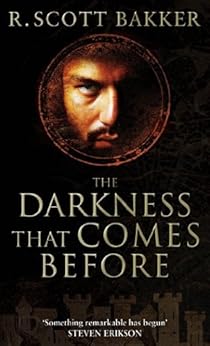
I remain a fan of Scott Bakker and have purchased (Kindle) this: (start of a mega-epic) ..


.. which seems awfully complicated. I have dipped my toe in.

---

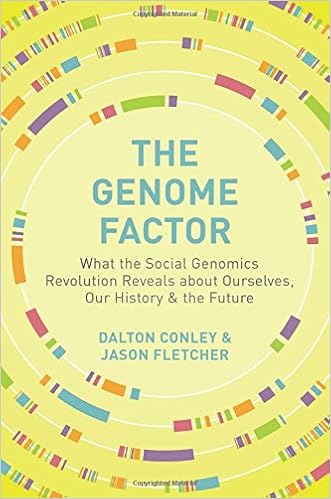
My third ordered volume is "The Genome Factor: What the Social Genomics Revolution Reveals About Ourselves, Our History, and the Future" by Dalton Conley and Jason Fletcher.


I'm hyper-wary of the fluffy-bunny pleasantries of the Standard Social Science Model, but it seems well-regarded so I'm taking the risk. Should be out some time in late February.

---

Do you hear that hacking cough from the bedroom? Clare is much recovered today but the sub-zero windchill of our lunchtime shopping trip to Waitrose has sapped her energy .. and she has retired to bed. Still, direction of progress is positive.

---

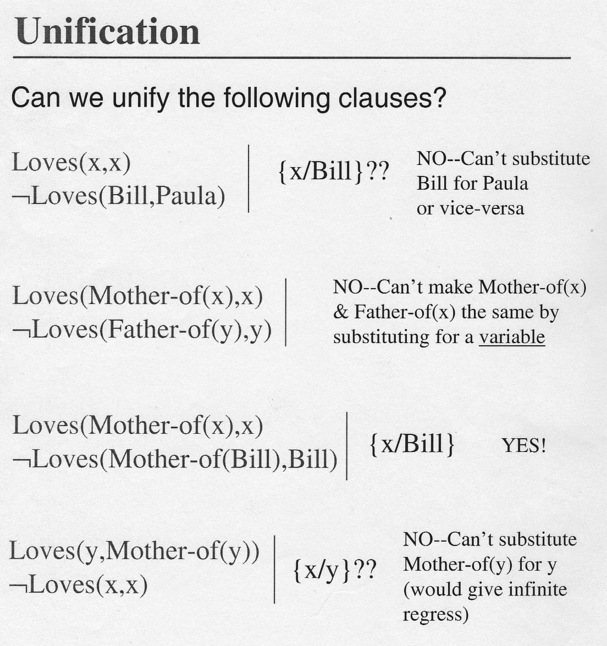
Well, enough time here. I think it's time to re-acquaint myself with J. A Robinson's exemplary treatment of unification with those substitution subtleties ... .


Friday, December 09, 2016

Pig quotes

Not all arguments are productive.

“Never attempt to teach a pig to sing; it wastes your time and annoys the pig.”

This from Robert A. Heinlein, Time Enough for Love.

---

On arguing with the argumentative.

"I learned long ago never to wrestle with a pig. You get dirty, and besides, the pig likes it."

Quoted by George Bernard Shaw. He should have said "enjoys".

This second quote featured in this:

Amazon link

More literary slumming.

James McGill is an everyteenboy action hero. The plotting is absurd and the tempo unrelenting. The writing is better than Lee Child: page-turning. Back to more serious stuff soon.

---

Moving animals, on living in the moment.
“One of your most ancient writers, a historian named Herodotus, tells of a thief who was to be executed. As he was taken away he made a bargain with the king: in one year he would teach the king's favorite horse to sing hymns. The other prisoners watched the thief singing to the horse and laughed. "You will not succeed," they told him. "No one can."

To which the thief replied, "I have a year, and who knows what might happen in that time. The king might die. The horse might die. I might die. And perhaps the horse will learn to sing.
”
Jerry Pournelle from "The Mote in God's Eye".