Showing posts with label Cruise Missile. Show all posts

Friday, April 07, 2017

Cruise missiles in the wilderness of mirrors

En route to Syria

I almost completely agree with the points below made by Scott Adams in his latest blog post.
" ... But let’s say the world believes Assad or a rogue general under his command gassed his own people. What’s an American President to do? If Trump does nothing, he appears weak, and it invites mischief from other countries. But if he launches 59 Tomahawk missiles at a Syrian military air base base within a few days, which he did, the U.S. gets several benefits at low cost:

1. President Trump just solved for the allegation that he is Putin’s puppet. He doesn’t look like Putin’s puppet today. And that was Trump’s biggest problem, which made it America’s problem too. No one wants a president who is under a cloud of suspicion about Russian influence.

2. President Trump solved (partly) for the allegation that he is incompetent. You can hate this military action, but even Trump’s critics will call it measured and rational. Like it or not, President Trump’s credibility is likely to rise because of this, if not his popularity. Successful military action does that for presidents.

3. President Trump just set the table for his conversations with China about North Korea. Does China doubt Trump will take care of the problem in China’s own backyard if they don’t take care of it themselves? That negotiation just got easier.

4. Iran might be feeling a bit more flexible when it’s time to talk about their nuclear program.

5. Trump’s plan of a Syrian Safe Zone requires dominating the Syrian Air Force for security. That just got easier.

6. After ISIS is sufficiently beaten-back, the Syrian government will need to negotiate with the remaining entities in Syria to form a lasting peace of some sort that keeps would-be refugees in place. Syria’s government just got more flexible. It probably wants to keep the rest of its military.

7. Israel is safer whenever an adversary’s air power is degraded.

On the risk side of the equation, we have the possibility of getting into war with Russia. I’d put those odds at roughly zero in this case because obviously the U.S. warned Russia about the attack. That means we knew their reaction before we attacked. And it was a measured response of the type Putin probably respects. I expect Russia to complain a lot but continue to partner with the U.S. against ISIS.

If it turns out that the sarin gas attack that sparked this military action didn’t come from Assad, it doesn’t much matter. President Trump will bank all of the benefits above even if the attack turns out to be a hoax. We know Assad had some chemical weapons at one point, and probably used them. No one will be crying for Assad if the attack was unnecessary. And realistically, the public will never be 100% sure who was behind the attack. ..."
I would just add this. The liberal-dominated media still don't get Trump. They persist in thinking he's operating according to some overarching grand theory. They had him pegged as a Putin-puppet, then as an America-first isolationist and now a latter-day neocon.

Since they approve of this last position they're breathing a collective sigh of relief.

None of this is true. Ordinary folk realise that Trump is not an intellectual, he's just out to defend US interests. He instinctively knows that the way you do that is to operate from a position of strength and not let your opponents diss you.

Liberals, who never think like that, will never understand Trump, But I suspect that the Syrian military are also behind the curve.

Unlike western liberals, they should have no problem figuring out Trump's 'Big Man' politics - those are de rigeur in the Middle-East. But they're so parochial over there, so insular, that until yesterday they still hadn't figured out that the game changed when Obama left the building.

But unlike the liberals, they'll be fast learners.

Monday, February 06, 2017

A battlespace AI


When contemplating AI-controlled cruise missiles, as in yesterday's post, there is a tendency to hear 'AI' and think magic, or imagine we're in the foothills of the Butlerian Jihad.

Still, even without access to classified information, there's a lot we can say about this kind of battlespace AI, just by comparing it with stuff we already know about.

An anti-carrier cruise missile is basically a suicide drone. Its mission is threefold:
  • navigate to the target
  • identify the best choice of target to crash into (and blow up)
  • cope with an extraordinarily hostile environment.
All three of these mission priorities are amenable to current artificial neural net technology:
  • navigation can leverage autonomous vehicle/reconnaissance-drone tech
  • target identification is not dissimilar to existing object/facial recognition tasks
  • the hostile environment can be addressed by massive simulation-training.
I imagine AI prototypes are probably flying drones around right now in simulated attack-scenarios. Steve Hsu has more information on this.

---

There are three interesting issues which arise from the specifics of a combat environment.

1. Target identification/selection

Unlike relatively benign civilian environments, enemy carriers and other ships will attempt to make location and targeting difficult. There will be smoke, perhaps battle damage, explosions and defensive measures such as laser dazzle, jamming, false targets and chaff.

The solution appears to involve multiple sensing platforms illuminating or imaging the target space: satellites; aircraft/drone loitering radars; multiple attack-weapons sharing sensor data on a local net.

Sensor data fusion is a complex but well-researched topic amenable to AI (satirised here).

2. The hostile environment

The incoming missiles will be targeted by the carrier group with everything they have. Antimissiles, guns, lasers. Who can imagine an optimal set of tactics for surviving such an assault?

An AI system which has trained on millions of simulations.

It's somehow similar to AlphaGo.

What we know of AI adversaries is that they often exhibit brilliant but quite counter-intuitive behaviour. That's mostly a plus in the last few kilometres.

3. Autonomy

There's a stupid point here, and an intelligent one.

The stupid argument demands that AI weapons systems have 'no autonomy' - that there will always be a human in the loop.

So ... like with mines, then?

Plainly, if the carrier has already been sunk on cruise missile arrival, the AI will make a fast call on the optimal secondary target. There will be no human in the loop - in fact real-time communications will undoubtedly be 'very difficult'.

However, on a larger scale of strategic autonomy we do need to worry about the unpredictability and lack of transparency of current neural net technology. If, for some obscure tactical reason, an AI weapon concludes that it needs to attack a friendly vessel, then - absent a superhuman common sense (right!) - we should be worrying.

An emergent research area is the design of human-machine interfaces which have explicit, communicable and actionable knowledge about the operations of their powerful but opaque neural net subsystems.

Humans have one of those too: it's called consciousness.

Sunday, February 05, 2017

Revealed preferences

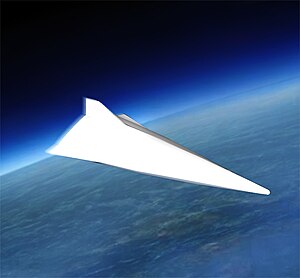
Chinese hypersonic glide vehicle DF-ZF

From the New York Times.
"In August, the state-run China Daily reported that the country had embarked on the development of a cruise missile system with a “high level” of artificial intelligence. The new system appears to be a response to a missile the United States Navy is expected to deploy in 2018 to counter growing Chinese military influence in the Pacific. ...

"The new Chinese weapon typifies a strategy known as “remote warfare,” said John Arquilla, a military strategist at the Naval Post Graduate School in Monterey, Calif. The idea is to build large fleets of small ships that deploy missiles, to attack an enemy with larger ships, like aircraft carriers."
Ultrafast AI-piloted cruise missiles, fabricated at low marginal cost, are pretty much guaranteed to take out an aircraft carrier.

The fact that the US and UK are still investing in these behemoths indicates that they see the next decades of force-projection as targeting third world states, not Russia or China.

Let's hope they're right.

---

The AGM-158C LRASM is the US anti-ship weapon mentioned.

---

What kind of AI could pilot a combat cruise missile?