Showing posts with label Feminism. Show all posts

Monday, November 12, 2018

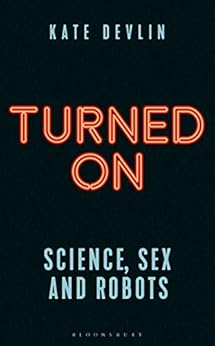
A feminist on sex machines: Kate Devlin

Amazon link

Dr Kate Devlin's Wikipedia entry.

---

The concept of a 'machine for sex’ is a wondrous, powerful one. As the author notes, its arc aligns with all of human history. Devlin describes ‘sex toys’ from prehistory and antiquity right through to the present day.

The term ‘sex robot’ itself is rather reified. Better is the idea of an artefact with which humans may engage sexually. Such an artefact might be genetically engineered, machine fabricated or some hybrid in between. Sex devices interestingly inhabit the intersection of science and technology, genetics and evolutionary biology, and the myriad social sciences.

If a sex robot is defined as a thing, as human property, then they existed once, currently don't really exist and may exist again in the middling future. In antiquity slaves were property and presumed to have no agency. It was routine and uncontroversial for elite slave-owning males to buy and use nubile male and female slaves for sex. As Kyle Harper recounts in his “Slavery in the Late Roman World, AD 275–425”, consequences included masters becoming (stupidly) besotted with their slave sex-objects, wifely jealousy .. and unintended offspring who would join the next generation of slaves.

Antique ‘sex robots’ were, from a functional point of view, poorly implemented. Their inner drives and motivations were not aligned with their 'function’ which made ownership fraught and only manageable through sustained terror.

Devlin’s first degree was in archaeology so she will know all this. It would have been good to read about the social, ethical and even practical implications of the widespread availability of high-functioning ‘sex robots’ in antiquity. Devlin's discussion is however (pp.116-117) superficial, flagging only the usual oppressively gendered roles found in all premodern societies stabilised by male violence. She also notes a pre-Christian sexual disinhibition of which she approves.

“Turned On” is not a book of science with some feminist advocacy. It is instead a feminist tract anchored around the topic of sex-with-artefacts (p.213). What’s this for example - a mocking rebuke to the transgression of equal outcomes?
“Why do we experience things? How do the mechanisms of our bodies and brains give rise to conscious sensations? Where does that consciousness come from? You don’t have to have an answer in the Great Zombie Debate. The philosophers can’t agree on it either, Which is why you have a bunch of very clever middle-aged white men amusingly inventing words like‘ ‘zoombie’ and ‘zimboe’ to put forward their own variations on the theory. “ (p. 102)
My emphasis. It's certainly of the moment, but it jars.

Devlin tells us she is a feminist, an ideology developed to further the interests of liberal professional women like Dr Devlin. Like all ideologies, it’s protean and eclectic, cherry picking arguments which support the cause. A characteristic of ideologies is that they narrate a world their proponents wish they were in but which rarely coincides with actuality or realistic possible outcomes.

Consider objectification, something she takes strong issue with. The discussion is phenomenological: an example might be a builder wolf-whistling an attractive woman in the street; or a bunch of women hooting and laughing at a male stripper at a ‘hen party’.

In the broad-brush triune brain model, primary drives such as lust are associated with the (animalistic) brainstem formation; emotional attachment with the mammalian limbic system; and rational interaction with hominid cortical systems. It’s not much of a surprise that humans can exhibit sexual behaviour dominated by any of these loci.

Objectification (the mode of lust-dominance) would then be a brain-stem determined form of behaviour. In more refined circles we expect cortical inhibition/mediation of primary drives to deliver more measured, prosocial behaviour factoring in social context. Our biology is complicated in social settings.

There isn’t any such framing in Devlin's book. Just normative presumption that objectification is out there (for some reason), that’s it’s wrong and that current sex doll designs play up to it. This is to sell the reader short, replacing analysis with moralising.

Naturally we don't wish to succumb to the naturalistic fallacy; humans with their small group evolutionary history are imperfectly adapted to large scale societies. There are plenty of natural urges we need to regulate and indeed legislate against. There are few easy answers here as Devlin would be the first to argue, in contexts such as the legality and ethics of child sex dolls.

Devlin adopts the fashionable feminist view that phenomenal gender differences are purely social constructs. This despite the enormous weight of hard evidence (evolutionary, neuroanatomic, genomic, physical, psychometric) for well-defined and reproducible biological differences between the sexes. Differences which are hardly obscure, but recognition of which might undermine the claims of her interest group. Public choice theory assumes its usual relevance here.

Devlin interviews the CEO of RealDoll, Matt McMullen, and gives him a hard time about the overwhelming preponderance of hyper-sexualised female dolls and robots. 'Where are the less-sexualised dolls, the male dolls?' she wants to know. Actually this is a point she takes up with all the doll manufacturers she meets. The replies she gets are defensive, framed in terms of male-female differences in sexuality leading to skews in demand. Devlin is having none of it, blaming biased marketing and uncritical social conditioning (pp. 153-154). Time for a quick review of microeconomics (supply-demand equilibria?) then as I reflect on the democracy of markets in probing the world as it actually is.

Then we read this in a meandering discussion of rape fantasies and the claimed lack of any genetic influence:
“If anything, rape would theoretically reduce the reproductive success of our ancestors as it takes away selective genetic choice. “ (p. 233).
Reality is more nuanced. Rape is historically (and currently) commonplace in intergroup conflicts. It's plainly adaptive for males in the absence of draconian ingroup penalties. I suggest a quick read of Dawkins' "The Selfish Gene".

Gendered social roles have historically been oppressive to women. There are biological reasons (eg male physical strength, aggression and paternity-uncertainty) which interlink with social reasons (eg within-family inheritance) which are specific to different kinds of society and which need to be explicitly teased out. If capitalism appears to be intrinsically gender-blind in its desire to free everyone up to maximally work, then the deleterious effects on human self-reproduction also need some analysis.

A perennial science-fictional trope referenced by Tom Whipple, The Times science editor in his review, is that of the perfected sex robot as a kind of sterile mosquito (which has already resulted in some local extinctions of this malaria disease vector).

This is not a problem we'll face anytime soon but is there something to it? Devlin is unworried while Whipple remains concerned. Plainly it’s hard to assess an unknown artefact but with universal and easy access to contraception in the west, perhaps we already have a natural experiment. Check those Total Fertility Ratios.

We are already selecting for women who positively want children (rather than just sex); ubiquitous effective and sterile sex robots would select for men with a similar drive. Let's hope there's that much variability in the gene pool.

In summary Devlin's book is an easy and amusing read: somewhat superficial; an interesting tour of the sex doll/sex toy landscape which will be unfamiliar to many readers; intriguing confessional snippets from the author's private life.

The book is not particularly scandalous or salacious, it's not very conceptual or analytic and its opinions are conventional liberal left. Put aside a slightly sprawling and uneven structure and it reads like an extended New Scientist article.

Incidentally, if Dr Devlin or her co-workers were ever to read this review, they would not be won over. It is in the nature of ideologies to be believed by their adherents and they provide powerful mechanisms of contextualisation and framing to theorise their opponents. This review would be framed as a defence of the patriarchal power structure: discredited gender essentialism.

We are truly the victims of our own axioms.

---

Further reading: "So Beautiful".

Monday, June 18, 2018

"Tell her you're a feminist"

On the way back from the dump this morning where we deposited my old printer and shredder (q.v.) we pop into the supermarket for odds and ends. The store is almost deserted.

Finishing up, we approach the one open checkout, occupied by a young woman waiting resignedly for custom. I judge her as intelligent, serious and woke.


Supermarkets are designed to be soporific. I begin unloading the trolley while the checkout girl waits and Clare adopts that spaced-out mode to which she is uniquely susceptible under the supermarket's hypnotic lighting and ambient white noise.

"Clare, if you could grab the bag she'd be able to start."

Clare starts, wakes, fishes the shopping bag out of the trolley and walks around to the front of the checkout. The girl appears to be adjusting something in her cash register. I continue unloading.

I complete my task and push the empty trolley round to the front. The girl looks up and finally begins to transfer items through - and I've been judged.

She heard me apparently ordering Clare around and by implication ordering her to start work. She's concluded that I'm a classic old, male-chauvinist pig. She thoroughly disapproves of me and is having none of it.

Paying, I play my part in the script: 'Car parking, no cashback, take your card'. We both adopt an utterly businesslike demeanour. Except she looks at me like I'm a dead fish.

I say to Clare, "Tell her you're a feminist."

Except that I don't. That might be construed as self-defeating.

Tuesday, April 17, 2018

Equality of gender-outcome: a typological view

Amazon link

From p. 108:
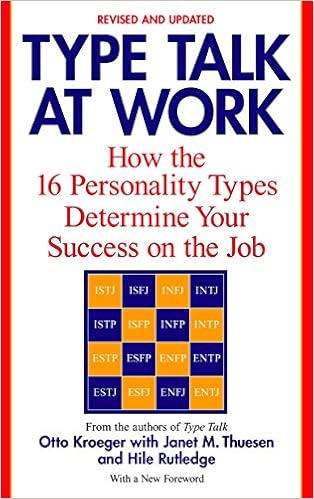
"As we said, certain types are naturally prone to rise to the top of most companies. Traits such as objectivity, punctuality, and accountability are qualities that support productivity and profit. As such, those types sharing Thinking and Judging are naturally promoted, and other types tend to be scarcer the higher up you go.

Though any one of the sixteen types can and does make it to the executive level, those not sharing T and J are the exception, not the rule. It took us ten years of collecting typological data on top managers before we found executives representing all sixteen types. At the executive level upward of 90 percent are Thinking-Judgers.

As a result of all this, we can predict three things about the typological makeup of the higher echelons of the workplace:

  • As long as management is predominantly TJ, women are statistically destined to be in the minority; there are simply fewer T women in the population.

  • Most of the women achieving top-level positions will look typologically like their male counterparts. More than likely they will be TJs.

  • The few Feeling-Perceptive types who make it to the top typically do so for one of two reasons: simply to prove to themselves that they can do it or because they have a missionary zeal to change the organization. The FPs got there not because the system accepted them so much as because of their ability to play the TJ game. While at the top the idealists do have some impact, but as soon as they leave, their programs are often obliterated with the sweep of a pen.
Therefore, diversity in the executive circles of any organization is fleeting and over the long term has low impact on organizational effectiveness."
The failures of equality of gender-outcome in business and government are often explained as the statistical effect of women taking leave to raise children. But the underlying personality differences between men and women are less often remarked upon. This will come as little surprise, except to the NFs amongst you.

Tuesday, April 10, 2018

More bad times a-comin' (for systematizers) ...

An interesting post (from Arnold Kling).


"Once upon a time, (say, 1930), higher education in America was not for the masses. Harvard was a place for upper-class WASP males, who were not necessarily the cream of the crop intellectually, to firm up their social connections while studying the classics from Western civilization.

By the early 1960s, admission to higher education had become meritocratic, but many of the best colleges did not admit women. This was probably the peak period for “systemizers” to dominate the pool of undergraduates. The classics were still being taught, but many among this brighter cadre of students were gravitating toward the more mathematical and scientific disciplines. To be sure, pre-Med was an especially popular undergraduate choice because guys did not want to end up in Vietnam.

Two developments began in the 1960s that eventually created the state we are in today. One was the attempt to make higher education a mass-market phenomenon. The other was to ensure equal access to higher education for women.

To make a long story short, mass higher education for men was a failure, but for women it was a success. The result was that higher education came to be dominated by empathizers in a number of areas. In the humanities, the classics were displaced by “___ studies” courses, which required less systematic analysis. In these courses and in psychology and sociology, objectivity gave way to the goal of raising the status of women and minorities.

In terms of voting behavior, we now have young, educated women who have bought into the cause of raising the status of women and minorities, a cause which is packaged with other left-wing causes, including socialism. But we have older Americans and younger less-educated men who have not bought into that cause. ...

My sense is that, unfortunately, many of these young educated women have a strong streak of soft authoritarianism. If you want to know what it will feel like when they are in charge, read (the movie does not do it justice) One Flew Over the Cuckoo’s Nest. Today’s well-educated young women, and the men who affiliate with them, have a low tolerance for systemizers whose analysis does not lend support to the cause of raising the status of women and minorities."
To consider at the next "burning injustice" headline.

Friday, January 05, 2018

Way too much Fire and Fury

Amazon link

I think it was David Keirsey in "Please Understand Me II" who observed that the feminism of the sixties and seventies was driven by female ENFJs.


Amazon link

The Keirsey/Myers-Briggs NF ('Idealist') temperament describes a combination of abstract-intuition and compassion which forms the essence of liberalism. The extraversion (E) and Judging (J) work to turn that abstracted-compassion loose on the world - let the campaign begin!

Rationals like myself (ineffectually inclined to Libertarianism) tend to value truth and logical coherence. We are prepared for our ideas to be refuted.

Idealists, by contrast, are driven by moral fervour, not intellectual rigour. When they meet opposition, their opponents get classed as heretics, their positions a value-atrocity.

It's no fun debating SJWs.

So when the liberals got their claws into Donald Trump for not being one of them (and for refusing to sign up to their agenda - as Obama and Clinton had done), it was very tempting to defend the current POTUS.

But the political enemy of my enemy can also be .. my enemy.

---

Trump is most likely an ESTP. The lack of interest in ideas or coherent policy-making is not unusual for a self-indulging, prickly and egocentric Artisan.

The higher ranks of modern society tend to be overpopulated with intellectuals. Rationals do strategy and policy; the Idealists focus on the people stuff: the media and the campaigns. People who traffic in ideas usually write off concrete types (Guardians and Artisans) as stupid.

But Trump has made a successful business and television career and by all accounts has a mesmerising eye for detail. Stupid he is not.

Out of his depth, aggressive and unintellectual? - Well, we are where we are.

---

I would advise to dial down the panic. Trump is not Hitler. There is no American fascist movement of any consequence. One person alone does not control what happens in any modern society. Trump is undoubtedly the boss from hell - Wolff can be relied upon in his numerous anecdotes of glazed eyes and childish petulance - but the managing of such people is a well-trodden path.

You give them options and ensure the right one is the most attractive. It does require a good chief of staff as butler-in-chief, supported by a solid team across the silos of government.

The military, however, excels at developing senior officers with that kind of talent. This last year has seen a Darwinian process operating in the White House to form a senior government leadership team which actually kind of works.

Wednesday, January 04, 2017

Helena Cronin on "Sex"

Edge mission statement:
"To arrive at the edge of the world's knowledge, seek out the most complex and sophisticated minds, put them in a room together, and have them ask each other the questions they are asking themselves."
Every year, Edge asks these great minds a question. This year the question is "Which Scientific Term or Concept Ought To Be More Widely Known?"

By now you probably have a question of your own. What word best describes this mutual back-slapping fest?
  • Smug 
  • Pretentious
  • Self-indulgent
  • Conceited
  • Pompous?

The full list of essays is here.

---

Amongst the self-satisfied, complacent, virtue-signalling there are a few intriguing articles.

Take Helena Cronin's piece on "Sex"
"The poet Philip Larkin famously proclaimed that sex began in 1963. He was inaccurate by 800 million years. Moreover, what began in the 1960s was instead a campaign to oust sex—in particular sex differences—in favor of gender.

Why? Because biological differences were thought to spell genetic determinism, immutability, anti-feminism and, most egregiously, women's oppression. Gender, however, was the realm of societal forces; "male" and "female" were social constructs, the stuff of political struggle; so gender was safe sex.

The campaign triumphed. Sex now struggles to be heard over a clamor of misconceptions, fabrications and denunciations. And gender is ubiquitous, dominating thinking far beyond popular culture and spreading even to science—such that a respected neuroscience journal recently felt the need to devote an entire issue to urging that sex should be treated as a biological variable."
It's the usual issue: equality of opportunity (ie no discrimination) vs equality of outcome (ie no differences in preference).
"Bear in mind that equality is not sameness. Equality is about fair treatment, not about people or outcomes being identical; so fairness does not and should not require sameness. However, when sameness gets confused with equality—and equality is of course to do with fairness—then sameness ends up undeservedly sharing their moral high ground. And male/female discrepancies become a moral crusade. Why so few women CEOs or engineers? It becomes socially suspect to explain this as the result not of discrimination but of differential choice.

Well, it shouldn’t be suspect. Because the sexes do differ—and in ways that, on average, make a notable difference to their distribution in today's workplace.

So we need to talk about sex.

Here's why the sexes differ. A sexual organism must divide its total reproductive investment into two—competing for mates and caring for offspring. Almost from the dawn of sexual reproduction, one sex specialized slightly more in competing for mates and the other slightly more in caring for offspring. This was because only one sex was able to inherit the mitochondria (the powerhouse of cells); so that sex started out with sex cells larger and more resource-rich than the other sex.

And thus began the great divide into fat, resource-laden eggs, already investing in "caring"—providing for offspring—and slim, streamlined sperm, already competing for that vital investment. Over evolutionary time, this divergence widened, proliferating and amplifying, in every sexually reproducing species that has ever existed. So the differences go far beyond reproductive plumbing. They are distinctive adaptations for the different life-strategies of competitors and carers.

Wherever ancestral males and females faced different adaptive problems, we should expect sex differences—encompassing bodies, brains and behaviour. And we should expect that, reflecting those differences, competitors and carers will have correspondingly different life-priorities. And that's why, from that initial asymmetry, the same characteristic differences between males and females have evolved across all sexually-reproducing animals, differences that pervade what constitutes being male or female.

As for different outcomes in the workplace, the causes are above all different interests and temperaments (and not women being "less clever" than men). Women on average have a strong preference for working with people—hence the nurses and teachers; and, compared to men, they care more about family and relationships and have broader interests and priorities—hence little appeal in becoming CEOs. Men have far more interest in "things"—hence the engineers; and they are vastly more competitive: more risk-taking, ambitious, status-seeking, single-minded, opportunistic—hence the CEOs. So men and women have, on average, different conceptions of what constitutes success (despite the gender quest to impose the same—male—conception on all).

And here's some intriguing evidence. "Gender" predicts that, as discrimination diminishes, males and females will increasingly converge. But a study of 55 nations found that it was in the most liberal, democratic, equality-driven countries that divergence was greatest. The less the sexism, the greater the sex differences. Difference, this suggests, is evidence not of oppression but of choice; not socialization, not patriarchy, not false consciousness, not even pink t-shirts or personal pronouns … but female choice."
---

In yesterday's post, on Michel Houellebecq’s ‘Submission’, I finished with a quote from the book where François says this:
'I’ve never really been convinced that it was a good idea for women to get the vote, study the same things as men, go into the same professions, et cetera. I mean, we’re used to it now — but was it really a good idea?’
Houellebecq needs this throwaway apparently-misogynistic remark to ease the way for his narrator's later conversion to Islam - thereby opening the door to a well-paid lecturing job at the Sorbonne and three wives. (It's satire, but Islam's historically-regrettable attitude to women is entirely real).

Of course women should have the vote, as should the poor, the rich and the liberal intelligentsia.

Elites used to worry about mass democracy, for example that the great unwashed would simply vote themselves endless benefits financed by taxing the rich, resulting in economic collapse.

Things like that have happened, but the ruling classes are now on the case. Governments with such programmes don't end up actually pulling the levers of power, and if they do, they find those levers don't connect to anything. The bureaucracy has its reasons, of which reason knows nothing.

Military force serves as the ultimate insurance policy.

Mass-participatory, bourgeois democracy has been made stable and safe, most of the time. François's half-hearted flirtation with Islam as a replacement ideology - vigorous, based on deep biological truths, giving meaning to life - is flawed through and through.

I'm sure it will never catch on.

Tuesday, January 19, 2016

Pretty in Pink?

Today The Times leads with: "Women charged more on ‘sexist’ high street" (yes, it's a slow news day).

Levi’s 501 jeans for women are ~46 per cent more expensive than men’s
"High street stores are charging women up to twice as much as men for practically identical products, an investigation by The Times has found.

"The cost of clothes, beauty products and toys for women and girls is higher than equivalent items marketed at men and boys, according to an analysis of hundreds of products. The “sexist” prices can be found at many of Britain’s biggest retailers, including Tesco, Boots and Amazon. In one case Tesco charges double the price for ten disposable razors simply because they are pink.

"At Argos, identical children’s scooters are £5 more expensive in pink than in blue. Levi’s 501 jeans for women are on average 46 per cent more expensive than the men’s version, even if they have the same waist and leg length.

"Retail bosses face being called to parliament to justify the price gap after the chairwoman of a committee of MPs called the practice unacceptable.

"Maria Miller, who leads the women and equalities committee, said: “It is unacceptable that women face higher costs for the same products just because they are targeted at women. Retailers have got to explain why they do this. At a time when we should be moving towards a more de-gendered society, retailers are out of step with public opinion.”

"Sam Smethers, of the Fawcett Society campaign group for women’s rights, said: “This investigation is really quite shocking. What we are seeing is a sexist surcharge. We need more gender-neutral options and an end to these rip-off practices.”
...
"Tesco said: “We work hard to offer clear, fair and transparent pricing. A number of products for females have additional design and performance features. We continually review our pricing strategy.”

"A spokesman for Boots said: “Our products are priced individually based on factors including formulation, ingredients and market comparison.”

"Argos did not comment."
Markets, huh?

There is so much joy in this article for anyone who has a smattering of economics or marketing. I'm not one to lecture - let me just give you the headings:

As a bonus we have the gender politics, like who is the bad guy here?

Do feminists think that women should pay the same unit price for pink razors as men pay for the equally-functional blue ones? So are we talking price controls?

Or do they think that women should liberate themselves from girly-pink and simply buy blue (which would successfully subvert the retailer's market segmentation and price discrimination), (after all, no one's stopping them)?

As long as women are willing in the mass to pay extra for pink, the market will helpfully arrange to charge them more for it.

I think the answer must be to market blue as gender-neutral.

Saturday, September 20, 2014

Digit ratios

Dr James Thompson writes about digit ratios and feminists, a recent news story.

The statistic in question is the length of your second digit (index finger) divided by the length of your fourth digit (ring finger). This is normally less than one, indicating you have a longer ring finger (digit 4). Here are scans of the author's right hand - palm up - and his wife's, with all relevant data points indicated.


The idea is this:
"It has been suggested by some scientists that the ratio of two digits in particular, the 2nd (index finger) and 4th (ring finger), is affected by exposure to androgens e.g. testosterone while in the uterus ..."
A low ratio (e.g. 0.94) suggests you are more likely to be high in testosterone, male and black. A high ratio (e.g. 0.98) suggests lower testosterone levels, female and caucasian or east asian. See here for details.

The article Thompson discusses looks, however, at how all this might illuminate the paradox of feminism:
"The feminist movement purports to improve conditions for women, and yet only a minority of women in modern societies self-identify as feminists. This is known as the feminist paradox."
Why might this be?
"Evolutionary psychology observes that the basic pattern of psychological differences between the sexes can be explained by their having essentially different innate adaptations associated with, most importantly, women investing considerably more resources into offspring through pregnancy and breast-feeding (e.g., Buss, 2012). Males are more aggressive and risk-taking on average, because these traits have paid off historically in terms of increased fitness, given that male-male aggression and risk-taking in the pursuit of resource acquisition have led to more offspring. This would thus explain why males tend to dominate professions where these traits are necessary for success, such as in the military, business, politics and even crime, where competition is high. Females are on average more sociable and empathic than males, because caring for offspring and negotiating social relations that promote their survival until they reach reproductive age ensured that the mother’s genes live on. Hence women dominate professions where these traits are maximally valued, such as teaching, social work, and in human and veterinary medicine (Lippa, 2010). ...

"Another possible explanation of why feminism represents a minority position amongst women is therefore that the activists who shape feminist attitudes and beliefs are themselves generally more physiologically and psychologically masculinized than is typical for women (Wilson, 2010). This might for example explain their belief in sex-role interchangeability, as they may perceive the behaviors and interests of sex-typical women as incomprehensible and at variance with their own more masculinized preferences in terms of child-rearing and status-seeking. This might then lead them to infer that women in general have been manipulated to become different from themselves by external forces, as embodied by notions of social constructions or gender systems ..."
And so they did the 2D: 4D finger length ratio test at a feminist activists' conference. Their account is quite amusing.
"We therefore recruited our sample directly from the operational definition, that is, attendees at a feminist conference in Sweden. This public one-day event was advertised through posters, flyers, and social internet media, and featured some 20 talks and lectures in several parallel sessions, presented by political and other interest organizations. In the conference hall we set up a table and a sign saying (translated from Swedish) “Answer a few questions and image your hands in exchange for fruit or candy. Your participation is anonymous.” We surmised that any mention of feminism, and the possible connection between feminism and biomarkers in particular, would have deterred attendees from contributing. In order to maximize participation, therefore, we did not ask them if they self-defined as feminists, and did not disclose the purpose of the study.

"In total, 35 attendees participated in data collection over the course of the whole conference day, mostly when moving between rooms, in exchange for items of fruit or candy. To ensure anonymity no biographical information was collected, and sex and age were assessed visually (20–45 years). The total number of attendants was estimated at ∼100 over the day and the female-to-male ratio to ∼2/3. Twenty-five of the respondents were female and hence were eligible for inclusion in the analyses, which means that our sample included ∼35% of the female attendees."
And after all the fruit and candy had been distributed, what were the results? Their diagram below shows: the reference female population, the reference male population and the sample from the feminist conference. The mean 2D:4D figures, read off the chart are as follows: mean female = 0.992, mean male = 0.969, mean feminist = 0.95. Yep, the feminist women scored more masculine than the average Swedish man. This may explain something about Sweden.

The x-axis increment is 0.0135

It's hard to obtain large population studies which are tightly controlled for ethnicity, at least via Google, so I don't know where Clare and myself lie on the British/Caucasian spectrum. However, lower ratios predispose males at least to higher risks of prostate cancer and autism spectrum disorders, as you can see from this table. I think this is compatible with what my 23andMe results already suggested.