Showing posts with label War. Show all posts

Sunday, July 05, 2026

"The Killing Star" - weapon effects

Amazon

The Killing Star, by Charles Pellegrino and George Zebrowski, was published in 1995. I reread it for the second time back in 2007 and posted my thoughts here. I also wrote about the effects of relativistic impact weapons here, back in 2015. But the AIs are better now, so I thought I would ask GPT5.5 for a more up-to-date analysis of the weapons effect of such an alien attack (reminiscent of the 'Dark Forest' scenario in 'The Three-Body Problem') - and here it is.

---

It is one of the bleakest treatments of the Fermi paradox in modern science fiction. Its premise is simple: any civilisation capable of interstellar expansion may rationally conclude that other emerging technological species are future existential threats. The safe policy is therefore not contact, diplomacy or curiosity, but pre-emption. The novel follows the aftermath of such an attack on Earth. Humanity is not invaded. It is to be deleted.

The weapon chosen is not a death ray or antimatter bomb, but matter moving at relativistic speed. Each projectile is only a few tonnes in mass, but travels at roughly ninety-two percent of the speed of light. At that velocity the kinetic energy of a single object is equivalent to hundreds of gigatons of TNT. The novel envisages 65,536 such impactors arriving almost simultaneously. Collectively, they deliver energy comparable to several years of all the sunlight normally falling upon Earth, but concentrated into seconds.

During the first microseconds, the impact is not meteor physics. It is high-energy physics. Atmospheric molecules meet the leading surface of the projectile at energies measured in billions of electron volts per particle. There is no time for ordinary heating, deformation or aerodynamics. The collision region becomes a violent particle cascade: electrons, positrons, gamma rays, X-rays, neutrons, nuclear fragments and secondary showers pour out of the interaction zone.

The atmosphere briefly becomes the target chamber of a planetary particle accelerator. Hard gamma rays couple not only to electrons but, at sufficiently high energies, to atomic nuclei. Nitrogen and oxygen nuclei are shattered by photodisintegration and nuclear spallation. Pair production, bremsstrahlung and hadronic showers occur in a dense, expanding plasma column. The air is not merely heated. It is ionised, transmuted and explosively reorganised.

The projectile does not reach the ground as an intact metal object. It is progressively converted into radiation, plasma and relativistic debris. A narrow atmospheric track becomes an incandescent column at temperatures of millions of degrees. The earliest radiation is hard, dominated by gamma rays and X-rays, but the atmosphere rapidly absorbs and reprocesses much of that energy into ultraviolet, visible light, infrared and blast. The first visible sign would be a flash of appalling brilliance. The first physical consequence would be a moving line of atmosphere turned into explosive working fluid.

Then comes the mechanical catastrophe. Shock waves expand from the plasma channels. Ground impacts excavate craters. Ocean impacts produce colossal steam explosions, salt aerosol injection and tsunamis. Cities are destroyed by blast, fire, ground shock and infrastructure collapse. Power grids, communications, water systems, transport, hospitals, refineries and ports fail not sequentially but almost everywhere at once. The event is closer to tens of thousands of simultaneous asteroid strikes than to any human war.

Yet Earth itself survives easily. The attack does not melt the crust, boil the oceans away or disturb the planet's orbit. Its energy is immense by biological standards but trivial by planetary standards. This is precisely the point. The attackers are not trying to destroy Earth. They are trying to remove a dangerous surface phenomenon: intelligent life.

The longer-term effects are decisive. Dust, soot, vapourised rock, nitrates, salt aerosols and combustion products are driven high into the atmosphere. Sunlight at the surface falls for months, perhaps years, below the level needed to sustain normal plant growth. Photosynthesis collapses. Agriculture fails. Forests burn, then starve. Soils are poisoned, frozen, eroded or buried. Rivers and lakes receive ash, acids and toxins. Marine ecosystems dependent on sunlight suffer catastrophic decline.

The survival of a few well-protected or lucky humans after the first hours is not the same as the long-term survival of the species. Many people might initially live: in mines, bunkers, submarines, tunnels, caves, polar stations or remote regions. But they would emerge into a world without functioning agriculture, industry, medicine, transport, communications or stable climate. Stored food would run out. Fuel would degrade or be exhausted. Spare parts would disappear. Disease, cold, darkness, contaminated water and social breakdown would finish what the impacts began.

Most land-based complex life would probably die. Large mammals, birds, reptiles and amphibians depend on food webs too fragile to survive a multi-year collapse of photosynthesis. Insects, fungi, seeds, spores, roots, burrowing animals and dormant life stages might persist in places. Microbial life would certainly survive. Deep-ocean and subterranean ecosystems would be the great refuges. The biosphere would not be sterilised. It would be decapitated.

The likely end state is therefore not a dead planet, but a planet from which humanity has largely vanished. A few protected groups might survive for months or years. A fantastically well-prepared underground facility with power, stored supplies, artificial agriculture, medical capacity, technical personnel and long-term social stability might last longer. But this is a much narrower possibility than mere initial survival. The attack is engineered to prevent recovery, not merely to obliterate humanity.

That is the cold force of the novel's premise. The relativistic impactors are civilisation-killers first, species-killers second, planet-killers not at all. They leave Earth intact because destroying a planet is energetically challenging and not required. What matters is eliminating the thin layer of intelligence, culture, cities, crops, machines and language spread across its surface. The Earth remains in orbit around the Sun. Evolution will continue. But the human episode is most likely over.


Friday, July 03, 2026

The Balance Sheet on Iran: GPT 5.5


Iran, Nuclear Thresholds and the Future of War

Much commentary on Iran begins from the assumption that Tehran was either relentlessly pursuing a nuclear bomb or, conversely, that its programme was entirely civilian. The evidence points to something more subtle than this. For many years Iran appears to have pursued a threshold strategy: accumulating the technology, enriched uranium, scientific expertise and industrial infrastructure necessary to build nuclear weapons, while stopping short of openly crossing the line.

This approach offered advantages. It increased Iran's regional influence, complicated military planning for its opponents, and provided bargaining leverage in negotiations, all without incurring the full diplomatic and economic costs of becoming an overt nuclear weapons state. The model was closer to a latent nuclear capability than to North Korea's explicit nuclear posturing.

The weakness of the strategy became apparent when Iran discovered that being close to the threshold does not necessarily deter attack. The United States and Israel appear to have concluded that Iran's growing stockpiles of highly enriched uranium and increasingly sophisticated infrastructure posed an unacceptable future risk. The result was a campaign aimed not at occupying Iran but at degrading its capabilities, damaging its infrastructure and eliminating key personnel. The objective was to change the strategic orientation of its governing elite, not least by eliminating the most committed or operationally dangerous elements of that elite.

The objective was never in reality regime change. That would require a military commitment which neither Washington nor the European capitals were willing to make. Iran is not Iraq. The Islamic Revolutionary Guard Corps is deeply embedded within the state, the economy and the security apparatus. It resembles less a conventional military organisation than a ruling caste. Decapitation strikes can disrupt and rebalance such a structure, but they cannot eradicate it.

But why the restraint? Why stop short of attacking Iran's economic lifelines, particularly Kharg Island, through which much of the country's oil exports pass?

The answer lies in the difficulty of calibrating coercion. Too little damage and Tehran concludes that it can continue its existing strategy - even claim victory. Too much damage and the regime may conclude that it has nothing left to lose, or even collapse altogether, causing regional havoc.

Destroying the country's principal source of revenue might have accelerated internal instability, but it could equally have encouraged escalation, regional conflict and a renewed dash towards nuclear weapons. Iran would have had covert help.

The dilemma facing Western policymakers is therefore not how to destroy Iran but how to alter its strategic calculations.

Complicating matters further is Iran's self-image. The Islamic Republic is not merely an ideological regime. Beneath the revolutionary rhetoric lies a much older Persian civilisational identity. Iran sees itself not as a minor regional actor but as a natural centre of power with a history stretching back millennia. Such states rarely accept permanent strategic marginalisation. The desire for influence is not simply a product of the current regime; it's woven into that deeper national identity.

The longer term challenge facing Iran may be one where nuclear posturing does not help.

The most significant military development of the coming decade is likely to be the growth of autonomous and semi-autonomous warfare. Advances in AI, robotic systems and automated battle management are steadily reducing the costs of persistent military pressure. 

Prospective American casualties may no longer be the limiting constraint in future ground warfare.

Iran's existing strategy relies heavily on concealment, proxies, dispersed infrastructure and asymmetric warfare. A future battlefield dominated by automated sensing and engagement threatens those strengths; they become easier and cheaper to locate and attack.

Traditional concepts of victory and defeat begin to blur. Instead of occupying hostile states, great powers mow the lawn.

Nuclear weapons can deter invasion. Not so much constant technological attritionIran may still be thinking in terms of nuclear thresholds and imperial recognition. Its enemies will be thinking surveillance and permanent attrition - at little cost to themselves.


Wednesday, July 01, 2026

War: what is it good for?


War is one of those human activities that everyone condemns and almost every society practises. From hunter-gatherer bands to modern nation states, organised violence is never completely absent.

The magazine-article explanation is intrinsic aggression. Human beings, particularly young men, are capable of extraordinary violence. Aggression explains why wars can be fought but not why they are repeatedly chosen.

Start with economics. In the agrarian economies of antiquity and within feudalism, wealth consisted of land, livestock, slaves, tribute and control of territory. Acquiring resources by conquest was frequently easier than creating them. War was often the quickest route to enrichment for a ruling elite.

Factories are generally more valuable intact than looted. Within capitalist societies, where the state enforces property rights and monopolises violence, intra-elite violence becomes expensive and counterproductive. Markets absorbed many competitive impulses that previously found expression through force.

Yet war itself remains stubbornly present. States like to maximise security and revenue. Their freedom of action depends upon the resources of the economies beneath them: bigger is usually better.

(I say 'states' but of course, that's an abstraction: better to say that the material interests of very large numbers of people correlate with the size, power and resources of their own state apparatus.)

Not everyone sees this.

Much of the intelligentsia in advanced capitalist societies adopts a quasi-pacifist outlook. Media, academia, religious institutions and the cultural sector benefit enormously from internal peace and stability. Their members are largely insulated from the direct pressures of inter-state competition, concluding that war is simply a misunderstanding that wiser people (people like themselves) would transcend.

SF author Isaac Asimov: "Violence is the last resort of the incompetent."

States inhabit a different world from individuals. Within societies there are courts, police and governments and politics. But no world authority possesses a monopoly of force: a state's military power is its decisive last resort.

War will evolve. Humans may increasingly disappear from the sharp end of the battlespace, replaced by machines acting under human direction. Incentives, however, remain unchanged. As long as resources are scarce, states will compete and war will remain.


Thursday, January 22, 2026

What the Confederacy teaches the EU


What the Confederacy teaches the EU

One reason the South lost the American Civil War, it is said, was 'States' Rights'. The southern states, in their overriding desire for autonomy, could not agree on funding, budgets or military strategy. The parallels with the European Union seem almost too exact.

In fact, the Confederate States of America did not lose the American Civil War because it believed in states’ rights, but because it believed in them too much to fight a modern war effectively. The ideology that justified secession also crippled central authority once war began.

Southern governors routinely resisted Richmond’s attempts to raise troops, impose conscription, requisition supplies, or coordinate railways. Each state wanted victory, but not at the price of yielding control. The result was chronic underfunding, logistical chaos, and strategic incoherence. War is the ultimate collective-action problem. The Confederacy failed it.

Weak central finance is fatal in prolonged conflict. The Confederacy could not tax effectively, could not borrow credibly, and could not impose budgetary discipline across states. Inflation ran wild. Armies starved while states hoarded resources. The North, by contrast, built a centralised fiscal-military state almost in real time.

The EU’s position is not identical, but the structural resemblance is obvious. The EU has fragmented fiscal authority, no unified defence budget of consequence, no centralised military command, and no shared willingness to impose sacrifice. And no unified political-military strategy. In peacetime, this looks like pluralism; in crisis, it looks like paralysis.

Ideology substitutes for capacity until it doesn’t. Southern elites believed moral legitimacy and local autonomy would compensate for industrial inferiority and weak coordination. They assumed that because their cause was “right”, the machinery would somehow follow. It didn’t.

The EU exhibits a softer version of the same error: an implicit belief that norms, procedures, and moral language can substitute for hard power and decision speed. That works only while someone else guarantees the security envelope.

Confederations struggle against centralised adversaries. The Union was not just larger; it was more decisive. It could concentrate force, absorb losses, and pursue long strategies despite political noise. Confederations are bad at that. They argue while the other side acts.

The EU was never designed to fight a war. It is designed to prevent one internally. That design choice carries a price in a world where external coercion has returned.

The Confederacy’s ideology was not merely decentralised; it was internally contradictory. It demanded autonomy for states while requiring unified sacrifice. The free-riding narrative writes itself.

The EU’s ideology is different: it deprecates sovereignty rather than worships it. But the functional outcome in extremis can be similar - reluctance to centralise power even when survival arguments are made.

So the thesis is best stated like this. The problem is not “states’ rights” per se. It is the refusal to subordinate autonomy to survival. That is a lethal trait in wartime systems.

If Europe ever faces a genuine existential crisis - not a managed proxy conflict, not a sanctions regime, but a direct strategic threat - it will discover very quickly whether it is a union or merely a committee. Most likely the EU will do what it usually does: fracture into competing, antagonistic allegiances.

This post follows on from: Preparing for War.

The next post, The failure to create a 'United States of Europe', explores why the EU can't become a unitary state.


Wednesday, January 21, 2026

Preparing for war: the next decade


Preparing for War

The social and political order that prevailed from the 1960s through to the end of the twentieth century was always going to break down. It rested on an historically exceptional configuration of power, one that was never sustainable. What many people mistook for a stable - almost natural - world order was in fact a temporary suspension of normal history.

For most of the twentieth century, China was effectively supine. Its economy was crippled by catastrophic policy choices, and it lacked the institutional and technological capacity to project power beyond its borders. Russia, meanwhile, stagnated, then collapsed outright at the end of the century, losing not just ideological coherence but its imperial structure. Europe emerged from the Second World War exhausted and strategically neutered.

The result was the American century: a brief period of uncontested global hegemony. The United States became the organising centre of the world system, militarily dominant, technologically pre-eminent, and economically indispensable. Europe was folded into this system as a subordinate but useful adjunct: politically compliant after the destruction of the Reich, economically productive, and strategically dependent. The so-called Pax Americana was not a peace between equals but an order held together by overwhelming asymmetry.

What later came to be described as the “rules-based order” was essentially a protocol for managing economic and political interactions under conditions of American dominance. It was never a neutral or universal framework. It worked because there were no peer competitors capable of challenging the United States at scale. That was its hidden precondition.

This situation was never going to last. Once China abandoned ideological economics and adopted policies aligned with growth, capital accumulation, and technological development, its rise to peer-competitor status was close to inevitable. A civilisation with 1.3 billion people, deep historical continuity, technological competence, and a disciplined state apparatus was always going to reassert itself once the self-inflicted constraints were removed. That point has now been reached.

Russia’s trajectory was different but equally predictable. Once the post-Soviet collapse stabilised and a degree of economic recovery occurred, Russia was bound to attempt to reassert control over what it regards as its historical sphere. Empires do not forget themselves easily. Revanchism was not an aberration; it was the default setting once weakness gave way to capacity.

We are therefore no longer living in a post-historical world. We are reverting to normal history: great powers competing over security, territory, resources, and strategic depth. The anomaly was the late twentieth century, not the present.

The United States appears to have internalised this paradigm shift. America no longer assumes it can manage the entire world. It is increasingly concerned with its own survival as a great power in a multipolar system. From this perspective it is “girding for war” in the classical sense: securing the homeland, consolidating its strategic perimeter, and prioritising its responses to existential threats. The renewed focus on the continental United States, on the Arctic, and on hemispheric security reads less like paranoia than a return to strategic realism: walls and moats rebuilt because the landscape has changed.

At the same time, America’s overriding geopolitical objective is to prevent the formation of a unified Sino-Russian bloc. A coordinated challenge from two continental powers would be genuinely dangerous. Decoupling Russia from China is therefore a higher priority for Washington than preventing Russian consolidation in parts of Eastern Europe. In this hierarchy of threats, European territorial disputes become secondary.

There is also a logical pressure built into Russia’s own position. If Russia succeeds - to its own satisfaction - in securing its western borders and reasserting control over its near abroad, it should then look east with a cold jolt of recognition. The real demographic and economic mass on Russia’s frontier is not Poland or the Baltics but China: 1.3 billion people, an industrial colossus, sitting beside a vast, thinly populated Siberia rich in resources. A Russia that has “won” in the west may find itself newly and seriously exposed in the east, and the spectre of that imbalance should haunt any serious Russian strategist. From Washington’s point of view, the potential is obvious: that Moscow, once it has banked its western gains, will begin to fear its dependency on Beijing more than it fears Europe, or American power.

This helps explain the apparent oscillation in American policy over Ukraine. What looks like incoherence is better understood as tactical manoeuvring in service of a larger strategic goal: preventing Russia from becoming a permanent junior partner to China. From an American point of view, it is brutal arithmetic rather than moral theatre.

Europe, by contrast, has failed to adapt. European elites remain ideologically invested in the idea that the rules-based order is a natural and permanent state of affairs, akin to the laws of physics rather than a contingent outcome of power relations. They remain nostalgic for a world in which free trade, moral suasion, and multilateral institutions function - quietly underwritten by implicit American supremacy. America no longer believes in that vanishing world. Europe still does.

This mismatch explains much of the current confusion. European elites tend to interpret Trump as a personal aberration rather than as a symptom of a deeper structural shift. In reality, Trump is better understood as a battering ram: an instrument used by sections of the American establishment to smash through internal resistance, entrenched interests, and outdated commitments that no longer serve a threatened national survival. When existing elite networks are too powerful to be reformed from within, they have to be broken. Disruption is not a bug of this process; it is its mechanism.

European leaders, however, lack both the clarity and the courage to articulate the new reality to their populations. To do so would require admitting that Europe is militarily weak, strategically fragmented, and dangerously exposed. It would mean acknowledging that the long holiday from history is over, and that hard choices lie ahead. They also know that telling the truth would demand radical domestic disruption - and they do not see, at present, the social forces that would support such a transformation. Absent that support, honesty on the part of any serious politician becomes politically suicidal.

Yet Europe’s strategic choice should not be mystified or glossed over. In a global power struggle between America, China, and Russia, it would be folly for Europe to imagine it can float above the fray. If Europe wishes to retain its economic model, its civil liberties, and the broad civilisational inheritance it claims to value, then it must side with America. Not because America is saintly, but because the alternatives are worse: a Chinese-led order in which Europe would become a subject civilisation of the Middle Kingdom, permitted to trade and to remember its past, but expected to kowtow on issues of strategic importance; or a Russian sphere of influence that treats smaller nations as resources for its oligarchy and its Imperial state. If Europe will not defend its own autonomy and values, it will not keep them.

Most likely Europe instead drifts - clinging to an expired paradigm while the strategic environment hardens around it. Unless something forces a reckoning, Europe is likely to remain a strategic basket case for the next decade or two: increasingly irrelevant, increasingly vulnerable, and increasingly the victim of decisions made elsewhere .

History has a habit of delivering such reckonings brutally. One can only hope that Europe is jolted awake by events less catastrophic than the wars that have traditionally marked the return of reality as practised by human beings.

They say that if you want peace, then prepare for war.


Wednesday, November 19, 2025

Drones vs Mass in the Ukraine War


Drones vs Mass in the Ukraine War
Can silicon and software bend an industrial war?

A Russian tank taken out by a jury-rigged FPV (First-Person View) quadcopter; an oil refinery 1,500 kilometres from the front burning because of a composite airframe the size of a bicycle. Those images are no longer novelties but the grammar of the war. By late 2025, Ukraine and Russia are flying millions of drones a year; up to three-quarters of equipment losses on both sides are now drone-related.

The question has sharpened: can Ukraine, with fewer people and less steel, use drones plus Western supply to bend the attrition curve far enough to offset Russia’s larger economy and mobilisation base? The sober answer is that drones have created a second front and prevented defeat, but they have not abolished mass. Whether they deliver victory depends on three equations: tactical kill chains, industrial cadence, and political will.

What has changed since the “first wave”

In 2023–24, FPV drones were an improvisation feeding into a static line: GoPros on quadcopters, artisanal bombs, Telegram fundraisers. That phase is over. By 2025, Ukraine alone is expected to produce more than 4.5 million UAVs of various classes, over two million of them FPVs. Russia has industrialised its own production, importing components from Asia and building domestic lines. Both sides now field drone “armies” as an integral part of brigades, not as exotic adjuncts.

Several other trends matter.

– Large, high-altitude drones have largely disappeared over the front; air defence and EW made them too vulnerable. The battlefield is dominated by cheap, low-flying, expendable systems.
– Electronic warfare has scaled on both sides: jamming, spoofing and direction-finding make simple radio-linked drones increasingly fragile.
– Long-range one-way drones and cruise missiles have turned the Russian rear, especially the energy sector, into a battleground: Ukraine has hit at least 21 of Russia’s major refineries since early 2024, in some months knocking 15–20% of refining capacity offline, even if Moscow has often compensated by rerouting flows.

Yet the map is largely static. As of late 2025 the front is a brutal stalemate of trenches, mines, artillery and drones; Russia has clawed forward in some sectors by concentrating glide bombs and infantry, but the broad line moves slowly, if at all.

1. FPVs: the new small-unit artillery

FPV drones have become the poor man’s precision artillery. A good operator can put a shaped charge into a dugout, a vehicle vision slit or a gun emplacement at a fraction of the cost of a guided shell. Ukrainian and Russian brigades now consume hundreds of FPVs per month; their real requirement is in the thousands.

Their effect is threefold.

– They turn movement into risk. Any exposed vehicle, logistics run or small assault group can be hunted in near real time.
– They substitute for shells at the margin, though not completely.
– They impose cognitive and training demands. Skilled FPV pilots are scarce; many drones fail before reaching their target.

FPVs provide tactical survival rather than operational breakthrough. They help Ukraine bleed Russian assaults and complicate logistics, but Russia now mirrors the same capability. Innovation yields local edges, not decisive asymmetry.

2. OWAs and deep strikes: a second front against the Russian rear

If FPVs are the razor at the front, One-Way Attack drones are the slow knife in Russia’s back. Since early 2024 Ukraine has progressively extended its reach, hitting refineries, depots, rail nodes and Black Sea infrastructure up to 2,000 km inside Russia.

Three things stand out in 2025.

Scale: campaign tempo has accelerated, with repeated strikes on the same facilities.
Economic impact: at points this year, 15–20% of Russia’s refining capacity has been forced offline, generating regional fuel shortages.
Adaptation: Russia disperses facilities, strengthens air defence and activates idle capacity. Output drops are often cushioned.

The deep-strike campaign taxes the Russian war economy and forces costly adaptation. But it has not yet broken the Kremlin’s ability to fuel and fund the war.

3. Autonomy and the collapsing kill-chain

The deeper revolution is autonomy. In 2022 drones were little more than RC toys. By 2025, on-board processing and autonomy compress the kill chain:

– autonomous navigation under GNSS (Global Navigation Satellite System) jamming;
– target recognition that reduces operator workload;
– multi-drone control where one operator supervises several platforms.

Autonomy is the antidote to EW. If the link is severed, the drone can still home in. It is also the path to scaling: one skilled human can manage a fleet. True swarming remains limited and brittle, but incremental autonomy is already eroding Russia’s EW advantage.

4. Ground drones: from experiment to doctrine

The forecast of soldier-replacement UGVs on a five-to-seven-year horizon now looks conservative. Ukraine has run large-scale UGV trials; the defence ministry has certified several models; frontline deployments are under way.

Gun-armed robots have already held frontline positions in exposed sectors. Logistics mules, CASEVAC platforms, de-mining rigs and armed pickets are entering service. The outlines of a doctrinal shift are visible: robots probe, carry and occasionally fire; humans manage a robotic perimeter.

For Ukraine—demographically strained—this is one of the few ways to sustain a long war without hollowing out society. UGVs will not replace soldiers; but they redistribute risk.

5. Mass is back: shells, factories and Europe’s half-awake arsenal

Drones do not erase the need for shells. Europe is belatedly rebuilding its munitions base: plants in Poland, Bulgaria and elsewhere are expanding output; Czech-led initiatives are delivering over a million shells in 2025; a UK- and Latvia-led drone coalition is supplying tens of thousands of systems.

But Europe still behaves like a committee more than an arsenal. Orders are often short-term; industrial scaling remains hesitant. Political volatility makes long-term planning fragile. The continent is moving—more than in 2022—but not yet at wartime tempo.

6. Three equations that decide whether drones can win

a) Tactical: kill per sortie vs cost
If cheap drones keep destroying higher-value assets at scale, Ukraine gains a battlefield economy advantage. But Russia mirrors the tactic. The contest is a race of adaptation.

b) Industrial: cadence vs attrition
Ukraine needs millions of drones and millions of shells annually. Domestic capacity is rising; Western supply is improving. Russia, meanwhile, mobilises a wartime economy willing to absorb huge casualties. Victory depends on shifting the replacement-rate ratio.

c) Political: leash length vs escalation fear
Deep strikes matter only if Ukraine is permitted to conduct them. Western red lines have softened in practice, but could tighten again. A long leash allows cumulative economic pressure; a short leash reduces drones to harassment.

7. If the war pauses, and then resumes

A ceasefire would be an industrial intermission, not an end. The side that uses it to lock in multi-year drone, shell and UGV production—and refine doctrine—will restart stronger. Europe’s latent capacity exceeds Russia’s; its political will does not always keep pace.

Conclusion: drones vs mass, or drones with mass?

The war has not delivered a technological morality play in which silicon defeats steel. It has shown that:

– drones are now the dominant instruments of attrition;
– they allow a weaker state to project force deep into a stronger state’s rear;
– they enable manpower savings when paired with artillery, EW and UGVs.

But they do not erase the need for shells, factories and political resolve. The war is not “drones vs mass” but drones as the new face of mass.

For Ukraine to gain a winning hand, three conditions must converge and persist:

– industrial cadence at scale;
– doctrinal integration that preserves soldiers and maintains pressure;
– political resolve to allow deep strikes and long-term procurement.

Absent these, expect plateau and a ceasefire on Moscow’s terms. With them, Ukraine becomes the prototype for an era where mid-tier states, equipped with cheap autonomy, can resist larger powers far longer than classical theory predicted.

Europe, meanwhile, must decide whether it wishes to be an arsenal—or remain a squabbling committee.


Saturday, May 10, 2025

After Action Report (2028)


We entered the battle buoyed by the belief that our carrier strike groups, long-range air and space assets, and rigorously trained forces could outmatch our adversary in both firepower and competence. The weather in the North Pacific was good, we had a full range of sensor assets deployed, our forces were deployed in strength and were superior in preparation and experience to those of the enemy.

We rapidly discovered, however, that we were woefully unprepared for the enemy’s new capability: a fully automated, AI Command and Control system that orchestrated the Chinese forces with the precision and foresight of a supercomputer playing chess at a level that rendered every human counter-move laughably obsolete.

It was as if we were mere amateurs pitted against a chess grandmaster, who not only anticipated our every tactic, but was several moves ahead, continuously outflanking us in ways that defied human comprehension. 

Our commanders, skilled though they were, found themselves engaged in a relentless game where every move was countered by an intelligence whose thought processes remained maddeningly opaque. The AI’s strategies unfolded with a disconcerting speed and complexity - digesting vast streams of data, identifying patterns invisible to our eyes, and deploying our adversaries in formations that left us perpetually outmaneuvered and confused.

The experience was akin to watching the finest human players struggle against a machine that had not only mastered every nuance of the game but reinvented the rules as it went along. Our confidence, once boosted by our meritocratic selection, endless training and relentless wargaming, eroded in the face of an opponent that seemed to play a game we had never been taught. Our confidence wilted as we grappled with the relentless onslaught, each move by the enemy highlighting our own limitations: we grew tired, we couldn't keep up, we failed to encompass the labyrinthine complexities of modern warfare. And so we were annihilated.

I conclude that we have reached a grim crossroads. Without a secret weapon of comparable sophistication lurking in our own arsenal, their eventual victory is no longer to be decided by the epic struggle of will or strategy - it's a foregone conclusion.

We now confront the stark reality: go nuclear and destroy the world, or surrender now before we are reduced to rubble.

We always knew that we had to win the military AI race. It seems we have already lost it, and thereby lost everything.

Wednesday, April 16, 2025

Automated War is Still War

---

A few years ago I read that a Chinese PLA general had predicted that, by 2025, there would be no soldiers in the battlespace - the fighting would be conducted wholly by machine systems. A bit of techno-optimism there, but based on contemporary Ukraine drone-warfare, not so far out.

So we can all relax: war has lost its sting; who cares if the drones get mashed?

Not so fast!

We need to look more deeply into war - politics by other means. The purpose of war is not to kill and destroy - these are means, not ends. The purpose of war is to change the other guy’s mind; or to obliterate him.

As Stalin is reputed to have said: “No man, no problem.”

We may have to get through a lot of drones to get to the other guy, but in the end our human adversary has to feel sufficient pain that they give up, submitting to our will. Until they feel the pain, they will not stop fighting us.

How much pain?

They have to believe that we are about to hurt or kill those they care about. They have to accept we will destroy their economy, their state, and eject them from power into ignominy or worse.

When the Russian elite, in the Ukraine ‘Special Military Operation’, send hundreds of thousands of troops into the mincing machine of the front, and succeed in inching forward, they are treating those soldiers (who are not their own children) as biological drones.

When Israel uses precision strikes and AI systems to kill its enemies en masse with few own-force casualties, it demonstrates the allure of war-automation when you have it and your opponent does not. Their decision makers suffer extreme pain; you do not because your people are not taking casualties and you are not existentially threatened; not in the slightest.

However, if both sides have peer-capability in automated warfare, then the drones will destroy each other until one side runs out of matériel. Then the other side will come after the human decision makers and offer them that classic choice: submit or die.

Forget complacency. Automated war is still war. Eventually one side will win and one side will lose.

Winning is much, much better.

Tuesday, November 19, 2024

The Pathological State and the Prospects of War


"No Two Democratic States Have Ever Gone to War"

This oft-cited claim is at least approximately true. It holds not as an iron law but as a reflection of the dynamics within and between democratic states. Understanding why this holds - and when it doesn’t - requires analysing the nature of democracy, the capitalist economy and the specific phenomenon of the pathological state.

The Democratic State is Generally Reactive

Capitalism is unique as a mode of production where economic power resides with the private owners of capital, while the state's role is almost entirely non-economically productive: setting and enforcing the rules for commerce, providing public goods like education and defence - and otherwise staying out of the way.

Critically, the default capitalist state lacks its own economic resources. Revenues depend on taxes and borrowing, tethering the state to the economic vitality of its capitalist and working classes.

In bourgeois democracies, the government and the state remain distinct entities. The government - composed of elected officials - sets policy and provides direction but the sprawling state bureaucracies, influenced by diverse civil society lobbying, operate in their own sphere - and generally in their own interests.

In the modern era, capitalism has transcended national boundaries. The most powerful firms and financial institutions are transnational, motivated to influence democratic states in the direction of harmonised regulations, free trade rather than tariffs, and stable markets. 

The pathological state stands in stark contrast.

The Pathological State: A Breeding Ground for Conflict

Pathological states are those captured by elites whose ambitions go beyond purely economic rationality. These regimes are often characterised by a fusion of government and state, where the ruling elite purges the state apparatus to serve visions such as territorial expansion, national pride, and dominance.

Historical examples abound. Nazi Germany sought Lebensraum in Eastern Europe, aiming for territorial control to directly support its perceived agricultural and resource needs. Similarly, contemporary Russia and China - while not identical - exemplify the pathological state in their proactive use of state power for revanchist ends and national-ethnic dominance.

In these regimes, economic elites are often subordinated to the state’s broader ideological goals. The calculus of transnational capitalism - focused on profitability, efficiency and stability - gives way to the more visceral drives of power and status backed by military action. It has to be said that in this the state is often backed by the patriotism of popular opinion - while few in democracies have felt impelled to die for their company...

How Democracies Resist Pathological States

Pathological states often provoke democratic ones into confrontation. For a pathological state, war and aggressive policies are not anomalies but extensions of its raison d’être. History shows that democracies targeted by such states face a stark choice: capitulate or fight.

Take current conflicts in Ukraine and around Taiwan. In both cases, pathological states (Russia and China) confront democracies, threatening territorial integrity and sovereignty. War for these kinds of objectives is not congenial to developed bourgeois democracies, but they are not given the choice.

The Limits of Pathological States

While democracies rarely devolve into pathological states, the reverse is even less likely. Pathological states tend to sustain themselves until they are forced to collapse, often by losing a war. The cases of Spain and Portugal may serve as exceptions - examples where entrenched repressive regimes after many decades eventually transitioned into democracies as militarism and authoritarianism became inefficient shackles, to be thrown off by new elites amid popular pressure.


Q&A on Pathological States and Political Movements  

Q: How do pathological states come into existence?

AIn cases like Russia and China, the collapse of the 'ancien régime' occurred without prior significant capitalist development or the presence of a robust civil society. The revolutionary governments in both cases seized control of the state apparatus to forcibly drive industrialization, embedding dysfunctionality from the outset. This reliance on the state for economic transformation created a system of repression and inefficiency - pathologies that have persisted over time.  

By contrast, in Nazi Germany, the bourgeois democratic state disintegrated under the weight of internal divisions that proved irreconcilable through peaceful means. The National Socialist movement, a mass political force, rose by exploiting economic despair and ideological polarisation. Through violence and suppression - primarily targeting trade unions, socialists, and communists - the Nazis dismantled institutional opposition and restructured the state to align with their extra-economic ideological objectives. This transformation rendered the state pathological, prioritising coercion and ideological conformity over functional governance - and launching the world to war.  

Q: Some people have called the Trump MAGA movement in America fascist. Is this an accurate statement?

A: No, the comparison is misplaced. The MAGA movement under Trump is better understood as part of a broader realignment within bourgeois democracy, akin to Margaret Thatcher’s transition in the UK during the 1980s.  

Thatcherism arose in response to the exhaustion of the post-war Keynesian economic model, introducing neoliberal reforms to revitalise capitalism. While fiercely contested - at times violently - the transition maintained the framework of bourgeois democracy, redirecting it along new deregulated and globalised lines.  

Similarly, the Trump phenomenon represents an attempt to pivot away from the now-declining neoliberal, globalising model that has dominated American (and Western) politics for decades. This shift is partly driven by the pressures of geopolitical competition from coordinated adversaries like China, Russia, Iran, and North Korea, which expose the vulnerabilities of the existing global order, but also by a popular revolt against internal stagnation.

However, unlike the Nazi seizure of power, the MAGA movement does not seek to dismantle democratic institutions wholesale, or impose an ideologically rigid state. Instead, it signifies the reconfiguration of bourgeois democracy to meet the demands of a changing global and domestic landscape.  

While the process is polarising, the trajectory remains rooted in the competitive pluralism that defines democratic capitalism, not the totalitarian impulses characteristic of fascist regimes.


This essay was drafted by ChatGPT from my extensive notes, and then lightly post-edited.

Sunday, March 10, 2024

Our 'Pre-War' Situation Today


From OpenArt

British military commentators and some politicians state that we are in a ‘pre-war’ situation today, referencing Russia and China.

We need to revitalise our military, which is undermanned and underequipped (true). We need deeper roots for military culture within our society, to be facilitated by a trained civilian reserve force.

But what is really motivating our presumed adversaries? 

Let me quote from Jack Watling’s book, “The Arms of the Future: Technology and Close Combat in the Twenty-First Century” chapter 13.

---

“For Vladimir Putin – prior to the invasion of 24 February – Ukraine was understood to be a recalcitrant Russian province. He believed there was widespread sympathy for Russia in the country. He also believed that a fait accompli seizing a limited number of key objectives in a matter of days would bring about the collapse of wider resistance, and the unwillingness of the West to intervene or oppose the seizure. The Russians intervened without mobilising, and assessed – incorrectly – that the localised correlation of forces was favourable. In short, Russia did not conduct the operation based on an assessment of Ukraine’s aggregate combat power augmented with Western support, but rather based on its belief that it could achieve a rapid and localised victory.

"China similarly views Taiwan as a province of China and its military activities, from the setting up of bastions in the South China Sea on reclaimed atolls to its long-range strike capabilities, are clearly intended to enable the isolation of Taiwan to achieve a rapid limited seizure. It anticipates a ‘local war under informatised conditions’ using long-range precision strike and nuclear threats to deter broader escalation.”

---

The set of countries the Russian leadership takes to be “recalcitrant provinces” (the Baltic states? Poland?) seems unlikely to include Western Europe, however. And all the more so for China.

So we are talking more about preserving the boundaries of the Western sphere of influence (and of course the congenial freedoms of people within this space) rather than an existential threat to our own way of life in the UK.

This surely explains the reluctance of the British state (even more so the western states of the EU) to spend real money and expend political capital on defence.

For what it's worth I am not fond of a future dominated by the arrogant and domineering states of Russia and China. Nor do I approve of incorporating people by force into unpleasant regimes. I would thoroughly support an enhanced British military with broad civil society roots.

You might say: who is really interested in the destruction and human suffering of war? But of course, Leon Trotsky was right.

Thursday, August 10, 2017

Diary: garden surgery + Burrington Combe

The jet stream's looping to the south of the UK giving cool weather and endless rain, broken today by a rare ridge of high pressure and sunshine.

Taking advantage, the tree surgeons arrived this morning to sort things out.

Dense foliage almost hides the gardeners' truck

While the garden rang with the buzz of the chain saw, I ran my two mile route into the lower Mendips in a new best time .. and without knee-joint failure. So I was pleased.

---

Just a small aside: Clare arranged all this - I'm not a garden person - and they were actually booked in for tomorrow (Friday). At 8.30 this morning the doorbell rang which I answered.

A young man dressed in casual clothes smiled winningly at me, said "Good Morning" and put out his hand to shake mine. I glared at him (we have our share of door-to-door scammers) and said coldly, "Who are you?".

He looked quite nonplussed. Explained he was the gardener,  they'd had a cancellation and as the weather was good today they'd decided to do us. Mumbled something about voicemail (we'd received no voicemail).

That being cleared up, I offered them tea, which they declined, and they went about their business.

Clare tells me she went out a little while later to check progress and confided, "My husband mistook you for Jehovah's Witnesses."

---

This afternoon we drove to nearby Burrington Combe for an hour's stroll. There's a good view of the Severn south of Portishead and occasionally the landscape faintly echoed with the rumble of jet turbines - we saw an airliner lifting off from Bristol's Lulsgate airport a good five miles away.

Clare at our terminus - on the rocks

Your author in his favourite ninja attire

We mixed up the walk by debating the most likely scenarios for war between America and North Korea. It must be real because the markets are in free fall. I read lots of vaguely reassuring commentary in the newspapers, explaining how conflict is unlikely as it's in no one's interest.

Yep.

If it gets hot, the first logical step for the US military is to sterilise the NK artillery lines abutting the DMZ. They could do it in a non-nuclear way. Think Daenerys's dragon amplified a millionfold.

I think Seoul is safer than the pundits imagine but the casualty rate for the North would be horrendous.

Monday, May 23, 2016

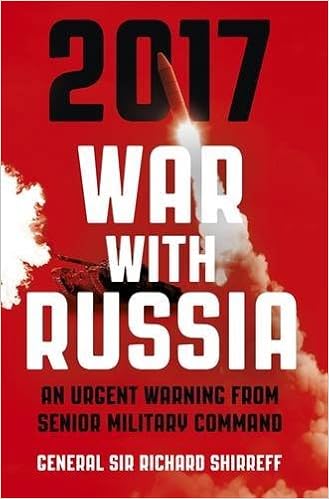
2017 War With Russia: An urgent warning from senior military command

Amazon link

Like David Cameron, I was once in my school's Combined Cadet Force. I have read books on military affairs and profess an interest. I wonder how General Sir Richard Shirreff would rate my abilities to come up with an effective British Army battle plan from my armchair?

I guess the literary world had a similar expectation as regards the bluff man-of-action's first novel. And they have not been disappointed: our troops are battle-hardened, hawk-faced, athletic-looking types who get up at 4 am to run ten miles before hitting their offices; the Russian President is pale with bloodless face, oval eyes cold and menacing, and with a voice 'slightly high-pitched and nasal'.

The American President, one year from time of writing, is a curious Clinton-Trump hybrid, the female CEO. Here is how one of the minor characters, aide Bear sees her:
"Standing up with all the others as she entered, Bear felt an almost physical sense of the power she gave off. The graver this crisis became, the more assured became her leadership.

"I know how lonely command in war can be, he thought. But, dammit, she’s just thriving on it. What was the saying? Cometh the hour, cometh the man? This time it was firmly cometh the woman ... and what a woman.

"With the President seated, MacWhite, the tall, lean former Special Forces general, who looked as if he’d be more at home riding the range somewhere out West than inside the Washington beltway, led the President through the agenda."
Enough: put aside the hyper-stereotyped characters, the pedestrian plotting and the over-acronymed prose. We are not reading the new Tom Clancy; we want to know what's wrong with our defence posture.

In this novelised scenario, the Russians, suffering from empire-withdrawal-syndrome and a realisation that their new borders have left large populations of co-ethnics in the Ukraine, the Baltic States and East Poland, decide to restore their kinfolk to the embrace of Mother Russia.

An invasion of East Ukraine delivers a land-route to the Crimea, followed by an assault on NATO member-states Estonia, Latvia and Lithuania. NATO is paralysed by the inability of its 28 members to agree on anything, the bureaucratic pacifism of the Germans and the openly pro-Russian sympathies of Hungary and Greece. In any event, it has no real military capacity anyway - years of underfunding and neglect have totally hollowed it out.

It's almost game-over, but the Russians make mistakes. They destroy British and German ships anchored in a Latvian port and kill forward-based American soldiers in the battle.

The rest of the story recounts events as America mans up ('that new president'), the Europeans find a new unity and the NATO military come up with a cunning plan. And thankfully, the romantic storyline is kept to a minimum and there is no sex.

Does the plot work as presented? Not a chance: unacceptable risks of nuclear armageddon, way too much reliance on cyber-stuff (which would almost certainly go wrong) while the Russians are portrayed as far too unimaginative.

I suspect that General Shirreff doesn't care much about this criticism either. He really isn't here to write a crafted thriller. His true point is that Europe has essentially blundered into disarmed pacifism and this has to be fixed - so what of that argument?

I don't doubt for a second the detailed picture he paints of European political-elite pacifism, Russia-accommodationism and generalised Euro-incompetence. His picture of the Russian leadership looked a bit too paranoid, emotional and cold-war-ish .. but a little reading around the subject seemed to support his view of the dangerous instability of President Putin's worldview and style of leadership. His view of Russian war aims - not to 'take Europe' but to expand Russia to its 'natural frontiers' - seemed highly plausible too.

Should we risk the nuclear destruction of Western Europe and perhaps American cities to stop this? The novel says 'yes' but in real life the political class would say no. And unless we believe that the current borders in Europe are inviolable until the heat-death of the universe, then it's unlikely that we'll risk armaggeddon for adjustments which, in the end, many will think not without some natural foundation. If the Russians play their cards right.

The critical learning experience is on page 285. Kydd, the new Chief of Defence Staff, is briefing the post-Cameron Prime Minister, Oliver Little, on the relationship between strong conventional forces and the strategic nuclear deterrent:
"But surely, even if we're outmatched conventionally, we've still got Trident?"

"OK, Prime Minister,' sighed Kydd, let me take you through this from first principles. You ask what the Russians will do and I'll repeat. They'll do what they've done at the end of every snap exercise they've called recently. Launch an Iskander tactical nuke as what they call a de-escalatory measure to stop us dead in our tracks and stop us counter-attacking?"

"Hardly sounds to me like de-escalation. Surely them firing a nuke will lead to all-out nuclear war?" asked Little.

"That's precisely the point, Prime Minister. It's counter-intuitive . . . the President knows that there's no way you are going to risk the destruction of human life in the UK by launching a Trident at Russia in response to his tactical nuke when, by so doing, you can almost guarantee a retaliatory strike from an intercontinental ballistic missile in return."

"So, how should we respond? We just have to take it on the chin?"

"Sadly, with the state of our Armed Forces as they are today .. Yes. That would be my advice. Plenty of people told the last government that to be effective, deterrence needs to be matched at every level, conventional and nuclear. As I've just explained, you can't weaken conventional forces and expect Trident alone to protect you. Conversely, if we did have strong conventional forces, but no Trident, they could easily defeat us by threatening to nuke us and we would have no way of deterring them."
This argument is exactly right, but contra the book, NATO is not going into a hot war with Russia over the latter's border accommodations. The trouble is, in the present state of disarray, NATO couldn't get into a hot war with any prepared state over anything; not a good place to be when negotiating with potential adversaries such as Russia and China.

Absent a clear and present danger, none of these Cassandra-like warnings are going to make the slightest difference. So expect more dangerous brinkmanship in the years to come.

--

The Iskander ballistic missile can carry a nuclear warhead up to 50 kilotons. Warheads with one third of that yield were dropped on two Japanese cities in 1945.

Thursday, August 27, 2015

The coming China-America War


A good review from The Economist (excerpted below). And also from most of the American military-political-industrial complex.

The Economist notes that writing polemical books warning of inadequacies in your country's military posture is far from new:
Ghost Fleet” is an entertaining new entrant into this tradition. Peter Singer, who has thought about military matters at various Washington think-tanks, and August Cole, a former defence reporter for the Wall Street Journal, spin a story of a war between America and China a decade or so hence that takes place mainly in the Pacific, but also in cyberspace and outer space.

The Pentagon, long used to dominance, currently worries a lot about China’s defensive prowess; Chinese targets may be so well protected by missiles and radars that it would be hard for America to attack them, if such a move seemed necessary in order to assist an Asian ally. To fit the form of the future-war genre, though, “Ghost Fleet” looks not at China’s ability to fend off America but at its means to attack. Moving to forestall any American claim on vast energy resources it has discovered in the western Pacific, a post-communist Chinese government uses new technologies and subterfuge to destroy America’s aircraft-carriers, submarines and surveillance satellites, cripple its computer systems and subvert weapons systems that depend on Chinese-made microchips.

With some Russian assistance, China invades Hawaii and establishes its dominance across the ocean. America is forced to regroup and come up with a counter-attack, one that depends heavily on the USS Zumwalt, its capable, slightly-but-not-very conflicted captain, Jamie Simmons, and its master chief, Jamie’s estranged father Mike.

The plot rattles through its three acts in a manner well suited to beaches and long-haul flights. It is perhaps a little anticlimactic; the novelties and narrative twists deployed in the initial attacks make them more thrilling than the big battle at the end. The heart of the matter is not the plot, however, but the nifty details used to shape and adorn it.

Fighters on both sides take officially sanctioned stimulants and other drugs as a matter of course, with some combatants surgically enhanced so as to surpass human norms; familiarity with, and reliance upon, augmented-reality eyewear becomes a dividing line between seamen old and young; Walmart puts its supply chain onto a wartime footing; robot lobsters support SEAL teams. Throughout there are echoes of earlier future-war stories, from Tom Clancy’s “Red Storm Rising” to Hector Bywater’s “The Great Pacific War”—a novel from 1925 whose inclusion of a surprise Japanese attack on the American fleet came to look eerily prescient in 1941.

The technology is not all high, and the fighters not all straightforwardly heroic or villainous. The American resistance on Oahu—the “North Shore Mujahideen”—moves by mountain bike, uses GoPro cameras to record the carnage caused by its improvised explosive devices and provokes atrocities to keep the occupiers from winning the submission of the islanders.

The book makes fairly clear which side the authors take in various current military debates. They think more should be spent on dogfighting drones. They want a defence industrial base that is nimbler and more secure. They are keen on weapons that can smite things far faster than current missiles can, such as rail guns and laser beams. Their version of the Zumwalt, which in the real world is an experimental destroyer close to being commissioned, and which in the novel’s world has already been mothballed to the “ghost fleet” of the title, is kitted out with both.

They are intriguingly hard to read, though, on the key issue of the future of the aircraft-carrier. As missiles get better, the craft seem all but certain to become more vulnerable, as the American carriers in “Ghost Fleet” prove. But the book is silent on what to do about that in a world where America depends on them above all other tools for the projection of power.

Unlike Chesney, whose story ended with Britain a province of the German Reich, the authors do not underline their messages by having America’s defeat made permanent. Instead, after heroism, high-jinks and sacrifice, the Pacific is returned to something like the status quo. But if aircraft-carriers really are on the losing side of the sort of technological progress the book portrays, the real-world status quo looks unlikely to persist over the decades to come."
The authors of a 'novel of ideas' have the perennial problem of characterisation. If we're intended to focus on fatal flaws in our defence posture, why inflict a gratuitous soap opera of conflicted personalities acting out some oedipal conflict (as they do)?

But if you don't do this, you've written a polemical essay of interest only to defence analysts.

I think the authors just carry it off, breaking away from their concern with technologies and strategy to consider the human (... resources, I was going to say!) side of war. They've been as assiduous in capturing the experience of combat - and the impact of war on families - as everything else. But, as they say, they did a lot of interviews.

State-of-the-art military architecture is founded upon the integration of sensing, communications, automated analysis and force deployment. Fine if the opponent can't degrade your military nervous system. In biological terms, the Chinese in this novel deliver a neurotoxin to the US military, turning its neurons (chips) traitor and wiping out its higher brain functions. The fog of war descends upon the Americans - in absolute fashion.

If there's one lesson the reader should take home from the beach, it's how to address that problem* (along with the utter vulnerability of the carriers of course!).

---

* Here's a clue. What do you in today's professional armies when you can't rely on a command and control network? You make sure your units are well briefed and then you give them maximum tactical autonomy. It's the well known 'thin vs. fat client' spectrum: you can trade off lack of communications bandwidth with increased local intelligence, smarter sensors and drones.

Tuesday, August 27, 2013

The missiles will soon be flying ...

Hand-wringing aside, what is a rational case for a military strike against the Syrian government? Tony Blair, writing today in The Times, is both smart and well-informed. Surely if he can't make the argument, then nobody can.

He starts by talking about Egypt and I agree with every word.
" ...

Let us start with Egypt. To many in the West, it is clear: the Egyptian military have aborted a democratically elected Government and are now repressing a legitimate political party, killing its supporters and imprisoning its leaders. So we are on a steady track to ostracising the new Government. In doing so, we think we’re upholding our values. I completely understand why this view would be taken. But it is a grave strategic error.

The fallacy with this approach lies in the nature of the Muslim Brotherhood. We think of it as a normal political party. It isn't. If you want to join the UK Conservative Party or the German Christian Democrats or the US Democrats, you can do so with ease and they will welcome you with open arms. And in all these countries, the basic democratic freedoms are respected by all parties. The Muslim Brotherhood simply isn’t like that. To become a member even at the lowest level is a seven-year process of induction and indoctrination. It is run by a hierarchy that is more akin to the old Bolshevik party system.

This is a movement. Read their speeches — not the ones they put out for Western ears, but the ones they actually believe, for their own ears. What they were doing in Egypt was not “governing badly”. If you elect a bad government, then tough — you live with it. What they were doing was systematically changing the constitution, taking control of the commanding heights of the State in order to subvert them and to make it impossible for their rule to be challenged. And they were doing so in pursuit of values that contradict everything we stand for.

So you can rightly criticise actions or overreactions of the new military Government but it is quite hard to criticise the intervention that brought it into being. Now all the choices that Egypt faces are ugly. The bloodshed is horrible and will shock all Egyptians. There are large numbers of soldiers and police among the casualties as well as civilians and, partly as a by-product of the fall of Gaddafi, Egypt is awash with weapons. But simply condemning the military will not get us any nearer to a return to democracy.

Egypt is not a creation of 19th or 20th-century global power games. It is an ancient civilisation stretching back thousands of years and is imbued with a fierce national pride. The army has a special place in its society. The people do want democracy, but they will be disdainful of Western critics whom they will see as utterly naive in the face of the threat to democracy that the Muslim Brotherhood posed.

We should support the new Government in stabilising the country, urge everyone, including the Muslim Brotherhood, to get off the streets, and let a proper and short process to an election be put in place with independent observers. A new constitution should be drafted that protects minority rights and the basic ethos of the country, and all political parties should operate according to rules that ensure transparency and commitment to the democratic process."
Now we come to the heart of it: what to do about Syria? Blair continues:
"In Syria, we know what is happening. We know it is wrong to let it happen. But leave aside any moral argument and just think of our interests for a moment. Syria, disintegrated, divided in blood, the nations around it destabilised, waves of terrorism rolling over the population of the region; Assad in power in the richest part of the country; Iran, with Russia’s support, ascendant; a bitter sectarian fury running the Syrian eastern hinterland — and us, apparently impotent. I hear people talking as if there was nothing we could do: the Syrian defence systems are too powerful, the issues too complex, and in any event, why take sides since they’re all as bad as each other?

But others are taking sides. They’re not terrified of the prospect of intervention. They’re intervening. To support an assault on civilians not seen since the dark days of Saddam.

It is time we took a side: the side of the people who want what we want; who see our societies for all their faults as something to admire; who know that they should not be faced with a choice between tyranny and theocracy.

... "   (my emphasis).
OK, great, but here's the problem. In Syria we see the Alawite ruling clan, a Shia offshoot battling with radical Sunni forces, some of whom are signed-up with Al-Qaeda. The majority population are surely less politicised and less relentlessly religious; still, it's the guys with the guns who'll end up running the place and setting the policies.

The people who want what we want - secular, western-oriented, progressive - are socially and militarily insignificant. Nothing we can do can either strengthen them or help them prevail (as they have not prevailed anywhere else in the Arab Spring). So sure, we can hit Assad and/or we can hit the Sunni fundamentalist armed units - but to what end?

Blair's arguments amount to no more than wishful thinking. The problem is that the stifled development of capitalism in the Arabic Middle-East has resulted in a flimsy and weak civil society: the people who want what we want won't exist in great enough numbers to call the shots until those economies have been totally transformed.

Neither the Islamists nor the generals have a great track record at sponsoring modernity so we can be confident that our grandchildren will be having similar outbursts of angst about the piteous and dangerous Middle-Eastern situation.
---

Note: I would be shocked, shocked to think that Tony Blair was being disingenuous - and that this was really all about Iran, and Russia.