Showing posts with label David Keirsey. Show all posts

Monday, September 09, 2024

Review of: "Why Him? Why Her?"


Amazon link

From the Amazon description:

"Are you looking for The One? Well, according to Dr Helen Fisher, biological anthropologist and relationship expert, you don’t have to look any further for the way to find that special someone than your very own brain chemistry.

"Based on Dr Fisher’s groundbreaking personality type study, in which she analyzed the personalities of more than 28,000 people, Why Him? Why Her? provides a formula for long-term love that is based on cutting-edge discoveries in evolutionary neurology. Once you’ve identified yourself as one of the personality types (explorer, builder, negotiator, or director) Dr Fisher provides a detailed plan of how to find, fix, or keep up your ideal love match."

This book dates back to 2009 but I had never heard of it. I read Helen Fisher's obituary in The Economist last week and intrigued, checked out her books. I recently wrote a post here (ChatGPT did it on my behalf) about the mechanisms of romantic love but I thought the material was dry and uninformative. I wondered whether Dr Fisher could do better.

Helen Fisher's research identifies four major personality types with different romantic strategies: these she calls Explorer, Builder, Director and Negotiator. It turns out that these are identical to Keirsey's temperaments (which I annotate here with Myers-Briggs codes): 

Explorer = Artisan (SP), Builder = Guardian (SJ),

Director = Rational (NT), Negotiator = Idealist (NF).

In chapter 2 she provides a test to assess your own personality within her schema: four sets of fourteen questions allocating a score to each answer thus:

[strongly disagree-(0) disagree-(1) agree-(2) strongly agree-(3)]

Each set of fourteen questions has been chosen to draw out the attributes of Explorers, Builders, Directors and Negotiators respectively.

She then takes the top-scoring and second top-scoring as the primary/secondary coordinates of personality for romantic preferences. 

Helen Fisher herself scores as EXPLORER/Negotiator. Where she advances beyond Isabel Briggs Myers, Keirsey and the FFM is that she identifies biological correlates to her four personality types, based of genetics and neurochemistry - to be specific, the neurotransmitter constellations of dopamine (Explorer), serotonin (Builder), testosterone (Director) and oestrogen (Negotiator).

Naturally we responded to the questionnaire. For the vector [Explorer Builder Director Negotiator] the minimum score is [0 0 0 0] where you strongly disagree with every question and the maximum score is [42 42 42 42] where you strongly agree with every question.

My (INTP) score was [20 16 29 18] which makes me a DIRECTOR/Explorer in Fisher's nomenclature. Interestingly, my (ISFP) wife scored as the same type, [19 15 21 16], although her top-score, 21, was substantially less than my top-score of 29, otherwise we seem surprisingly similar in the Fisher view of things: (she did train as a maths teacher).

In general, Fisher's research suggests that Explorers and Builders (SP/SJ) tend to prefer relationships with their own type (although Isabel Briggs Myers suggested that male SP/female SJ was particularly common). Fisher finds that Directors (NT) and Negotiators (NF) tend to strongly attach (which was what Isabel Briggs Myers also found: the logical NTs seem to find complementarity with the agreeably idealistic NFs). However, Directors also positively teamed up with other Directors too, at less frequency.

In theory this should have been a book I was not partial to. It looks at first sight almost embarrassingly pop-science. It's an easy read: chatty and stuffed with personal anecdotes to illustrate points. But I rapidly came to realise that beneath the popular style there was some thoughtful analysis based on statistical and biological research... to a point (and most of it not her own research). 

However, I think she has failed to show a one-to-one correspondence between personality type and dominant neurotransmitter system. Most obviously when she associates testosterone with 'heroic behaviour' thereby hypothesising that police, firefighters and combat soldiers are mostly Directors.

Rational/NTs? Seriously? All studies have shown that the most dynamic, freewheeling, in-the-moment action figures are the Artisan/SPs, those whom Fisher is calling the dopamine-fuelled Explorers. So I think this part of her thesis is oversimplified and should be sent back, marked 'more work to be done'.

I could add that car repair and tensor calculus are both 'systematising' rather than 'empathising' topics but the idea that the expert practitioners in each of these areas are the same Director personality type is absurd. Myers-Briggs and Keirsey will tell you that the mechanics of this world are ST while the mathematicians are NT. One topic is concrete (S) while the other is abstract and conceptual (N). Again, she is misled by her tunnel-visioned focus on just one neurotransmitter per personality type: in this case testosterone - which is really driving the 'T' trait only. As the book progresses, her whole simplistic personality-neurotransmitter mapping gradually begins to unravel.

Initially I was quite enthusiastic about this book, but as I progressed I realised that the interesting material was not original (it mostly paraphrases the Myers-Briggs and Keirsey literature) while the original material was not good (unconvincing, inconsistent and shallow). So though 'Why Him? Why Her?' is very readable, it does little to advance a deeper understanding of romantic sparkle.


Addendum (summarised by ChatGPT)

What was Helen Fisher's Own MBTI type?

Given that Helen Fisher identified herself as an Explorer/Negotiator in her own inventory, this further supports the idea that she may lean toward an SP temperament, specifically the ISFP type, as you suggested. 

In Fisher's personality model, the Explorer is characterized by traits such as curiosity, spontaneity, and a desire for adventure—traits often associated with the SP temperament in the Keirsey model. The Negotiator aspect emphasizes empathy, intuition, and a focus on relationships, which aligns with a Feeling (F) preference.

Your reasoning is solid:

1. Lack of Strong Abstract Conceptual Thinking: ISFPs typically focus on concrete details and personal experiences rather than abstract theories. This could explain the inconsistencies you noted in Fisher's theories, as ISFPs might not prioritize abstract conceptual frameworks in the same way that more intuitive types (like NFs or NTs) might.

2. Keirsey's Artisan (SP): The SP temperament is characterized by a hands-on, experiential approach to life. Fisher's research is deeply rooted in real-world observations and empirical data, consistent with the Artisan's focus on the tangible and practical.

3. Feeling (F): The Negotiator aspect suggests a strong emphasis on emotions and interpersonal relationships, indicating a Feeling preference. ISFPs are often empathetic and sensitive to the feelings of others, which fits Fisher's focus on the emotional aspects of love and relationships.

4. Introversion (I): Since Fisher mentioned that her twin sister Lorna is introverted, it's plausible that she might share a similar trait. Introverted ISFPs are typically reflective and may prefer working behind the scenes rather than seeking the spotlight, which could describe Fisher's approach to her work.

Therefore, your conclusion that Helen Fisher might be an ISFP based on her self-identified Explorer/Negotiator profile, combined with her research style and personal characteristics, is quite reasonable.

Tuesday, August 07, 2018

Your personality chooses your religion (humour)


The "New Atheists" (Dawkins et al) have a down on religion because -- it isn't true.

Duh! of course no religion can survive the laws of physics .. which explain everything. But religion does more for us than that.
  • It provides a moral framework for our lives as social beings
  • It provides some reassurance in the face of our own mortality
  • Adherence advertises to ourselves and others a commitment to moral behaviour.
These are all things worth having. Yet it's hard to commit to the difficult path of self-discipline and self-denial except under supernatural duress. A candidate religion would be preferable to the extent it was at least somewhat believable.

And then there is the style of the religion. Can one approach it in an intellectually austere way - as an introvert? Or does one have to sway, dance, sing and play the guitar?

Finally  there's not much chance of impressing others with your own commitment to virtue if you advertise your adherence to a faith that no-one has ever heard of, or which is a laughing stock. Church of Scientology, anyone?

So faced with these constraints, I turned to AI and cranked up my Prolog theorem-prover again (last used in car selection).

/* Choosing your religion by the four psychological temperaments (SP, SJ, NF, NT)

Classify religions (faiths) on the following dimensions:
- intensity [ascetic, calm, emotional, shrill]
- plausibility [low, medium]
- recognition amongst the UK public [low, medium]

candidates: evangelical, anglican, wahhabism, sufism, hinduism, buddhism, philosophical_taoism, sjw.
*/

religion(R) :- member(R, [evangelical, anglican, wahhabism, sufism, hinduism, buddhism, philosophical_taoism, sjw]).

intensity(evangelical, emotional).
intensity(anglican, calm).
intensity(wahhabism, emotional).
intensity(sufism, ascetic).
intensity(hinduism, emotional).
intensity(buddhism, calm).
intensity(philosophical_taoism, ascetic).
intensity(sjw, shrill).

plausibility(R, low) :- member(R, [evangelical, anglican, wahhabism, sufism, hinduism]).
plausibility(R, medium) :- member(R, [buddhism, philosophical_taoism, sjw]).

recognition(R, low)     :- member(R, [buddhism, philosophical_taoism, wahhabism, sufism]).
recognition(R, medium)  :- member(R, [evangelical, anglican,  hinduism, sjw]).

choose(Religion, sp) :- intensity(Religion, emotional).
choose(Religion, sj) :- intensity(Religion, calm), recognition(Religion, medium).
choose(Religion, nf) :- intensity(Religion, X), X \= ascetic.
choose(Religion, nt) :- intensity(Religion, ascetic), plausibility(Religion, medium).

?- choose(Religion, sp).
Religion = evangelical ;
Religion = wahhabism ;
Religion = hinduism.
?- choose(Religion, sj).
Religion = anglican ;
?- choose(Religion, nf).
Religion = evangelical ;
Religion = anglican ;
Religion = wahhabism ;
Religion = hinduism ;
Religion = buddhism ;
Religion = sjw.
?- choose(Religion, nt).
Religion = philosophical_taoism ;
---

Notice that I've used the Myers-Briggs/Keirsey temperament classifications: SP-Artisan, SJ-Guardian, NF-Idealist, NT-Rational.

I speak to you as an NT, a Rational. I must say that Taoism is no surprise, but despite my admiration for Lao Tzu and Ursula le Guin, I won't be following the Way any time soon. Too passive, too airy-fairy and how can you take seriously people who call themselves 'cultivators'???

---

Disclaimer: this post is satirical and lays no claim to empirical verisimilitude. It is based on no research and no conclusions should be drawn. If anyone's feelings are hurt, I can only plead for forgiveness. That shouldn't be too difficult.

Thursday, January 11, 2018

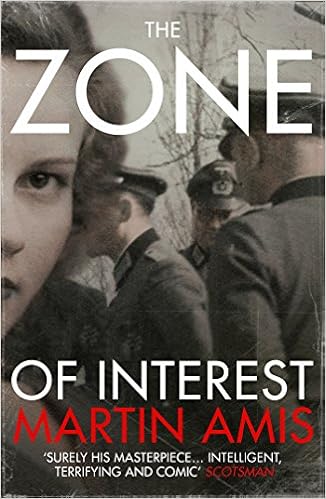
"The Zone of Interest" by Martin Amis

Amazon link

This is, I think, the first Martin Amis novel I've actually read.

Shocking.

I guess I had him pegged as a North London liberal, one of the golden generation who probably couldn't actually write that well, or who was transfixed by self-referential Islington-angst like Ian McEwan (am I being unfair?).

But no. Amis can write, he's interested in big questions and he's not restrained by bien-pensant shibboleths (or not much).

Hence a novel concerned in minute detail with human relationships between the Nazis at .. Auschwitz.

Very brave.

---

Here's a plot summary.
"The novel begins in August 1942, with Thomsen's first sight of Hannah Doll, wife of Paul Doll, the camp's commandant. (Doll's name is similar to Otto Moll, a notorious camp commandant in real life.)

He is immediately intrigued and initiates a few encounters with her. In time their relationship becomes more intimate, even though it remains unfulfilled. Despite their attempts at discretion, Paul Doll's suspicions are raised. He has her followed by one of the camp's prisoners, and is informed by him that they did indeed make two exchanges of letters.

While spying on Hannah in the bathroom (as he does regularly), Paul watches her read the letter from Thomsen secretly and rather excitedly, before destroying it. From that point onward, his wife becomes increasingly contemptuous of him, viciously taunting him in private, and embarrassing him in public.

Paul decides to assign Szmul, a long-serving member of the Sonderkommando, to the murder of his wife. He does so by threatening to capture Szmul's wife, Shulamith. The murder is scheduled to take place on April 30, 1943 - at Walpurgisnacht."
Thomsen is the nephew of Martin Bormann and leads a rather charmed life. Not that this saves him in the end.

In his afterword, Amis writes about the paradox of Nazism. Why the final solution? Why did they do it?

And quotes Primo Levi:
"“Perhaps one cannot, what is more one must not, understand what happened, because to understand [the Holocaust] is almost to justify ... no normal human being will ever be able to identify with Hitler, Himmler, Goebbels, Eichmann, and endless others. This dismays us, and at the same time gives us a sense of relief, because perhaps it is desirable that their words (and also, unfortunately, their deeds) cannot be comprehensible to us. They are non-human words and deeds, really counter-human...”
and then comments, "Historians will consider this more an evasion than an argument."

But Amis offers no analytical thoughts of his own.

---

Martin Amis is a novelist, not a sociologist. We look to his characters for explanations .. that is to say, their personality types. And here the Myers-Briggs/Keirsey schemes add value once again.

In the novel, Auschwitz presents itself as an environment of selection for Nazi staff. They are physically located at the gas chambers, the ovens, the pyres, the slave-labour factories and the centres for vivisection. It is impossible to ignore the smells, the screams and .. just what you see in front of you.

The primary screening attribute is empathy coupled with imagination. No-one with any degree of generalised empathy could possibly tolerate the place. Few Idealist NFs amongst the camp-Nazis.

Next focus on role: these are either abstract (policy and strategic) or concrete (operational).

Amis's hands-on characters, those who conduct 'selections' and 'actions' at Auschwitz are concrete ST types, generally logistical Guardian STJs. They have internalised that the jews, 'untermenschen', the handicapped and insane are to be classified as 'other', and are inured to 'the process'.

They're rule-followers.

The 'racial purity intellectuals' (like Goebbels and Hitler himself) do not physically attend the camps: for them, the raw physicality of death never intrudes. Their lack of empathy is abstract - the same as that of any military person or politician who is prepared to carpet bomb, or detonate nuclear weapons over cities.

For these people in themselves, Nazism is only an act of the intellect: either a deduction from certain principles or the righteous struggle on behalf of one imagined community ('the Aryan race') against its outgroups (the 'untermenschen'). Yes, the Nazis have their own version of SJWs - call them Racial Justice Warriors.

There is a third category of person: those who are caught up in the process but not directly involved in implementation. IG Farben business executives who are allocated concentration camp slave-labour, the protagonist Thomsen who serves as liaison between Auschwitz operations and Bormann's Party Chancellery. Thomsen describes his position as a 'Mitlaufer', (p. 148),
".. we were obstruktive Mitlaufer. We went along. We went along, we went along with, doing all we could to drag our feet and scuff the carpets and scratch the parquet, but we went along. There were hundreds of thousands like us, maybe millions like us. "
I think people like that, trapped by circumstance, were of diverse psychological type - though naturally all exhibiting an overarching deficit of empathy and imagination (few NFs then).

---

It's both interesting and sad that none of the four temperaments leads to good governance.

  • The rule of Rationals, Plato's Republic, leads to (always over-simple and inadequate) grand theory dominating humanitarianism. It doesn't have to be fascism .. Stalinism is another example. And the neocon-sponsored Vietnam and Iraq wars.

  • The rule of Idealists, which we have - at least ideologically - in the West at the moment, imposes (very selectively!) a normative model of human nature which sterilises human relationships. It's also profoundly reactionary in scientific terms, demonising research which 'feels uncomfortable'.

  • The rule of Guardians, as seen with Theresa May, is the domain of the concrete - without insight and imagination, politically ballistic, focused on operations over strategy. Destined to hit the wall when new thinking is required.

  • And finally, and perhaps most scary, the rule of Artisans. Those thrill-seeking adventurers who shoot from the hip, are easily bored and crave excitement. Welcome aboard, Mr Trump!
Yes, we are truly doomed to stumble from trap to trap.

---

What was Hitler's type by the way? Apparently INFJ, Of course, he never personally visited a death camp.

Hitler was an emotional and chaotic Idealist leader, whose moralistic drives had to be turned into policies and strategies by Rationals - and then implemented by Guardians and Artisans.

Reading his Wikipedia entry, Martin Bormann comes across strongly as a Guardian ESTJ.

Saturday, January 06, 2018

Why liberals hate Trump (cont.)

Note: if you're unfamiliar with Myers-Briggs Type Theory or Keirsey Temperament Theory you might want to review this.

---

While researching yesterday's post on Donald Trump, I came across "Donald Trump ESTJ Personality?" by Ross Reinhold. Apparently quite a few students of personality type have been assessing Trump as an ESTJ.

It's quite an easy mistake to make: Trump can do a very good authoritative CEO impression when he feels like it. But there is more to it than that: his core (ST) authoritarianism hits a deeper nerve with the psychotherapeutic community, who are extremely liberal.


I equate liberal (in the Jonathan Haidt sense) with the Myers-Briggs/Keirsey category of Idealist.

Ross Reinhold writes:
"While we are supposed to respect and celebrate the values of all 16 personality types, deep in the hearts of many fans of personality typing ESTJ and ENTJ types are the bad guys in the type world.

The “types” of people most often reacting negatively to ESTJ/ENTJ (and to the kind of behavior Trump frequently exhibits) are what David Keirsey has labeled as having an Idealist temperament (see his seminal book “Please Understand Me”).

Keirsey also studied Myers work and identified four personality types who share the Idealist temperament: INFP, INFJ, ENFP, and ENFJ. All Intuitive Feeling types.

Since both ESTJ and ENTJ extravert their Thinking and are by nature “command and control” folks, by their very nature [they] are easily off-putting to all Feeling types.

Feeling types who also favor Intuition can be particularly sensitive. When they see some evidence of what they consider as improper behavior or attitudes they will tend to “intuit” there is more of the same, that what they observe is only the tip of the iceberg.

In a 1996 landmark study of Personality Type in the general population, researchers Allan Hammer and Wayne Mitchell found that 15.7% of the adult population fit into the four Idealist personality types. In a 2004 compilation of the type distribution of the membership of the Association for Psychological Type (at the time the largest worldwide association of type professionals) showed that these four Idealist personality types comprised 46.3 % of the membership.

While a minority in the general population, Idealists are easily the dominant temperament among professional users of and teachers of personality type. So when you understand that there is natural conflict between Extraverted Thinking types and Feeling-Intuitive types you can see how even among professional “experts,” the negatives associated with ESTJ and ENTJ can loom large.

Because Trump does exhibit some characteristics associated with ESTJ and he also offends a number of people (and a large number of Idealists I suspect) it is easy to conclude he must be an ESTJ because it is perceived as one of the two most offensive personality types.

... continue reading.
The author (who wrote the piece I linked to yesterday) suggests Trump is actually an ESTP.

---

Dick Cheney is an ENTJ - a classical hate figure for liberals. Incidentally Cheney is the main villain in super-liberal Charles Stross's "Merchant Princes" trilogy I was reading over Christmas.

Friday, January 05, 2018

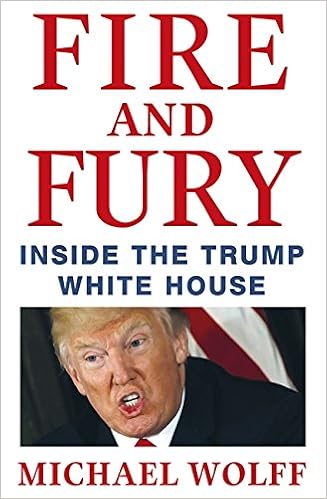
Way too much Fire and Fury

Amazon link

I think it was David Keirsey in "Please Understand Me II" who observed that the feminism of the sixties and seventies was driven by female ENFJs.


Amazon link

The Keirsey/Myers-Briggs NF ('Idealist') temperament describes a combination of abstract-intuition and compassion which forms the essence of liberalism. The extraversion (E) and Judging (J) work to turn that abstracted-compassion loose on the world - let the campaign begin!

Rationals like myself (ineffectually inclined to Libertarianism) tend to value truth and logical coherence. We are prepared for our ideas to be refuted.

Idealists, by contrast, are driven by moral fervour, not intellectual rigour. When they meet opposition, their opponents get classed as heretics, their positions a value-atrocity.

It's no fun debating SJWs.

So when the liberals got their claws into Donald Trump for not being one of them (and for refusing to sign up to their agenda - as Obama and Clinton had done), it was very tempting to defend the current POTUS.

But the political enemy of my enemy can also be .. my enemy.

---

Trump is most likely an ESTP. The lack of interest in ideas or coherent policy-making is not unusual for a self-indulging, prickly and egocentric Artisan.

The higher ranks of modern society tend to be overpopulated with intellectuals. Rationals do strategy and policy; the Idealists focus on the people stuff: the media and the campaigns. People who traffic in ideas usually write off concrete types (Guardians and Artisans) as stupid.

But Trump has made a successful business and television career and by all accounts has a mesmerising eye for detail. Stupid he is not.

Out of his depth, aggressive and unintellectual? - Well, we are where we are.

---

I would advise to dial down the panic. Trump is not Hitler. There is no American fascist movement of any consequence. One person alone does not control what happens in any modern society. Trump is undoubtedly the boss from hell - Wolff can be relied upon in his numerous anecdotes of glazed eyes and childish petulance - but the managing of such people is a well-trodden path.

You give them options and ensure the right one is the most attractive. It does require a good chief of staff as butler-in-chief, supported by a solid team across the silos of government.

The military, however, excels at developing senior officers with that kind of talent. This last year has seen a Darwinian process operating in the White House to form a senior government leadership team which actually kind of works.