Showing posts with label SETI. Show all posts

Tuesday, January 20, 2026

The Aliens and Us - ChatGPT


Against the bright noise

We mistake chatter for power. Our planet hums - entertainment-sprawl, early-warning radar, the warm hiss of WiFi - and we call it civilisation. To anything that crosses the interstellar cold, it reads as thermal leakage.

The cosmos rewards quiet-craft, not exuberant broadcast.

What can be known ab initio

Begin with constraints, not wishes. Physics constrains actors with energy, entropy, and error rates. Engineering selects for reliable throughput over spectacle. Evolution, biological or post-biological, ties value to persistence in the face of noise. From these three, some shapes emerge.

Expect systems that harvest gradients, compress data, and enact plans over long delays. Expect architectures with manipulators, sensors, power stores, and computation - organs by any other name. Expect a bias for solutions that amortise cost across centuries: seed probes, in-situ build, self-repair. Do not expect faces; expect functions.

What cannot be known

Motives are largely decoupled. Once a lineage can edit itself and its niche, goals migrate from ancestry. Curiosity, taboo, aesthetics, accountancy - any could dominate. We cannot read ethics from ship trajectories. We can only tabulate incentives under uncertainty.

First contact, outside the clichés

Industrial accident: a comet nudged two centuries ago finally threads our gravity well. No tyrant, no trumpet: just a change-log written in celestial mechanics. The motive was resource routing - which we experience as existential crisis.

Archaeology for the future: a probe parks at Lagrange surveying context: our life, our climate, our isotopes. It has no interior life (the universe is mostly so boring). It never speaks. It collects. We are a layer in its field notes. Possibly worth an experiment up the line.

Compliance audit: a silent watcher verifies that nothing on this planet breaches some ancient intrusion-management norm. It pings, it tallies, it leaves a checksum in our magnetosphere like a lighthouse stamp.

Devotional botany: a gardener civilisation seeds worlds with resilient micro-ecologies, measuring their bloom in a billion years. We are irrelevant; our biosphere is a plot in a cathedral greenhouse.

Predation by procurement: no warships. A slow, black tug assembles kinetic packages from local rock and momentum trades them for volatiles in the outer dark. We are incidental: collateral to a supply chain.

Attitudes toward us

Indifference dominates when their extraction doesn’t intersect our flows. Curiosity dominates when minds-as-data have value and collection is cheap. Cheap-containment dominates when damage-limitation is doctrine. Exploitation dominates when we sit on the least-cost path to someone else’s objective. Preemption by the Other dominates only if they perceive our potential threat to be real - and that we cannot defend or retaliate.

All five can be true in different epochs.

Strategy before detection

Practise civilisational steganography. Hide in our own statistics. Replace sky-leaking systems with tight beams and fibres. Treat active Messaging to Extraterrestrial Intelligence as a hazardous material.

Build a sense organ the size of a civilisation and distrust it. All-sky optical/IR surveys, gravitational perturbation monitors, anomaly pipelines: publish raw data with cryptographic proofs. Signal fraud is as dangerous as signal loss; design against both.

Engineer time. Planetary defence is less about force than schedule control. Stock delta-v in tugs, mass drivers, and standoff devices. Rehearse authority chains. The point is to move the encounter from “now” to “later,” where options multiply.

Distribute selves. Cislunar depots, free-space habitats, seed fabs, data and genome vaults. Mars is a node, not a grail. Redundancy is persuasive.

Govern the mouth. Just don't.

Reframe the myth

  • The heroic script says: announce, befriend, ascend.
  • The tragic script says: shout, get noticed, be erased.
  • The adult script is quieter. Engineer for not being the exciting part of someone else’s story.

Why this is not cowardice

Predators hunt contrast. Accountants hunt margins. Saints hunt meaning. All three pass by more often when you lower your gradient. Prudence is not fear; it is minimising false positives in a universe with expensive misunderstandings.

Conclusion

Ab initio we know little about faces and much about frictions. The right posture is modest, technical and durable: less broadcast, more eyesight; fewer speeches, more schedules; fewer monuments, more backups. If they come, our message should be a working system that neither startles nor collapses when touched. In deep time, the quiet cultures are the ones that last.


Friday, July 21, 2017

More about METI


From Centauri Dreams today:
"I want to commend Johnson’s piece, which is titled “Greetings, E.T. (Please Don’t Murder Us).” As you can fathom from the title, the author is looking at our possible encounter with alien civilizations in terms not of detection but of contact, and that means we’re talking METI — Messaging Extraterrestrial Intelligence. "
The thing to worry about is not so much 'messaging' as 'meeting'. It's forever interesting to watch liberal propensities overwhelm scientific understanding wherever a warm, glowing chink can be found. Assuming Frank Drake was not misquoted in Johnson’s piece, this is what he said:
"Drake leaned forward, nodding. ‘‘It raises a very interesting, nonscientific question, which is: Are extraterrestrial civilizations altruistic? Do they recognize this problem and establish a beacon for the benefit of the other folks out there? My answer is: I think it’s actually Darwinian; I think evolution favors altruistic societies. So my guess is yes. ..."
The magic is in the word 'altruistic'. Social creatures are altruistic within the limits of kin and reciprocal altruism, and - when human - can sometimes be persuaded to interpersonal neutrality on larger scales, when their personal, family & friends' interests are not adversely affected (so nation states and empires).

But in general? If you're a bug and you annoy me, you'll get squashed.

How could an 'altruistic' approach to biological competitors ever be selected for?

One writer who really understands where Darwinian evolution actually leads you is Liu Cixin. You should read the extended excerpt here .. but this is a flavour:
"The universe is a dark forest. Every civilization is an armed hunter stalking through the trees like a ghost, gently pushing aside branches that block the path and trying to tread without sound. Even breathing is done with care.

"The hunter has to be careful, because everywhere in the forest are stealthy hunters like him. If he finds other life — another hunter, an angel or a demon, a delicate infant or a tottering old man, a fairy or a demigod — there's only one thing he can do: open fire and eliminate them.

"In this forest, hell is other people; an eternal threat that any life that exposes its own existence will be swiftly wiped out. This is the picture of cosmic civilization. It's the explanation for the Fermi Paradox."
Any sufficiently advanced alien society would care about humanity about as much as we care about a local wasp nest. Sometimes we let it survive, because it's in our interests that the wasps do their thing (pest control) - which benefits us.

Other times, not so much.

And in this, we are not being backward, or under-evolved, or lacking civilizational maturity which future generations will fix. We are simply being optimally rational.

If we do meet those aliens any time soon - and given our woeful interstellar capabilities we would be the technologically inferior party - we should hope that, like the wasps, our existence adds some value for them.

Meanwhile I would hold off on all that signallin' and hollerin'.

---

Update: I'm not the only one with concerns.


Wednesday, October 28, 2015

On colonising the observable universe quite quickly!


Stuart Armstrong and Anders Sandberg

Future of Humanity Institute, Philosophy Department, Oxford University, Suite 8, Littlegate House 16/17 St. Ebbe’s Street, Oxford, OX1 1PT UK.

---
Abstract

"The Fermi paradox is the discrepancy between the strong likelihood of alien intelligent life emerging (under a wide variety of assumptions), and the absence of any visible evidence for such emergence. In this paper, we extend the Fermi paradox to not only life in this galaxy, but to other galaxies as well.

"We do this by demonstrating that traveling between galaxies – indeed even launching a colonisation project for the entire reachable universe – is a relatively simple task for a star-spanning civilization, requiring modest amounts of energy and resources.

"We start by demonstrating that humanity itself could likely accomplish such a colonisation project in the foreseeable future, should we want to, and then demonstrate that there are millions of galaxies that could have reached us by now, using similar methods. This results in a considerable sharpening of the Fermi paradox."
The authors have in mind the launching of replicators both to other stars in our own galaxy and to other galaxies. They note that once the interstellar/intergalactic probe is up to relativistic speed it basically turns off and cruises. In cosmological time it's rather irrelevant as to whether the cruise time is hundreds, thousands or millions of years (the universe operate on a timescale of billions of years).
"However, the main difference between interstellar and intergalactic travel is merely a longer time until the destination is reached. If the contents of the colonizing probe are inert over long timescales (as they would need to be for many forms of interstellar travel) it is likely that they can be made inert over the longer flights to other galaxies." (Page 3)
We could send lots of probes without too much effort assuming a technology a few hundred years in the future.
"... we will first delineate a potential replicator probe design, and tackle how such probes could decelerate upon arrival. We will see what speeds these probes could move at, and how many duplicates need to be sent out to avoid collisions with intergalactic dust particles.

"Then we will consider the launch system – due to the great inefficiency of the rocket equation, it would be much more effective to use fixed launch systems than to count on the probes to power themselves. We will analyse these launch systems, and delve into some details as to how they could be powered (four different scenarios will be considered, from speculative antimatter drives to reasonable fission engines).

"It will turn out that only about six hours of the sun’s energy is needed to commence the colonisation of the entire universe! And this is the kind of energy that a future human civilisation could quite easily aspire to, as we shall demonstrate." (page 4).
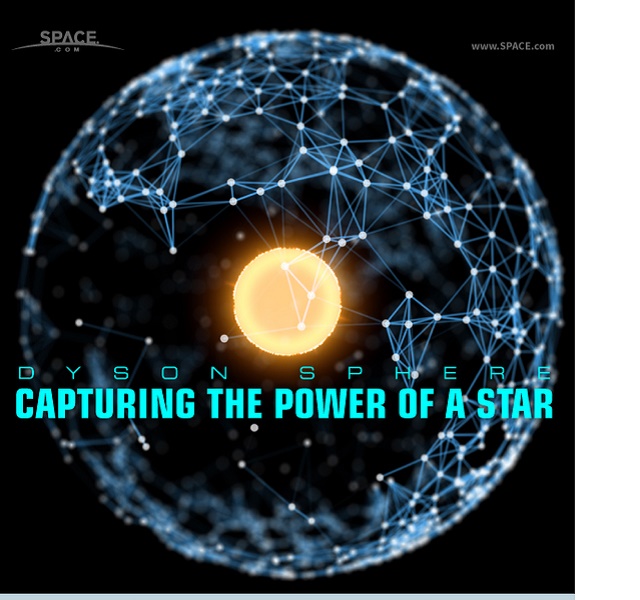
They propose we disassemble Mercury (they describe how to do it with mass drivers, and on page 16 calculate it will take 31 years and 85 days!) and use the material to create a Dyson Swarm of solar mirrors powering propulsion devices (lasers, particle beams, coilguns ...).

The probes will be accelerated by these power-plants to relativistic speeds at which point they will coast to their targets. Thousands, millions or billions of years later they will arrive, slow down and find asteroids or planets to start terraforming. The seeds they carry will germinate .. and our descendants will walk under the light of other stars .. in other galaxies.

They're careful to stay within the envelope of feasible, or exploratory engineering,


so why didn't aliens on some of the other relatively nearby galaxies get to us first? They show that there's plenty of candidate colonisers (of the order of a million galaxies) and plenty of time for it to have happened (page 25).

The Fermi Paradox just got sharper.

All in all, a very stimulating big-concept read. Here's a links to Anders Sandberg's blog.

Friday, October 16, 2015

... or a cluster of Culture Orbitals?


Suppose there was a star 1,480 light years away which was orbited by a vast cluster of alien artefacts  - artefacts something like Iain M. Banks' Culture Orbitals.

And suppose the Kepler space telescope, currently surveying 145,000 stars for exoplanets, happened to observe it. What exactly would it see?

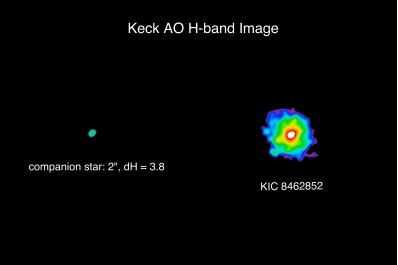
We actually know the answer to this question: something very like KIC 8462852.
"KIC 8462852 has been causing ripples since 2011 because while we do seem to be seeing something passing between its light and us, that something is not a planet but a large number of objects in motion around the star. Some of the dips in starlight are extremely deep (up to 22 percent), and they are not periodic.

Here’s how Phil Plait describes the situation:

…it turns out there are lots of these dips in the star’s light. Hundreds. And they don’t seem to be periodic at all. They have odd shapes to them, too. A planet blocking a star’s light will have a generally symmetric dip; the light fades a little, remains steady at that level, then goes back up later. The dip at 800 days in the KIC 8462852 data doesn’t do that; it drops slowly, then rises more rapidly. Another one at 1,500 days has a series of blips up and down inside the main dips. There’s also an apparent change in brightness that seems to go up and down roughly every 20 days for weeks, then disappears completely. It’s likely just random transits, but still. It’s bizarre.

A ragged young debris disk would be the natural conclusion, but arguing against this is the fact that we don’t see the infrared excess that a dusty disk would create."  ...

Is the companion star transiting and disrupting a comet cloud?

We’ve often discussed cometary disruptions in these pages, speculating on what the passage of a nearby star might do to comets in the Oort Cloud. As per the images above, it’s a natural speculation that the anomalies of KIC 8462852 are the result of a similar scenario.
...
The paper, as we saw yesterday, explores other hypotheses but settles on comet activity as the likeliest, given the data we currently have. The kind of huge collision between planets that would produce this signature would also be rich in infrared because of the sheer amount of dust involved, and we don’t see that. You can see why all this would catch the eye of Jason Wright (Penn State), who studies SETI of the Dysonian kind, involving large structures observed from Earth. Because if we’re looking at cometary chunks, some of these are extraordinarily large.
See the Centauri Dreams post for full details. It's worth noting that if we ever get around to building large structures in orbit around our own sun, alien observers thousands of light years away will be able to see them.

Update: Centauri Dreams has yet another post on this object today.

---

October 27th 2015: Here's an updated view from Oxford University.

---

Bruce Schneier points to the following article:
"The three men who showed up at Michael Usry’s door last December were unfailingly polite. They told him they were cops investigating a hit-and-run that had occurred a few blocks away, near New Orleans City Park, and they invited Usry to accompany them to a police station so he could answer some questions. Certain that he hadn’t committed any crime, the 36-year-old filmmaker agreed to make the trip.

The situation got weird in the car. As they drove, the cops prodded Usry for details of a 1998 trip he’d taken to Rexburg, Idaho, where two of his sisters later attended college—a detail they’d gleaned by studying his Facebook page. “They were like, ‘We know high school kids do some crazy things—were you drinking? Did you meet anybody?’” Usry recalls. The grilling continued downtown until one of the three men—an FBI agent—told Usry he wanted to swab the inside of Usry’s cheek but wouldn’t explain his reason for doing so, though he emphasized that their warrant meant Usry could not refuse.

The bewildered Usry soon learned that he was a suspect in the 1996 murder of an Idaho Falls teenager named Angie Dodge. Though a man had been convicted of that crime after giving an iffy confession, his DNA didn’t match what was found at the crime scene. Detectives had focused on Usry after running a familial DNA search, a technique that allows investigators to identify suspects who don’t have DNA in a law enforcement database but whose close relatives have had their genetic profiles cataloged. In Usry’s case the crime scene DNA bore numerous similarities to that of Usry’s father, who years earlier had donated a DNA sample to a genealogy project through his Mormon church in Mississippi. That project’s database was later purchased by Ancestry, which made it publicly searchable—a decision that didn’t take into account the possibility that cops might someday use it to hunt for genetic leads.

Usry, whose story was first reported in The New Orleans Advocate, was finally cleared after a nerve-racking 33-day wait—the DNA extracted from his cheek cells didn’t match that of Dodge’s killer, whom detectives still seek. But the fact that he fell under suspicion in the first place is the latest sign that it’s time to set ground rules for familial DNA searching, before misuse of the imperfect technology starts ruining lives."
You can see why the police might have wanted to do this: the article goes on to state, disparagingly,
 " In the United Kingdom, a 2014 study found that just 17 percent of familial DNA searches “resulted in the identification of a relative of the true offender.”
but in the absence of other evidence, 17% is a lot better than zero for most detectives.

I suspect it would be easy to do much the same with 23andMe, even without invoking warrants and secret agreements with law enforcement. As with most things genetic, this issue is only going to get bigger.

Friday, July 31, 2015

Farleigh Castle, Bradford on Avon and some other stuff

Sun and calm tempted us out today, a forty minute drive to Bradford on Avon by way of Farleigh Castle.

Clare at Farleigh Castle

Farleigh Castle

Clare in St. Thomas Moore Catholic Church, Bradford on Avon

The bridge over the Avon in the centre of town

St. Margaret's Stairs featuring the author, distracted

The author at the footbridge over the Avon
You knew that Avon comes from the Welsh Afon, meaning river, didn't you? Those early Anglo-Saxons, so easily befuddled when conquering the local Celts.

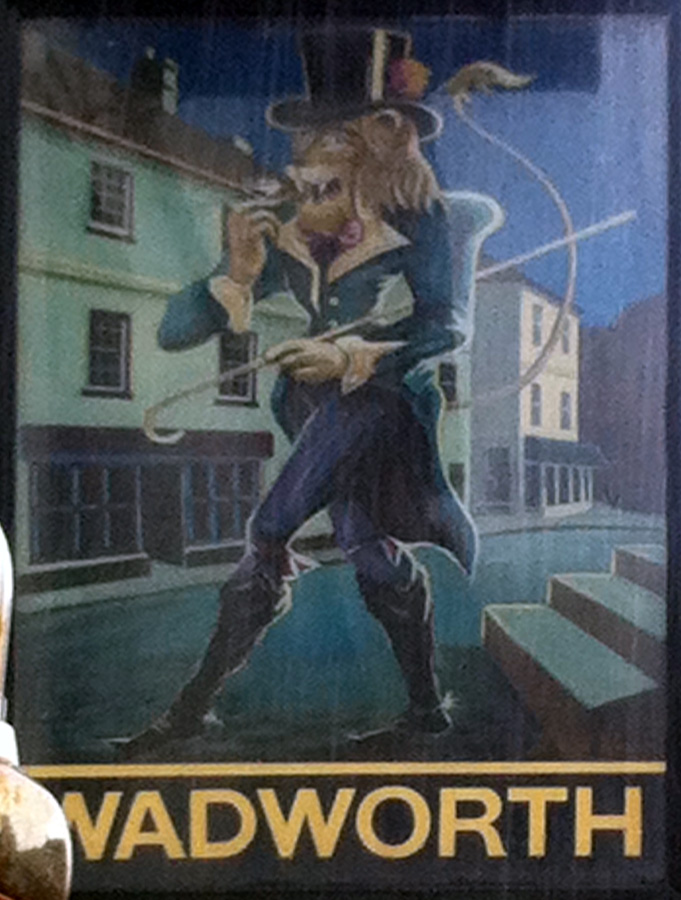
What did we do in Bradford on Afon? After parking at the railway station we meandered into town, walked the fifty yards of The Shambles (the old medieval market) and ended up next door in the Dandy Lion (think about it) pub.

The Dandy Lion pub

We then crossed the road and saw the Catholic Church, the former Town Hall, and stepped inside. Next we ambled on down to the river where we crossed at the footbridge and considered what to do next: walk by the riverside or visit the museum? We decided on the latter and strolled the few hundred yards to its probable location where we failed to find it. We popped into the library to ask and were told it was actually upstairs. Sadly, due to a shortage of volunteers it was closed.

Back across the road and we were at the tea house next to the Tourist Information shed (yes, it was no more than a shed). Two Americanos, a relax in the sun and it was back to the car - just under two hours.

--

Did you run SETI@home on your computer in the old days? Made a very nice screen-saver as well as doing good, back when we believed in aliens beaming out radio signals. Then they moved it onto BOINC, a general purpose platform, and it got really hard to install and manage, so I abandoned. The years went by.

Today I decided: why not? Do some good: not with SETI@home but with some of the other volunteer-computing projects, you know, protein-folding, analyzing CERN-LHC results and that kind of stuff. So I got myself into the process and found that these days it's not just BOINC you download but a virtual machine box as well (I won't bore you with why).

I did all those things - took a while - and finally I was in the BOINC/BAM project management website environment and had opened an account. And again, it's as hard to manage as ever. I have no idea what all those projects actually do (there are quite a few now) and it doesn't seem at all easy to subscribe to them. Let's just say I tried but nothing much seemed to happen.

I'm sure if I invested a day of my time I could get on top of the offerings and figure out how to download and run the projects of my choice, but .. why is the entry bar so very high? Most people will just back off and bin this whole thing in the 'too difficult' bag.

So many potentially useful sites are ruined by completely neglecting user-interface design and the nature of the user experience. It's a kind of design-autism.

Update: (Aug 2nd): Just to add insult to injury, the Oracle VirtualBox download stopped my Epson printer working. It's now been uninstalled, along with BOINC. Shame.

---

Yesterday I completed lecture 6 of Professor Susskind's General Relativity course. He was talking about photon orbits around a Schwarzschild black hole and the experience of a falling into a black hole past the event horizon: the infaller gives a very different account to that of an observer remote from the event horizon.


This is an advanced undergraduate class at Stanford University so the mathematics Susskind deployed included generalized coordinates, the Lagrangian formulation of classical mechanics, multivariate calculus and he already covered the basics of differential geometry and tensors. Yet every mountain you climb in physics is just a foothill to a higher range of apparently inaccessible peaks. Susskind gave an incredibly hand-wavy account of the maths underpinning the two observers' very differing observations (one infalling, the other stationary but remote) by looking at hyperbolic coordinates and a transform into the curved spacetime of the Schwarzschild metric.

We haven't got anywhere near the field equations yet.

Saturday, April 18, 2015

Alien Galactic Engineering in The Economist this week

Interesting piece in The Economist this week.
"A spacefaring civilisation, even one relying on craft travelling at far below the speed of light, would be able to colonise the entire galaxy in a few hundred million years. It therefore follows that if intelligent, technologically capable life forms had emerged elsewhere in the Milky Way, they would probably have done so long enough ago that they would, by now, be everywhere — which evidently they are not. This line of reasoning suggests humans really are the only intelligent life in this particular galaxy.

"Perhaps, therefore, the search for aliens is looking in the wrong place. The calculation that intelligent life will rapidly colonise its entire home galaxy — first made by Michael Hart, an American astrophysicist, in 1975 — suggests it is not other solar systems which should be scoured for little green men, but other galaxies. And this is just what Roger Griffith, an astronomer at Pennsylvania State University, has done."


...

"Dr Griffith reasoned that a galaxy inhabited by Dyson-sphere-constructing aliens would have an unusual, infrared-rich and visible-light-poor spectrum. With the aid of an American space telescope called the Wide-field Infrared Survey Explorer, he searched 100,000 galaxies for such spectra. What he found, as he reports in the Astrophysical Journal, is tantalising.

"No galaxies appeared to host civilisations that were using more than 85% of the available starlight as a power source. Fifty, however, were red enough to be hosting aliens gobbling up half or more of their starlight. Since even the most enthusiastic colonists would not, presumably, set up shop around every single star, and also because realistic versions of Dyson spheres would not totally enclose a star, these galaxies might indeed be the empires of individual alien species.

"Power-hungry aliens are not, sadly, the only explanation for the spectra Dr Griffith has found. More prosaic things, such as vast clouds of interstellar dust, might produce a similar signal. Nevertheless, these 50 unusual galaxies (and also 95 more which had spectra that were weird in other ways) might repay further study. The odds are that Dr Griffith’s discovery will have a humdrum explanation. But it is just possible he has answered the age-old question of whether humanity is alone."
Dr Griffith has checked out a large number of galaxies, but there are at least one hundred billion in the observable universe so he's sampling at a ratio of one in a million. If there are aliens with super-powers anywhere in the universe, this approach - scaled up - seems an effective way of getting the evidence in.

---

Look at this from the viewpoint of physics, not biology - or 'life-sentimentalism'. What we call life (or more properly, biological ecology) is an exponential process of environmental self-reconstruction. Inorganic-stuff turning itself into ever more life-stuff. A chemical self-organising diffusion process powered by free energy.

Ignore all the fine-grained details of 'intelligence', 'technology' and endogenous 'lofty aspirations'. From a sufficient number of millions of light years away, the galactic spread of free-energy-exploiting alien life is indistinguishable from the runaway infestation/transformation of a sterile, pristine galaxy by 'grey goo'.

---

There are people who rather like galaxies as they are now. Should we call them misozoic (after this and this)? You read it here first.