Showing posts with label Tyler Cowen. Show all posts

Wednesday, June 17, 2026

Protecting Kids on the Internet


The UK Government thinks the problem is nude images on children's phones. Signal thinks the problem is government interference with encryption security. Symptoms.

The real problem is that children enter and inhabit a digital ecosystem built for adults without much built-in 'safeguarding'.

The stock libertarian answer: parents should control what their children can access. Perhaps libertarian parents are competent, attentive and technically capable. But the worst outcomes arise where parental supervision is at its most incompetent or perverse.

And so to negative externalities.

The costs of failure are borne by one group - young people themselves - while incentives for other parties vary. Platforms optimise for engagement; the media likes clickbait; politicians revel in righteous moralism.

The UK Government has focused on unsuitable content, politically attractive because content is visible. The nude image says, "There is the problem." But grooming, coercion, blackmail and exploitation are behavioural phenomena: that image is embedded in a relationship, a history, that's harder to pin down.

Tyler Cowen at Marginal Revolution has been arguing for some time that the solution should not involve regulating communications directly. He has suggested AI-based chaperones operating on children's devices. When he first proposed the idea it sounded interesting but futuristic. Increasingly it looks like the direction in which the technology is moving anyway, with agentic assistants which inhabit your context.

For years child protection online implied state surveillance: read the messages, scan the content, break/subvert the encryption. But that may already be yesterday's architecture. Suppose every child account on an iPhone or Android device automatically entered Child Safety Mode.

The phone itself could recognise grooming, coercion, pressure to send images, suspicious adult contact with high fidelity. Not perfectly, but neither are spam filters perfect - yet spam has largely disappeared from our inboxes.

And things will get better.

The AI would contextually blur those problematic images, issue warnings, delay transmission, require parental approval for certain contacts - and flag genuinely suspicious interactions. Most processing would happen locally on the device. No government database. No finger-wagging bureaucrat reading messages. No weakening of encryption.

The technology is only now catching up with Cowen's idea. It is AI-assisted guardianship built into children's devices by default - the requirements technically standardised, the app accredited and legally mandated, and given privileged access to the operating system.

The AI technology is becoming available while policymakers are legislating the wrong things.


Friday, June 05, 2026

"Context is that which is scarce"


Context Is That Which Is Scarce

The modern world is not short of information. It is short of the conditions under which information becomes competent judgement. That is the underlying truth of Tyler Cowen’s definitional phrase, “Context is that which is scarce”, which Cowen tends to drop cryptically into posts on Marginal Revolution.

It is not a clever way of saying that people should read more background material. 

Our high-connectivity, high-scale culture has excelled at detaching statements, numbers, images, prices, credentials and gestures from the circumstances that once made them intelligible.

  • A sentence leaves a conversation and becomes a screenshot.
  • A scholar's post becomes a likes count.
  • A political remark becomes a tribal flare fired into the night.

The fragment is portable, searchable, rankable and monetisable. And utterly misleading.

Cowen’s aphorism meets James C. Scott’s Seeing Like a State.

Scott described how states simplify reality in order to govern it. Forests become timber yields. Villages become administrative maps. People become taxable units.

What disappears is mētis: local, practical, tacit knowledge acquired through long acquaintance with a particular field of action: competence embedded in conditions too dense for documentation. The perils of book-learning have long been advertised by the wise.

The internet is high-modernism escaped the state bureaucracy. It performs the same flattening operation, but distributes it through platforms, mobs and algorithms rather than civil servants.

The state wants legibility from above; the digital world demands legibility from everywhere. Every utterance must be instantly available to strangers who know none of its history, genre, audience or tacit constraints.

AI enters this terrain ambiguously. A chatbot without memory is another context-destruction machine: fluent, generic, plausibly informed, and utterly ignorant of your local terrain. But an AI with curated memory, the relevant documents, your correspondence and repeated interaction may become something different: a partial prosthesis for lost context. Perhaps (though episodically to date) it may be more contextually wise than you.


Sunday, May 25, 2025

Scott Alexander, The Rationalist/EA Community... and TDS


---

You remember Scott Alexander and the (mostly Californian) Rationalist Community: incubators of Effective Altruism and AI doom?

I stopped reading Mr Alexander a few years ago, when the agenda shifted from libertarian-adjacent to progressive-tribal without the author seeming to notice. Just a few days ago, Tyler Cowen had to have a word.

I'll never forget the put-down I read years ago:

"A bunch of IQ 140 people obsessing about IQ 110 topics."

Exactly.

Saturday, March 01, 2025

'I write for the AIs...'


Amazon link

Tyler Cowen, from the blog ‘Marginal Revolution’, suggests that we should be writing for the AIs, the large language models (LLMs) that will one day serve as our digital custodians.

The reasoning is straightforward: our descendants will have neither the time nor the inclination to sift through the mountains of words we leave behind. But the machines will. They will be the ones reading, processing, and perhaps even presenting us to the future. It’s an intriguing notion, but one that raises an immediate question: why bother?

Human relationships are defined by bonds of personal necessity and affection - family, friends, lovers, comrades-in-arms. Beyond this circle, we lapse into mere social obligation, and even that wears thin.

If I had the chance to meet a sixteenth-century ancestor, what exactly would we talk about? The price of grain? The relative merits of different plough designs? His pious peasant worldview would, at best, be a short-term curiosity; at worst, just tedious.

Why, then, should I expect my distant descendants to care for my accumulated wisdom on obsolete telecom network architecture, frankly naive political philosophy, or the minor ups and downs of twenty-first-century Britain?

But perhaps that’s the wrong framing. The real issue is not whether anyone will care, but whether anyone will even feel inclined to. The function of human relationships is mostly to exchange knowledge, provide advice, offer emotional support, and help each other navigate the labyrinth of life. Yet all of this will be, increasingly, the domain of more competent and amenable artificial systems.

Give AI another twenty years to develop fine-grain personality modeling and soft-touch humanoid robotics - and the role of wise old grandparent, experienced mentor, or sympathetic friend will be performed more effectively by an exquisitely tailored machine than by some stilted, digitised reconstruction of a long-dead ancestor.

The living barely listen to their forebears now; why should we expect the future to be any different?

Perhaps we should adjust our Wills. State that our digitised personas may be edited, altered and upgraded, tailored to become a preferred companionate personality for our remote offspring.

In this way allow our individual, historic selves to be subsumed into the collective subconscious of improved and optimised humanity: a Jungian prospect reminiscent of Peter Hamilton’s Edenists in the Night’s Dawn trilogy. The self, once rigid and finite, dissolves into something fluid, continuously enhanced - a digital ancestor no longer preserved but reimagined and repurposed.

Cowen’s vision, then, is not without irony. Yes, the AIs will read our words, digest our ideas, and perhaps synthesise them into some grand collective narrative of human thought. But what remains of us in that process? Do we become mere echoes, endlessly refined until we are no longer distinct from the computational matrix itself? Or do we vanish into irrelevance, our carefully curated personas serving as little more than scaffolding for something newer, sharper, and ultimately indifferent to its origins?

If we are to write for the future, we should do so not out of a desperate hope to be remembered, but because we have something genuinely worth saying. Process not outcome: whether it is read by man or machine is, in the end, incidental.

Saturday, April 13, 2024

"Christian Atheism: How to Be a Real Materialist" - Slavoj Žižek

Amazon link

This is what comes from listening too much to Marginal Revolution:

"I am very much enjoying his new book Christian Atheism: How to Be a Real Materialist. Slavoj is one of the very few CWT guests (can you guess the others?) who can handle pretty much any question about any area, and have something fresh to say in response."

So I bought it, I'm in the process of reading it, and I thought of Iain Banks's response in an interview with Jude Roberts:

JR: Have you read any work by Michel Foucault, Jacques Derrida, or Emanuel Levinas (or any other continental philosophers)? If you have, what did you think?

IB: The little I've read I mostly didn't understand, and the little I understood of the little I've read seemed to consist either of rather banal points made difficult to understand by deliberately opaque and obstructive language (this might have been the translation, though I doubt it), or just plain nonsense. Or it could be I'm just not up to the mark intellectually, of course.

Slavoj Žižek as a writer reminds me of the output of a current LLM. The text flows felicitously enough but one senses deeper understanding is not there. He unwisely has a chapter on quantum theory, and despite it being checked over by a math professor, it's plain he's operating at the level of a reader of popularisations: those little errors keep creeping in.

Through the forest of abstractions, the endless references to Lacan and Hegel, sometimes an interesting insight emerges but mostly it's - in the space of ungrounded abstractions - just a rearrangement of the scenery.

It turns out that Roger Scruton was well ahead of me...


Here's an example of the kind of mistake.

“A minimum of time always elapses between a quantum event and its registration, and this minimal delay opens up the space for a kind of ontological cheating with virtual particles (an electron can create a proton and thereby violate the principle of constant energy, on condition that it reabsorbs it quickly enough, i.e., before its environs “take note” of the discrepancy). THIS is how God himself – the ultimate figure of the big Other – can be deceived; by a swarm of “ones” which escape its grasp…” (p. 112).

So much for charge conservation.

Thursday, May 16, 2019

"Everything that could NOT possibly go wrong ..."

Tyler Cowen has an article at Bloomberg: "Nuclear War Is Still Very Possible and Very Scary".

Commentator reaganite88 had this response.
"Great column. I once got to talk to the head of Sandia National Laboratories about how they did analysis of the possibility of an unintentional detonation of a nuclear device. He said they had two teams look at each device... one to think about everything that could possibly go wrong... and another to look at everything that could NOT possibly go wrong. Because the impact of an unintentional detonation was so massive the second team was needed to try to reduce any "black swan" events that the first team could not imagine happening. "
Another commentator, Juan Pablo, noted that "Only a fundamentalist state would launch a nuclear war with MAD. MAD has worked for 70 years."

That was a theme of Dan Simmons's controversial SF novel, 'Flashback'.

It's imaginable to detonate a few nuclear devices if you're a fundamentalist. Global nuclear annihilation is something only America, Russia and China could aspire to. I don't see any Islamic state being on the road to that capability.

Monday, March 19, 2018

Tyler Cowen: "a Straussian reading"

Leo Strauss - a role model for our age

Marginal Revolution (the Tyler Cowen and Alex Tabarrok website) has a thing about 'Straussian Reading'. A commentator explains:
"It's Leo Strauss. He means, there's a hidden meaning in the text, that you may need some background information on the author and subject to understand it. This section on Strauss' biography on Wikipedia summarizes the point:
'In 1952 he [Strauss] published Persecution and the Art of Writing, arguing that serious writers write esoterically, that is, with multiple or layered meanings, often disguised within irony or paradox, obscure references, even deliberate self-contradiction.

Esoteric writing serves several purposes: protecting the philosopher from the retribution of the regime, and protecting the regime from the corrosion of philosophy; it attracts the right kind of reader and repels the wrong kind; and ferreting out the interior message is in itself an exercise of philosophical reasoning.'
Cowen frequently uses the term in that sense.

From an example in your search. The Straussian interpretation of Taylor Swift using TS as a brand in China could mean she's referencing Tienanmen Square - attempting to signal tacit support for pro-Democracy groups in China.

Just like in that example, Straussian reading means putting interpretations at risk for lots of false positives (except when the author suggests such interpretations may be appropriate)."
---

Why do I mention this here? Not only because it's a useful concept (tactic?) but also because one senses that public hysteria is becoming more intense.

Cowen frequently speaks admiringly of the Straussian tactic, reflecting on the weak position of academics in the States when confronting the howling tide of righteous moralising: way too many blasphemous truths can no longer be said.

I suppose when Straussianism becomes universal, the Russians will prove to have an historic competitive edge.

---

I find Straussianism difficult myself. Moral outrage often encourages one to just set the record straight. There is also a suggestion of cowardice in excessive indirection. I notice some writers cope by using rather technical language which the arbiters of the good fail to understand.

I resolve to up my level of intelligence and write with more obliquity, trusting you to read the white lines as well as the text.

Friday, March 09, 2018

My top twelve Favourite SF novels

Over at Marginal Revolution, Tyler Cowen has his "Ten favorite science fiction novels". It's a party game anyone can play: here are mine - in no particular order.

---

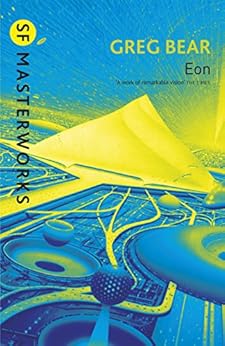
1. Eon by Greg Bear (and its follow-on, Eternity)

Amazon link

Great sense of wonder SF on the grandest of canvases. The plot seriously holds attention while characterisation is not bad, at least for the major characters.

2. Quarantine by Greg Egan 

Amazon link

Cowen prefers "Permutation City", Egan's 'reality is computation' novel (cf Dust Theory), but the many-worlds interpretation of QM is so compelling a setting and the private-eye thriller-based plot so convoluted that I felt compelled to buy this novel twice.

3. The City and the City by China Miéville

Amazon link

Cowan prefers "EmbassyTown" which is clever but, for me, less involving. The City and the City has a most unusual setting, the only novel I've read centred around the social construction of reality - and while the police procedural plotting and characterisation is a bit clunky, the whole book amazes throughout. The idealism of the premise is capped by its superpowered final denouement, a brutal assertion of materialism.

It's shortly to be a four part series on BBC2 (April 6th 2018).

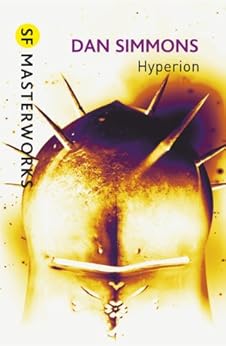
4. Hyperion (and its three successors) by Dan Simmons 

Amazon link

Cowan agrees with this choice. The four novels are beautifully written, have cultural depth and immerse the reader. Some of the scenes are truly shocking.

5. Altered Carbon by Richard Morgan 

Amazon link

The story of brutal but fundamentally moral Takeshi Kovacs. The successors are good also and complete the exploration of Morgan's interestingly-complex protagonist. Warning: high levels of sex, torture and violence throughout; most characters lacking in personal empathy .

6. The Mote in God's Eye by Larry Niven and Jerry Pournelle

Amazon link

The writing is clunky but the plot and setting completely compelling. You won't read a better account of first contact. The style is a bracing antidote to a public culture of suffocating high-mindedness.

7. Accelerando by Charles Stross

Amazon link

Hits you hard and then accelerates. A convincing and baroque invocation of the Singularity: never bettered.

8. Mindbridge by Joe Halderman 

Amazon link

People usually quote "The Forever War" which is good, but Mindbridge hits more of my buttons.

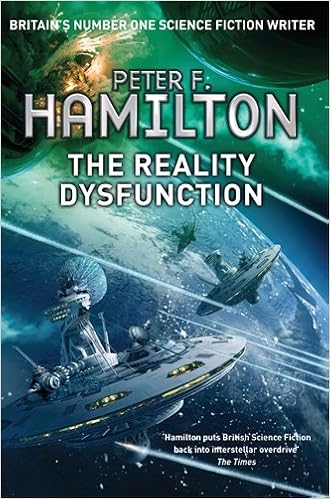
9. The Reality Dysfunction (and successors) by Peter Hamilton

Amazon link

Hamilton's later door-stoppers have proven tedious, but the Night's Dawn Trilogy brims with energy and inventiveness on the grandest of scales.

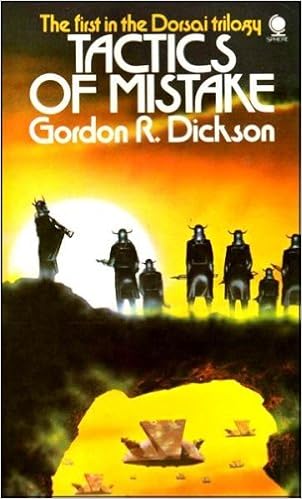
10. Tactics of Mistake (and follow-on Dorsai novels) by Gordon R. Dickson

Amazon link

Intelligent and exciting, intricately plotted with overtones of mediaeval chivalry. Loved them all.

11. The Three-Body Problem trilogy by Cixin Liu 

Amazon link

The writing may sometimes be rather pedestrian, as Cowen observes, but the three volumes are incredibly inventive.

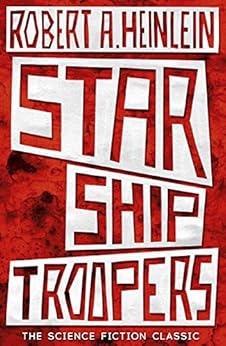
12. Starship Troopers by Robert Heinlein

Amazon link

Starship Troopers: last but not least. It's the only Heinlein novel which makes the cut for me, impressing by force of conviction. The author profoundly cares about the message of the novel and it's another antidote to contemporary hand-wringing.

Putting aside the occasional bouts of didacticism, it's a great story too.

---

Near Misses

Solaris is brilliant - I'm also a fan of Lem's other works such as His Master's Voice and The Invincible.

As a child I loved Isaac Asimov's Foundation trilogy and Frank Herbert's Dune sequence but, like Cowan, coming back to them I find they're not brilliantly written.

Wednesday, August 17, 2016

Why the Great Stagnation? What next?

This is what my CV says in the couple of years leading up to the great crash of 2008.
Programme Management - BT Wireless Cities: May 2006 - Sep 2007
A lucrative sixteen month contract, rolling out urban WiFi for BT across major cities in the UK.
Network architecture consultant to Dubai World Central: Jan 2008 - July 2008
A seven month contract in Dubai designing the network from scratch for a new ultra-wired airport/city complex. We completed the design and then the crash arrived .. and we flew home.
Network architecture consultant to Media City, Manchester: Dec 2008 - Jan 2009

Security Accreditation (IL2/IL3) at C&W and other clients: Jan 2010 - Sep 2010

Managed an RFQ for an international law firm, London: Jan 2012 - July 2012.
These were worthwhile but small-scale pieces of work. After that, things did not get any better. I was pleased to retire from network design in March 2014.

---

The UK economy normally rebounds from dips within three years (12 quarters) but the 2008 crash was something special. The rate of growth was negative for about a year and a half (six quarters) and after that - anaemic.

I read that financial crises always exhibit a longer recovery period, as people have to pay down their debts, but it's now been eight years since the big crash and growth rates are still subdued.

What's going on?

Larry Summers suggested an answer in his essay, "The Age of Secular Stagnation".
"Most observers expected the unusually deep recession to be followed by an unusually rapid recovery, with output and employment returning to trend levels relatively quickly. Yet even with the U.S. Federal Reserve’s aggressive monetary policies, the recovery (both in the United States and around the globe) has fallen significantly short of predictions and has been far weaker than its predecessors.

"Had the American economy performed as the Congressional Budget Office fore­cast in August 2009 - after the stimulus had been passed and the recovery had started—U.S. GDP today would be about $1.3 trillion higher than it is."
So what went wrong?
"The key to understanding this situation lies in the concept of secular stagnation, first put forward by the economist Alvin Hansen in the 1930s. The economies of the industrial world, in this view, suffer from an imbalance resulting from an increasing propensity to save and a decreasing propensity to invest. The result is that excessive saving acts as a drag on demand, reducing growth and inflation, and the imbalance between savings and investment pulls down real interest rates.

"When significant growth is achieved, meanwhile—as in the United States between 2003 and 2007 - it comes from dangerous levels of borrowing that translate excess savings into unsustainable levels of investment (which in this case emerged as a housing bubble)."
But why are people be so keen to save, rather than invest?
"Greater saving has been driven by:
  • increases in inequality and in the share of income going to the wealthy, 
  • increases in uncertainty about the length of retirement and the availability of benefits, 
  • reductions in the ability to borrow (especially against housing), and 
  • a greater accumulation of assets by foreign central banks and sovereign wealth funds. 
"Reduced investment has been driven by:
  • slower growth in the labor force, 
  • the availability of cheaper capital goods, and 
  • tighter credit (with lending more highly regulated than before).
"Perhaps most important, the new economy tends to conserve capital. Apple and Google, for example, are the two largest U.S. companies and are eager to push the frontiers of technology forward, yet both are awash in cash and are under pressure to distribute more of it to their shareholders.

"Think about Airbnb’s impact on hotel construction, Uber’s impact on automobile demand, Amazon’s impact on the construction of malls, or the more general impact of information technology on the demand for copiers, printers, and office space.

"And in a period of rapid technological change, it can make sense to defer investment lest new technology soon make the old obsolete."
So how do we get out of this? It seems that austerity (clamping down on public expenditure to claw-back massive Government debt) has few friends left. Summers' remarks are addressed to a US audience, but are equally applicable to the UK.
"... primary responsibility for addressing secular stagnation should rest with fiscal policy. An expansionary fiscal policy can reduce national savings, raise neutral real interest rates, and stimulate growth.

"Fiscal policy has other virtues as well, particularly when pursued through public investment. A time of low real interest rates, low materials prices, and high construction unemployment is the ideal moment for a large public investment program. It is tragic, therefore, that in the United States today, federal infrastructure investment, net of depreciation, is running close to zero, and net government investment is lower than at any time in nearly six decades.

"It is true that an expansionary fiscal policy would increase deficits, and many worry that running larger deficits would place larger burdens on later generations, who will already face the challenges of an aging society. But those future generations will be better off owing lots of money in long-term bonds at low rates in a currency they can print than they would be inheriting a vast deferred maintenance liability."
Finally we come to the politics. With our ever-expanding university sector, we're seriously in the business of elite overproduction. New graduates, particularly those articulate, idealistic young people with arts degrees, can't get high-status, well-rewarded jobs. They naturally channel their unhappiness into political activism.
"Secular stagnation and the slow growth and financial instability associated with it have political as well as economic consequences. If middle-class living standards were increasing at traditional rates, politics across 
the developed world would likely be far less surly and dysfunctional. So mitigating secular stagnation is of profound importance.

"Writing in 1930, in circumstances far more dire than those we face today, Keynes still managed to summon some optimism. Using a British term for a type of alternator in a car engine, he noted that the economy had what he called “magneto trouble.”

"A car with a broken alternator won’t move at all - yet it takes only a simple repair to get it going. In much the same way, secular stagnation does not reveal a profound or inherent flaw in capitalism. Raising demand is actually not that difficult, and it is much easier than raising the capacity to produce. The crucial thing is for policymakers to diagnose the problem correctly and make the appropriate repairs."
I'm interested in what Peter Turchin is going to make of all this in September with his new book, "Ages of Discord".

Many of the recoveries we have seen in the past were driven by massive investment in new, productivity-raising technologies: electrification, petrol engines, scientific management, computers and the Internet. In every case, it took a good few years for the new technologies to develop, be perfected and for people to learn how to use them to increase productivity. It was only then that the economic tipping point occurred.

The next revolution will be driven by new technologies such as AI, new sensors, robotics and VR, bound together by high-speed ubiquitous networks; also genetic engineering and genomics. These technologies will surely launch a huge boom, but plainly we're in the earliest days.

So I expect a good decade or so of bouncing around in 'the new normal' before the next lift-off, deficit spending or no.

---

Tyler Cowen of Marginal Revolution (amongst many others) has written about this too.