Showing posts with label Future Politics. Show all posts

Friday, January 23, 2026

The coming fracturing of Europe


In a multi-polar future world where neutrality and disengagement were not options, how would European countries line up with the three great powers and why?

Imagine Europe in a hard season over the next five to ten years: sanctions and counter-sanctions biting, energy and shipping routes contested, finance tightening, cyber and sabotage normalised, and deterrence no longer an abstract doctrine but a daily challenge. In that climate, “neutrality/independence” is not a proud civilisational statement but an unaffordable luxury. Countries would align, not with the banner they wave at conferences, but with the patron that can keep the lights on, the shelves stocked, and the border quiet; keep them as safe as possible.

Under that sort of pressure, Europe would not split by ideology so much as by four brute variables: (1) immediate security threat perception, (2) dependence on trade and industrial supply chains, (3) exposure to energy leverage, and (4) the temperament of domestic politics - especially the tolerance for coercion dressed up as “pragmatism”.

The US camp: the security-first Atlanticists

This bloc would be built around NATO reliance and a vivid sense of Russian proximity. Expect the Baltic states (Estonia, Latvia, Lithuania), Poland, Finland, Sweden, Denmark, the Netherlands, Romania, Bulgaria, the Czech Republic, and a scattering of others to land here. The UK would be firmly in this camp too, non-EU membership notwithstanding. 

The logic is simple: when you believe you may be next and you can't realistically defend yourself, you buy the strongest insurance policy available. In Europe that still means American power - airlift, ISR, nuclear guarantees, logistics, and the ability to make threats credible - if America chooses to supply them.

These states would accept economic friction with China if necessary, because the alternative is worse: being “left alone” on a continent where proximity is destiny and deterrence is a collective sport.

The China camp: the trade-first industrial pragmatists

If the eastern rim is governed by fear of invasion, the industrial core is governed by fear of stagnation and economic warfare. In a no-neutrality world, countries whose prosperity is welded to export markets, manufacturing scale, and capital flows would be tempted to lean Beijing-ward: Germany above all, with France, Italy, Spain, Belgium, Luxembourg, Austria, Greece, and perhaps others depending on who is in office.

China’s offer is not sentimental. It is transactional: markets, financing, supply-chain access, and an ideology-light vocabulary of “non-interference”. In a crisis, that can look like oxygen. The cost is that dependency is never a free lunch; “investment” segues effortlessly into leverage.

The Russia camp: the coercion-and-leverage periphery

This would likely be the smallest camp, but the most disruptive. Russia’s comparative advantage in a fractured Europe is not charm - it is proximity, energy leverage (where it still exists), intelligence reach, and the ability to reward or punish neighbours quickly. Belarus is the obvious anchor. Beyond that, Russia’s likely pickups are hinge or vulnerable states where domestic politics, energy exposure, or territorial pressure make alignment a form of damage limitation: Slovakia and Hungary are plausible candidates, with Serbia a perennial swing state. Moldova could be forced into this orbit under sustained duress.

This is not a “pro-Russia” romance so much as a grim accommodation: a decision made by governments that conclude they cannot afford permanent hostility with the bear next door - or that find the bear’s political/cultural style congenial.

The hinge states: where the crack runs through the cabinet table

Some countries would not so much “choose” as oscillate. Italy is the canonical example: Atlantic security instincts pulling one way, the seduction of Chinese capital and markets pulling the other. France, too, would try to perform “strategic autonomy” - but in a forced-choice world it could easily end up economically entangled with China while attempting to retain American security links (good luck with that). Hungary and Serbia remain the most obvious pivot points between camps.

The underlying rule

In peacetime, Europeans like to talk as though alignment is a moral essay. In crisis, it becomes a procurement exercise. The eastern and northern rim aligns with the US because it wants credible deterrence now, not philosophical debates. The industrial core leans towards China because it wants markets, supply chains, and financing when growth is life support. Russia picks off exposed edges where geography and leverage do what speeches cannot. Notice how how energy leverage dominates the Russia camp, trade dependence the China camp, and threat perception the US camp

None of this is inevitable, and each country contains factions tugging in different directions. But if neutrality is truly off the table, Europe does what it has always done when history stops being polite: it falls into camps according to fear, fuel, finance, and the psychology of power.

Next: The failure to create a 'United States of Europe'.


Saturday, December 14, 2024

The Prospects for Western Europe (ChatGPT)


The Prospects for Western Europe

Consider a Western European country with a population and size equivalent to the UK, France, or Germany. It has the following characteristics:

  • Its government is weak and incapable of taking hard decisions. The legislature is composed of multiple factions, each beholden to special interests in civil society and each capable of vetoing decisive action.
  • The state apparatus—the civil service—is process rather than results-oriented, overly bureaucratic, and incompetent in project management. It prefers producing elegant reports to getting things done and is highly skilled in defending itself against reforms.
  • The tax rate is high, the budget deficit has been in excess of 6% for decades, and the national debt exceeds 100% of GDP. The country is living beyond its means and has done so for many years.
  • The bulk of the budget goes to pay off debt and fund generous social care, which no political group feels it can trim. Productivity is low because costs are high and profitability is poor, restricting capital investment. The working environment is filled with restrictive practices that are tenaciously defended by unions, holding back progress.
  • People are widely discontented. Public services, being underfunded and unproductive, are increasingly experienced as breaking down. However, public service institutions resist reform, which would disrupt their rather congenial existing arrangements. The defence sector is an underfunded, undersized, and under-equipped mess.
  • Meanwhile, enemy states are spending much more on military budgets and showing expansionary tendencies. However, in the country we are considering, there is no political will to increase the defence budget, as there is no money without cutting entitlement programmes, and that seems politically impossible.

This raises several questions. Firstly, has a situation like this occurred previously in history? If so, how did things turn out? Is the Weimar Republic in Germany a possible example of this state of affairs? Secondly, what kinds of political and economic issues would we expect this country to face over the next five to ten years? In particular, is the present form of democracy, which works as one vast veto network preventing reform, necessarily doomed?


Over to ChatGPT: the following is an exploration of these issues.

The Historical Parallels

History offers several examples of nations trapped in similar cycles of decay and indecision:

The Weimar Republic

The Weimar Republic (1919–1933) struggled with many of the same problems:

  • A fragmented legislature with proportional representation that made decisive governance nearly impossible.
  • Economic hardship exacerbated by hyperinflation in the early 1920s, followed by the Great Depression.
  • High levels of debt and a reliance on short-term political compromises that avoided meaningful reforms.
  • An underfunded and constrained defence sector, rendered impotent by the Treaty of Versailles.

Ultimately, the Republic collapsed, leading to the rise of an authoritarian regime under Adolf Hitler. External pressures—such as economic collapse and the rise of radical ideologies—acted as accelerants for the systemic weaknesses already in place.

Late Roman Republic

Another parallel is the late Roman Republic, which saw:

  • A political system overwhelmed by the complexities of governing a vast and growing empire.
  • Factionalism, corruption, and governance failures due to vested interests and resistance to structural change.
  • The eventual reliance on authoritarian figures like Julius Caesar to bypass institutional paralysis.

This period ultimately resulted in the dissolution of the Republic and the establishment of the Roman Empire.

France Before the Revolution

In the late 18th century, France faced:

  • High national debt and resistance to fiscal reform by entrenched elites (nobility and clergy).
  • Public dissatisfaction with declining living standards and government inefficiency.
  • A political system unable to implement meaningful change, leading to widespread unrest.

These conditions culminated in the French Revolution, which radically transformed the state and society.

Contemporary Challenges

Looking ahead, a country trapped in the cycle described above would face numerous challenges:

Economic Decline and Social Instability

Without fiscal reform, debt servicing will consume a growing portion of the budget, leaving little for public services or investment. Discontent over declining living standards could manifest as strikes, protests, and even rioting.

External Vulnerabilities

A weak defence sector plus lack of strategic resolve leaves the nation vulnerable to external aggression and/or economic coercion.

Political Gridlock and Legitimacy Crises

If democratic institutions continue to block necessary reforms, public trust will erode, and the nation may witness the rise of populist or authoritarian movements promising decisive action.

Institutional Resistance to Reform

Vested interests within bureaucracies and unions will resist change, even as their inefficiencies exacerbate the crisis. Reform attempts may provoke widespread backlash, worsening instability.

Is Democracy Necessarily Doomed?

Democracy is not inherently doomed by such circumstances, but it must adapt. There are historical examples of successful democratic reform:

  • Post-WWII Germany and Japan underwent extensive overhauls under external guidance, resulting in more effective governance and sustainable welfare systems. Admittedly this was after state collapse following defeat in war.
  • Sweden's crisis in the 1990s led to bipartisan fiscal reforms, tax restructuring, and deregulation, which preserved democratic stability and economic growth. At that time the Swedish people had enviable social cohesion and solidarity.

Possible Futures

The country could take one of several paths:

  • Reform from Within: A "grand bargain" could emerge if political and civil society factions recognize the existential threat posed by the status quo.
  • Radical Transformation: The system could enter an existential crisis, leading either to authoritarianism or even revolution.
  • Gradual Decline: The nation might stagnate, becoming irrelevant on the global stage, a plaything of other, stronger states.

Conclusion

The Weimar Republic serves as a stark reminder of the consequences of failing to adapt to crises. While democracy is not destined to fail, resolving the current crises depends upon both a mass movement capable of overriding existing vested interests and a political leadership with the judgement to develop a workable reform programme for the next mode of Western governance - faced as it is with this myriad of new challenges. Be prepared to ride the tiger!


Friday, August 30, 2019

Nicos Poulantzas: Capitalism in the next decade

I wrote a series of generally admiring posts about the work of Nicos Poulantzas (here, in declining order of relevance).

I was reading this evening an outstanding recent summary of his work by David Sessions.

Nicos Poulantzas
Generally I'm a huge fan.

Poulantzas tried to break out of the simplistic stereotypes of both the Stalinists and the Trotskyists concerning the nature of the capitalist state and its role in mediating and enforcing capitalist class dynamics.

Poulantzas's great problem, the issue that destroyed his theoretical position, was that he wanted an accurate analysis of contemporary capitalism which also predicted transition to socialism (the supercession of capitalist relations of production) as a reachable goal.

All his analysis kept trying to tell him this wasn't on the cards. It simply wasn't possible.

What does the future hold if not a transition to socialism?

The central political problems 'we' face today: the breakdown of consensus politics, the rise of 'populism', leftist hysteria - these symptoms are all rooted in the obsolescence of the neoliberal phase of capitalism. Neoliberalism has created a gulf between the super-elite beneficiaries of a financialised, globalised capitalism and vast swathes of the proletariat and petit-bourgeoisie (old and new - Poulantzas emphasised the distinction) which has not shared in this largesse, which correctly feels abandoned, disrespected, atomised, alienated and futureless.

The problem has been accentuated by 'elite overproduction': the flow of c. 40% of the population through the universities, which has created a febrile petit-bourgeois mass which has internalised neoliberal ideologies and then naively tried to realise them in actuality.

This is the genesis of the SJW, equal-outcome, blank-slate-believing mass movements which self-define as 'left' but which are thoroughly bourgeois-liberal. They have captured the traditional labour parties of the left.

I expect a new capitalist synthesis to arise out of all this turmoil over the next decade. The shape is hard to discern but it will be whatever serves to restore class cohesion - that's the stability point.

Probably a little more socially conservative, a little more redistributive. Only time will tell. The process won't be pretty: I agree with Peter Turchin about that.

It's worth watching the project of Dominic Cummings and Boris Johnson in the new UK Government. That's exactly the project they're trying to define.

I expect the Brexit project now to go through, because there's a gathering consensus in the more strategic and hard-headed section of the British political elite that Britain's future is best assured by a strategic alliance with the US rather than being semi-locked-in to a disunited Europe, a power both politically and militarily weak.

In the past there has been the famous 'bridge' or 'straddling' policy, which saw the UK acting as a 'value-adding' middleman between the US and Europe. But in an increasingly multipolar political world resulting from the decay of the naive neoliberal globalisation project and catalysed by the rise of China and an incipent global recession, the UK finally, has to choose sides.

I think the Johnson government understands that, while the Remainers, locked into crumbling, sterile visions of the past, do not.

Such a shame that Nico Poulantzas is no longer with us. I wish I knew what he would have thought.

Sunday, October 28, 2018

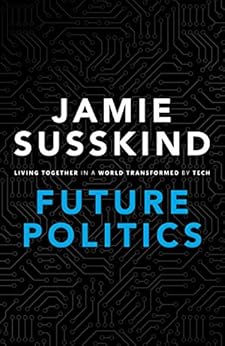
Our future of total surveillance (Jamie Susskind)

Amazon link

Susskind's book was reviewed in The Sunday Times today (here).  It's about a dystopian future of AI super-surveillance sourced from sinister tech companies like Google (I am not being ironic).


I was struck by this quote:
".. the children decide to go on a demo. They heard about it from their friends; artificial-intelligence systems had prevented them receiving online information. Their phones warn them about rain and traffic, but there is none. A drone records their progress. Then, on their internet-enabled glasses, they see pictures of people being interrogated in stress positions; each has the face of one of them. They turn back."
Actually, demonstrators within authoritarian regimes face far stronger disincentives than those described above. Demonstrations still happen because when people get mad enough they'll brave prospects of torture. Or perhaps they lack imagination or think it won't happen to them. All of the above probably.

---

There have been a few lone-actor atrocities in the US over the last few days. The so-called 'MAGA bomber', Cesar Sayoc, was found particularly rapidly after fingerprints and DNA were apparently found on suspect devices. Easy to cross-check as Sayoc had a criminal record.

Wikipedia tells us, "According to the US Bureau of Justice Statistics, 2,220,300 adults were incarcerated in US federal and state prisons, and county jails in 2013 – about 0.91% of adults (1 in 110) in the U.S. resident population."

That's a great dataset for machine learning applied to GWAS. Genome to facial appearance is a quick win: you can almost always get a scene-of-crime DNA sample, and all criminals are on Facebook, aren't they?

---

I read the review carefully but I'm not convinced there's much new in Susskind's book ..
"His writing is clear and precise; he is a lawyer, he is making a case. Irritatingly, he puts in too many (one would be too many) cheeky-chappy asides such as, “At last, someone has found a use for spinach.” But, on the whole, he steers a course to the future that is as convincing as it is shocking. We can fix this, is his message, but there is also the nagging sense that we probably won’t."
We won't until we do. I'll give the book a miss.

---

Related postÜber-surveillance.