Showing posts with label Schrödinger equation. Show all posts

Thursday, October 25, 2018

A second review of "Beyond Weird" by Philip Ball

Amazon link

Roy Simpson has written his own review of the above book which I'm pleased to guest-post here. He previously guest-reviewed "The Order of Time" by Carlo Rovelli.

---

Review of Philip Ball: Beyond Weird (2018)

By Dr. Roy Simpson, October 2018

This review was requested by Nigel Seel and could be read in conjunction with his review of this book.

In reviewing a book such as this it is tempting to first review the style and content of the book, then secondly to add comments concerning one's own view and approach to these matters.

Having been familiar with the basic equations of quantum mechanics for a long time I am not able to say for sure whether the book actually requires the prior familiarity with quantum mechanics suggested in the Seel review. Certainly one has to be interested in physics and its foundations. The book contains a good introduction to the structure and key components of quantum mechanics and eventually leads us towards the questions of interpretation and meaning.

The unusual nature of the formulation of the subject is neatly captured in a chapter comparing the axioms of quantum mechanics with other physics theories. For example we have Newton's Laws:

1. Every moving object keeps moving at the same speed if no force is applied to it. If it is still to begin with, it stays still.

2. If a force is applied to an object it accelerates it in direct proportion to that force .. .

3. For every force that one body exerts on another, the other body exerts an equal force back in the opposite direction.

Special Relativity can be presented with similar physically comprehensible (and experimentally checkable) axioms. By contrast for quantum mechanics we have:

1. For every system, there is a complex Hilbert Space H.

2. States of the system correspond to projection operators onto H.

3. Those things that are observable somehow correspond to eigenprojectors of Hermitian operators.

4. Isolated systems evolve according to the Schrödinger equation.

Now all physics theories have a mathematical content and even Newtonian mechanics can be presented using mathematical structures such as symplectic manifolds, Noetherian moments and differential forms. However Newtonian theory has a basic physical form as stated above. The issue is: what is the Quantum equivalent?

Without an answer to that question it can be difficult to be convinced that the theory has been fully understood, despite the success of the mathematical formulation. So this situation is deemed philosophically unsatisfactory and also impedes progress towards reconciling quantum theory with General Relativity (which also has a physical explanation as well as a successful mathematical form).

The book takes a long look at the most basic interpretation (as these attempts to connect the mathematics with any physical reality are called) of quantum mechanics, called the Copenhagen interpretation.

The book then follows with a more cursory and dismissive view of the Bohm-de Broglie interpretation as an example of a key distinction between such interpretations: are they Ontic (the mathematical entities represent real physical structures in the usual physics sense); or are they Epistemic (the mathematical entities describe the observer's knowledge of the – perhaps unknowable – physical system).

The Copenhagen leans towards the Epistemic, whereas the Bohm is Ontic. Other interpretations are also discussed by the book such as the very Epistemic Qbism interpretation and the Ontic GRW and Penrose-Diosi models. These latter are not just interpretations but are modifications of some of the mathematics (making a physics explanation easier, in the latter case by invoking gravity).

There is also a long and useful discussion of “decoherence”. However this book does not include any mathematics and although that makes the book easier for some audiences, it does detract from some clarity and rigour in the arguments the author wishes to make.

Another interpretation dismissively discussed in the book is the Many Worlds Interpretation. A recent summary of this section is available in an online article by the author here.

There are over one dozen interpretations of quantum mechanics and they are not all discussed in the book. New interpretations appear regularly with an example “The Montevideo Interpretation” (which this reviewer has not yet studied). So the book is not comprehensive in its account of interpretations.

The book gives a long account of the Bell Theorem, which is an experimentally checked theorem implying the non-locality and non-contextuality of quantum mechanics. The discussion here is interesting, but this reviewer has uncovered a recent examination of the Bell Theorem which is more precise about the nature of the “superluminal effects” involved in the statement of the theorem.

Apparently there were two forms of Bell's Theorem: a “coarser” form, and 10 years later a more precise form, which makes clearer what is and is not prohibited by the theorem. However the book does not discuss this level of distinction, and the possible consequences.

The book eventually focuses on the idea of an information-based interpretation of Quantum Mechanics, and recent work related to this. This area of work is largely stimulated by the subject of Quantum Computation, and the intriguing question as to whether all of the “engineering” problems in that area are purely engineering problems and not also some scientific (i.e. quantum interpretational).

Of particular interest is the idea of “quantum reconstruction” and “information causality”. Here the attempt is to address the lack of a physics basis by trying to find one in axioms - often based on “information” based ideas. From the present reviewer's perspective this work is encouraging in the sense that the results may be converging on a class of invariant mathematical objects that are being studied in 21st century mathematics.

So overall the book is a good comprehensive account of quantum interpretation and meaning from an early 21st century perspective, especially as viewed by a physical-chemist who has a “user” view of quantum mechanics.

Sunday, October 07, 2018

"Beyond Weird" - Philip Ball

Amazon link

I mentioned Peter Woit's generally favourable review of this book in a previous post.

"Beyond Weird", despite its cheesy title, makes a good impression from the very start. Ball is an engaging writer who knows his stuff and doesn't patronise the reader. It's like he's talking to a curious colleague who uses quantum theory (a chemist or applied physicist, for example) but doesn't research it. The tone would work well for a recent physics graduate or someone in the final stages of their QM course.

The problem with quantum mechanics is that the mathematics makes plenty of sense in itself (Schrödinger's equation and its many solutions in concrete circumstances such as the structure and behaviour of the hydrogen atom, for example)  but the many constructs of the theoretical apparatus don't align with any compelling concept of 'reality'. To properly engage with the 'interpretation problem' you have to understand the maths, which means taking a course first.

Before I studied quantum mechanics (with the Open University - SM358) I thought I had a grasp - as an educated person with a technical background - of quantum theory, at least at a conceptual level. I knew, or thought I knew, about the uncertainty principle, the wave function and its collapse, the double slit experiment and its paradoxical interpretation and so on.

I spent the first third of my QM course learning a lot of details about Schrödinger's equation in its time dependent and stationary forms, about spin spaces, kets, operators, expansions in terms of eigenfunctions, Hilbert spaces and so on. I was internalising this complex apparatus and making it work and I couldn't anchor any of it into the real world. I was confused, baffled, a sufferer from extreme cognitive dissonance. It was not pleasant.

Eventually I managed to organise all this stuff into something which kind of made internal sense, and kept reminding myself that in the end its only function was to produce a number between zero and one as regards observable outcomes. I had become acculturated, but I still didn't know what any of it really told me about reality.

And I think that only after this 'preparation' is a reader really able to engage profitably with Philip Ball's book.

Ball is good on superpositions and what it would mean if they were observable. He's as good as you could expect on decoherence and einselection, although it would have been useful to have had a more explanatory appendix given its centrality in accounting for 'collapse' (but perhaps that's more a signifier for my own lack of clarity). He is also good at debunking some of the more ontological-realist views of the wavefunction. There are also clear accounts of Bell's theorem and quantum computing.

And then it starts to unravel. Ball clearly has a thing about the many-worlds interpretation (which has a stronghold at his alma mater, Oxford). His customary cool deserts him for visceral distaste. His debunking is anticlimactic, however, depending on philosophical sophistry about identity-continuity before and after 'splitting' of worlds. The MWI does not hang on such arguments.

In the final chapters things get worse. Ball's enthusiasm for 'it from bit', an information-centric approach to the interpretation problem, gets the better of him. Unfortunately the ideas swirling around in this currently active area of investigation are even more formless and confusing than the more conventional ideas he's been debunking all along. We finish the book shaking our heads and asking, 'What was that about?'.

If you read one book on the interpretation of quantum mechanics, and you have studied QM as an undergraduate, this may well be the book for you. It will confirm that you were right to be concerned that the Copenhagen stuff you were taught does not put an end to the discussion, and it will straighten out and firm up many of your questions and half-formed, tentative conclusions.

Just don't think it will give you any final answers: there are none.

---

See also Roy Simpson's review: "A second review of "Beyond Weird" by Philip Ball".

Friday, August 17, 2018

Relativistic Schrödinger equations

Amazon link

Note: some chapters of Robert Klauber's excellent book are downloadable for free.

---

In my intermittent progress through Robert Klauber's excellent "Student Friendly Quantum Field Theory" I'm currently working through the relativistic versions of the Schrödinger equation (prior to hitting QFT-proper).

These are indexed by spin. Schrödinger's non-relativistic equation which is the staple of introductory quantum mechanics courses, works for spin-1/2 fermions like the electron to which it is usually applied.

The most direct relativistic counterpart is Klein-Gordon, which Schrödinger considered first but couldn't make work for the hydrogen atom. This is because it actually applies to spin-0 particles (scalar bosons such as the Higgs particle).

The correct relativistic equation for the electron and other spin-1/2 fermions is named after Dirac, while vector bosons such as the photons (spin 1) have their own Proca equation.

So I was wondering if the spin-2 graviton has its own equation .. but then I recalled that quantum theory can't do gravity yet - see this.

Here's a convenient, semi-impenetrable table.


Thursday, May 25, 2017

Diary: Burnham-on-Sea

Temperatures hit 24 degrees again today. Time for a trip to the Somerset Riviera: Burnham-on-Sea.

If Weston-super-Mare (love the Latin!) just up the road has gentrified over the last twenty years, Burnham retains its authentic working-class culture: the mother chasing her recalcitrant toddler along the beach, shoulders reddening, crying "Jason, stop kicking over those sandcastles - they don't belong to you!"

I digress. Click on any of the images to make them larger.

Clare really enjoys the Somerset Riviera -
the beach is such an improvement over Nice

This in homage to Jonathan Meades - lover of concrete brutalism in all its forms

One of the sights from Burnham: the Hinkley Point reactors A and B.
I watched with fascinated interest for any intense flares of actinic blue light:
Burnham is downwind of the reactor.

The sandy beach will be packed this summer.

Never let it be said that we don't delight in our beach experience.
After our picnic, Clare read her John le Carré  in the bright sunshine;
I tried to read the screen of my Nexus 6.

You get a better class of beach graffiti at Burnham, perhaps inspired by Hinkley Point?

Your author on the promenade
---

If you'd like to check out the beach and sea-front at Burnham-on-Sea, here's a bonus video.


We'll certainly be back!

Friday, August 19, 2016

The 10,000 year view

Amazon link

Richard Feynman once wrote:
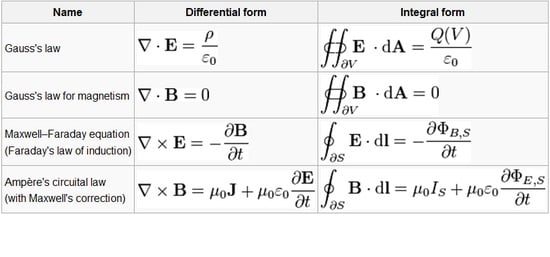
"From a long view of the history of mankind - seen from, say, ten thousand years from now - there can be little doubt that the most significant event of the 19th century will be judged as Maxwell's discovery of the laws of electrodynamics."
What should we say about the other centuries?

---

The seventeenth century, in 10,000 years time, will be remembered principally for Isaac Newton's laws of dynamics:

  • First law: When viewed in an inertial reference frame, an object either remains at rest or continues to move at a constant velocity, unless acted upon by a net force.

  • Second law: In an inertial reference frame, the vector sum of the forces F on an object is equal to the mass m of that object multiplied by the acceleration vector a of the object: F = ma.

  • Third law: When one body exerts a force on a second body, the second body simultaneously exerts a force equal in magnitude and opposite in direction on the first body.

And universal gravitation:  F = Gm1m2/r2  - plus calculus, co-discovered with Leibnitz.

---

The eighteenth century was not rich in epoch-spanning discoveries, but future historians of science will recall it for Rev. Thomas Bayes, whose profound theorem will power the great AI learning engines down the ages.


---

The nineteenth century we've already mentioned. Here are Maxwell's equations in the vector form he would not easily have recognised.


---

The twentieth century is a cornucopia of fundamental science, but I think the most truly foundational, revolutionary and influential discovery has to be the Schrödinger equation, which explains .. well, almost everything around us.


But I doubt the 10,000 year future will have forgotten Einstein - or BohrHeisenbergDirac, ... .

---

Sean Carroll has a related list of his seven favourite equations here.