Tuesday, August 28, 2018

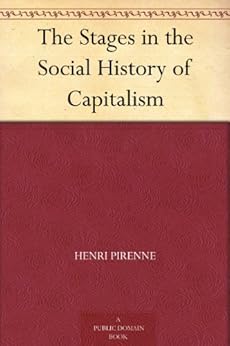
Where did the capitalists come from? - Henri Pirenne

The high-bourgeoisie rules the planet. World-striding 'entrepreneurs' and bankers live gilded lives. The top 1% et cetera.

But it was not always so.

How fragile was the state of being a capitalist in the beginning! Unlike the lords of feudalism or antiquity, the proto-capitalists had no military forces at their disposal and relied upon alien, hostile institutions for the security of their business transactions - and for their own personal safety. How often were moneylenders simply killed or exiled by those powerful nobles indebted to them?

Reflecting upon Helen Dale's tantalising question - Could the Roman Empire have produced capitalism in 200 BC? - I came upon this strange, short and enticing free book.

Amazon link

This 36 page text is the address of Henri Pirenne (1862-1935) given at the International Congress of Historical Studies, London, April, 1913. It's a really interesting 40 minutes read (did I mention it's a free Kindle book?).

Here is some of what Pirenne, who had an interesting life, has to say.
"The ancestors of the bourgeoisie must then be sought, specifically, in the mass of those wandering beings who, having no land to cultivate, floated across the surface of society, living from day to day upon the alms of the monasteries, hiring themselves to the cultivators of the soil in harvest time, enlisting in the armies in time of war, and. shrinking from neither pillage nor rapine if the occasion presented itself.

It may without difficulty be admitted that there may have been among them some rural artisans or some professional peddlers, But it is beyond question that with very few exceptions it was poor men who floated to the towns and there built up the first fortunes in movable property that the Middle Ages knew.

Fortunately we possess certain narratives which enable us to support this thesis with concrete examples. It will suffice to cite here the most characteristic of them, the biography of St. Godric of Finchale.  He was born of poor peasants in Lincolnshire, toward the end of the eleventh century, and from infancy was forced to tax his ingenuity to find the means of livelihood. Like many other unfortunates of all times, he at first walked the beaches on the outlook for wreckage cast up by the sea. Then we see him, perhaps by reason of some fortunate find, setting up as a peddler and travelling through the country with a little pack of goods (cum mercibus minutis).

At length he gathers together a small sum, and one fine day joins a troop of town merchants whom he has met in the course of his wanderings. Thenceforward he goes with his companions from market to market, from fair to fair, from town to town. Having thus become a professional merchant, he rapidly gains a sufficient sum to enable him to associate himself with other merchants, charter a boat with them, and engage in the coasting trade along the shores of England, Scotland, Denmark, and Flanders.

The company is highly successful. Its operations consist in carrying to a foreign country goods which it knows to be uncommon there, in selling them there at a high price, and acquiring in exchange various merchandise which it takes pains to dispose of in the places where the demand for them is greatest and where it can consequently make the greatest gains.

At the end of some years this prudent practice of buying cheap and selling dear has made of Godric, and doubtless of his associates, a man of important wealth. Then, touched by divine grace, he suddenly renounces his fortune, gives his goods to the poor, and becomes a monk.

The story of Godric, if one omits its pious conclusion, must have been that of many others. It shows us, with perfect clearness, how a man beginning with nothing might in a relatively short time amass a considerable capital. Our adventurer must have been favored by circumstances and chance. But the secret of his success, and the contemporary biographer to whom we owe the story insists strongly upon it, is intelligence.  ...

The fortunes acquired in the wandering commerce by the parvenus of the eleventh and twelfth, centuries soon transformed. them into landed proprietors. They invest a good part of their gains in lands, and the land they thus acquire is naturally that of the towns in they reside. From the beginning of the thirteenth century one sees this land held in large parcels by an aristocracy of patricians, viri hereditarii, divites„ majores„ in whom we cannot fail to recognize the descendants of the bold voyagers of the gilds and the hanses.

The continuous increase of the burghal population enriches them more and more, for as new  inhabitants establish themselves in the towns, and as the number of the houses increases, the rent of the ground increases in proportion. So from the commencement of the thirteenth century, the grandsons of the primitive merchants abandon commerce and content themselves with living comfortably upon the revenue of their lands.

They bid farewell to the agitations and the chances of the wandering life, They live henceforward in their stone houses, whose battlements and towers rise above the thatched roofs of the wooden houses of their tenants. They assume control of the municipal administration; they and their families monopolize the seats in the échevinage or the town council. Some even, by fortunate marriages, ally themselves with the lesser nobility and begin to model their manner of living upon that of the knights. ...

This was destined to last, as is familiar, until the moment when in England at the end of the eighteenth century, on the Continent in the first years of the nineteenth, the invention of machinery and the application of steam to manufacturing completely disorganized the conditions of economic activity.

The phenomena of the sixteenth century are reproduced, but with tenfold intensity Merchants accustomed to the routine of mercantilism and to state protection are pushed aside. We do not see them pushing forward into the career which opens itself before them, unless as lenders of money. In their turn, and as we have seen it at each great crisis of economic history, they retire from business and transform themselves into an aristocracy.

Of the powerful houses which are established on all hands and which give the impetus to the modern industries of metallurgy, of the spinning and weaving of wool, linen, and cotton, hardly one is connected with the establishments existing before the end of the eighteenth century Once again, it is new men, enterprising spirits, and sturdy characters which profit by the circumstances."
Henri Pirenne confuses his mercantilists with his capitalists. The former buy cheap and sell dear; most of what they accomplish is the shifting of value around. Capitalists, on the other hand, buy labour-power and appropriate surplus value: they do preside over the creation of new value. Capitalism as a mode of production requires the employment of workers in commodity production for the market - not a feature of medieval times except at the margins of the highly-regulated guilds.

However, his 'stages theory', in which the merchants and proto-capitalists of each generation make their money and cash in, to join and reinvigorate their pre-capitalist elites, is surely correct. It was ever so.

---

The Roman Empire enslaved available labour. It didn't seem to have occurred to anyone that this might be a moral atrocity: there were no abolitionists in antiquity, although slaves were often freed on a personal basis.

The main thing preventing a capitalist transition seems to have been the lack of proto-capitalists. There were certainly many 'new men' who made their fortunes in trade around the Mediterranean and farther afield. As Pirenne similarly observes for the mediaeval period, it was invariably the case that they then bought status and prestige by converting their fortunes into land and slaves.

As a matter of fact, Roman artisan workshops did not expand into proto-companies powered by wage labour, which would have marked the onset of capitalism-proper.

Amazon link

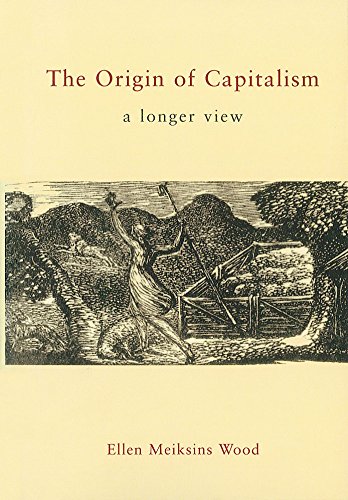
I'm still struggling to put my finger on exactly why no bourgeoisie developed in Rome, but maybe this book by the renowned Ellen Meiksins Wood will help (I've just started it). More later.

---

Marx anticipated all this with his knockabout "Genesis of the Industrial Capitalist", Chapter 31 of the first volume of Capital.

Friday, August 24, 2018

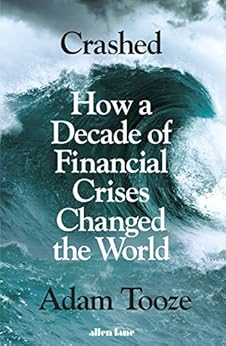
"Crashed" - Adam Tooze

Amazon link

From Michael Roberts's blog:
"Tooze’s new book makes a massive contribution to the economic history of the global financial crash of 2008-9.  Tooze shows what happened and how it came about that the great credit boom of the early 2000s eventually led to the biggest financial disaster in modern economies and the ensuing deepest slump in capitalist production since the 1930s.

And he concludes that the way this was dealt with by ‘the powers that be’, namely through bailouts of the banks and the general saving of the wealth of the rich at the expense of the rest of us, has provoked the emergence of a ‘populist’ reaction against ‘capitalism’, whether leftist as in Greece or Spain, or rightist as with Trump, Brexit and the Liga in Italy.

So the legacy of the first ten years of 21st century capitalism is still with us in the second decade.  And worse, the underlying problem of rising debt and an uncontrolled financial sector has not been resolved.  The financial crisis of 2008-9 could well return.

There have been other intriguing analyses of the great financial crash before Tooze’s. The most popular was The Big Short by Michael Lewis (which was made into a movie).  Lewis tells the story of the investment banks who sold ‘toxic’ mortgage backed bonds to their clients (mainly other investment banks and rich individuals, often from Europe), knowing full well that they were rotten. As the property bubble started to burst, these banks then secretly went ‘short’ (betting on a collapse). As Lewis puts in his book, “Goldman Sachs did not leave the house before it began to burn; it was merely the first to dash through the exit – and then it closed the door behind it.”

In my own book on this period, The Great Recession, which is a chronological account, month by month, of the crisis from 2005 to 2010, I describe how the big banks in particular completely escaped the consequences of this scam, thanks to the US government.  Indeed, the whole ugly story of the activities of Goldman Sachs and other investment banks before, during and after the credit crunch and the Great Recession beggars belief.

But Tooze’s long book covers the significant financial crises of the previous ten years in much more detail than Lewis or me – and is global in scope.  Its length does not mean it is boring at all, as he presents us with vignettes of the major players and their decisions.  He shows how they ensured that the stronger and luckier big banks gained at the expense of the weaker and smaller; and how government intervention provided funding for the culprits of the financial disaster at the expense of the victims, working people, tax payers and small businesses.

It was ‘socialism for the rich and capitalism for the poor’: such is the stuff of the capitalist order."
Someone in the comments asks for Michael Roberts's opinion on how we get out of this mess.
"Do you write anywhere about what a socialist economy might look like and how a transition to such an economy might happen – and here I’m talking about the ‘economics’ rather than the politics of change?

In a world where everyone had agreed that need rather than profit should govern production, and given a political mandate to achieve that, what would you aim for and how would you engineer the change?"
I await with interest any response - but we've never had one before. Not from any Marxist economist, not to single Roberts out.

One feels like a literate, educated inhabitant of the Roman Empire or any feudal state during one of their many dislocating crises. There must be a better way, you muse to yourself,.

But the historical preconditions are just not ready.

Truly, you say to yourself, there is no qualitative alternative on offer. Just hunker down and mitigate.

And don't do stupid stuff like the Venezuelans, things which would crash the economy .. and make Adam Tooze's account look like a picnic.

Thursday, August 23, 2018

"Postmodernism, or, The Cultural Logic of Late Capitalism" - Fredric Jameson

Amazon link

I've just begun reading Fredric Jameson's masterpiece and was struck by this excerpt (page 4):
"As for the postmodern revolt against all that [i.e. modernism], however, it must equally be stressed that its own offensive features from obscurity and sexually explicit material to psychological squalor and overt expressions of social and political defiance, which transcend anything that might have been imagined at the most extreme moments of high modernism—no longer scandalize anyone and are not only received with the greatest complacency but have themselves become institutionalized and are at one with the official or public culture of Western society.

What has happened is that aesthetic production today has become integrated into commodity production generally: the frantic economic urgency of producing fresh waves of ever more novel-seeming goods (from clothing to airplanes), at ever greater rates of turnover, now assigns an increasingly essential structural function and position to aesthetic innovation and experimentation.

Such economic necessities then find recognition in the varied kinds of institutional support available for the newer art, from foundations and grants to museums and other forms of patronage. Of all the arts, architecture is the closest constitutively to the economic, with which, in the form of commissions and land values, it has a virtually unmediated relationship.

It will therefore not be surprising to find the extraordinary flowering of the new postmodern architecture grounded in the patronage of multinational business, whose expansion and development is strictly contemporaneous with it. Later I will suggest that these two new phenomena have an even deeper dialectical interrelationship than the simple one-to-one financing of this or that individual project.

Yet this is the point at which I must remind the reader of the obvious; namely, that this whole global, yet American, postmodern culture is the internal and superstructural expression of a whole new wave of American military and economic domination throughout the world: in this sense, as throughout class history, the underside of culture is blood, torture, death, and terror. "
Postmodernism is surely a liberal project. Jonathan Haidt (Moral Foundations Theory) has highlighted liberal blindness to the moral dimensions of sanctity, respect for due authority and sexual/social propriety. Pussy Riot are rightly postmodernist icons.

Jameson here nails the moral selectiveness of fashionable liberal opinion.

---

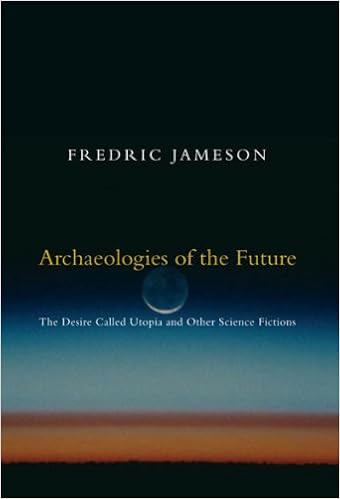
Jameson is undeniably brilliant - his work suffused in the culture of Western Marxism and the Frankfurt School. I'm debating whether to get his later (2005) review, "Archaeologies of the Future: The Desire Called Utopia and Other Science Fictions".

Amazon link

"This is a brilliant study of utopia and science fiction, from Thomas More to Philip K. Dick, by the master literary critic. "Archaeologies of the Future", Jameson's most substantial work since "Postmodernism", investigates the development of the Utopian form since Thomas More, and interrogates the functions of Utopian thinking in a post-Communist age.

The relationship between utopia and science fiction is explored through the representations of otherness...alien life and alien worlds...and a study of the works of Philip K. Dick, Ursula LeGuin, William Gibson, Brian Aldiss, Kim Stanley Robinson and more."      [From the Amazon page].

Wednesday, August 22, 2018

The house painter takes a break


Clare takes a break from painting our front room. I wish I could claim credit for this pencil sketch .. but no, it's the magic of my new Honor 10 AI phone again!

Monday, August 20, 2018

Diary: camping in Wolverley, Kidderminster

We were recently camping for a few days at Wolverley, just north of Kidderminster (about 20 miles west of Birmingham). The proximate reason was to move our base c. 100 miles north and see some new National Trust sites.

My Honor 10 AI phone in its 'art' mode: our tent

Hanbury Hall NT: an apparently 2D monument

The Queen's Head, Wolverley where we had dinner

We left at eight as the band (above) was setting up. They were scheduled to start at nine. I said to Clare that there are thousands of perfectly competent bands like this up and down the country - even many about our age. The difference between them and the top acts is one of energy and charisma, the sheer animal spirits of Liam-style swagger.

I can think of many less attractive occupations than playing in a gigging pub band. Alas, my guitar skills were always bounded by my clumsiness. Perhaps in another life.

Friday, August 17, 2018

Relativistic Schrödinger equations

Amazon link

Note: some chapters of Robert Klauber's excellent book are downloadable for free.

---

In my intermittent progress through Robert Klauber's excellent "Student Friendly Quantum Field Theory" I'm currently working through the relativistic versions of the Schrödinger equation (prior to hitting QFT-proper).

These are indexed by spin. Schrödinger's non-relativistic equation which is the staple of introductory quantum mechanics courses, works for spin-1/2 fermions like the electron to which it is usually applied.

The most direct relativistic counterpart is Klein-Gordon, which Schrödinger considered first but couldn't make work for the hydrogen atom. This is because it actually applies to spin-0 particles (scalar bosons such as the Higgs particle).

The correct relativistic equation for the electron and other spin-1/2 fermions is named after Dirac, while vector bosons such as the photons (spin 1) have their own Proca equation.

So I was wondering if the spin-2 graviton has its own equation .. but then I recalled that quantum theory can't do gravity yet - see this.

Here's a convenient, semi-impenetrable table.


Tuesday, August 14, 2018

The Virus of Marxism

A lot of people - ex-Marxists - talk about having caught 'the virus of Marxism' in their youth. They always seem less clear as to how they recovered from their complaint.

---

Marx thought that the selfishness and egotism so obvious in the people around him were the product of capitalist relations of production. Under communism selflessness would be the norm, the benevolence of a society of abundance.

This is an empirical claim, yet one which Marxists are strangely unwilling to explore. Everything we know about human beings suggests such a prospect is false. There are strata of society which are currently very well off. The pages of 'Hello' magazine suggest that saintliness does not come naturally. Why not? They're not all evil oppressors.

We know from biology that (for good genetic reasons) most animals are either in it for themselves or at most for their close kin. It's considered noteworthy that some evidence has been uncovered for reciprocal altruism in chimpanzees.

Humans exhibit adaptations for living in large groups*, and for symbol-mediated cooperation: loyalty to causes, countries and empires (provided such causes sufficiently align with personal self-interest of course). Despite much effort however, in-group/out-group tribalism has never been close to eradication. It's a bit airy-fairy to blame those famed (and reified) 'capitalist relations of production' for that historical universal.

Rich societies in a state of formal peace fragment into tribes which pick intense fights on secondary issues, spearheaded by young males. Who'd have thought it? (Apart from evolutionary psychologists).

---

Where does this leave the Marxist project? A clue can be found in the extreme unwillingness of Marxist theoreticians to engage with these issues. Their uneasiness is palpable: such research is neither acceptable nor refutable - a sheepish turning away of the head changes the subject.


Mediated of course by the social relations of production and exchange, it's new tech which opens the door to historical progress. The future presents as a branching tree: genomic experimentation in humans combined with social-agency in robots (cf replicants).

It's really hard to predict how things will turn out: there are many scenarios. Why suppose that Marx and Lenin tediously had the future nailed down more than a century ago?

The thing which scares Marxist intellectuals is that if humans can't make a collectivised society work - and they can't - then we seem to be stuck with capitalism indefinitely. That does seem a bit of a capitulation to bourgeois ideology. But private ownership of the means of production has a lot more flexibility than historical observers had imagined. Those dark satanic mills so graphically denounced in Capital Vol 1 have long since vanished in the west. Capitalism keeps getting richer (on trend) and more capable, with ever greater reserves. Its own dynamic will in the end utterly transform it .. I suspect.

Why is capitalism so bad, anyway?

We shouldn't ask the question this way. It's not the job of science to take sides on ethical questions. Marxists above all should not be appealing to platonic ethical absolutes. Yet they err in seeking ethical judgements about capitalism only in social relations.

If human beings didn't have a human, biological nature, if they didn't care whether they ate or starved, lived or died, then who could complain about social formations since the dawn of time where such 'bad' outcomes were the norm?

Of course, human beings very much subscribe (for obvious biological reasons) to something like Maslow's hierarchy of needs.

Maslow's hierarchy of needs

In Marx's day (and Lenin's too in Russia) capitalism was bootstrapping itself through primitive accumulation. It was a brutal time and every one of Maslow's levels was violated for the newly-emergent working class. The communists were vitriolic in their anger and hatred against capitalism - the new bourgeoisie were certainly not starving in their mansions.

But as Stalin showed in the 1930s, forced accumulation is inherently a brutal business.

A richer contemporary capitalism is less polar, more stratified. Large segments of the population - proletarian in that they own no means of production and need to sell their labour power to survive - find themselves not badly paid and doing socially-necessary work of deep intrinsic interest. They may well attain all of Maslow's levels in their occupations.

Marxists like to say that capitalism is irrational, not being centrally planned. This is a rather pejorative way of describing a decentralised economy composed of discrete, competing companies each trying to maximise its own profit. Companies may be legal persons, but in a dog-eat-dog capitalist economy their psychologies are psychopathic.

Still, self-centeredness is a common feature in natural ecosystems: we observed above that generalised altruism is rare to non-existent. Though corporates-gone-bad are a staple of dystopian fiction, in a healthy capitalist state there exist legal mechanisms to ensure rule-based behaviour, recognising that social-responsibility is not intrinsic to the capitalist firm.

Bad corporate behaviour is  often contested - see any newspaper.

The Marxist economist will then turn to crisis theory as evidence of capitalist inefficiency. The dynamics are not disputed (except by bourgeois equilibrium economists!) but given the inability to predict future demand, competitive overshoots will happen and in modern times the effects of downturns are somewhat mitigated.

It is claimed that capitalism has an inherent alienation, anomie caused by the fundamental deception of capitalism, that ordinary folks' efforts only serve to produce more profits for the bourgeoisie. We're all in it together, suckers! When things are going well, and capitalist corporations are achieving great outcomes (in construction, healthcare, new technologies) things don't seem that discordant. It's hard to identify "the Man" who sits in his top hat chortling at the efforts of his deceived minions.

Capitalism certainly has an ideology of 'atomism': the free individual contracting with an employer. But once in work, nothing much gets accomplished without the team .. and teamwork is pretty core to human nature. Outside of work there are associations in plenty for those who want them - even revolutionary communist parties.

We're down to the bottom line. In a class society, the rich and powerful tend to get their own way. What did you expect?

---

* Less aggression and more self-control, but varies with population group.

Getting capitalism to work successfully is the most difficult task humanity has ever set itself. Success correlates with national IQ, as Professor Garett Jones describes in his book "Hive Mind".

From "Hive Mind" by Garett Jones

Monday, August 13, 2018

Rod Liddle on the BBC (The Spectator)

Yesterday I noted that "Those outside the bubble are ceaselessly lectured, indeed have no other language of norms and morality." At that time I hadn't read the piece below.

Must be the zeitgeist.


Rod Liddle

Rod Liddle (The Spectatorwrites:
"It is hard to keep up, isn’t it? The British Register of Victimhood lengthens almost daily, in defiance of science, common sense and reality. I think that the only way to avoid giving offence is for the BBC to lecture us on a daily basis about how we must see the world, according to its own implacable and berserk liberal agenda. Maybe a 15-minute slot after the early evening news, where Kirsty Wark or Huw Edwards could simply spell out to us where we’re going wrong and what we should do about it. That would be a genuine public service, no?

The corporation recently made a video aimed at GCSE students about multiculturalism — and it was, as you can imagine, a carefully balanced piece of work, giving equal weight to both sides of the story. ‘Multiculturalism is a powerful tool for survival and possibly the only way to survive, so let’s embrace it,’ the children were informed. Elsewhere a smug little Geordie narrator (the dialect of choice these days) said that Great Britain had ‘always’ been a nation of immigrants, there was no such thing as British people, and yet you could always hear malevolent idiots ‘banging on’ about the need to control immigration.

No mention was made of the overwhelming opposition to uncontrolled immigration, nor the weight of numbers that have arrived here recently, nor the relationship with crime figures. Still less the views of the majority of the population that immigration has actually not been a good thing, overall, for the country. In other words, they wish it hadn’t happened.

The film was eventually pulled by the BBC because, as viewers on YouTube pointed out, it was vacuous, tendentious, biased tripe. This must have come as a shock to the producers of the film, who will surely have believed that they were simply promulgating the usual BBC line on immigration — and that this isn’t remotely a case of bias but simply decency and civility, and that those who disagree are uneducated untermenschen who need to be taught a lesson or two, preferably by some Geordie halfwit so that it sounds authentic and not too metrocentric.

The problem is that this is indeed precisely the BBC’s view, without caveat: it is the mindset which informs every single report the BBC has ever done on the subject of immigration, be it on the news programmes or the dramas or even the bloody Food Programme. And as I say, they do not think that it is bias at all. It is simply right, and there’s an end to it. And if they pull this video, I assume they’ll be pulling Newsnight, The News at Ten, Today, World at One and every local news programme across the country."
The pervasiveness of bubble-think - and not just on immigration.

Sunday, August 12, 2018

O'Sullivan's First Law continues - so far

"All organizations that are not actually right-wing will over time become left-wing."
O'Sullivan's First Law. John O'Sullivan, CBE (born 25 April 1942) is a British conservative political commentator and journalist.(Wikipedia). I suppose the RSPCA would be an example.

---

The priests invariably propose an ideology, a romanticised (false) view of human nature which usefully buttresses the existing order. The Enlightenment, a secularised Christianity, is popular in the west. I make an observation, not a moral critique.

The ideology's falsity violates innate instincts and therefore requires self-control in application. The priests live rather gilded lives: stresses are few. They find mental compartmentalisation and self-control ('tolerance') not so hard.

Those outside the bubble are ceaselessly lectured, indeed have no other language of norms and morality. As O'Sullivan noted, heretics are everywhere shamed and expelled.

But in recent years there's been a widening gap. Guardian and BBC ethics have been losing purchase on life's not so little problems. The masses mill around, seeking answers. There is no truly acceptable alternative ideology. ''Populism" is an inchoate mishmash.

Most recoil at mindless prejudice and bigotry. In the old days the alt-narratives of Communism (and Fascism, with less coherence) had mass appeal. Today, not so much.

---


Ideologies are not forged in a vacuum, they morally and intellectually underpin the order of society - and evolve with it.

Is there a replacement for neoliberalism, with its failing global supply chains and tottering financial  architecture? Is there an evolution which doesn't require a round of effective repression against the uppity masses? Like in Chile, the gold standard for dealing with (leftwing) populism?

I rather fear not. But the priests won't be doing the dirty work. I suspect their time is running out. Though to be clear, we are talking of a decade-long timescale here, not the events of the next year.

Saturday, August 11, 2018

When your AI phone is the real artist

Take a look at the images below. They're all based on pictures taken using my Honor 10 phone. Huawei (Honor is a brand name) have provided a powerful image editor for the phone which I used to produce these effects (click on an image to make larger).


Clare painting

At Burnham Beach

Montacute House

Our kitchen .. after van Gogh

Photos are transformed to coloured pen drawings or watercolours.

If I had produced these myself I'd be marvelling at my own skill; perhaps others would too. Knowing that it's the Honor 10 AI chip doing the creative work here, does that change anything?

Yes.