Monday, August 20, 2018

Diary: camping in Wolverley, Kidderminster

We were recently camping for a few days at Wolverley, just north of Kidderminster (about 20 miles west of Birmingham). The proximate reason was to move our base c. 100 miles north and see some new National Trust sites.

My Honor 10 AI phone in its 'art' mode: our tent

Hanbury Hall NT: an apparently 2D monument

The Queen's Head, Wolverley where we had dinner

We left at eight as the band (above) was setting up. They were scheduled to start at nine. I said to Clare that there are thousands of perfectly competent bands like this up and down the country - even many about our age. The difference between them and the top acts is one of energy and charisma, the sheer animal spirits of Liam-style swagger.

I can think of many less attractive occupations than playing in a gigging pub band. Alas, my guitar skills were always bounded by my clumsiness. Perhaps in another life.

Friday, August 17, 2018

Relativistic Schrödinger equations

Amazon link

Note: some chapters of Robert Klauber's excellent book are downloadable for free.

---

In my intermittent progress through Robert Klauber's excellent "Student Friendly Quantum Field Theory" I'm currently working through the relativistic versions of the Schrödinger equation (prior to hitting QFT-proper).

These are indexed by spin. Schrödinger's non-relativistic equation which is the staple of introductory quantum mechanics courses, works for spin-1/2 fermions like the electron to which it is usually applied.

The most direct relativistic counterpart is Klein-Gordon, which Schrödinger considered first but couldn't make work for the hydrogen atom. This is because it actually applies to spin-0 particles (scalar bosons such as the Higgs particle).

The correct relativistic equation for the electron and other spin-1/2 fermions is named after Dirac, while vector bosons such as the photons (spin 1) have their own Proca equation.

So I was wondering if the spin-2 graviton has its own equation .. but then I recalled that quantum theory can't do gravity yet - see this.

Here's a convenient, semi-impenetrable table.


Tuesday, August 14, 2018

The Virus of Marxism

A lot of people - ex-Marxists - talk about having caught 'the virus of Marxism' in their youth. They always seem less clear as to how they recovered from their complaint.

---

Marx thought that the selfishness and egotism so obvious in the people around him were the product of capitalist relations of production. Under communism selflessness would be the norm, the benevolence of a society of abundance.

This is an empirical claim, yet one which Marxists are strangely unwilling to explore. Everything we know about human beings suggests such a prospect is false. There are strata of society which are currently very well off. The pages of 'Hello' magazine suggest that saintliness does not come naturally. Why not? They're not all evil oppressors.

We know from biology that (for good genetic reasons) most animals are either in it for themselves or at most for their close kin. It's considered noteworthy that some evidence has been uncovered for reciprocal altruism in chimpanzees.

Humans exhibit adaptations for living in large groups*, and for symbol-mediated cooperation: loyalty to causes, countries and empires (provided such causes sufficiently align with personal self-interest of course). Despite much effort however, in-group/out-group tribalism has never been close to eradication. It's a bit airy-fairy to blame those famed (and reified) 'capitalist relations of production' for that historical universal.

Rich societies in a state of formal peace fragment into tribes which pick intense fights on secondary issues, spearheaded by young males. Who'd have thought it? (Apart from evolutionary psychologists).

---

Where does this leave the Marxist project? A clue can be found in the extreme unwillingness of Marxist theoreticians to engage with these issues. Their uneasiness is palpable: such research is neither acceptable nor refutable - a sheepish turning away of the head changes the subject.


Mediated of course by the social relations of production and exchange, it's new tech which opens the door to historical progress. The future presents as a branching tree: genomic experimentation in humans combined with social-agency in robots (cf replicants).

It's really hard to predict how things will turn out: there are many scenarios. Why suppose that Marx and Lenin tediously had the future nailed down more than a century ago?

The thing which scares Marxist intellectuals is that if humans can't make a collectivised society work - and they can't - then we seem to be stuck with capitalism indefinitely. That does seem a bit of a capitulation to bourgeois ideology. But private ownership of the means of production has a lot more flexibility than historical observers had imagined. Those dark satanic mills so graphically denounced in Capital Vol 1 have long since vanished in the west. Capitalism keeps getting richer (on trend) and more capable, with ever greater reserves. Its own dynamic will in the end utterly transform it .. I suspect.

Why is capitalism so bad, anyway?

We shouldn't ask the question this way. It's not the job of science to take sides on ethical questions. Marxists above all should not be appealing to platonic ethical absolutes. Yet they err in seeking ethical judgements about capitalism only in social relations.

If human beings didn't have a human, biological nature, if they didn't care whether they ate or starved, lived or died, then who could complain about social formations since the dawn of time where such 'bad' outcomes were the norm?

Of course, human beings very much subscribe (for obvious biological reasons) to something like Maslow's hierarchy of needs.

Maslow's hierarchy of needs

In Marx's day (and Lenin's too in Russia) capitalism was bootstrapping itself through primitive accumulation. It was a brutal time and every one of Maslow's levels was violated for the newly-emergent working class. The communists were vitriolic in their anger and hatred against capitalism - the new bourgeoisie were certainly not starving in their mansions.

But as Stalin showed in the 1930s, forced accumulation is inherently a brutal business.

A richer contemporary capitalism is less polar, more stratified. Large segments of the population - proletarian in that they own no means of production and need to sell their labour power to survive - find themselves not badly paid and doing socially-necessary work of deep intrinsic interest. They may well attain all of Maslow's levels in their occupations.

Marxists like to say that capitalism is irrational, not being centrally planned. This is a rather pejorative way of describing a decentralised economy composed of discrete, competing companies each trying to maximise its own profit. Companies may be legal persons, but in a dog-eat-dog capitalist economy their psychologies are psychopathic.

Still, self-centeredness is a common feature in natural ecosystems: we observed above that generalised altruism is rare to non-existent. Though corporates-gone-bad are a staple of dystopian fiction, in a healthy capitalist state there exist legal mechanisms to ensure rule-based behaviour, recognising that social-responsibility is not intrinsic to the capitalist firm.

Bad corporate behaviour is  often contested - see any newspaper.

The Marxist economist will then turn to crisis theory as evidence of capitalist inefficiency. The dynamics are not disputed (except by bourgeois equilibrium economists!) but given the inability to predict future demand, competitive overshoots will happen and in modern times the effects of downturns are somewhat mitigated.

It is claimed that capitalism has an inherent alienation, anomie caused by the fundamental deception of capitalism, that ordinary folks' efforts only serve to produce more profits for the bourgeoisie. We're all in it together, suckers! When things are going well, and capitalist corporations are achieving great outcomes (in construction, healthcare, new technologies) things don't seem that discordant. It's hard to identify "the Man" who sits in his top hat chortling at the efforts of his deceived minions.

Capitalism certainly has an ideology of 'atomism': the free individual contracting with an employer. But once in work, nothing much gets accomplished without the team .. and teamwork is pretty core to human nature. Outside of work there are associations in plenty for those who want them - even revolutionary communist parties.

We're down to the bottom line. In a class society, the rich and powerful tend to get their own way. What did you expect?

---

* Less aggression and more self-control, but varies with population group.

Getting capitalism to work successfully is the most difficult task humanity has ever set itself. Success correlates with national IQ, as Professor Garett Jones describes in his book "Hive Mind".

From "Hive Mind" by Garett Jones

Monday, August 13, 2018

Rod Liddle on the BBC (The Spectator)

Yesterday I noted that "Those outside the bubble are ceaselessly lectured, indeed have no other language of norms and morality." At that time I hadn't read the piece below.

Must be the zeitgeist.


Rod Liddle

Rod Liddle (The Spectator) writes:
"It is hard to keep up, isn’t it? The British Register of Victimhood lengthens almost daily, in defiance of science, common sense and reality. I think that the only way to avoid giving offence is for the BBC to lecture us on a daily basis about how we must see the world, according to its own implacable and berserk liberal agenda. Maybe a 15-minute slot after the early evening news, where Kirsty Wark or Huw Edwards could simply spell out to us where we’re going wrong and what we should do about it. That would be a genuine public service, no?

The corporation recently made a video aimed at GCSE students about multiculturalism — and it was, as you can imagine, a carefully balanced piece of work, giving equal weight to both sides of the story. ‘Multiculturalism is a powerful tool for survival and possibly the only way to survive, so let’s embrace it,’ the children were informed. Elsewhere a smug little Geordie narrator (the dialect of choice these days) said that Great Britain had ‘always’ been a nation of immigrants, there was no such thing as British people, and yet you could always hear malevolent idiots ‘banging on’ about the need to control immigration.

No mention was made of the overwhelming opposition to uncontrolled immigration, nor the weight of numbers that have arrived here recently, nor the relationship with crime figures. Still less the views of the majority of the population that immigration has actually not been a good thing, overall, for the country. In other words, they wish it hadn’t happened.

The film was eventually pulled by the BBC because, as viewers on YouTube pointed out, it was vacuous, tendentious, biased tripe. This must have come as a shock to the producers of the film, who will surely have believed that they were simply promulgating the usual BBC line on immigration — and that this isn’t remotely a case of bias but simply decency and civility, and that those who disagree are uneducated untermenschen who need to be taught a lesson or two, preferably by some Geordie halfwit so that it sounds authentic and not too metrocentric.

The problem is that this is indeed precisely the BBC’s view, without caveat: it is the mindset which informs every single report the BBC has ever done on the subject of immigration, be it on the news programmes or the dramas or even the bloody Food Programme. And as I say, they do not think that it is bias at all. It is simply right, and there’s an end to it. And if they pull this video, I assume they’ll be pulling Newsnight, The News at Ten, Today, World at One and every local news programme across the country."
The pervasiveness of bubble-think - and not just on immigration.

Sunday, August 12, 2018

O'Sullivan's First Law continues - so far

"All organizations that are not actually right-wing will over time become left-wing."
O'Sullivan's First Law. John O'Sullivan, CBE (born 25 April 1942) is a British conservative political commentator and journalist.(Wikipedia). I suppose the RSPCA would be an example.

---

The priests invariably propose an ideology, a romanticised (false) view of human nature which usefully buttresses the existing order. The Enlightenment, a secularised Christianity, is popular in the west. I make an observation, not a moral critique.

The ideology's falsity violates innate instincts and therefore requires self-control in application. The priests live rather gilded lives: stresses are few. They find mental compartmentalisation and self-control ('tolerance') not so hard.

Those outside the bubble are ceaselessly lectured, indeed have no other language of norms and morality. As O'Sullivan noted, heretics are everywhere shamed and expelled.

But in recent years there's been a widening gap. Guardian and BBC ethics have been losing purchase on life's not so little problems. The masses mill around, seeking answers. There is no truly acceptable alternative ideology. ''Populism" is an inchoate mishmash.

Most recoil at mindless prejudice and bigotry. In the old days the alt-narratives of Communism (and Fascism, with less coherence) had mass appeal. Today, not so much.

---


Ideologies are not forged in a vacuum, they morally and intellectually underpin the order of society - and evolve with it.

Is there a replacement for neoliberalism, with its failing global supply chains and tottering financial  architecture? Is there an evolution which doesn't require a round of effective repression against the uppity masses? Like in Chile, the gold standard for dealing with (leftwing) populism?

I rather fear not. But the priests won't be doing the dirty work. I suspect their time is running out. Though to be clear, we are talking of a decade-long timescale here, not the events of the next year.

Saturday, August 11, 2018

When your AI phone is the real artist

Take a look at the images below. They're all based on pictures taken using my Honor 10 phone. Huawei (Honor is a brand name) have provided a powerful image editor for the phone which I used to produce these effects (click on an image to make larger).


Clare painting

At Burnham Beach

Montacute House

Our kitchen .. after van Gogh

Photos are transformed to coloured pen drawings or watercolours.

If I had produced these myself I'd be marvelling at my own skill; perhaps others would too. Knowing that it's the Honor 10 AI chip doing the creative work here, does that change anything?

Yes.

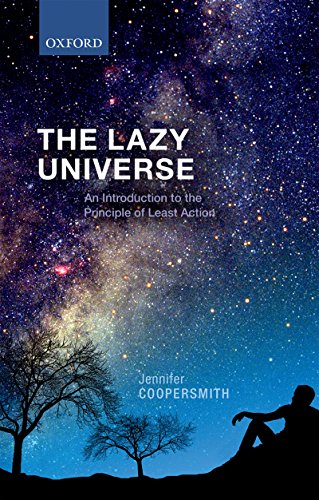
"The Lazy Universe" - Jennifer Coopersmith

Amazon link

I've now completed Jennifer Coopersmith's good-to-excellent book which talks about the principle of least action, Lagrangians, the calculus of variations and so on in the style of the best tutor you ever wanted to have.

I can't do better than this review from Lee Pavelich.
"I really enjoyed this book. The principle of least action is one of those great gems that bears returning to again and again. One of my pet pursuits is finding more and better explanations for the age-old question “Why is the classical Lagrangian kinetic minus potential energy?” (see here for example for my attempt to understand it a bit better in the case of gravity). Coopersmith devotes Section 6.6 to that very topic.

The Lazy Universe is structured by beginning with some historical material and some mathematical preliminaries (advisory note: you do need to know vector calculus to really profit from this book). Then we march from the principle of virtual work, to D’Alembert’s principle, on to Lagrangian mechanics and then Hamiltonian mechanics. Unlike Susskind’s popular classical mechanics book Coopersmith doesn’t address Poisson brackets. I really like the structure and how she builds from one chapter to the next; I certainly did not sufficiently appreciate the point of virtual work and D’Alembert when I took my classical mechanics class. In the penultimate chapter there’s a survey of how the principle of least action takes its form in other branches of physics.

I’m just not sure who this book is for, exactly. Much of the mathematical nitty-gritty and nearly all the examples are pushed to a multitude of appendices, which makes it annoying to flip back and forth if you want the full story. This was done I think so that less mathematically-adept readers could enjoy the main thread of the argument, but that still requires knowledge of the variational calculus (for example, the Euler-Lagrange equations are not derived like in Susskind’s book). So I would recommend this to people for whom this is their second (or third, etc) pass at analytical mechanics."
You really do have to know multivariate calculus (partial differential equations), vector calculus and have some exposure to the calculus of variations however. Coopersmith doesn't shy away from the equations.

There is a wealth of historical motivation here for why the whole counter-intuitive Lagrangian-Hamiltonian project got off the ground (incredibly useful!) and the author attempts to make concepts like (T-V), action and least-action plausible. The extent to which she is successful is the extent to which these abstractions are intuitive at all. That they work is the minimal answer.

I was glad I worked through Coopersmith's book, although it's hardly a page-turner. I was motivated by the fact that you cannot engage with QFT or the particle physics underlying the standard model without travelling the Lagrangian path.

---

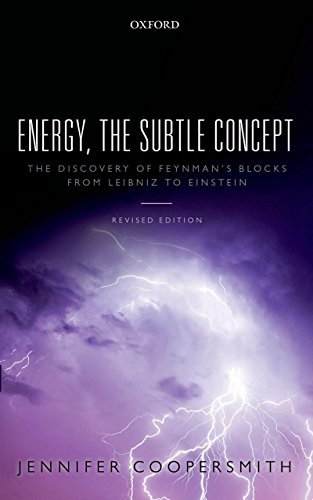
Jennifer Coopersmith also has a book about energy which I may well take a look at later ..

Amazon link

.. except for this.

---

Tuesday, August 07, 2018

Your personality chooses your religion (humour)


The "New Atheists" (Dawkins et al) have a down on religion because -- it isn't true.

Duh! of course no religion can survive the laws of physics .. which explain everything. But religion does more for us than that.
  • It provides a moral framework for our lives as social beings
  • It provides some reassurance in the face of our own mortality
  • Adherence advertises to ourselves and others a commitment to moral behaviour.
These are all things worth having. Yet it's hard to commit to the difficult path of self-discipline and self-denial except under supernatural duress. A candidate religion would be preferable to the extent it was at least somewhat believable.

And then there is the style of the religion. Can one approach it in an intellectually austere way - as an introvert? Or does one have to sway, dance, sing and play the guitar?

Finally  there's not much chance of impressing others with your own commitment to virtue if you advertise your adherence to a faith that no-one has ever heard of, or which is a laughing stock. Church of Scientology, anyone?

So faced with these constraints, I turned to AI and cranked up my Prolog theorem-prover again (last used in car selection).

/* Choosing your religion by the four psychological temperaments (SP, SJ, NF, NT)

Classify religions (faiths) on the following dimensions:
- intensity [ascetic, calm, emotional, shrill]
- plausibility [low, medium]
- recognition amongst the UK public [low, medium]

candidates: evangelical, anglican, wahhabism, sufism, hinduism, buddhism, philosophical_taoism, sjw.
*/

religion(R) :- member(R, [evangelical, anglican, wahhabism, sufism, hinduism, buddhism, philosophical_taoism, sjw]).

intensity(evangelical, emotional).
intensity(anglican, calm).
intensity(wahhabism, emotional).
intensity(sufism, ascetic).
intensity(hinduism, emotional).
intensity(buddhism, calm).
intensity(philosophical_taoism, ascetic).
intensity(sjw, shrill).

plausibility(R, low) :- member(R, [evangelical, anglican, wahhabism, sufism, hinduism]).
plausibility(R, medium) :- member(R, [buddhism, philosophical_taoism, sjw]).

recognition(R, low)     :- member(R, [buddhism, philosophical_taoism, wahhabism, sufism]).
recognition(R, medium)  :- member(R, [evangelical, anglican,  hinduism, sjw]).

choose(Religion, sp) :- intensity(Religion, emotional).
choose(Religion, sj) :- intensity(Religion, calm), recognition(Religion, medium).
choose(Religion, nf) :- intensity(Religion, X), X \= ascetic.
choose(Religion, nt) :- intensity(Religion, ascetic), plausibility(Religion, medium).

?- choose(Religion, sp).
Religion = evangelical ;
Religion = wahhabism ;
Religion = hinduism.
?- choose(Religion, sj).
Religion = anglican ;
?- choose(Religion, nf).
Religion = evangelical ;
Religion = anglican ;
Religion = wahhabism ;
Religion = hinduism ;
Religion = buddhism ;
Religion = sjw.
?- choose(Religion, nt).
Religion = philosophical_taoism ;
---

Notice that I've used the Myers-Briggs/Keirsey temperament classifications: SP-Artisan, SJ-Guardian, NF-Idealist, NT-Rational.

I speak to you as an NT, a Rational. I must say that Taoism is no surprise, but despite my admiration for Lao Tzu and Ursula le Guin, I won't be following the Way any time soon. Too passive, too airy-fairy and how can you take seriously people who call themselves 'cultivators'???

---

Disclaimer: this post is satirical and lays no claim to empirical verisimilitude. It is based on no research and no conclusions should be drawn. If anyone's feelings are hurt, I can only plead for forgiveness. That shouldn't be too difficult.

Sunday, August 05, 2018

"The Robespierrean social justice terror blowing through Silicon Valley"

La nostalgie de l'Ancien Régime

"The Robespierrean social justice terror blowing through Silicon Valley ...".

Nice phrase (ugly reality). Marginal Revolution has some notes on US tech management.

Here are the top nine (of seventeen).

  1. "Most tech leaders aren’t especially personable. Instead, they’re quirky introverts. Or worse.

  2. Most tech leaders don’t care much about the usual policy issues. They care about AI, self-driving cars, and space travel, none of which translate into positive political influence.

  3. Tech leaders are idealistic and don’t intuitively understand the grubby workings of WDC [Washington DC].

  4. People who could be “managers” in tech policy areas (for instance, they understand tech, are good at coalition building, etc.) will probably be pulled into a more lucrative area of tech. Therefore there is an acute talent shortage in tech policy areas.

  5. The Robespierrean social justice terror blowing through Silicon Valley occupies most of tech leaders’ “political” mental energy. It is hard to find time to focus on more concrete policy issues.

  6. Of the policy issues that people in tech do care about—climate, gay/trans rights, abortion, Trump—they’re misaligned with Republican Party, to say the least. This same Republican party currently rules.

  7. While accusations of deliberate bias against Republicans are overstated, the tech rank-and-file is quite anti-Republican, and increasingly so. This limits the political degrees of freedom of tech leaders. (See the responses to Elon Musk’s Republican donation.)

  8. Several of the big tech companies are de facto monopolies or semi-monopolies. They must spend a lot of their political capital denying this or otherwise minimizing its import.

  9. The media increasingly hates tech. (In part because tech is such a threat, in part because of a deeper C.P. Snow-style cultural mismatch.)
---

There's a scenario in which a perfect storm is brewing. The Googles and Facebooks of the world are economically and ideologically aligned with a declining neoliberal project which only gets the more shrill as it loses out to the inchoate populism of the increasingly disaffected masses.

As popular discontent grows, the tech companies - deploying personal data and means of surveillance undreamt of by former elites - are increasingly available for repression (in a just cause of course). We forget how authoritarian regimes always spin out self-justification.

When social cohesion breaks down (and this is a feature of the political-economic period we're living through) left and right are equally tribal and nasty, each in their own way. In the end it's always human beings and their antagonistic group interests, dressed up in fancy ideologies.

Makes you nostalgic for the mid twentieth century, Les Trente Glorieuses.

---

And here's an antidote to that.


Thursday, August 02, 2018

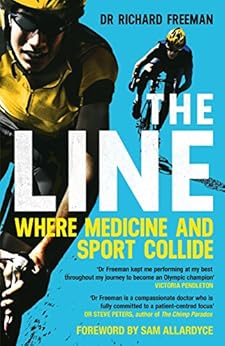
"Why I didn't cross the line" - Dr Richard Freeman

Amazon link

From The Guardian last month:
"Dr Richard Freeman did not appear at the digital, culture, media and sport (DCMS) committee last year, citing ill health, after being summoned over his involvement in a package given to Sir Bradley Wiggins after the Critérium du Dauphiné in 2011. He replied in writing but did not appear in person before the parliamentary inquiry.

The UK Anti-Doping Agency spent 14 months investigating allegations that the package contained triamcinolone, a banned corticosteroid. In November 2017 Ukad closed its investigation, saying it was unable to prove or disprove that it contained a banned substance because of missing medical reports.

The DCMS report concluded in March that Team Sky had “crossed an ethical line” in their use of the powerful drug. Wiggins, Freeman and Team Sky have all categorically denied cheating and insist the package contained a legal decongestant.

Now in an interview with BBC Sport, Freeman reiterated that he, Wiggins and Team Sky never “crossed the line”. Asked if he ever “flirted with the line” or sat in a “grey area that falls somewhere between the rules and cheating”, he replied: “Never.”

Freeman, who resigned as British Cycling’s head doctor last year, said he did not appear at the select committee because of a “breakdown” brought on by the investigations."

This is a bitty book. Chapters alternate between
  • Freeman's personal history training to be a doctor
  • His subsequent career as a sports doctor in football and cycling
  • A diary of a typical day with Sky on a Grand Tour
  • Training techniques (eg sprinters spend most of their time in the gym)
  • Marginal gains (room-prep, hygiene, eating and drinking, sleep)
  • Stories about particular gruesome crashes where Freeman intervened
  • General medical stories about administering to elite sportspeople
  • Advice to enthusiastic amateurs.

And yes, there is a detailed account of what was in that jiffy bag and how Dr Freeman came to lose the relevant medical records following a violent hotel break-in having failed to secure backups.

Does Freeman's case for the defence hold water? It's impossible to be sure. His story is plausible but feels partial and self-exculpating. But then, everyone has an agenda around the Team Sky and British Cycling leadership (Brailsford, Sutton, et al). The DCMS came across as the voice of the prosecution, not a disinterested enquiry.

And sometimes you get the feeling that the liberal establishment thinks winning is somehow a value-atrocity and is ultimately unforgivable, especially when it seems to involve a degree of ruthlessness, harshness and being unkind to some of the athletes some of the time.

The book can be read as a psychometric test. Freeman comes across as an ISFJ. His depressive episodes are consistent with that, as is his focus on process, rules and hierarchy. He's a concrete kind of guy (as are many who choose General Practice). He doesn't do theorisation or abstractions.

His writing is passive-aggressive. In his own mind he's been treated abominably and disloyally by his employers, betrayed even (and this may even be true). He's too loyal and decent to reply in kind, he thinks; so we get an aggrieved, long-suffering narrative. There's not a lot of humour or point-scoring to be found here. But if you're interested in an insider's view of a top road-racing cycle team on and off the road, there are plenty of nuggets scattered around .. and in the end it's an easy read.