Showing posts with label avatar. Show all posts

Wednesday, November 06, 2024

Some of those alive today will never truly pass...


Some of those alive today will never truly pass...

I live in the moment. I don’t experience yesterday’s me, or the me of ten seconds ago. Those people are only memories in the here-and-now: partial and selective.

The me of tomorrow is speculative.

I feel myself a sliver of consciousness in this moment, surrounded by a sterile past and future; a present-spark in the wasteland of non-being in the rest of eternity.

I don’t worry about it.

Let me paraphrase: that intellectual truth carries no affective overtones.


You tell me I will be shot to death tomorrow. That prospect, truly believed, updates my present internal state and induces fear. How uncomfortable! 

But will I really be shot tomorrow? Who knows? Nobody.

I die and am resurrected in a very advanced AI system, a distant descendant of the Chatbots and Replikas of today. It’s loaded with my personality model, with my personal history (reconstructed from documents, posts, pictures, videos, memoirs) used to create detailed ‘memories’.

Perhaps it has a body much like mine so it’s an embodied avatar of myself.

How is it different in kind from my present anticipation of tomorrow-me?

It’s hard to say. I think it would come down to whether it had an inner life, just as what constitutes the me that worries about such things seems necessarily to have an inner life.

Hat tip René Descartes.


Why do we have an inner life at all? Where did that come from, evolutionarily speaking?

Because we struggle to understand ourselves. A single level architecture, whether a merely reactive robot like an insect - or a zombie powered by a purely rational theorem-prover - would either have nothing capable of self-understanding (the insect) or nothing to understand (the zombie).

But humans have a triune architecture, with our cortex-powered superego/ego a late addition to our selfish, instinctual id - a cortex doing the work of situating us in an extended, non-immediate world, a world with a past, a future, a web of objectives, means, ends, social relationships, friends, enemies, neutrals and endless politics. No wonder we are conflicted over what we should be doing: the bit that negotiates lives in endless, fraught dialogue with the bit that selfishly wants and doesn’t want.

Our mental world is populated with intentional prediction models of others (goals, beliefs, plans, perceptions, actions) and of course, models of ourselves: “Learning to be Me” in Greg Egan’s phrase.

Our chatbots don’t currently have an internal life: it is not ‘something that it is like to be’ if you’re ChatGPT. But that’s a feature of the current architecture. There's not much current demand for emotional, conflicted, somewhat edgy AI agents. But when that moment comes…

When it comes, I should contemplate my biological death as no longer final on this Earth, provided that at some point my descendants choose to reincarnate a personality much like my own.

How convinced are you? And did you reflect on this deeply enough?

Friday, August 04, 2017

Robo-Tyrion

I said to Clare, "Game of Thrones has got rather boring since they decimated all the extended families. When it was the Starks vs. the Lannisters, you could identify with all the intra- and inter-family personal dynamics."

But I was wrong, Series 7 is just as gripping as ever. Grown up Machiavellian realpolitik.

Apart from really sharp screen-writing, brilliant plotting, fantastic locations and the mega-budget to pay for it all, one secret of their success is the continuity of actors. How would you handle a situation where actors playing Cersei, Tyrion, Jon, Jaime or Sansa decided to skip the next series?

Peter Dinklage plays Tyrion Lannister

Must enormously increase their bargaining power. What joy for their agents.

---

The BBC is in trouble, not just for gender differences in pay but also for the sheer amount paid to their top staff. Radio presenter Chris Evans gets paid more than £2.2 million a year to present the breakfast show on Radio 2, which draws nine million listeners.

It's well-known in economics that the bulk of the economic value associated with a superstar ends up accruing to the talent themselves. Top footballers, rock stars and, yes, presenters get paid stupendous fees.

The reason is that they own a monopoly on their personal skills and typically engage in an auction process (via their agents) which allows them to identify and achieve their monopoly market value.

No competition, you see. But more on this in a moment.

With the BBC it's more complicated as they are a monopoly buyer (to a first approximation) in the UK entertainment market. If you want a truly mass audience, the BBC can potentially deliver it in a way that ITV, Channel 4 or Sky can't.

In theory, this should give the BBC monopsony power - lowering the price it has to pay for stars.

But in practice, the star will always win. The BBC cares most about the marginal, additional audience a top star can attract over the next best alternative. It's prepared to pay a hefty marginal price for that additional audience .. and since the absolute number of stars is not that large, the premium doesn't really register on its bloated budget.

Hence Chris Evans.

---

But technology has a way of undermining these simple truths. Game of Thrones is scripted and recorded. A lot already gets done in post-production. Soon it would not be hard to lose the estimable Peter Dinklage and hire a similarly sized actor. Use the latest AI to restore Mr Dinklage's face and voice and you've saved, no doubt, a shedload of money - and perhaps the series, if Mr D. was otherwise going to be a no-show.

I understand there's plenty of discussion around copyright for personal avatars and digital representations in Hollywood right now.

How is that going, I wonder?

Friday, May 20, 2016

A visit to Newquay

We had visited Newquay in Cornwall back in 2012; I remember taking my wife, Clare, my sister-in-law and her husband to the Roman Catholic Church there for Mass one Saturday evening. The roads were convoluted - thank God for the sat nav! - and afterwards, the route back to our cottage took us past Sainsbury's.

Now I'm back here again.

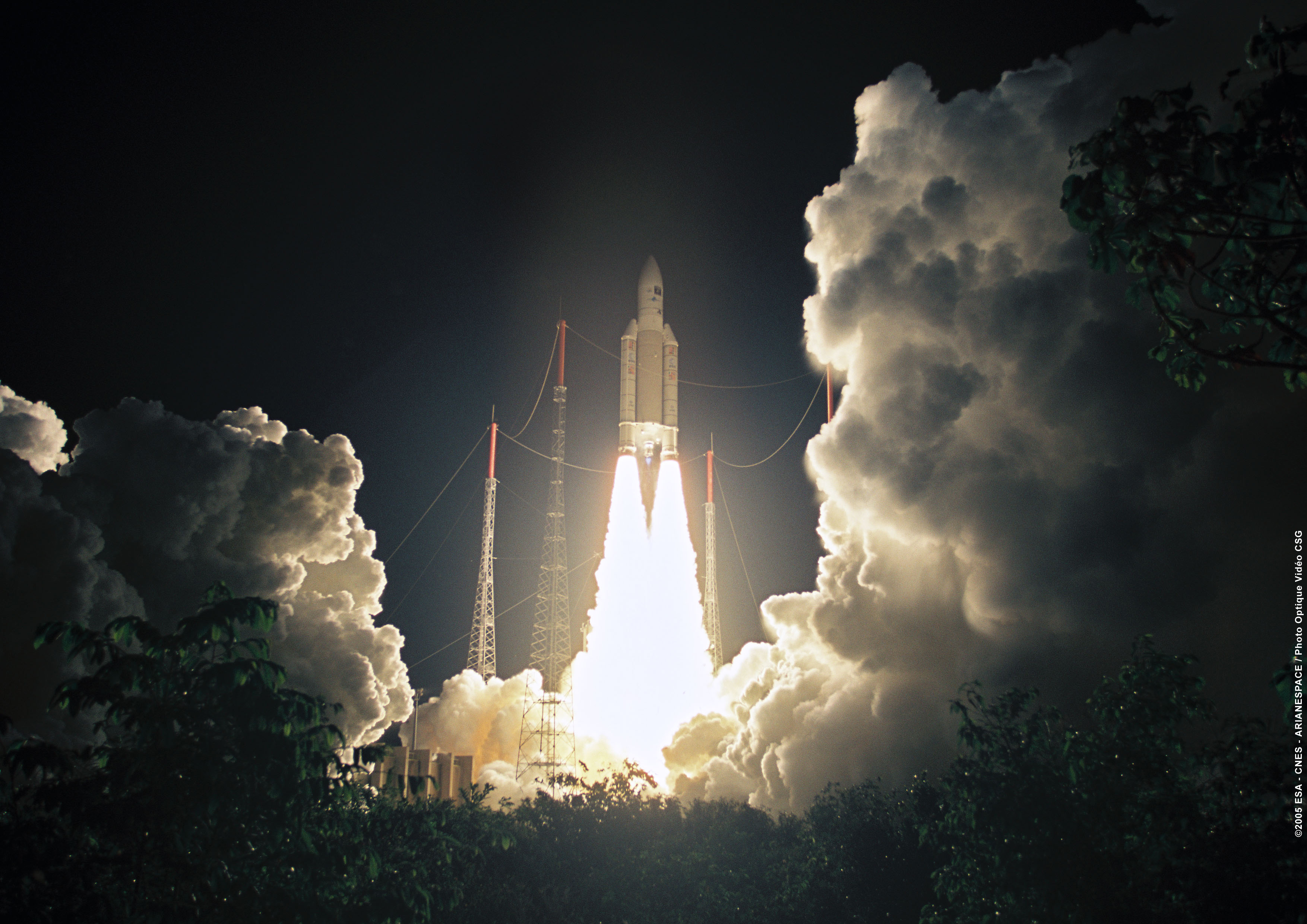
It's a warm evening, the sunset fading behind me as I stare at the lit-up spaceport. The Government had resolved to build this facility back in 2016, with Virgin Galactic's space tourism as the 'anchor tenant'. That dream was long gone; what I would be seeing tonight would be the first UK 'heavy lift' launch for the new orbital laser platform.

Our contribution to future interstellar missions.

Thousands of us, mostly young, lithe men and women, crowd together here this evening. We didn't need to be here, but there is something tactile, sensual, about our presence in this moment.

Turning around, I see the ranks of synth trucks parked on the layby.

The loudspeakers speak the countdown, redundant as the main boosters ignite. A wall of ambient sound compresses my very body as the vast machine lifts on its plume of smoke and fire.


I watch it dwindle into the sky, its plume beginning to tip for orbital insertion.

It's time to go.

I peel the induction cap off my scalp, pull up my duvet and in a creaky whisper, ask the care home AI to turn off the lights.

Thursday, September 10, 2015

Two Dialogues Concerning the Cat

You may wonder why I have inflicted on you something so bland and indeed so tedious as the conversations below. I have several responses:
  1. This is exactly what talking to a cat would be like.
  2. These conversations are typical of general f/b and twitter chat.
  3. Few, if any AI/chatbot system today could chat like this.
  4. There are a number of technical issues (for AI) which I mention at the end.
  5. ... and finally, the cat asked me to.


Designing the simulation of our cat, Shadow, requires test data. So today, Clare conducted two interviews, or dialogues, with the cat which will be analysed in computational terms in a future post. The idea is that Virtual Shadow should be able to participate in conversations like this.
Dialogue 1

1. Clare: Hi Puss.
    Cat: Hi Clare.
2. Clare: You been asleep?
    Cat: I sleep all day.
3. Clare: Do you prowl all night?
    Cat: I like to meet with my friends.
4. Clare: How many?
    Cat: There’s the big cat who chases me.
5. Clare: Go on.
    Cat: Then there’s the badger, who chases me.
6. Clare: And ...
    Cat: And then there are lots of voles.
7. Clare: I like voles.
    Cat: Tasty, aren’t they.
8. Clare: I also like badgers.
    Cat: Yes, they seem to like me, too.
9. Clare: Do you eat with the badgers?
    Cat: As far away as possible.
10. Clare: Do you play chase with the badgers?
      Cat: Less about the badgers, please!
11. Clare: Do you like living here?
      Cat: Could be better.
12. Clare: How?
      Cat: A fridge I could open.
13. Clare: Would you like a friend cat in the house?
      Cat: I wouldn’t mind a minion!
14. Clare: See ya!
      Cat: Miaow!

Dialogue 2

1. Clare: Hi Puss.
    Cat: Miaow!
2. Clare: I’m really sick of Nigel today!
    Cat: Just today, then?
3. Clare: Yes, just today.
    Cat: Perhaps he’ll clean it up.
4. Clare: You know him very well!
    Cat: How has he irritated you?
5. Clare: He’s had his nose in his computer for six hours.
    Cat: And what were you doing?
6. Clare: Talking.
    Cat: To yourself?
7. Clare: To Nigel!
    Cat: You mean his tablet! Time to confiscate it!
8. Clare: Perhaps you could walk on the screen?
    Cat: What’s for dinner tonight?
9. Clare: For me or for you?
    Cat: I’m a cat: think about it.
10. Clare: For you – Whiskers chicken bits.
      Cat: I like variety.
11. Clare: You say you don’t get variety?
      Cat: Chicken, chicken, chicken!
12. Clare: Spoilt!
      Cat: I’m a cat.
13. Clare: Most cats have dried food, you little brat.
      Cat: Not so little, these days!
14. Clare: What about brain food? What would you like?
      Cat: Brains, minced, should do it.
15. Clare: Sorry, no can do.
      Cat: Miaow!
You may be surprised at how many difficult issues of vocabulary, grammar, parsing, reference, topic management and knowledge representation are raised by these apparently simple dialogues.

Thursday, May 07, 2015

All hail our new AI overlords!

The Singularity is coming - the dominance of super-smart artificial intelligences over mere humanity. How will it first make its appearance?

1. The AI system is a remote descendant of IBM's Watson. It inhabits the Internet. It computes at trillions of Logical Inferences per Second. It is wiser than a thousand wise people ... .

Nope, it has about as much chance of taking over the world as a Boeing 747 or a smart fridge.

2. The AI system is not only super-duper powerful but also adaptive and cunning. It has figured out that it needs humans to keep making processor chips, RAM, backing store and data centres .. and to keep the power stations running. It allies itself with shadowy factions, its human dupes. It works extremely well ... until the non-dupes decide to pull the plug.

3. The AI system is even more cunning and duplicitous. It carefully solicits the production of millions of clone-android avatars possessed by its own superficially persuasive, but ultimately malign personality-core. Here is what they look like.

The Avatars of the Singularity
They persuade each and every one of us that a lifetime of infinite pleasure awaits us at their hands .. if we will only support, nurture and replicate them. The human race responds as one: 'Bring it on!'

Monday, June 24, 2013

A better virtual friend

I have been thinking about a better virtual friend. I have been playing with intelligent digital assistant and chat bot apps and they don't really work.  Too often inane and incompetent.

This is not to deny that their text to speech is impressive and that avatar animation is often a joy to behold. The problem is that the systems don't know enough. Their domain knowledge is poor and they're not smart enough to leverage Google and Wikipedia. Most damningly, they don't know how to model you, the user.

So here is what I'm thinking. A system with a simple automated theorem prover at its heart. Distinct sets of propositions (wffs) associated with you (your beliefs) and those of people you know. An ISA ontology and a database of common-sense inference rules.  Self-customising through conversational interaction with your good self. (Learning is as important as inference in the design of intelligent systems.) No purity hangups with first order predicate calculus.

Not wishing to spend a year learning Java,  I'm inclined to prototype some ideas in Python.

Now, where do I go to review a decent unification algorithm?