Showing posts with label five factor model. Show all posts

Thursday, December 19, 2024

'Doppelgänger' - a short story by Adam Carlton


---

“I don't want to die, Father,” I say to the priest, squirming on the plastic chair next to my bed.

Squirming.

Strange that a chaplain would be so squeamish. About heaven and hell, the baggage of his trade.

“This is the time to take stock of your life, to prepare for judgement, André... ,” the priest says.

But I’m no longer listening. I’m thirty-four, a mathematician at the École Polytechnique. Some success under my belt and so much more to give. I’m not minded to check out so easily.

“Thank you, Father,” I say, waving him away. He looks at me oddly, muttering something which sounds a lot like ‘denial’ under his breath.

So they send in the psychologist.


Dr P_ looks smart and businesslike. It’s pleasing not to be patronised for a change.

How is André feeling this morning? You are going to eat your porridge aren't you, or shall I be cross?

“Leukaemia, right? Terminal? How long do they give you?“

I decide to test him.

“It's a Poisson process. Mean survival time - as of today - is five days.”

He doesn’t blink an eye.

“Like radioactive decay, huh? We'd better get a move on, then!”

“If I were seventy,” I explain wearily, “with all my creative years behind me, well it would be different. I'd be happy to mulch back into the biosphere, my work done. But, ...”

I wave weakly and helplessly,

“... I'm just not ready to go.“

Dr P_ gives me a sympathetic look.

“Not much we can do about your personal Poisson process, I accept that. But reflect on this. Personal extinction is really something quite different. Something considerably more tractable.”

I may look confused; I certainly feel it.

The psychologist pulls up his tablet.

“I've got your details here. All those psychometric tests you did?”

He looks at me in mock admiration.

“IQ of 145, it says here. Not quite genius level but you must be one in a million.”

“1,300 in a million,” I correct him.

I'm beginning to warm to this guy.

“I'm looking at your Five-Factor and Myers-Briggs stats now,” he continues. “It says here you’re: flippant and facetious; careless about things which don’t interest you; tunnel-visioned and obsessive about the things which do.”

“That’s not so exceptional,” I say, “For a mathematician.”

He leans towards me, suddenly more serious.

“Personal identity is a strange old thing,” he says. “Every night you turn yourself off. Every morning you reboot yourself. A new you for a new day.”

He holds up his hand at my skeptical frown: where's he going with this?

“Listen. Hear me out. If you woke up tomorrow with amnesia, remembering nothing of your previous life, but still feeling some ineffable sense of your you-ness, is that still you?

I nod, humouring him. I know such things have happened. It wouldn't be ideal, but .. .

"Sure. It’s not like you’re dead."

Dr P_ stands up.

“Approximately a billion people in the world have been sequenced by now and their results put online for research purposes. In my professional capacity I have ..  André, are you listening?“

I suppress a yawn. Always interesting to hear about a colleague's work.

In any case, he hadn't stopped.

“I want you to think about the test-retest box around your psychometric score. Sure, it's tight but there are a lot of people out there. We'll run the PGS algorithms but I can tell you right now with greater than 99% certainty.  

"You have a doppelgänger out there somewhere."


Two days later a mathematics professor died at the tender age of thirty-four. It was remarked that his face had a peaceful expression, maybe even the hint of a smile.


It was another beautiful morning on the Ukrainian steppe as Katya left her parents’ cottage to cycle the ten kilometres to Institute 14, a school for the precociously-gifted.

On arrival, Katya logged-in and found an unexpected email. It was from Paris, France via anonymized routing. The author, a clinical psychologist, apologised for not being able to greet her properly - confidentiality required that he should know nothing of her identity or location in the world.

The message was simply for her information. A very promising mathematician, Professor André Z_ had just passed away, and the computers had identified her as being an uncanny match in personality and intellect.

There was a link to her mental twin's Wikipedia page. If she wished she could check out her doppelgänger’s life history and accomplishments. No specific action was required on her part and there would be no further communication.

Katya, mildly curious, scanned the article and then deleted the message. It was quickly forgotten as she hurried off to her first class of the day, in advanced statistics.


Monday, July 08, 2024

Elites are not like us


A young member of the British elite - by OpenArt

When I was a teen, commuting to grammar school from my working class housing estate, I thought people like my teachers and the parents of my school-friends were a separate species from my working class community.

  • Middle-class people were polite, pleasant, organised and thoughtful. They could follow a train of thought with interest and contribute with sophistication.
  • By contrast the working-class people of my acquaintance seemed loud and boisterous, crass in their humour, impulsive and easily distracted. No conversations about ideas.

Gemini tells me that there are correlations between socioeconomic status (SES) and the Big Five personality traits.

“Here's a summary of the findings:

    • Conscientiousness and Agreeableness: Individuals from higher SES backgrounds tend to score higher on conscientiousness (organized, disciplined) and agreeableness (cooperative, helpful).
    • Extraversion and Openness: Studies suggest a positive association between SES and extraversion (outgoing, sociable) and openness to experience (intellectual, curious).
    • Neuroticism: Lower SES is linked with higher scores on neuroticism (anxious, tense).”

This class-sorting by personality type is accompanied by an IQ gradient (of almost 2 SD). With assortative mating - recall that personality traits and IQ have heritability greater than 50% - this inexorably leads in the direction of a persistent caste system. Indeed, as Gregory Clark has shown ('The Son Also Rises'), social mobility in modern societies is already far less than most people imagine.

Another reason why populism, the revolt of the dispossessed, can never win, merely providing shock troops for cynical, shameless, but aspirational elite members jockeying for their own place at the summit.

Wednesday, July 12, 2017

Rock’n’Roll Guns for Hire: the Sideman

BBC4's "Rock’n’Roll Guns for Hire: The Story of the Sideman " was a ninety minutes look at those popular music artists who support the star - but aren't members of the band.

Bernard Fowler and Earl Slick

Here is what The Guardian had to say:
"Earl Slick played guitar on stage for David Bowie, on and off for 40 years, so he has some insight into the psychology of being a sideman – a professional musician in the service of a big ego. “Most of the time we’re invisible,” he says. “Ghosts at the top table.”

Slick took an unusual leading role in Rock’n’Roll Guns for Hire: The Story of the Sideman (BBC4), exploring what it takes – and what it means – to have a career based on facilitating someone else’s vision. Even in this he was overshadowed, as big names offered their perfect sideman’s job description. “The better you are at your job, the less people will notice you,” said Keith Richards. “And that’s the whole point.”

In fact, all of the Rolling Stones turned out to heap measured praise on Bernard Fowler, their long-serving back-up singer, arranger and person in charge of remembering how all the songs go. The Stones seem utterly reliant on him.

We were also introduced to Wendy and Lisa of Prince and the Revolution fame; Crystal Taliefero, who played just about everything for Billy Joel; and legendary Stax guitarist Steve Cropper, whose co-writing credits on a string of hits make him a rare creature – a sideman with a pension."
What made this programme riveting was the psychological angle. The 'sidemen' seemed to be more professional, to have greater musical knowledge and certainly better musicianship than the stars they supported.

What on earth did they lack?

In a word: charisma. This was shown most clearly at the end, where after the death of Bowie some of the featured sidemen joined up to create a kind of 'Bowie tribute band'.  Bernard Fowler did the vocals - in his own accomplished and unique style - while Earl Slick played guitar. The whole thing was an embarrassing travesty - about as much excitement as watching paint dry.

"Low energy," as Trump might observe.

---

We know something about charisma. On the five-factor model it loads on Extraversion and Neuroticism (negatively). Considerably greater insight comes about through delving deeper into the 30 constituent facets (each of the five FFM dimensions further resolves into six facets).

Jasmine Vergauwe, Bart Wille, Joeri Hofmans and Filip De Fruyt wrote "Development of a Five-Factor Model charisma compound and its relations to career outcomes", concluding:
"In summary, the experts described the prototypical charismatic leader to be low on several Neuroticism facets, indicating that that they are in general:
  • relaxed, unconcerned, cool: (low on anxiety) 
  • optimistic (low on depression) 
  • self-assured, glib, shameless (low on self-consciousness)
  • clear-thinking, fearless, and unflappable (low on vulnerability).
Moreover, the experts rated the charismatic leader as typically high on all Extraversion facets, except for excitement seeking. This means that the charismatic leader tends to be:
  • cordial, affectionate, attached (high on warmth) 
  • sociable, outgoing (high on gregariousness)
  • dominant, forceful (high on assertiveness)
  • vigorous, energetic, active (high on activity)
  • happy, cheerful, and joyous (high on positive emotions). 
Further, two Openness facets have been indicated to be prototypically high for the charismatic leader, namely:
  • actions (unconventional, eccentric)
  • values (permissive, broad-minded).
Finally, within the Conscientiousness domain:
  • achievement striving (workaholic, ambitious) 
is perceived to be high in charismatic leaders, and none of the Agreeableness facets came out as a relevant personality-related description of the prototypical charismatic leader."
The sidemen by contrast were introverted, transactional, very amiable and conscientious.

It occurred to me suddenly that they were the quintessential consultants.

---

In sport too the same dichotomy. It's a problem when the qualities that make for sporting success are not aligned with a native charisma:
  • Djokovic has charisma, Murray is a sideman
  • Peter Sagan and Alberto Contador have charisma; Froome, Quintana - sidemen
  • Lewis Hamilton has charisma, Nigel Mansell was a sideman.

Thursday, June 22, 2017

A chatbot could morph into someone quite like you

Version 1.0. -- June 22nd 2017

Download the PDF.

---

Available as a PDF

Birds of a feather flock together: it's well known from psychometric studies that friends psychometrically match; that is, they are more similar in personality type and intelligence than randomly chosen pairs of people.

This is a problem for chatbot designers in the business of designing virtual friends (eg Replika). By default, the chatbot starts with each new user as a standardised blank-slate, slowly individuating through lengthy and often tedious get to know you dialogue. See this transcript of a dialogue with my Replika instance, Bede.

It seems likely that concepts of intelligence and personality type are not even architectural present for these kinds of chatbot, limiting their ability to optimally-match their human partners.

We can do better than this.

---

Before chatbot-friends there were online dating agencies. They too faced the problem of assortatively matching people who came to them unknown, as strangers. Dating agencies therefore constructed detailed online questionnaires designed to elicit salient psychological traits.

Which particular traits did they investigate? That's proprietary, part of their USP. No doubt they experimented - lots of data! - but the starting point was surely the standard models of personality and IQ.

---

Many people (think employers) are interested in knowing your personal psychological qualities. The most popular evaluation framework is the Myers-Briggs Type Indicator which comes with an intuitively-compelling personality classification scheme (I'm an INTP) plus an underlying narrative of type dynamics which can be powerful in an informed analyst's hands.

The Myers-Briggs establishment is quite proprietorial with its canon of intellectual property, but it naturally holds no monopoly over personality research in general. The Keirsey system tells a different story, but generates similar results.

Academics tend to dismiss both camps as pseudo-science, with constructs unanchored in rigorous observation. The five-factor model (FFM), based on the 'lexical hypothesis' processed through factor analysis, is claimed as both rigorously-empirical and fundamentally atheoretic as regards underlying genetic, environmental, or neurophysiological etiology.

No matter: from the point of view of dating agencies and chatbot design, it is sufficient to define an appropriate personality space and to be able to classify people within it. It is commonly observed that in the five-dimensional space of the FFM there is a four-dimensional subspace broadly isomorphic to the MBTI and Keirsey as follows:
E = Extraversion
N = Openness
F = Agreeableness
J = Conscientiousness
Neuroticism (a tendency to experience and channel negative emotions - contrasted with emotional stability) is not a feature of MB/Keirsey. Some people have advocated adding it.

I would also suggest adding the somewhat-orthogonal dimension of intelligence as an equally relevant attribute, so using six dimensions overall.

For the chatbot (or dating agency) designer, a new user should be allocated a coordinate in personality/intelligence space: the means of doing so is through their answering questions.

The design of psychometric questionnaires is interesting and well-studied. Lists of candidate questions are generated for each trait and then tested with large samples of subjects. Question-responses are cross-correlated to identify those questions with the greatest diagnostic power. The idea is to prune down to a much-reduced, highly-efficient subset of key questions.

The whole process is quite expensive, uses large sample sizes and takes a while. Luckily, for dating agencies and chatbots, we're doing engineering, not science; we just need to allocate people to the right 'bins' (to use a technical term).

The best approach is to take one of the many FFM questionnaires freely available on the web and simply edit the questions to the needs of your own scripts while maintaining their general tenor. A cursory google search, for example, turns up this.

Once you have a starting point of maybe 50-100 questions, they should then be tested on a tame audience (eg your employees) where you already have psychometric data. This will ensure initial calibration.

Next, the surviving, and duly modified questions can go live in the chatbot dialogue. They need to be instrumented so evaluation can continue on the much larger user datasets to come, looking for high within-trait correlation clustering - and ideally, further factor analysis.

---

The process so far is asymmetric: the personality type/IQ of the user is being assessed. This is vital for a dating agency - it's the raw material for the matching algorithm. However, the chatbot designer further requires that the chatbot should use this data to 'morph' itself.

In the FFM + IQ model, construct a six-vector with two-valued components:


This will be used to configure 64 chatbot variants.

---

How do we do this? Let me give you an example from an area I'm somewhat familiar with: automated theorem-proving. Intelligence is associated with the ability to competently handle abstractions, both deductive and abductive (the latter being associated with creativity/openness).

For the theorem-prover designer, humans are pretty useless at deduction - they have to be modelled as exhibiting severely-bounded search spaces, with smarter people having larger bounds - greater lookahead, if you like. You can see how a chatbot could have an adjustable parameter here.

Abduction (reasoning from facts to larger, embedding contexts) is also a search problem. An automated system will start from the topic under discussion and seek matches in its wider database of concepts. Smart people have larger and more sophisticated 'concept-bases' plus a greater ability to find productive matches.

All this is readily emulated by bounded search in diverse semantic nets (or similar formalisms). This gives two dimensions of inter-personal variability; two parameters to be varied.

---

In my more GOFAI-moments, I would be tempted to create algorithms, data-structures and search strategies for the computational realisation of FFM traits. But that would not be the ML-way. Instead, take the conversation datasets from FFM-labelled users and run them through a machine learning process to extract the relevant conversational feature traits.

Then use those traits in generative-mode.

Someone who scored
"(concrete, organised, introvert, tough-minded, stable)"
would produce very different conversational feature-vectors than a typical
"(abstract, spontaneous, extravert, friendly, emotional)".
---

It would be deeply unfashionable these days to do too much hand-crafting of the 64 chatbot variants. The thing is to architecturally distinguish them, so that machine learning has explicit parameters to adjust based on the classification assigned to each new user.

So here is how I would see it working.

You sign up with a chatbot-friend provider (such as Replika) which initially knows nothing at all about you. Your first interactions with the chatbot are friendly but rather impersonal. It's like talking to an amiable stranger - whiling away the time on a long journey.

The chatbot is subtly directive. The questions are those which elicit your personality six-vector values. As you become more localised in personality-space, the chatbot itself begins to transition. Like an empathic colleague, it alters its own configuration parameters to mirror your localisation in personality space. If you are more extravert, its conversational style veers that way; if you are intellectual its mode becomes .. perhaps more discursive.

Subconsciously you begin to feel more at home with your chatbot-partner, it seems to be 'like you', sharing your style. It's comfortable.

---

Like the dating agencies, this would just be a start. The end-game is to tailor chatbot empathic-convergence to each user as rapidly as possible.

This is a problem for which big data was designed. Interactions must be instrumented and analysed in a process of continuous improvement.

It sounds like a really interesting programme!

Saturday, February 20, 2016

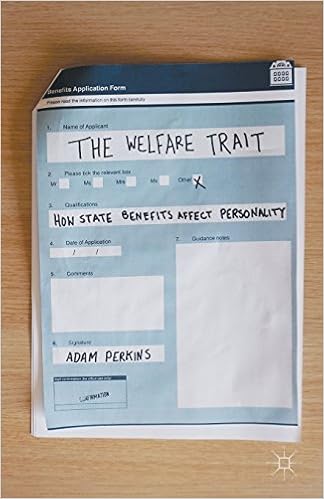
The Welfare Trait: How State Benefits Affect Personality - Dr Adam Perkins

Amazon Link

Perhaps you are fortunate enough to know people who are agreeable and conscientious - the elements of the prosocial personality. Managers love such people: they do what they say they will do, and are a pleasure to deal with.

It will come as little surprise that people with the opposite traits, those who are impulsive and aggressive, are harder to employ. They disproportionately fill the ranks of those on welfare, where - as problem families - they make major contributions to violence and criminality. They also fecklessly create large numbers of offspring and then neglect them.

These stereotypical descriptions are not, of course, constructed from thin air. They summarise countless reports and the daily experiences of people unfortunate enough to have to deal with them.

Adam Perkins, in his book 'The Welfare Trait', calls these people 'employment resistant'. As personality traits are moderately heritable (he quotes 0.3-0.4, Wikipedia has 0.4 -0.6), he suggests that we're rather stupid in our welfare policies to encourage their enhanced reproduction.

How could anyone with half a brain disagree? When you're in a hole, stop digging. But the key issue is how big a problem it really is. The author has some numbers (p. 134 ff) buried in a rather lengthy and turgid discussion, but my impression is that in the great scheme of things it's not the biggest problem we face right now. In any event, his proposed solution of disincentivising reproduction by the employment-resistant would make a difference over generations only at the margins.

Dr Perkins takes 185 pages to make the points above, and his writing is pedestrian and leaden.  His heart is in the right place, and it is of course deplorable that  he has been prevented from speaking by right-on students, but I still couldn't really recommend you buy this book; way too repetitive, not enough sparkle, originality or wit.

---

A review from The Adam Smith Institute and one from Dr James Thompson.

And then there's Rod Liddle in the Sunday Times.
"Sorry, Grand Theft Auto, Dr Perkins is off the bill

"The latest victim of politically correct censorship is Dr Adam Perkins, of King’s College London, who believes that unemployed people are unspeakably ghastly.

"This is a somewhat crude distillation of his work, The Welfare Trait, in which he suggests that a large tranche of long-term welfare claimants are employment-averse, belligerent, unconscientious and disagreeable, traits they painstakingly propagate in their awful children, who have names like 50 Cent and Grand Theft Auto.

"Perkins was “saddened” to find his lecture at the London School of Economics cancelled after adverse social media comment about his eminently sensible thesis. One hysterical campaigning organisation, Black Triangle, suggested his views would meet with the approval of Iain Duncan Smith. That’s apparently enough to get you banned from speaking."
Rod, you are so bad.

---

A final remark: prosociality is often assumed to be wholly positive, but there's a reason we're not all doves. The best soldiers are often the worst citizens.

Friday, September 18, 2015

The Evolution of Personality Differences

Evolutionary psychologist Daniel Nettle wrote an important paper ten years ago, "The Evolution of Personality Variation in Humans and Other Animals" which has not dated. The paper addressed two issues:
  • Why is there variation in human personalities?
  • What is the evolutionary basis of the 'five factor model' dimensions?
On the first question he has this to say.
"Heritable variation is ubiquitous in natural populations. ... Why does variation persist? The ultimate source of variation is of course mutation. The level of variation found in a population at any point in time reflects the balance between mutation introducing new variants and selection removing them. For a trait influenced by a single gene, selection does not have to be very strong to keep the level of standing variation close to zero, because mutations arise relatively infrequently. However, the rate of appearance of mutations affecting a trait rises directly with the number of genes involved in building it, and selection does not remove them instantaneously. Thus, for a trait affected by many genes, even if selection is strong, there will be a significant amount of standing genetic variation. ...

Varying the level of investment in a quantitative trait is rarely simply advantageous or simply disadvantageous. There are many components to overall fitness, and increasing investment in one trait is usually done at the expense of others. For example, growing large, though possibly beneficial in intraspecific competition, raises metabolic costs and also lengthens the time spent growing and thus delays the onset of reproduction. ...

The extreme case of variable optima is what is known as negative frequency-dependent selection. This describes the situation in which the relative fitness of a trait is high as long as it is rare in the local population but declines as it becomes widespread. It has long been recognized that negative frequency dependence can in theory lead to the maintenance of polymorphism. ...

Variation is a normal and ubiquitous result of the fluctuating nature of selection, coupled with the large numbers of genes that can affect behavior. Frequency-dependent selection, oft discussed as a maintainer of variation, is in fact just a subcase of the more general phenomenon of fluctuating selection. ...

Behavioral alternatives can be considered as trade-offs, with a particular trait producing not unalloyed advantage but a mixture of costs and benefits such that the optimal value for fitness may depend on very specific local circumstances. With these generalizations in mind, I now turn to the consideration of personality variation in humans."
We may observe that every form of human society from hunter-gatherer through pastoral, agricultural and mercantile-capitalist has required a division of labour where different personality types are optimal. Not everyone can be the big chief or be a compliant follower, not everyone can focus on competence in tool-making, not everyone can be a specialist in interpersonal diplomacy.

I summarise Professor Nettle's views on the evolutionary validity of the five factors below (his second question). The Myers-Briggs Type Theory dimensions are shown in brackets. I have edited-out the original inline references for readability - refer to the original paper (PDF) for the full text.

1. Extraversion-Introversion (E-I) 
"Extraversion is strongly and positively related to number of sexual partners which, for men in particular, can increase fitness. High scorers are also more likely to engage in extra-pair copulations or to terminate a relationship for another. This may lead to their securing mates of higher quality than those secured by individuals who are more constant in their choice of partners. The benefits of extraversion are not limited to mating, as extraverts,or those high on the closely correlated trait of sensation seeking, initiate more social behavior and have more social support than others. Moreover, they are more physically active and undertake more exploration of their environment.

However, in pursuing high sexual diversity, and high levels of exploration and activity in general, extraverts also expose themselves to risk. Those who are hospitalized due to accident or illness are higher in extraversion than those who are not, and those who suffer traumatic injury have been found to be high in sensation seeking. High extraversion or sensation seeking scorers also have elevated probabilities of migrating, becoming involved in criminal or antisocial behavior, and being arrested. All of these are sources of risk, risk that in the ancestral environment might have meant social ostracism or death.Moreover, because of their turnover of relationships, extraverts have an elevated probability of exposing their offspring to stepparenting, which is a known risk factor for child well-being."
2. Neuroticism-Emotional Stability (Turbulent-Assertive as defined here)
"The neuroticism personality axis is associated with variation in the activity levels of negative emotion systems such as fear, sadness, anxiety, and guilt. The negative effects of neuroticism are well-known in the psychological literature. High neuroticism is a strong predictor of psychiatric disorder in general, particularly depression and anxiety. Neuroticism is also associated with impaired physical health, presumably through chronic activation of stress mechanisms. Neuroticism is a predictor of relationship failure and social isolation. A much more challenging issue, then, is finding any compensatory benefit to neuroticism.

However, given the normal distribution observed in the human population, and the persistence of lineages demonstrably high in the trait, such a benefit seems likely. Studies in nonhuman animals, such as guppies, suggest that vigilance and wariness are both highly beneficial in avoiding predation and highly costly because they are quickly lost when predation pressure is absent. In ancestral environments, a level of neuroticism may have been necessary for avoidance of acute dangers. Anxiety, of which neuroticism can be considered a trait measure, enhances detection of threatening stimuli by speeding up the reaction to them, interpreting ambiguous stimuli as negative, and locking attention onto them.

Because actual physical threats are generally attenuated in contemporary situations, the safety benefits of neuroticism may be hard to detect empirically. However, certain groups who take extreme risks, such as alpinists and Mount Everest climbers, have been found to be unusually low in neuroticism. Given the high mortality involved in such endeavors (around 300 people have died in attempting Everest), this finding suggests that neuroticism can be protective."
3. Openness-Concreteness (N-S)
"The trait of openness to experience again seems, at first blush, to be an unalloyed good. Openness is positively related to artistic creativity. According to Miller’s cultural courtship model, creative production in artistic domains serves to attract mates, and there is evidence that women find creativity attractive, especially during the most fertile phase of the menstrual cycle, and that poets and visual artists have higher numbers of sexual partners than controls. The core of openness seems to be a divergent cognitive style that seeks novelty and complexity and makes associations or mappings between apparently disparate domains. Though such a cognitive style might appear purely beneficial, it is conceptually very similar to components of schizotypy, or proneness to psychosis. ...

Thus, openness and its covariates are associated with damaging psychotic and delusional phenomena as well as high function. Openness itself has been found to be associated with depression, as has a high score on the Unusual Experiences scale. Thus, the unusual thinking style characteristic of openness can lead to nonveridical ideas about the world, from supernatural or paranormal belief systems to the frank break with reality that is psychosis."
4. Conscientiousness-Spontaneity (J-P)
"The remaining two personality domains, conscientiousness and agreeableness, are often thought of as being unalloyed in their benefits, because they are generally negatively related to measures of delinquency and antisocial behavior. However, it is important not to conflate social desirability with positive effects on fitness. Natural selection favors traits that increase reproductive success, including many cases in which this success comes at the expense of other individuals. It is likely that fitness can be enhanced by a capacity to demand a free ride, break rules, and cheat on others under certain circumstances.

Conscientiousness involves orderliness and self-control in the pursuit of goals. A by-product of conscientiousness is that immediate gratification is often delayed in favor of a longer term plan. This leads, for example, to a positive association of conscientiousness with life expectancy, which works through adoption of healthy behaviors and avoidance of unhygienic risks. Very high levels of traits related to conscientiousness - moral principle, perfectionism, and self-control - are found in patients with eating disorders and with obsessive-compulsive personality disorder.

Though some obsessional individuals can be very high achievers in the modern context, it is not evident that their fitness would always have been maximal in a variable and unpredictable ancestral environment. Their extreme self control not only may be damaging, as their routines become pathological, but may lead to the missing of spontaneous opportunities to enhance reproductive success. Highly conscientious individuals have fewer short-term mating episodes and will forgo opportunities to take an immediate return that may be to their advantage. Adaptations that orient the organism toward working for long-term payoffs will tend to have the effect of reducing the opportunistic taking of immediate ones."
5. Agreeableness-Tough-Mindedness (F-T)
"Agreeableness, with its correlates of empathy and trust, is also generally seen as beneficial by personality psychologists, and its absence is associated with antisocial personality disorder. Agreeableness is strongly correlated with Baron-Cohen’s empathizing scale, which is in turn argued to measure theory of mind abilities and the awareness of others’ mental states.

Several evolutionary psychologists have argued plausibly that as a highly social species, humans have been under strong selection to attend to and track the mental states of others. Others have noted that we seem to be unique among mammals in the extent of our cooperation with unrelated conspecifics. Inasmuch as agreeableness facilitates these interactions, it would be highly advantageous. Agreeable individuals have harmonious interpersonal interactions and avoid violence and interpersonal hostility. They are much valued as friends and coalition partners. ...

Although this may be true, a vast literature in theoretical biology has been devoted to demonstrating that unconditional trust of others is almost never an adaptive strategy. Across a wide variety of conditions, unconditional trusters are invariably outcompeted by defectors or by those whose trust is conditional or selective. ...

Though it is an uncomfortable truth to recognize, it is unlikely that fitness is unconditionally maximized by investing energy in positive attention to others. Instead, though an empathic cognitive style may be useful in the whirl of social life, it may have costs in terms of exploitation or inattention to personal fitness gains.

Moreover, sociopaths, who are low in agreeableness, may at least sometimes do very well in terms of fitness, especially when they are rare in a population. The balance of advantages between being agreeable and looking after personal interests will obviously vary enormously according to context. For example, in a small isolated group with a limited number of people to interact with and a need for common actions, high agreeableness may be selected for. Larger, looser social formations, or situations in which the environment allows solitary foraging, may select agreeableness downward."
Professor Nettle leaves us with this useful summary picture.


Nettle agrees that his ideas are speculative and are intended to propose hypotheses for future research. In fact it has proved hard to directly identify genotype correlates to psychological traits. Genes code for brain structure and process-regulation in a highly-indirect way. The missing level of analysis is in the variant brain architectures and operating modes (such as neurotransmitter levels) which underlie individual personality traits and differences - these seem to be largely under genetic control.

Thankfully, there's a lot of research into these areas at the moment.

Sunday, September 06, 2015

Success in life: is it coz i is nice?


Thought for the day.
"We assessed the association and underlying genetic and environmental influences among intelligence (IQ) and personality in adolescent and young adult twins.

Data on intelligence were obtained from psychometric IQ tests and personality was assessed with the short form of the NEO five factor inventory (NEO-FFI).

IQ and personality data were available for 646 twins. There were an additional 1307 twins with NEOFFI data, and 535 with IQ data. Multivariate genetic structural equation modeling was carried out.

Significant positive phenotypic correlations with IQ were seen for agreeableness (r = 0.21) and openness to experience (r = 0.32). A negative correlation emerged for neuroticism and IQ (r = -0.10).

 Genetic factors explained (nearly) all of the covariance between personality traits and IQ.

Genetic correlations were 0.3–0.4 between IQ and agreeableness and openness. The genetic correlation between IQ and neuroticism was around -0.18. Thus, personality and IQ did not appear to be independent dimensions, and low neuroticism, high agreeableness and high scores on openness all contributed to higher IQ scores."
All that stuff you were told, that personality was independent from intelligence, was so much guff. Smarter people tend to be nicer.

Self-control is also positively associated with intelligence. The famous marshmallow test purported to show that those with self-control got ahead in life. Maybe so, but wait .. they were also smarter.

---

By the way, before you complain that you know people who are nice but dim, or cite The Donald as a counterexample .. which part of the following scatter diagram are you struggling with?

Correlation here is 0.3 
Hint: think Intelligence (IQ) on the horizontal axis and a psychological trait such as Agreeableness on the vertical axis.

Friday, July 17, 2015

Litter in the park

Deborah Ross wrote in yesterday's Times:
Litter is a class issue, but why? 

I live an equal distance from two London parks. One is in a well-to-do, middle-class area and one is not. (To give you some idea of how different these parks are, when it last snowed, in the well-to-do park someone built not a snowman, but a snow-flautist, complete with twig for flute, while in the other it was a huge snow-penis, complete with huge snow balls.).

Since I'm often in both parks, what with the dog and all, one thing I have noticed is this: whereas the well-to-do middle-class park (OK, Highgate Wood) does not have a litter problem, the other (OK, Finsbury Park) seriously does.

That is, say I go in the morning: while Finsbury Park is covered in yesterday’s picnic debris, Highgate Wood is not. Different staffing levels? Highgate Wood employs more people to clear up? I don’t think so. Even while I'm walking, I see people chucking drink cans, burger wrappers, crisp packets and chicken bones all over the place in Finsbury Park in a way I never see in the wood.

So, is litter a class issue? If so, why? Particularly when it seems counterintuitive. Wouldn't the middle classes, with their cleaners and gardeners and pond hooverers — I know someone who has a man come in to hoover her pond — be more likely to think that others will step in to do their dirty work?

I have asked around and the following explanations have been offered: paying higher taxes means a higher sense of ownership of public spaces; the less well-off are more disaffected and have less interest in maintaining society’s infrastructure; middle-class culture simply pays more respect to the environment; the middle classes are restrained by social shaming (but shouldn't everyone be ashamed of dropping litter, and if not, why not?). I don’t know. You tell me . .

Once one has recovered from amazement that a Times columnist would be puzzled over so obvious a question, one feels inclined to frame an answer.

The simplest possible response is something like this:
Tidy parks are the result of tidy people, people with prosocial personality traits such as agreeableness, intelligence and empathy. Such people tend to get on in our imperfect meritocracy and thrive in the middle class. The lower classes include many who haven't got on, people who tend disproportionately to the 'dark triad' - lack of empathy, disregard for others, selfishness. For good or ill, these qualities are rather heritable which accounts for their persistence across the social classes. Hence your differential litter phenomenon.
The distinction between the prosocial and antisocial personality type is not well captured in the five-factor model. The newer HEXACO model apparently shows a greater ability to discriminate with its six dimensions of personality:
  • Honesty-Humility (H): sincere, honest, faithful, loyal, modest/unassuming versus sly, deceitful, greedy, pretentious, hypocritical, boastful, pompous.
  • Emotionality (E): emotional, oversensitive, sentimental, fearful, anxious, vulnerable versus brave, tough, independent, self-assured, stable.
  • Extraversion (X): outgoing, lively, extraverted, sociable, talkative, cheerful, active versus shy, passive, withdrawn, introverted, quiet, reserved.
  • Agreeableness (A): patient, tolerant, peaceful, mild, agreeable, lenient, gentle versus ill-tempered, quarrelsome, stubborn, choleric.
  • Conscientiousness (C): organized, disciplined, diligent, careful, thorough, precise versus sloppy, negligent, reckless, lazy, irresponsible, absent-minded.
  • Openness to Experience (O): intellectual, creative, unconventional, innovative, ironic versus shallow, unimaginative, conventional.
You can see how pro- and antisocial personality types are going to map onto this - you can seek confirmation here.