Showing posts with label Russian Revolution. Show all posts

Tuesday, March 25, 2025

Russian History after a Bolshevik Defeat


Trotsky's theory of Permanent Revolution argued that in economically backward countries like early 20th-century Russia, the bourgeoisie was too weak and reactionary to carry out a full capitalist transformation, including land reform and democratic rights. Instead, he believed that only the working class, leading the peasantry, could overthrow the old order and usher in profound change.

In so doing, it could not simply hand over affairs to the politically-impotent bourgeoisie; instead the workers’ movement would have to forge on, working to establish a socialist state. Thus the communist revolution would be ‘permanent’, i.e. completed once and for all.

Trotsky never anticipated that the revolution would not expand beyond Russia itself. Russia was so backward economically, its productivity so low, that a society of equality based on abundance was unthinkable. It would have to be helped by workers’ states in prosperous western europe. 

Trotsky’s model, however, was fatally flawed; tragically simplistic: centrally planned economies controlled by workers’ councils simply do not work in practice. And so Russia proceeded to Stalinism, heckled by Trotsky from increasing distances, until the exiled dissident was eventually assassinated.

Perhaps, contrary to Trotsky's vehemently-expressed views, there really was no ‘Trotskyist’ alternative to Stalinism after the revolution succeeded in 1917. But what would have happened if Lenin’s Bolsheviks had failed in their putsch against the collapsing Kerensky government? Despite the disintegration of the army, enough units of the Russian military were, after all, standing by, as the Bolsheviks discovered in the long civil war which followed.

Had the Bolsheviks failed in 1917, Russia would certainly have fallen under a military dictatorship, facing the same challenge Stalin later confronted: dragging a feudal, agrarian society towards a modern industrial economy and state. The military dictatorship would have been forced to depopulate the countryside, dismantling peasant agriculture to create a mass urban workforce. This brutal transition - akin to enclosures in Europe but imposed at breakneck speed - would have been necessary to fuel rapid industrialisation, driven by the imperatives of security and military rivalry, particularly with Germany.

Schumpeter’s insight applies: authoritarian command economies, whether Stalinist or capitalist, can be equally effective at economic take-off. The regime would have pursued state-directed capitalism, using repression to discipline labor, expand heavy industry, and consolidate large-scale capitalist farming. Political rhetoric would frame these measures as national survival, not class struggle, but the human toll - displacement, famine, and political terror - would mirror Stalin’s forced modernisation.

Yet, no dictatorship lasts forever. Spain, Portugal, and Greece transitioned from authoritarianism to democracy as modernisation weakened their regimes. A Russian junta, once its industrial goals were met, might have faced internal power struggles, economic stagnation, or public unrest in the second half of the twentieth century. However, Russia’s deep imperial and autocratic traditions could have prolonged authoritarian rule, replacing one strongman with another rather than fostering genuine democracy.

In the end, a post-1917 military dictatorship would have shaped Russia much as Stalinism did - through coercion, industrial might, and state-driven modernisation. Whether it collapsed into reform or prolonged despotism would depend less on economic success than on Russia’s historical inertia: a state that has long thrived on repression is rarely eager to let go.

But a capitalist Russia emerging from dictatorship would have had a working civil society, an economic power-base separate from the state apparatus. Consequently, the chances of a democratic transition would have been far greater than with the Russia we currently have, where civil society (weak to begin with) has been thoroughly crushed for a century by the power of an overweening state.

Without Stalinism to discredit it, it’s possible that the revolutionary left in a Bolshevik-defeat world would be more vigorous than in our actual world; but overall, if the Bolsheviks had been defeated, that world today would most likely be a better and more peaceful place than our own, too.

Wednesday, November 08, 2017

The Bolshevik centennial


Today is pretty much the Russian Revolution centennial. Michael Roberts has a post, "The Russian revolution: some economic notes" which shows the power of central planning for extensional growth, but not for high-productivity development:
"The success of the Soviet extensive growth model in the 1950s and 1960s was undeniable. But a phase of economic stagnation began in the 1970s.  The attempt to move to a new regime of intensive accumulation, to one based on high productivity growth failed."
He finishes his post with:
".. for a compelling arguments on the feasibility of a planned economy delivering the needs of people, see Cottrell and Cockshott’s paper, Socialist planning after the collapse of the Soviet Union.
I read the paper (hope springs eternal!) only to find yet another technocratic solution to the dilemmas of central planning using high-powered computers and linear programming.

The Soviets never used these techniques because optimal allocation of resources was incompatible with bureaucratic self-interest. Each factory tried to understate its own capabilities while securing the largest possible inventory of stocks, 'just in case'.

Gaming The Plan was a matter of survival.

If you start from the (evolutionary: kin-selection, reciprocal-altruism*) fact that people in general look out for their own interests, and those of their families and friends, and will not self-sacrifice for the abstract interests of the Party or the Universal Proletariat, then you'll get a better handle on why central planning never seems to quite get things right.

---

* But see Ultrasociety and "Culture-gene coevolution, large-scale cooperation and the shaping of human social psychology". Things have moved on since the early work of Hamilton and Trivers.

Wednesday, October 11, 2017

1917-2017: the collapse of the revolutionary left

I recently surveyed the top thinkers on contemporary Marxism. By comparison with 1917 they're almost all academics or independent intellectuals. Compare this with the talented leadership of the mass working-class socialist organisations so dominant a century ago.

"Lenin lived, lives and will live!"

I find it remarkable.

The discourse of contemporary Marxist theory, while as acerbic as always, is incredibly introverted. The top issues still the 'transformation problem' or the validity of  'the law of the falling tendency of the rate of profit'.

Where are the analyses of how developments in genomics and psychometrics impact upon Marxist theory? Surely the nature of the individuals who create the social relationships of society - across classes and across the world - are pretty relevant? So why the visceral hostility to such research?

And where are the serious debates about the transition to socialism? No-one analyses why the Soviet Union imploded. No-one asks where China is going. No-one thinks deeply or plausibly about the nature of revolution when the Leninist vanguard-insurrection model seems completely off the agenda. No-one thinks about how to organise a post-capitalist society in a way which wouldn't collapse into something like bureaucratic-socialism, a cure far worse than the disease.

---

Ironically the 'mass-leftism' we see (Corbyn/Momentum in the UK, the SJW phenomenon all over the place) isn't based on a Marxist analysis at all. It's liberal-egalitarian in ideological content. An under-analysed aspect of capitalist society is the production of ideology. Sure, enough Marxists have emphasised that cultural leaders, public intellectuals, op-ed writers don't just sit down and think to themselves, "How can I dream up a narrative which justifies the global exploitation of workers by the neoliberal bourgeoisie?"

Obviously.

The way it really works is that earnest, well-meaning people have had their horizons reset since the 1980s by the eclipse of the workers movements and the rise of globalisation.They now reflect upon a world bound together, as they see it, by the ties of global production and trade.

They buy in to the civilising and developmental benefits of world-wide manufacturing and global supply-chains, and are naturally keen that people everywhere have unimpeded access to a plethora of meritocratic opportunities. Why wouldn't they be opposed to racism, sexism, and phobias of all description, which seem to impact on equal outcomes?

Global capitalism is wholly on board with such morally-uplifting campaigns, which smooth the way for frictionless utilisation of labour power across the planet. The whole SJW thing is in no sense anti-capitalist at all, which is why the establishment so indulges it. You'd think that the more profound Marxist thinkers might be drawing attention to this, rather than simply aligning themselves uncritically with 'the movement'.

---

My final point is that the death-throes of capitalism have been trumpeted prematurely by Marxists for 150 years. Really, there is very little evidence that the historical work of capitalism in developing the productive forces has been achieved. The abolition of capitalism will come about through the dynamics of its real innermost contradictions, those whereby capitalism seeks to abolish the proletariat itself.

From 1917 to 2017 we've had a century of capitalist progress; for another century we will see more of the same. When it's time for capitalism to go, we surely will know it without having to dig deep into Marxist theory to discern the hidden patterns of the tea leaves.

Friday, March 10, 2017

Darkness at Noon

Amazon Link

The Russian revolution of 1917 was the most significant political event of the twentieth century - and possibly of the twenty first. There will always be dreams of the perfect society and a belief that capitalism is not it. Putting religion to one side, three centuries of progressive secular thought have led to no significant alternative to Marxism.

In 1917 a party which was completely committed to Marx's vision attained state power. As they saw it, they had an opportunity to create the future they dreamt of. Unfortunately, there was no blueprint, no roadmap. They had been granted the vision; the rest they would have to work out for themselves.

Post-revolution, World War One still continued.  The workers and peasants across Russia were out of control. The peasants were busy expropriating the landlords and creating that regressive peasant-utopia of small self-owned landholdings. The workers had seized the factories and were running them themselves. The army had elected soldiers' councils and was ungovernable. The economy had collapsed. Then came the armed counter-revolution.

The Soviet regime survived - just - but only by taking administrative control of industry and the agrarian economy. This was the period known as 'War Communism'.

By 1921 the policy was bankrupt: peasants would not produce grain and livestock to be requisitioned; micromanagement of industrial production was a disaster. The party introduced the New Economic Policy (NEP) which restored market relations between town and country and in the SME sector.

Important sections of the Bolshevik party violently opposed NEP seeing the danger of a restoration of capitalism. Yet over the next few years the policy was remarkably successful in stabilising, and then growing the economy. Nikolai Bukharin - warm, gregarious intellectual, liberal and cultured - was the principal architect of NEP economics and achieved great prominence in this period.

By 1928, NEP had hit the buffers. Factories were at full capacity, agricultural productivity was abysmal (all those undercapitalised smallholdings) while unemployment was increasing in the cities as peasants deserted the land. Worse, with fascism on the ascendant in Germany, there were worrying indications of war.

The problem was the urgent need for a massive injection of capital to drive industrialisation: electrification, heavy industry, transportation. No-one seriously believed the capitalist financial sector could be relied upon - the source would have to be endogenous.

Bukharin and his group believed that an organic, harmonious re-tweaking of the economy could keep everyone happy: the peasantry, workers, light and heavy industry. The unpleasant alternative was to soak the peasants. This would involve forced collectivisation of the agrarian workforce into large, economically-efficient holdings and manipulation of agricultural prices to subsidise industrial investment.

Since no-one thought the peasants would agree to this, it could only be achieved by force. In 1929 Stalin launched his 'revolution from above', mass agrarian requisitions and forced collectivization.

Over the next decade as the new policies played out, the level of opposition within the party was immense. Stalin's response was intense repression, culminating in the infamous Moscow Trials. Bukharin, the 'Last Bolshevik', was perhaps the most high-profile victim.

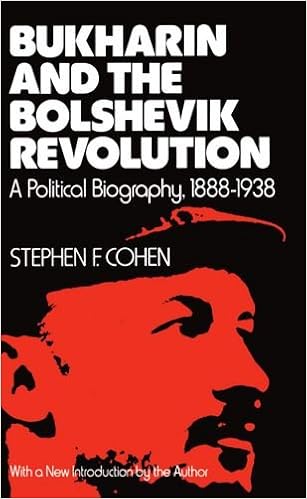
From Stephen Cohen's book (pp 374 ff.)
"History sometimes remembers its important actors in inappropriate ways. For many years after his death, Bukharin was defined in the Western political imagination not by his role in the Bolshevik Party or by what he represented in Soviet history, but almost exclusively by his show trial of 1938.

The grim fascination of an illustrious founding father pilloried and executed as a "rabid enemy" of the Soviet Republic is understandable. It was made doubly compelling, however, by a widespread misconception - that Bukharin willingly confessed to hideous, preposterous crimes in order to repudiate what he himself represented, to repent sincerely his opposition to Stalinism, and thereby to perform a "last service" to the party and its myth of infallibility.

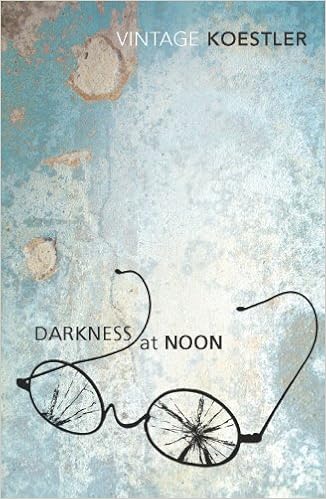
Derived from a misinterpretation of his conduct at his trial, this notion gained popularity with Arthur Koestler's famous 1940 novel, Darkness at Noon, whose fictional purge victim, Rubashov, an old Bolshevik modeled largely on Bukharin, is persuaded by his police interrogator (and by himself) of the necessity and rightness of such a "last service."

Owing largely to Koestler's powerful art, this image of Bukharin-Rubashov as repentant Bolshevik and morally bankrupt intellectual prevailed for two generations. In fact, however, as some understood at the time and others eventually came to see, Bukharin did not really confess to the criminal charges at all.

...

Why so many confessed is no longer a mystery. By 1917, Soviet political prisons had become the scene of the cruelest methods of physical torture, continual debilitating interrogation (the "conveyor" system) for weeks on end, countless summary executions.

Brutal atrocities were inflicted on men and women, young and old alike. It was, concludes one Soviet historian, "probably the most terrible page in Russian history." Many prisoners somehow held out, finally tortured to death or shot without confessing. Those who "confessed" did so for the most human of reasons: they were physically or otherwise compelled. A few Bolsheviks may have confessed because of Rubashov-like motives; but for the great tormented majority, a survivor tells us, Darkness at Noon "would have been the subject of gay mockery."

In these surroundings, Bukharin, reportedly not tortured, held out "with remarkable vigor" for three months against the continual threats and interrogation directed by Yezhov on Stalin's instructions. On around June 2, 1937, he finally relented, "only after the investigators threatened to kill his wife and newborn son."

This was no idle threat. "'Wives of Enemies of the People" with their children were routinely arrested and used as hostages (particularly in cases of major Bolsheviks scheduled to appear in show trials), sentenced to long prison terms or shot.

Within weeks of his arrest, Bukharin's wife and son had been exiled with relatives of other "politicals" to Astrakhan.  To save them - they spent the next twenty years in prison camps -  he had to "confess" and stand trial."

Amazon Link

We look at the Russian revolution and ask: did it have to turn out this way? Could Trotsky or Bukharin have won? If they had, would things have turned out .. OK?

You would expect Stephen Cohen - such a fan of Bukharin - to be pretty optimistic here. And yet .. . If Bukharin had won, the economy would not have developed as it undoubtedly did (despite many stupidities) under Stalin's first and second five-year plans.

Because Soviet Russia did manage to industrialise (on the backs and bodies of the peasantry) they were able to defeat the Nazis in WW2. We in the UK probably owe our existence as an independent country to that fact.

Omelettes and eggs: despite all the calumny heaped upon Stalin personally, he didn't do it all by himself. His policies had support - perhaps because they were least-wrong. The tragedy for Russia was that once the mincing machine had done its work they couldn't find a way to retire Stalin and the police state and return to Bukharin's vision.

But the deeper truth from Stephen Cohen's excellent book is that even Bukharin's liberal Marxism was in practice illiberal, undemocratic, top-down and unworkable. To this day we lack any Marxist thinkers who can summon up a compelling and authoritative strategy for improving on capitalism.

In this centenary of the Bolshevik revolution everybody will have an agenda. Liberal pieties will not be in short supply. Cohen’s biography of Bukharin is a breath of fresh air, refreshingly non-doctrinaire and taking the reader into the heart of debates untainted by hindsight.

Thursday, January 05, 2017

And if they had failed?

Amazon link

This year is the centenary of the October Revolution, and everyone is sharpening their agendas.

I expect the dominant narrative will be that the whole thing was a tragic mistake, and that if only Kerensky could have retained power, today Russia would be the new Germany. Or something.

---

It's a delight to read an intelligent, scholarly account of events through the eyes of a slightly second-rank player. You've heard of Leninists and Trotskyists but seldom of 'Bukharinists'.

No agenda, except to rehabilitate this most-traduced man.

I'm not far into this weighty tome, but two things immediately stand out:
  1. In the summer of 1917, the workers and peasants across Russia were out of control. The peasants were busy expropriating the landlords and creating that regressive peasant-utopia of small self-owned landholdings; the workers had seized the factories and were running them themselves; the army had elected soldiers' councils and was ungovernable.

  2. Kerensky's Provisional Government of moderates and liberals was powerless, while many prominent Bolsheviks balked at leadership. It was only Lenin's iron determination to take charge that avoided a collapse into chaos, probably followed by a German takeover .. and later Allied dismemberment.

Cohen is clear that the new Bolshevik Government had no clue as to what to do next; nothing in the Marxist canon provided a blueprint. Then came the Civil War, as the counter-revolution plus Allied forces tried to topple the new revolutionary power, and top-down bureaucratic command-and-control became the order of the day.

Bukharin was instrumental in the introduction of the New Economic Policy in 1921, which revived the moribund economy (for more about that, scroll down here).

---

I keep coming back to Marxism on this blog: you will look in vain for a clearer analysis of capitalism as a construct of specific recurrent human social relationships. But the focus on the social construction of reality is not well-grounded in human nature. We know a lot more than Marx did.

Capitalism goes with the grain of human nature (at least a human nature with a certain level of intelligence, conscientiousness, agreeableness, trust and low time preference) - it was not consciously designed.

Post-Capitalism - as conceived within the Marxist tradition - requires an attainable human nature at the outer limits of a Social Justice Warrior's wish-list.*

---

I continually speculate on the future target social architecture which synthesises our best understanding of human psychology with the social insights of Marxism. My best attempt, compassionate libertarianism:
  • a safety net for those who don't cope
  • maximal equality of opportunity 
  • highly-constrained elite power.

As Marx suggested, this depends on a much greater development of the productive forces, and as Marx didn't say, some improvements in 'human capital'.*

Scott Alexander once suggested that the task of the current generation might be to take care of the world until we get AI automation and genetic engineering to work. Perhaps that's task enough.

---

* OK, here's the nightmare.