Showing posts with label Centauri Dreams. Show all posts

Thursday, January 31, 2019

Interstellar AI: a new paper from Hein and Baxter


Centauri Dreams has a series of posts: "Artificial Intelligence and the Starship" which review "an absorbing new paper called “Artificial Intelligence for Interstellar Travel, now submitted to the Journal of the British Interplanetary Society" by Andreas Hein and Stephen Baxter. Baxter is the well-known science-fiction writer.

I checked out their paper on the arxiv. It's disappointing.

Here's the abstract.
"The large distances involved in interstellar travel require a high degree of spacecraft autonomy, realized by artificial intelligence. The breadth of tasks artificial intelligence could perform on such spacecraft involves maintenance, data collection, designing and constructing an infrastructure using in-situ resources.

Despite its importance, existing publications on artificial intelligence and interstellar travel are limited to cursory descriptions where little detail is given about the nature of the artificial intelligence. This article explores the role of artificial intelligence for interstellar travel by compiling use cases, exploring capabilities, and proposing typologies, system and mission architectures.

Estimations for the required intelligence level for specific types of interstellar probes are given, along with potential system and mission architectures, covering those proposed in the literature but also presenting novel ones.

Finally, a generic design for interstellar probes with an AI payload is proposed. Given current levels of increase in computational power, a spacecraft with a similar computational power as the human brain would have a mass from dozens to hundreds of tons in a 2050-2060 time-frame.

Given that the advent of the first interstellar missions and artificial general intelligence are estimated to be by the mid-21st century, a more in-depth exploration of the relationship between the two should be attempted, focusing on neglected areas such as protecting the artificial intelligence payload from radiation in interstellar space and the role of artificial intelligence in self-replication."
They use some formalisation and present a taxonomy of four different kinds of AI:
"We distinguish between four types of AI probes:

Explorer
  • capable of implementing a previously defined science mission in a system with known properties (for instance after remote observation);

  • capable of manufacturing predefined spare parts and components; Examples: the Icarus and Daedalus studies.
Philosopher
  • capable of devising and implementing a science program in unexplored circumstances; capable of original science: observing unexpected phenomena, drawing up hypotheses and testing them;

  • capable of doing this within philosophical parameters such as planetary protection;

  • capable of using local resources to a limited extent, e.g. manufacturing sub-probes, or replicas for further exploration at other stars.
Founder
  • capable of using local resources on a significant scale, such as for establishing a human-ready habitat;

  • capable of setting up a human-ready habitat on a target object such as part of an embryo space colonization programme;

  • perhaps modifying conditions on a global scale (terraforming).
Ambassador
  • equipped to handle the first contact with extraterrestrial intelligence on behalf of mankind, within philosophical and other parameters: e.g. obeying a Prime Directive and ensuring the safety of humanity."
These are engineering classifications and don't correspond to any sensible theoretical taxonomy of agent types. Perhaps that wasn't the intention but in terms of defining a research program which can dovetail with an interstellar vehicle programme, we do actually need a sensible roadmap for AI in the appropriate terms. Referencing AGI doesn't cut it, because today that term labels the problem only.

I didn't find their mathematical transliteration of their verbal points useful. How can I convey my problem?

∃x.question(me, unspecified-audience, conversation-procedure(x, describes(problem(me, non-utility-of-their-maths), unspecified-audience))).

I trust you are now enlightened in all senses.

I plan to write some more here about a more ecological way of thinking about agent taxonomies. Here's a brief preview.
Agents are discrete entities which exhibit behaviour in their environments. Agents are bound by the laws of physics, which therefore don't per se differentiate between agents which we find boring (lumps of rock) and agents we find interesting (animals, people).

Non-trivial agents are entities whose behaviour deviates from the behaviour of a similarly-sized-and-placed lump of rock - an entity whose behaviour could be predicted from the laws of physics and easily-obtained boundary conditions without too much difficulty. Non-trivial agents have complex and inaccessible internal states which produce enhanced behaviour by use of free-energy.

Agents are characterised by these four intentional parameters: beliefs + goals and perceptions + actions. These also work for rocks but it's a trivial case. An interesting problem is to link the intentional level of description to the input-output behaviourist level and then back to the laws of physics. This can always be done in principle.

Non-trivial agents are always mechanisms, whether biologically-living or fabricated. They do not in general need to be constructed so as to use explicit symbolic manipulation (theorem-provers or planners) as part of their mechanisms, although research scientists may use such concepts to describe and analyse their behaviour.

Agents get a lot more interesting when they're social, and when social objectives and individual goals are contingent, possibly contradictory and need to be dynamically negotiated. It's believed that mutual-modelling, language and conversation, and consciousness are all emergent from that scenario.

It's possible to devise a scale of intellectual competence for agents, linked to the capacity to effectively deploy abstractions to cope with complex and novel situations. It's not too clear how to model this taxonomy in the architecture space apart from such obvious points as "more processors and memory, and cranking up the clock rate" and their neuronal equivalents. Those remedies are not of course wrong but it's not enough.

Now apply this to the design of autonomous interstellar probes.

In almost every respect, the engineering domain of interstellar missions is an application area for AI rather than something which raises fundamentally new theoretical questions.

Friday, July 21, 2017

More about METI


From Centauri Dreams today:
"I want to commend Johnson’s piece, which is titled “Greetings, E.T. (Please Don’t Murder Us).” As you can fathom from the title, the author is looking at our possible encounter with alien civilizations in terms not of detection but of contact, and that means we’re talking METI — Messaging Extraterrestrial Intelligence. "
The thing to worry about is not so much 'messaging' as 'meeting'. It's forever interesting to watch liberal propensities overwhelm scientific understanding wherever a warm, glowing chink can be found. Assuming Frank Drake was not misquoted in Johnson’s piece, this is what he said:
"Drake leaned forward, nodding. ‘‘It raises a very interesting, nonscientific question, which is: Are extraterrestrial civilizations altruistic? Do they recognize this problem and establish a beacon for the benefit of the other folks out there? My answer is: I think it’s actually Darwinian; I think evolution favors altruistic societies. So my guess is yes. ..."
The magic is in the word 'altruistic'. Social creatures are altruistic within the limits of kin and reciprocal altruism, and - when human - can sometimes be persuaded to interpersonal neutrality on larger scales, when their personal, family & friends' interests are not adversely affected (so nation states and empires).

But in general? If you're a bug and you annoy me, you'll get squashed.

How could an 'altruistic' approach to biological competitors ever be selected for?

One writer who really understands where Darwinian evolution actually leads you is Liu Cixin. You should read the extended excerpt here .. but this is a flavour:
"The universe is a dark forest. Every civilization is an armed hunter stalking through the trees like a ghost, gently pushing aside branches that block the path and trying to tread without sound. Even breathing is done with care.

"The hunter has to be careful, because everywhere in the forest are stealthy hunters like him. If he finds other life — another hunter, an angel or a demon, a delicate infant or a tottering old man, a fairy or a demigod — there's only one thing he can do: open fire and eliminate them.

"In this forest, hell is other people; an eternal threat that any life that exposes its own existence will be swiftly wiped out. This is the picture of cosmic civilization. It's the explanation for the Fermi Paradox."
Any sufficiently advanced alien society would care about humanity about as much as we care about a local wasp nest. Sometimes we let it survive, because it's in our interests that the wasps do their thing (pest control) - which benefits us.

Other times, not so much.

And in this, we are not being backward, or under-evolved, or lacking civilizational maturity which future generations will fix. We are simply being optimally rational.

If we do meet those aliens any time soon - and given our woeful interstellar capabilities we would be the technologically inferior party - we should hope that, like the wasps, our existence adds some value for them.

Meanwhile I would hold off on all that signallin' and hollerin'.

---

Update: I'm not the only one with concerns.


Wednesday, March 22, 2017

A star orbitally skimming a black hole

Centauri Dreams had a post yesterday describing the unusual system 47 Tuc X9 which is 14,800 light years from Earth. It appears to be a white dwarf star in a very close orbit (radius about a million kilometres) around a black hole, with orbital period 28 minutes (!).

The post is illustrated by an artist's impression of the system:


and a statement of the curious orbital dynamics:
"This white dwarf is so close to the black hole that material is being pulled away from the star and dumped onto a disk of matter around the black hole before falling in,” says lead author Arash Bahramian (University of Alberta and Michigan State University). “Luckily for this star, we don’t think it will follow this path into oblivion, but instead will stay in orbit. ...

"We think the star may have been losing gas to the black hole for tens of millions of years and by now has now lost the majority of its mass. Over time, we think that the star’s orbit will get wider and wider as even more mass is lost, eventually turning into an exotic object similar to the famous diamond planet discovered a few years ago."
It isn't obvious why the star is winding its way out from the black hole and several commentators get confused (hint: it's not frame-dragging).

From the star's period and orbital radius we can work out the mass of the black hole: 94 solar masses. From this, we can calculate the black hole's schwarzschild radius - an event horizon of 277 km, just under 100 times larger than the event horizon of a solar mass black hole (3 km).

The black hole's gravity at the orbital radius of the star is 13.4 km/sec2, or just under 1,400g. You can see why it's whipping around so fast (c. 3,300 km/sec or 1% of the speed of light).

Try to imagine it. If this black hole were placed at the centre of the Earth, it would be an unimaginably tiny object (277 km!) in the middle of the core. The star, meanwhile, is two and a half times the distance of the Moon. The star's experience of the black hole comes down to some pretty crazy tidal forces.

We know about tidal forces: they try to tear the star apart and rearrange its material into an orbital ring. None of this would explain material infalling into the black hole or the star spiralling outwards. We don't see such phenomena at Saturn for example.

The secret is explained by the authors in this remark:
"Low mass X-ray binaries (LMXBs) are systems in which a compact object [neutron star (NS) or black hole (BH)] accretes matter from a low mass companion (typically a main sequence star) through Roche-lobe overflow or wind-fed accretion (from a red giant). ...

"In the most likely scenario, this particular star would have first started losing mass to the suspected black hole several tens of millions of years ago when it was much closer, in an orbit with a period of just minutes.

"Over time, as that star has lost most of its mass, the size of the orbit would have increased, and the rate at which mass has been lost to the black hole would have decreased. The rate of mass loss would once have been a billion times higher. So yes, the star would initially have been much closer to the black hole.

"How close a star can get to a black hole before starting to lose mass to the black hole depends on the kind of star it is. Big, fluffy giant stars can lose gas to a black hole when they are much further away than small, compact stellar remnants like this white dwarf, whose gravity is strong enough that they are able to hold onto their mass more tightly, so need to get much closer before mass can be torn away.

"We also think that this star will have been gradually losing mass over tens to hundreds of millions of years; in this case it is not being torn apart in a single cataclysmic event that results in it being shredded into streams of debris, as we have seen in spectacular outbursts from the centres of some external galaxies (known as tidal disruption events).

"Rather, in this case, we have a steady loss of mass to the black hole over time."
The Roche-lobe overflow effect is an interesting one (Wikipedia article). If debris from the star can reach the L1 Lagrange point (between the star and the black hole) it can migrate to the black hole itself. The remaining stellar material has higher than before angular momentum and its orbital radius increases. [Note: but apparently not - see comments.]

Roche Lobe potential: from the Wikipedia article

There are few things more counter-intuitive than orbital mechanics.

Monday, November 14, 2016

"Arrival": the strong Sapir–Whorf hypothesis is back!

"Arrival" at Wikipedia (spoilers)


Tyler Cowen
:
"I’ve never seen a movie before where I wanted to yell at the screen “It’s called the Coase theorem!”, and furthermore with complete justification.

"There is plenty of social science in this film, including insights from Thomas Schelling and the construction and solution of some non-cooperative games, mostly by introducing a more dynamic method of equilibrium selection.

"There are homages to Childhood’s End, 2001, Close Encounters, Interstellar, Buddhism, Himalayan Nagas, Eastern Orthodox, the theology of the number 12, and more.  It’s hard to explain without spoiling the plot, but definitely recommended and maybe the best Hollywood movie so far this year.  Nice sonics too."
And Steve Sailer:
"Arrival is a girl sci-fi movie in the tradition of Jody Foster’s Contact. Amy Adams plays a linguist (or some other kind of language-related academic) with a sad back story much like Sandra Bullock’s in Gravity. She is hired by the US Army to try to communicate with the aliens inside the giant flying saucer hovering a few feet above Montana. The plot is aimed at a female audience: the titanic history-changing events are really just a cover for a story about the loss of loved ones.
...
"Arrival takes place mostly in a northern valley of clouds, rain, green grass, and dim light. There is almost no action in Arrival and what does happen is shown obliquely, often with the camera pointing at a person reacting to whatever it is we really want to see. Dialogue is not on the on the nose and can be a little hard to hear. Amy Adams’ disoriented scientist is plagued by insomnia and in much of the movie is either on the verge of nodding off or is just waking up. The style of the movie is similarly blurry.

"Overall, I’d say: good, not great. But the movie is different enough that I’ll leave open the possibility that it may eventually become the consensus that it’s very good."
The dialogue is pretty mumbly and for the first half of the movie the homages to standard tropes are so linear and stacked-up that one simply sits there, ticking them off. The film conceptually comes to life only at the end where the revelations kick in, leaving you scratching your head as you leave the cinema - and that's assuming you're up to speed with the strong Sapir–Whorf hypothesis.

I refrained from looking at my watch and Clare confirmed she was not bored, although she found Amy Adams' character, Louise Banks, maddeningly over-controlled.

I think this one might grow on you.

---

Stephen Wolfram writes about how he 'did the science' on Arrival: "Quick, How Might the Alien Spacecraft Work?" (no spoilers there).

Via Centauri Dreams.

---

Three things the film got right.

  1. Once the aliens arrived, there would be months of utter tedium as smart people tried to engage them with very little progress.
  2. Across the world, people would project their most malign fantasies onto the new arrivals, leading to riots, looting, violence and mayhem combined with insane political and religious activism.
  3. No matter how benign or passive the aliens appeared, some individuals and/or states would want to blow them up.

A reviewer mournfully confided that he promised his wife there would be no explosions: (there's one).

---

Abigail Nussbaum's excellent review.

Wednesday, October 26, 2016

The Alpha Centauri party in May 2028

"Were you planning to stay around until 2028?"

"I'd be 77. Why, something worth waiting for?"

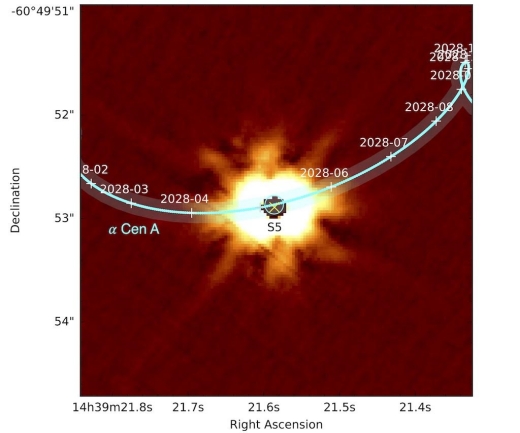
"The star Alpha Centauri A, you know, the one which is 4 light years from Earth and maybe has planets, will be coming in front of a distant red giant star. It will act as a microlens, flaring the red giant into an Einstein ring."

"Sounds pretty. What's the red star?

"It's called 2MASS 14392160-6049528 but they seem to have named it S5 for short. It's roughly 10,000 light years away."

"And the possible Centauri planets?"

"Microlensing again. Planetary effects will be discernable as fluctuations in the extended image of the red giant."


An enlargement of the conjunction that will occurs in 2028, with the Einstein ring
caused by Alpha Cen A represented in cyan color. Credit: Pierre Kervella.

There are currently no reported planets around Alpha Centauri A. There is a suspected planet in tight orbit around its close binary partner, Alpha Centauri B.

Meanwhile there is better evidence of a planet around the more distant (from A/B) Alpha Centauri C, better known as Proxima - the nearest extrasolar star to Earth.

The Proxima planet, "lies in the habitable zone of Proxima Centauri, but it is possible that the planet is tidally locked to the star," It's a possible target for the super-laser-powered  Breakthrough Starshot initiative to send interstellar nanocraft to Alpha Centauri within the next fifty years.

---

Something no-one discussed. If we wanted (for some reason) to communicate with the red giant star S5, the Centauri microlensing event would be the perfect way to do it via communications amplification through gravitational lensing.

The only problem is that we'd need to fire up the lasers in 2019 - and they won't be ready.

---

Hat tip Centauri Dreams.

Wednesday, April 13, 2016

Going interstellar

I'm interested in the Internet blogosphere reaction to Yuri Milner's $100 million investment into the new starwisp.

Incidentally, Milner is quoted at having £3 billion in his bank account, so his proposed investment is 3.3% of his wealth. It's not however coming out in one lump sum - I hear talk of a 10 or 20 year programme of research.

Let's be optimistic and say a decade. Then Milner is spending 0.33% of his wealth per year on this project. Given his likely return on assets invested, this is a rounding error in his global interest rate.

Luboš Motl focuses, as expected, on the physics of the thing. He writes,
"We want to accelerate a few grams to c/5. The kinetic energy may still be "barely" computed by the non-relativistic formula and it is E = mc2/50. If m were 5 grams, we get 9 trillion joules."
Now, one kiloton of TNT (a small nuke) is equivalent to 4 trillion joules, so when this interstellar probe hits the atmosphere of a planet around Alpha Centauri, it's going to look to the alien inhabitants like someone detonated a 2 kt nuke in their atmosphere. Did anyone mention we're going to send a swarm of these things?

This kind of first strike is a bit extreme, even for me ... .

Steve Sailer is reminded of the famous Larry Niven and Jerry Pournelle book, "The Mote in God's Eye", and sees a parallel with immigration policy:
"A half-dozen centuries in the future, humanity has stumbled into a fortuitous discovery of a faster than light interstellar travel technology and spreads out across the habitable planets of the galaxy, never encountering any other intelligent life.

"Then a slower-than-light spacecraft driven by a light sail arrives from an unexplored solar system.

"Our Space Navy goes to visit the planet that sent it and discovers a civilization that seems as advanced as ours, except they don’t have our faster-than-light travel technology, so they are stuck in their solar system, except for sending out the occasional expensive probe. We can visit them, but they can’t visit us.

"Their extremely gracious ambassadors greet our ambassadors in a most affable manner.

"The book then turns into an ecological detective story as a few suspicious Earthlings try to unravel the complex story of the Moties’ nature before diplomacy gets too far advanced to put the brakes on proposals such as sharing the FTL drive with the aliens in the name of interstellar harmony and goodwill. We wouldn’t want to be seen as speciesist, now would we?"
Centauri Dreams wonders about the project itself, the timescales and whether it would work. No-one seems to have seen the engineering plans for the interstellar device, but with accelerations estimated in the region of 20,000-60,000g you can forget anything with a framed structure. The ultrathin sail will be the entire device, embedding sensors, communications and control.
"Writing for The Atlantic, Ross Andersen describes the sail this way in Inside a Billionaire’s New Interstellar Mission:

"Picture a thin disc about the size of a round picnic tabletop. It would have miniaturized electronics onboard, including a power source, cameras, photon thrusters for navigation, and a laser for communication. Some of this kit would be bundled into the disc’s center, and some would be distributed through the rest of the sail. But it would all be a single unit: If you saw it streaking by, it would look like a flat, round sheet of reflective material.

"We’ve also got a problem in that concept, because Jim Benford has pointed out that a flat sail is not a good ‘beam-rider’ — we’ll likely have to look at the kind of curved sail designs both Jim and brother Gregory Benford have studied in lab work at the Jet Propulsion Laboratory. But get a sail under that beam successfully and it reaches Pluto the day after launch, as Andersen notes. Another 20 years and it’s streaking through the Alpha Centauri system."
It's easy to poke holes in the mission concept as we currently understand it:
  • The device can't be slowed so dwell-time on target is under a second
  • For similar sums we could image exoplanets with near-Earth space telescopes
  • Future progress might obsolete the probes before they even arrived.
Better to let the study programme think creatively about what you could actually do better with a relativistic flyby.

---

Most optimistic timeline:

2016: R&D project starts
2026: Infrastructure build project starts (10 years)
2036: Launch (and 20 year coast to Alpha Centauri)
2060: Results received back here on Earth.

We get the results in 44 years, when I will be 109 years old. Hmm.

Friday, October 16, 2015

... or a cluster of Culture Orbitals?


Suppose there was a star 1,480 light years away which was orbited by a vast cluster of alien artefacts  - artefacts something like Iain M. Banks' Culture Orbitals.

And suppose the Kepler space telescope, currently surveying 145,000 stars for exoplanets, happened to observe it. What exactly would it see?

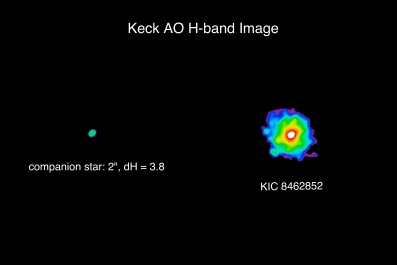
We actually know the answer to this question: something very like KIC 8462852.
"KIC 8462852 has been causing ripples since 2011 because while we do seem to be seeing something passing between its light and us, that something is not a planet but a large number of objects in motion around the star. Some of the dips in starlight are extremely deep (up to 22 percent), and they are not periodic.

Here’s how Phil Plait describes the situation:

…it turns out there are lots of these dips in the star’s light. Hundreds. And they don’t seem to be periodic at all. They have odd shapes to them, too. A planet blocking a star’s light will have a generally symmetric dip; the light fades a little, remains steady at that level, then goes back up later. The dip at 800 days in the KIC 8462852 data doesn’t do that; it drops slowly, then rises more rapidly. Another one at 1,500 days has a series of blips up and down inside the main dips. There’s also an apparent change in brightness that seems to go up and down roughly every 20 days for weeks, then disappears completely. It’s likely just random transits, but still. It’s bizarre.

A ragged young debris disk would be the natural conclusion, but arguing against this is the fact that we don’t see the infrared excess that a dusty disk would create."  ...

Is the companion star transiting and disrupting a comet cloud?

We’ve often discussed cometary disruptions in these pages, speculating on what the passage of a nearby star might do to comets in the Oort Cloud. As per the images above, it’s a natural speculation that the anomalies of KIC 8462852 are the result of a similar scenario.
...
The paper, as we saw yesterday, explores other hypotheses but settles on comet activity as the likeliest, given the data we currently have. The kind of huge collision between planets that would produce this signature would also be rich in infrared because of the sheer amount of dust involved, and we don’t see that. You can see why all this would catch the eye of Jason Wright (Penn State), who studies SETI of the Dysonian kind, involving large structures observed from Earth. Because if we’re looking at cometary chunks, some of these are extraordinarily large.
See the Centauri Dreams post for full details. It's worth noting that if we ever get around to building large structures in orbit around our own sun, alien observers thousands of light years away will be able to see them.

Update: Centauri Dreams has yet another post on this object today.

---

October 27th 2015: Here's an updated view from Oxford University.

---

Bruce Schneier points to the following article:
"The three men who showed up at Michael Usry’s door last December were unfailingly polite. They told him they were cops investigating a hit-and-run that had occurred a few blocks away, near New Orleans City Park, and they invited Usry to accompany them to a police station so he could answer some questions. Certain that he hadn’t committed any crime, the 36-year-old filmmaker agreed to make the trip.

The situation got weird in the car. As they drove, the cops prodded Usry for details of a 1998 trip he’d taken to Rexburg, Idaho, where two of his sisters later attended college—a detail they’d gleaned by studying his Facebook page. “They were like, ‘We know high school kids do some crazy things—were you drinking? Did you meet anybody?’” Usry recalls. The grilling continued downtown until one of the three men—an FBI agent—told Usry he wanted to swab the inside of Usry’s cheek but wouldn’t explain his reason for doing so, though he emphasized that their warrant meant Usry could not refuse.

The bewildered Usry soon learned that he was a suspect in the 1996 murder of an Idaho Falls teenager named Angie Dodge. Though a man had been convicted of that crime after giving an iffy confession, his DNA didn’t match what was found at the crime scene. Detectives had focused on Usry after running a familial DNA search, a technique that allows investigators to identify suspects who don’t have DNA in a law enforcement database but whose close relatives have had their genetic profiles cataloged. In Usry’s case the crime scene DNA bore numerous similarities to that of Usry’s father, who years earlier had donated a DNA sample to a genealogy project through his Mormon church in Mississippi. That project’s database was later purchased by Ancestry, which made it publicly searchable—a decision that didn’t take into account the possibility that cops might someday use it to hunt for genetic leads.

Usry, whose story was first reported in The New Orleans Advocate, was finally cleared after a nerve-racking 33-day wait—the DNA extracted from his cheek cells didn’t match that of Dodge’s killer, whom detectives still seek. But the fact that he fell under suspicion in the first place is the latest sign that it’s time to set ground rules for familial DNA searching, before misuse of the imperfect technology starts ruining lives."
You can see why the police might have wanted to do this: the article goes on to state, disparagingly,
 " In the United Kingdom, a 2014 study found that just 17 percent of familial DNA searches “resulted in the identification of a relative of the true offender.”
but in the absence of other evidence, 17% is a lot better than zero for most detectives.

I suspect it would be easy to do much the same with 23andMe, even without invoking warrants and secret agreements with law enforcement. As with most things genetic, this issue is only going to get bigger.

Friday, September 11, 2015

The solar system from a distance of 45 light years

From Centauri Dreams.

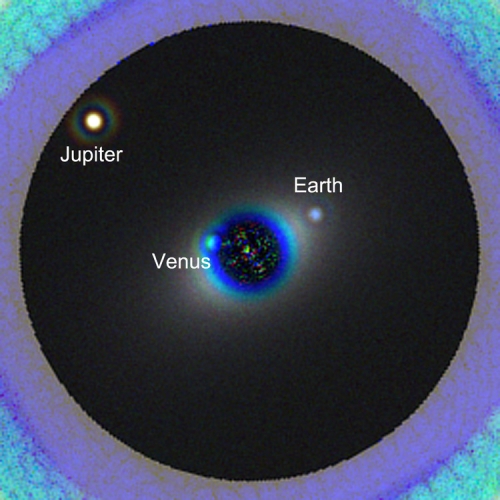
Suppose we cloned the Earth and placed it around a star 45 light years away. And supposing the inhabitants of that cloned Earth launched the proposed NASA High Definition Space Telescope and pointed it at the solar system. What would they see?

This.


A simulated image of a solar system twin as seen with the proposed High Definition Space Telescope (HDST). The star and its planetary system as they would be seen from a distance of 45 light years. (The central star is occluded by a screen)

I used to think we needed exotic technologies such as gravitational lensing telescopes to image extra-solar planets. Apparently not so.

Centauri Dreams is an excellent site, by the way.