Showing posts with label Thriller. Show all posts

Wednesday, January 24, 2018

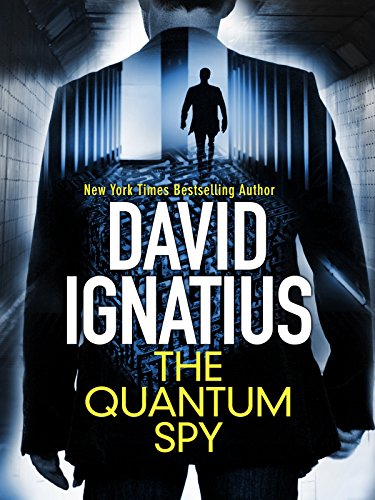
"The Quantum Spy" - David Ignatius

Amazon link

I first heard about this techno-thriller via Peter Woit's website, 'Not Even Wrong'.
"I don’t often read spy thrillers, but just finished one, The Quantum Spy, by David Ignatius. Ignatius is a well-known journalist at the Washington Post, specializing in international affairs and the intelligence community (and known to some as The Mainstream Media’s Chief Apologist for CIA Crimes). While the book is fiction, it’s also clearly closely based on reality. Sometimes writing this sort of “fiction” allows an author to provide their take on aspects of current events that confidentiality prevents them from writing about as “non-fiction”.  ...

The topic of The Quantum Spy is Chinese spying on American research in quantum computing. This is very much in the news these days: after finishing the book I picked up today’s paper to read about the arrest of a Chinese-American ex-CIA agent on charges of being a mole spying for the Chinese (a central theme of the Ignatius novel is the divided loyalties of a Chinese-American CIA agent). ...

Ignatius clearly spent quite a bit of time talking to those very knowledgeable about this. One part of his story is about a company closely based on D-Wave, and he explains that the technology they have is different than the true quantum computer concept that is being pursued by others. Majorana fermions and topologically protected states make an appearance in another part of the story. One character’s reading material to orient himself is Scott Aaronson’s Quantum Computing Since Democritus.

The novel portrays the US and Chinese governments as highly concerned and competitive about quantum computing technology and its security implications. I’d always naively assumed that classified research on quantum computing was carried on just by groups within the NSA or other security agencies, but Ignatius tells a different story. According to him, what happens is that groups performing unclassified government-funded quantum computing research in the open can find themselves forced to “go dark”, with their work going forward classified and no longer publicly accessible. His plot revolves around Chinese efforts to get information about such research. ..."
But is the novel any good? Peter Woit rather piously explains:
"I’m the wrong person to ask, the few spy stories I’ve read have been because of an interest in some non-spy thriller aspect of the story. The spy thriller aspect of this one didn’t seem particularly compelling, but what do I know."
But on Amazon, the title of the thriller is given as: "The Quantum Spy: An unputdownable technothriller that will keep you gripped".

Having devoured this on my Kindle, I can confirm that it's an edge-of-the-seat page-turner.

---

Characters good: check. Plot races along: check. Not too much political correctness: check.

I thought the conflicting loyalties thing of Chinese-Americans was sympathetically done. It's the perennial question.  Substitute 'ethnic kin' for 'friend'.

In the novel, the 'D-wave'-like machine seems to accomplish wonders in facial recognition over a vast CCTV dataset. This seems completely unrealistic: I think with some image-pre-processing (eigenfaces) this task would be fast-enough on conventional computers, and I think it's beyond the state of the art for current quantum computers. But what do I know?

The novel only really disappoints in its saccharine finale: all must have prizes.

Very American.

---

My review of  'Quantum Computing Since Democritus' - Scott Aaronson.

Monday, May 23, 2016

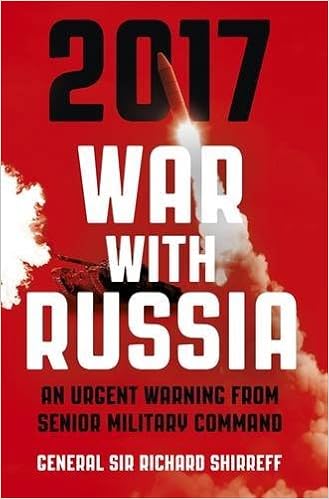
2017 War With Russia: An urgent warning from senior military command

Amazon link

Like David Cameron, I was once in my school's Combined Cadet Force. I have read books on military affairs and profess an interest. I wonder how General Sir Richard Shirreff would rate my abilities to come up with an effective British Army battle plan from my armchair?

I guess the literary world had a similar expectation as regards the bluff man-of-action's first novel. And they have not been disappointed: our troops are battle-hardened, hawk-faced, athletic-looking types who get up at 4 am to run ten miles before hitting their offices; the Russian President is pale with bloodless face, oval eyes cold and menacing, and with a voice 'slightly high-pitched and nasal'.

The American President, one year from time of writing, is a curious Clinton-Trump hybrid, the female CEO. Here is how one of the minor characters, aide Bear sees her:
"Standing up with all the others as she entered, Bear felt an almost physical sense of the power she gave off. The graver this crisis became, the more assured became her leadership.

"I know how lonely command in war can be, he thought. But, dammit, she’s just thriving on it. What was the saying? Cometh the hour, cometh the man? This time it was firmly cometh the woman ... and what a woman.

"With the President seated, MacWhite, the tall, lean former Special Forces general, who looked as if he’d be more at home riding the range somewhere out West than inside the Washington beltway, led the President through the agenda."
Enough: put aside the hyper-stereotyped characters, the pedestrian plotting and the over-acronymed prose. We are not reading the new Tom Clancy; we want to know what's wrong with our defence posture.

In this novelised scenario, the Russians, suffering from empire-withdrawal-syndrome and a realisation that their new borders have left large populations of co-ethnics in the Ukraine, the Baltic States and East Poland, decide to restore their kinfolk to the embrace of Mother Russia.

An invasion of East Ukraine delivers a land-route to the Crimea, followed by an assault on NATO member-states Estonia, Latvia and Lithuania. NATO is paralysed by the inability of its 28 members to agree on anything, the bureaucratic pacifism of the Germans and the openly pro-Russian sympathies of Hungary and Greece. In any event, it has no real military capacity anyway - years of underfunding and neglect have totally hollowed it out.

It's almost game-over, but the Russians make mistakes. They destroy British and German ships anchored in a Latvian port and kill forward-based American soldiers in the battle.

The rest of the story recounts events as America mans up ('that new president'), the Europeans find a new unity and the NATO military come up with a cunning plan. And thankfully, the romantic storyline is kept to a minimum and there is no sex.

Does the plot work as presented? Not a chance: unacceptable risks of nuclear armageddon, way too much reliance on cyber-stuff (which would almost certainly go wrong) while the Russians are portrayed as far too unimaginative.

I suspect that General Shirreff doesn't care much about this criticism either. He really isn't here to write a crafted thriller. His true point is that Europe has essentially blundered into disarmed pacifism and this has to be fixed - so what of that argument?

I don't doubt for a second the detailed picture he paints of European political-elite pacifism, Russia-accommodationism and generalised Euro-incompetence. His picture of the Russian leadership looked a bit too paranoid, emotional and cold-war-ish .. but a little reading around the subject seemed to support his view of the dangerous instability of President Putin's worldview and style of leadership. His view of Russian war aims - not to 'take Europe' but to expand Russia to its 'natural frontiers' - seemed highly plausible too.

Should we risk the nuclear destruction of Western Europe and perhaps American cities to stop this? The novel says 'yes' but in real life the political class would say no. And unless we believe that the current borders in Europe are inviolable until the heat-death of the universe, then it's unlikely that we'll risk armaggeddon for adjustments which, in the end, many will think not without some natural foundation. If the Russians play their cards right.

The critical learning experience is on page 285. Kydd, the new Chief of Defence Staff, is briefing the post-Cameron Prime Minister, Oliver Little, on the relationship between strong conventional forces and the strategic nuclear deterrent:
"But surely, even if we're outmatched conventionally, we've still got Trident?"

"OK, Prime Minister,' sighed Kydd, let me take you through this from first principles. You ask what the Russians will do and I'll repeat. They'll do what they've done at the end of every snap exercise they've called recently. Launch an Iskander tactical nuke as what they call a de-escalatory measure to stop us dead in our tracks and stop us counter-attacking?"

"Hardly sounds to me like de-escalation. Surely them firing a nuke will lead to all-out nuclear war?" asked Little.

"That's precisely the point, Prime Minister. It's counter-intuitive . . . the President knows that there's no way you are going to risk the destruction of human life in the UK by launching a Trident at Russia in response to his tactical nuke when, by so doing, you can almost guarantee a retaliatory strike from an intercontinental ballistic missile in return."

"So, how should we respond? We just have to take it on the chin?"

"Sadly, with the state of our Armed Forces as they are today .. Yes. That would be my advice. Plenty of people told the last government that to be effective, deterrence needs to be matched at every level, conventional and nuclear. As I've just explained, you can't weaken conventional forces and expect Trident alone to protect you. Conversely, if we did have strong conventional forces, but no Trident, they could easily defeat us by threatening to nuke us and we would have no way of deterring them."
This argument is exactly right, but contra the book, NATO is not going into a hot war with Russia over the latter's border accommodations. The trouble is, in the present state of disarray, NATO couldn't get into a hot war with any prepared state over anything; not a good place to be when negotiating with potential adversaries such as Russia and China.

Absent a clear and present danger, none of these Cassandra-like warnings are going to make the slightest difference. So expect more dangerous brinkmanship in the years to come.

--

The Iskander ballistic missile can carry a nuclear warhead up to 50 kilotons. Warheads with one third of that yield were dropped on two Japanese cities in 1945.