Showing posts with label David Schweickart. Show all posts

Monday, October 30, 2017

Marx: "Right about capitalism, wrong about socialism"

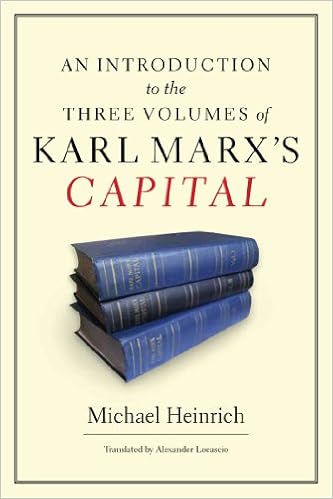
I've been engaged in an exploration of the Marxian analysis of capitalism as a mode of production, how any successor society might emerge and what it might be like. I've read the first two volumes of Capital (bulky, circuitous and sprawling though they are) and also two excellent introductions from Michael Heinrich and Duncan Foley.

Amazon link .. and PDF

Amazon link .. and PDF

I feel quite sufficiently educated. I also concur with the Russian epigram quoted above: Marx was right about capitalism, but wrong about socialism.

But .. before we get too judgemental .. it's worth bearing in mind that Marx said very little about socialism. As Duncan Foley observes in his "Socialist alternatives to capitalism I: Marx to Hayek",
"In general Marx responded to questions about his views on the organization of socialist society by saying that these questions could be solved only by those who actually confronted them historically, that is, presumably, by the revolutionary movements that would establish socialist institutions. This is a prudent and in some ways sensible stance, but frustrating to a posterity that has made notably little progress on these problems."
Foley continues:
"Really existing socialism

"History, of course, was not waiting for political economy to sort out the issue of socialism. The early decades of the twentieth century also saw the emergence of a Soviet Union dedicated, rhetorically at least, to the building of a socialist economy, out of the wreckage of the Russian Empire.

The Bolsheviks confronted two practical political economic problems in the 1920s. Perhaps the lesser was the organization of day-to-day production and distribution. The greater was what later came to be called the problem of “development”: how to transform the backward, largely traditional agricultural economy of the sprawling Russian empire into a viable industrialized power.

The second task was all the more pressing because the denouement of the First World War on the Eastern Front had revealed the military and political vulnerability of a backward Russian economy in a world increasingly populated by industrialized capitalist powers.

The Soviets, whose leadership contained some remarkably talented and thoughtful figures, such as Nikolai Bukharin, arrived at a practical solution to the problem of organization of day-to-day production fairly soon after consolidating political power through prevailing in the Civil War with the Whites. This took the form of the “New Economic Policy” (NEP), which allowed, and indeed encouraged, capitalist commodity production in many sectors of the economy, including food production.

The NEP structurally created a “mixed” economy in which a large private sector co-existed with state-sponsored industrial enterprises. (The NEP is recognizably a precursor of Deng Xiaoping’s “socialist market economy” which was the framework for Chinese economic growth in recent years.)

The NEP worked well to stabilize the Soviet economy after the Civil War; under this regime output and incomes recovered significantly from the low levels of the Civil War period. Many Bolsheviks, including Lenin, were willing to accept the NEP framework as an indefinitely prolonged phase of building socialism, as long as the state held the “commanding heights” of the economy through control of energy, transportation, heavy industry, and finance.

Two connected and predictable developments undermined the NEP. First, as we would expect, the privatized commodity-producing sector of the economy exemplified some fundamental laws in generating large disparities in income and wealth. The appearance of a wealthy proto-bourgeoisie in the midst of a society governed by a one-party dictatorship committed to socialist goals threatened the narrow political base of Bolshevik power.

Second, the NEP was structurally favorable to the agricultural sector, particularly to the market-oriented strata of the peasants. The NEP thus resulted in a relatively “balanced” path of economic growth between industry and agriculture. Not surprisingly the prices of food and other agricultural products tended to rise relative to industrially produced goods, limiting the degree to which surplus production in agriculture could be mobilized for rapid industrial investment.

Despite Bukharin’s determination to “ride to socialism behind the peasant’s nag”, NEP policies proved explosively unstable politically, and collapsed under efforts to mobilize agricultural surpluses by military force which ultimately led to collectivization, central planning, and the bloody political purges of the nineteen-thirties.

Stalin rather than Bukharin balanced at the top of the “greasy pole” of Communist Party politics apparently more by ruthless and opportunistic manipulation of coalition politics than through consolidating a stable political base of power.

Just how the Soviet economy did operate in the 1930s, and in particular what was the practical mixture of bottom-up and top-down dynamics in this period remains obscure. A relatively small central planning bureaucracy had in theory enormous economic power to implement a policy of extremely rapid industrialization centered on the expansion of heavy industry. It seems unlikely that the fairly coarse-grained plans produced could be the whole story of Soviet economic life under this regime.

The management of new industrial armies recruited to new urban centers involved a great deal of decentralized local improvisation and experimentation. Since the centralized planning bureaucracy did not actually control many resources itself, local managers facing shortages of inputs and surpluses of outputs improvised informal market-like arrangements with each other. Despite the wishful thinking of market-fundamentalists, capitalist economies in periods of extremely rapid industrialization have often strayed significantly from the orthodoxies of profit-maximization given market prices, making it difficult to draw hard analytical lines by which to characterize the Soviet experiment.

While the Soviets were engaged in their furious (if in the very long run curiously futile) attempt to change the world, western European philosophers continued to interpret it. ... "
In his follow-up paper, "Socialist alternatives to capitalism II: Vienna to Santa Fe", Foley contemplates the great complexity of the global capitalist economy and speculates how any subsequent mode of production could do better as regards the difficult issues of economic information retrieval, resource allocation and optimality of outcomes. He contrasts top-down and bottom-up approaches:
"The last half of the twentieth century saw an upsurge in interest in bottom-up self-organized systems, such as ant-hills and bees’ nests, bird flocks, computer networks, unsupervised learning algorithms such as neural nets, the capitalist economy, possibly the human brain and a host of other similar examples.

Several features of these bottom-up systems draw the attention of systems thinkers. For one thing, compared to top-down optimal control systems, bottom-up self-organized systems tend to be more “resilient” or “robust”. Self organized systems often (though not invariably) continue to function (possibly in a degraded mode) despite the disruption or even destruction of important subsystems, and in important cases can recover from such damage spontaneously.

Top-down systems can be built with considerably “redundancy”, but tend to be more vulnerable to disruption of key elements, particularly the feedbacks that implement their optimal control properties.

Another intriguing property of bottom-up self-organized systems is that although they are not designed to achieve optimal performance, they often do perform surprisingly well. Ant-hills, for example, are remarkably efficient in locating and exploiting food sources. Bottom-up self-organized systems also exhibit a high degree of adaptability to new situations. Optimal control systems tend to be optimized for some particular context in which they are designed to operate. Self-organized systems can adapt to a wide range of environmental changes (though there are typically limits to the magnitude of shocks any such system can survive).

Capitalism itself is a good example of all these features of spontaneously organized bottom-up systems: historically capitalist institutions tend to reproduce themselves even after the destruction wrought by wars, revolutions and financial meltdowns; capitalist allocation of resources approximates efficiency to some degree; and capitalism has proven to be highly adaptable in the face of massive environmental changes (many of which, such as world population growth and technical innovations, arise from the dynamics of capital accumulation itself).

The vision of the economy as a complex system gives rise to a “bottom-up” understanding of how commodity production is organized, a la Hayek. It also suggests a parallel bottom-up vision of socialism as arising from the spontaneous organization of production through some framework of institutions different from private appropriation and exchange of products.

This bottom-up vision of social organization resonates with important political currents of the late twentieth century. The “New Left” movements of the nineteen-sixties rebelled against the centralizing and regimenting tendencies of “Old Left” socialism and communism by calling for decentralization, participation, and the political primacy of individual freedom and expression.

The Left, such as it is in the contemporary world of globalized capitalism, is much more attracted to the vision of spontaneous political expression than to the unpleasant chore of organizing political institutions.

This enthusiasm for spontaneity without central coordination or direction has attached different parts of the Left to various economic experiments, plans, philosophies, and models. Some of these, such as micro-credit institutions, amount to very minor modifications of the capitalist commodity system (or could indeed be regarded as systematic extensions of the logic of the commodity system).

One idea which flowers perennially on the Left as an alternative to capitalism is workers’ control. ..."
Foley then looks in detail at the historical experience with workers' control, particularly in the former Yugoslavia, and comes to some very pessimistic conclusions.
"When worker-controlled enterprises become very successful, the resulting hierarchy of workers begins to resemble that of capitalist firms. When the contradictions between the juridical form of organization of the enterprise and the substantive claims of different strata of workers to the surplus revenues become acute, it is common for worker-controlled enterprises to privatize themselves spontaneously, converting into traditional capitalist firms.

A second point is that despite the demonstrated capability of worker-controlled firms to compete successfully with capitalist firms under particular circumstances, there has been no tendency for worker controlled enterprises to grow spontaneously to crowd out capitalist firms in any economy: workers’ control remains a relatively small sector even in societies where tradition and practice favor this form of productive organization."
So no easy answers then. However, Foley's essay would not be complete without at least an attempt to provide an existence proof that a mode of production transcending capitalism is at least possible (- all emphasis in the extract below has been added).
"To bring this talk to an end, I will indulge in the luxury of fantasizing about some alternatives to capitalist-commodity production.

There are some ground rules for this exercise. This is speculation about changing what Marx calls social relations of production. In thinking about alternatives in this (very broad) range of issues I am not required to consider every social problem (foreign policy, religion, education, political institutions, mental illness, drug abuse, culture).

In general, the basic supposition is that life goes on as usual. People get up, go to work or school, form families, reproduce, age, consume, and so forth. There are natural disasters and domestic and foreign conflicts, regional divisions, and the like. But it is not fair for me to wish away critical aspects of the problem of organizing a complex division of labor to sustain the type of technologically sophisticated society post-industrial capitalism has created, with relatively high levels of consumption and economic security.

For example, it would not be very interesting for me to posit a system of universal abundance of use-values created by some imaginary robot workforce, and then to spin a vision of the resulting glittering possibilities for human social life.

It would also not be of much interest for me to ignore the problem of a “transition” by assuming a complete self-contained and self-reproducing alternative system. A socialist fantasy alternative has to include the notion of a “mixed” economy, in which commodity-capitalist social relations continue to prevail in some sectors, or regions. The socialist sector of the economy has to include methods for dealing with a capitalist-commodity other.

Furthermore, I am most interested in ideas that would allow a socialist alternative to co-exist with (and in a larger sense compete with) capitalist-commodity social relations indefinitely. Thus it is not fair for me to assume some “revolutionary” transformation of the whole society (even with the dystopian backdrop of a looming or ongoing ecological crisis) to resolve basic problems of social relations.

It is equally uninteresting for me, however, to ignore the deep hostility of bourgeois ideology to radical alternatives to capitalist-commodity production. I am interested primarily in how ordinary, regular suburban/urban people who by and large have jobs, incomes, and more or less stable lives through the capitalist-commodity system might transform their social relations of production.

It is not going to be hard to criticize the particular fantasy I put forward. The main function of such exercises is to induce dialectic thinking by making concrete assumptions that can be knocked down.

On the other hand, it is not in the spirit of this kind of exercise to invoke “human nature” in one or another of its many incarnations as an objection; or to wish away through assertion the fact that capitalist-commodity production has many parallel unresolved contradictions.

It is not reasonable to insist, for example, that opportunistic behavior would be any less mixed with social and other-regarding behavior in a socialist fantasy than it is in capitalist commodity reality. In fact, it seems reasonable to suppose that a change in social relations could re-balance human behavior towards others at least at the margin.

It also seems reasonable to suppose that people are grown-up enough and aware enough of the facts of economic life to understand that at an aggregate level consumption depends on production, and that they are willing to accept social responsibility to work productively as a condition of consuming."
Don't hold your breath: gaming the system is rather pervasive in human affairs.
"Lifenet 

"So let us imagine an alternative set of social relations, which I will call “Lifenet” which can organize social production to meet at least some part of the spectrum of human needs outside capitalist-commodity institutions.

Lifenet production is organized through peer-production enterprises. People start or join existing peer-production initiatives without any direct material compensation. The output of these enterprises is made available freely to participants in the system through a Lifenet distribution system, just as open-source software is published freely through open source licenses.

One key point here is that users or consumers of Lifenet outputs agree not to re-sell them as commodities for money. The aim is to create an alternative system of production and distribution that can be effectively separated from capitalist-commodity production.

Participants in Lifenet enterprises have a Lifenet account maintained in a central Lifenet database. The Lifenet account records individual contributions to Lifenet enterprises, and also individual withdrawals of Lifenet products. Thus an individual who participated in a food production enterprise would have that participation recorded in her Lifenet account; if she received food or clothing or software from Lifenet distribution centers (perhaps something like food coops or farmers’ markets today) these withdrawals would also be recorded in the Lifenet account. (One can imagine something like a credit card system to maintain these accounts automatically.)

The purpose of the Lifenet account would not be to enforce an exact balance between individual contributions to the production system on the one hand and withdrawals through the distribution system on the other. It would, however, allow the system to monitor the balance of production and distribution as a whole, and to identify and discourage or prevent possible abusive over-drawing on distribution. (If some level of the individual accounts were publicly accessible, peer pressure could play a major role in this respect.)

The premise of the accounts is that Lifenet as a whole is solvent, and has products available for distribution. A Lifenet system is going to work only if the individuals participating and the system itself develop an ethos of thrift, prudence, and waste-aversion. Lifenet must prudently keep large reserves of products to secure its ability to respond to contingencies (natural disasters, local breakdowns of the system) flexibly and reliably. The participants in the system must use its resources sparingly and thriftily, both as producers and consumers. The idea of “enough” has to pervade the system from top to bottom.
He goes on but you can see (as in David Schweickart's account of a possible model for socialism which I wrote about), this is already sinking under its own implausibilities.

It is worth emphasising what derails all these models of socialism: the conflict between the interests of the larger economy vs. the interests of groups comprised of families and friends.

'Communist man' does not exist and  - short of substantial genomic engineering - never will: we are not ants. When this factory has to close and the workers relocate, or that sacrifice has to be made 'for the common good', then under capitalism - in the final analysis - coercion is applied.

Conflicts are intrinsic and unavoidable. Contemporary Marxist intellectuals always leave the room at this point, wringing their hands; the Bolsheviks were never so mealy-mouthed.

So if Professor Foley, a very smart economist, can do no better than this after a lifetime of study, I am more than ever convinced that capitalism will be superseded only when it has created sufficient cognitive-robotic automation to essentially displace the proletariat from production .. and thus end any further possibilities of capital accumulation.

Tuesday, May 16, 2017

And this is the best you could do?

Over the last thirty to forty years, capitalism leveraged the developing Internet and a rapidly-industrialising Far-East to reorganise itself on a thoroughly global basis. It's just a fading memory now, the latter part of the twentieth century with its industrially-based national capitalisms, first-world manufacturing and millions of production-workers in secure, well-paid and unionised jobs with prospects.

The advent of globalisation coincided with massive overproduction in manufacturing (cf the car industry, steel)  so that the smart money moved into finance. Bailed out in the aftermath of 2008, and with a dearth of profitable investment opportunities, the global elite continue to enjoy their luxuries while the masses stagnate .. and wonder where their lives are going.

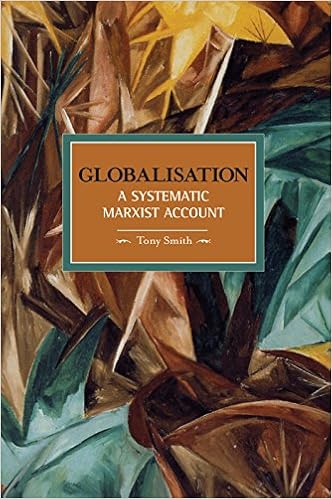
We all know something about globalisation and many of us want our politicians to fix it. Part one of Tony Smith's book reviews the leading proposals for reform.


Amazon link

---

As I mentioned in a previous post, I learned a lot from Tony Smith. Here is how he begins: the quotes below are taken from his chapter 8, "A Marxian Model of Socialist Globalisation".
"The various models of globalisation examined in part one are designed to ... provide a spur to reform existing institutions and practices.

  1. Proponents of the social state call for a renewed state commitment to social welfare and full employment. 

  2. Neoliberals advocate increased free trade and capital liberalisation, along with the dismantling of 'crony capitalism'. 

  3. Defenders of the catalytic state insist that public authorities must aggressively and comprehensively provide the necessary preconditions for a region's successful participation in the global economy. 

  4. Democratic-cosmopolitan theorists propose a global social charter guaranteeing the material preconditions for autonomy and substantive equality of opportunity."

Smith has little difficulty in establishing that all four schools of thought (since they accept the continuing existence of capitalism) fail to propose realistic measures which put a 'democratic' control of economic activity ahead of relentless global profit maximisation.

---

There is, of course, no end to the list of critics of capitalism. But the socialist alternatives are completely tarnished, are they not? By the disastrous experience of 'soviet communism'?

Smith tackles this issue with commendable rigour and honesty:
"A wide variety of objections have been proposed against Soviet-style bureaucratic central planning, widely taken to be either the only form of socialism or the form to which all others degenerate. I shall first list what I take to be the eight most significant criticisms of this framework. ..."
Smith's case against state bureaucratic-socialism is familiar:
"(i) Ownership of the means of production lies in the same hands as control of the coercive state apparatus. While this arrangement may not make the worst forms of totalitarianism inevitable, no one familiar with the historical record could deny its close association with authoritarian regimes.

(ii) Ownership by everyone in general is equivalent to a lack of ownership by anyone in particular. When private property rights to capital goods are not defined, no one has an incentive to use them efficiently.

(iii) Product quality tends to be poor. It is far easier for planners to formulate, implement, and monitor plans in quantitative than qualitative terms. The lack of an effective feedback mechanism connecting producers and users/consumers also leads to a neglect of product quality.

(iv) The informational burdens placed on bureaucratic central planning are now almost universally acknowledged to result in economic inefficiency. Central planners cannot appropriate adequate information regarding all potential inputs, all potential outputs, and all potential social wants and needs, when possible inputs, outputs, and wants and needs are all changing over time.

(v) If we take planners as 'principals' and managers of enterprises as their 'agents', centralised bureaucratic planning necessarily tends to generate severe principal/agent problems. Collective ownership leads managers to distort the information they pass on to central planners, underestimating the output their enterprises are capable of producing while overestimating the inputs required to produce any given level of output.

(vi) Authoritarian central planning is not able to develop successfully in areas where personal initiative and creative responses to unforeseen problems are important. Ordinary workers feel dehumanised and cynical, with pernicious economic effects.

(vii) State ownership of the means of production and centralised planning by a bureaucratic caste cannot match the technological dynamism of capitalism. In certain circumstances, bureaucratic central planning is able to attain considerable extensive growth, that is, growth resulting from the mobilisation of greater and greater inputs. And, in certain sectors where mass resources could be devoted and where success or failure was relatively easily measured (for example, space, military, heavy industry), significant accomplishments were in fact attained in the Soviet Union and elsewhere.

But this sort of social order is unable to generate intensive growth based on the more efficient use of inputs. The lack of incentives for managers to engage in risky activities like innovative behaviour is surely a significant factor. Managers appropriate few of the fruits of such activities when they are successful, and may suffer significant penalties when they are not.

(viii) A lack of hard budget constraints allows inefficient firms to continue in production and even expand over time.

Taking all of these factors into account, most observers conclude, it should have come as no surprise that bureaucratic central planning with state ownership of the means of production eventually generated vast material and spiritual stagnation."
It's surprising how many nostalgic communists and left social-democrats have still not taken these forceful (and thoroughly correct and legitimate) points on board.
"These considerations appear to justify the conclusion that there is simply no feasible alternative to capitalist markets with private ownership of the means of production. Market competition appears to provide private owners with incentives to ensure a level of efficiency and dynamism unattainable in either bureaucratic socialism or market socialism.

"One can accept this conclusion without having to deny that capitalism brings with it profound social costs. Financial crises, environmental crises, extreme levels of economic and political inequalities, and so on, are not likely to ever be entirely eliminated. But the harms they inflict can be lessened over time.

"If there is no feasible and normatively attractive alternative to a capitalist framework, lessening these harms must be our goal, and the failed project of collective ownership of the means of production must be unequivocally abandoned.

"In the present historical context, the burden of proof lies entirely with those who continue to call for the socialisation of the means of production [my emphasis]. Meeting this burden requires developing an alternative model of socialism capable of avoiding the fundamental structural flaws listed above."
---

You can imagine at this point how excited I was that such an incisive and profound thinker was about to unveil a model of post-capitalist economics and politics which might actually work!
"I shall adopt the model of economic democracy developed by David Schweickart, adding three modifications to make it a more adequate alternative form of globalisation."
David Schweickart's book is called "After Capitalism" (2002) by the way: I haven't read it.
"The model Schweickart defends has the following essential elements:

(i) Production and distribution are primarily undertaken within worker collectives. Workers are not hired as wage-labourers by capital; they instead join worker collectives as fellow members. There is a basic right to employment, with state enterprises providing jobs for those unable to find positions in collectives."
Hiring is the easy bit. Smith does a fair amount of hand-wringing later in the chapter when he considers how you might have to get around to actually firing workers.
"(ii) Managers of worker collectives are democratically accountable to those over whom they exercise authority, either through direct elections or through appointment by a workers' council that is itself directly elected. These enterprises are required to have representatives from a range of social movements (environmental groups, consumer groups, feminist groups, and so on) on their boards of directors, accountable to those movements."
Given the intellectual coherence and balanced judgement observed in radical social movements in the real world, I think you can guarantee that they would wreck any otherwise-viable economic enterprise. I might also mention the ample opportunities for rent-seeking and intimidation.
"(iii) Worker collectives produce public goods, inputs into the production process, or final consumption goods. Funds for the first are directly allocated to collectives by the relevant planning agencies (see below). The latter two categories of products are offered for sale in producer and consumer markets.

"In Schweickart's view, attempts to centrally plan all inputs and outputs in a top-down fashion are simply not feasible, at least not in a complex and dynamic economy. But it does not follow that capitalist market societies are the only acceptable forms of economic organisation.

It is possible to imagine a feasible and normatively attractive society combining markets with the socialisation of the means of production, that is, a society making use of producer and consumer markets after abolishing both capital markets and labour markets."
This doesn't pass the innovation test. Would Steve Jobs have got the funds he needed from the relevant 'planning agency'?
"(iv) Workers in enterprises are granted use rights to facilities and other means of production. But ultimate ownership rights remain with the local community. Workers cannot use their enterprise as a cash cow and then walk away; they have a legal duty to maintain the value of the community's investments. If sufficient depreciation funds cannot be appropriated from revenues to maintain the value of these investments, it is the responsibility of community banks to shut down an enterprise."
Shutting down a community enterprise? Yes, that's going to happen. To be fair, Smith himself worries about that but his Pollyanna assumptions that everyone would 'do the best thing' are unfortunately just so much pie-in-the-sky.
"Once depreciated funds have been deducted, the remainder of the revenues from public allocations or sales in consumer/producer markets (apart from the taxes to be considered below) are then distributed among the members of the collective according to formulae set by the democratically accountable management."
Incidentally, this focus on local communities is endearingly Victorian but hopelessly anachronistic. Modern globalised industry (which Smith agrees is a productivity advance that post-capitalism needs to build upon, not roll-back) increasingly organises both production and employee-allocation globally. Localised, and presumably small-scale communities are simply not the scale at which state-of-the-art enterprises operate at.
"(v) The origin of funds for new investment and public goods is a flat tax on the non-labour assets of all enterprises. In Schweickart's proposal, the rate of this tax is initially set by a democratically elected legislature, operating on the national level. This legislature also decides on the appropriate division of revenues between funding for national public goods and funds that are allocated to democratically elected regional and local legislative bodies.

"Each of these assemblies, in turn, must also decide upon the level of funding for public goods to be supplied in the relevant geographical area vis-à-vis the level of funds set aside for distribution to the level below it. These legislative bodies can also set aside a percentage of funds for investment in areas of pressing social needs."
It's touching that Smith thinks that allocations of resources in the billions of dollars are going to be somehow resistant to powerful lobbying, rent-seeking and every form of power-play. Plainly the human nature that Smith sees is not the same as most of us observe.
"(vi) After all decisions have been made regarding the general level of new investment and the order of social priorities, and after funds required for public goods on the national, regional, and local levels have been allocated, the remaining revenues are distributed to local communities on a per capita basis (at least this should be the presumption in the absence of compelling reasons to do otherwise, such as the need to temporarily favour historically disadvantaged regions).

"Community banks would then undertake the actual allocation of new investment funds to worker collectives. The boards of directors of these banks would include representatives of a broad range of social groups affected by the banks' decisions. New enterprises would be formed, and existing ones expanded, through allocations by community banks rather than private capital markets."
Still this idea that 'local communities' are the essential unit of future social organisation. Leading edge corporations today operate globally and have to raise resources on global financial markets. Any socialist alternative is going to have to recognise that global is not simply the additive sum of hundreds or thousands of local community banks.
"(vii) When allocating investment funds for new worker collectives and the expansion of existing ones, community banks must take three main questions into account. Is there likely to be sufficient demand for the output of the given enterprise for it to maintain the value of the community's investment and provide adequate income for its members? Will the investment provide stable employment? And is the investment consistent with the set of social priorities democratically affirmed on the national, regional and local levels?

"Extensive external financial and social audits can be regularly imposed on all enterprises and community banks to assess their performances in terms of these criteria. These independent social audits are a crucial component of the socialist version of the principle of transparency, institutionalising a level of accountability and transparency far beyond the limited neoliberal version of the principle.

"Community banks can then be ranked on the basis of the results of these audits. The level of income of the staff of a particular bank, and the amount of funds allocated to this bank for distribution in the future, are determined by the bank's place in this ranking."
I think we're looking at an impenetrable veto-network here. How many crucial innovations were funded by capitalists taking a punt? There will be precious few punts in the above arrangements.
"(viii) In Schweickart's model, there are no markets for capital assets, and so there will be no capital flight in the form of cross-border investments in capital assets. There will also be little foreign direct investment, since worker collectives are unlikely to outsource their own jobs, and community banks are assessed according to the extent they create employment in their own communities. But there will still be trade across borders.

"For a period of time, this may include trade with regions that have not institutionalised a version of economic democracy. In such circumstances, regions committed to socialist globalisation should follow the principle of fair trade rather than 'free' trade. To ensure that this occurs, Schweickart calls for a 'social tariff'." If oppressive labour practices hold down wage levels in a given region, the prices of imports from that region will be raised to what they would have been had worker income been comparable to the level prevailing in the importing country.

"A social tariff will also be imposed to compensate for a lack of adequate spending on the environment, worker health and safety, or social welfare in the exporting nation. The revenues collected by this tariff will then be distributed to the groups in the exporting country with the best record of effectively implementing anti-poverty programmes, whether or not they are agencies of the government."
A touching faith in (chronically ineffectual) do-gooding organisations and a complete lack of insight into the intractable developmental issues in the third world, particularly sub-Saharan Africa.
"I believe that three additions to this framework should be made:

"(ix) Schweickart does not investigate the monetary dimension of international trade in his model. I believe that the proposals made by Paul Davidson discussed in the last chapter are incompatible with capitalist social relations, but quite feasible if socialist production relations are established. In the latter set of circumstances, it would be possible to have something like Davidson's International Monetary Clearing Units serve as the sole form of world money. It would also be feasible to establish a set of rules that ensure that excessive trade imbalances do not persist, and that the burdens of adjusting to the imbalances that do arise are not disproportionately imposed on the most vulnerable regions of the global economy.

"(x) David Held's proposals for democratic-cosmopolitan law are also incompatible with capitalist social relations, as Chapter 4 established. But they, too, would be feasible if socialist production relations were in place. More specifically, a level of global governance above the state should be established. This would include a representative assembly selected more democratically than the United Nations, a global social charter, an international court of justice, and so on."
Ah yes, world government through a beefed-up UN. presumably with a world army to enforce its decisions. That will go down well. If only we could all get along, like a vast ant colony of genetically-related and sterile individuals.
"(xi) Schweickart holds that local communities within a nation ought to receive new investment funds on a per capita basis. In this manner, the material preconditions for both individual autonomy and flourishing communities are furthered. The force of this argument extends to the global level. There should be a democratically accountable socialist international planning agency to ensure the provision of global public goods. It must also guarantee that regions across the planet have access to new investment funds in direct proportion to their population in the absence of special considerations (such as the need to temporarily favour previously disadvantaged regions of the global economy).

"This is an extension of Held's proposal for global social investment funds, but with these funds now replacing, rather than merely 'complementing', global capital markets. In this manner, the systematic tendency to uneven development that afflicts all possible forms of capitalism could be abolished."
We know how popular transfer payments are.
"This model of economic democracy undoubtedly needs to be greatly supplemented and modified, and compared and contrasted with other approaches with which it shares 'family resemblances'. Once again, however, the goal here is not to provide a fully fleshed-out blueprint of the single best form of socialism. If the model is developed enough to show that a feasible and normatively attractive socialist alternative is possible in principle, that is sufficient."
So you can see how unimpressed I was by Tony Smith's model of post-capitalism. A fantasy of infeasible cooperation and general niceness. To be fair, Smith recognises that not everyone will be thinking altruistically of the greater good of all humanity all of the time, but his architecture kinda presupposes that.

It's what happens when you ignore biology and your model assumes a human nature which would indeed work if almost everyone was a sterile clone.

Still, even if the solution is utterly unconvincing, the analysis isn't bad. I listened to Professor Smith lecturing for an hour last night - to a rather sparsely-attended class at Iowa State - and I was impressed by what he had to say about current global economic difficulties.


He comes across as a slightly manic Bernie Sanders.

---

I am still waiting for the Martian Marxist, the social scientist who simple analyses without confected, activist rage.

I am also of the opinion that a post-capitalist future will emerge from a capitalism which has automated away almost all routine jobs. Call me a fan of AI and robotics.

What happens when the few remaining jobs are at a level of skill and intelligence denied to, say, 95% of the workforce? Those 95% will insist on a radical reordering of things, one which is probably incompatible with the reproduction of capitalist relations of production.

But it will be better.