Showing posts with label Arthur Koestler. Show all posts

Wednesday, March 15, 2017

AGI: some things are not serious

Through a circuitous route, I came upon Ben Goertzel who might be called the Godfather of Artificial General Intelligence (AGI).

Dr Ben Goertzel

I read his paper (PDF), "Are there Deep Reasons Underlying the Pathologies of Today’s Deep Learning Algorithms?" which makes some interesting 'nod the head as you go along' points, but stops before saying anything truly novel.


From Goertzel's 'Pathologies' paper 

I was sufficiently interested to look up Dr Goertzel - he has his Wikipedia entry - and a more flagrant piece of self-satisfaction I have seldom encountered.

I dug deeper, checking out his overview article on AGI, (Artificial General Intelligence: Concept, State of the Art, and Future Prospects), on the eponymous website's resources page. It's a type of article I'm very familiar with: intellectual polyfilla - entirely sparkle-free.

I have read papers which crackle with intelligence, where paradigms are overturned and you suddenly see a new and powerful way of looking at the world: AGI is not it. So I think it's fair to say that no-one has a clue what the architecture or design of an artificial general intelligence would look like, or a plausible narrative as to how to get there.

AGI-17 will be hosted in Melbourne

It doesn't stop them having beautiful conferences in nice places though.

---

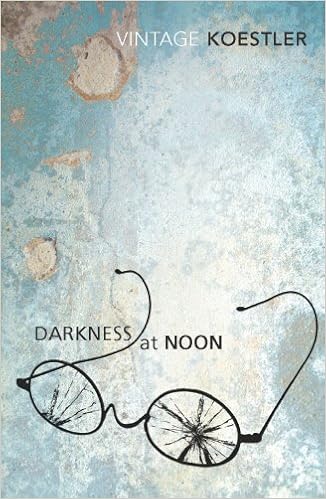
In something completely unrelated, I have been mentioning Arthur Koestler's famous and profound novel, 'Darkness at Noon' in recent posts. I recall reading one of his lesser novels, 'The Call-Girls'. Kirkus Reviews starts its description thus:
"The call girls are academic habitués of vacuous international conferences, one of which takes place here in an Alpine village. ... "
Some phenomena are always with us.

Sunday, March 12, 2017

Humanism and terror

From "Darkness at Noon".

No. 1 is Stalin; Rubashov is a combination of Bukharin, Trotsky and Radek.
Extract from the diary of N. S. Rubashov, on the fifth day of imprisonment

"... The ultimate truth is penultimately always a falsehood. He who will be proved right in the end appears to be wrong and harmful before it. But who will be proved right? It will only be known later. Meanwhile he is bound to act on credit and to sell his soul to the devil, in the hope of history's absolution.

"It is said that No. 1 has Machiavelli's Prince lying permanently by his bedside. So he should: since then, nothing really important has been said about the rules of political ethics. We were the first to replace the nineteenth century's liberal ethics of ‘fair play' by the revolutionary ethics of the twentieth century. In that also we were right: a revolution conducted according to the rules of cricket is an absurdity.

"Politics can be relatively fair in the breathing spaces of history, but at its critical turning points there is no other rule possible than the old one, that the end justifies the means. We introduced neo-Machiavellism into this country, the others, the counter-revolutionary dictatorships, have clumsily imitated it. We were neo-Machiavellians in the name of universal reason - that was our greatness, the others in the name of a national romanticism, that is their anachronism. That is why we will in the end be absolved by history, but not they.

"Yet for the moment we are thinking and acting on credit. As we have thrown overboard all conventions and rules of cricket-morality, our sole guiding principle is that of consequent logic. We are under the terrible compulsion to follow our thought down to its final consequence and to act in accordance to it. We are sailing without ballast, therefore each touch on the helm is a matter of life or death.

"A short time ago, our leading agriculturist, B., was shot with thirty of his collaborators because he maintained the opinion that nitrate artificial manure was superior to potash. No. 1 is all for potash; therefore B. and the thirty had to be liquidated as saboteurs.

"In a nationally centralized agriculture, the alternative of nitrate or potash is of enormous importance: it can decide the issue of the next war. If No. 1 was in the right, history will absolve him, and the execution of the thirty-one men will be a mere bagatelle. If he was wrong ...

"It is that alone that matters: who is objectively in the right.

"The cricket-moralists are agitated by quite another problem: whether B. was subjectively in good faith when he recommended nitrogen. If he was not, according to their ethics he should be shot, even if it should subsequently be shown that nitrogen would have been better after all. If he was in good faith, then he should be acquitted and allowed to continue making propaganda for nitrate, even if the country should be ruined by it.

"That is, of course, complete nonsense. For us the question of subjective good faith is of no interest. He who is in the wrong must pay; he who is in the right will be absolved. That is the law of historical credit; it was our law. History has taught us that often lies serve her better than the truth, for man is sluggish and has to be led through the desert for forty years before each step In his development. And he has to be driven through the desert with threats and promises, by imaginary terrors and imaginary consolations, so that he should not sit down prematurely to rest and divert himself by worshipping golden calves. "

"We have learnt history more thoroughly than the others. We differ from all others in our logical consistency. We know that virtue does not matter to history, and that crimes remain unpunished; but that every error had its consequences and revenges itself unto the seventh generation. Therefore we concentrated all our efforts on preventing error and destroying the very seeds of it.

"Never in history has so much power over the future of humanity been concentrated in so few hands as in our case. Each wrong idea we follow is a crime committed against future generations. Therefore we have to punish wrong ideas as others punish crimes: with death.

"We were held for madmen because we followed every thought down to its final consequence and acted accordingly. We were compared to the inquisition because, like them, we constantly felt in ourselves the whole weight of responsibility for the super-individual life to come. We resembled the great Inquisitors in that we persecuted the seeds of evil not only in men's deeds, but in their thoughts. We admitted no private sphere, not even inside a man's skull.

"We lived under the compulsion of working things out to their final conclusions. Our minds were so tensely charged that the slightest collision caused a mortal short-circuit. Thus we were fated to mutual destruction.

"I was one of those. I have thought and acted as I had to; I destroyed people whom I was fond of, and gave power to others I did not like. History put me where I stood; I have exhausted the credit which she accorded me; if I was right I have nothing to repent of; if wrong, I will pay.

"But how can the present decide what will be judged truth in the future? We are doing the work of prophets without their gift. We replaced vision by logical deduction; but although we all started from the same point of departure, we came to divergent results. Proof disproved proof, and finally we had to recur to faith - to axiomatic faith in the rightness of one's own reasoning. That is the crucial point.

"We have thrown all ballast overboard; only one anchor holds us: faith in one's self. Geometry is the purest realization of human reason; but Euclid's axioms cannot be proved. He who does not believe in them sees the whole building crash.

"No. 1 has faith in himself, tough, slow, sullen and unshakable. He has the most solid anchor-chain of all. Mine has worn thin in the last few years. ... "The fact is: I no longer believe in my infallibility. That is why I am lost."
This argument is not fiction. It was exactly the worldview of the Communist Party leadership. Gramsci, channelling Machiavelli, argued that the Party was the Modern Prince.

---

Why this argument? Why now?

1. Ideological Stalinism has made an unlamented departure, but as long as there are losers in society there will be ideological leftists with a vision, a strategy and a lack of scruples.

2. Rubashov describes ideologically-driven revolutionary change in general, not limited to Stalinism: "We introduced neo-Machiavellism into this country, the others, the counter-revolutionary dictatorships, have clumsily imitated it."

Radical Islam was not on the radar in 1940 but fits all the technical criteria of totalitarianism.

3. And finally, as a matter of practicality, how could you bring about decisive transformational change without a philosophy like this?

Friday, March 10, 2017

Darkness at Noon

Amazon Link

The Russian revolution of 1917 was the most significant political event of the twentieth century - and possibly of the twenty first. There will always be dreams of the perfect society and a belief that capitalism is not it. Putting religion to one side, three centuries of progressive secular thought have led to no significant alternative to Marxism.

In 1917 a party which was completely committed to Marx's vision attained state power. As they saw it, they had an opportunity to create the future they dreamt of. Unfortunately, there was no blueprint, no roadmap. They had been granted the vision; the rest they would have to work out for themselves.

Post-revolution, World War One still continued.  The workers and peasants across Russia were out of control. The peasants were busy expropriating the landlords and creating that regressive peasant-utopia of small self-owned landholdings. The workers had seized the factories and were running them themselves. The army had elected soldiers' councils and was ungovernable. The economy had collapsed. Then came the armed counter-revolution.

The Soviet regime survived - just - but only by taking administrative control of industry and the agrarian economy. This was the period known as 'War Communism'.

By 1921 the policy was bankrupt: peasants would not produce grain and livestock to be requisitioned; micromanagement of industrial production was a disaster. The party introduced the New Economic Policy (NEP) which restored market relations between town and country and in the SME sector.

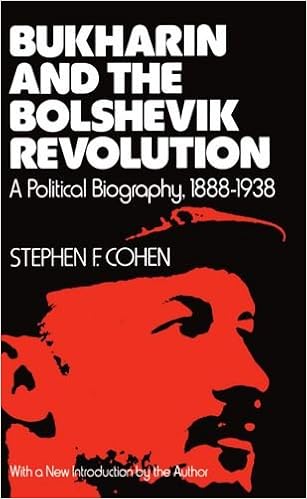
Important sections of the Bolshevik party violently opposed NEP seeing the danger of a restoration of capitalism. Yet over the next few years the policy was remarkably successful in stabilising, and then growing the economy. Nikolai Bukharin - warm, gregarious intellectual, liberal and cultured - was the principal architect of NEP economics and achieved great prominence in this period.

By 1928, NEP had hit the buffers. Factories were at full capacity, agricultural productivity was abysmal (all those undercapitalised smallholdings) while unemployment was increasing in the cities as peasants deserted the land. Worse, with fascism on the ascendant in Germany, there were worrying indications of war.

The problem was the urgent need for a massive injection of capital to drive industrialisation: electrification, heavy industry, transportation. No-one seriously believed the capitalist financial sector could be relied upon - the source would have to be endogenous.

Bukharin and his group believed that an organic, harmonious re-tweaking of the economy could keep everyone happy: the peasantry, workers, light and heavy industry. The unpleasant alternative was to soak the peasants. This would involve forced collectivisation of the agrarian workforce into large, economically-efficient holdings and manipulation of agricultural prices to subsidise industrial investment.

Since no-one thought the peasants would agree to this, it could only be achieved by force. In 1929 Stalin launched his 'revolution from above', mass agrarian requisitions and forced collectivization.

Over the next decade as the new policies played out, the level of opposition within the party was immense. Stalin's response was intense repression, culminating in the infamous Moscow Trials. Bukharin, the 'Last Bolshevik', was perhaps the most high-profile victim.

From Stephen Cohen's book (pp 374 ff.)
"History sometimes remembers its important actors in inappropriate ways. For many years after his death, Bukharin was defined in the Western political imagination not by his role in the Bolshevik Party or by what he represented in Soviet history, but almost exclusively by his show trial of 1938.

The grim fascination of an illustrious founding father pilloried and executed as a "rabid enemy" of the Soviet Republic is understandable. It was made doubly compelling, however, by a widespread misconception - that Bukharin willingly confessed to hideous, preposterous crimes in order to repudiate what he himself represented, to repent sincerely his opposition to Stalinism, and thereby to perform a "last service" to the party and its myth of infallibility.

Derived from a misinterpretation of his conduct at his trial, this notion gained popularity with Arthur Koestler's famous 1940 novel, Darkness at Noon, whose fictional purge victim, Rubashov, an old Bolshevik modeled largely on Bukharin, is persuaded by his police interrogator (and by himself) of the necessity and rightness of such a "last service."

Owing largely to Koestler's powerful art, this image of Bukharin-Rubashov as repentant Bolshevik and morally bankrupt intellectual prevailed for two generations. In fact, however, as some understood at the time and others eventually came to see, Bukharin did not really confess to the criminal charges at all.

...

Why so many confessed is no longer a mystery. By 1917, Soviet political prisons had become the scene of the cruelest methods of physical torture, continual debilitating interrogation (the "conveyor" system) for weeks on end, countless summary executions.

Brutal atrocities were inflicted on men and women, young and old alike. It was, concludes one Soviet historian, "probably the most terrible page in Russian history." Many prisoners somehow held out, finally tortured to death or shot without confessing. Those who "confessed" did so for the most human of reasons: they were physically or otherwise compelled. A few Bolsheviks may have confessed because of Rubashov-like motives; but for the great tormented majority, a survivor tells us, Darkness at Noon "would have been the subject of gay mockery."

In these surroundings, Bukharin, reportedly not tortured, held out "with remarkable vigor" for three months against the continual threats and interrogation directed by Yezhov on Stalin's instructions. On around June 2, 1937, he finally relented, "only after the investigators threatened to kill his wife and newborn son."

This was no idle threat. "'Wives of Enemies of the People" with their children were routinely arrested and used as hostages (particularly in cases of major Bolsheviks scheduled to appear in show trials), sentenced to long prison terms or shot.

Within weeks of his arrest, Bukharin's wife and son had been exiled with relatives of other "politicals" to Astrakhan.  To save them - they spent the next twenty years in prison camps -  he had to "confess" and stand trial."

Amazon Link

We look at the Russian revolution and ask: did it have to turn out this way? Could Trotsky or Bukharin have won? If they had, would things have turned out .. OK?

You would expect Stephen Cohen - such a fan of Bukharin - to be pretty optimistic here. And yet .. . If Bukharin had won, the economy would not have developed as it undoubtedly did (despite many stupidities) under Stalin's first and second five-year plans.

Because Soviet Russia did manage to industrialise (on the backs and bodies of the peasantry) they were able to defeat the Nazis in WW2. We in the UK probably owe our existence as an independent country to that fact.

Omelettes and eggs: despite all the calumny heaped upon Stalin personally, he didn't do it all by himself. His policies had support - perhaps because they were least-wrong. The tragedy for Russia was that once the mincing machine had done its work they couldn't find a way to retire Stalin and the police state and return to Bukharin's vision.

But the deeper truth from Stephen Cohen's excellent book is that even Bukharin's liberal Marxism was in practice illiberal, undemocratic, top-down and unworkable. To this day we lack any Marxist thinkers who can summon up a compelling and authoritative strategy for improving on capitalism.

In this centenary of the Bolshevik revolution everybody will have an agenda. Liberal pieties will not be in short supply. Cohen’s biography of Bukharin is a breath of fresh air, refreshingly non-doctrinaire and taking the reader into the heart of debates untainted by hindsight.