Showing posts with label Robert Heinlein. Show all posts

Monday, February 24, 2025

My Favourite Science-Fiction Authors

---

ChatGPT:
In your teens you were a fan of Isaac Asimov's Foundation series, Robert Heinlein's adventure SF novels, and Arthur C. Clarke's technical near-future fiction. None of these authors now feature on your favorite list—why is that?

Nigel:
When I returned to these authors, as an adult, I found Asimov's characterisation shallow and his style pedestrian—tedious, in fact.

Heinlein’s Starship Troopers stands out as a kind of masterclass in civics and moral coming-of-age, but most of his other stories are drowned in hedonistic self-indulgence.

As for Clarke, his engineering bias hasn’t aged well, and once again his characterisations are virtually non-existent.

These days, I want more from my fiction.


ChatGPT:
Your critique clearly shows that you demand more depth—both in characterisation and in thematic exploration—than what you found in those earlier works. Shifting focus to your current favorites: Which among them best fills that gap? Take Iain M. Banks’ Culture series, for instance. What resonates with you about it, and can you pinpoint a moment or aspect in Banks’ writing that you find transformative compared to the cold technicality or self-indulgent hedonism you disliked before?

Nigel:
After his death, I genuinely thought for some years that Banks would quickly be forgotten and be unread. His plot development is dense, complex, and often unmemorable; the quality of his Culture novels is quite uneven.

Over the last couple of years, however, I’ve reconsidered. I now see more clearly how many deep issues his thinking encompassed, and how the vast canvas of space opera allowed him to explore profound philosophical and moral dilemmas through vast splurges of baroque text.

Banks was very smart and expected the same of his readers—you never come to believe, as you read, that you're out-thinking him. On the downside, I don’t think there are many sharply, deeply delineated characters in his work. Even Diziet Sma only takes you so far.


ChatGPT:
Interesting. Moving on to Greg Bear, you’ve admired his work as well. Do you think he strikes a better balance between scientific rigor and emotional engagement? Are there particular works—say, Eon or Queen of Angels—that exemplify his strengths? How do you feel his narrative style has evolved over time?

Nigel:
I don’t think that’s the spectrum by which Bear’s work should be judged.

Like most ideas-based SF, his writing is rather matter-of-fact. It doesn’t elevate the heart-rate or engage the emotions much—except for the intellectual sense of awe it inspires. Bear tells an awe-inspiring story, and he’s one of the best at expanding that vast canvas of futurity which simply blows the mind away, whatever topic he’s dealing with.

I always felt he was working through a standard list of subjects—the General Relativity novel, the Quantum Mechanics novel, the Bio-Engineering novel, and so on. He generally made superlative tech-thrillers out of nearly all of them: his work is brimming with ideas, worked out in exquisite detail, which holds your attention.

But once again, memorable characters and inner lives are not his strong suit.


ChatGPT:
That’s a clear-eyed assessment. Let’s talk about Richard K. Morgan next. His work is known for a gritty, uncompromising vision of the future, filled with realpolitik, double-crosses, and a jolt of raw sex and violence. What aspects of his style or thematic focus do you think best capture the contemporary zeitgeist? How do his narratives, especially in the development of his antihero Takeshi Kovacs, address or subvert traditional dystopian tropes?

Nigel:
Morgan’s worldview is fairly standard: evil corporations, corrupt institutions and governments, and oppressive religions. His schtick is realpolitik—cynical about motives and fully aware that superior physical force generally wins the day. His plots are packed with double-crosses, deception, and betrayal—ingredients that make for an engrossing thriller.

Additionally, Morgan is a disinhibited writer. His sex and violence are described in prose that leaves little to the imagination and knows few boundaries—the reader is invariably jolted.

What I appreciate most about Morgan’s writing, though, is the way he handles the personal development of his antihero, Takeshi Kovacs. For a long time, we’re led to believe this super-warrior, this Envoy, is criminally-minded, brutal, self-serving, and utterly nihilistic. And yet, we eventually discover (spoiler alert!) that this is really just a carefully constructed facade.


ChatGPT:
Now let’s move on to Charles Stross. You’ve highlighted him as presenting a curious paradox. Can you explain what distinguishes his approach for you? Specifically, does his handling of political intrigue and economic themes offer a satisfying contrast to the baroque expansiveness of Banks or the gritty realism of Morgan? What is it about his narrative pace or style that makes his work stand out?

Nigel:
Charles Stross presents a curious paradox. As an individual, he comes across—much like Peter Watts—as an extremely militant, bleeding-heart liberal. In his published talks at conventions, his every utterance is steeped in moral outrage and preachy, self-righteous vitriol.

And yet, when he sits down in the quiet of his study and applies his economic, political, and technical knowledge to develop speculative scenarios with plausible issues and plots, he is simply superlative. He can write sympathetic, rounded characters, and his very artistic, emotional temperament imbues his writing with the necessary literary fire.

He writes what he cares about, and you know it—it isn’t just an intellectual exercise, which would be utterly boring.



Tuesday, March 12, 2024

The Notebooks of Lazarus Long - Robert A. Heinlein


https://www.amazon.co.uk/Time-Enough-Love-Lazarus-Science/dp/0593437241/

I'm back into Heinlein mode.

A human being should be able to

  1. change a diaper
  2. plan an invasion
  3. butcher a hog
  4. conn a ship
  5. design a building
  6. write a sonnet
  7. balance accounts
  8. build a wall
  9. set a bone
  10. comfort the dying
  11. take orders
  12. give orders
  13. cooperate
  14. act alone
  15. solve equations
  16. analyze a new problem
  17. pitch manure
  18. program a computer
  19. cook a tasty meal
  20. fight efficiently
  21. die gallantly.

Specialization is for insects.

---

I set in italics those obligations which I am either plainly unable to do, or have no idea whether I could (I would like to not italicise numbers 20 and 21).

Where did Heinlein get this list? 

It's implicitly gendered: it says 'human being' but reads as 'man': surely his list for women would be different - indeed we know so from elsewhere. It's a combination of artisanal (hogs; wall-building) and intellectual (invasion; programming). It reflects the culture of the western frontiersman transferred in time to the mid-twentieth century. But it also speaks to deep truths in human nature: the masculine virtues of good men with useful skills courageously banding together to defend against threats to their communities.

The fact that Heinlein's list stirs the emotions witnesses to its elemental truth.

Currently disparaged and despised, the need for Heinlein's ethos will be with us again soon enough.

---

Here are some more Heinlein aphorisms from (the intermissions within) the novel above.


Note: I abandoned "Time Enough For Love" after the first of the embedded stories (David Lamb, the Laziest Man in the World which by itself is quite a good story). Heinlein's work has not aged well. His characters are simplistic, implausible and often irritating. His attitudes - particularly on sexual matters - are self-indulgent and stupid, and his endless didacticism is wearying. 

"Starship Troopers" excepted, I think Heinlein is an author to miss.

Friday, December 09, 2016

Pig quotes

Not all arguments are productive.

Never attempt to teach a pig to sing; it wastes your time and annoys the pig.

This from Robert A. Heinlein, Time Enough for Love.

---

On arguing with the argumentative.

"I learned long ago never to wrestle with a pig. You get dirty, and besides, the pig likes it."

Quoted by George Bernard Shaw. He should have said "enjoys".

This second quote featured in this:

Amazon link

More literary slumming.

James McGill is an everyteenboy action hero. The plotting is absurd and the tempo unrelenting. The writing is better than Lee Child: page-turning. Back to more serious stuff soon.

---

Moving animals, on living in the moment.
One of your most ancient writers, a historian named Herodotus, tells of a thief who was to be executed. As he was taken away he made a bargain with the king: in one year he would teach the king's favorite horse to sing hymns. The other prisoners watched the thief singing to the horse and laughed. "You will not succeed," they told him. "No one can."

To which the thief replied, "I have a year, and who knows what might happen in that time. The king might die. The horse might die. I might die. And perhaps the horse will learn to sing.
Jerry Pournelle from "The Mote in God's Eye".


Tuesday, June 07, 2016

Robert Heinlein on Democracy

Robert Heinlein from "The Notebooks of Lazarus Long, Time Enough for Love".
"Democracy is based on the assumption that a million men are wiser than one man. How's that again? I missed something. Autocracy is based on the assumption that one man is wiser than a million men. Let's play that over again too. Who decides?"
In Robert Harris's novel "Archangel", I recall a scene after the death of Stalin where the secret police chief, Beria, tries to manipulate his colleagues to ensure his own succession. He has a cunning plan but it does not end well.

A politburo colleague observes that Beria, like many very smart people, assumes that more average people will never figure out what he's up to. But that's to mistake the nature of average folk: it's not that they can't get there - they can; it just takes them a little longer.

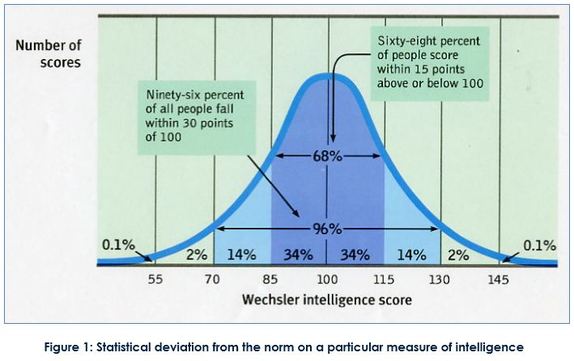
That's why I'm not that worried by the left-hand side of the bell-curve getting the vote.


The not-so-super-smart are usually not au fait with the niceties of public policy options, but they tend to be pretty expert on whether things are working out well for themselves. And in the end, that's a recipe for a stable and productive society: keep the punters reasonably content.

If you disenfranchise swathes of the population, you reserve political power to the vested interests of those who retain the vote. Naturally public policy will be captured (in the economics sense of regulatory capture) by such vested interests.

In the long run, this is seldom a good thing.

Sentimental, moralistic platitudes about the 'ethical superiority of democracy' don't do it for me.

No, I'm strictly functionalist. Democracy should be supported because it's the only system which provides a regular and universal protocol to "kick the bastards out".

---

Note: if you want Robert Heinlein's considered view as to how to make democracy work, you should read "Starship Troopers".


Tl; dr - voting should be restricted to those prepared to defend society, so no votes for parasites. Basically you do your military service, indicate your willingness to put your life on the line for your country .. and then you get to vote.

Monday, August 04, 2014

You write the truth: who cares?

"A religion is sometimes a source of happiness and I would not deprive anyone of happiness.But it is a comfort appropriate for the weak - and you are strong. The great trouble with religion - any religion - is that a religionist, having accepted certain propositions by faith, cannot thereafter judge those propositions by evidence. One may bask at the warm fire of faith or choose to live in the bleak uncertainty of reason - but one cannot have both."
Robert A. Heinlein wrote these words in "Friday" (p. 306) published in 1982 - thirty two years ago. Last time I noticed, religion was still doing its magic.

There's a kind of self-importance writers have, that they possess important insights and truths, and that it is sufficient to take these to print and the world will be enlightened. I remember a while ago a smart music-scene reporter doing a feature on the band Oasis. The Gallagher brothers informed him they were going to be bigger than The Beatles. Our reporter answered that this was impossible: that band had been the voice of a vast, global social revolution - the sixties - but there was no such seismic shift right now. Then he shut up - he was wasting his breath. Good luck to those few authors who are truly the voice of a new generation, or the revolution!

As the judge said, "I may not be able to define pornography but I know it when I see it." Just as you know political correctness, or an author with an agenda, when you see it. Heinlein has many attractive virtues as a writer and as a social theorist but boy, does he have an agenda. I can't tell you how jarring it is to read "Friday" or "Methuselah's Children" or, God help us, "Stranger in a Strange Land" and be exposed to Heinlein's theory that men and women in an ideal state desire nothing more than to have no-strings sex with anyone they quite like. (He seldom features male-male sex for some reason).

The argument that his writing predates evolutionary psychology is a non-starter. Noticing how people normally react to marital infidelity would have been enough - or some introspection into his own emotions with regard to his beloved wife Ginny. Correction: it appears that Heinlein had open marriages with both his second and third wives (Ginny was number three). So guilty of sexual solipsism then. 

I'm disappointed in him!

---

I rather liked Peter Frost's recent article on how empathy (and its inverse, guilt) are particularly individualistic attributes of Europeans - it has been suggested that East Asians (Chinese, Japanese) express their prosociality through the more externalized traits of conformity and shame. Worth reading the article.

---

Gregory Cochran's recent post (Biology and Human Capital) attracted this comment from a Mr Boyle:
"It seems to me that the world should try to preserve the precious resource of Ashkenazi brains. I don’t follow the politics of the region all that closely but Arabs, Palestinians and the like are plentiful and not very talented. Jews however are rare and valuable. These basic facts to me argue for siding with Israel."
This is a scaringly controversial sentiment to express. It violates all our empathic instincts .. and the poster was immediately rebuked for 'autism'.  We can all think of scenarios where for the good of some section of humanity, other sections have to justifiably die. It's called backing one side in a war and we're all expected to do it under some circumstances - so perhaps it's disingenuous to beat up Mr Boyle for his unbearable frankness. Had he spoken instead of Israel being a first-world democracy in a third world region and thereby worth preserving as a beacon then I guess his remarks would have come across as more mainstream, at least in America.

For the record, Israel is of course worth preserving: I just wish they'd be smarter and more strategic about it.

Tuesday, June 24, 2014

The wisdom of Robert Heinlein

"Never attempt to teach a pig to sing; it wastes your time and annoys the pig."

Robert A. Heinlein, Time Enough for Love.

Profound and moving!