Showing posts with label Author. Show all posts

Saturday, May 24, 2025

Telling it like it is: William Barton

Amazon link

---

William Barton’s Melting in the Sun 

So, to William Barton’s somewhat-fictionalised memoir, Melting in the Sun (2011) - stories from his young life, mostly. Barton comes across as a bright, intense young man, obsessed with science fiction, astronomy - and girls, of course. He grows up in the Virginia/North Carolina area, straddling two worlds: mixing with the dirt-poor, sometimes violent “white trash” kids on one side, and his more conventional peers on the other.

In one story, wandering by himself one sunny afternoon at the broken-down edge of town, he's accosted by an older boy who has previously bullied him. We're talking maybe 12 and 14 years old here. The older boy looks threatening and acts weird, and then asks the young Barton if he can hang out with him that afternoon. Barton helplessly agrees, but takes an early opportunity to escape, running off to meet with his friend at a downtown coffee bar.

It's only later that he discovers that the bully has been diagnosed with cancer and has only a few months left to live. Guilt haunts Barton forever.

In his late teens and early twenties Barton finds no clear career path - it's a string of odd jobs: stripping and cleaning offices, drifting into freelance work as a software contractor. Writing always presses at him, but for years he can't get published.

In a later story, the professional world of publishing is portrayed as cynical and arbitrary. He's approached by a fellow author who calls his work 'filthy'; others accuse him of writing male pornography, of being obsessed with sex, and misogynistic. Barton seems to take these accusations with mild incredulity and contempt: he's writing the truth about the male interior mind and he's being criticised by hypocrites and fools.

Publishers, however, are only interested in sales and the zeitgeist: authors are manipulated and dropped with no warning as fashions change. You are only as good as your last sales figures.

Barton seems always drawn to emotionally-volatile women who make his life difficult - they give him a hard time, cheat on him, and invariably dump him. Relationships confuse him - while he confuses his romantic partners. He’s accused of talking like he’s reading aloud from a book. He’s obsessed with sex (although that's hardly unusual  for young men). However, he never seems to get out of the cycle of dating disasters.

 'The craving for love': an emotion which dares not speak its name to the young masculine mind.

Some of the stories he recounts are bleak, even harrowing. In one, he’s hitchhiking at night in a bad part of town when the driver and accomplice rape his girlfriend while he is held at gunpoint. In another, he’s struck down by some kind of serious infectious disease, barely making the hospital: the medical staff are disparaging and try to eject him when he explains he has no medical insurance. 

It’s not hard to see where Barton’s fiction - and his recurring themes - come from. The world he writes about is harsh, unstable, and largely indifferent to the individual. If Barton was not such a talented writer he'd be just another intelligent oddball, stuck in the margins of society, invisible and unremarked.

Barton's works are very inconsistent: a lot of it is more like therapy-writing - deeply unpleasant to read. But at his best, where his searing honesty is harnessed to the power of higher ideals: we are jolted.


For those curious about Barton’s fiction, the best place to start is with Acts of Conscience, When We Were Real, and When Heaven Fell. These are books that take the raw material of his life - alienation, desire, trauma, disillusion - and reframe it in the deep interstellar; distance lends perspective.

Friday, March 09, 2018

My top twelve Favourite SF novels

Over at Marginal Revolution, Tyler Cowen has his "Ten favorite science fiction novels". It's a party game anyone can play: here are mine - in no particular order.

---

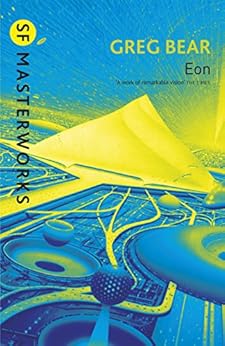
1. Eon by Greg Bear (and its follow-on, Eternity)

Amazon link

Great sense of wonder SF on the grandest of canvases. The plot seriously holds attention while characterisation is not bad, at least for the major characters.

2. Quarantine by Greg Egan 

Amazon link

Cowen prefers "Permutation City", Egan's 'reality is computation' novel (cf Dust Theory), but the many-worlds interpretation of QM is so compelling a setting and the private-eye thriller-based plot so convoluted that I felt compelled to buy this novel twice.

3. The City and the City by China Miéville

Amazon link

Cowan prefers "EmbassyTown" which is clever but, for me, less involving. The City and the City has a most unusual setting, the only novel I've read centred around the social construction of reality - and while the police procedural plotting and characterisation is a bit clunky, the whole book amazes throughout. The idealism of the premise is capped by its superpowered final denouement, a brutal assertion of materialism.

It's shortly to be a four part series on BBC2 (April 6th 2018).

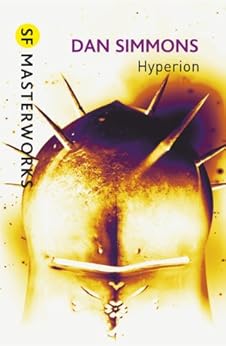
4. Hyperion (and its three successors) by Dan Simmons 

Amazon link

Cowan agrees with this choice. The four novels are beautifully written, have cultural depth and immerse the reader. Some of the scenes are truly shocking.

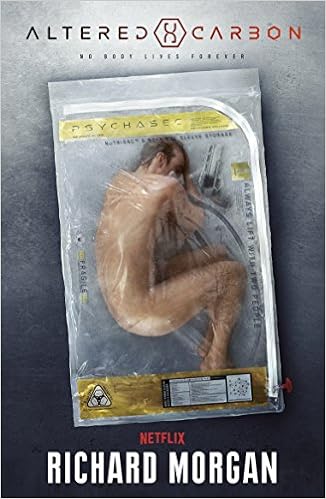
5. Altered Carbon by Richard Morgan 

Amazon link

The story of brutal but fundamentally moral Takeshi Kovacs. The successors are good also and complete the exploration of Morgan's interestingly-complex protagonist. Warning: high levels of sex, torture and violence throughout; most characters lacking in personal empathy .

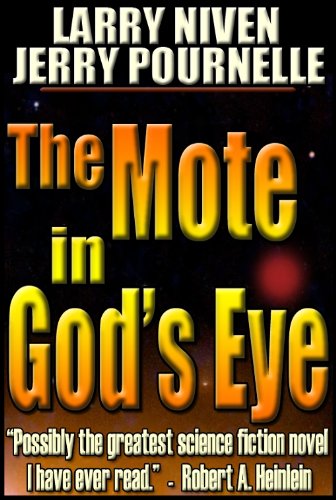
6. The Mote in God's Eye by Larry Niven and Jerry Pournelle

Amazon link

The writing is clunky but the plot and setting completely compelling. You won't read a better account of first contact. The style is a bracing antidote to a public culture of suffocating high-mindedness.

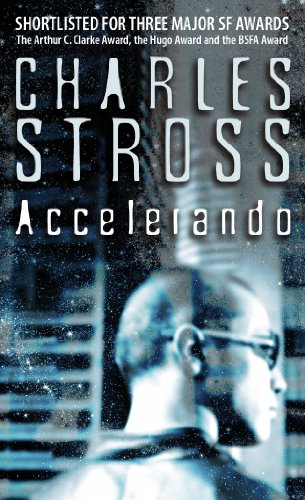
7. Accelerando by Charles Stross

Amazon link

Hits you hard and then accelerates. A convincing and baroque invocation of the Singularity: never bettered.

8. Mindbridge by Joe Halderman 

Amazon link

People usually quote "The Forever War" which is good, but Mindbridge hits more of my buttons.

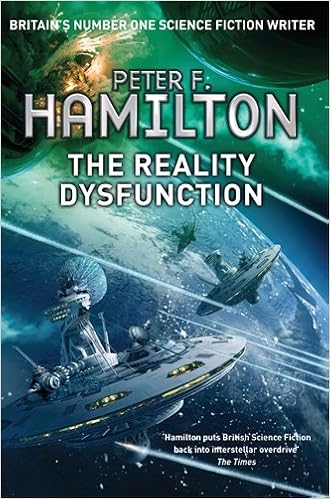
9. The Reality Dysfunction (and successors) by Peter Hamilton

Amazon link

Hamilton's later door-stoppers have proven tedious, but the Night's Dawn Trilogy brims with energy and inventiveness on the grandest of scales.

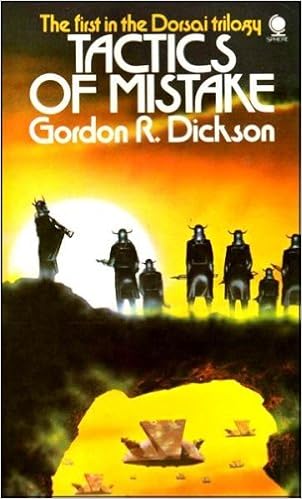
10. Tactics of Mistake (and follow-on Dorsai novels) by Gordon R. Dickson

Amazon link

Intelligent and exciting, intricately plotted with overtones of mediaeval chivalry. Loved them all.

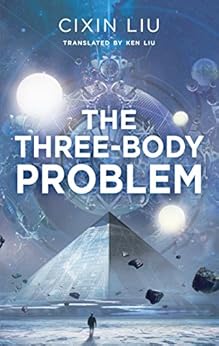
11. The Three-Body Problem trilogy by Cixin Liu 

Amazon link

The writing may sometimes be rather pedestrian, as Cowen observes, but the three volumes are incredibly inventive.

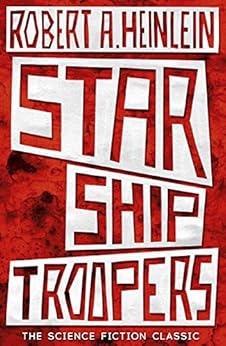
12. Starship Troopers by Robert Heinlein

Amazon link

Starship Troopers: last but not least. It's the only Heinlein novel which makes the cut for me, impressing by force of conviction. The author profoundly cares about the message of the novel and it's another antidote to contemporary hand-wringing.

Putting aside the occasional bouts of didacticism, it's a great story too.

---

Near Misses

Solaris is brilliant - I'm also a fan of Lem's other works such as His Master's Voice and The Invincible.

As a child I loved Isaac Asimov's Foundation trilogy and Frank Herbert's Dune sequence but, like Cowan, coming back to them I find they're not brilliantly written.

Saturday, November 14, 2015

Tom Wolfe (1971) - on intimidation and shake-downs

Steve Hsu points to this Tom Wolfe piece from 1971: ' Mau-Mauing the Flak Catchers'*.
"... Wolfe's book is set at the Office of Economic Opportunity in San Francisco which was in charge of administering many of the anti-poverty programs of the time. Wolfe presents the office as corrupt, continually gamed by hustlers diverting cash into their own pockets. The essay centers on the irony of these failed programs fortifying not the diets but the resentment and contempt of the Black, Chicano, Filipino, Chinese, Indian, and Samoan communities of San Francisco.

"Wolfe describes hapless bureaucrats (the eponymous Flak Catchers) whose function was reduced to taking abuse, or "mau-mauing" (in reference to the intimidation tactics employed in Kenya's anti-colonial Mau Mau Uprising) from intimidating young Blacks and Samoans, who are seen as reveling in the newfound vulnerability of "the Man".

The flak-catchers smile pathetically, allowing their tormentors to indulge themselves in abuse; the process is seen as a farcical but useful expedient, condescending toward the resentment of these communities. He described one mau-mauer who would show up at the offices and hand over ice-picks, switch-blades and straight-razors that he said were taken from gangs, in exchange for payments from the program. As a result, much of the money of these programs was not reaching its intended recipients, rendering the programs largely ineffective."
Tom Wolfe is, of course, a great writer (although this piece is too long). He seems devoid of political correctness, and his writing is energetic, and great at painting a scene. What I wondered was how on earth he managed to get all this detail (names, places, events, back stories - all fly-on-the-wall stuff).

Did he sit in the 'Office of Economic Opportunity' interview room cataloguing the horrors? Did he wander the ghettos watching pimps and dealers up close and personal?

Tom Wolfe is an effete, middle-class white man who, one imagines, wouldn't last two minutes in a tough 'hood.

Tom Wolfe: author and 'ghetto expert'

I'm often reminded how economics, despite its many flaws, is still the best of that sorry bunch of subjects, the social sciences. In the anti-poverty programmes one sees the essence of public choice theory applied to special interests.

---

* The Tom Wolfe piece is here - shame about the intrusive ad at the bottom of the page. And the poor formatting. It reads much better on a tablet.