Showing posts with label Jess Riedel. Show all posts

Tuesday, September 20, 2016

Mineralarians

This is a joke, right? (H/t Jess Riedel)
"Many thoughtful people have embraced some form of vegetarianism, adopting practices long traditional with Hindus, Seventh Day Adventists, and other groups.  But that is only a partial solution.  Modern molecular genetics and biochemistry has proved beyond doubt the interrelatedness of all living things, from the lowliest bacterium to the tallest redwood.  We are scarcely less related to the wheat or the yeast in a loaf of bread than we are to our fellow animals.

"We can no longer hide behind the idea that these life forms are not our kin, nor can we rationalize our mistreatment of them by saying that plants, fungi, and microbes are incapable of suffering.  The instinct to avoid pain and noxious stimuli, and the restless search for favorable conditions, which Thomas Jefferson called the pursuit of happiness, are as universal among living beings as their DNA.

If we refuse to eat our relatives, what CAN we eat?  Fortunately, the same sciences of chemistry and biology that reveal our kinship to all life have freed us at last from the need to kill.  Although most people are surprised to hear it, it is possible to live and thrive on a diet consisting entirely of foods of mineral origin.

"This is because every one of the several dozen nutrients the human body requires - carbohydrate, amino acids, fats, vitamins, and of course minerals - can be synthesized or extracted from air, water, and rock without the involvement of any life form, aside from the chemists who perform these miraculous transformations.

"The Mineralarians are an international association of people, diverse in other respects, who share the common determination to subsist on foods of mineral origin, thereby sparing our fellow beings the victimization that has been their lot, at our hands for the last million years, and before that at the claws and jaws of previously dominant species."
So how would this work?
"How are Mineralarian foods made?  Starting with carbon from coal and petroleum, hydrogen from water and nitrogen and oxygen from air, a few feedstocks of simple organic chemicals are made.  Some,  like glycerine (C3H8O3), are already nutritious and digestible; others, like methanol, ammonia, and acetaldehyde, are merely intermediates along the way to synthesizing the dozens of amino acids, fatty acids, and vitamins the body needs in greater or lesser quantity.

"Many of the synthetic reactions mimic those that occur naturally in plants and microbes, but we carry them out with mineral catalysts in a cruelty-free laboratory environment.   The body's own metabolism picks up where our chemistry leaves off, converting the few dozen essential nutrients in mineralarian food into the hundreds and thousands of specialized molecules, including DNA and proteins, required for life. "
Coal?! You're eating extracts from coal!? And petroleum!?? But these come from lifeforms, creatures that were once alive!
"Some mineralarians choose not to eat foods made from fossil fuels like coal and petroleum, or fossiliferous sedimentary rocks, for the same reason they would be not want to eat road kills.  Fossils are usually the result of violence and often contain plain evidence of a being's untimely and painful death.

"To be sure, the violence was not due to human cruelty or negligence, and indeed usually predates the appearance of humans on earth, but it is violence nonetheless.  For those who do not wish to bring the fruits of ancient violence into their bodies, we offer a range of strict mineralarian foods made entirely from certified igneous rocks and atmospheric gases.

"For some, even these foods are problematic, because there is no assurance that an iron or calcium atom freshly spewed from a volcano, or a nitrogen atom distilled out of the air, has not at some earlier time in geologic history been part of a living being who suffered a violent death.  Certainly there are some atoms on earth that have never been part of living beings, but there is no sure way to identify them, because all atoms of a given kind (isotope) are physically indistinguishable.

"The consumer of such atoms is like a reluctant participant in an old-fashioned firing squad execution, where it was customary to issue one blank round at random among the live rounds, so each squad member would have some chance of not having killed.

"If you are troubled by such thoughts, please contact us.  If there is enough interest, we will investigate the possibility of creating foods from material of extraterrestrial origin, in other words from meteorites.  Such food would be as nutritious and tasty as our other offerings, but it would likely be quite expensive, because some biologically essential elements, like nitrogen, occur only in low concentrations in meteorites."
If you feel a need to contact these folk - possible 'this person' - there is a contact email address (Charles Bennett) at the article.

---

If the Mineralarians are not to your taste, why not choose a Minuteman Pizza?

Friday, May 27, 2016

A tourist map of physics

This interesting cube-diagram is from Jess Riedels' blog.


The idea of this diagram is that the fundamental theories of physics can be placed in three dimensions as to how they treat gravity, the speed of light and Planck's constant h-bar, ℏ.

Gravity

G is Newton's gravitational constant as in his law F = Gm1m2/r2. When we dial G to zero we're in domains where we ignore the effects of gravity. Most of quantum theory is here, as is special relativity and classical mechanics.

The speed of light

Strictly speaking the important thing about our universe is not the weirdness of the speed of light, it's that in the large the universe's structure is Minkowski spacetime, not our intuitive 3D Euclidean space + time. This is a difference in metric, as well-explained here.

If you dial the speed of light to infinity (so 1/c goes to zero) then the space + time metric tends to that of common sense.

Planck's Constant

This is the weird one. Quantum phenomena such as superposition and entanglement emerge mathematically from the non-zero value of ℏ, most clearly seen in the uncertainty principle.

However, the emergence of classical physics from quantum mechanics as you reduce ℏ to zero isn't too clear. The state space of quantum mechanics is an abstract structure, a complex high-dimensional vector space called Hilbert space, which is not directly mappable to spacetime.

---

You might say that seven out of the eight nodes on this cube are well-established - the central mystery of contemporary fundamental physics is the eighth, quantum gravity.

Friday, April 01, 2016

ISIS infosec seems to be rubbish

How ISIS does information security

CNN reports:
"Last summer, a French student was arrested in Paris on suspicion of a plot to take hostages at a concert hall. His name was Reda Hame. According to a transcript of his interrogation obtained by CNN, Hame claimed he had been provided weapons training, including in the use of Kalashnikovs, by Abaaoud in a park in Raqqa in early June. But he'd backed out of the plot when he arrived in France."
According to security researcher the grugq, CNN further reported:
"Hame also revealed to interrogators that ISIS had set up an elaborate encrypted communication system so that it could keep in touch with its European operatives.

"While with ISIS in Raqqa, he said he was instructed to encrypt communications with a software tool called “Truecrypt,” which authorities found on a thumb drive he had been given by Abaaoud. Hame said he had been taught to copy a message into the software, select an encryption option and then paste the message into a password-protected sharing site."
The grugq asks: "How Crap Is This System?"

It's pretty bad - Errata Security has a post suggesting how any half-decent intelligence agency might hack into this ISIS protocol.

ISIS won't have any autonomous cryptographic capabilities - you have to be a first-world state to do that kind of thing right. It's forced to use third party tools and systems. But it's very, very difficult as amateurs to design a system that the NSA, GCHQ or half a dozen other competent organisations can't address.

If the ISIS operatives are not using a VPN, then a 'listener on the wire' will get the IP addresses of dead-drop users. As Errata Security explained, TrueCrypt volumes are not hard to detect in transit. Metadata like IP addresses lead straight to identities. But I doubt that most VPNs are safe either, not when their logs and traffic can also be monitored.

Perhaps the bad guys should just send a courier, clunky as that sounds. But last I heard, couriers speak in plain, not ciphertext; they say that bugging with microphones is pretty good these days.

I like a one-time pad, but distributing it is the trick. If you send those very long random bit sequences on a USB drive, how do you know the intelligence services haven't covertly grabbed and copied it in transit? And then you're toast.

I begin to see why ISIS has been so singularly unsuccessful in the UK this last decade.

---

Note: from one of the comments: "Counterterror experts who reviewed this protocol tell me it reminds them of what al-Qaeda did for yrs: saving "drafts" in Yahoo inboxes" - (these were apparently in plaintext).

*Head-in-hands*.

---

Our transition to a Planetary Hospital

Interesting and reasonably accessible article via Jess Riedel, "Mutation and Human Exceptionalism: Our Future Genetic Load" by Michael Lynch, GENETICS March 1, 2016. From the abstract:
"What is exceptional about humans is the recent detachment from the challenges of the natural environment and the ability to modify phenotypic traits in ways that mitigate the fitness effects of mutations, e.g., precision and personalized medicine.

"This results in a relaxation of selection against mildly deleterious mutations, including those magnifying the mutation rate itself. The long-term consequence of such effects is an expected genetic deterioration in the baseline human condition, potentially measurable on the timescale of a few generations in westernized societies, and because the brain is a particularly large mutational target, this is of particular concern.

"Ultimately, the price will have to be covered by further investment in various forms of medical intervention. "
The famous population geneticist W. D. Hamilton coined the phrase "Planetary Hospital", explained by Bruce Charlton like this:
"It is becoming hard to avoid the conclusion that we have been, for several generations, living in what WD Hamilton (in Narrow Roads of Gene Land, Volume 2) called the Planetary Hospital - in other words, a world in which almost everyone is suffering from significant genetic damage, and an increasing proportion of the population are suffering from genetic disease. "
The dystopian effects of relaxed selection and the removal of purifying selection are well-documented in the population genetics literature. The effects in just a few generations are, however, slight (c. 1% per generation).

Despite Dr Charlton's vividly-expressed concerns. I like to think we may still avoid Idiocracy.

Sunday, January 31, 2016

Do it for fun, but not for profit

Just a couple of choice selections from the cornucopia which is Jess Riedel's blog.

---

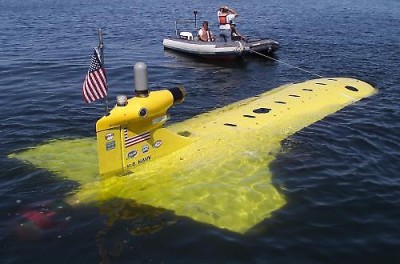
American drone for covert underwater warfare

Trident will be obsolete before the next-generation hits the water
"For half a century, big missile submarines, known as boomers, have been arguably the most decisive weapon systems in modern warfare – the queen on the strategic chessboard – because of their capacity to remain unseen until the critical moment, unleashing enormous destructive force without warning.

"Now that dominant position is under threat. A submarine can hide from a few noisily obvious ships and planes, but it is harder to hide from a swarm of small, virtually undetectable drones. The robots being developed here can potentially be made cheap and expendable, and capable of being deployed in large numbers to cover vast expanses of sea. Once fully developed, they could tilt the balance of power beneath the waves – much as airborne drones are already doing in the sky.

"It is unclear how far other countries have got with underwater drone technology; it is known that the Russian navy is working on it intensively."
I foresee an arms race where the ballistic missile submarine deploys a screen of 'drone fighters' to take out the enemies underwater surveillance drones. Good luck with that.

---

Propensity to exercise and increased lifespan are correlated but not causal
"Observational studies report a strong inverse relationship between leisure-time physical activity and all-cause mortality. Despite suggestive evidence from population-based associations, scientists have not been able to show a beneficial effect of physical activity on the risk of death in controlled intervention studies among individuals who have been healthy at baseline. On the other hand, high cardiorespiratory fitness is known to be a strong predictor of reduced mortality, even more robust than physical activity level itself.

"Here, in both animals and/or human twins, we show that the same genetic factors influence physical activity levels, cardiorespiratory fitness, and risk of death. Previous observational follow-up studies in humans suggest that increasing fitness through physical activity levels could prolong life; however, our controlled interventional study with laboratory rats bred for low and high intrinsic fitness contrast with these findings.

"Also, we find no evidence for the suggested association using pairwise analysis among monozygotic twin pairs who are discordant in their physical activity levels. Based on both our animal and human findings, we propose that genetic pleiotropy might partly explain the frequently observed associations between high baseline physical activity and later reduced mortality in humans."
What this is saying is that the same set of good genes are both encouraging higher physical activity levels and giving you a longer life. If you happen to have the good genes and for some reason you're not physically active ('monozygotic twin pairs who are discordant in their physical activity levels') you still get the long life.

This is not genetic determinism. Your genes give you a set point: a certain lifespan, body-plan, weight; your choices of diet and exercise will have a varying effect, but only around that set point - not arbitrarily.

Riedel comments, "Stunning if true. Think this will slowdown our culture’s obsession with exercise for health? Me neither."

Sunday, November 01, 2015

China will build the next LHC; the HBP is a disaster

From Science Alert Oct 30th 2015:
"China has announced that it will begin construction of the world's largest particle collider in 2020. According to officials, the subterranean facility will be at least twice the size of the Large Hadron Collider (LHC) in Switzerland, and will endeavour to find out more about the mysterious Higgs boson.

"The final concept design won't be completed until the end of next year, so we don't have many details to go on, but the collider is expected to smash protons and electrons together at seven times the energy levels of the LHC, generating millions of Higgs bosons in the process. Best of all, the facility will reportedly be available to the entire global scientific community. "
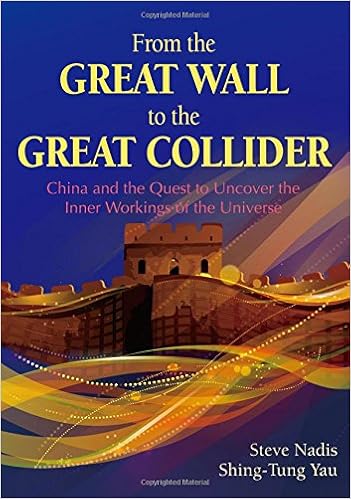
The Great Collider

There's a book on this (below) due for release shortly (author Steve Nadis writes about the project here); Luboš Motl reviews the book here.


Jess Riedel is not so impressed,
"I think this is a bad development for physics because I am pessimistic about particle accelerators telling us something truly deep and novel about the universe, at least in the next century. Particle physics is a perfect-storm specialty in the sense that it can absorb unlimited amounts of money and physics talent while yielding arbitrarily slow progress on the important questions. If there are tens of billions of dollars flowing into these machines, innumerable physicists will continue to pour their youth into them for extremely incremental results."
but even in terms of spin-offs (computing and communications, high-tech manufacture, magnet and superconducting technologies, general physics education and culture) this has to be a winner for China. Assuming it finally gets the OK from the Politburo.

---

I'm inclined to be impressed by China's big science. Less so on the record of the European Union.
"In 2013 the European Commission awarded neuroscientist Henry Markram $1.3 billion to pursue an audacious goal: building a simulation of the human brain. Markram's initiative, the Human Brain Project (HBP), is now in disarray. Critics blame HBP management and the project's unreasonably ambitious goals. Yet plenty of blame for the HBP's woes rests with the project's funders in Brussels, who put politics ahead of science and exercised poor oversight."

(Scientific American article here).
So we now have this amusing, impassioned and sweary rant about the project which carries a deep ring of truth. In this area, at least, it appears that no-one knows anything.

Wednesday, October 28, 2015

The Final Parsec Problem

Another interesting link from Jess Riedel's blog. He refers to an article with this title: "Supermassive black holes found spiraling in at seven percent light speed".
"Data from NASA’s Galaxy Evolution Explorer (GALEX) and the Hubble Space Telescope has confirmed the presence of a pair of supermassive black holes orbiting each other so closely that they're moving at relativistic speeds—a significant fraction of the speed of light.

Supermassive black holes are expected to come in pairs pretty often. That’s because every galaxy has its own supermassive black hole, and galaxies often merge, bringing the two together. These mergers are very slow processes that distort both galaxies until their stars settle into new orbits (a process known as "violent relaxation"). While this is happening, extremely heavy objects, such as supermassive black holes, will tend to move in toward the center of the new galaxy. The new galaxy would end up with two supermassive black holes, one from each original galaxy, orbiting each other at its core."
The supermassive black holes (millions of solar masses) tend to orbit each other at a distance of a few parsecs (1 parsec = 3.26 light years). Orbits are pretty stable things - the Earth has been orbiting the sun for quite a while - so to get really close (for example, so close that both black holes would fit inside the dimensions of the solar system) they have to lose energy somehow. But how do you slow down supermassive black holes? This is the Final Parsec Problem.

The binary black holes in the article have:
 "an inferred distance between them somewhere between .007 and .017 parsecs, which is not much bigger than the diameter of the Solar System. That’s astoundingly close for two objects of this size .... To maintain their orbit, the black holes have to be whipping around at relativistic speeds."
The black holes in question will coalesce in perhaps one million years in a massive burst of gravitational radiation. Strictly speaking this has already happened as the system is 3.5 billion light years away - in fact it occurred at the origins of life on Earth!

Here's a Caltech/Cornell computer simulation:


And for further reading, here's the Wikipedia article on binary black holes.

Thursday, October 30, 2014

Three good pieces

1. Best review of Iain M. Banks's Culture sequence


Matt Hilliard, a smart and insightful reviewer at Strange Horizons wrote this piece on his blog: the best assessment of what on earth Banks was trying to do with his Culture novels. His take on Peter Watts' Echopraxia is equally superior.

2. Steve Hsu's popular and accessible article on genetic engineering for super-intelligence

Steve Hsu in action
"Super-Intelligent Humans Are Coming - genetic engineering will one day create the smartest humans who have ever lived".

'Stephen Hsu is Vice-President for Research and Professor of Theoretical Physics at Michigan State University. He is also a scientific advisor to BGI (formerly, Beijing Genomics Institute) and a founder of its Cognitive Genomics Lab.'

His blog is here.

3. What makes the quadcopter design so great for small drones?

Remember all those camera drones with four rotors arranged in a square? Amazon's PR stunt for drone delivery? Why do we still go for helicopters in the large then? Is the future the quadcopter?

Here's why not.

A helicopter drone

Thanks to Jess Riedel's blog for the last two links.
---
Oh, and here's a laugh-out-loud bonus from The War Nerd.

Take me to Istanbul ..