#FakeNews #ButNotThatFake
They could be babies, those little homunculi, pushed around in kiddie-karts by Google staff. You can't see the high-bandwidth comms, the data links ferrying every perception and mewling cry to DeepMind's server farms.
The situated cognition people were right.
To be human-smart is to participate wholly in human society.
Reading millions of files off the Internet just doesn't hack it for artificial general intelligence.
HUM∀NS's 'synths' and Westworld's 'hosts' were the way to go.
Google is betting that body research will track mental development. When they need their baby-synths to toddle around, the batteries and artificial muscles will be there.
Adolescence is going to be the tricky one.
Showing posts with label Synth. Show all posts
Showing posts with label Synth. Show all posts
Monday, December 19, 2016

Monday, September 12, 2016
Workers, slaves, androids - and agency
Einstein produced well-validated scientific theories combined with speculations which seem out of synch with current quantum orthodoxies, while politically he seemed to be socialist-pacifist.
Marx produced rigorous theories of class societies focusing on the capitalist mode of production (Capital etc), speculated about the future of capitalism (inaccurately), and politically seemed to be, well, a communist.
It pays to stay focused on the theories.
So ignore the politicking and moralising and focus on Marxism as a theoretical system; how exactly do workers as living, breathing persons figure in Marxist economic theory?
---
In the beginning was the 'primitive communism' of egalitarian hunter-gathers. Following the neolithic revolutions - agriculture and pastoralism - we entered the age of class societies. All class societies are unequal. At the bottom there are one or more classes which are the primary producers of the necessities of life.
Through the increased productivity of agriculture and pastoralism, the lower classes produced more than they needed to survive. The excess, the social surplus product, was appropriated by the rulers, also serving to fund the elements of the state - administration, warriors and of course, tax collectors.
There was always an accompanying ideology to explain why this little ditty:
was inapplicable, and in fact downright subversive.
Archaic empires had their God-Kings while Axial age empires harnessed more abstract Gods to the maintenance of social order.
In feudal times, there was "a set of reciprocal legal and military obligations revolving around the three key concepts of lords, vassals and fiefs. A lord was in broad terms a noble who held land, a vassal was a person who was granted possession of the land by the lord, and the land was known as a fief. In exchange for the use of the fief and the protection of the lord, the vassal would provide some sort of service to the lord."
As I mentioned already, for Marx the specific essence of capitalism was generalised commodity production and exchange.
The value at which a commodity is exchanged is captured by the formula c + v + s, where c is the value of machinery and raw materials, v the value of the worker's wage and s the additional value created by the activity of the worker in producing the final commodity.
The class nature of capitalism is exhibited in that the worker produces more value (v + s) than he or she receives in payment (v). It doesn't seem that way, as wages are superficially presented as payment for labour (ie the product of labour) rather than labour-power (the capacity to work - placed at the disposal of the capitalist).
Still, in formal terms the worker and the capitalist meet as equals in the market place; the worker sells his/her labour-power and receives a fair price for it. The workers don't have to sell their labour-power and the capitalist doesn't have to employ them. Proletarians have agency (although the concept is not theorised).
We have to add a few things to get closer to quotidien reality: asymmetries of power between workers and bosses; supply/demand & differing profitabilities creating price-variations around value, and so on. But the principle is as stated.
---
People sometimes talk about wage-slavery, working for the Man. Slavery exists under capitalism (the antebellum American South and Nazi Germany being high-profile examples) but in Marxist economics a slave isn't a proletarian; a slave is not a party to a market-transaction for labour-power: a slave is owned.
In this sense, a slave is in the same category as any other piece of equipment, classified as constant capital (c) in the equation. The slave is not paid wages but is merely provided with the same maintenance and raw materials (specifically shelter, food) as any other piece of smart automation. In particular, a slave does not produce surplus value (just surplus product). An economy comprised wholly of slaves, with no wage-labourers, is exactly equivalent to a totally-automated economy - it cannot operate as a capitalist economy as no surplus value is produced.
It's in this sense that slave economies such as the Roman Empire prefigure speculative-future total-automation economies. The Romans had a class of incredibly advanced, intelligent instrumenta vocalia ('talking tools') embedded within a general technological environment of staggering backwardness and low productivity.
The instrumentum vocale philosophy might be adopted for future AI systems, such as the androids featured in the recent TV programme 'Humans', but we run straight into the problem of agency.
The moment we start treating advanced automation systems as persons, we cannot embed them into the economy as 'talking tools'. Considering them as free agents, we may feel obligated to offer them rights, including labour rights in waged employment. They then enter our existing capitalist society as 'new proletarians' .. and 'new capitalists'.
No doubt that will turn out well.
---
Let's be clear. There is nothing in Marx or reality which prevents a 'robot capitalism'. As long as worker-robots are paid wages which they use to buy their means of self-reproduction in the marketplace, and as long as robot-capitalists can use their robotic work force's labour-power to make profits, capitalist relations of production remain in place.
Protoplasm is not a requirement.
Whether these industrious, capable androids will feel comfortable being taxed to support the remaining, wholly parasitic, humans is an issue I leave to your imagination.
---
In the previous post on this topic, "Total automation under capitalism?", I considered communism brought about by non-sentient automation, giving as an example the 3D printer/fabricator.
In the scenario above, abundance is delivered through automation systems with agency: sentient AI systems - androids or robots - which most people would classify as persons.
It mirrors the distinction in AI research between systems which augment people (like Google today, satnavs or exoskeletons) and those which emulate/replace people, which cut people out of the loop. There are few examples of the latter at the moment - autonomous piloted vehicles perhaps being the most salient.
If we are to avoid the much-hyped technological singularity where in the worst case humans are rendered extinct by our creations, we should perhaps make sure that our automated infrastructure is of the non-sentient type while AI-based agents become our colleagues, companions and friends.
On a bad day, I wonder if this distinction can really hold, given the likely extreme complexity of a communist economy.
Marx produced rigorous theories of class societies focusing on the capitalist mode of production (Capital etc), speculated about the future of capitalism (inaccurately), and politically seemed to be, well, a communist.
It pays to stay focused on the theories.
So ignore the politicking and moralising and focus on Marxism as a theoretical system; how exactly do workers as living, breathing persons figure in Marxist economic theory?
---
In the beginning was the 'primitive communism' of egalitarian hunter-gathers. Following the neolithic revolutions - agriculture and pastoralism - we entered the age of class societies. All class societies are unequal. At the bottom there are one or more classes which are the primary producers of the necessities of life.
Through the increased productivity of agriculture and pastoralism, the lower classes produced more than they needed to survive. The excess, the social surplus product, was appropriated by the rulers, also serving to fund the elements of the state - administration, warriors and of course, tax collectors.
There was always an accompanying ideology to explain why this little ditty:
was inapplicable, and in fact downright subversive.
Archaic empires had their God-Kings while Axial age empires harnessed more abstract Gods to the maintenance of social order.
In feudal times, there was "a set of reciprocal legal and military obligations revolving around the three key concepts of lords, vassals and fiefs. A lord was in broad terms a noble who held land, a vassal was a person who was granted possession of the land by the lord, and the land was known as a fief. In exchange for the use of the fief and the protection of the lord, the vassal would provide some sort of service to the lord."
As I mentioned already, for Marx the specific essence of capitalism was generalised commodity production and exchange.
The value at which a commodity is exchanged is captured by the formula c + v + s, where c is the value of machinery and raw materials, v the value of the worker's wage and s the additional value created by the activity of the worker in producing the final commodity.
The class nature of capitalism is exhibited in that the worker produces more value (v + s) than he or she receives in payment (v). It doesn't seem that way, as wages are superficially presented as payment for labour (ie the product of labour) rather than labour-power (the capacity to work - placed at the disposal of the capitalist).
Still, in formal terms the worker and the capitalist meet as equals in the market place; the worker sells his/her labour-power and receives a fair price for it. The workers don't have to sell their labour-power and the capitalist doesn't have to employ them. Proletarians have agency (although the concept is not theorised).
We have to add a few things to get closer to quotidien reality: asymmetries of power between workers and bosses; supply/demand & differing profitabilities creating price-variations around value, and so on. But the principle is as stated.
---
People sometimes talk about wage-slavery, working for the Man. Slavery exists under capitalism (the antebellum American South and Nazi Germany being high-profile examples) but in Marxist economics a slave isn't a proletarian; a slave is not a party to a market-transaction for labour-power: a slave is owned.
In this sense, a slave is in the same category as any other piece of equipment, classified as constant capital (c) in the equation. The slave is not paid wages but is merely provided with the same maintenance and raw materials (specifically shelter, food) as any other piece of smart automation. In particular, a slave does not produce surplus value (just surplus product). An economy comprised wholly of slaves, with no wage-labourers, is exactly equivalent to a totally-automated economy - it cannot operate as a capitalist economy as no surplus value is produced.
It's in this sense that slave economies such as the Roman Empire prefigure speculative-future total-automation economies. The Romans had a class of incredibly advanced, intelligent instrumenta vocalia ('talking tools') embedded within a general technological environment of staggering backwardness and low productivity.
The instrumentum vocale philosophy might be adopted for future AI systems, such as the androids featured in the recent TV programme 'Humans', but we run straight into the problem of agency.
 |
| "Humans" on Channel 4, showing the 'Synth' Anita |
The moment we start treating advanced automation systems as persons, we cannot embed them into the economy as 'talking tools'. Considering them as free agents, we may feel obligated to offer them rights, including labour rights in waged employment. They then enter our existing capitalist society as 'new proletarians' .. and 'new capitalists'.
No doubt that will turn out well.
---
Let's be clear. There is nothing in Marx or reality which prevents a 'robot capitalism'. As long as worker-robots are paid wages which they use to buy their means of self-reproduction in the marketplace, and as long as robot-capitalists can use their robotic work force's labour-power to make profits, capitalist relations of production remain in place.
Protoplasm is not a requirement.
Whether these industrious, capable androids will feel comfortable being taxed to support the remaining, wholly parasitic, humans is an issue I leave to your imagination.
---
In the previous post on this topic, "Total automation under capitalism?", I considered communism brought about by non-sentient automation, giving as an example the 3D printer/fabricator.
In the scenario above, abundance is delivered through automation systems with agency: sentient AI systems - androids or robots - which most people would classify as persons.
It mirrors the distinction in AI research between systems which augment people (like Google today, satnavs or exoskeletons) and those which emulate/replace people, which cut people out of the loop. There are few examples of the latter at the moment - autonomous piloted vehicles perhaps being the most salient.
If we are to avoid the much-hyped technological singularity where in the worst case humans are rendered extinct by our creations, we should perhaps make sure that our automated infrastructure is of the non-sentient type while AI-based agents become our colleagues, companions and friends.
On a bad day, I wonder if this distinction can really hold, given the likely extreme complexity of a communist economy.
Friday, May 20, 2016
A visit to Newquay
We had visited Newquay in Cornwall back in 2012; I remember taking my wife, Clare, my sister-in-law and her husband to the Roman Catholic Church there for Mass one Saturday evening. The roads were convoluted - thank God for the sat nav! - and afterwards, the route back to our cottage took us past Sainsbury's.
Now I'm back here again.
It's a warm evening, the sunset fading behind me as I stare at the lit-up spaceport. The Government had resolved to build this facility back in 2016, with Virgin Galactic's space tourism as the 'anchor tenant'. That dream was long gone; what I would be seeing tonight would be the first UK 'heavy lift' launch for the new orbital laser platform.
Our contribution to future interstellar missions.
Thousands of us, mostly young, lithe men and women, crowd together here this evening. We didn't need to be here, but there is something tactile, sensual, about our presence in this moment.
Turning around, I see the ranks of synth trucks parked on the layby.
The loudspeakers speak the countdown, redundant as the main boosters ignite. A wall of ambient sound compresses my very body as the vast machine lifts on its plume of smoke and fire.
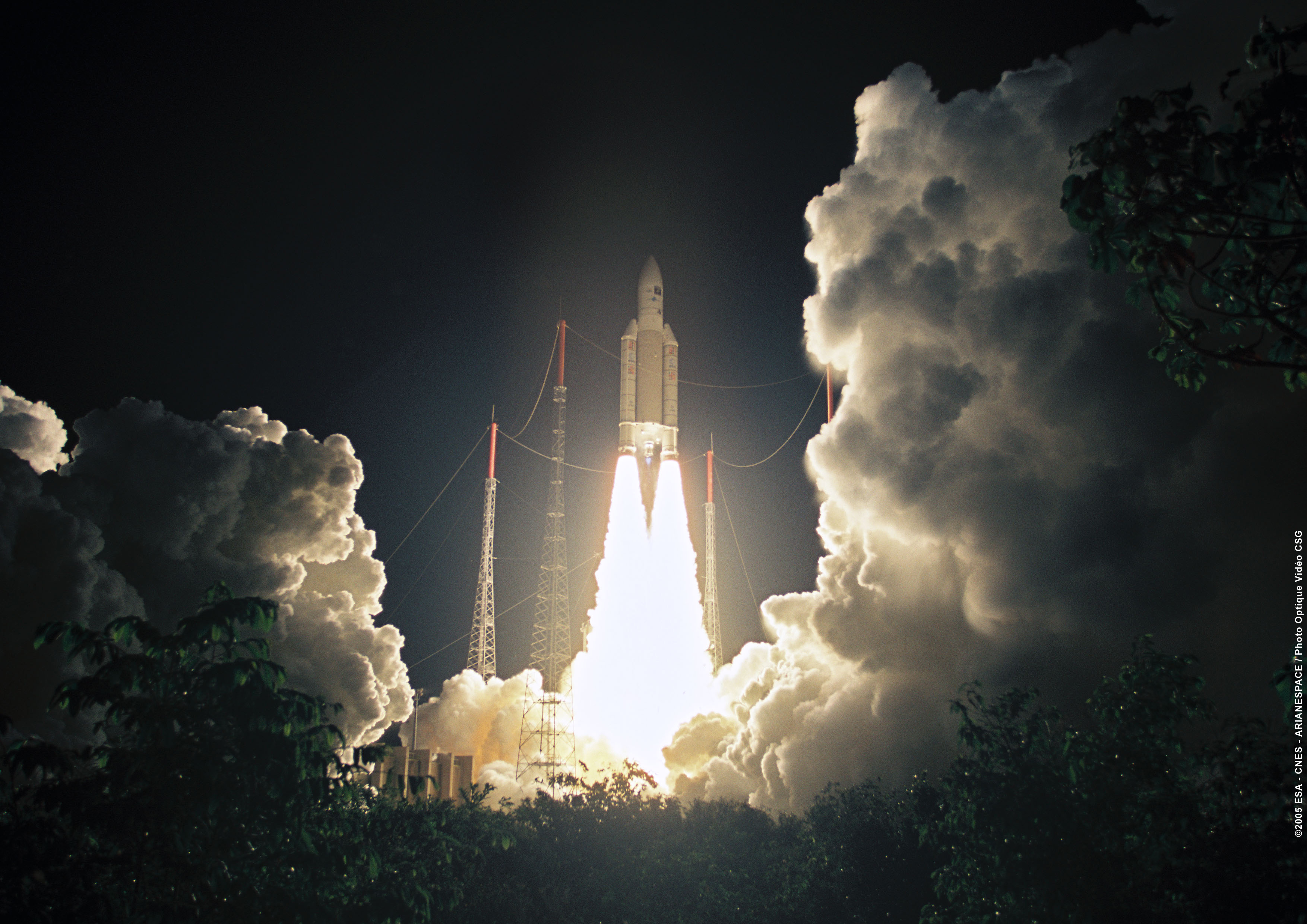
I watch it dwindle into the sky, its plume beginning to tip for orbital insertion.
It's time to go.
I peel the induction cap off my scalp, pull up my duvet and in a creaky whisper, ask the care home AI to turn off the lights.
Now I'm back here again.
It's a warm evening, the sunset fading behind me as I stare at the lit-up spaceport. The Government had resolved to build this facility back in 2016, with Virgin Galactic's space tourism as the 'anchor tenant'. That dream was long gone; what I would be seeing tonight would be the first UK 'heavy lift' launch for the new orbital laser platform.
Our contribution to future interstellar missions.
Thousands of us, mostly young, lithe men and women, crowd together here this evening. We didn't need to be here, but there is something tactile, sensual, about our presence in this moment.
Turning around, I see the ranks of synth trucks parked on the layby.
The loudspeakers speak the countdown, redundant as the main boosters ignite. A wall of ambient sound compresses my very body as the vast machine lifts on its plume of smoke and fire.
I watch it dwindle into the sky, its plume beginning to tip for orbital insertion.
It's time to go.
I peel the induction cap off my scalp, pull up my duvet and in a creaky whisper, ask the care home AI to turn off the lights.
Wednesday, June 17, 2015
Humans (TV: Channel 4)
 |
| The 'synth' is the pretty one |
"Would you? Get one? That’s a discussion that will have been going on in the country’s living rooms during and after the first episode of Humans (Channel 4, Sunday). One meaning your own synthetic, or “synth”: a green-eyed humanoid robot.Here's the video showing the state-of-the-art in anthropoid robotics, from the DARPA Robotic Challenge last week.
On the plus side it will clean and iron and then cook you a nice chicken chasseur for tea, freeing you up for all the good stuff you never find time for. It might even provide some kind of companionship. Plus there are potential upgrades, including adult ones, if you know what I'm saying.
On the downside, there is a danger synths might make you, me, everyone redundant. They are already doing all the jobs people don’t really want to do, not just in the house, but street cleaning, handing out free newspapers, sex work etc (they are basically a bit like immigrants, I’m afraid). But it won’t be long before they’re doing the jobs you might want to do yourself – doctor, lawyer, politician, TV critic, footballer perhaps. The Singularity – when artificial intelligence overtakes human intelligence – isn't far off.
Also, returning to the basic domestic model, it might be a bit creepy having a machine that looks just like a person living in your house. It’s not good for the children either, it’ll mess with their heads. Plus you might be unlucky – like the Hawkins family – and get one, like Anita, that … who can think, and feel. Then things start to get really complicated.
One of the beauties of Humans is that, like Charlie Brooker’s Black Mirror, it really isn't such a big leap, or ask. Only last week there was a story about Ocado creating an army of humanoids with artificial intelligence. The online supermarket robots might not be as pretty as Gemma Chan, who plays Anita (very convincing as a semi-humanoid), but this stuff is happening. Tellingly, Humans is set not some time in the future, but some time around now. It’s sci-fi for the non sci-fi fan, sci-fi that has more than a foot in sci-fact."
My best guess is that 'synths' as portrayed are 20-30 years away. And then the human race will go extinct.
Subscribe to:
Posts (Atom)